How we make this list: we compare pricing pages, product documentation and public user reviews. Rankite is independent; if a vendor ever pays for a featured spot, that listing is clearly labeled Partner.
Key takeaways
- Elicit, Consensus and SciSpace automate literature discovery and synthesis, answering research questions from published papers.
- Scite.ai shows how papers cite each other, distinguishing supporting from contrasting citations.
- Connected Papers, ResearchRabbit, Litmaps and Inciteful map the citation graph so you find related work visually.
- Semantic Scholar remains the free backbone, with an open corpus of 200 million papers and a public API.
- No AI tool replaces reading the primary literature; use them to find papers, then verify claims in the source.
Academic research has a discovery problem. Millions of papers publish every year, and no researcher can read even a fraction of their field. AI tools for research automation attack this bottleneck from several angles: some answer questions by synthesizing the literature, some map citation networks visually, some analyze how papers cite each other, and some draft and polish the writing itself. This guide compares nine tools that automate different stages of the research workflow, so you can pick the ones that fit how you work.

#1
Elicit
Best for: Researchers who want AI-synthesized answers with citations from the literature
Visit elicit.com
Starting priceSee website
Free planYes
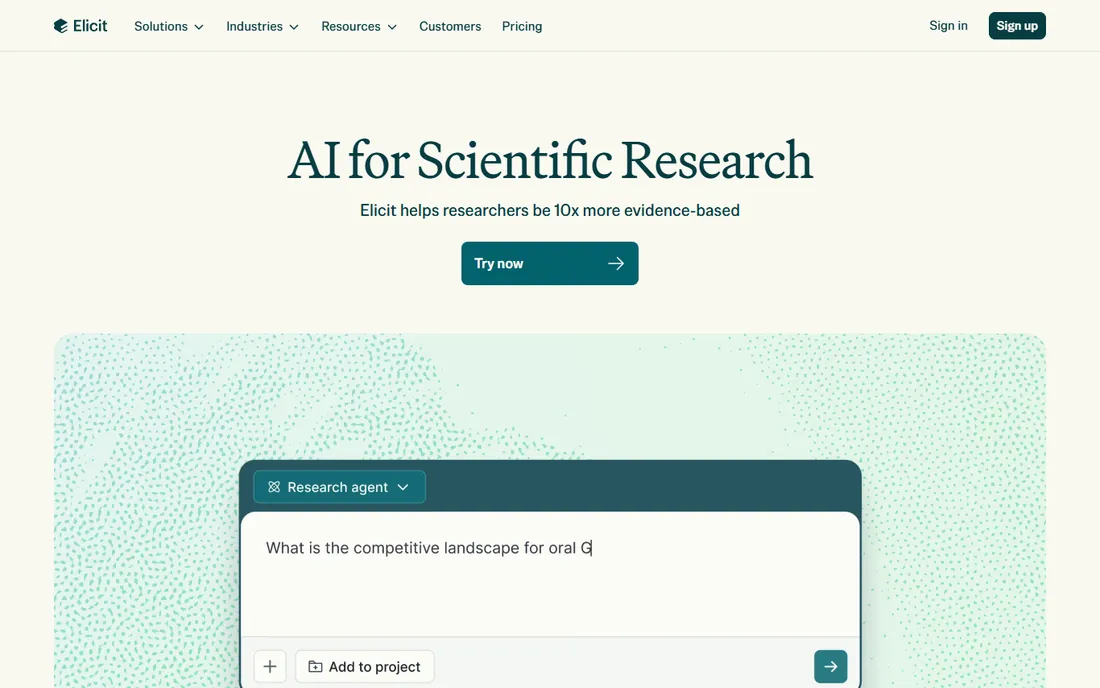
Elicit works like a research assistant you can interrogate. Ask a question in plain language and it searches the academic literature, extracts relevant findings and returns a structured table of papers with one-line summaries of their results. It is particularly useful for the early stages of a literature review, when you need to know what is already known before designing a study.
The free plan includes monthly credits, which is enough for casual use, and paid plans add more. The key discipline with Elicit is verification: its summaries are starting points, and you should always open the cited papers before quoting a result. Used that way, it compresses hours of database searching into minutes.
What we like- Returns structured answers with real citations
- Strong screening for systematic reviews
- Free plan with monthly credits
Watch out for- Synthesis quality depends on the underlying papers
- Limited to what is in its corpus

#2
Consensus
Best for: Getting evidence-backed yes-or-no answers from peer-reviewed research
Visit consensus.app
Starting priceSee website
Free planYes
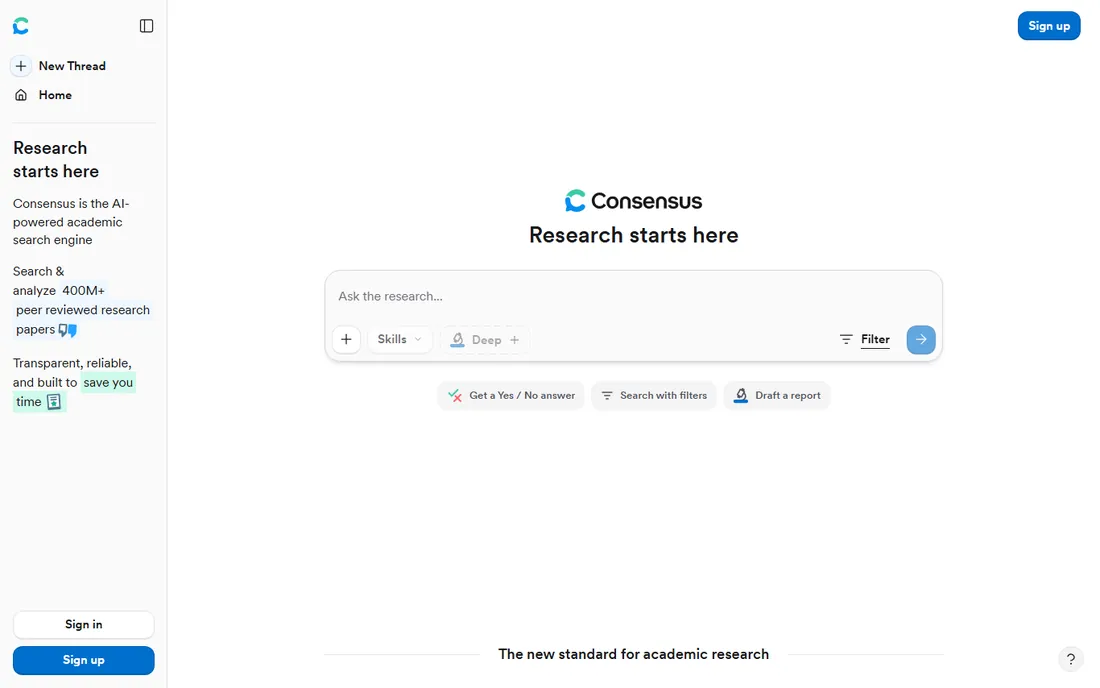
Consensus takes a different approach from Elicit: it aims to tell you what the research agrees on. Ask a question and it returns an AI-generated synthesis with a "consensus meter" indicating whether studies generally agree, disagree or lack enough data. Every claim links to the peer-reviewed papers behind it.
This makes Consensus excellent for evidence checks: does the literature support this intervention, this theory, this claim? It is less suited to open-ended exploration or fields where the literature is thin. The free plan covers casual querying, and the interface is one of the most approachable in this category, which matters when you want students or collaborators to use it too.
What we like- Focuses on peer-reviewed sources
- Consensus meter shows agreement across studies
- Clean, fast interface
Watch out for- Best for settled questions
- Less useful for exploratory or theoretical work

#3
SciSpace
Best for: Understanding dense papers quickly with AI explanations and a writing copilot
Visit scispace.com
Starting priceSee website
Free planYes
SciSpace, formerly Typeset, is the Swiss Army knife of AI research tools. Upload a PDF and ask questions about it, get explanations of complex passages, formulas and tables, and use the AI copilot to help draft, paraphrase and cite. It also includes literature discovery, so you can find papers and understand them in the same workflow.
The breadth is both the strength and the weakness: SciSpace does a lot, but individual features may not match the best single-purpose tools. For students and researchers who want one subscription covering reading, understanding and writing assistance, though, it is a strong package. The free plan lets you try the core features before paying.
What we like- Explains papers, formulas and tables in plain language
- Copilot for writing and paraphrasing
- Broad toolset in one place
Watch out for- The many features can feel scattered
- Free plan has usage limits

#4
Scite.ai
Best for: Seeing how papers have been cited: supported, mentioned or contrasted
Visit scite.ai
Starting priceSee website
Free planNo
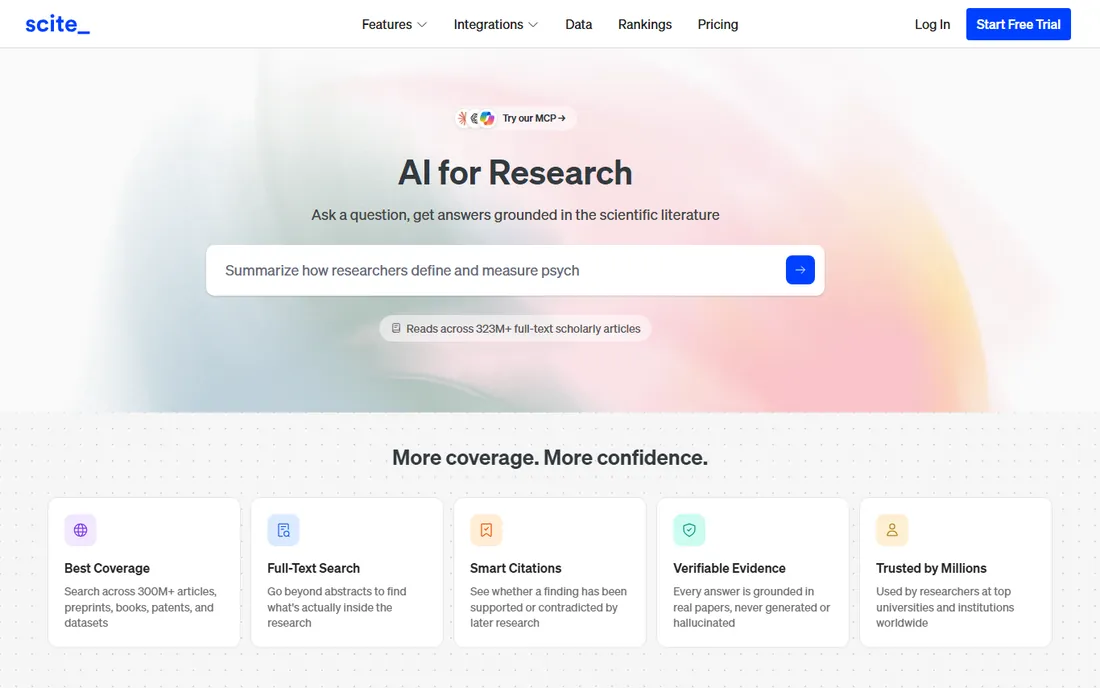
Scite.ai solves a problem every researcher knows: a paper with 500 citations looks influential, but were those citations supportive or critical? Its Smart Citations classify each citing context as supporting, mentioning or contrasting, so you can see at a glance whether a finding has held up. It also offers reference checks that scan your manuscript's citations for retractions, corrections and editorial notices.
This makes Scite.ai uniquely valuable for due diligence: before building on a paper, check how the field has actually received it. It is a paid tool with no free tier, aimed at serious researchers, institutions and publishers. If your work depends on the reliability of prior findings, it is worth the subscription.
What we like- Smart Citations classify citation context
- Excellent for evaluating paper reliability
- Reference check tools
Watch out for- No free plan
- Coverage depends on its citation extraction
Starting priceSee website
Free planYes
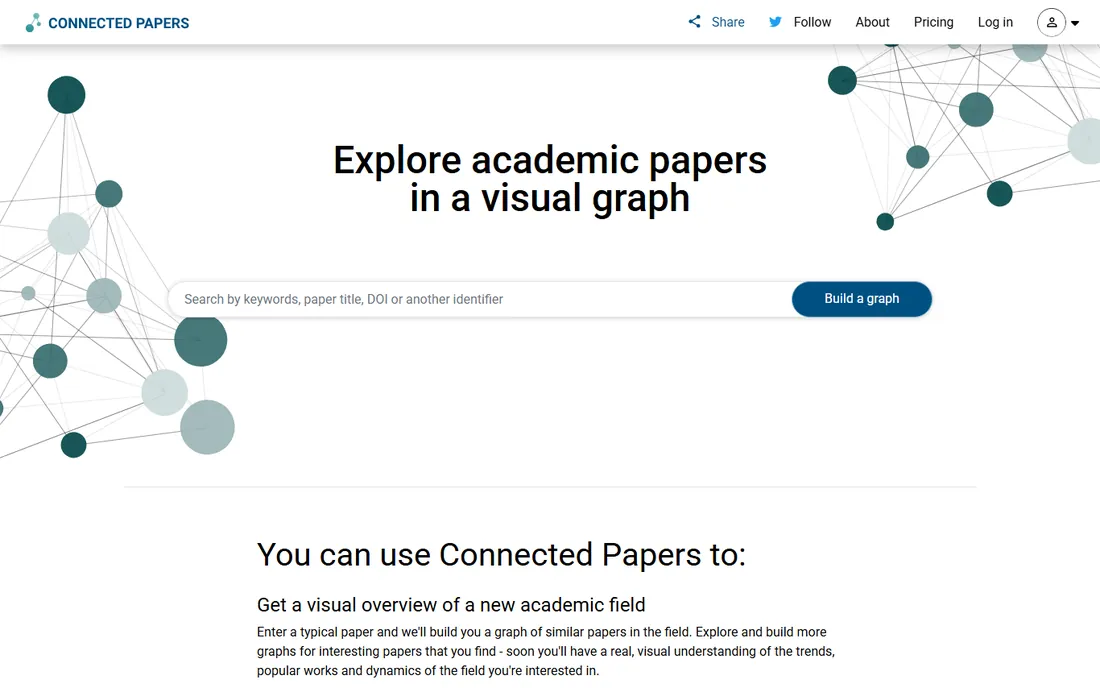
Connected Papers builds a visual graph of the papers most related to a seed paper you provide, laying out prior works that influenced it and derivative works that built on it. The graph layout encodes similarity, so clusters reveal subfields and bridges reveal interdisciplinary connections. It is the fastest way to get oriented in an unfamiliar literature.
The free tier allows a handful of graphs per month, which is enough for occasional deep dives. It does not synthesize or answer questions; it maps the field so you can explore. Pair it with Elicit or Consensus for a powerful combination: map the field visually, then query it conversationally.
What we like- Beautiful citation graphs reveal a field's structure
- Great for finding prior and derivative work
- Simple to use
Watch out for- Limited to graph exploration
- Free tier caps the number of graphs
Starting priceFree
Free planYes
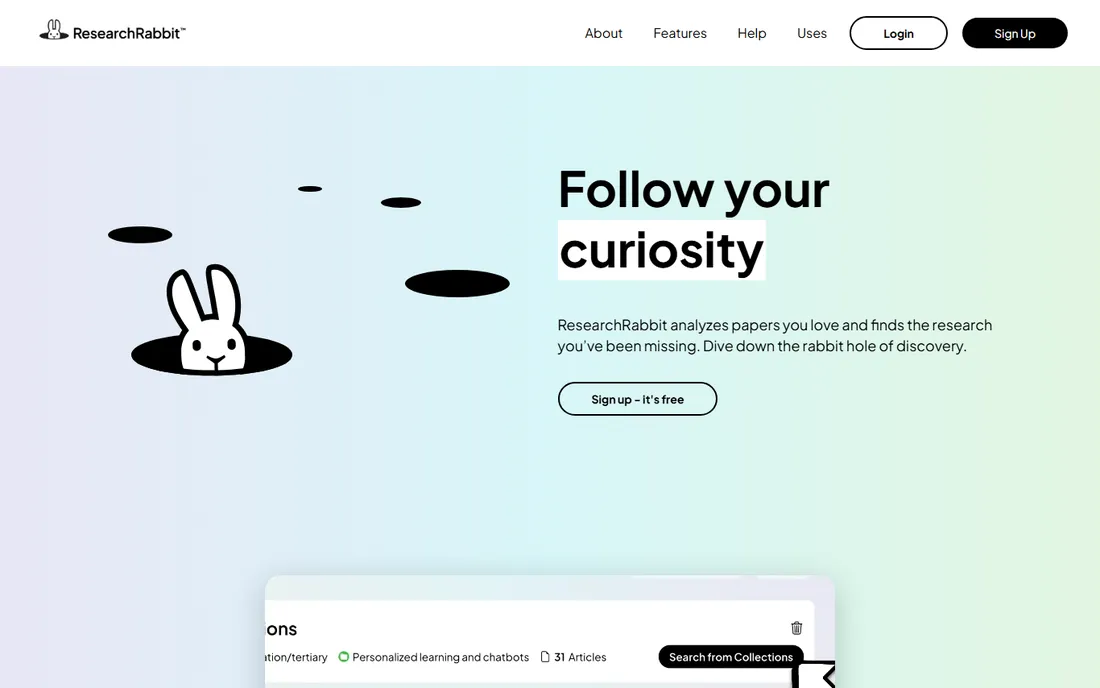
ResearchRabbit is the beloved free tool of the category. Like Connected Papers, it builds visual maps from seed papers, but it is free with no meaningful limits, and its collections feature lets you organize papers into projects that grow as you add more. The interface is polished and the recommendations genuinely useful.
Because it is free, ResearchRabbit is the default starting point for students and anyone mapping a new field on a budget. It does not answer questions or summarize; it is a discovery engine. Use it to build your reading list, then turn to Elicit, SciSpace or the papers themselves for depth.
What we like- Completely free with no graph limits
- Elegant collections and visualizations
- Good for ongoing projects
Watch out for- Discovery only
- No AI synthesis or writing help

#7
Litmaps
Best for: Interactive citation maps with alerts on new relevant papers
Visit litmaps.com
Starting priceSee website
Free planYes
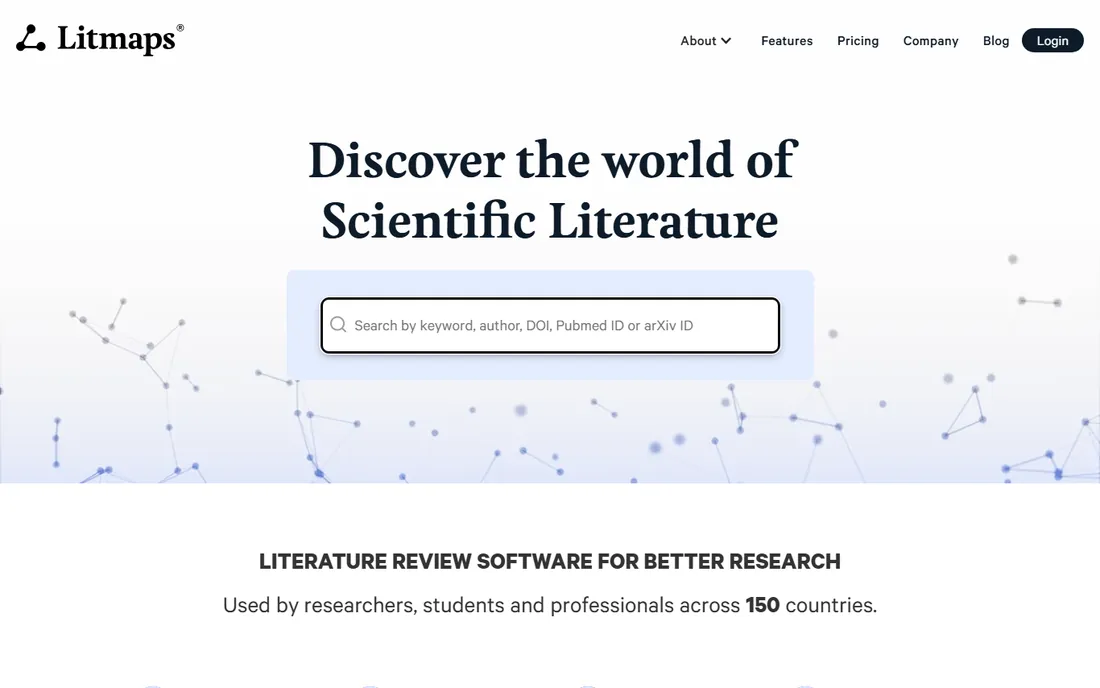
Litmaps turns citation networks into interactive, living maps. Seed a map with papers and it visualizes connections; as new papers cite your seeds, Litmaps can alert you, so your literature review stays current without repeated manual searches. Collaboration features let research groups share and build maps together.
The alerting is the standout feature: most discovery tools show you the past, while Litmaps watches the future. The free plan covers basic mapping, with paid tiers for larger projects. For PhD students and research teams running multi-year projects, the ongoing monitoring justifies a look.
What we like- Dynamic maps update as the literature grows
- Email alerts for new citations
- Good collaboration features
Watch out for- Smaller user base than some rivals
- Free plan limits map size

#8
Inciteful
Best for: Free citation-based paper discovery with no account needed
Visit inciteful.xyz
Starting priceFree
Free planYes
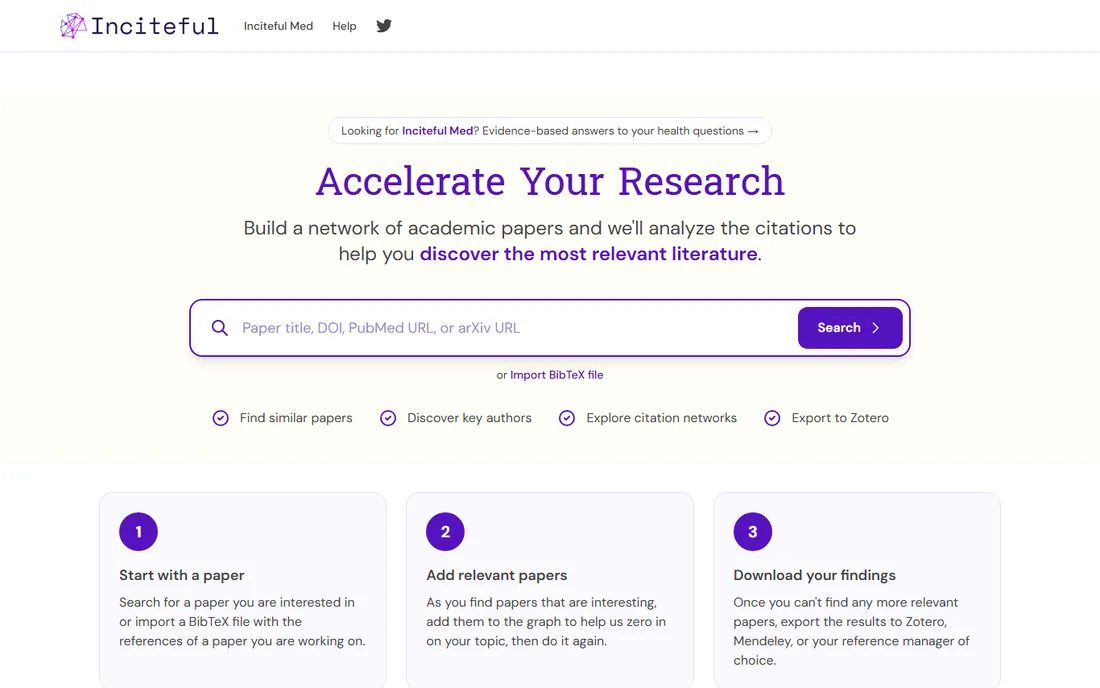
Inciteful is refreshingly simple: paste a paper title or DOI and get a graph of similar papers based on citation analysis, with no account and no cost. It is maintained as a free academic resource, and its recommendations are powered by the same citation-graph logic as fancier tools.
There is no AI synthesis, no PDF chat, no writing help; Inciteful does one thing and does it well. For quick "what else should I read" queries, it is the fastest option on this list. Researchers who distrust AI-generated summaries will appreciate that Inciteful shows you papers, not prose about papers.
What we like- 100% free with no sign-up
- Fast graph-based recommendations
- Simple and focused
Watch out for- Minimal interface
- No AI features or synthesis
Starting priceFree
Free planYes
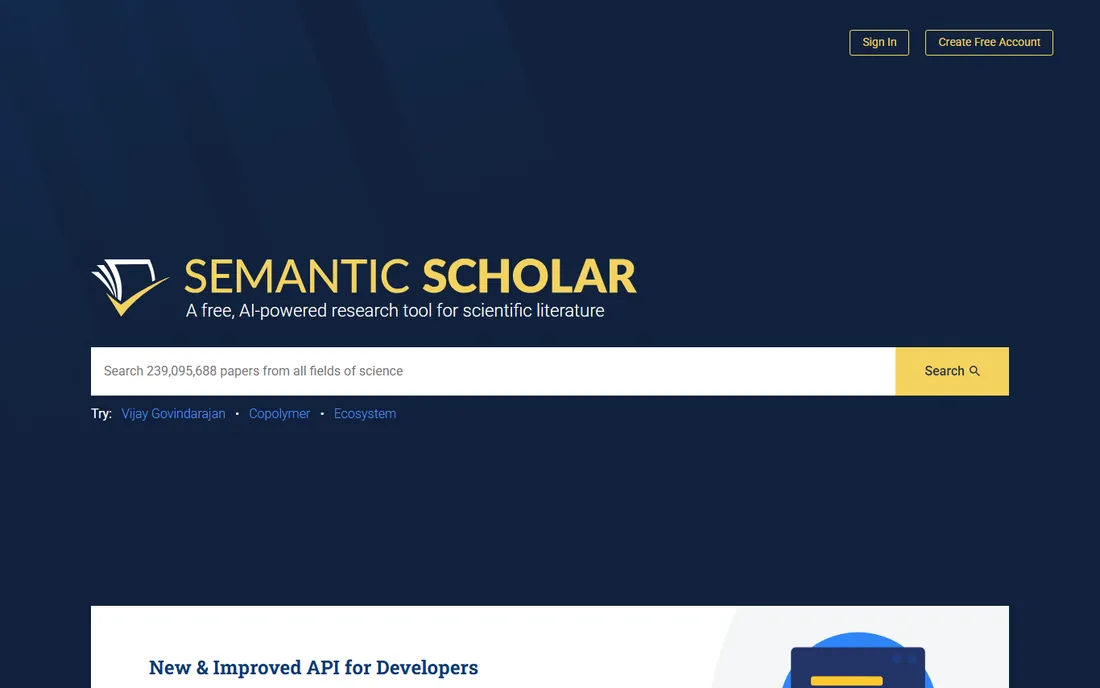
Semantic Scholar, from the Allen Institute for AI, is the infrastructure underneath much of this category. Its corpus of over 200 million papers is free to search, many entries include AI-generated TLDR summaries, and its open API lets developers and researchers build their own tools on top. Several tools on this list draw on data that flows through here.
As a daily research tool, Semantic Scholar is the free scholarly search engine that respects researchers: no paywall for the search itself, citation graphs, influential citation metrics and alerts. It lacks the conversational AI of Elicit or Consensus, but for systematic searching and API-driven automation, it remains essential.
What we like- Massive open corpus
- Free API for programmatic access
- TLDR summaries on many papers
Watch out for- Search is keyword-based rather than conversational
- Fewer workflow features than commercial tools
Quick comparison
| Tool | Best for | Starting price | Free plan |
|---|
| Elicit | Researchers who want AI-synthesized answers with citations from the literature | See website | Yes |
| Consensus | Getting evidence-backed yes-or-no answers from peer-reviewed research | See website | Yes |
| SciSpace | Understanding dense papers quickly with AI explanations and a writing copilot | See website | Yes |
| Scite.ai | Seeing how papers have been cited: supported, mentioned or contrasted | See website | No |
 Connected Papers Connected Papers | Visual exploration of related papers from a single seed paper | See website | Yes |
 ResearchRabbit ResearchRabbit | Free, unlimited visual literature mapping for discovery | Free | Yes |
| Litmaps | Interactive citation maps with alerts on new relevant papers | See website | Yes |
| Inciteful | Free citation-based paper discovery with no account needed | Free | Yes |
 Semantic Scholar Semantic Scholar | Free access to 200 million papers with an open API | Free | Yes |
Is your product missing or out of date?
We review this list regularly. Vendors can request a listing, send updated pricing or ask about featured placement.
Map the tools to your workflow stage. For discovery, start with Semantic Scholar for systematic searching, then use Connected Papers or ResearchRabbit to map the field visually and Litmaps to keep the map current. For understanding, Elicit and Consensus answer specific questions from the literature, while SciSpace explains the papers you have already found.
For evaluation, Scite.ai is in a class of its own: check how key papers were actually received before building on them. For writing, SciSpace's copilot helps with drafting and paraphrasing, though your institution's policies on AI-assisted writing apply. And for automation at scale, Semantic Scholar's API lets you script searches, alerts and analyses that no manual workflow can match.
The limits of AI research automation
These tools compress the mechanical parts of research, but they do not do research. AI summaries can miss nuance, misread methods or confidently restate a paper's claims without flagging its weaknesses. Citation graphs show connections, not quality. And every tool here is only as good as the literature it indexes; brand-new preprints, non-English journals and grey literature may be missing.
The responsible workflow is: use AI to find and triage, then read the primary sources yourself before citing anything. Supervisors and peer reviewers increasingly ask how AI was used in a project, so keep notes on which tools informed your literature review. Automation is a force multiplier for judgment, not a replacement for it.
Frequently asked questions
Can AI tools write my literature review for me?
They can draft sections and summarize papers, but you should not submit AI-generated synthesis without verifying every claim against the primary sources. Most institutions require disclosure of AI use in research. Use these tools to accelerate discovery and drafting, then apply your own judgment.
Which AI research tool is free?
ResearchRabbit, Inciteful and Semantic Scholar are completely free. Elicit, Consensus, SciSpace, Connected Papers and Litmaps offer free plans with limits. Scite.ai is paid only. For a zero-budget workflow, combine Semantic Scholar, ResearchRabbit and Inciteful.
How accurate are AI literature summaries?
They are useful for triage but imperfect. Summaries can oversimplify methods, miss limitations and occasionally misattribute findings. Treat AI output as a map to the literature, not a substitute for reading. Always verify important claims in the full text.
What is the difference between Elicit and Consensus?
Elicit returns structured, detailed answers with extracted data from papers, suited to deep literature reviews. Consensus focuses on whether the evidence agrees, with a consensus meter showing agreement across studies. Elicit is better for exploration; Consensus is better for evidence checks.
Can these tools find papers outside my field?
Yes, and that is one of their strengths. Citation-graph tools like Connected Papers and ResearchRabbit surface interdisciplinary connections, and conversational tools search across disciplines. This makes them valuable for finding methods or findings from other fields that apply to your problem.
Do I still need Google Scholar?
Google Scholar remains useful for its enormous index and citation counts, but these AI tools offer capabilities it does not: conversational answers, citation context, visual mapping and automated monitoring. Most researchers now use both: Scholar for comprehensive searching, AI tools for discovery and synthesis.
We focused on AI tools that automate real stages of academic research: discovery, synthesis, citation analysis and writing assistance. Each tool was verified with a live homepage check, and we confirmed current details such as SciSpace's history as Typeset and the free-plan terms each vendor publishes. We did not run hands-on trials of every paid plan and did not invent pricing, user counts or accuracy claims. Where a vendor does not publish a starting price, we wrote See website. Prices and free-plan terms change, so check the vendor's own pricing page before committing.
Sources we checked (9)
- https://elicit.com/
- https://scispace.com/
- https://consensus.app/
- https://scite.ai/
- https://connectedpapers.com/
- https://www.researchrabbit.ai/
- https://litmaps.com/
- https://inciteful.xyz/
- https://www.semanticscholar.org/
Is your product missing or out of date?
We review this list regularly. Vendors can request a listing, send updated pricing or ask about featured placement.

Shihab Mia · Founder, Rankite
Shihab has spent more than a decade helping SaaS and e-commerce brands grow through search. He writes Rankite's software buying guides from pricing pages, documentation and public user reviews. More about Shihab.