How we make this list: we compare pricing pages, product documentation and public user reviews. Rankite is independent; if a vendor ever pays for a featured spot, that listing is clearly labeled Partner.
Key takeaways
- Eightfold and Phenom lead AI talent intelligence: skills-based hiring, internal mobility and workforce planning driven by AI.
- Workday embeds AI across enterprise HCM; Rippling unifies HR, IT and payroll with automation-first design.
- BambooHR brings AI-powered people intelligence to SMBs; Lattice focuses AI on performance, engagement and growth.
- ChartHop turns workforce data into decisions; Gusto keeps AI-assisted HR simple for small businesses.
Quick comparison
| Tool | Best for | Starting price | Free plan |
|---|
 Eightfold Eightfold | Enterprises building skills-based talent strategies | See website | No |
 Phenom Phenom | AI across the full talent lifecycle | See website | No |
 Workday Workday | Enterprises wanting AI inside their HCM system of record | See website | No |
 Rippling Rippling | Companies unifying HR, IT, payroll and spend | See website | Free trial |
 BambooHR BambooHR | SMBs wanting people intelligence without enterprise complexity | See website | Free trial |
 Lattice Lattice | Performance management, engagement and growth | See website | Free trial |
 ChartHop ChartHop | Turning workforce data into business decisions | See website | Free trial |
 Gusto Gusto | Small businesses wanting simple, assisted HR | See website | Free trial |
Is your product missing or out of date?
We review this list regularly. Vendors can request a listing, send updated pricing or ask about featured placement.
The best AI HR software
AI in HR spans talent intelligence (who can do what, who might leave, who to hire), recruiting automation, performance insights and people analytics. Eight platforms, from AI-native talent systems to HR suites with embedded intelligence.
#1
Eightfold
Best for: Enterprises building skills-based talent strategies
Visit eightfold.ai
Starting priceSee website
Free planNo
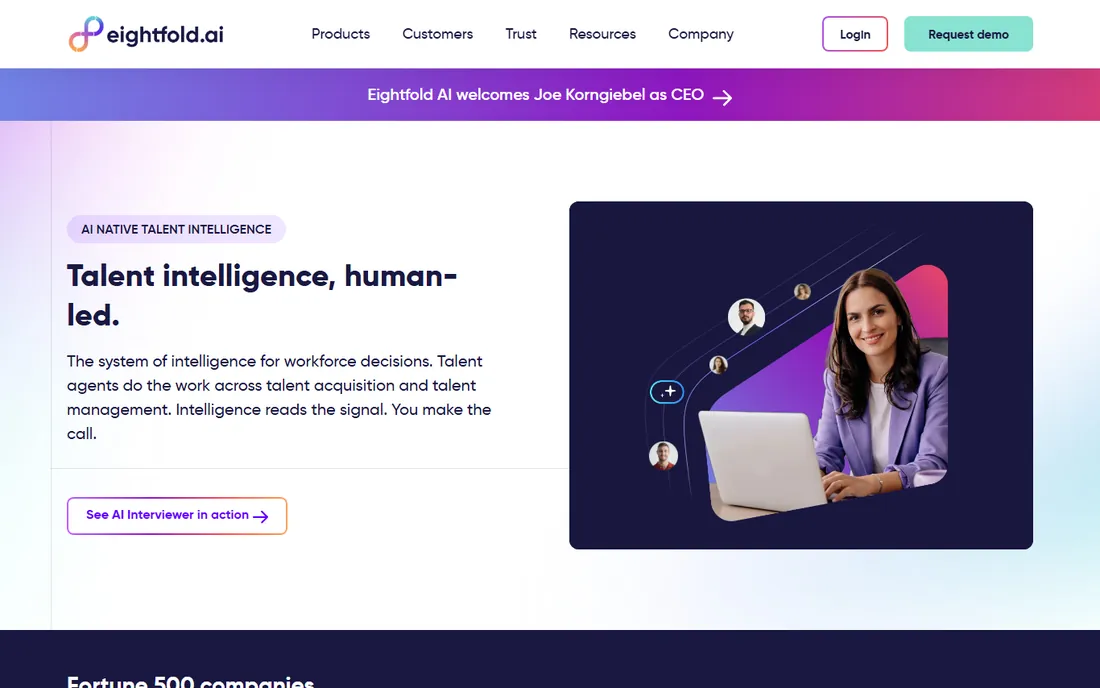
Eightfold is the talent-intelligence pioneer: AI that infers skills from profiles, matches people to roles and gigs, predicts workforce needs and powers internal mobility. Its agentic platform (TalentForge and related products) pushes toward AI-assisted workforce orchestration.
The honest fit is enterprise. Pricing and implementation suit large organizations with talent complexity; smaller companies get better value elsewhere. But for enterprises serious about skills-based talent strategy, Eightfold's depth is the category reference.
What we like- Agentic talent intelligence across hiring, mobility and planning
- Deep skills inference
- Enterprise-proven at scale
Watch out for- Enterprise pricing and implementation
- Overkill for small organizations
Starting priceSee website
Free planNo

Phenom (formerly Phenom People) applies AI across hiring, development and retention: intelligent career sites, candidate matching, internal mobility, manager and employee experiences. Recent acquisitions (Included for people analytics, Be Applied for assessments) keep expanding the platform.
The honest consideration is scope. The platform story is broad; buyers should verify each module against their priorities rather than buying the vision. But for organizations wanting one AI talent platform from attraction to retention, Phenom's breadth is the argument.
What we like- Applied AI for hiring, development and retention in one platform
- Strong candidate and employee experiences
- Acquisitive product expansion
Watch out for- Enterprise focus
- Platform breadth needs evaluation against point needs
#3
Workday
Best for: Enterprises wanting AI inside their HCM system of record
Visit workday.com
Starting priceSee website
Free planNo
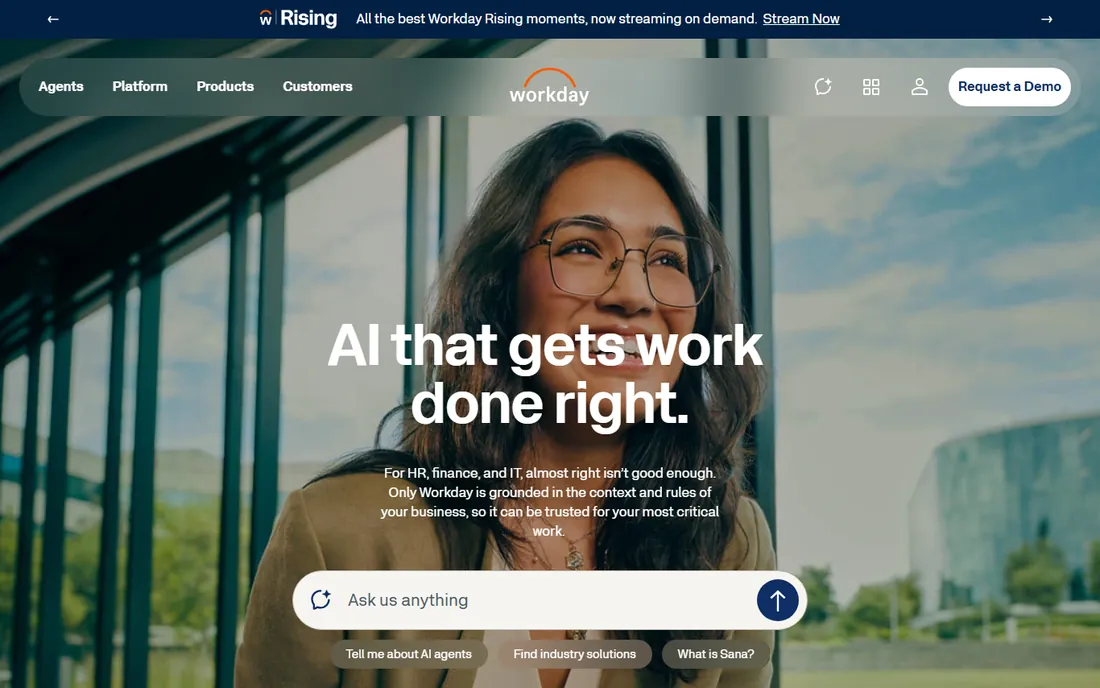
Workday bakes AI into the enterprise HCM: recruiting assistance, workforce planning, skills analysis and conversational experiences inside the system global enterprises already run. For Workday customers, AI arrives as platform evolution rather than new-vendor risk.
The honest reality is enterprise software economics: long implementations, significant cost, and AI that performs to the quality of your data. But for large organizations standardizing on Workday, the embedded AI story beats bolting on point tools.
What we like- AI embedded across HCM, recruiting, planning and analytics
- The enterprise system of record
- Massive ecosystem and partner network
Watch out for- Expensive, lengthy implementations
- AI value depends on data quality and adoption
Starting priceSee website
Free planFree trial
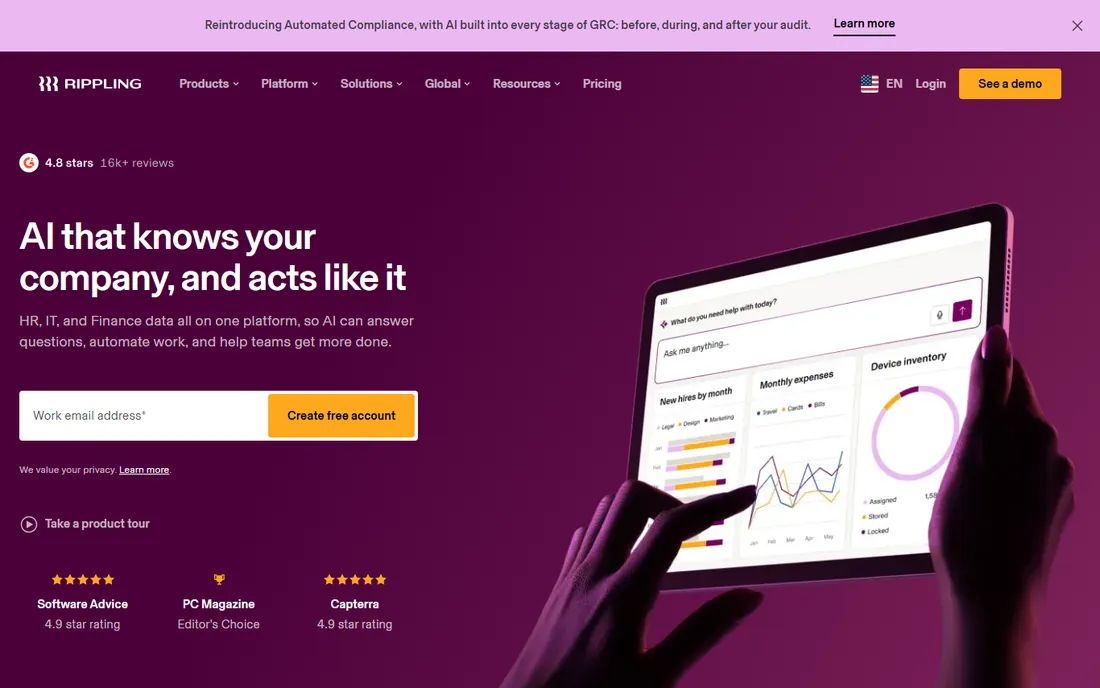
Rippling's AI-adjacent value is unification: one employee record automatically provisions apps, runs payroll, manages devices and enforces policies, with workflows and analytics across it all. The automation eliminates the HR-IT-payroll handoffs that plague growing companies.
The honest limits are enterprise depth and cost stacking. Workday goes deeper for global enterprises; Rippling's modules add up. But for mid-size companies wanting one intelligent system instead of five disconnected ones, Rippling's coherence wins.
What we like- Single employee record drives HR, IT provisioning, payroll and apps
- Powerful workflow automation
- Modern, fast interface
Watch out for- Modular pricing stacks up
- HR depth less than Workday at enterprise scale
#5
BambooHR
Best for: SMBs wanting people intelligence without enterprise complexity
Visit bamboohr.com
Starting priceSee website
Free planFree trial
BambooHR brings AI-assisted HR to small and mid-size businesses: core HR, payroll, benefits and talent management unified with embedded AI, insights and workflows, serving over 30,000 customers. The platform makes people data actionable without a people-analytics team.
The honest boundary is scale. Global enterprises need Workday's depth; analytics specialists may prefer ChartHop. But for SMBs, BambooHR's combination of completeness, usability and price is the category's best value.
What we like- People Intelligence Platform unifying HR, payroll and benefits
- Embedded AI insights
- 30,000-plus customers
- Approachable pricing
Watch out for- Enterprise features thinner than Workday
- Advanced analytics less deep than ChartHop
Starting priceSee website
Free planFree trial
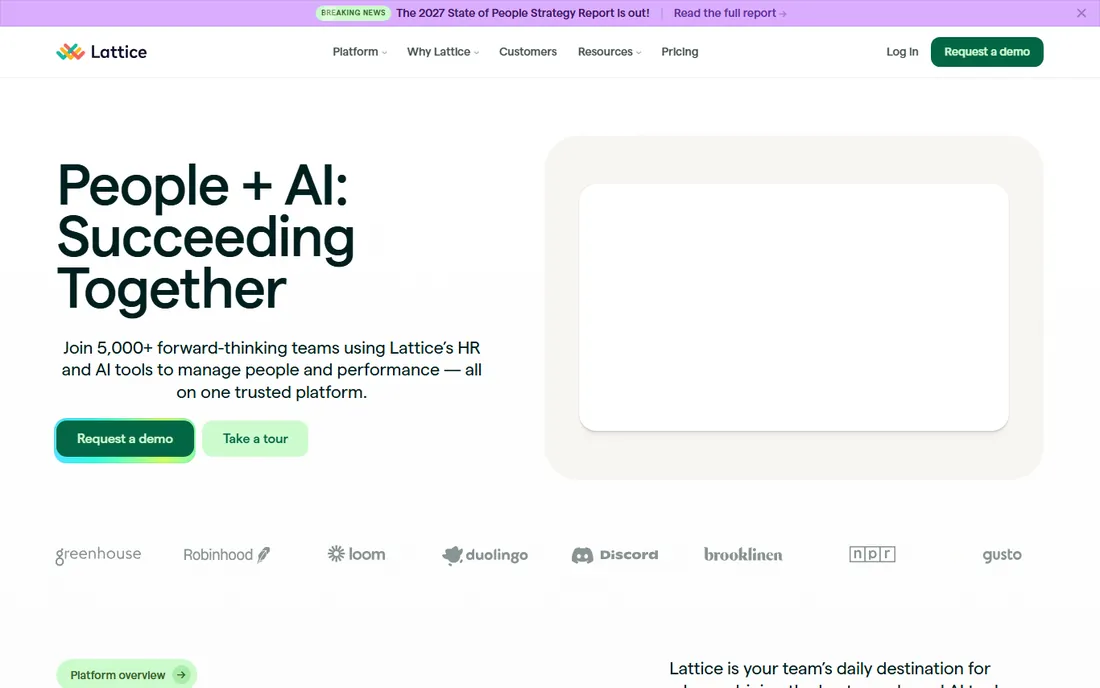
Lattice focuses AI on the human side: performance reviews, engagement surveys, growth plans, compensation and 1:1s, now with HRIS and analytics completing the picture. Managers get clarity tools; HR leaders get strategic insights.
The honest positioning is emphasis. Companies needing deep core-HR administration pair Lattice with (or choose) fuller suites. But for organizations where performance culture is the HR priority, Lattice's focused excellence beats generic suites.
What we like- Purpose-built for the AI age: performance, engagement, growth, compensation and HRIS
- Manager-friendly
- Strong analytics for HR leaders
Watch out for- HRIS depth less than full suites
- Best as performance layer plus core HR
Starting priceSee website
Free planFree trial
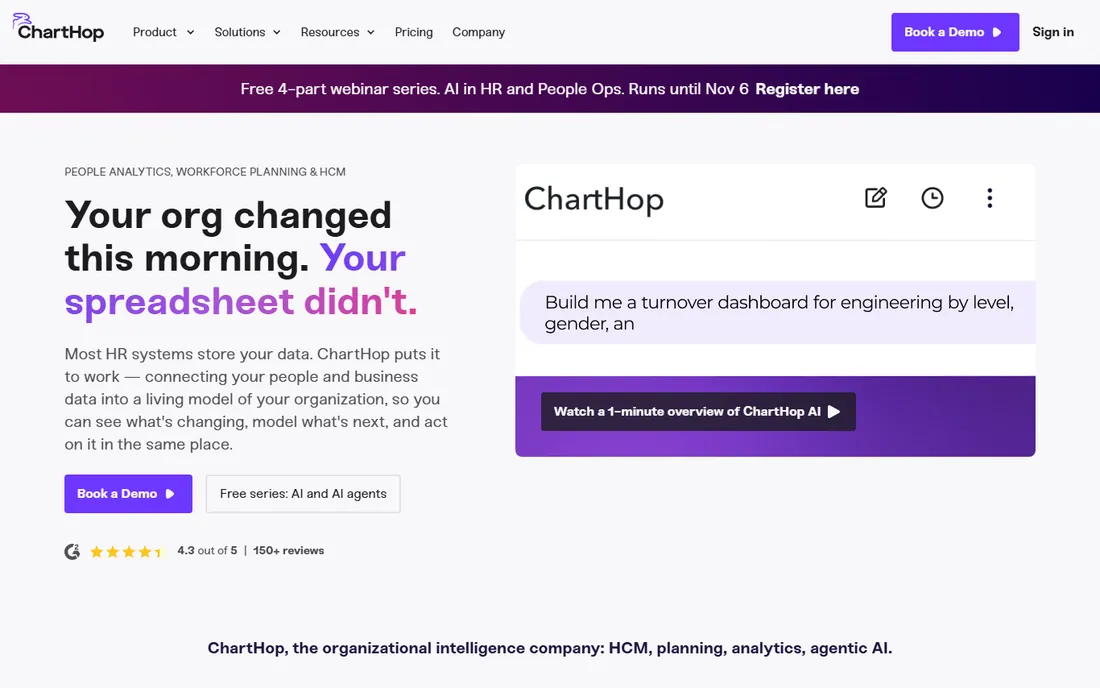
ChartHop is the system of insight: unify workforce data, model headcount scenarios, visualize the organization and get AI-powered answers for planning decisions. Finance and HR leaders use it to connect people data to business outcomes.
The honest framing is complement, not replacement. ChartHop analyzes; HRIS systems administer. Organizations with solid systems of record but weak insight get the most value. For data-driven workforce planning, its visualizations and scenario modeling lead.
What we like- AI-powered people operations: headcount planning, org design, compensation and engagement analytics
- Visual org intelligence
- SAP Store availability
Watch out for- Analytics-first
- Core HR administration lives elsewhere
#8
Gusto
Best for: Small businesses wanting simple, assisted HR
Visit gusto.com
Starting priceSee website
Free planFree trial
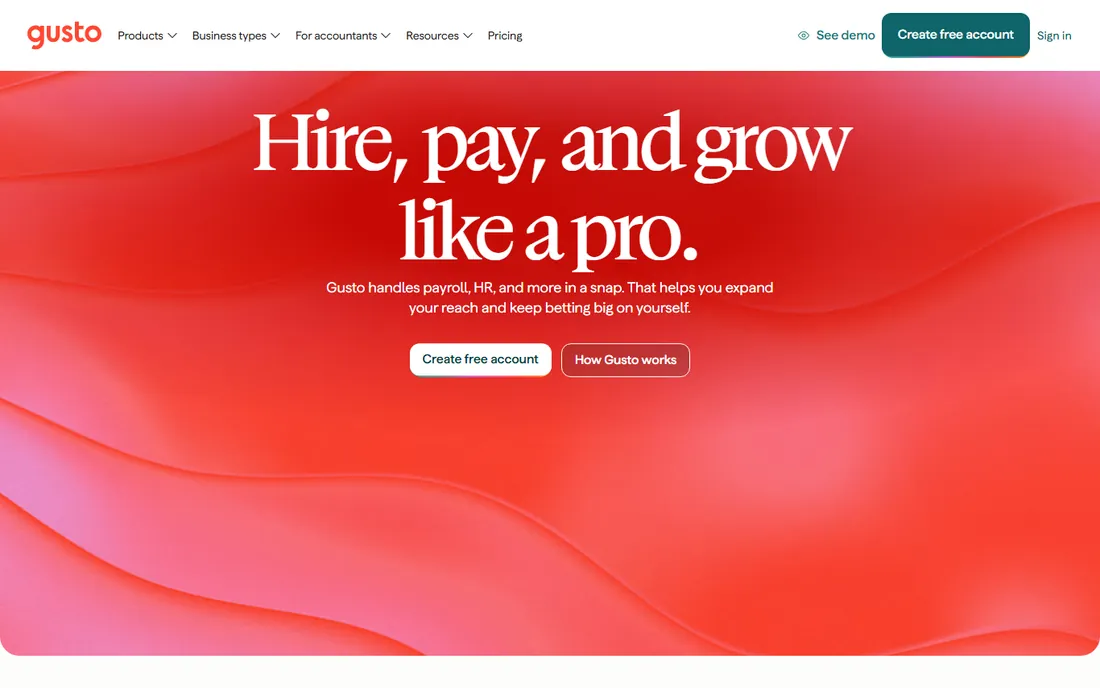
Gusto keeps HR simple: payroll, onboarding, benefits and compliance handled with friendly automation for small US businesses. The AI story is assistive rather than transformative, which suits its audience.
The honest limits are ambition. Growing companies needing talent intelligence or deep analytics outgrow Gusto. But for small businesses, Gusto's "HR handled" simplicity at accessible pricing remains the right-sized answer.
What we like- Payroll-centered HR with easy onboarding and benefits
- Approachable automation
- Excellent for US small businesses
Watch out for- US-focused
- AI and analytics depth less than dedicated platforms
How we chose
We selected established HR platforms with genuine AI capability, spanning talent intelligence, enterprise HCM, unified HR/IT, SMB suites, performance and analytics. We weighed AI honesty (real capability versus marketing), segment fit, pricing fairness and implementation realism. Pricing comes from each vendor's own pricing page; unverifiable plans are marked "See website." No hands-on testing was performed.
What to look for before you buy
Interrogate the AI claims. Ask what the AI actually does (matching, inference, prediction, generation), what data it needs, and how accuracy is measured. "AI-powered" without specifics is marketing.
Check data requirements. Talent AI performs to training data quality; assess your HR data completeness honestly before expecting miracles.
Evaluate bias and compliance. AI hiring tools face regulatory scrutiny; ask about bias testing, auditability and compliance features, especially for recruiting use cases.
Finally, pilot with your people data. Run the AI on your real workforce and hiring history during evaluation. Generic demos flatter every vendor; your data reveals the truth.
Where AI in HR actually pays off first
AI HR tools promise transformation, but the payoff concentrates in a few specific workflows. Knowing where the value lands helps you buy the right tool and set honest expectations. The pattern across successful deployments is consistent: AI wins first where the work is high-volume, repetitive and data-rich, and humans keep the judgment calls.
Resume screening and candidate matching is the clearest win. Recruiters drowning in applicants get AI-ranked shortlists in minutes instead of days, and matching quality is genuinely good when the system trains on your hiring history. The caveat is data: the AI learns from your past hires, so if your historical hiring was narrow, the recommendations will be too. Audit the shortlists for the first quarter and correct the system explicitly; the feedback loop is where the value compounds.
Interview scheduling and candidate communication come next. AI scheduling assistants and chatbots remove the back-and-forth that consumes recruiter hours, and candidates actually prefer instant responses to waiting days. This is unglamorous work with immediate, measurable time savings. It rarely makes the vendor's headline slides, but practitioners consistently rank it among the highest-ROI features.
Internal mobility is the sleeper value. Most companies hire externally for roles that existing employees could fill, because nobody has a complete picture of workforce skills. AI talent marketplaces (Eightfold, Phenom, Gloat-style systems) surface internal candidates for open roles and gigs, cutting recruiting costs and improving retention. The prerequisite is skills data: the AI needs to know what employees can do, which means investing in skills profiles or inferring them from work history.
Attrition prediction helps when it drives action, not just dashboards. Knowing which teams are flight risks is only useful if managers do something: stay interviews, compensation reviews, workload adjustments. Buyers should ask vendors what interventions their customers actually run off the predictions. A risk score nobody acts on is an expensive decoration.
Performance and engagement analytics work best as manager coaching, not surveillance. AI that summarizes review themes or flags disengagement patterns helps managers have better conversations. AI that scores individual employees for stack-ranking destroys trust. Set the cultural ground rules before deployment: tell employees what the AI does and does not do, in plain language.
The honest timeline: expect 3 to 6 months before AI HR features produce trusted output, because the systems need your data and your feedback. Vendors demoing instant magic are showing trained models on sample data. Plan a pilot on one workflow (usually recruiting), measure time-to-hire and recruiter hours, then expand. The companies that get burned are the ones that buy the full platform vision on day one.
Frequently asked questions
What is AI HR software?
HR platforms using artificial intelligence for tasks like candidate matching, skills inference, attrition prediction, performance insights, workforce planning and automated HR workflows.
Is AI recruiting biased?
It can be: models trained on historical hiring data can perpetuate past biases. Reputable vendors test for adverse impact and offer auditability; ask for evidence, not assurances.
Eightfold vs Phenom: which is better?
Both lead AI talent intelligence; Eightfold emphasizes agentic skills-based workforce orchestration, Phenom covers the broader talent lifecycle including experiences. Evaluate against your specific talent priorities.
Can small businesses use AI HR software?
Yes: BambooHR, Gusto and Rippling bring AI-assisted HR to SMBs at accessible prices. Enterprise talent intelligence (Eightfold, Phenom) suits larger organizations.
Will AI replace HR professionals?
No: AI automates screening, matching, analytics and admin, but judgment, empathy, employee relations and strategy remain human. The best tools make HR more strategic, not smaller.
How do I measure ROI on AI HR software?
Time-to-hire, quality of hire, retention rates, internal mobility rates and HR admin hours. Baseline these before implementation; AI HR value shows in talent outcomes, not software metrics.
Sources we checked (8)
- https://www.eightfold.ai
- https://www.phenom.com
- https://www.workday.com
- https://www.rippling.com
- https://www.bamboohr.com
- https://www.lattice.com
- https://www.charthop.com
- https://www.gusto.com
Is your product missing or out of date?
We review this list regularly. Vendors can request a listing, send updated pricing or ask about featured placement.

Shihab Mia · Founder, Rankite
Shihab has spent more than a decade helping SaaS and e-commerce brands grow through search. He writes Rankite's software buying guides from pricing pages, documentation and public user reviews. More about Shihab.