How we make this list: we compare pricing pages, product documentation and public user reviews. Rankite is independent; if a vendor ever pays for a featured spot, that listing is clearly labeled Partner.
Key takeaways
- Perplexity answers cite sources, so the useful metric is citation share and mention frequency, not a position number; every tool below reports those.
- Otterly AI ($29/month entry) and LLMrefs (free tier) are the cheapest ways to start watching Perplexity; enterprise teams needing prompt volume data should look at Profound or AthenaHQ first.
- Daily tracking matters more than weekly here because Perplexity answers shift with its source index; check the refresh cadence before you buy.
- If you also need ChatGPT, Gemini and Claude coverage in the same dashboard, pick a multi-engine platform (Profound, Peec AI, Scrunch) rather than a Perplexity-only view.
Quick comparison
| Tool | Best for | Starting price | Free plan |
|---|
 Profound Profound | Enterprise teams that need deep Perplexity intelligence | See website | Free trial |
 Otterly AI Otterly AI | Small teams starting Perplexity monitoring cheaply | See website | No |
 Peec AI Peec AI | Mid-market teams that want daily Perplexity tracking | See website | No |
 Scrunch Scrunch | Brands that want monitoring plus fixes, not just a dashboard | See website | Free trial |
 AthenaHQ AthenaHQ | Teams that want monitoring, scoring and remediation in one place | See website | Yes |
 LLMrefs LLMrefs | Budget-conscious teams that think in keywords | See website | Yes |
 Goodie AI Goodie AI | Marketing teams connecting Perplexity visibility to content work | See website | No |
 Brandlight Brandlight | Brands that need to know which sources shape Perplexity answers | See website | No |
Is your product missing or out of date?
We review this list regularly. Vendors can request a listing, send updated pricing or ask about featured placement.
Perplexity answers questions with cited sources, and buyers increasingly trust those answers the way they once trusted the top three blue links. If your brand is not cited in Perplexity answers for your category, you are invisible to a growing slice of researchers. The eight tools below track how brands appear inside Perplexity: mentions, citations, sentiment and how you stack up against competitors.
Starting priceSee website
Free planFree trial
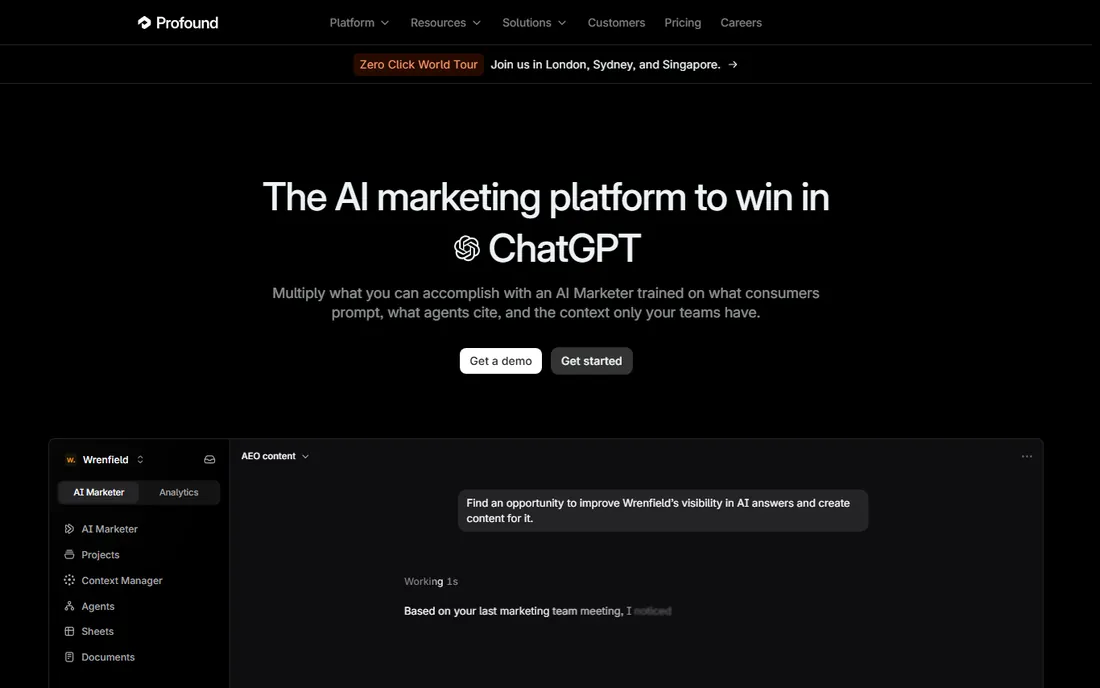
Profound is the reference point most agencies name first when a client asks how they show up in AI answers. Its Perplexity coverage sits inside a broader engine set, so you can compare how the same prompt behaves across Perplexity, ChatGPT and Google AI Overviews without switching tools. The citation analysis is the part that earns its keep: it shows which domains and pages Perplexity pulls into answers about your category, which tells your content team exactly where to earn presence.
The honest catch is the price curve. Profound is built for brands with real budgets, and the deeper features (multi-region tracking, agent analytics, large prompt libraries) sit in custom tiers. Small businesses will get similar Perplexity mention data for less elsewhere. But if your CMO wants a defensible, board-ready view of AI visibility, this is the dashboard most teams end up standardizing on.
What we like- Tracks Perplexity alongside ChatGPT, Gemini, Claude, Copilot and more
- Prompt Volumes data estimates real conversation demand behind prompts
- Answer Engine Insights surface citations, sentiment and content opportunities
Watch out for- Enterprise-shaped pricing puts it out of reach for small sites
- The entry tier covers fewer engines than the full platform
#2
Otterly AI
Best for: Small teams starting Perplexity monitoring cheaply
Visit otterly.ai
Starting priceSee website
Free planNo
Otterly AI is the on-ramp for teams that need Perplexity data this week without a procurement process. Setup takes minutes: add your brand, add competitor brands, add the prompts your buyers ask, and the platform starts capturing Perplexity answers on a schedule. The interface stays readable even for marketers who have never touched an SEO tool, which is why agencies like it for client reporting.
The trade-off is depth. The entry plan tracks a small prompt set, and expanding engine coverage beyond the base four costs more. There is also no traffic attribution, so you will know you were mentioned in Perplexity but not what that mention was worth. For a first year of AI visibility monitoring, though, the value per dollar is hard to beat.
What we like- Low entry price with Perplexity included in the base engines
- Tracks mentions, citations and share of voice
- Weekly automated tracking keeps the workflow light
Watch out for- Google AI Mode, Gemini and Claude cost extra as add-ons on every tier
- Prompt caps are tight at the entry level
#3
Peec AI
Best for: Mid-market teams that want daily Perplexity tracking
Visit peec.ai
Starting priceSee website
Free planNo
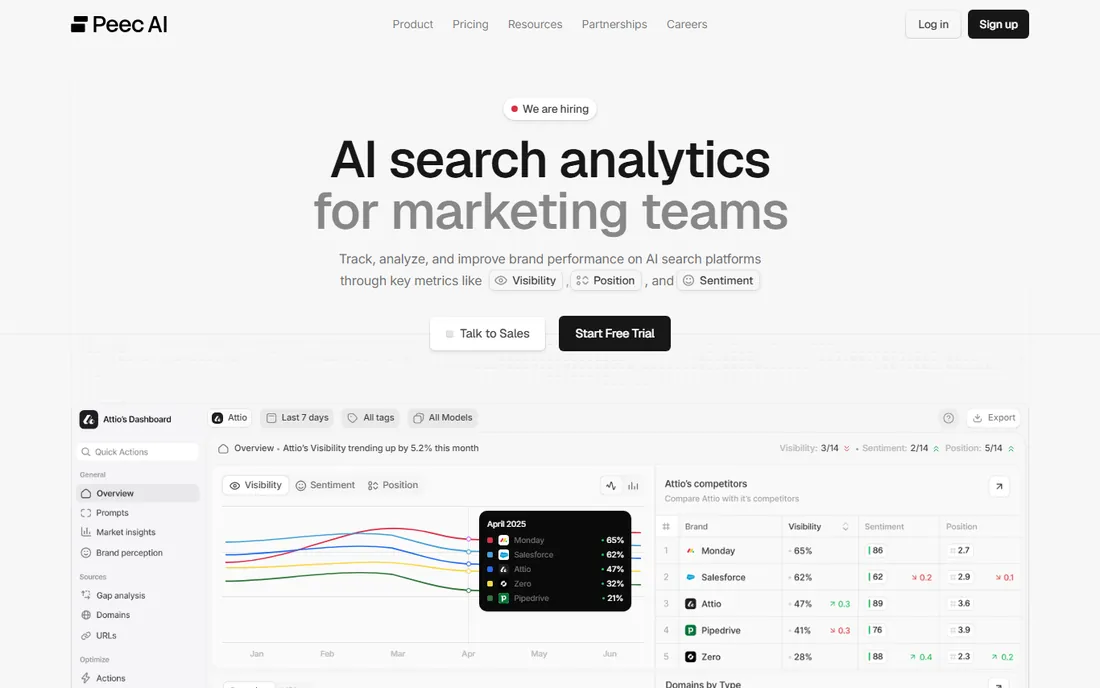
Peec AI takes an unusual technical approach: instead of querying model APIs, it reads the rendered interface of each engine by simulating real user sessions. For Perplexity that matters, because what the API returns and what a logged-out buyer sees on screen can differ. The result is tracking data you can defend in a meeting, with daily refreshes that catch how fast Perplexity answers change.
The pricing structure needs a careful read before you commit. The base plan covers a set number of prompts across three models, and adding engines or prompt volume raises the bill. Teams that only care about Perplexity plus one or two other engines will be fine; teams that want everything tracked everywhere should price it against Profound or AthenaHQ first.
What we like- Simulates real user sessions so data reflects what buyers actually see
- Daily tracking with prompt-level competitor views
- Clean organization of prompts by topic and region
Watch out for- Self-serve tiers cap engine coverage, with per-engine fees on top
- Thinner public review base than older competitors
#4
Scrunch
Best for: Brands that want monitoring plus fixes, not just a dashboard
Visit scrunch.com
Starting priceSee website
Free planFree trial
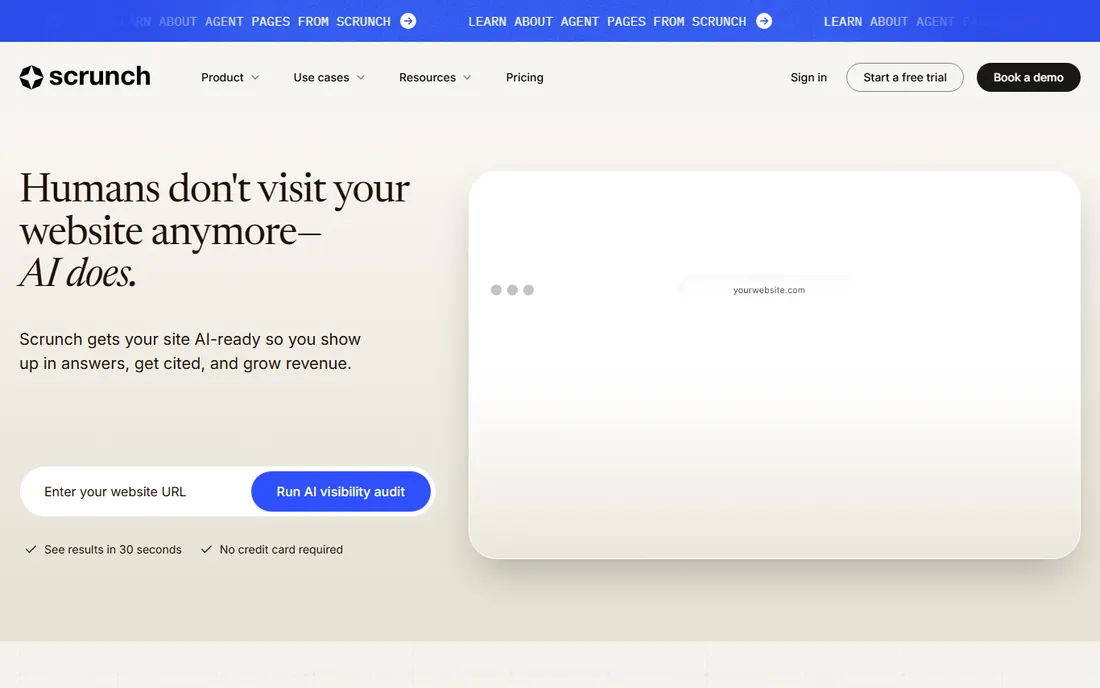
Scrunch sits one step beyond pure tracking. It watches Perplexity, ChatGPT, Claude, Gemini and Google surfaces for your brand, then adds an Agent Experience Platform that helps you act on what it finds: technical fixes, content recommendations and citation gap analysis. That monitor-plus-fix pairing is what separates it from tools that only show you a chart.
The catch is that you pay for the full stack whether or not you use the fixing half. Teams that already have an SEO agency or content team doing the remediation may prefer a cheaper pure-play tracker and keep the action work in-house. If you want one vendor accountable for both measurement and improvement, Scrunch is a strong shortlist candidate.
What we like- Combines Perplexity monitoring with an optimization layer
- Tracks sentiment and brand-safety risks like misinformation
- Serves mid-market and enterprise with SOC 2 certification
Watch out for- Starts higher than lightweight trackers
- The optimization tooling adds complexity some teams will not use
#5
AthenaHQ
Best for: Teams that want monitoring, scoring and remediation in one place
Visit athenahq.ai
Starting priceSee website
Free planYes
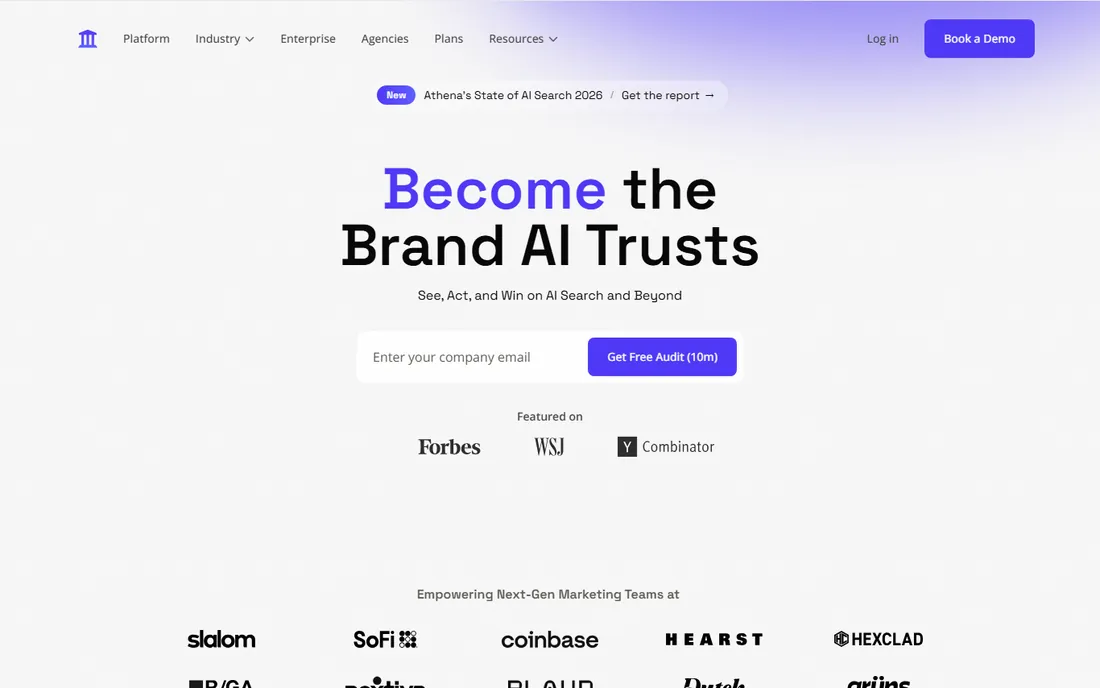
AthenaHQ was built by former Google Search and DeepMind engineers, and it shows in the product's structure: GEO scoring, prompt analytics and competitor benchmarking are organized like a search console for AI answers. Perplexity is a first-class engine here, tracked alongside ChatGPT, Gemini, Claude, Copilot and Google AI surfaces. The action layer (recommendations, citation engine on enterprise tiers) means insights turn into tickets for your content team instead of dying in a PDF.
The credit-based system is the thing to model before you sign. Heavy prompt libraries and multi-region tracking consume credits fast, so map your real usage against the plan before assuming the sticker price is your bill. The free tier exists, which makes that evaluation honest instead of theoretical.
What we like- Covers up to eight major LLMs including Perplexity
- Built-in hallucination detection and content recommendations
- Free tier lets you evaluate before paying
Watch out for- Starter plan is pricier than budget trackers
- Credit-based usage needs watching so you do not burn through quota
Starting priceSee website
Free planYes
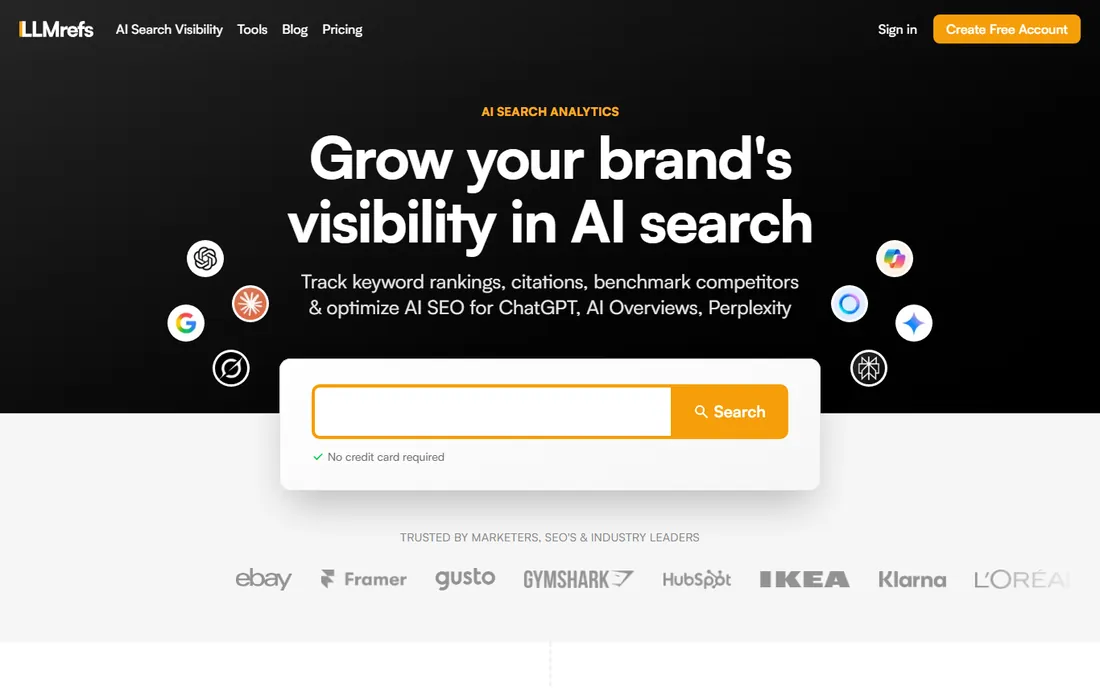
LLMrefs is the simplest tool on this list, and that is its selling point. It organizes Perplexity tracking around keywords rather than abstract prompt libraries, which feels familiar to anyone coming from classic rank tracking. You see the real snippets, the citations Perplexity used, and a straightforward score for how visible your brand is.
It will not replace an enterprise platform: engine coverage is narrower, there is no deep sentiment engine and the reporting is basic. But for a small business that just needs to know whether Perplexity mentions them and links to them, the free tier answers the question in an afternoon.
What we like- Freemium tracking with a simple scoring model
- Tracks Perplexity alongside ChatGPT, Gemini and Claude
- Shows real snippets and citations behind each mention
Watch out for- Fewer engines and shallower analytics than full platforms
- Smaller company with a shorter track record
#7
Goodie AI
Best for: Marketing teams connecting Perplexity visibility to content work
Visit higoodie.com
Starting priceSee website
Free planNo
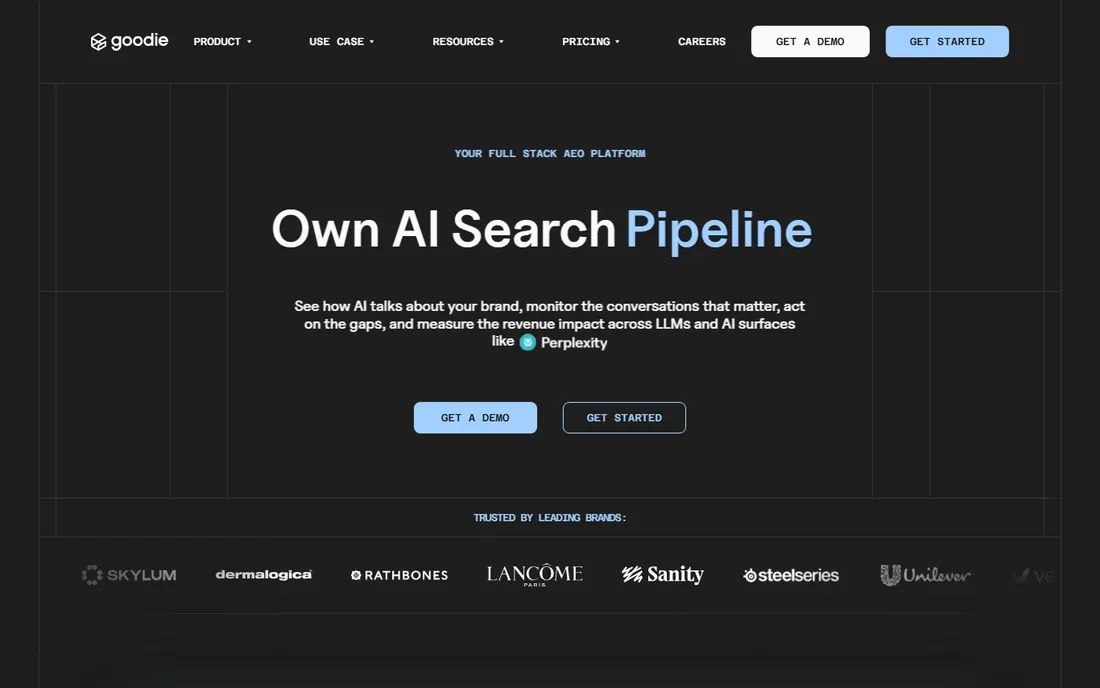
Goodie AI approaches Perplexity visibility from the content side. Rather than only reporting where you appear, it ties monitoring to the assets that earn citations: your content, your schema markup and your product catalog data. For brands whose Perplexity problem is "we are never cited," that diagnosis-to-action loop is more useful than another share-of-voice chart.
The downside is transparency. Pricing is not published, which means a sales conversation before you can budget, and the company is younger than Profound or the SEO-suite add-ons. If your team can run the content fixes a tool like this recommends, it earns its place; if you only want monitoring, simpler tools cost less.
What we like- AI-native platform covering monitoring, analysis and optimization
- Connects content, schema and catalog data to visibility
- Useful for ecommerce and product-led brands
Watch out for- Less established than the category leaders
- Pricing is not published on the site
#8
Brandlight
Best for: Brands that need to know which sources shape Perplexity answers
Visit brandlight.ai
Starting priceSee website
Free planNo
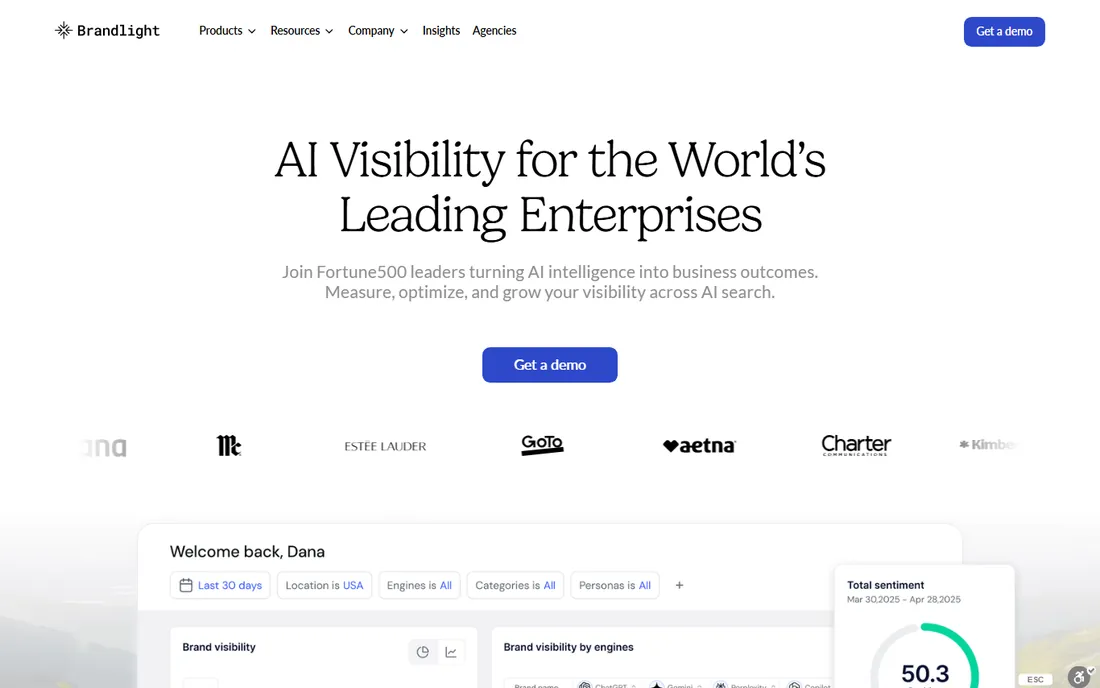
Brandlight's angle is source attribution. Perplexity answers are only as good as the sources they cite, and Brandlight scores which domains, forums, Wikipedia pages and PDFs actually shape what Perplexity says about your brand. That tells a PR or content team where to invest: getting cited on the three domains that feed your category's answers beats publishing ten blog posts nobody references.
It is a focused tool rather than a broad one, so expect lighter prompt management and reporting than the big platforms. Pair it with a cheaper tracker for day-to-day mention counts and use Brandlight for the quarterly question of where your Perplexity presence actually comes from.
What we like- Influence-source scoring shows which publishers and pages drive Perplexity mentions
- Response analysis breaks down how the brand is portrayed
- Competitive comparison built in
Watch out for- Narrower feature set than full GEO suites
- Less public pricing and review data
How we chose
We compared platforms that explicitly track Perplexity, not just ChatGPT with Perplexity mentioned in marketing copy. We weighed engine coverage, refresh cadence, citation-level detail, sentiment and competitor benchmarking, and the fit for different company sizes. Pricing and plan details come from each vendor's own pricing page; where a vendor does not publish pricing, we say so instead of guessing. We did not run hands-on trials for this guide; the assessment rests on documentation, feature lists, public reviews and how each product positions its Perplexity coverage.
What to look for before you buy
Start with the metric you actually need. Perplexity does not have positions the way Google does, so ask each vendor how they define a mention, a citation and share of voice, and whether you can see the underlying answer text. A tool that only gives you a score without the source answers is a black box you will stop trusting.
Next, check refresh cadence and prompt limits. Perplexity answers change as its index updates, so weekly tracking misses movement that daily tracking catches. Count the prompts you really need: brand terms, category questions and competitor comparisons add up fast, and most tools price by prompt volume.
Then confirm the engine mix. If Perplexity is your whole question, a focused tool like LLMrefs or Otterly AI is enough. If your buyers also ask ChatGPT and Gemini, a multi-engine platform saves you from buying two tools in six months.
Finally, ask about exports and alerts. The value of Perplexity tracking is catching a bad answer or a lost citation early. You want alerts when sentiment drops or a competitor displaces you, and clean exports for the monthly report your boss actually reads.
Common mistakes teams make with Perplexity tracking
The biggest one is tracking too few prompts. Five brand terms tell you nothing about the category questions buyers actually ask Perplexity, like "best CRM for a 20-person agency." Build your prompt library from real sales calls and support tickets, not from your homepage headlines.
The second mistake is treating Perplexity like Google. A citation in a Perplexity answer is closer to a referral than a ranking, and chasing it with keyword stuffing backfires. The pages Perplexity cites tend to be specific, well-structured and genuinely informative, so the fix for low visibility is usually better content, not more content.
The third is buying enterprise software for a startup problem. If you have one domain and ten important questions, a $29/month tracker and a spreadsheet beat a platform whose onboarding needs a solutions architect.
Frequently asked questions
Can I check Perplexity rankings for free?
Yes, to a point. LLMrefs offers a free tier and AthenaHQ has a free plan, both of which show basic Perplexity visibility. Free options show fewer prompts, fewer engines and slower refreshes, so they work for a first audit but not for ongoing monitoring.
Does Perplexity have keyword rankings like Google?
No. Perplexity returns cited answers, not a ranked list of ten links. The closest equivalents are mention frequency (how often your brand appears in answers), citation share (how often Perplexity links to your pages) and sentiment (how it describes you).
How often should I track Perplexity visibility?
Daily if Perplexity drives real pipeline or if competitors are active in your category; weekly is enough for a baseline. Perplexity's answers update as its source index changes, so monthly tracking misses most movement.
Which tool is cheapest for Perplexity tracking?
LLMrefs has a free tier and Otterly AI starts at a low monthly price. Both cover Perplexity in their base offering, which makes them the cheapest honest starting points for small teams.
Do these tools also track ChatGPT and Gemini?
Most do. Profound, Peec AI, Scrunch, AthenaHQ and Brandlight all cover multiple engines. If you only need Perplexity, say so on the sales call; some vendors will quote a narrower plan.
Can tracking tools improve my Perplexity visibility?
Tracking alone does not. Tools with an optimization layer (Scrunch, Goodie AI, AthenaHQ's recommendations) tell you what to fix: which sources to earn citations from, which content gaps to close, which answers misstate your brand. The improvement comes from acting on that, not from the dashboard.
Sources we checked (10)
- https://www.tryprofound.com
- https://www.otterly.ai
- https://www.peec.ai
- https://www.scrunch.com
- https://www.athenahq.ai
- https://www.llmrefs.com
- https://www.higoodie.com
- https://www.brandlight.ai
- https://github.com/mitdralla/awesome-ai-search
- https://www.allaboutai.com/geo/ai-answer-tracker/best-ai-search-visibility-platforms/
Is your product missing or out of date?
We review this list regularly. Vendors can request a listing, send updated pricing or ask about featured placement.

Shihab Mia · Founder, Rankite
Shihab has spent more than a decade helping SaaS and e-commerce brands grow through search. He writes Rankite's software buying guides from pricing pages, documentation and public user reviews. More about Shihab.