How we make this list: we compare pricing pages, product documentation and public user reviews. Rankite is independent; if a vendor ever pays for a featured spot, that listing is clearly labeled Partner.
Key takeaways
- An LLM visibility check answers three questions: are you mentioned, are you cited, and how are you described; every tool below reports all three across multiple engines.
- Otterly AI and LLMrefs-style budget tools work for a first audit; ongoing checking across ChatGPT, Claude, Gemini and Perplexity needs a multi-engine platform like Profound, Peec AI or AthenaHQ.
- The engines disagree with each other constantly, so single-engine checking gives false confidence; budget for at least three engines from the start.
- If you already pay for Ahrefs or Semrush, check their AI visibility add-ons before buying a standalone tool; the data is thinner but the marginal cost is low.
Quick comparison
| Tool | Best for | Starting price | Free plan |
|---|
 Profound Profound | Enterprise teams running structured visibility audits | See website | Free trial |
 Peec AI Peec AI | Teams that want checks reflecting real user sessions | See website | No |
 Scrunch Scrunch | Brands that want the check to come with fixes | See website | Free trial |
 AthenaHQ AthenaHQ | Teams that want scored audits plus next steps | See website | Yes |
 Goodie AI Goodie AI | Marketing teams linking visibility checks to content assets | See website | No |
 Otterly AI Otterly AI | Small teams starting cross-engine checks affordably | See website | No |
 Brandlight Brandlight | Audits focused on which sources shape model answers | See website | No |
 Ahrefs Brand Radar Ahrefs Brand Radar | SEO teams extending their existing Ahrefs investment | See website | No |
Is your product missing or out of date?
We review this list regularly. Vendors can request a listing, send updated pricing or ask about featured placement.
The best LLM visibility checking software
Ask ChatGPT, Claude, Gemini and Perplexity the same question about your category and you will get four different answers, with different brands mentioned and different sources cited. LLM visibility checking software runs those questions at scale, records what each model says about you, and turns it into a score you can track. Eight tools that do this job in 2026.
Starting priceSee website
Free planFree trial
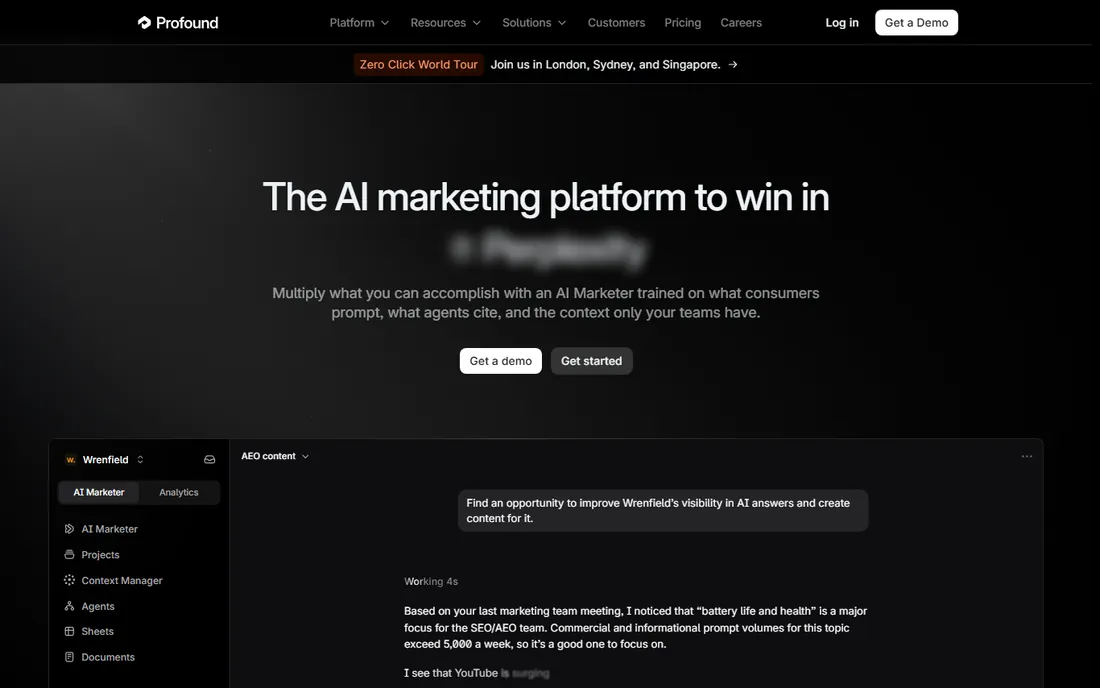
Profound is the audit-grade option. You define a prompt library (branded questions, category questions, competitor comparisons), and Profound runs it across ChatGPT, Perplexity, Gemini, Claude, Copilot and Google's AI surfaces on a schedule, capturing mentions, citations, sentiment and share of voice. The Prompt Volumes dataset is unique: it estimates how many real conversations happen behind each prompt, so you can prioritize the questions that actually carry demand.
The honest catch is the commercial model. This is enterprise software with enterprise pricing, and the entry tier covers fewer engines than the marketing suggests. But for a large brand that needs a defensible, repeatable visibility audit across every model that matters, Profound is the reference implementation.
What we like- Structured prompt runs across all major LLMs with citation and sentiment analysis
- Prompt Volumes estimates real demand behind each question
- Executive-ready reporting for large organizations
Watch out for- Enterprise pricing excludes small businesses
- The full engine set requires higher tiers
#2
Peec AI
Best for: Teams that want checks reflecting real user sessions
Visit peec.ai
Starting priceSee website
Free planNo
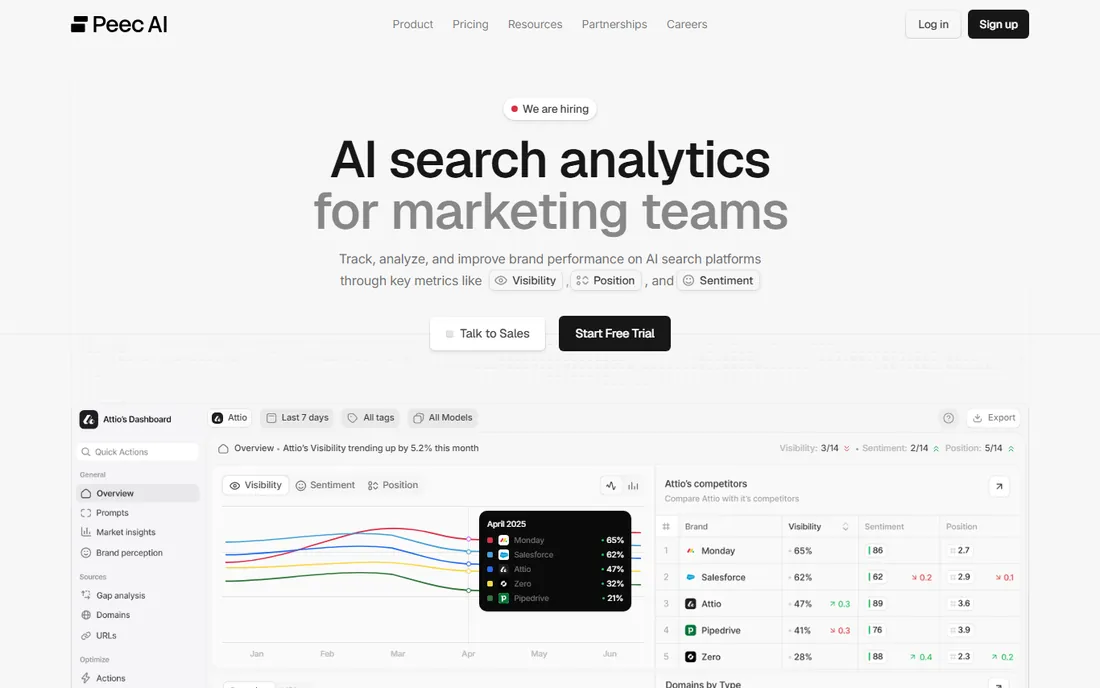
Peec AI's technical approach is its selling point: rather than hitting model APIs (whose outputs can differ from the consumer product), it reads the rendered interface of each engine by simulating real sessions. For visibility checking, that means the mention data reflects what a buyer actually sees on screen, which is the only version that matters commercially.
The pricing structure needs a careful read. The base plan covers a set number of prompts across a few models, and expanding coverage adds cost. Teams checking three or four engines will find it reasonable; teams wanting everything everywhere should compare total cost against Profound or AthenaHQ before deciding.
What we like- Simulates real user sessions instead of querying APIs, so results match what buyers see
- Daily tracking with prompt-level competitor views
- Clean regional benchmarking
Watch out for- Engine coverage on self-serve tiers is capped
- Per-engine add-ons complicate pricing
Starting priceSee website
Free planFree trial
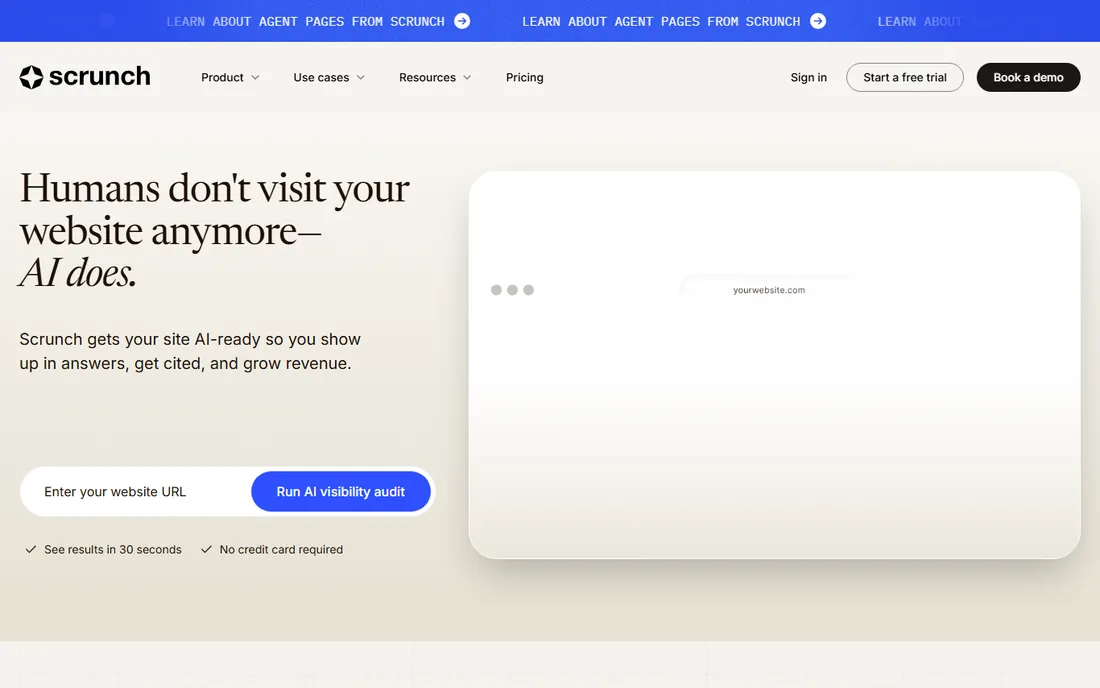
Scrunch pairs visibility checking with an Agent Experience Platform that acts on the findings: technical fixes, content recommendations and citation gap analysis. The checking side covers ChatGPT, Claude, Gemini, Perplexity and Google's AI surfaces with sentiment and brand-safety monitoring (including hallucination and misinformation detection), which matters when models state wrong things about your brand.
You pay for the full stack whether you use the fixing half or not. Teams with their own SEO resources may prefer a cheaper pure checker and handle remediation in-house. If you want one vendor accountable for both the audit and the improvement, Scrunch's combination is the strongest in this list.
What we like- Monitors all major LLMs and adds an optimization layer
- Tracks sentiment and misinformation risks, not just mentions
- SOC 2 certified for enterprise procurement
Watch out for- Higher entry price than pure checking tools
- The action tooling adds complexity if you only want measurement
Starting priceSee website
Free planYes
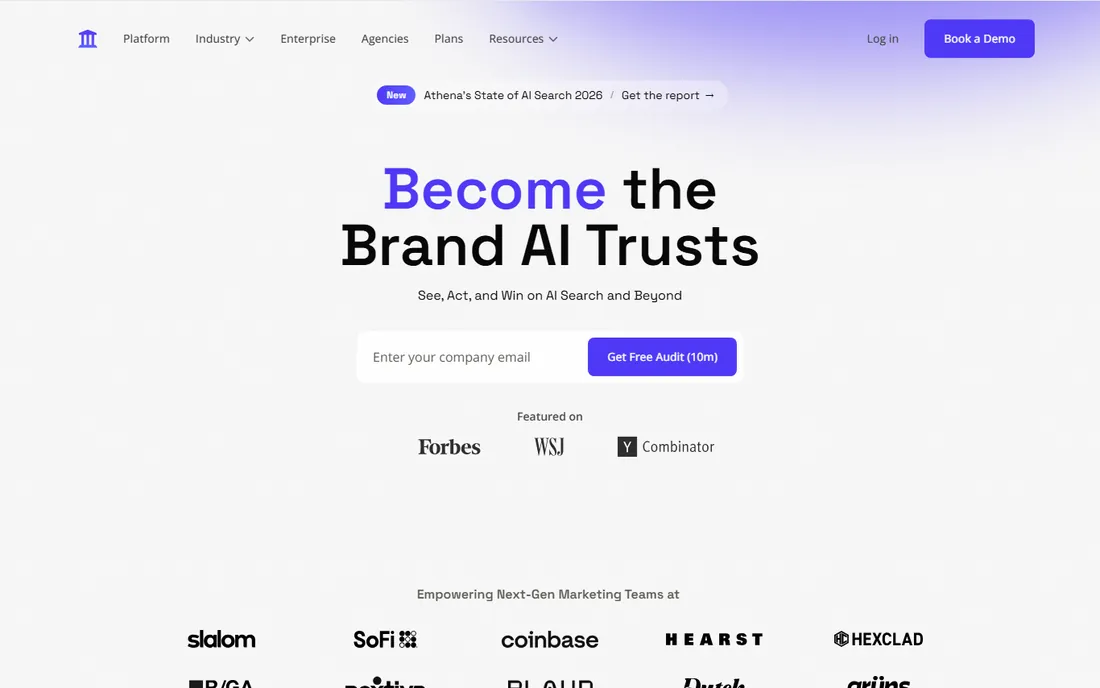
AthenaHQ structures visibility checking like a search console for AI: GEO scores, prompt-level analytics, competitor benchmarking and trend tracking across ChatGPT, Perplexity, Claude, Gemini, Copilot and Google AI surfaces. The hallucination detection is a standout for brand teams; when a model invents facts about your company, you find out from the dashboard instead of from a customer.
The credit system is the thing to model. Heavy prompt libraries and multi-region checks consume credits, so map real usage before assuming the sticker price. The free tier makes that evaluation honest. For teams that want the audit to produce a prioritized fix list, AthenaHQ's action layer earns its premium.
What we like- GEO scoring across up to eight LLMs with prompt analytics
- Hallucination detection flags false claims about your brand
- Free tier for genuine evaluation
Watch out for- Starter pricing sits above budget tools
- Credit-based usage needs active management
#5
Goodie AI
Best for: Marketing teams linking visibility checks to content assets
Visit higoodie.com
Starting priceSee website
Free planNo
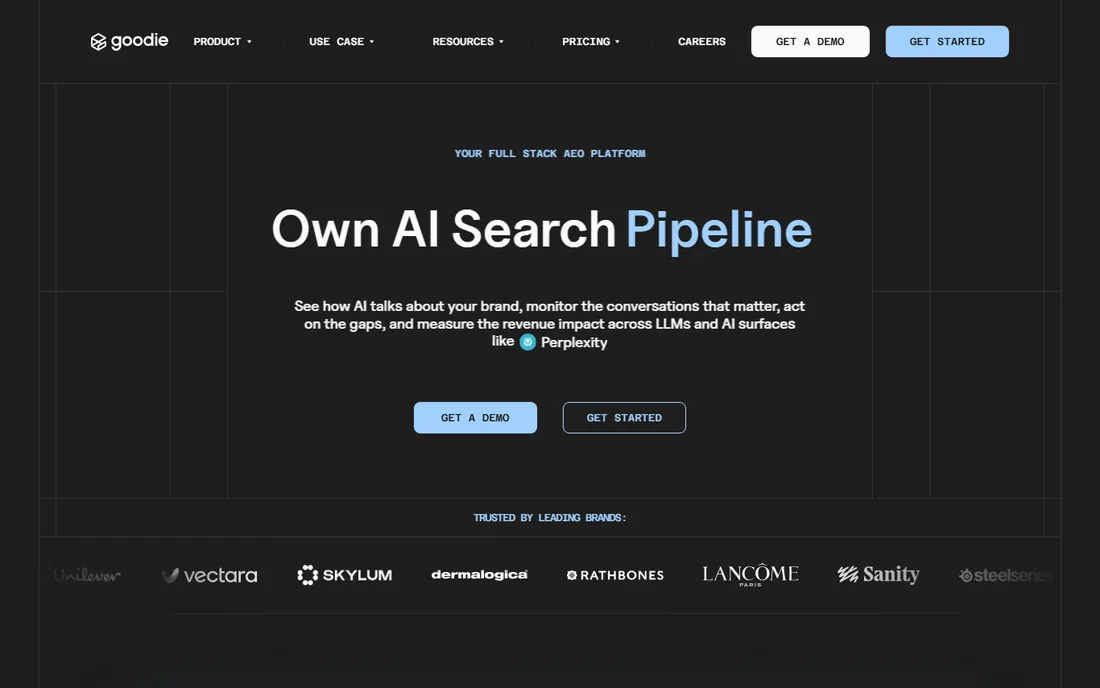
Goodie AI approaches checking from the content side: it monitors how your brand appears across AI engines and ties the findings to the assets that earn citations (your content, structured data, product catalogs). For brands whose audit reveals "we are never cited," that diagnosis-to-fix loop is more useful than another share-of-voice chart.
The downsides are transparency and tenure. Unpublished pricing means a sales conversation, and the company is younger than the category leaders. If your team can execute the content fixes it recommends, Goodie earns its place; if you only want the measurement, simpler tools cost less.
What we like- Connects visibility findings to content, schema and catalog data
- AI-native platform covering monitoring through optimization
- Useful for product and ecommerce brands
Watch out for- Younger company with a thinner track record
- Pricing not published
#6
Otterly AI
Best for: Small teams starting cross-engine checks affordably
Visit otterly.ai
Starting priceSee website
Free planNo
Otterly AI is the budget on-ramp for multi-engine checking. Setup takes minutes, the interface stays readable for non-SEOs, and the base engines cover the surfaces most buyers actually use. For a first year of LLM visibility monitoring, the value per dollar is hard to beat, which is why agencies like it for client reporting.
The add-on structure is the catch: expanding beyond the base four engines costs more on every tier, and entry prompt caps are tight. There is no traffic attribution, so you learn you were mentioned but not what it was worth. As a starting point, though, Otterly is the most accessible serious option here.
What we like- Low entry price with ChatGPT, AI Overviews, Perplexity and Copilot in the base plan
- Brand mentions, citations and share of voice tracked simply
- Light, readable reporting
Watch out for- Gemini, Claude and AI Mode cost extra as add-ons
- Tight prompt caps at the entry level
Starting priceSee website
Free planNo
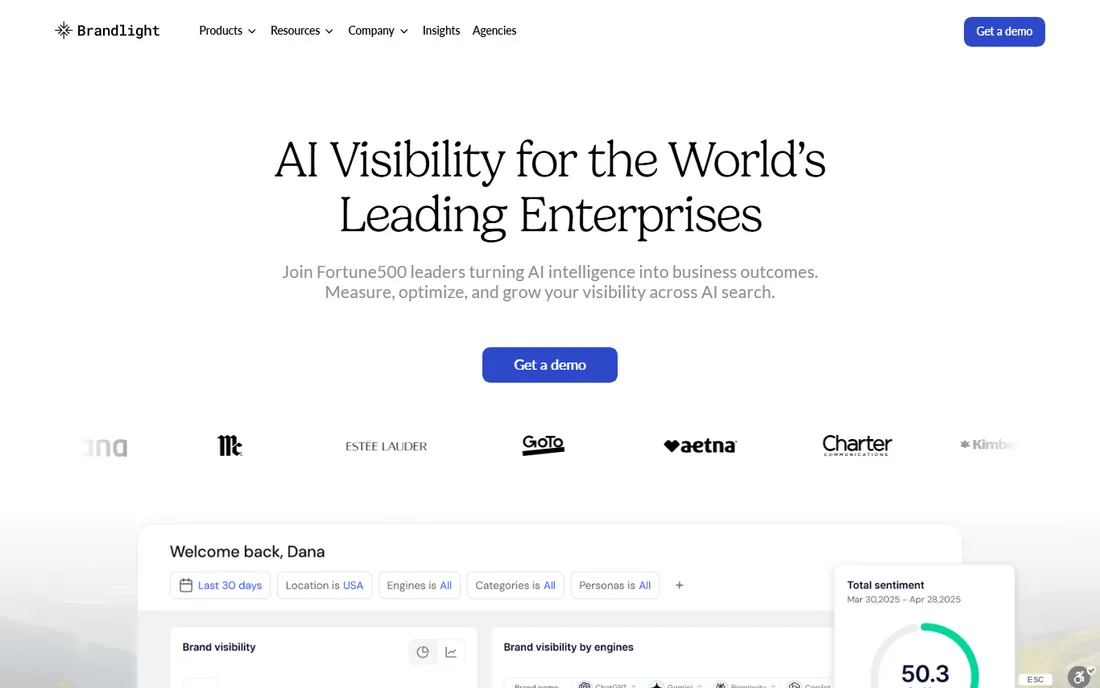
Brandlight's angle is source attribution: LLMs do not invent brand opinions from nothing; they synthesize publishers, forums, Wikipedia and PDFs. Brandlight scores which of those sources actually shape what ChatGPT, Gemini, Perplexity and Copilot say about you. That tells a content or PR team exactly where to invest: earning citations on the three domains that feed your category beats publishing into the void.
It is a focused audit tool rather than a broad monitoring suite, so expect lighter prompt management and reporting. Use it for the quarterly question of where your visibility comes from, paired with a cheaper tracker for day-to-day mention counts.
What we like- Influence-source scoring reveals which publishers drive mentions
- Response analysis shows how the brand is portrayed
- Competitor comparison built in
Watch out for- Narrower feature set than full platforms
- Less public pricing and review data
#8
Ahrefs Brand Radar
Best for: SEO teams extending their existing Ahrefs investment
Visit ahrefs.com
Starting priceSee website
Free planNo
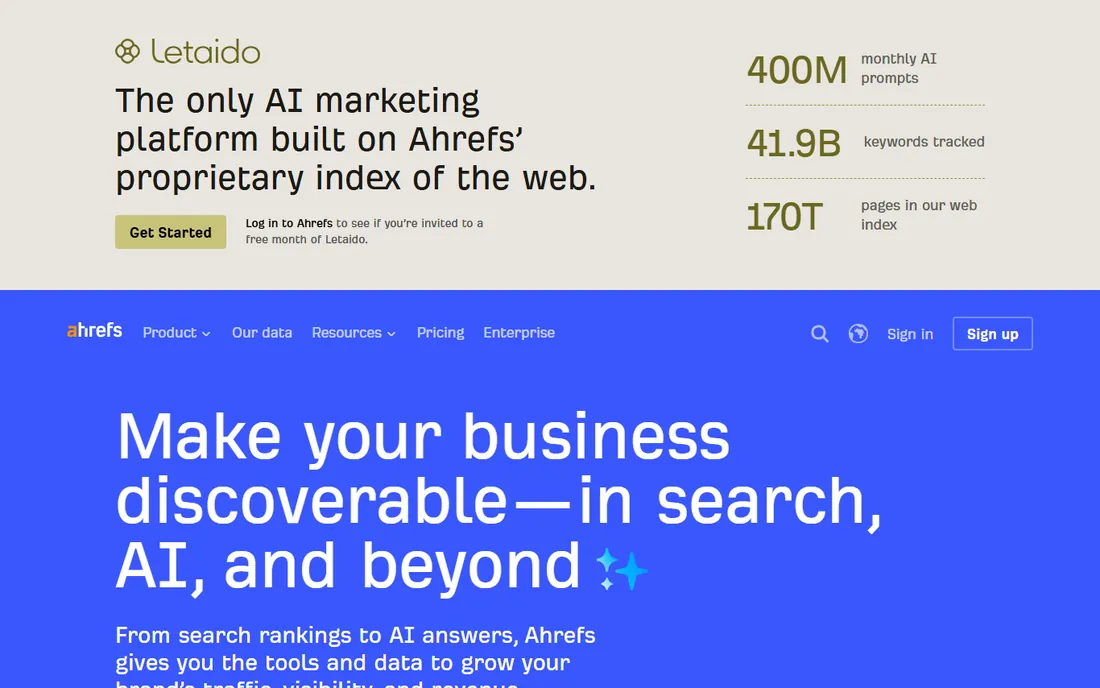
Ahrefs Brand Radar is the pragmatic choice for teams already paying for Ahrefs. It adds AI mention, citation and competitor tracking across major AI surfaces to the SEO platform you already use, and it connects AI visibility to the backlink and content data Ahrefs is famous for. No new vendor, no new login, no new procurement.
The honest limitation is depth. Dedicated platforms go further on prompt management, sentiment, regional tracking and optimization guidance. If AI visibility is a side question inside a broader SEO program, Brand Radar is the efficient answer; if it is the main question, buy a dedicated tool.
What we like- Brand mention and citation tracking across AI surfaces inside the Ahrefs suite
- Pairs AI visibility with the industry's deepest backlink and keyword data
- Familiar workflow for SEO teams
Watch out for- Requires an Ahrefs subscription, so standalone cost is high
- AI tracking depth trails the dedicated platforms
How we chose
We compared platforms that check brand visibility across multiple LLMs (not just one engine), weighing engine coverage, mention versus citation detail, sentiment analysis, refresh cadence and the fit for different team sizes. We included one SEO-suite add-on because many buyers already own it. Pricing comes from each vendor's own pricing page; unverifiable plans are marked "See website." No hands-on testing was performed.
What to check before you buy
Define your prompt library before the demo. The quality of any visibility check depends on the questions: brand terms, category questions ("best CRM for agencies"), comparison prompts and problem prompts. A tool is only as good as the prompts you feed it, so bring fifty real ones to every trial.
Verify engine coverage against your buyers. If your customers ask ChatGPT and Perplexity, you need both; a tool covering only one gives false confidence. Ask whether tracking uses real sessions or APIs, because the numbers can differ.
Check how mentions, citations and sentiment are defined. One vendor's "visibility score" is not another's; ask to see the underlying answer text behind the score. Black-box scores are where trust goes to die.
Finally, confirm alerts and exports. The value of checking is catching a lost citation or a bad answer early; you want notifications when sentiment drops and clean exports for reporting.
Frequently asked questions
What is LLM visibility checking?
It is the practice of systematically asking large language models (ChatGPT, Claude, Gemini, Perplexity) questions about your brand and category, then measuring mentions, citations, sentiment and share of voice over time.
How is this different from rank tracking?
Rank tracking measures positions on search result pages. LLM visibility checking measures presence inside AI-generated answers: whether you are mentioned, cited and described favorably, which has no "position" in the classic sense.
How often should I check LLM visibility?
Weekly is the minimum useful cadence; daily suits competitive categories or brands where AI answers drive pipeline. Model outputs shift constantly, so monthly checks miss most movement.
Can free tools check LLM visibility?
Partially. AthenaHQ offers a free tier and some platforms have limited free views. Free options cover fewer prompts and engines with slower refreshes; they work for a first audit, not ongoing monitoring.
Which LLMs should I track?
At minimum ChatGPT and Perplexity, plus Google AI Overviews if search traffic matters to you. Add Claude, Gemini and Copilot if your buyers use them. The right set depends on where your customers ask questions.
Do these tools improve visibility or just measure it?
Most measure. Tools with optimization layers (Scrunch, Goodie AI, AthenaHQ's recommendations) tell you what to fix: citation gaps, content weaknesses, misinformation. Improvement comes from acting on the findings.
Sources we checked (9)
- https://www.tryprofound.com
- https://www.peec.ai
- https://www.scrunch.com
- https://www.athenahq.ai
- https://www.higoodie.com
- https://www.otterly.ai
- https://www.brandlight.ai
- https://www.ahrefs.com
- https://github.com/mitdralla/awesome-geo
Is your product missing or out of date?
We review this list regularly. Vendors can request a listing, send updated pricing or ask about featured placement.

Shihab Mia · Founder, Rankite
Shihab has spent more than a decade helping SaaS and e-commerce brands grow through search. He writes Rankite's software buying guides from pricing pages, documentation and public user reviews. More about Shihab.