How we make this list: we compare pricing pages, product documentation and public user reviews. Rankite is independent; if a vendor ever pays for a featured spot, that listing is clearly labeled Partner.
Key takeaways
- Semrush and Ahrefs are the all-in-one visibility trackers; SE Ranking is the value alternative with strong rank tracking.
- Local visibility needs specialists: BrightLocal for agencies, Whitespark for citations and local rank tracking.
- AccuRanker and Nightwatch are dedicated rank trackers for teams that want precision without suite bloat.
- Moz remains relevant for its metrics and local tools; match suite breadth against your actual workflow.
Quick comparison
| Tool | Best for | Starting price | Free plan |
|---|
 Semrush Semrush | All-in-one search visibility tracking | See website | Free trial |
 Ahrefs Ahrefs | Visibility tracking with best-in-class backlink data | See website | Free trial |
 SE Ranking SE Ranking | Accurate rank tracking at a fair price | See website | Free trial |
 Moz Moz | Metrics-led SEO with trusted authority scores | See website | Free trial |
 BrightLocal BrightLocal | Agencies managing local search visibility | See website | Free trial |
 Whitespark Whitespark | Local rank tracking and citation building | See website | Limited |
 AccuRanker AccuRanker | Teams wanting the fastest, most precise rank data | See website | Free trial |
 Nightwatch Nightwatch | Visual rank tracking with elegant reporting | See website | Free trial |
Is your product missing or out of date?
We review this list regularly. Vendors can request a listing, send updated pricing or ask about featured placement.
The best visibility tracking software
Search visibility tracking answers a simple question daily: where do we rank, for what, and is it improving? The tools split into all-in-one suites (visibility plus everything else) and dedicated rank trackers (precision instruments). Eight options across both.
Starting priceSee website
Free planFree trial
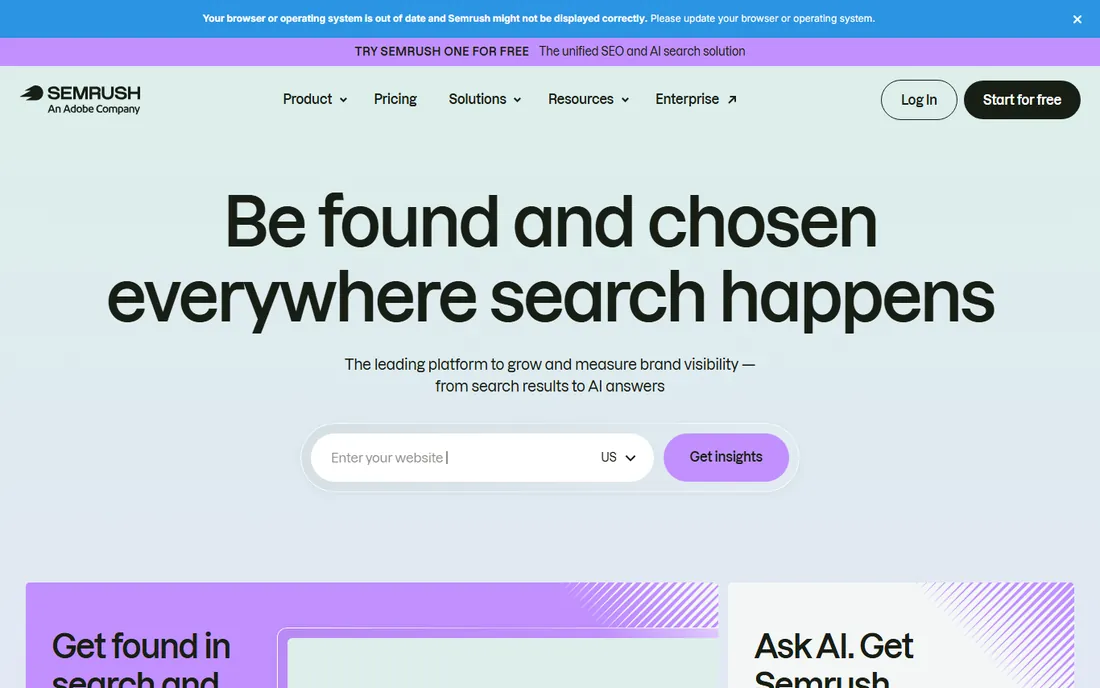
Semrush's Position Tracking and visibility metrics turn rankings into trends: daily updates, SERP feature tracking, competitor movement and cannibalization alerts, inside the broader SEO and PPC suite. Marketing teams get visibility in context rather than as an isolated number.
The honest cost is the suite. Rank-tracking-only buyers pay for tools they may not use, and higher tiers get expensive. But for teams already doing SEO broadly, Semrush's visibility tracking integrated with research and auditing is the efficient choice.
What we like- Visibility metrics, position tracking and competitive intelligence in one
- Huge keyword database
- Strong local add-ons
Watch out for- Pricing climbs with usage
- Breadth can overwhelm rank-tracking-only needs
#2
Ahrefs
Best for: Visibility tracking with best-in-class backlink data
Visit ahrefs.com
Starting priceSee website
Free planFree trial
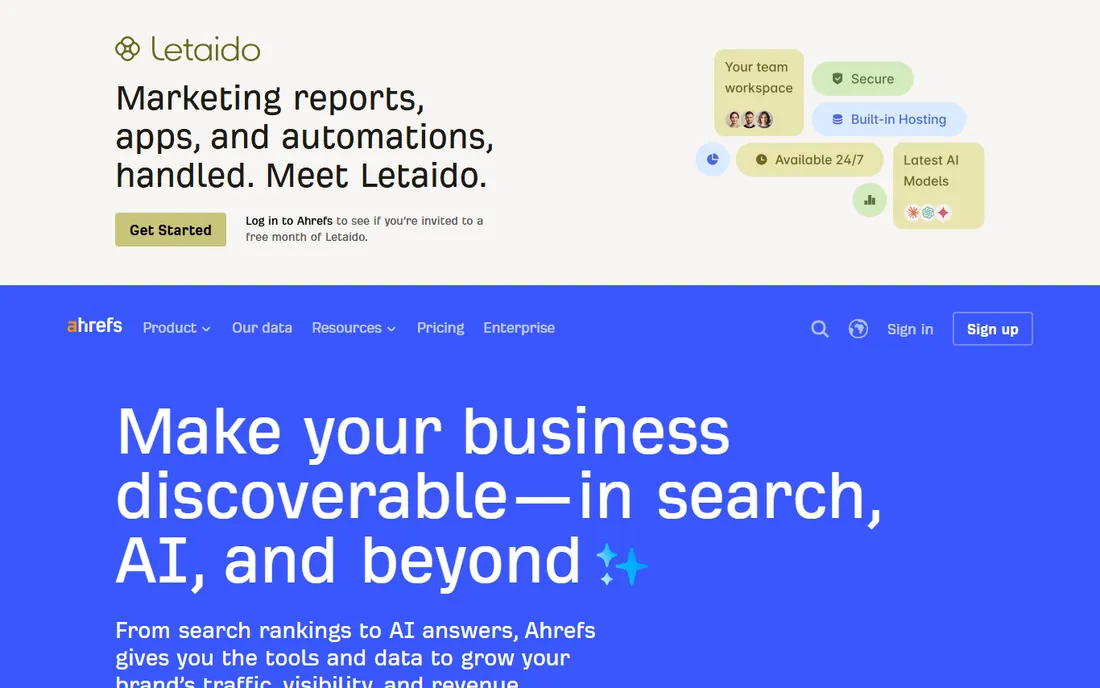
Ahrefs pairs rank tracking with its legendary backlink and content data, so visibility changes can be investigated against link and content shifts in the same session. The interface is the category's cleanest, and data quality is consistently high.
The honest pricing note is the premium. Ahrefs costs more than value alternatives, and plan limits need attention at scale. But for SEO teams where visibility, links and content are one workflow, the integration justifies the price.
What we like- Excellent rank tracking alongside the industry's best backlink index
- Clean interface
- Reliable data updates
Watch out for- Premium pricing
- Credit-based limits on some plans
Starting priceSee website
Free planFree trial
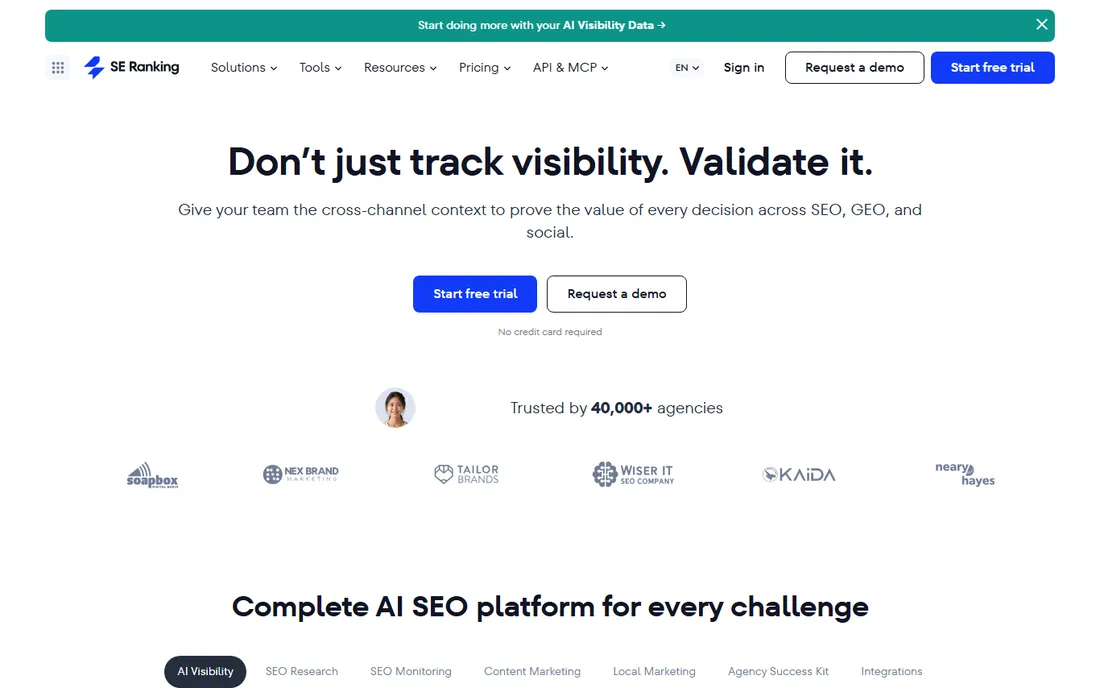
SE Ranking built its reputation on rank tracking done well: accurate daily updates across search engines, local tracking, SERP feature monitoring, wrapped in a complete (if less famous) SEO suite. Agencies appreciate the white-label reporting and honest pricing.
The honest comparison is scale. Keyword databases and backlink indexes trail the two giants in some regions. But for rank-tracking-first buyers who want suite value without suite pricing, SE Ranking's proposition is compelling.
What we like- Strong multi-engine rank tracking accuracy
- Full SEO suite included
- Transparent, affordable pricing
- White-label reporting
Watch out for- Brand smaller than the giants
- Database depth trails Semrush/Ahrefs in some markets
#4
Moz
Best for: Metrics-led SEO with trusted authority scores
Visit moz.com
Starting priceSee website
Free planFree trial
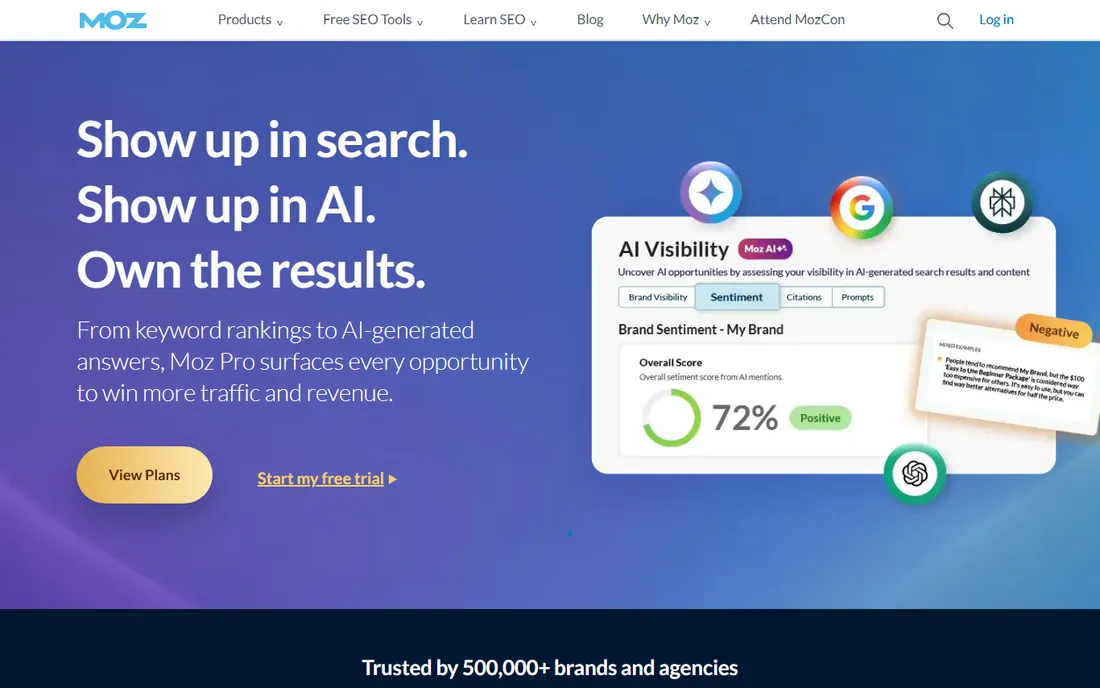
Moz's rank tracking sits inside a respected SEO platform: keyword tracking, site audits and the Domain Authority metrics the industry still quotes. Moz Local extends the story into listings management for local visibility.
The honest assessment is momentum. Competitors ship faster and broader; Moz trades on trust and clarity rather than feature velocity. But teams that value understandable metrics and solid fundamentals over the newest modules still find Moz a comfortable home.
What we like- Domain Authority remains an industry shorthand
- Solid rank tracking
- Moz Local for listings
- Respected educational resources
Watch out for- Product pace trails hungrier competitors
- Suite breadth less than Semrush
Starting priceSee website
Free planFree trial
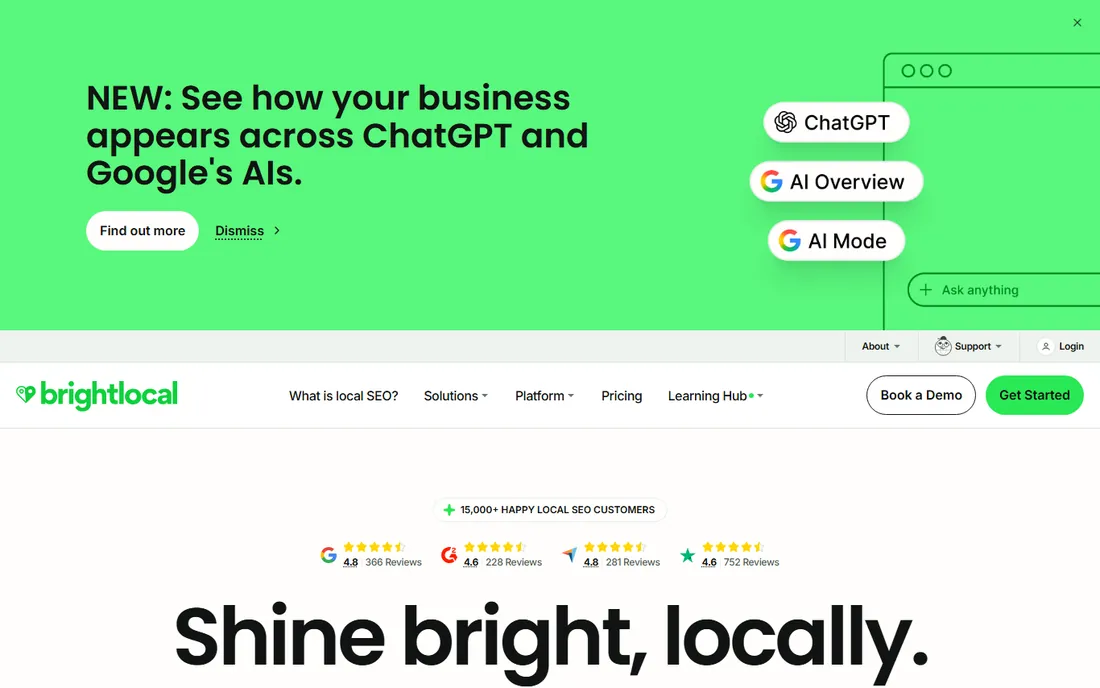
BrightLocal is the local visibility specialist: track local and mobile rankings, manage citations, monitor reviews, audit Google Business Profiles, all with agency-friendly white-label reports. For local SEO practitioners, it is the daily driver.
The honest boundary is right in the name. National organic campaigns need a different tool; BrightLocal does local, completely. Agencies and multi-location brands doing local search should shortlist it first.
What we like- Complete local SEO platform: rank tracking, citations, reviews, GBP audits
- White-label reporting agencies love
- Bootstrapped and focused
Watch out for- Local-only
- National/international organic tracking is not the job
Starting priceSee website
Free planLimited
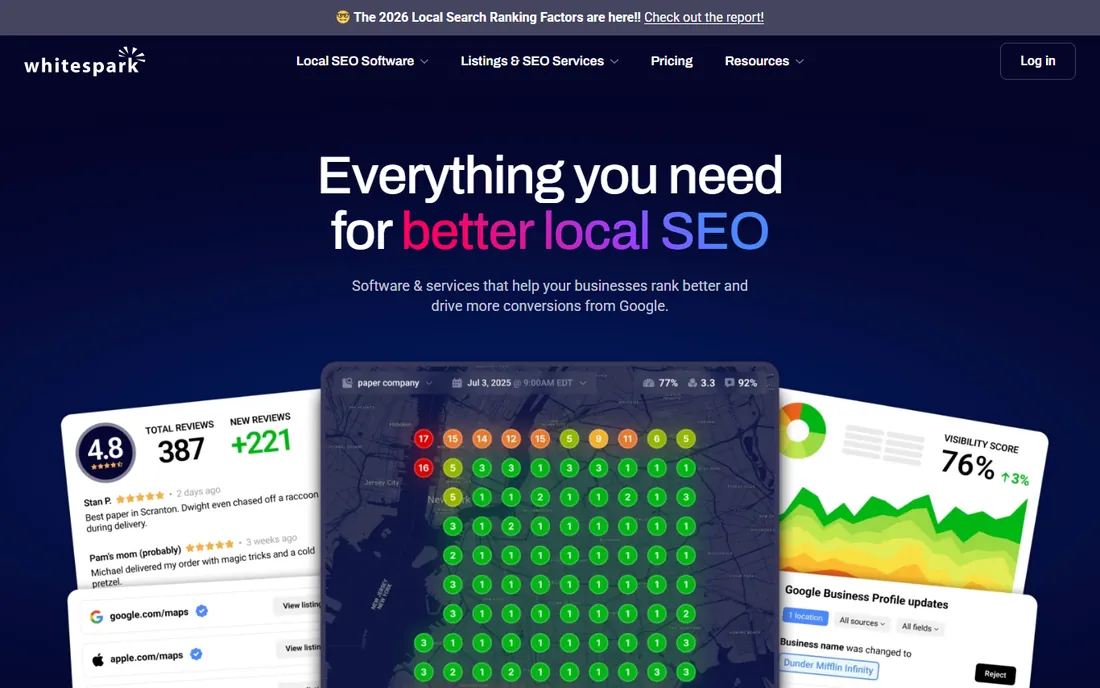
Whitespark's two flagships define local SEO workflows: the Local Rank Tracker shows organic rankings across local formats (maps, local pack, citations), and the Citation Finder remains the standard for citation gap analysis. Affordable, focused, effective.
The honest comparison is breadth. BrightLocal offers more modules; Whitespark offers sharper individual tools. Local SEO specialists often use both. For citation work and local rank precision specifically, Whitespark is the connoisseur's choice.
What we like- Local Rank Tracker with maps and local pack insight
- Local Citation Finder is the category standard
- Affordable and focused
Watch out for- Narrower platform than BrightLocal
- Canadian roots, global service
Starting priceSee website
Free planFree trial
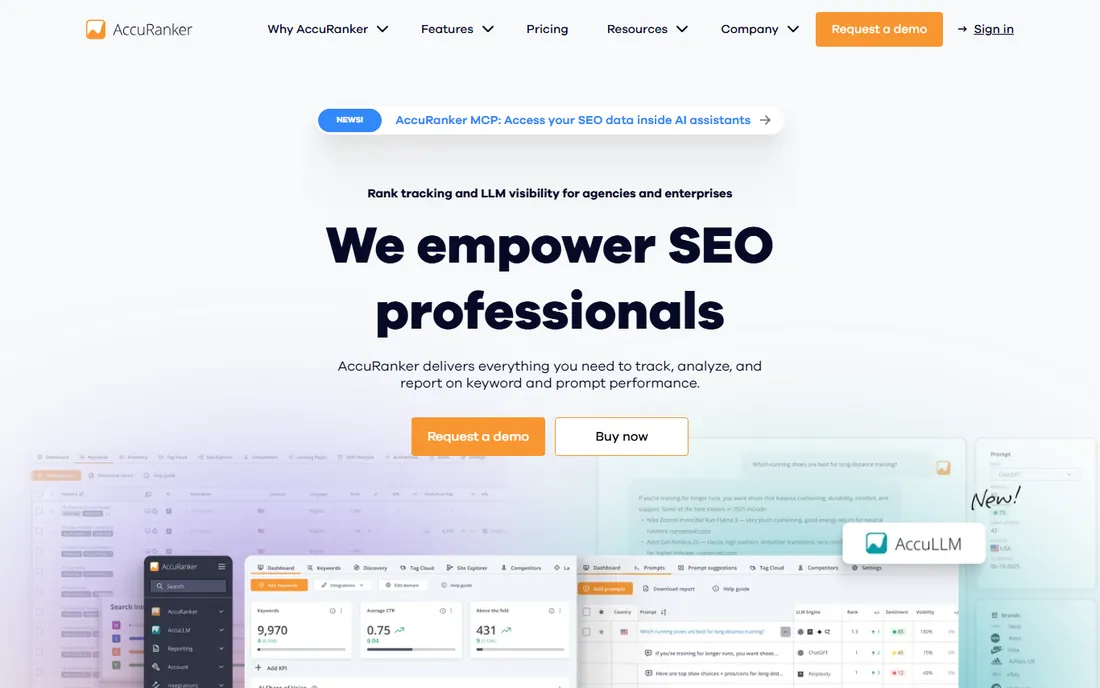
AccuRanker is the precision instrument: a dedicated rank tracker engineered for speed and accuracy, with on-demand data refreshes that suite tools do not offer. Agencies and enterprises tracking thousands of keywords get data they can trust intraday.
The honest framing is specialization. There is no site audit or backlink index here; you buy the best rank tracking available. Teams that tried to use suites as trackers and found them wanting understand exactly why AccuRanker exists.
What we like- High-performance rank tracking with on-demand updates
- Accurate, fast, up-to-date data
- Built for agencies and enterprises
Watch out for- Dedicated tracker, not a suite
- Pricing reflects the performance positioning
Starting priceSee website
Free planFree trial
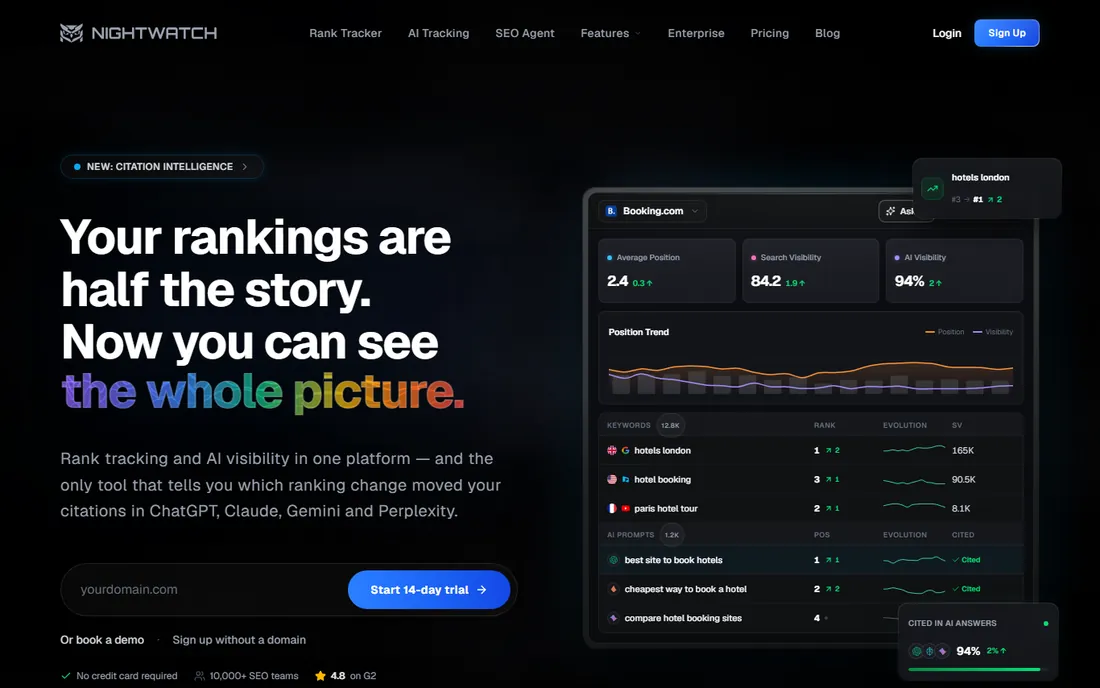
Nightwatch combines precise rank tracking with genuinely pleasant data visualization: visibility trends, local grids and competitor tracking presented in reports clients understand. Per-keyword pricing fits focused campaigns.
The honest limits are scale and breadth. It is a tracker with reporting, not a full SEO suite, and the vendor is smaller than the giants. But for teams that live in rank data and present it to stakeholders, Nightwatch's clarity is a real advantage.
What we like- Modern interface with strong data visualization
- Precise local and global tracking
- Per-keyword pricing suits focused campaigns
Watch out for- Smaller vendor
- Suite features thinner than all-in-ones
How we chose
We covered both visibility-tracking approaches (all-in-one suites and dedicated rank trackers) plus the local-visibility specialists the topic demands. We weighed data accuracy, update frequency, reporting quality, pricing fairness and honest fit for different SEO workflows. Pricing comes from each vendor's own pricing page; unverifiable plans are marked "See website." No hands-on testing was performed.
What to look for before you buy
Check data accuracy against your own rankings. During trials, compare tracked positions with manual checks and Search Console data; systematic discrepancies are disqualifying.
Verify local tracking granularity. Local visibility needs zip-code or coordinate-level precision; confirm the tool tracks at your required granularity, not just city level.
Assess the reporting workflow. Who consumes the data? White-label, scheduled, client-ready reports separate agency tools from in-house dashboards; match the output to the audience.
Finally, price the keyword volume honestly. Per-keyword and tiered plans produce very different costs at 100 versus 100,000 keywords; model your actual tracking needs including competitors.
Reading visibility data without fooling yourself
Visibility metrics are easy to misread, and the misreadings lead to bad decisions. A few recurring traps show up across teams using the tools in this guide. Knowing them in advance keeps the data honest.
The first trap is treating visibility score as a goal. Aggregated visibility indices blend rankings, search volume and position weights into one number that moves for reasons unrelated to your work: algorithm updates, SERP layout changes, seasonality. Use the score as a health indicator and investigate the underlying keyword movements before reacting. A dropping score with stable conversions is a reporting artifact, not a crisis.
The second trap is ignoring SERP feature theft. Your blue-link ranking can hold steady while clicks collapse because AI Overviews, featured snippets or video carousels absorb the clicks above you. Tools that track SERP features alongside rankings reveal this; tools that only track positions hide it. When traffic drops but rankings hold, the answer is almost always in the SERP layout, and the fix is winning the feature, not pushing the ranking one spot higher.
The third trap is national averages hiding local reality. For businesses with physical locations or local service areas, national rank tracking is nearly meaningless. A keyword can rank first nationally and be invisible in the cities that matter. Local rank tracking (grid-based, like Local Falcon, or city-level) is a separate discipline with separate tools. If local drives your revenue, budget for it explicitly.
The fourth trap is confusing correlation with causation in visibility changes. Rankings move for dozens of reasons: competitor content, algorithm shifts, site changes, link velocity. Before crediting (or blaming) a specific action, check the timeline against known updates and competitor movements. The tools give you the data; the discipline of checking alternatives is on you.
The fifth trap is keyword set rot. The keywords you tracked two years ago may not be the keywords that matter now: search behavior shifts, new competitors create new terms, AI search changes query patterns. Audit your tracked keyword set quarterly. Drop dead terms, add emerging ones, and make sure the set still represents how buyers search. Stale keyword sets produce confident, irrelevant reporting.
A practical reporting rhythm: weekly automated alerts for big movers, monthly review of trends by page type and intent, quarterly keyword set audit and competitor comparison. That cadence turns tracking from a dashboard nobody opens into decisions about content, technical fixes and SERP feature strategy.
Frequently asked questions
What is search visibility tracking?
Monitoring your website's rankings across keywords and search engines over time, usually aggregated into visibility scores that show whether overall search presence is growing or shrinking.
Rank tracker vs SEO suite: which do I need?
Dedicated trackers (AccuRanker, Nightwatch) for precision rank data; suites (Semrush, Ahrefs, SE Ranking) when visibility is one part of broader SEO work. Many teams use both.
How often should rankings be checked?
Daily for competitive or volatile keywords; weekly suffices for stable portfolios. On-demand updates (AccuRanker) matter during launches, migrations and algorithm updates.
Why do rank trackers disagree with each other?
Different data centers, personalization handling, update timing and localization produce variance. Pick one source of truth and track trends within it rather than comparing absolutes across tools.
What is local rank tracking?
Tracking rankings at specific geographic granularities (zip code, coordinates) for location-based searches, including map pack positions. Essential for local businesses; specialists like BrightLocal and Whitespark do it best.
Do I need AI search visibility tracking too?
Increasingly yes: buyers ask AI assistants, not just Google. Traditional rank trackers miss this; consider adding an AI-visibility tool alongside classic rank tracking for complete coverage.
Sources we checked (8)
- https://www.semrush.com
- https://www.ahrefs.com
- https://www.seranking.com
- https://www.moz.com
- https://www.brightlocal.com
- https://whitespark.ca
- https://www.accuranker.com
- https://www.nightwatch.io
Is your product missing or out of date?
We review this list regularly. Vendors can request a listing, send updated pricing or ask about featured placement.

Shihab Mia · Founder, Rankite
Shihab has spent more than a decade helping SaaS and e-commerce brands grow through search. He writes Rankite's software buying guides from pricing pages, documentation and public user reviews. More about Shihab.