How we make this list: we compare pricing pages, product documentation and public user reviews. Rankite is independent; if a vendor ever pays for a featured spot, that listing is clearly labeled Partner.
Key takeaways
- Pipeline management is about deal execution, not contact storage; the best tools make the next action obvious for every deal (Pipedrive, Close).
- Small sales teams should start with Pipedrive or HubSpot's free CRM; both make pipelines visible without implementation projects.
- Enterprises needing custom stages, forecasting models and territory structures should compare Salesforce and HubSpot's paid tiers against their process complexity.
- The number-one failure mode is stale pipelines; pick the tool your reps will actually update, which usually means the simplest one that fits.
Quick comparison
| Tool | Best for | Starting price | Free plan |
|---|
 Pipedrive Pipedrive | Sales teams that run on visual pipelines | See website | No |
 HubSpot HubSpot | Teams wanting pipeline management from a free start | See website | Yes |
 Salesforce Salesforce | Enterprises with complex, multi-team pipelines | See website | No |
 Close Close | Inside sales teams moving deals by phone and email | See website | No |
 Freshsales Freshsales | SMB pipelines with communication built in | See website | Yes |
 Copper Copper | Google Workspace teams wanting pipeline without friction | See website | No |
 Zoho CRM Zoho CRM | Budget teams wanting real pipeline depth | See website | Yes |
 Insightly Insightly | Teams where deals become projects | See website | Yes |
Is your product missing or out of date?
We review this list regularly. Vendors can request a listing, send updated pricing or ask about featured placement.
A sales pipeline is a promise about the future: these deals, at these stages, closing on these dates. Pipeline management tools make that promise visible, keep deals moving and tell you which forecasts to believe. These eight are judged on pipeline execution specifically: stage design, activity management, forecasting honesty and whether reps keep them current.
Starting priceSee website
Free planNo
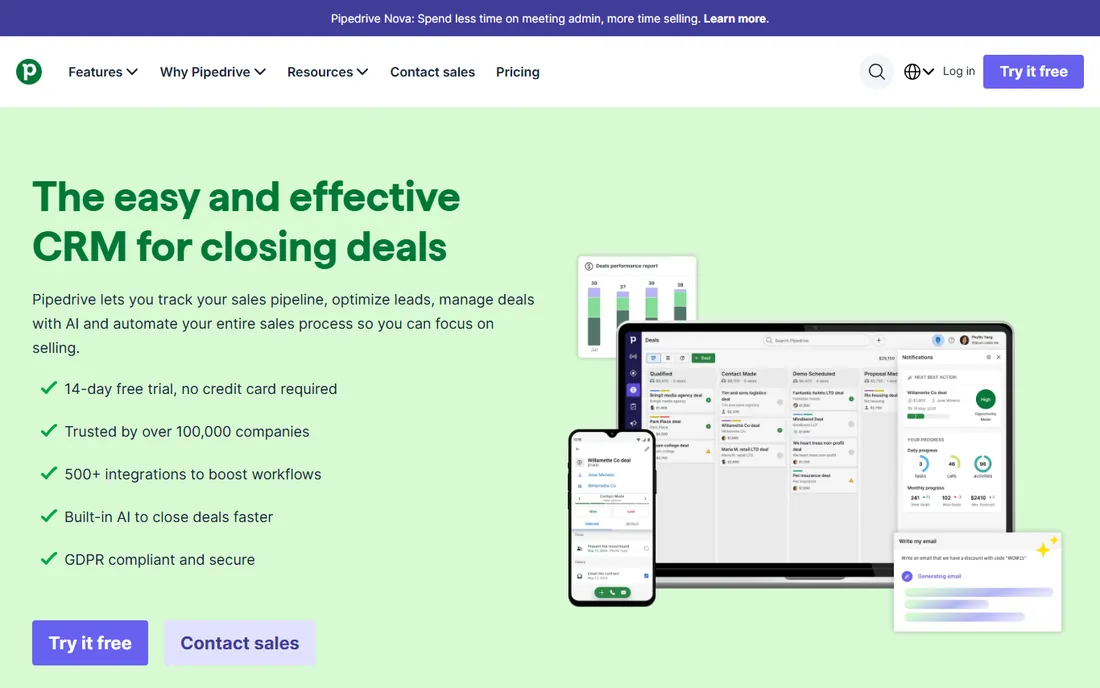
Pipedrive is the pipeline purist's tool. Deals sit in visual stages, each with the next required activity visible, and the methodology (activities drive deals forward) is baked into the workflow rather than bolted on. Reps adopt it because it tells them what to do today, and managers get honest pipeline views because updating is nearly frictionless.
The honest limits are analytical. Forecasting is straightforward rather than sophisticated, and enterprises with complex overlay structures need more. But for the core job (keep every deal moving, see the pipeline truthfully), Pipedrive's focused design beats suites that treat the pipeline as one tab among fifty.
What we like- The clearest visual pipeline in the category
- Activity-based selling keeps deals moving
- High rep adoption with minimal training
Watch out for- Forecasting and reporting depth trail enterprise tools
- No free tier
#2
HubSpot
Best for: Teams wanting pipeline management from a free start
Visit hubspot.com
Starting priceSee website
Free planYes
HubSpot's free CRM gives small teams real pipeline management for nothing: customizable stages, deal records, task automation and basic reporting. As teams grow, paid Sales Hub adds sequences, forecasting, playbooks and CPQ, all on the shared database that keeps marketing and service aligned.
The pricing curve is the watch-out: free to start, expensive to scale. Model the three-year cost at projected headcount. But for pipeline management specifically, HubSpot's combination of a free entry, easy automation and genuine scalability makes it the safest all-around pick.
What we like- Free CRM includes deal pipelines
- Automation moves deals and triggers tasks
- Scales from startup to enterprise on one platform
Watch out for- Paid tiers escalate with contacts and seats
- Advanced forecasting needs higher plans
Starting priceSee website
Free planNo
Salesforce handles pipeline complexity nothing else touches: multiple sales processes by segment, overlay and channel teams, custom forecasting models, territory management and approval chains. Einstein adds AI deal scoring and forecast predictions on top. For large sales organizations, the pipeline is a system, and Salesforce is the system builder.
The honest cost is everything around the license: implementation partners, ongoing administration, add-ons. Small teams buy prestige and drown. Buy Salesforce when your pipeline genuinely has the complexity to need it, and staff the administration it demands.
What we like- Unlimited pipeline customization: stages, processes, forecasting models
- Einstein AI for deal scoring and forecasting
- Massive ecosystem
Watch out for- Implementation needs admins or consultants
- Total cost far exceeds license price
#4
Close
Best for: Inside sales teams moving deals by phone and email
Visit close.com
Starting priceSee website
Free planNo
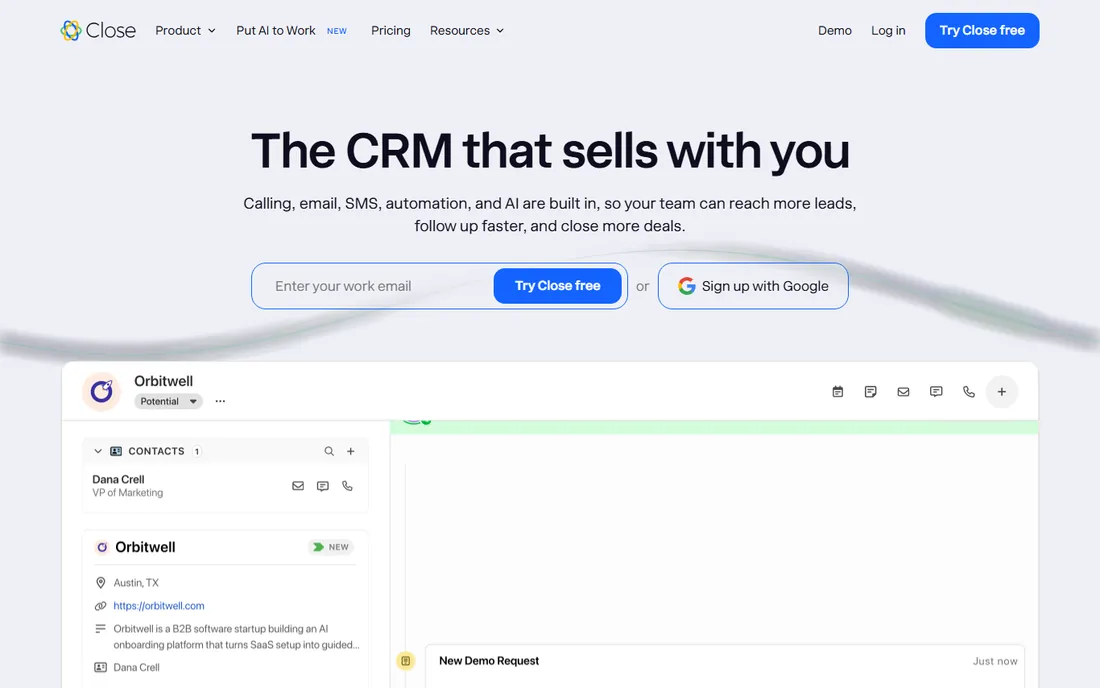
Close's pipeline is built for velocity: every deal view includes the calling, emailing and SMS tools to advance it, and activities log themselves so the pipeline stays honest without data-entry discipline. For inside sales teams measured on conversations and pipeline coverage, that integration converts directly into more at-bats per rep.
It is specialized by design. Complex enterprise deals with long cycles and buying committees fit Salesforce or HubSpot better. But for high-velocity outbound and inbound sales, Close's pipeline-plus-communication design is the most productive in this list.
What we like- Power dialer, SMS and sequences built into the pipeline
- Automatic activity logging keeps pipelines current
- Designed for call-heavy velocity
Watch out for- Premium pricing, no free tier
- Less suited to complex enterprise deal structures
Starting priceSee website
Free planYes
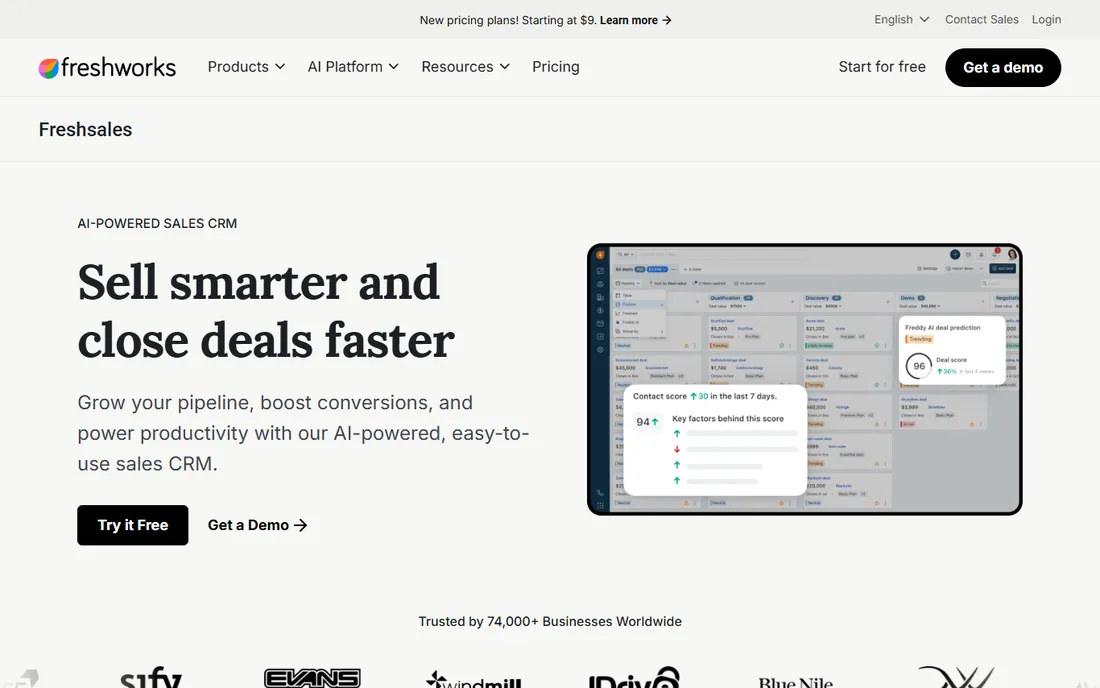
Freshsales keeps reps in the pipeline by putting communication there: call, email and message without leaving the deal view, with AI scoring highlighting which deals deserve attention first. The free tier lets small teams run real pipelines immediately, and the interface stays approachable as features grow.
The limits are depth and ecosystem. Complex forecasting models and niche integrations favor the bigger platforms. But for SMB sales teams that want pipeline management plus communication in one affordable, modern tool, Freshsales is a strong value pick.
What we like- Phone, email and chat inside the pipeline view
- AI lead scoring prioritizes deals
- Clean interface with a free tier to start
Watch out for- Forecasting and customization trail the leaders
- Ecosystem smaller than Salesforce or HubSpot
#6
Copper
Best for: Google Workspace teams wanting pipeline without friction
Visit copper.com
Starting priceSee website
Free planNo
Copper's pipeline thesis is that reps update what lives where they work. By embedding the pipeline in Gmail and Google Workspace, deal updates, activity logging and contact enrichment happen as a side effect of normal work. The pipeline stays current because currency requires no extra effort, which solves the number-one pipeline failure mode.
The trade-offs are the Google dependency and analytical depth. Forecasting and complex process modeling are lighter than Pipedrive or Salesforce. But for Google-native teams, Copper's adoption advantage (the pipeline your reps actually maintain) outweighs feature checklists.
What we like- Pipeline lives alongside Gmail, so updates happen naturally
- Automatic activity capture from email
- Simplest adoption curve here
Watch out for- Tied to Google Workspace
- Pipeline analytics less deep than specialists
#7
Zoho CRM
Best for: Budget teams wanting real pipeline depth
Visit zoho.com
Starting priceSee website
Free planYes
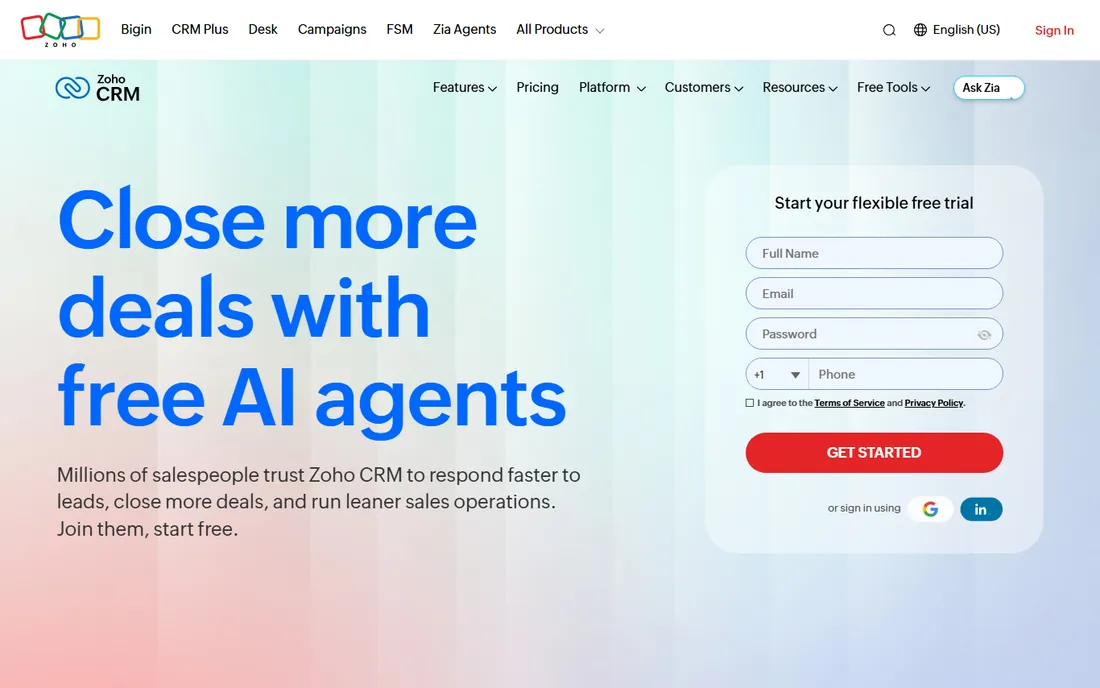
Zoho CRM's pipeline tools punch far above their price: customizable stages, Blueprint process enforcement (deals cannot skip your required steps), workflow automation, forecasting and AI-assisted insights. The free tier covers tiny teams, and paid tiers undercut every Western competitor.
The honest critique is usability. The interface carries years of accumulated features, and the learning curve for advanced pipeline automation is real. But buyers who prioritize capability per dollar, and who will invest the setup time, get enterprise-grade pipeline management at SMB prices.
What we like- Deep pipeline customization, automation and AI (Zia) at low prices
- Free tier for small teams
- Blueprint enforces your sales process stage by stage
Watch out for- Interface polish trails competitors
- Learning curve for the deeper features
Starting priceSee website
Free planYes
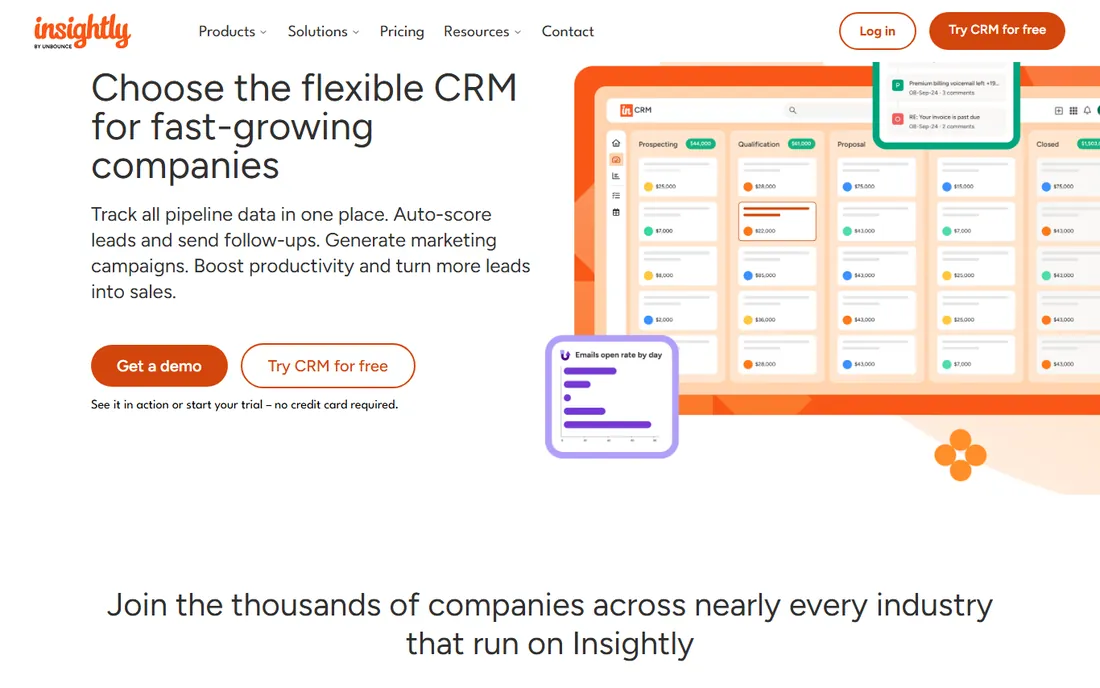
Insightly's distinctive value is the handoff: when a deal closes, it converts into a project with tasks, milestones and assignments, so nothing falls between sales and delivery. For agencies, contractors and consultants, that continuity matters more than forecasting sophistication. The pipeline itself covers stages, activities and reporting adequately.
Specialist pipeline tools go deeper on forecasting and sales methodology. But businesses where the pipeline's output is delivered work (not just revenue) find Insightly's sell-to-deliver flow more valuable than a prettier pipeline alone.
What we like- Pipeline links directly to project delivery
- Good for sell-then-deliver businesses
- Affordable with a free tier
Watch out for- Pipeline analytics trail specialists
- Dated interface in places
How we chose
We judged tools on pipeline execution specifically: stage customization, visual clarity, activity management, forecasting quality and the likelihood reps keep data current. We included free starters, pipeline specialists, enterprise platforms and niche fits (Google-native, sell-to-deliver) because pipeline needs vary by team shape. Pricing comes from each vendor's own pricing page; unverifiable plans are marked "See website." No hands-on testing was performed.
What to look for before you buy
Map your actual sales process first. List your real stages, the exit criteria for each, and who does what. The tool should model your process, not force you into its template. Vendors that cannot show your process in the demo are telling you something.
Test forecasting honesty, not just forecasting features. Ask how the tool handles slipped deals, partial commits and historical accuracy. A forecast nobody trusts is worse than no forecast.
Weight rep adoption above everything. Run a two-week trial with real reps on real deals; the tool they update without nagging wins. Stale pipelines are a people problem that good tool fit largely solves.
Finally, check the activity layer. Pipelines move on activities (calls, emails, meetings); the best tools make logging automatic and the next step obvious. Manual-everything pipelines die quietly.
Pipeline hygiene: the habits behind accurate forecasts
A sales pipeline tool is only as good as the data in it, and pipeline data decays without deliberate hygiene. The teams with trustworthy forecasts share a set of habits that have little to do with software choice and everything to do with discipline.
Define stage exit criteria in writing. "Proposal sent" should mean a proposal was actually sent and acknowledged, not "we talked about pricing". Every stage needs a one-sentence definition of what moves a deal forward and what moves it out. Without this, reps park deals in late stages to look good, and the forecast becomes fiction. Review the definitions quarterly; they drift as the sales motion evolves.
Enforce close dates or remove them. A pipeline full of deals with close dates from last quarter is not a forecast, it is a wish list. The rule that works: every open deal has a future close date, reviewed weekly; deals without a credible date go back to prospecting. Managers should inspect date changes, not just stage changes, because slipping dates are the earliest forecast warning.
Separate pipeline from forecast explicitly. The pipeline is everything being worked; the forecast is what will close this period with high confidence. Many tools support commit/best-case/pipeline categories; use them. Forcing every deal into a binary "in or out" produces either sandbagging or fantasy. Three categories with clear definitions give leadership a real range.
Clean on a cadence, not in panics. A 30-minute weekly pipeline review per rep (what moved, what stalled, what died) prevents the quarterly purge where half the pipeline vanishes at once. Dead deals should be closed-lost promptly with a reason; the loss reasons are valuable data for marketing and product. A pipeline that only gets cleaned before board meetings is a pipeline nobody trusts.
Measure the inputs, not just the outputs. Forecast accuracy improves when you track leading indicators: meetings booked, proposals sent, stakeholder counts per deal. If the inputs are thin, the forecast is thin regardless of what the pipeline total says. The pipeline tool reports history; hygiene creates the future it reports on.
Frequently asked questions
What is sales pipeline management?
The practice of tracking deals through defined stages from first contact to close, managing the activities that advance them, and forecasting revenue from the pipeline's shape. Software makes the pipeline visible and the process repeatable.
How many stages should a pipeline have?
Typically five to eight, each with clear exit criteria. Fewer stages hide problems; more stages create busywork. The right number mirrors how your buyers actually buy, not how your org chart looks.
What is the best free pipeline tool?
HubSpot's free CRM offers the most capable free pipeline management. Zoho CRM, Freshsales and Insightly also have free tiers. Free plans cover stages and basic reporting; forecasting and automation usually need paid tiers.
How do I keep my pipeline accurate?
Define exit criteria per stage, review stalled deals weekly, automate activity logging where possible, and tie forecasts to historical conversion rates rather than rep optimism. The tool helps; the discipline decides.
Pipeline management vs CRM: what is the difference?
Pipeline management is a function (tracking deals through stages); a CRM is the system that usually hosts it. Dedicated pipeline tools focus on deal execution, while full CRMs add contacts, marketing and service. Most teams buy a CRM and use its pipeline.
When should we upgrade from spreadsheets?
When deals slip because nobody sees them slipping: multiple reps, concurrent deals above twenty or thirty, or forecasts your leadership no longer believes. The tipping point is visibility failure, not team size alone.
Sources we checked (8)
- https://www.pipedrive.com
- https://www.hubspot.com
- https://www.salesforce.com
- https://www.close.com
- https://www.freshworks.com/crm/sales/
- https://www.copper.com
- https://www.zoho.com/crm/
- https://www.insightly.com
Is your product missing or out of date?
We review this list regularly. Vendors can request a listing, send updated pricing or ask about featured placement.

Shihab Mia · Founder, Rankite
Shihab has spent more than a decade helping SaaS and e-commerce brands grow through search. He writes Rankite's software buying guides from pricing pages, documentation and public user reviews. More about Shihab.