How we make this list: we compare pricing pages, product documentation and public user reviews. Rankite is independent; if a vendor ever pays for a featured spot, that listing is clearly labeled Partner.
Key takeaways
- Marketing teams need two tool types: visibility platforms that show where the brand stands (Profound, AthenaHQ, Goodie) and content tools that fix it (Frase, Surfer, Clearscope, MarketMuse).
- Start with measurement before production. A month of tracking data tells your content team exactly which prompts and competitors to target.
- Brandlight suits teams where PR and source strategy drive AI visibility; MarketMuse suits teams building topical authority as a content strategy.
- Do not buy enterprise measurement for a five-person marketing team; the suite add-ons and mid-market tools cover the essentials.
Quick comparison
| Tool | Best for | Starting price | Free plan |
|---|
 Profound Profound | Marketing teams that need the full visibility picture | See website | Free trial |
 Goodie AI Goodie AI | Teams connecting AI visibility to content operations | See website | No |
 AthenaHQ AthenaHQ | Marketing teams that want scores plus next steps | See website | Yes |
 Brandlight Brandlight | Teams where PR and source strategy drive visibility | See website | No |
 Frase Frase | Marketing teams producing answer-optimized content fast | See website | Free trial |
 Surfer SEO Surfer SEO | Optimizing the content library you already have | See website | Free trial |
 Clearscope Clearscope | Marketing orgs with many writers needing one standard | See website | Free trial |
 MarketMuse MarketMuse | Marketing leaders planning authority as strategy | See website | Free trial |
Is your product missing or out of date?
We review this list regularly. Vendors can request a listing, send updated pricing or ask about featured placement.
The best software for marketers focusing on AI search
Your buyers now ask ChatGPT and Perplexity for recommendations before they ever see your website. Marketing teams that ignore AI search are optimizing for a shrinking share of discovery. The software below is chosen for marketers specifically: tools that fit marketing workflows, speak in marketing metrics, and connect AI visibility to the content calendar. Eight tools, from measurement to production.
Starting priceSee website
Free planFree trial
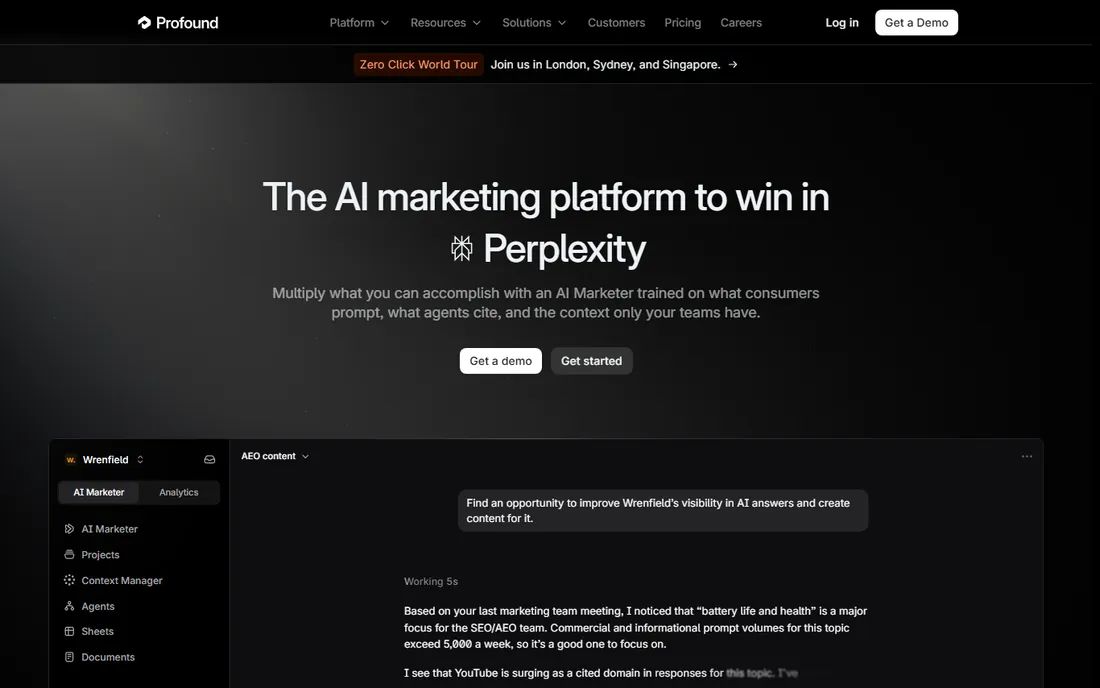
Profound is the measurement foundation for serious AI search marketing. It shows where your brand appears across ChatGPT, Perplexity, Gemini, Claude and Google's AI surfaces, who gets cited instead of you, and how sentiment trends over time. For a marketing leader building the AI search business case, its Prompt Volumes data (which questions carry real demand) turns a vague initiative into a prioritized plan.
The honest fit question is team size. Profound is built for marketing organizations with budget and process; a five-person team will not use half of it. Larger teams get the depth they need to run AI search as a program, not a project.
What we like- Tracks brand presence across every major AI engine with citation and sentiment detail
- Prompt Volumes ties visibility to real demand
- Reporting built for marketing leadership
Watch out for- Enterprise pricing and complexity
- Overkill for small marketing teams
#2
Goodie AI
Best for: Teams connecting AI visibility to content operations
Visit higoodie.com
Starting priceSee website
Free planNo
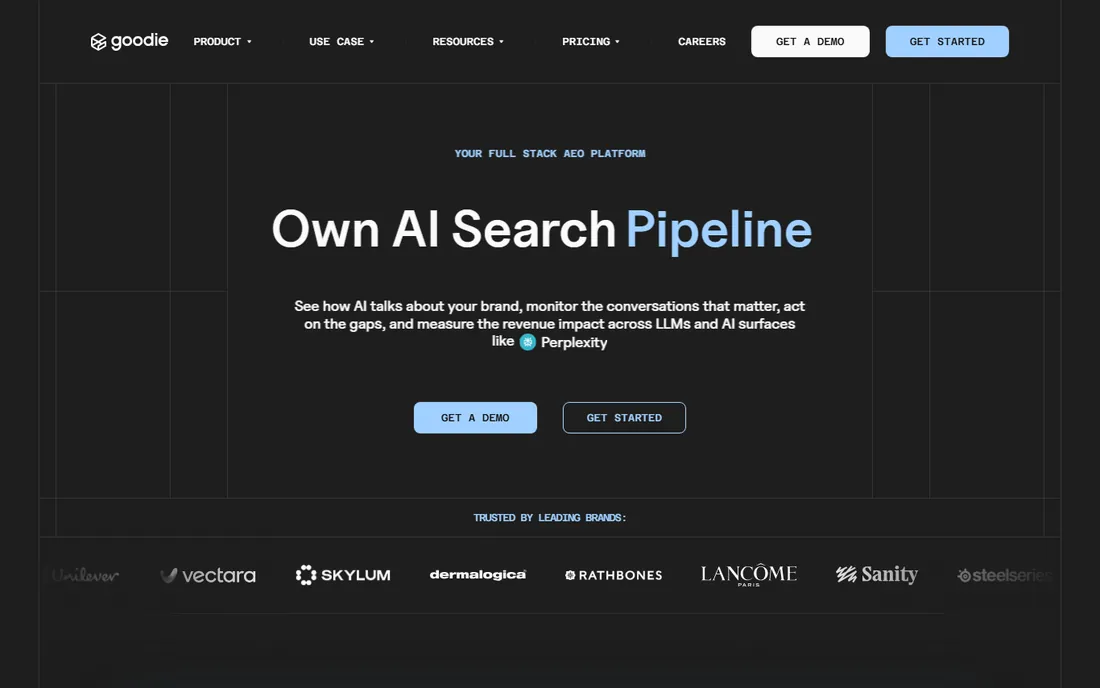
Goodie AI speaks marketing, not SEO. It monitors how your brand shows up in AI answers and connects the findings to the marketing assets that move the needle: content, structured data and product catalogs. For ecommerce and product-led teams, where AI shopping answers directly influence revenue, that connection between measurement and merchandising matters.
The trade-offs are tenure and transparency. It is a younger company than the category leaders, and unpublished pricing means a sales process. Marketing teams that can act on its recommendations (publish, fix schema, enrich catalogs) will get the value; teams wanting pure measurement should compare the dedicated trackers.
What we like- AI-native platform linking monitoring to content, schema and catalog fixes
- Built for marketers rather than SEO technicians
- Useful for product-led and ecommerce brands
Watch out for- Younger vendor with less public validation
- Pricing not published
#3
AthenaHQ
Best for: Marketing teams that want scores plus next steps
Visit athenahq.ai
Starting priceSee website
Free planYes
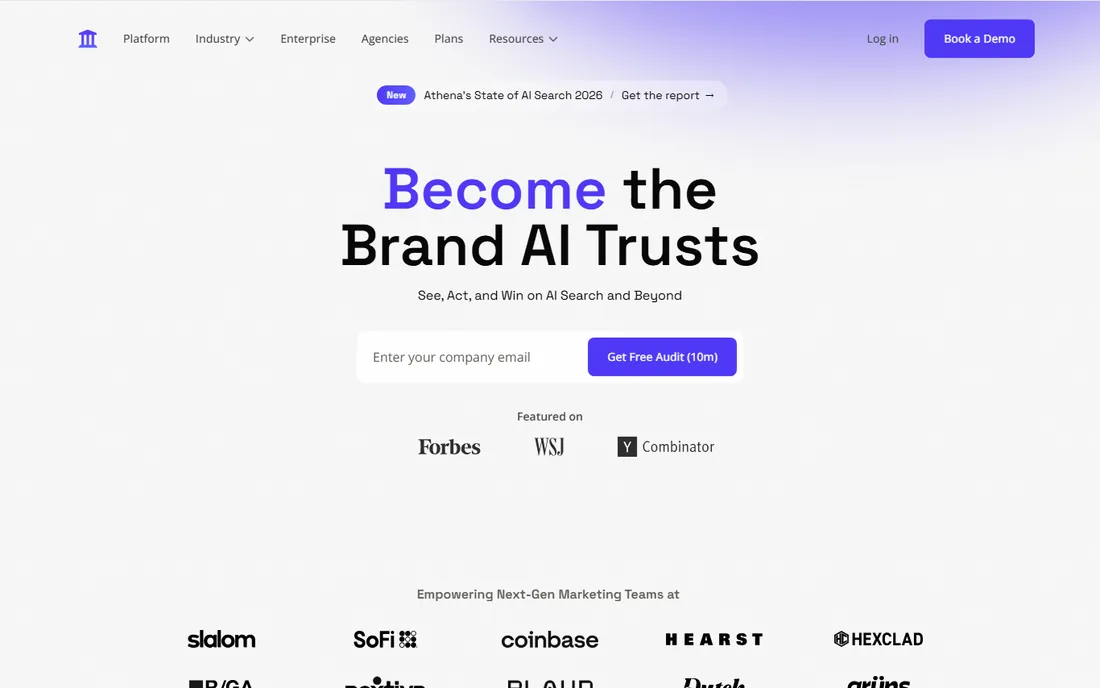
AthenaHQ gives marketing teams what they actually want from a dashboard: a score, a trend, a competitor comparison and a list of what to do next. Its coverage spans the engines buyers use, and the hallucination detection catches the embarrassing case (the model inventing facts about your company) before customers do. The free tier lets a marketing manager evaluate it without a procurement battle.
Watch the credit model: real prompt libraries consume quota, so model your usage before budgeting. For mid-market marketing teams that need measurement with a built-in action plan, AthenaHQ's balance of depth and usability is strong.
What we like- GEO scoring across major LLMs with clear benchmarking
- Hallucination detection protects brand accuracy
- Action layer turns findings into prioritized work
Watch out for- Credit-based pricing needs usage modeling
- Starter tier costs more than budget tools
Starting priceSee website
Free planNo
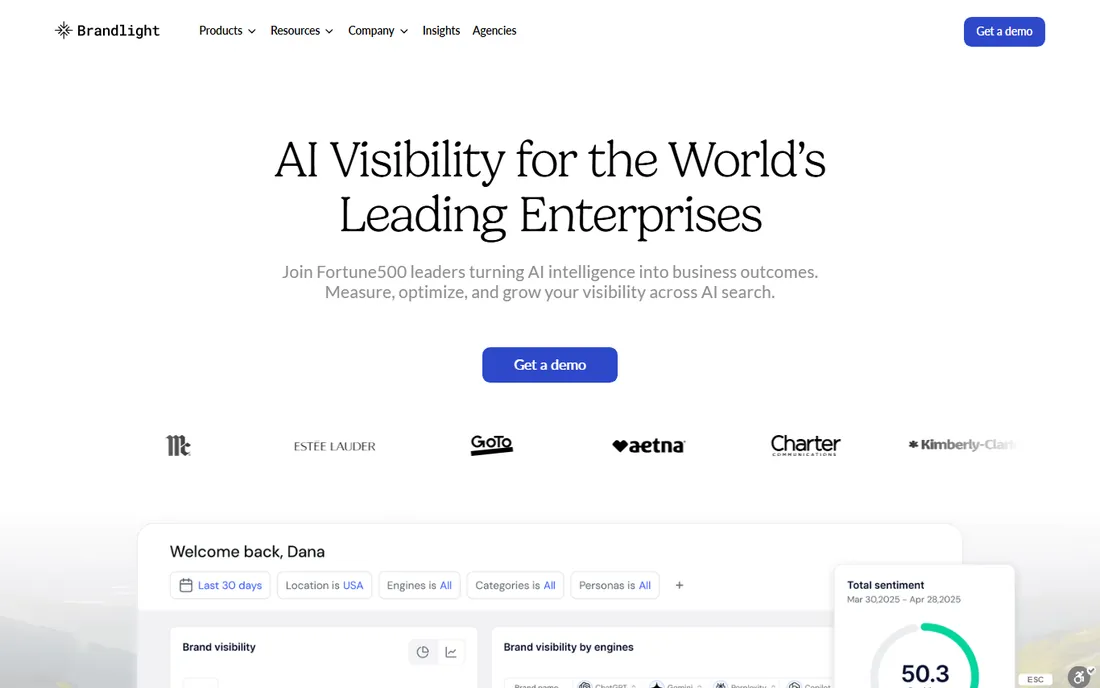
Brandlight answers the marketer's strategic question: why do AI engines describe us this way? Its influence-source scoring traces mentions back to the publishers, forums and references the models draw on. That turns AI search into a PR and content-distribution problem with named targets, which is exactly how marketing leaders think.
It is not a content editor or a campaign tool; pair it with production software for the full loop. But for teams whose AI visibility strategy runs through earned media and source authority, Brandlight provides the map nobody else draws.
What we like- Shows which publishers and sources shape AI answers about your brand
- Response analysis reveals portrayal
- Natural fit for PR-led marketing teams
Watch out for- Focused scope, not a full marketing suite
- Less pricing transparency
#5
Frase
Best for: Marketing teams producing answer-optimized content fast
Visit frase.io
Starting priceSee website
Free planFree trial
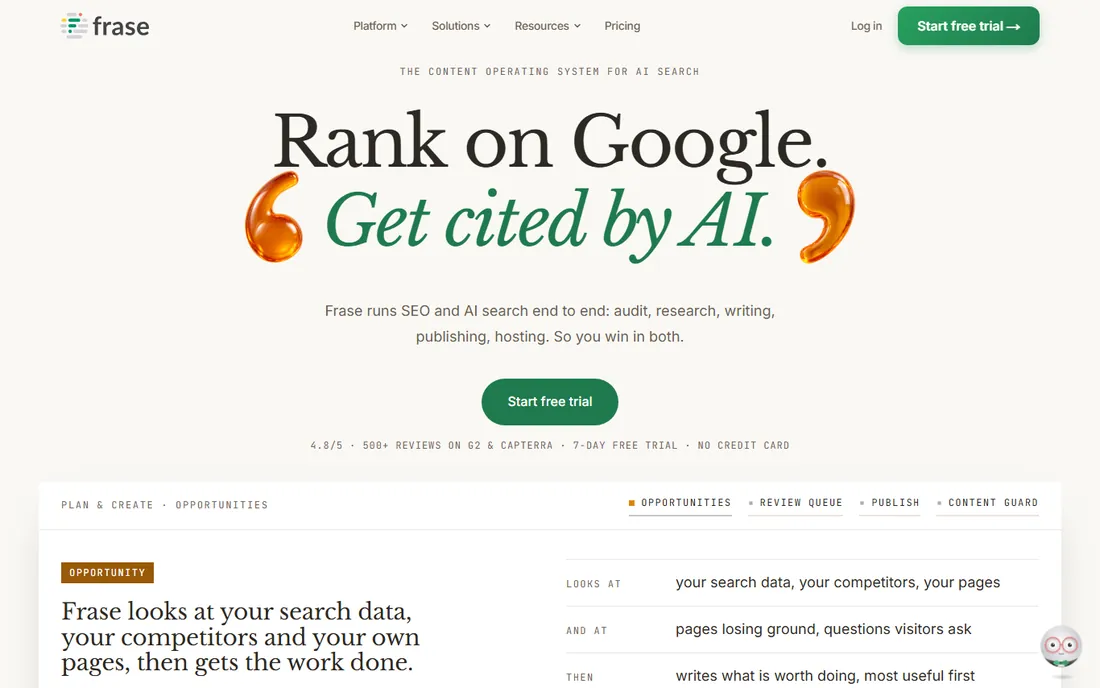
Frase is the production engine for AI search content. Marketing teams use it to research what AI engines and searchers ask, brief writers, draft with AI assistance and score the result for both classic SEO and generative optimization. When your visibility data says "we need cited content on these twenty questions," Frase is how a lean team produces it.
The honest limit is editorial: Frase accelerates production but does not replace judgment. Teams with standards get fast, good content; teams without them get fast, thin content that AI engines increasingly ignore. For marketers measured on pipeline from organic and AI discovery, it is one of the highest-ROI tools here.
What we like- Research-to-draft-to-score loop in one editor
- GEO scoring alongside SEO scoring
- Affordable for the production speed it delivers
Watch out for- AI drafts require real editing
- Output quality depends on editorial standards
Starting priceSee website
Free planFree trial
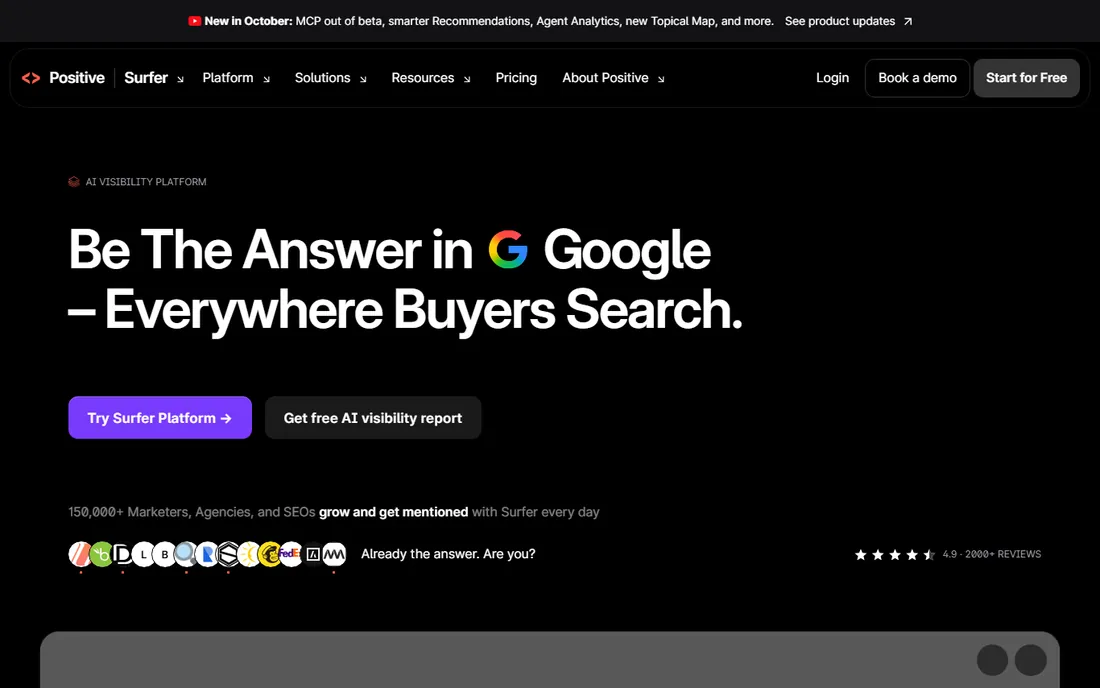
Most marketing teams sit on hundreds of existing pages, and Surfer SEO is how you make them AI-search-ready without rewriting everything. Its audits identify pages losing visibility, and the Content Editor guides refreshes toward the terms, structure and depth that earn citations. The work is unglamorous and effective: updated pages get cited more.
The caveat, confirmed by independent testing: optimization scores measure correlation with successful pages. They amplify good content; they cannot rescue thin content. Marketing teams should pair Surfer with a refresh prioritized by visibility data, not optimize at random.
What we like- Real-time editor grades content against top performers
- Audits find decaying pages worth refreshing
- AI visibility tracking connects optimization to answers
Watch out for- Scores correlate rather than cause
- Needs substantive content to work with
#7
Clearscope
Best for: Marketing orgs with many writers needing one standard
Visit clearscope.io
Starting priceSee website
Free planFree trial
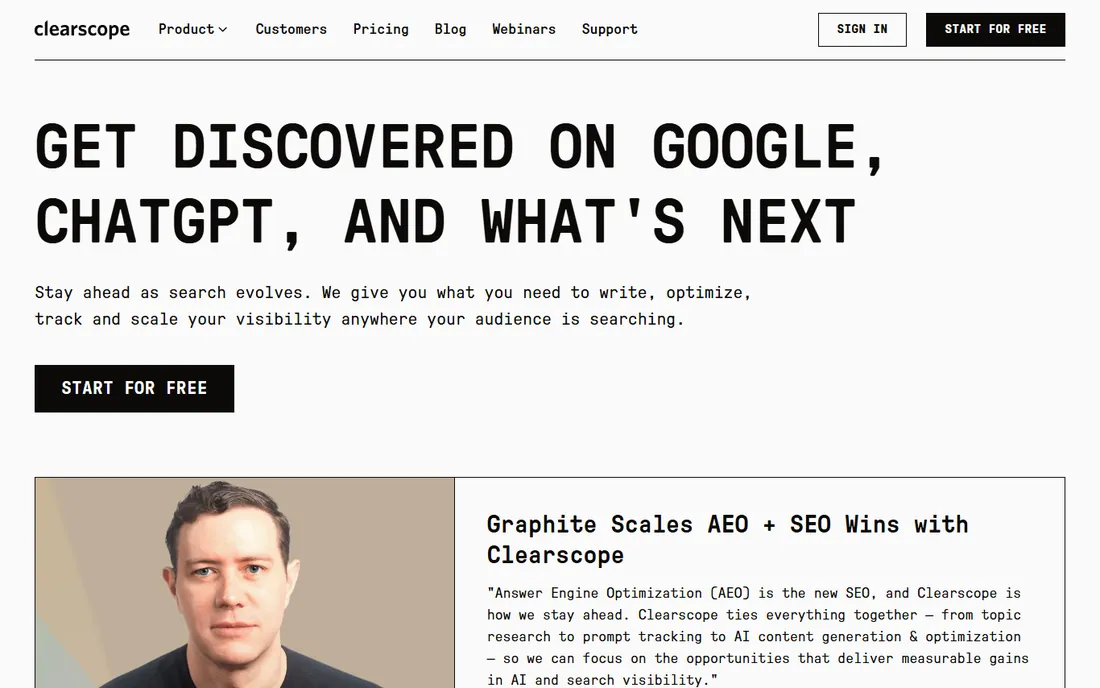
Clearscope solves the people problem in AI search content: getting ten writers to produce consistently optimizable drafts. The grading is instant and intuitive, the integrations meet writers where they work, and unlimited seats mean the whole marketing org can standardize. Its AI-answer tracking keeps the standard current.
It is the most expensive way to buy grading, and teams needing research-to-draft depth get more from Frase or Surfer. But when the bottleneck is writer consistency across a marketing organization, Clearscope's adoption advantage justifies the premium.
What we like- Simple A-to-F grading every writer understands
- Docs and WordPress integrations fit existing workflows
- Unlimited seats suit large teams
Watch out for- Premium price for grading alone
- Less research and drafting depth
Starting priceSee website
Free planFree trial
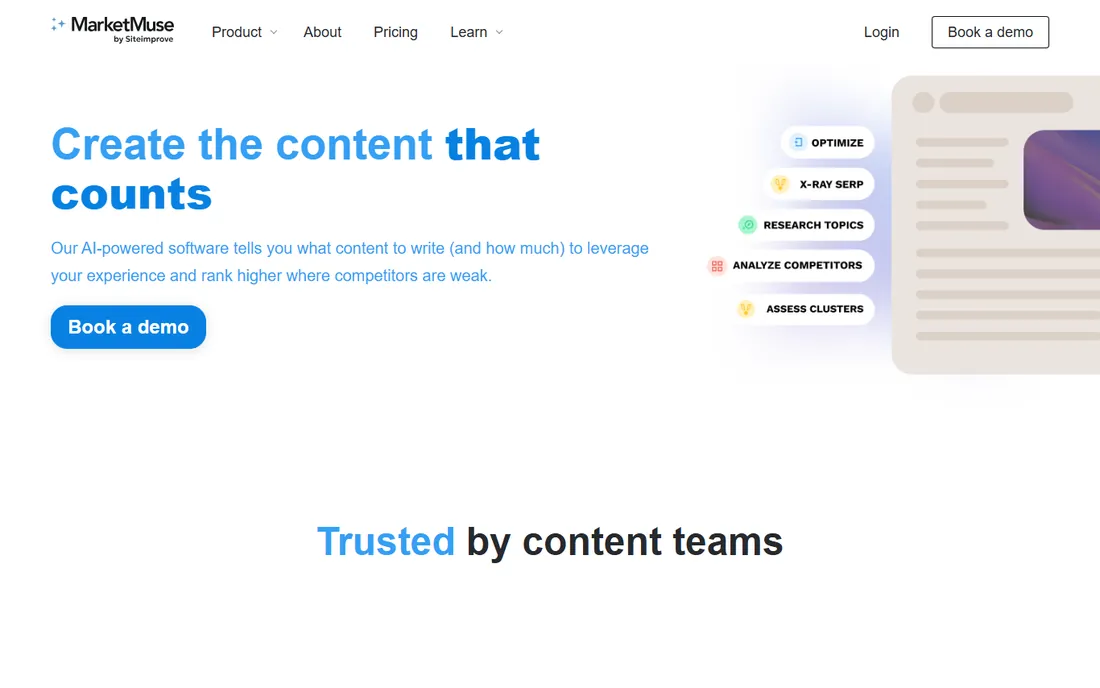
MarketMuse is for the marketing leader who thinks in quarters, not drafts. Its AI inventories your entire site, models topical authority against competitors, and produces a prioritized content plan: which topics to own, in what order, at what depth. Since AI engines cite domains with demonstrated depth, that authority planning is the strategic layer of AI search marketing.
It will not write Tuesday's blog post; the editors on this list do that. And it is priced for organizations, not freelancers. But marketing teams that run AI search as a program need the plan before the production, and MarketMuse writes the best version of that plan.
What we like- Site-wide AI analysis plans content for topical authority
- Shows exactly which gaps cost you answers
- Strategic rather than tactical
Watch out for- Planning-focused, not a daily writing tool
- Priced for serious content operations
How we chose
We selected tools for marketing teams specifically, not SEO technicians: measurement platforms with marketing-ready reporting, content tools that fit editorial workflows, and strategy platforms that speak in business outcomes. We favored current products with real adoption and covered both the measurement and production halves of AI search marketing. Pricing comes from each vendor's own pricing page; unverifiable plans are marked "See website." No hands-on testing was performed.
Building your AI search stack
Start with measurement. One month of visibility tracking (Profound, AthenaHQ or Goodie) tells you which prompts matter, where you are absent and which competitors own your category's answers. That data focuses every dollar you spend after it.
Add production where the gaps are. If you lack cited content, a production tool (Frase) or optimization workflow (Surfer) turns the gap list into published pages. If writers are inconsistent, standardize grading (Clearscope). If the strategy is unclear, plan authority first (MarketMuse).
Connect AI search to the content calendar, not a side project. The teams winning here treat AI visibility as a standing agenda item in content planning, with monthly reviews of scores, citations and competitor movement. Software enables that rhythm; it does not create it.
Finally, measure business outcomes, not just visibility. Track AI-referred traffic, assisted conversions and branded search lift alongside mention counts. The CMO funds what moves pipeline.
Frequently asked questions
What software do marketers need for AI search?
At minimum: a visibility tracking tool (to know where you stand) and a content optimization tool (to improve it). Larger teams add strategy planning and source analysis. Start with measurement, add production where gaps appear.
How is marketing for AI search different from SEO?
The goal shifts from ranking pages to earning mentions and citations inside answers. Tactics overlap heavily (good content, authority, structure), but success metrics differ: share of voice in answers rather than positions.
Can small marketing teams compete in AI search?
Yes. AI engines cite specific, helpful pages regardless of domain size, which favors focused specialists over generalist giants. A lean team with a tracking tool and a content editor can win category questions.
How do I prove ROI on AI search software?
Track AI-referred traffic in analytics, monitor branded search lift, and connect visibility improvements to pipeline where possible. Pair visibility scores with business metrics from the start so the program defends its budget.
Should AI search replace our SEO program?
No. AI search builds on SEO foundations: the content, authority and technical health are largely shared. Run them as one organic program with two measurement lenses, not as competing initiatives.
How long before AI search efforts pay off?
Tracking shows movement within weeks on volatile prompts. Content-driven gains typically take one to three quarters as authority builds. Treat the first quarter as baseline-building, not ROI harvest.
Sources we checked (8)
- https://www.tryprofound.com
- https://www.higoodie.com
- https://www.athenahq.ai
- https://www.brandlight.ai
- https://www.frase.io
- https://www.surferseo.com
- https://www.clearscope.io
- https://www.marketmuse.com
Is your product missing or out of date?
We review this list regularly. Vendors can request a listing, send updated pricing or ask about featured placement.

Shihab Mia · Founder, Rankite
Shihab has spent more than a decade helping SaaS and e-commerce brands grow through search. He writes Rankite's software buying guides from pricing pages, documentation and public user reviews. More about Shihab.