How we make this list: we compare pricing pages, product documentation and public user reviews. Rankite is independent; if a vendor ever pays for a featured spot, that listing is clearly labeled Partner.
Key takeaways
- Talent intelligence splits into two jobs: finding people (SeekOut, HireEZ) and understanding your workforce (Eightfold, Gloat, Beamery, Draup, Lightcast). Buying the wrong half is the most expensive mistake in this category.
- Every platform here except SeekOut sells by custom quote, so plan for a real procurement cycle with demos, security review and pilot pricing.
- If you already pay for LinkedIn Recruiter, SeekOut and HireEZ are the direct alternatives to evaluate first, since they compete on sourcing depth and cost per hire.
- For workforce planning and skills strategy rather than recruiting, Draup and Lightcast sell data and analytics, not seats for recruiters, and they price accordingly.
Quick comparison
| Tool | Best for | Starting price | Free plan |
|---|
 Eightfold AI Eightfold AI | Enterprises that want one intelligence layer across hiring and talent management | See website (custom quote) | No |
 Gloat Gloat | Large enterprises building internal talent marketplaces and workforce agility | See website (custom quote) | No |
 Phenom Phenom | Enterprises that want hiring, development and retention on one AI platform | See website (custom quote) | No |
 Beamery Beamery | Companies that want workforce intelligence layered over their existing HR systems | See website (custom quote) | No |
 SeekOut SeekOut | Recruiting teams that need deep sourcing, applicant evaluation and AI screening | See website (custom quote) | Free start offered (limited) |
 HireEZ HireEZ | Recruiting teams doing high-volume outbound sourcing | See website (custom quote) | No |
 Draup Draup | HR and strategy leaders who need labor market intelligence for planning decisions | See website (custom quote) | No |
 Lightcast Lightcast | Workforce planners, economic developers and HR strategists who need trusted labor data | See website (custom quote) | No |
Is your product missing or out of date?
We review this list regularly. Vendors can request a listing, send updated pricing or ask about featured placement.
The best talent intelligence software
Most talent intelligence demos look identical: a skills graph, an AI matching score, a dashboard. The differences that matter show up later, in data depth, in whether the AI explains itself, and in whether the platform fits sourcing, planning or both. These eight cover the real market, from recruiter workhorses to the data providers behind everyone else's dashboards.
#1
Eightfold AI
Best for: Enterprises that want one intelligence layer across hiring and talent management
Visit eightfold.ai
Starting priceSee website (custom quote)
Free planNo
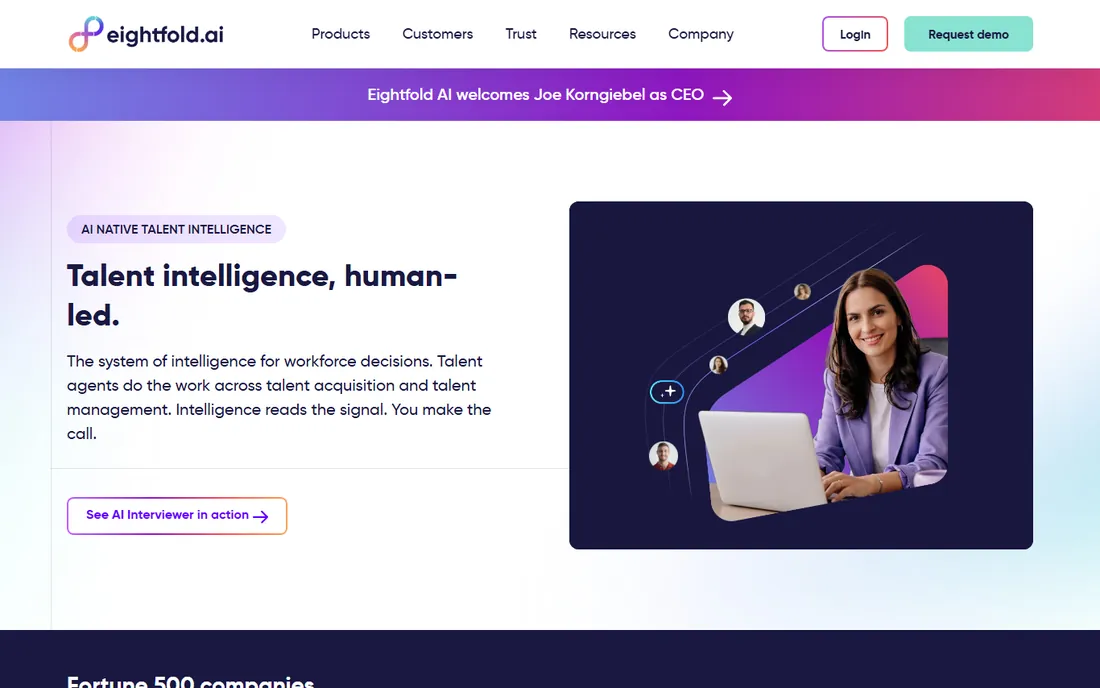
Eightfold is the reference point the rest of this category gets measured against. Its Talent Intelligence Platform builds a skills profile for every candidate and employee, then applies that understanding across recruiting (matching, screening, interview scheduling), talent management (internal mobility, succession, upskilling) and workforce planning. The newer TalentForge layer lets HR teams build custom applications on top of the same intelligence.
The honest tradeoff is commitment. Eightfold is an enterprise platform sold and implemented as such, with annual subscriptions, services and change management. Companies that go all in report meaningful results: some customers cite roughly a third cut in time to fill. But if you only need better sourcing, you are buying far more platform than you will use, and a tool like SeekOut or HireEZ will get recruiters productive faster.
What we like- Deep-learning models trained on 1.6 billion career trajectories and 1.6 million skills
- Covers the full lifecycle from sourcing and screening to internal mobility and succession
- Explainable matching with bias audits for regulated hiring
Watch out for- Enterprise-only pricing and implementation with no self-serve path
- The breadth means longer rollouts than point sourcing tools
#2
Gloat
Best for: Large enterprises building internal talent marketplaces and workforce agility
Visit gloat.com
Starting priceSee website (custom quote)
Free planNo
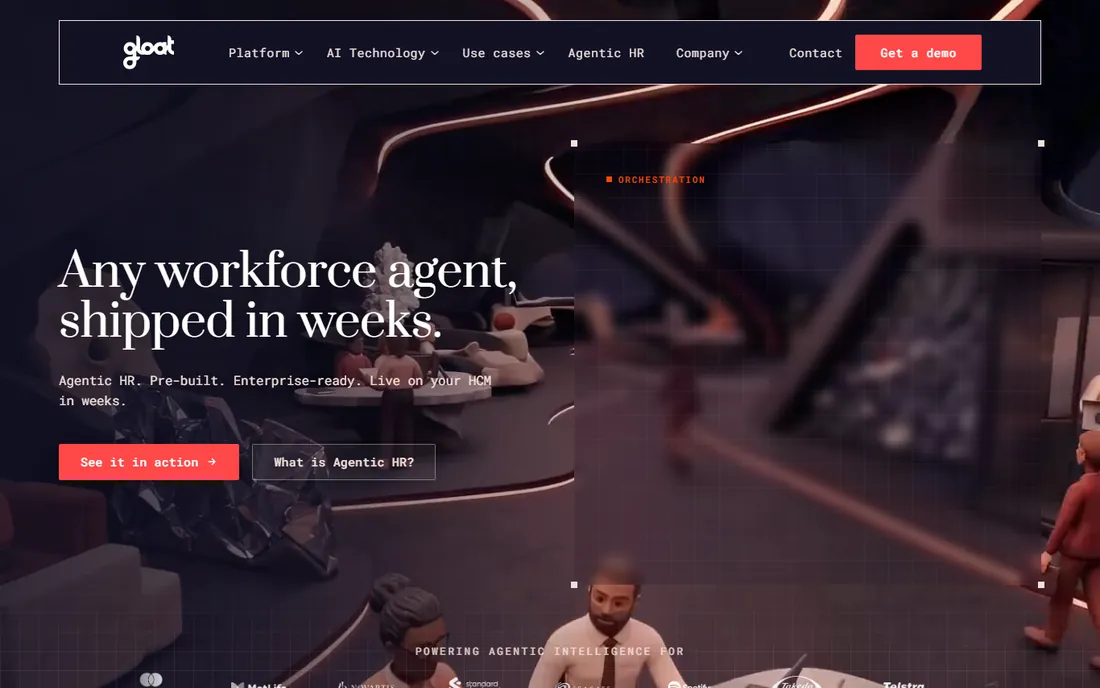
Gloat started as the internal talent marketplace and grew into something broader. The core idea remains powerful: instead of hiring externally for every opening, match the skills you already employ to open roles, projects, gigs and mentorships. The platform builds a skills profile for each employee, surfaces internal opportunities and gives leaders a live view of workforce capability. Its newer agentic direction pushes AI agents into the flow of work, handling HR tasks inside the tools employees already use.
Gloat fits organizations where retention and mobility are strategic, typically companies with thousands of employees and real internal labor markets. The customer list skews toward global enterprises that have run the platform for years. Smaller companies will struggle to justify it: without a large internal talent pool, the marketplace has nothing to match. Implementation is a program, not a purchase, so expect executive sponsorship to matter as much as the software.
What we like- Created the internal talent marketplace category, with deep expertise in skills matching for mobility, gigs and career pathing
- Agentic HR capabilities that run workflows inside Teams, Slack and Copilot
- Strong enterprise references across industries
Watch out for- Built for large enterprises, so mid-market buyers face enterprise pricing and timelines
- The agentic repositioning is new, so validate the roadmap against your use cases
#3
Phenom
Best for: Enterprises that want hiring, development and retention on one AI platform
Visit phenom.com
Starting priceSee website (custom quote)
Free planNo
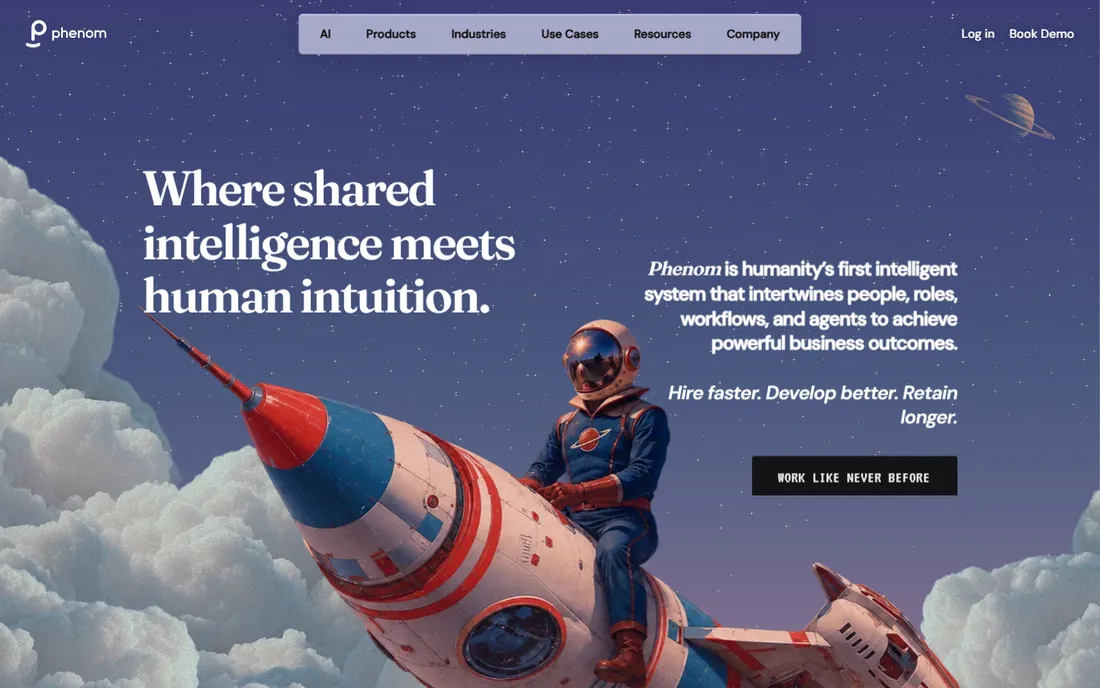
Phenom attacks the problem from the experience side. Where Eightfold leads with matching intelligence, Phenom leads with the idea that every talent interaction, candidate, recruiter, employee, manager, should be personalized and connected. The platform covers the career site, conversational chatbot, talent CRM, automated scheduling, internal mobility marketplace and workforce intelligence, all sharing one data layer. Its applied-AI positioning now extends to agents that execute multi-step hiring workflows.
The fit is the enterprise that wants to consolidate point tools: chatbot, CRM, career site and scheduling from separate vendors become one contract. That consolidation is also the risk. Phenom overlaps heavily with modern ATS platforms, so map carefully against what Workday, SuccessFactors or iCIMS already do before adding it. Like its peers, it is quote-only and implementation-heavy, so the buying decision deserves a proper RFP.
What we like- Genuinely broad platform spanning career sites, CRM, chatbot, scheduling, marketplace and workforce intelligence
- Strong candidate-experience heritage with personalization at scale
- Serves 500-plus enterprise customers with proven scale
Watch out for- Breadth creates complexity, and buyers report long implementations
- Pricing is entirely custom and the platform can overlap with existing ATS investments
#4
Beamery
Best for: Companies that want workforce intelligence layered over their existing HR systems
Visit beamery.com
Starting priceSee website (custom quote)
Free planNo
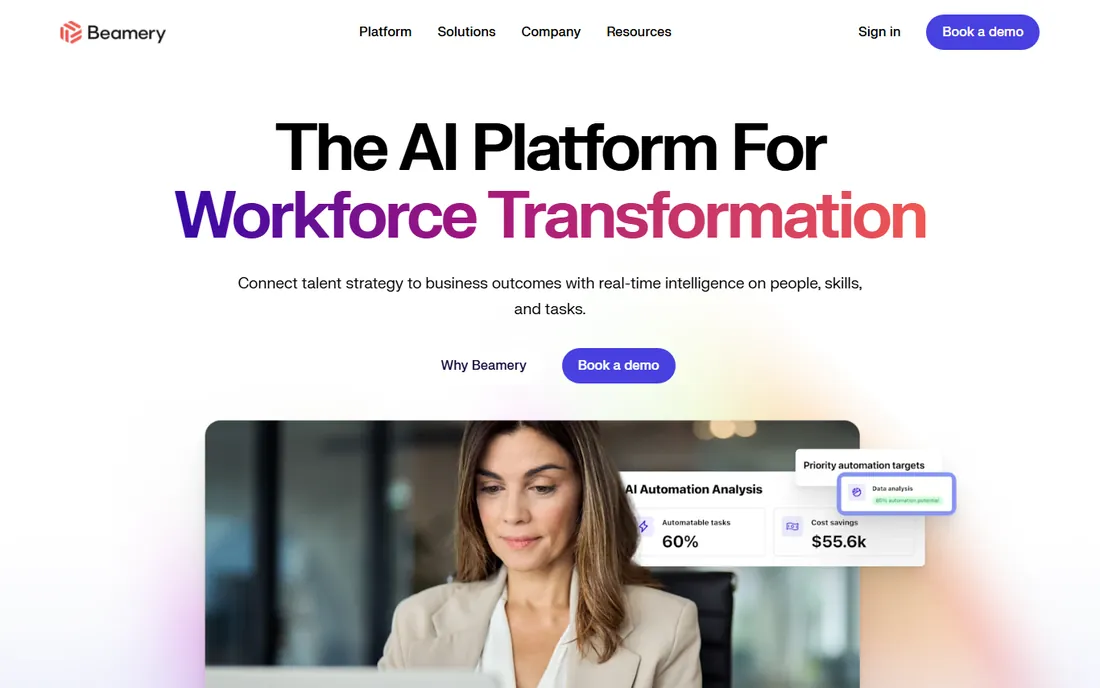
Beamery's strength is the data layer underneath the applications. The pitch is that your HR data lives in a dozen disconnected systems, and Beamery's talent graph stitches skills, roles, people and market data into a single dynamic view. On top of that sit workforce planning, talent acquisition, mobility and development workflows, plus an agentic advisor that works from real-time workforce data.
The positioning matters for buyers choosing between rip-and-replace and enhance. Beamery explicitly maximizes existing Workday and SAP investments rather than competing with them, which makes it an easier sell to HRIT than a platform that wants to own the system of record. The catch is the usual one: enterprise pricing, enterprise sales cycles and a product whose value scales with the size and messiness of your HR data estate. Clean, small HR stacks get less out of it.
What we like- Skills-based talent graph that unifies fragmented HR data into one source of truth
- Deep integrations with Workday and SAP that enhance rather than replace the HRIS
- Real-time workforce planning with scenario modeling
Watch out for- Quote-only enterprise pricing
- The platform story assumes you have an HRIS worth enhancing, so it adds less for companies without one
#5
SeekOut
Best for: Recruiting teams that need deep sourcing, applicant evaluation and AI screening
Visit seekout.com
Starting priceSee website (custom quote)
Free planFree start offered (limited)
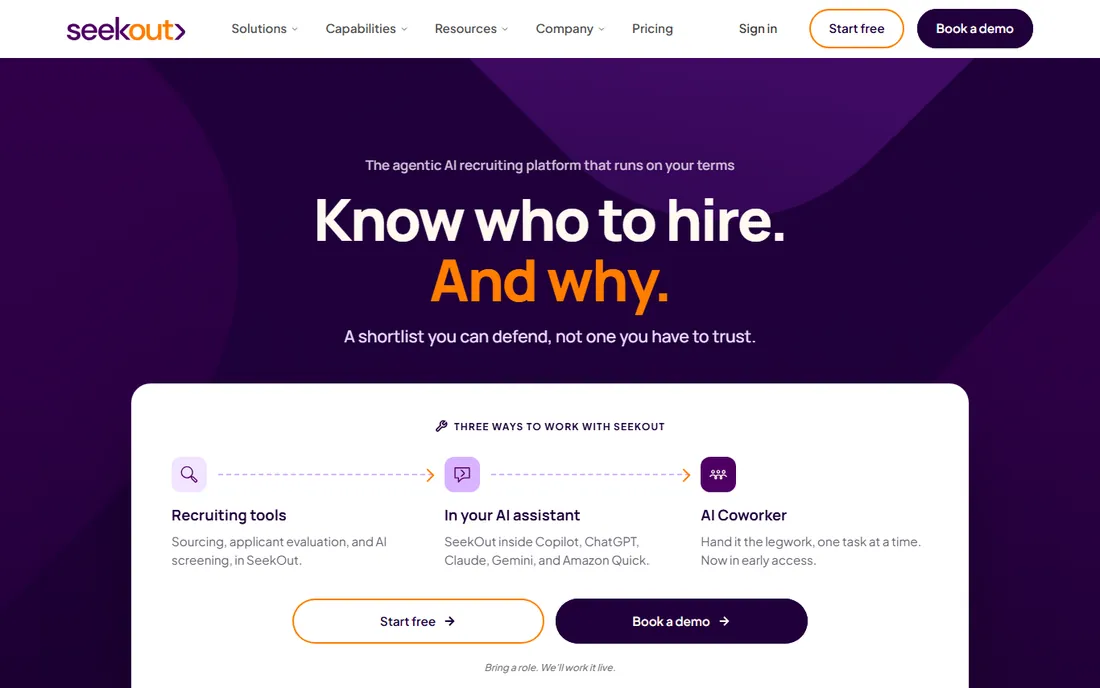
SeekOut is the sourcer's tool that grew up into a platform. It started by helping recruiters find candidates LinkedIn missed, using AI search across more than a billion profiles with filters for skills, diversity and hard-to-find backgrounds. It has since added applicant evaluation, AI video screening, personalized outreach campaigns and labor market insights, plus the ability to run inside Copilot, ChatGPT and other AI assistants.
For talent acquisition teams, the practical case is sourcing productivity and pipeline quality: standardized search, explainable AI with bias audits and ATS rediscovery that surfaces past applicants for new roles. The free start lowers the trial barrier, which is rare in this category. The watch-out is scope creep in the contract: with sourcing, screening, outreach and insights now bundled, make sure the quote matches the modules you will actually roll out, and run a pilot against your hardest roles before committing.
What we like- Searches more than a billion profiles with context-aware AI plus your own ATS data
- AI screening and applicant evaluation process high volumes fast
- Diversity filters and talent insights built for enterprise compliance needs
Watch out for- Pricing is still quote-based despite the free start
- The platform keeps expanding, so confirm which modules your contract actually includes
#6
HireEZ
Best for: Recruiting teams doing high-volume outbound sourcing
Visit hireez.com
Starting priceSee website (custom quote)
Free planNo
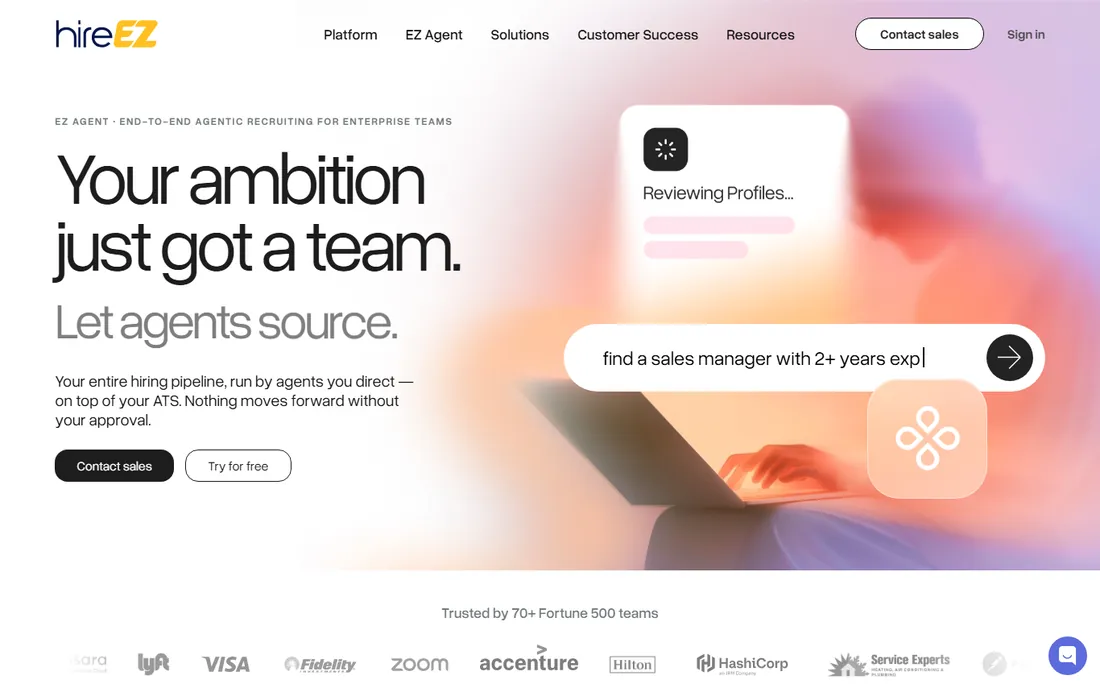
HireEZ, formerly Hiretual, lives where recruiters actually spend their day: sourcing. The platform combines AI candidate search across 800 million-plus profiles with contact discovery, engagement sequences and pipeline analytics, all designed to sit alongside the ATS rather than replace it. Its agentic direction adds AI that sources, screens, schedules and reports with human approval at each step.
The buyer here is the TA leader measured on pipeline and cost per hire, especially for hard-to-fill technical and niche roles. Reviewers consistently praise the sourcing depth versus LinkedIn Recruiter and the responsive support. The friction points are familiar: a learning curve for new users, limited customization in some workflows and pricing that draws complaints from smaller teams. Get the per-seat price and any credit or contact-data limits in writing, since those define the real cost.
What we like- Purpose-built sourcing workflows with AI matching, contact data and automated outreach sequences
- Runs on top of your ATS with 300-plus integrations
- Trusted by dozens of Fortune 500 recruiting teams
Watch out for- No published pricing, with third-party estimates putting plans in the hundreds per user per month
- Sourcing-centric, so workforce planning buyers should look elsewhere
#7
Draup
Best for: HR and strategy leaders who need labor market intelligence for planning decisions
Visit draup.com
Starting priceSee website (custom quote)
Free planNo
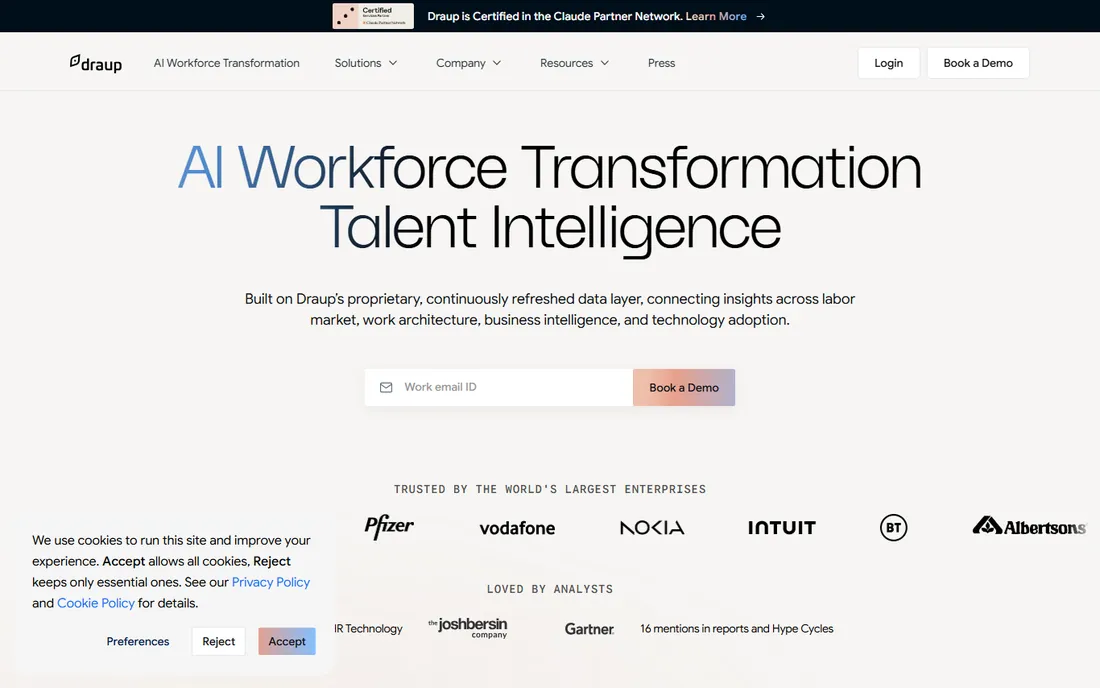
Draup is the analyst's choice more than the recruiter's. Its talent intelligence product answers planning questions: where is the talent for this role, what does it cost, how are competitors hiring, which skills are rising and which locations are undervalued. The data spans thousands of locations, millions of career paths and tens of thousands of skills, refreshed continuously, and it is built for workforce planning, location analysis, peer benchmarking and reskilling strategy.
The distinction matters because Draup does not source candidates. It tells you where to look and what to pay, then hands the execution to your recruiting stack. That makes it a complement to SeekOut or Eightfold rather than a competitor. Delivery flexibility is a plus: platform access, APIs, MCP connectors and data shares through Snowflake, Databricks and AWS Marketplace. Price it as a data subscription during budgeting, because that is what it is.
What we like- Multi-dimensional data covering labor markets, skills, roles, peer companies and technology adoption
- Supports location strategy, reskilling planning and competitive benchmarking
- Data available via platform, APIs and cloud marketplaces
Watch out for- It is an intelligence product, not a recruiting tool, so TA teams expecting sourcing will be disappointed
- Enterprise pricing with no public tiers
#8
Lightcast
Best for: Workforce planners, economic developers and HR strategists who need trusted labor data
Visit lightcast.io
Starting priceSee website (custom quote)
Free planNo
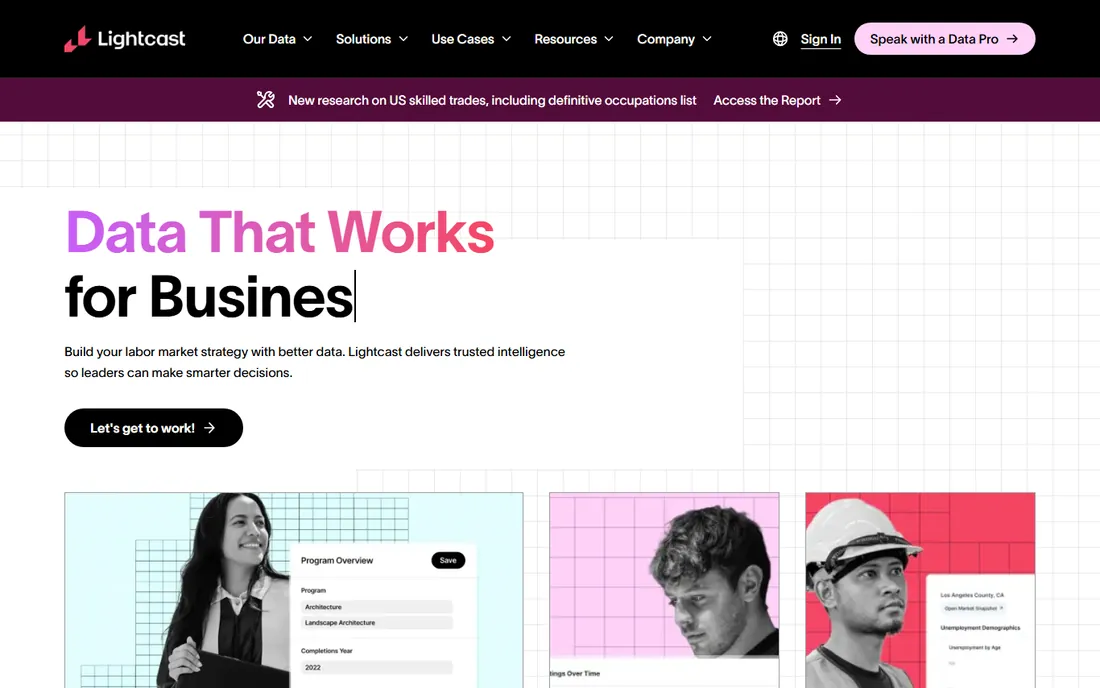
Lightcast does not source candidates at all, which is exactly why it belongs here. Born from the Emsi and Burning Glass merger, it is the standard reference for labor market intelligence: what skills employers demand, how occupations are shifting, where talent clusters and what compensation looks like. Enterprises use it for workforce planning, universities for program alignment and governments for economic development.
For corporate talent intelligence, Lightcast typically enters through the strategy or people-analytics team rather than recruiting. Its Talent Analyst platform, APIs and data shares let you benchmark roles, model skills adjacencies and defend location and hiring plans with third-party data. Like Draup, it is priced as an enterprise data relationship. Buyers should scope the geography and datasets they actually need, because global coverage is the premium tier of an already premium product.
What we like- Among the largest labor market datasets anywhere, covering 165-plus countries and billions of job postings and profiles
- Long track record with enterprises, universities and governments
- Available through software, APIs and data shares
Watch out for- Pure data and analytics, with no recruiting workflow attached
- The depth can overwhelm buyers who just need a simple skills taxonomy
How we chose
We started with the searches buyers run: talent intelligence software, AI recruiting platform and workforce intelligence platform. For each candidate we opened the vendor's own site, checked for published pricing, read product documentation and practitioner discussion on Reddit and analyst coverage, and compared sourcing depth, skills data, planning capabilities and company-size fit. Every vendor here except SeekOut keeps pricing quote-only, so we wrote "See website" rather than repeating third-party estimates.
What talent intelligence actually costs
Almost nothing in this category has a public price, and that is deliberate. Eightfold, Gloat, Phenom, Beamery, HireEZ, Draup and Lightcast all sell annual enterprise contracts priced on employee count or data scope, implementation services and modules. Third-party estimates routinely land in the tens of thousands per year for mid-market deployments and six figures for global enterprises, but treat those as rumors until you have a quote.
Budget beyond the license. Implementation services, HRIS integrations, data migration and change management are scoped separately and often cost as much as year one of the software. SeekOut's free start is the exception that lets a recruiting team trial value before procurement gets involved. For the rest, negotiate the pilot in the initial contract: a paid 90-day pilot against your hardest roles or planning questions is worth more than any demo, and it gives you cancellation power if adoption stalls.
The category name hides two different products. Sourcing-first tools (SeekOut, HireEZ) make recruiters faster at finding and engaging candidates. Planning-first tools (Draup, Lightcast) make leaders smarter about where talent is, what it costs and which skills are shifting. Full-lifecycle platforms (Eightfold, Phenom, Gloat, Beamery) try to do both, plus internal mobility and development.
Match the tool to the org chart. If the buyer is the head of talent acquisition measured on time to fill, start with SeekOut or HireEZ and demand a sourcing pilot. If the buyer is the CHRO or head of workforce planning measured on skills strategy, start with Draup or Lightcast and scope the data geography first. If the mandate is a multi-year talent transformation with executive sponsorship, the full-lifecycle platforms earn their place, but only with a phased rollout plan and named owners for adoption. Buying a planning tool for a sourcing problem, or vice versa, is how these projects fail.
Frequently asked questions
What is talent intelligence software?
It is software that uses AI and large datasets to help companies understand skills, find candidates and plan their workforce. Sourcing-focused tools search external talent pools, while planning-focused tools analyze labor markets, skills trends and internal capability. Full platforms combine both with internal mobility and development workflows.
How is it different from an ATS?
An applicant tracking system manages candidates who already applied: requisitions, pipelines, interview scheduling and hiring records. Talent intelligence works before and around the ATS: finding passive candidates, scoring applicants with AI, mapping workforce skills and forecasting talent supply. Most of these tools integrate with the ATS rather than replacing it.
Do small companies need talent intelligence software?
Usually not the enterprise platforms here, which are priced and built for scale. Companies under a few hundred employees get more from a good ATS plus LinkedIn Recruiter or a focused sourcing tool. The exception is SeekOut's free start, which a small recruiting team can trial without procurement.
How do these tools handle AI bias in hiring?
The serious vendors publish their approach: explainable AI that shows why a candidate matched, regular third-party bias audits and human-in-the-loop designs where AI recommends and people decide. Eightfold and SeekOut both document bias audits publicly. Ask every vendor for their audit reports and how they comply with regulations like New York City's Local Law 144 before you sign.
Can talent intelligence replace LinkedIn Recruiter?
For sourcing depth, SeekOut and HireEZ are the most direct alternatives and many teams use them to reduce LinkedIn spend. For passive candidate outreach at scale, LinkedIn's network effects are still hard to match. Most enterprise TA teams end up using both: the intelligence platform for search quality and pipeline analytics, LinkedIn for reach.
Sources we checked (8)
- https://eightfold.ai/
- https://gloat.com/
- https://www.phenom.com/
- https://beamery.com/
- https://seekout.com/
- https://hireez.com/
- https://draup.com/
- https://lightcast.io/
Is your product missing or out of date?
We review this list regularly. Vendors can request a listing, send updated pricing or ask about featured placement.

Shihab Mia · Founder, Rankite
Shihab has spent more than a decade helping SaaS and e-commerce brands grow through search. He writes Rankite's software buying guides from pricing pages, documentation and public user reviews. More about Shihab.