How we make this list: we compare pricing pages, product documentation and public user reviews. Rankite is independent; if a vendor ever pays for a featured spot, that listing is clearly labeled Partner.
Key takeaways
- A2X ($29/month Mini) is the most dropshipping-relevant add-on: it reconciles marketplace and Shopify payouts into QuickBooks or Xero so fees, refunds and taxes land correctly.
- Finaloop (from $245/month) is the done-for-you option: ecommerce-native bookkeeping plus an accounting team, priced by your annual revenue.
- QuickBooks Online ($38/month Simple Start) and Xero ($25/month Early) remain the standard ledgers; both need a connector like A2X or Link My Books to handle dropshipping payouts properly.
- Zoho Books ($15/month Standard) and Wave (free Starter) are the budget paths; Zoho gives you a free plan plus paid tiers, Wave is free until you need bank automation.
- The recurring failure in dropshipping books is unreconciled payouts: pick any ledger, then add the reconciliation layer, or the numbers will lie to you at tax time.
Quick comparison
| Tool | Best for | Starting price | Free plan |
|---|
 A2X A2X | Dropshippers who sell on Amazon, Shopify, eBay, Etsy or Walmart and use QuickBooks or Xero | $29/month (Mini, up to 200 orders) | Free trial |
 Finaloop Finaloop | Growing ecommerce brands that want bookkeeping handled by experts, not just software | $245/month (Starter, brands up to $1M annual revenue) | No (free discovery call offered) |
 QuickBooks Online QuickBooks Online | Dropshippers who want the most widely supported ledger and the biggest integration catalog | $38/month (Simple Start) | Free trial (30 days) |
 Xero Xero | Dropshippers who want clean books, unlimited users and excellent bank reconciliation | $25/month (Early) | Free trial (30 days) |
 Zoho Books Zoho Books | Budget-conscious dropshippers who want real accounting software with a free tier | $0 (free plan); $15/month (Standard) | Yes (free plan for small businesses) |
 Link My Books Link My Books | Marketplace sellers who want automated payout sync with VAT and tax handling | See website | Free trial |
 Wave Wave | Brand-new dropshippers who need real double-entry books for zero dollars | $0 (Starter); $19/month (Pro) | Yes (Starter plan is free) |
 FreshBooks FreshBooks | Tiny dropshipping operations with simple finances and light invoicing needs | $23/month (Lite) | Free trial (30 days) |
 Sage Sage | Established small businesses that want a traditional accounting vendor with inventory depth | See website (custom quote) | See website |
Is your product missing or out of date?
We review this list regularly. Vendors can request a listing, send updated pricing or ask about featured placement.
The best accounting software for dropshipping
Dropshipping looks simple until the bookkeeping starts. You never touch inventory, but your books still have to untangle supplier payments, marketplace fees, refunds, chargebacks, ad spend across three platforms, and payouts that arrive net of everything. Generic accounting software records what you tell it; dropshipping needs software that understands payouts. The nine tools below cover both halves: the ledgers where your books live, and the ecommerce connectors that keep those books honest.
#1
A2X
Best for: Dropshippers who sell on Amazon, Shopify, eBay, Etsy or Walmart and use QuickBooks or Xero
Visit a2xaccounting.com
Starting price$29/month (Mini, up to 200 orders)
Free planFree trial
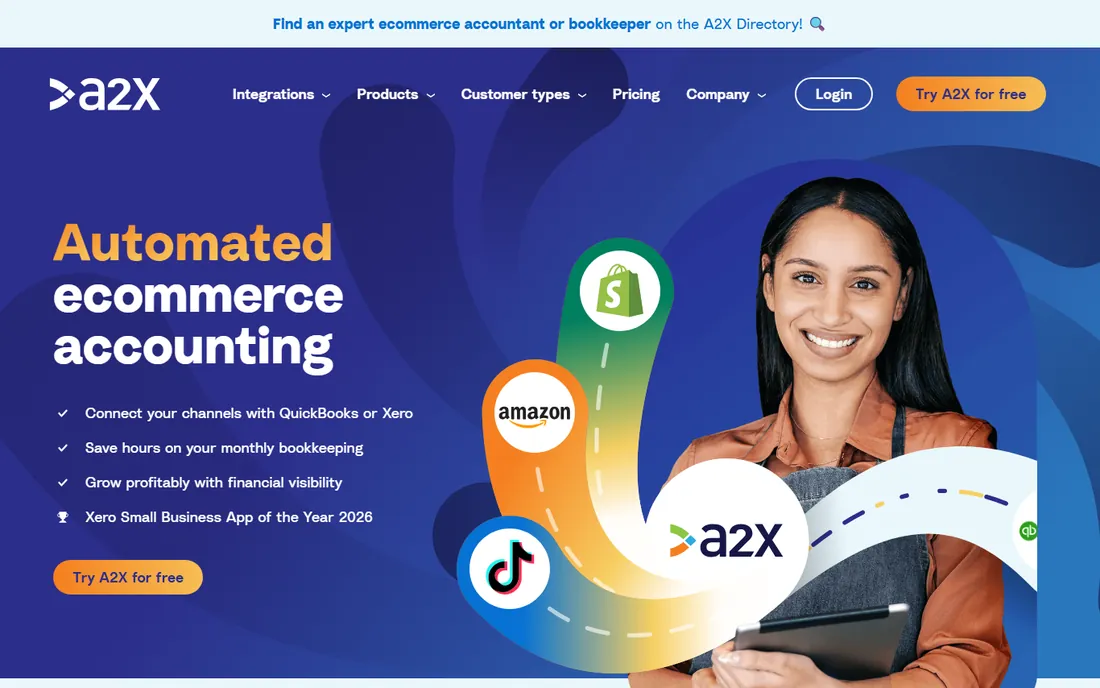
A2X solves the single most common dropshipping bookkeeping problem: the gap between what the marketplace reports and what hits your bank. Amazon or Shopify sends a payout net of fees, refunds and taxes, and A2X turns that into a clean summarized journal in QuickBooks Online or Xero, with sales, fees, refunds and taxes split correctly. The vendor's own pricing page starts the Mini plan at $29 per month for up to 200 orders, rising through $59, $79 and $159 tiers as volume grows.
The model to understand is per-channel. Sell on Amazon and Shopify and you pay for two A2X subscriptions. For a single-channel dropshipper the math is easy; for multichannel sellers, compare the total against Link My Books, which prices per connected account differently. Either way, pairing a ledger with a reconciliation tool like this is the difference between books you can file taxes from and books you cannot.
What we like- Posts summarized, accountant-approved settlements that match payouts exactly
- Per-channel pricing scales with order volume
- COGS tracking and FBA inventory locations on higher tiers
Watch out for- Each sales channel needs its own subscription, which adds up for multichannel sellers
- Does not replace your ledger, you still need QuickBooks or Xero
- Tax filing itself is not handled
#2
Finaloop
Best for: Growing ecommerce brands that want bookkeeping handled by experts, not just software
Visit finaloop.com
Starting price$245/month (Starter, brands up to $1M annual revenue)
Free planNo (free discovery call offered)
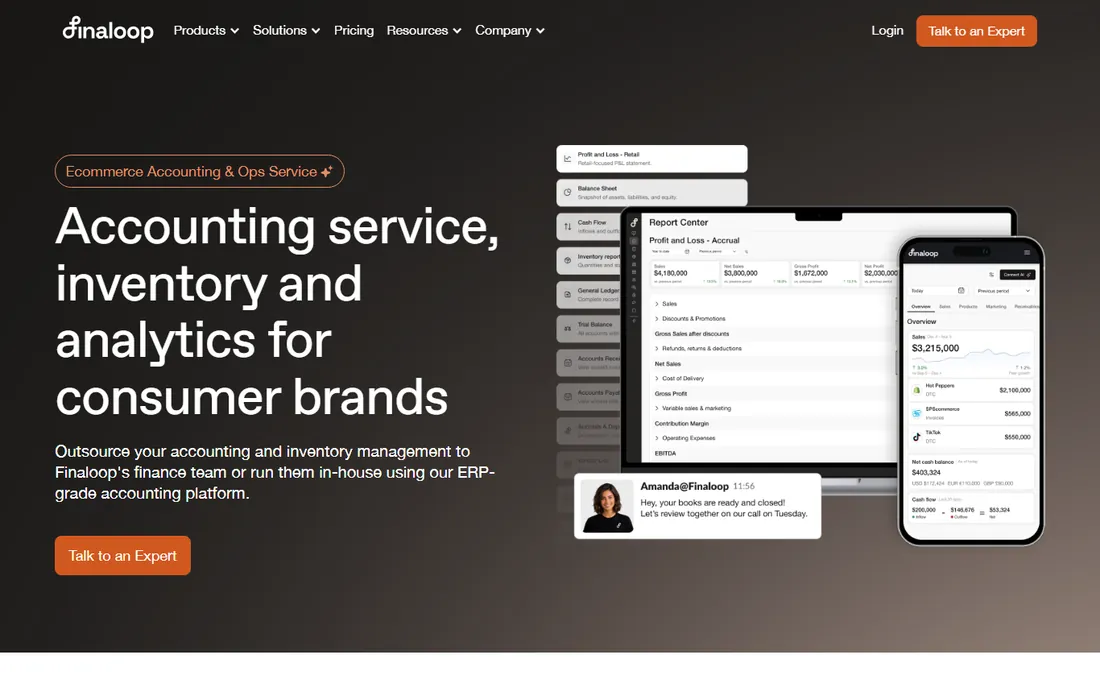
Finaloop is the answer for dropshippers who would rather sell than reconcile. It combines accounting software with an actual accounting team: your books stay current, inventory and COGS are tracked, and a dedicated team handles the financial operations. The vendor's own site puts the Starter plan at $245 per month for brands with up to $1 million in annual revenue, with higher tiers for larger sellers.
That price only makes sense past a certain scale. For a six or seven figure store, replacing a bookkeeper plus software with one subscription is straightforward value. For a new dropshipper doing a few thousand a month, it is overkill. Note the structural choice too: Finaloop is its own ledger, so you are leaving the QuickBooks/Xero ecosystem. If you want experts running your ecommerce books, this is the most purpose-built option available.
What we like- Ecommerce-native chart of accounts and real-time reconciliation out of the box
- Dedicated accounting team included, not just software
- Inventory and COGS tracking built for online sellers
Watch out for- $245 per month entry is far above DIY software
- Pricing scales with revenue, so growth raises the bill
- You work in Finaloop's system rather than QuickBooks or Xero
#3
QuickBooks Online
Best for: Dropshippers who want the most widely supported ledger and the biggest integration catalog
Visit quickbooks.intuit.com
Starting price$38/month (Simple Start)
Free planFree trial (30 days)
QuickBooks Online is the default ledger for a reason: every accountant knows it, and every ecommerce app integrates with it. For dropshipping, the honest setup is QuickBooks plus a connector. Connect A2X or Link My Books for payout reconciliation, your ad platforms for spend, and your bank for everything else, and you get books that actually reflect the business. Budgeting and inventory tracking worth using start at Plus, now $140 per month after Intuit's 2026 increase.
The failure mode is running QuickBooks alone and hand-entering payouts. Do not do that. The ledger is fine; the missing piece is always reconciliation. With the connector in place, QuickBooks is the safe, boring, correct choice for most dropshipping operations.
What we like- The largest ecosystem of ecommerce apps and accountants
- Inventory tracking and sales tax tools on Plus ($140/month)
- Bank feeds handle ad spend and supplier payments cleanly
Watch out for- Marketplace payouts need A2X or a similar connector to reconcile properly
- 2026 pricing pushed Essentials to $85 and Plus to $140 per month
- Inventory features are basic next to dedicated tools
#4
Xero
Best for: Dropshippers who want clean books, unlimited users and excellent bank reconciliation
Visit xero.com
Starting price$25/month (Early)
Free planFree trial (30 days)
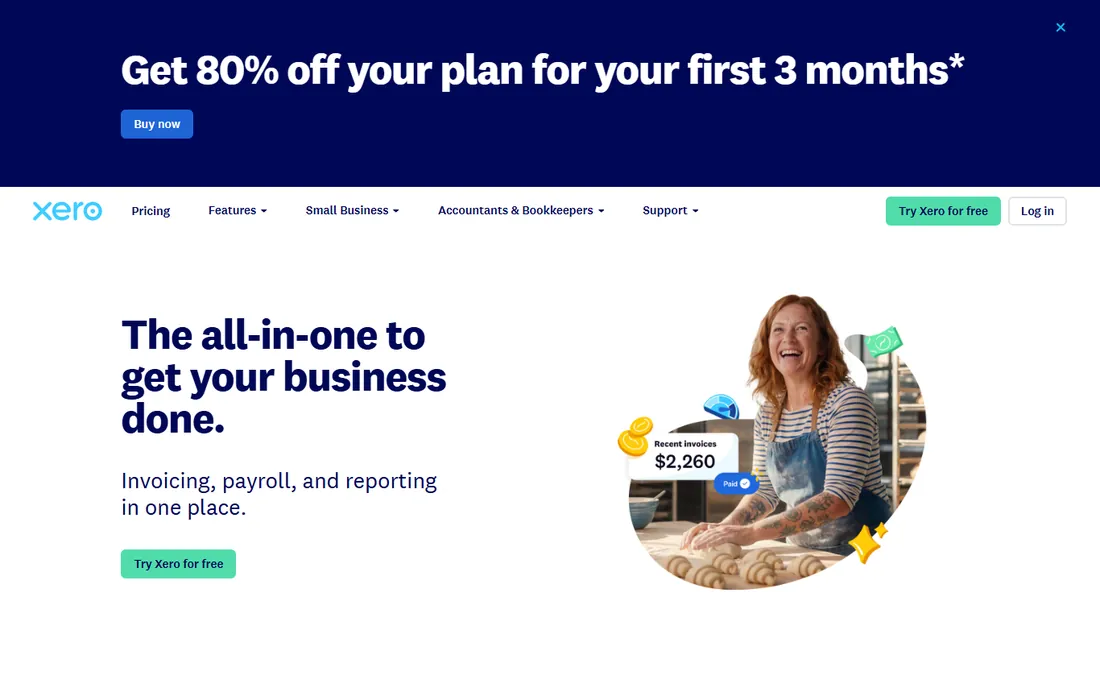
Xero is the ledger for dropshippers who value clean workflows over ecosystem size. The reconciliation interface is genuinely faster than the competition, which matters when you are matching hundreds of ad spend transactions and supplier payments. Unlimited users means your bookkeeper, your VA and your accountant all get access without seat fees. A2X and Link My Books both integrate with Xero, so the payout problem is solvable the same way as with QuickBooks.
The Early plan at $25 per month caps you at 20 invoices and 5 bills monthly, so most active stores land on Growing at $55. Inventory features are present but light. Choose Xero if you want the most pleasant bookkeeping experience and do not need QuickBooks' deeper inventory or the largest app catalog.
What we like- Unlimited users on every plan at no extra cost
- Bank reconciliation is the best in its class
- Strong app marketplace including A2X and Link My Books integrations
Watch out for- No native marketplace payout reconciliation, a connector is required
- Early plan caps invoices and bills
- Inventory tracking is lighter than QuickBooks Plus
#5
Zoho Books
Best for: Budget-conscious dropshippers who want real accounting software with a free tier
Visit zoho.com
Starting price$0 (free plan); $15/month (Standard)
Free planYes (free plan for small businesses)
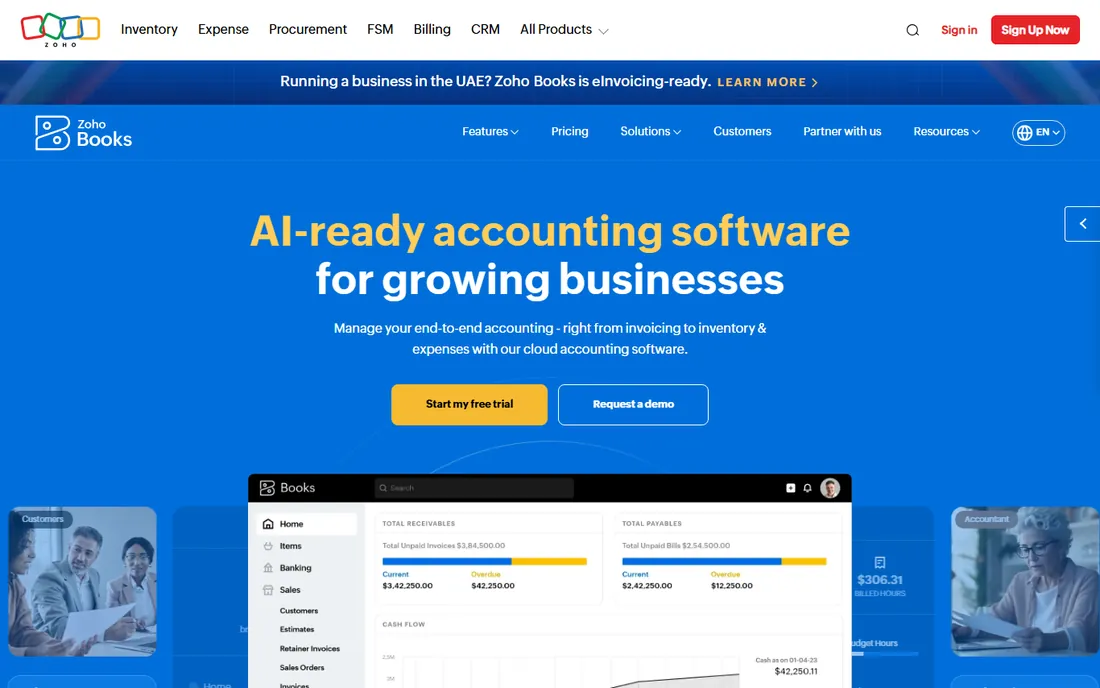
Zoho Books is the value play in general accounting. The vendor's own site offers a free plan for small businesses, with Standard at $15, Professional at $40 and Premium at $60 per month billed annually. Multi-currency is included, which helps when you pay suppliers in other currencies, and the automation tools handle recurring invoices and payment reminders.
The ecommerce story is the weak point. Fewer payout connectors exist for Zoho than for QuickBooks or Xero, so dropshippers should expect more manual reconciliation or middleware. But for a new store watching every dollar, starting free on Zoho and upgrading as revenue grows is a rational path, especially if you already use Zoho's other business apps.
What we like- Genuine free plan for getting started
- Standard at $15 per month is the cheapest paid ledger here
- Multi-currency support for international suppliers
- Integrates with the wider Zoho suite
Watch out for- Ecommerce integrations are thinner than QuickBooks or Xero
- Payout reconciliation still needs manual work or third-party tools
- Advanced inventory sits on higher tiers
#6
Link My Books
Best for: Marketplace sellers who want automated payout sync with VAT and tax handling
Visit linkmybooks.com
Starting priceSee website
Free planFree trial
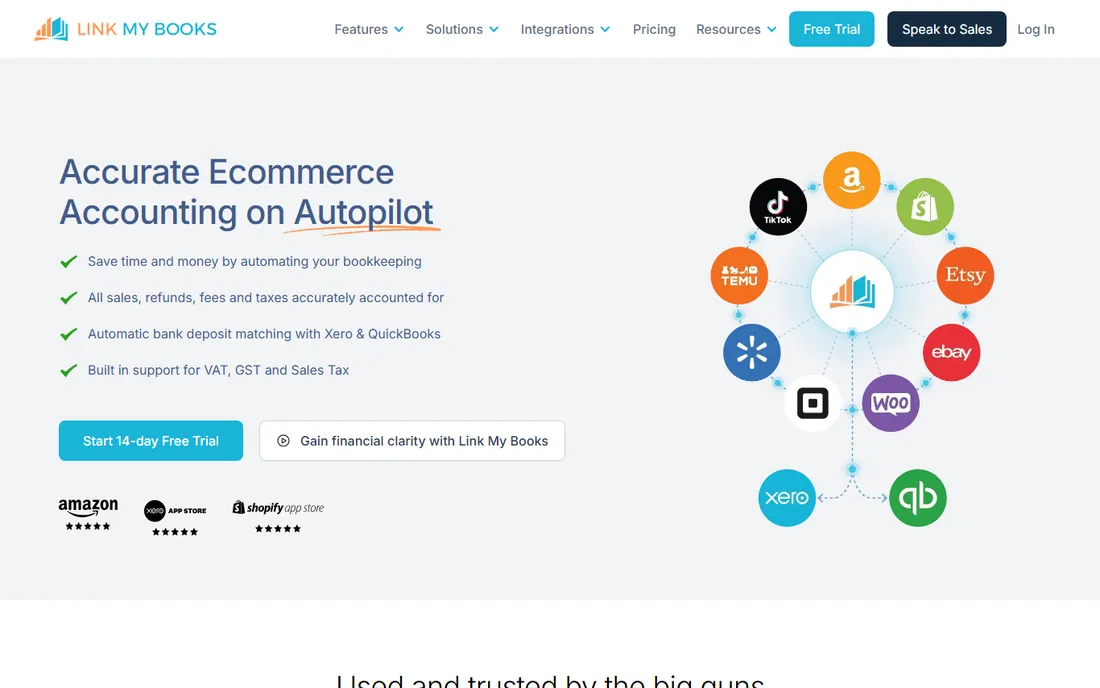
Link My Books is A2X's closest competitor and the better pick for some sellers. It connects more sales channels (including TikTok Shop and Walmart), syncs payouts into Xero or QuickBooks with sales, refunds, fees and taxes broken out, and handles VAT natively, which matters for UK and EU dropshippers. The vendor's site offers a free trial and confirms expert support from ecommerce accountants.
Pricing is not published, so get a quote against your channel count and order volume before comparing with A2X's per-channel model. Reviewers consistently praise the support quality and the time saved over spreadsheet reconciliation. If you sell on multiple marketplaces, shortlist this alongside A2X and compare total cost for your exact channel mix.
What we like- Automates payout reconciliation from Amazon, eBay, Shopify, Etsy, TikTok Shop and more
- Built-in VAT, GST and sales tax handling
- Free trial to test with your own data
Watch out for- Pricing is not published on the public site
- UK-built with the strongest fit for UK and EU sellers
- Still needs QuickBooks or Xero as the ledger
#7
Wave
Best for: Brand-new dropshippers who need real double-entry books for zero dollars
Visit waveapps.com
Starting price$0 (Starter); $19/month (Pro)
Free planYes (Starter plan is free)
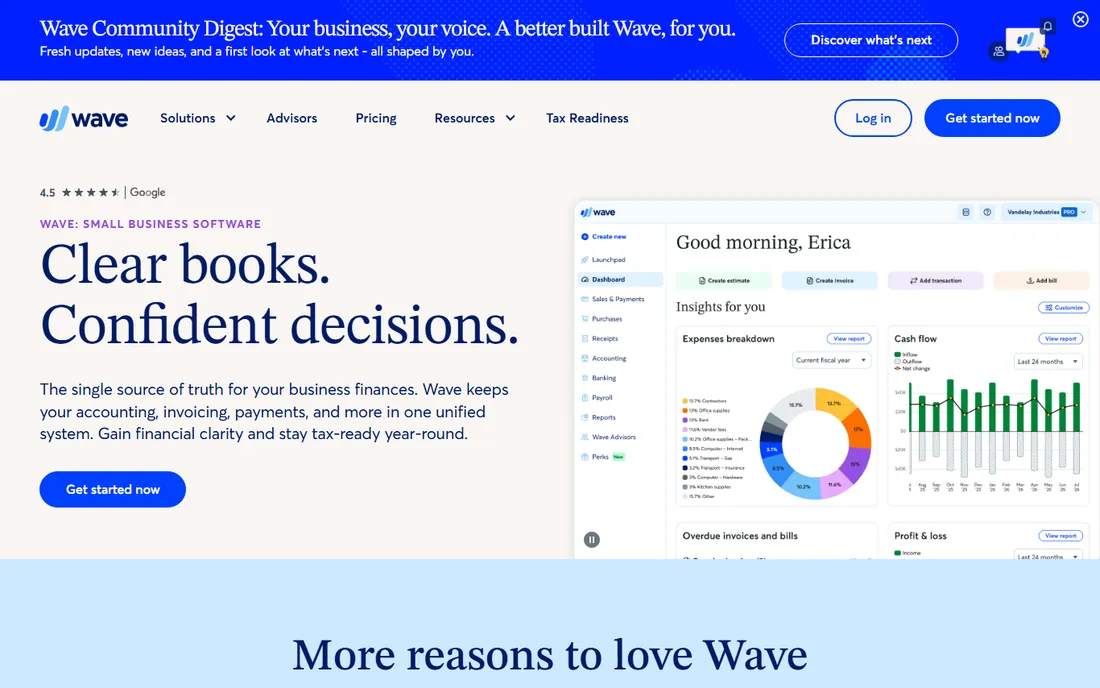
Wave is the honest starting point for a dropshipping experiment. The free Starter plan covers double-entry bookkeeping, invoicing and financial reports, and Pro at $19 per month adds automatic bank transaction imports. For a store testing its first products with a handful of orders, that is enough to keep clean records from day one.
The ceiling arrives fast. There is no payout reconciliation, no inventory management and no ecommerce-specific workflow, so growing sellers migrate to QuickBooks or Xero with a connector. But starting on Wave costs nothing and builds the bookkeeping habit early, which is worth more than any feature list at the validation stage.
What we like- Free accounting, invoicing and receipt handling on the Starter plan
- Pro at $19 per month adds automatic bank imports
- Simplest setup of any ledger here
Watch out for- No ecommerce payout reconciliation or inventory features
- Payment processing fees apply on customer payments
- You will outgrow it as soon as volume or complexity rises
#8
FreshBooks
Best for: Tiny dropshipping operations with simple finances and light invoicing needs
Visit freshbooks.com
Starting price$23/month (Lite)
Free planFree trial (30 days)
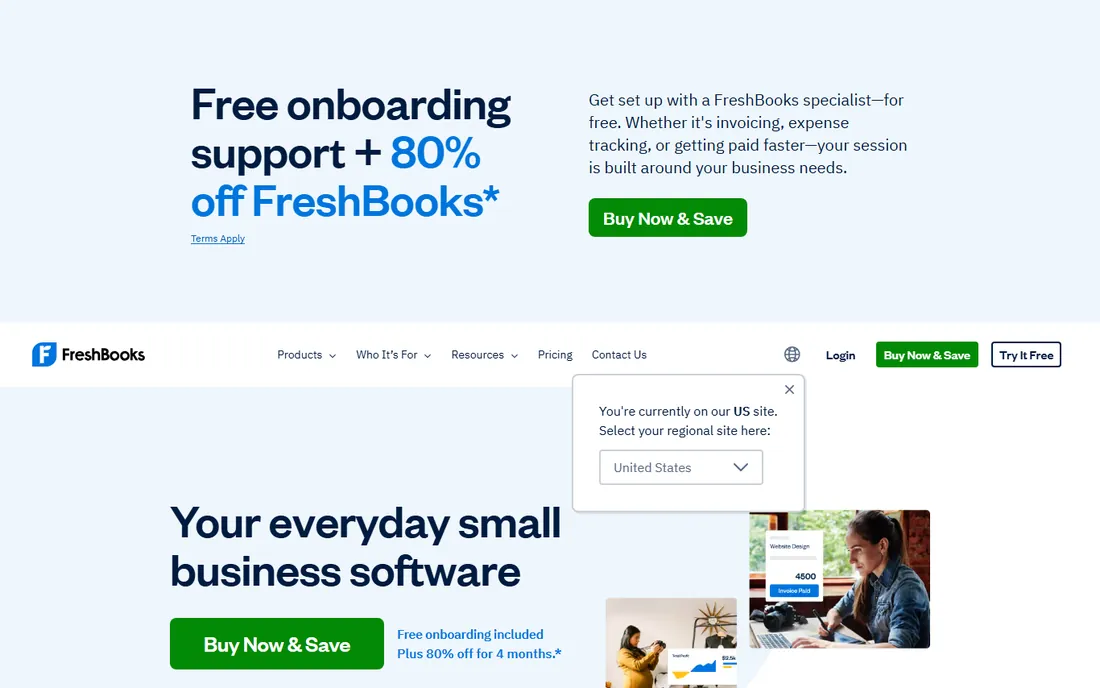
FreshBooks fits the smallest dropshipping setups: a solo operator whose accounting is really expense tracking, supplier payments and a clean year-end report. The interface is the easiest here for someone with no accounting background, and the Lite plan at $23 per month keeps costs minimal.
It is not ecommerce software. There is no inventory, no payout reconciliation and no marketplace awareness, so it works only while the business is simple enough to track manually. Treat FreshBooks as a stepping stone: fine for validation, but plan the move to a ledger-plus-connector setup once order volume makes manual tracking unreliable.
What we like- The friendliest interface for non-accountants
- Lite at $23 per month is affordable
- Expense tracking and bank reconciliation cover the basics
- Time tracking useful for logging hours
Watch out for- No inventory management or payout reconciliation features
- Lite caps billable clients at 5
- Per-user fees add up if you bring on help
#9
Sage
Best for: Established small businesses that want a traditional accounting vendor with inventory depth
Visit sage.com
Starting priceSee website (custom quote)
Free planSee website
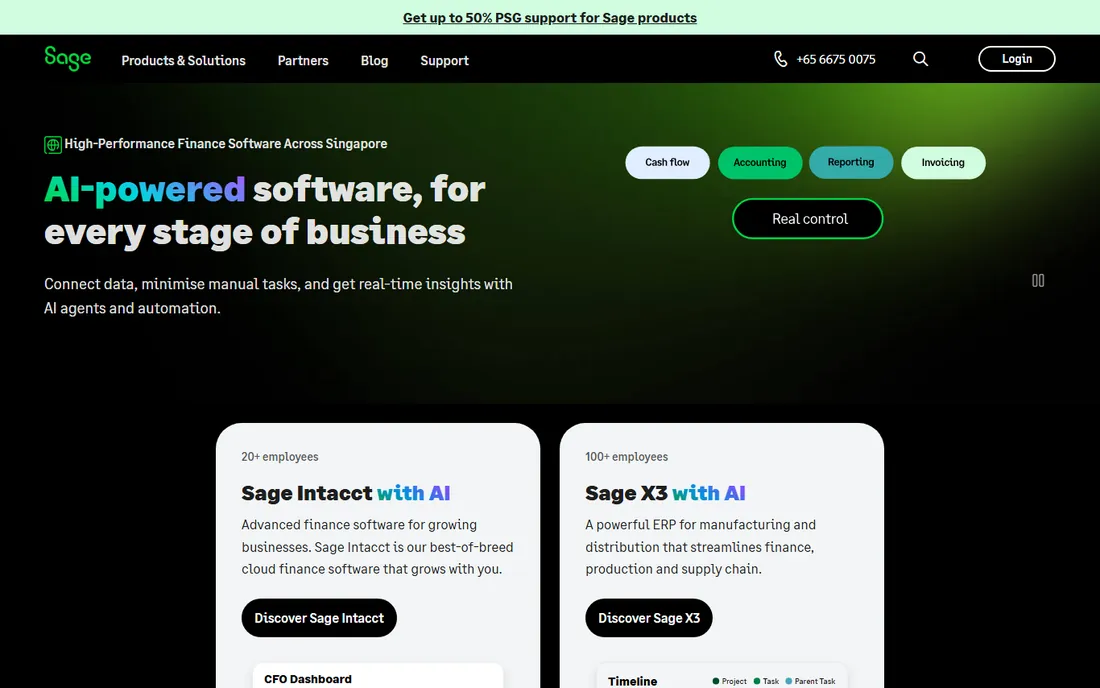
Sage is the incumbent option for dropshippers coming from traditional small-business accounting. Its strength is depth: inventory, multi-currency and reporting that go beyond the lightweight cloud ledgers, which suits sellers who have grown into real operational complexity. The vendor's site positions Sage Intacct for larger operations and Sage's small-business products for everyone else.
The buying process is enterprise-flavored: custom quotes, sales conversations and implementation effort. Ecommerce-native integrations lag the QuickBooks/Xero ecosystems, so expect middleware for payout reconciliation. Consider Sage when the business has outgrown simple ledgers and needs accounting depth more than ecommerce convenience.
What we like- Long-established vendor with deep small-business accounting features
- Inventory management stronger than most cloud ledgers
- Multi-entity and multi-currency options for growing operations
Watch out for- Pricing is custom-quoted with no public plans
- Implementation is heavier than modern cloud signups
- Ecommerce payout integrations are thinner than QuickBooks or Xero
Why dropshipping breaks generic bookkeeping
A normal business records sales and expenses. A dropshipping business records sales, then waits for a payout that has already subtracted marketplace fees, refunds, taxes and sometimes advertising costs. Record the payout as revenue and your books overstate income and understate fees. Record each fee by hand and you will spend your Sundays in spreadsheets.
This is why the connector layer matters more than the ledger choice. A2X and Link My Books exist because marketplaces do not speak accounting. They translate settlement reports into journals your ledger understands. Finaloop bundles the whole problem into a service. Whichever ledger you choose from this list, budget for the reconciliation piece from the start, because unreconciled payouts are the number one source of wrong dropshipping books.
How we chose
We started from the dropshipping workflow: supplier payments, marketplace payouts, fees, refunds, ad spend and multi-currency. For each candidate we opened the vendor's homepage, checked the vendor's own pricing page, and evaluated payout reconciliation, inventory handling, ecommerce integrations and fit for sellers at different stages. Where a vendor publishes no prices, we wrote "See website" rather than repeating third-party figures. General tools with no ecommerce story were excluded.
What to check before you buy
First, confirm the payout story for your exact channels. List every marketplace and platform you sell on, then verify the tool reconciles each one's payouts, fees and taxes. A2X and Link My Books publish their channel lists; check yours is on it before you commit to a ledger.
Second, separate the ledger from the connector in your budget. A $38 QuickBooks plan plus a $29 A2X plan is a $67 monthly stack, and that is the real number to compare against an all-in-one like Finaloop at $245. Add implementation and any bookkeeper time on top.
Third, check the tax workflow. Marketplace facilitator tax laws mean the platform often collects sales tax for you, but your books still need to record it correctly, and income tax needs clean profit figures. Confirm the tool handles your nexus situation, and keep a CPA in the loop for filing. Software organizes the numbers; it does not replace professional tax advice.
Frequently asked questions
What is the best accounting software for dropshipping?
There is no single winner because the job splits in two. For the ledger, QuickBooks Online ($38/month) or Xero ($25/month) are the standard picks. For the dropshipping-specific part, A2X ($29/month) or Link My Books reconcile marketplace payouts into that ledger. Growing brands that want it handled for them should look at Finaloop (from $245/month).
Do I need special accounting software for dropshipping?
You need a reconciliation layer, not necessarily special software. A standard ledger like QuickBooks, Xero or Zoho Books works if you add a connector like A2X or Link My Books that translates marketplace payouts into proper journals. Without that layer, your books will misstate revenue and fees.
Can I use Wave for free for my dropshipping business?
Yes. Wave's Starter plan is free and covers double-entry bookkeeping, invoicing and reports. It has no payout reconciliation or inventory features, so it fits the validation stage. Once order volume grows, move to a ledger with a proper ecommerce connector.
How does A2X work with QuickBooks?
A2X connects to your sales channels, pulls settlement data, and posts summarized journals into QuickBooks Online: sales, fees, refunds and taxes split into the right accounts, matched to the payout deposit. Plans start at $29 per month for up to 200 orders, with each sales channel on its own subscription.
What does Finaloop cost?
Finaloop's Starter plan starts at $245 per month for brands with up to $1 million in annual revenue, according to the company's own site. Higher tiers are customized by revenue and needs. It bundles software with a dedicated accounting team, so compare it against the cost of software plus a bookkeeper, not against software alone.
Should a new dropshipper pay for accounting software?
Start free with Wave or Zoho Books' free plan and keep clean records from the first sale. Pay for a ledger and a reconciliation connector once monthly revenue justifies it, usually when manual tracking starts taking hours or your tax preparer asks for cleaner books. Clean books from day one are cheaper than cleanup later.
Sources we checked (11)
- https://a2xaccounting.com/
- https://www.a2xaccounting.com/amazon/pricing
- https://www.finaloop.com/
- https://www.finaloop.com/finaloopvs/finaloopvsxero
- https://quickbooks.intuit.com/pricing
- https://www.xero.com/us/pricing-plans/
- https://www.zoho.com/books/
- https://linkmybooks.com/
- https://www.waveapps.com/pricing
- https://www.freshbooks.com/pricing
- https://www.sage.com/en-us/solutions/small-business/
Is your product missing or out of date?
We review this list regularly. Vendors can request a listing, send updated pricing or ask about featured placement.

Shihab Mia · Founder, Rankite
Shihab has spent more than a decade helping SaaS and e-commerce brands grow through search. He writes Rankite's software buying guides from pricing pages, documentation and public user reviews. More about Shihab.