How we make this list: we compare pricing pages, product documentation and public user reviews. Rankite is independent; if a vendor ever pays for a featured spot, that listing is clearly labeled Partner.
Key takeaways
- Project accounting is not project management: you need job costing, billable hours, expenses per project and profitability reports, not just task lists.
- SMB pricing in 2026: FreshBooks from $23/month, Xero from $25/month, QuickBooks Online from $38/month, Zoho Books free to $20/month.
- Professional services tools price per user: Harvest from $9/seat/month, Scoro from $17/user/month, BigTime from $20/user/month.
- Sage Intacct and NetSuite do not publish pricing; they fit mid-market and enterprise firms with complex revenue recognition, not small teams.
Quick comparison
| Tool | Best for | Starting price | Free plan |
|---|
 QuickBooks Online QuickBooks Online | Businesses whose accountant already uses it | From $38/month (Simple Start; project tracking on Plus) | No (30-day free trial) |
 Xero Xero | Growing teams that need unlimited users | From $25/month | No (30-day free trial) |
 FreshBooks FreshBooks | Service businesses that bill by project or hour | From $23/month (Lite) | No (30-day free trial) |
 Harvest Harvest | Teams whose projects live in timesheets | From $9/seat/month (Teams, billed annually) | Yes |
 BigTime BigTime | Professional services firms that bill on complexity | From $20/user/month | No (demo only) |
 Scoro Scoro | Agencies running quote-to-cash in one system | From $17/user/month (5-user minimum) | No (14-day free trial) |
 Sage Intacct Sage Intacct | Mid-market firms with complex project financials | See website | No (demo available) |
 Oracle NetSuite Oracle NetSuite | Enterprises unifying project accounting with ERP | See website | No (demo available) |
 Zoho Books Zoho Books | Budget-conscious teams in the Zoho ecosystem | Free (Standard from $20/month) | Yes |
Is your product missing or out of date?
We review this list regularly. Vendors can request a listing, send updated pricing or ask about featured placement.
The best accounting software for tracking projects
Every service business has a project that looked profitable until the final invoice. Project accounting exists to prevent that surprise: tracking labor, expenses and revenue per project so you know margins while the work is happening, not after. Nine tools that do it, from freelancer-simple to enterprise-grade.
Starting priceFrom $38/month (Simple Start; project tracking on Plus)
Free planNo (30-day free trial)
QuickBooks Online is the default because the ecosystem assumes it. Project tracking on Plus lets you assign income, expenses and labor to projects, then run project profitability reports. Simple Start begins at $38 a month in 2026, but project tracking needs Plus, so price that tier, not the entry one.
The honest math: Plus costs more than the headline $38, and each additional user adds to the bill. But the accountant compatibility is worth real money: no migration headaches, no training your bookkeeper. For US small businesses doing project work, QuickBooks is the safe choice even when it is not the cheapest.
What we like- Project tracking with job costing on Plus and Advanced
- The market standard, so accountants and bookkeepers know it
- 750+ integrations
Watch out for- Real project features require the pricier Plus tier
- Per-user pricing adds up for teams
- The interface mixes simple and complex awkwardly
#2
Xero
Best for: Growing teams that need unlimited users
Visit xero.com
Starting priceFrom $25/month
Free planNo (30-day free trial)
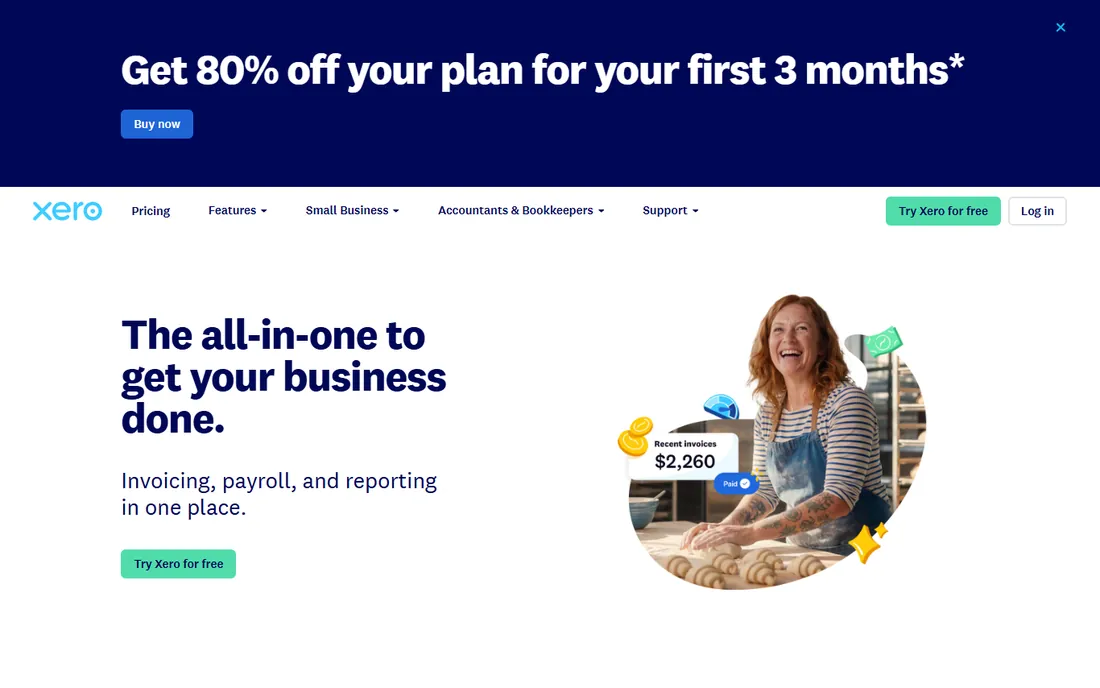
Xero's unlimited-user policy is the headline: add your whole team without per-seat fees, which alone can save hundreds over QuickBooks. US pricing runs $25 to $90 a month. Project tracking covers quotes, time entries, expenses and project invoicing with profitability views.
It is not a professional services suite: utilization reporting and revenue recognition are thinner than BigTime or Sage Intacct. US payroll is limited. But for growing teams that need real project accounting without per-user penalties, Xero is the strongest QuickBooks alternative.
What we like- Unlimited users on every plan, rare in the category
- Project tracking with quotes, time and expenses
- 1,000+ integrations and strong multi-currency
Watch out for- Payroll is limited in the US
- Project features are good but not as deep as PSA tools
- Support is ticket-based
Starting priceFrom $23/month (Lite)
Free planNo (30-day free trial)
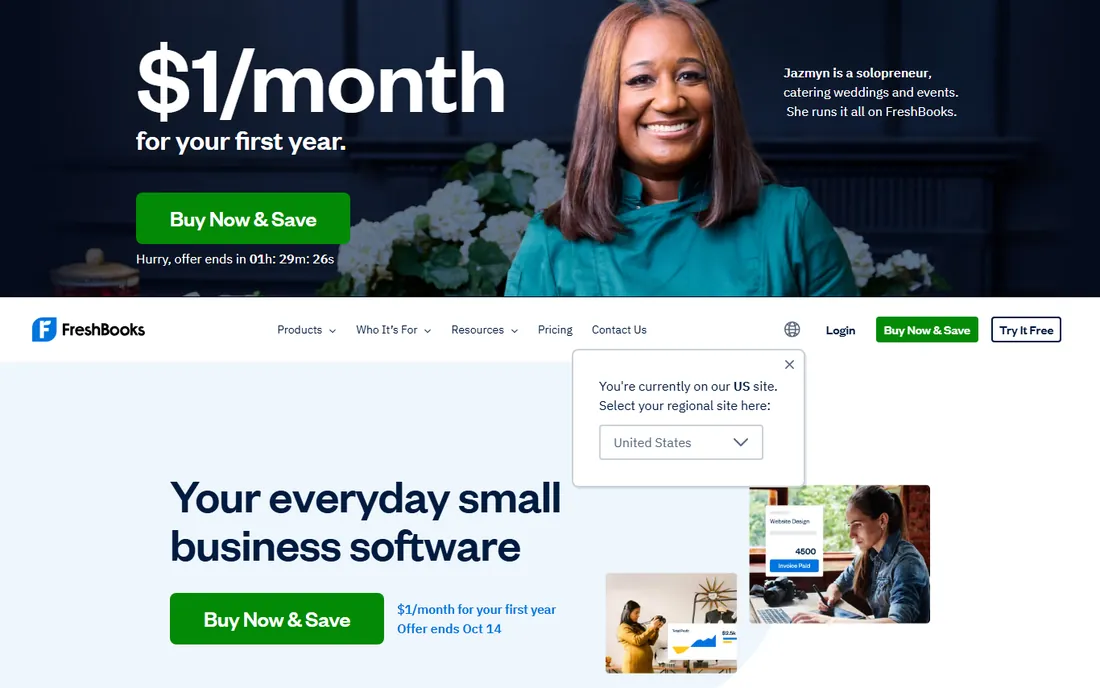
FreshBooks starts from the project, not the ledger. Log hours against a project, attach expenses, then convert everything into a branded invoice. Plans run $23 to $70 a month (Lite $23, Plus $43, Premium $70), each for one user with additional users at $11 a month.
The accounting is lighter than QuickBooks: fine for service businesses, thin for inventory or complex needs. But for freelancers, agencies and consultants whose financial life starts with a client engagement, FreshBooks fits the workflow better than any general ledger. There is no free tier anymore, only a 30-day trial.
What we like- Time tracking converts to invoices in a few clicks
- Project workflows feel built for services, not retrofitted
- Very user-friendly for non-accountants
Watch out for- No permanent free tier
- Each plan covers one user, with $11/month per extra
- Accounting depth is lighter than QuickBooks or Xero
Starting priceFrom $9/seat/month (Teams, billed annually)
Free planYes
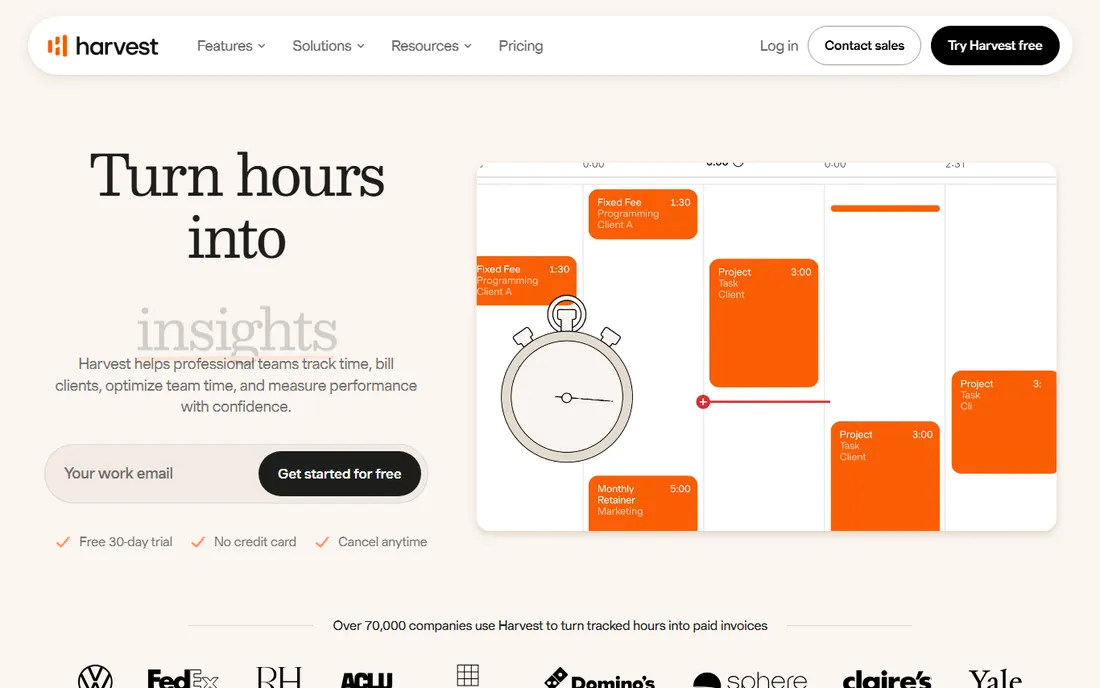
Harvest does one thing extremely well: turning tracked time into accurate client invoices. The free plan covers one seat and two projects, and paid Teams starts at $9 per seat per month billed annually ($11 monthly). It integrates with QuickBooks Online, Xero and Sage Intacct, so it complements your accounting rather than replacing it.
The 2026 caveat is serious: after the Bending Spoons acquisition, Harvest added usage-based fees for invoices, projects, clients and tasks on top of the seat rate, and it does not publish the per-unit amounts. Some firms report large bill increases at renewal. Price your actual usage, not just the seat rate, before committing.
What we like- The best pure time-tracking-to-invoice workflow
- Free plan covers 1 seat and 2 projects
- Integrates with QuickBooks, Xero and Sage Intacct
Watch out for- 2026 pricing adds unpublished usage fees on top of the seat rate
- Not a full accounting system
- Project financials are lighter than PSA tools
#5
BigTime
Best for: Professional services firms that bill on complexity
Visit bigtime.net
Starting priceFrom $20/user/month
Free planNo (demo only)
BigTime is where consulting and engineering firms go when FreshBooks runs out. It handles utilization tracking, complex billing rates, project budgeting and profitability reporting with a depth the general tools cannot match. Pricing starts at $20 per user per month.
There is no free trial, only a demo, and the sales process reflects its mid-market positioning. Implementation takes real work. But for firms where project profitability is the business, not a report, BigTime's depth pays for itself. Pair it with QuickBooks or Sage Intacct for the general ledger.
What we like- Built for professional services billing with utilization and profitability reporting
- Integrates with QuickBooks and Sage Intacct
- Handles complex rate structures
Watch out for- Demo-only entry, no self-serve trial
- The price reflects enterprise positioning
- Implementation takes longer than simpler tools
#6
Scoro
Best for: Agencies running quote-to-cash in one system
Visit scoro.com
Starting priceFrom $17/user/month (5-user minimum)
Free planNo (14-day free trial)
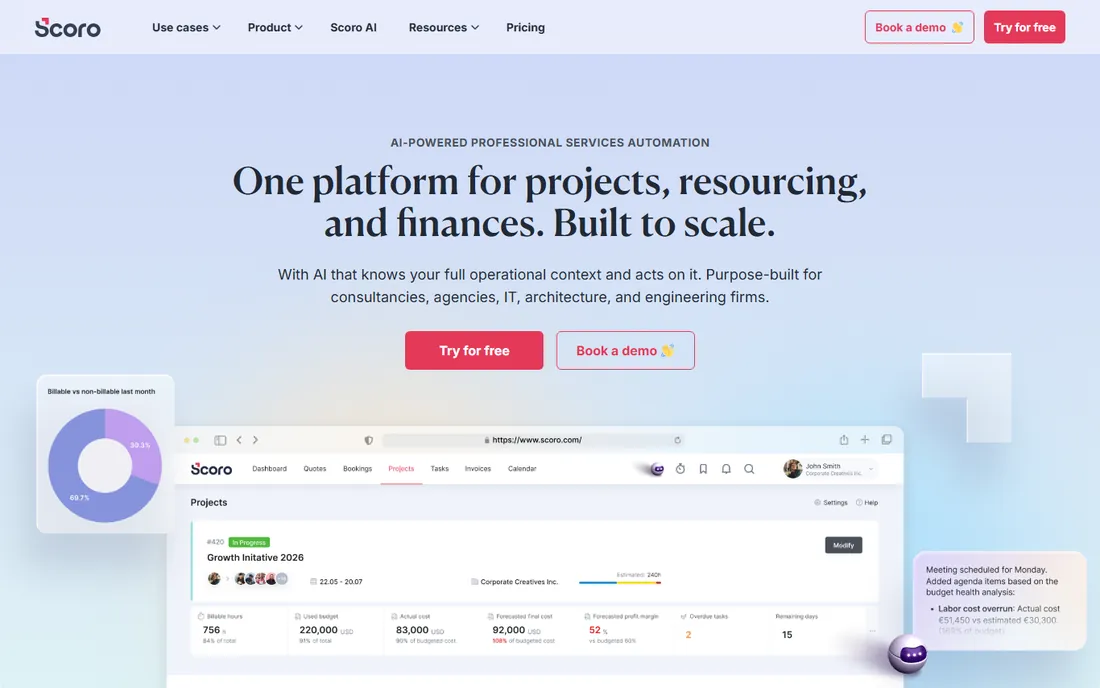
Scoro covers the full client lifecycle: quote the work, plan resources, deliver the project, track time and bill it, all in one system. Time-billing starts at $17 per user per month, but the Projects and Resources apps run $29 and the full end-to-end bundle $57, with a five-user minimum on every combination.
That minimum means the real entry is about $85 a month for time-billing alone. Small firms should look at Harvest or FreshBooks instead. But for agencies and consultancies of 5+ people that want quoting through cash in one place, Scoro's connected workflow beats stitching tools together.
What we like- Quotes, projects, resources and billing connected in one platform
- Strong utilization and project financial reporting
- QuickBooks, Xero and Jira integrations
Watch out for- Five-user minimum prices out small teams
- Modular pricing means the full workflow costs $29-$57 per user
- More setup than focused tools
Starting priceSee website
Free planNo (demo available)
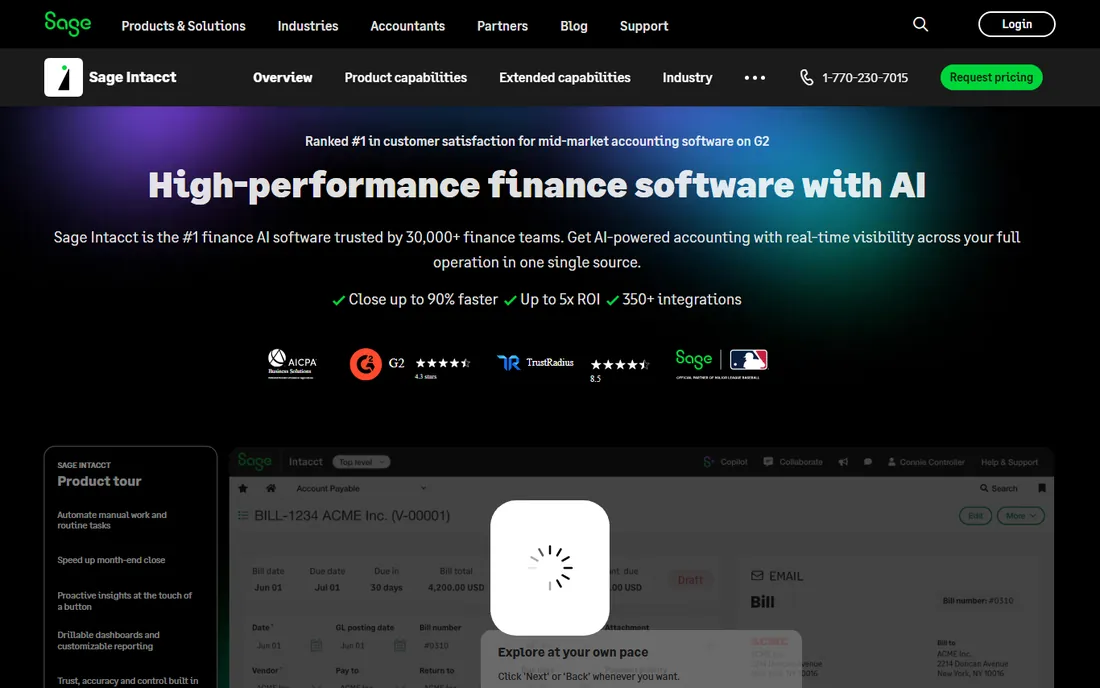
Sage Intacct is the step up when QuickBooks and Xero hit their ceiling: multi-entity project accounting, sophisticated revenue recognition, and dimensional reporting that slices project financials any way finance wants. It is the mid-market standard for a reason.
Everything is quote-based with consultant-led implementation, and the total cost reflects it. Teams under 50 people will find it overwhelming and overpriced. For growing firms with multiple entities, complex billing arrangements or audit-grade revenue recognition, Intacct is the right long-term platform.
What we like- True fund and project accounting with multi-entity support
- Revenue recognition that satisfies auditors
- Deep dimensional reporting
Watch out for- Quote-only pricing with enterprise sales cycles
- Implementation requires consultants
- Overkill for teams under 50 people
#8
Oracle NetSuite
Best for: Enterprises unifying project accounting with ERP
Visit netsuite.com
Starting priceSee website
Free planNo (demo available)
NetSuite is the enterprise answer: project accounting inside a full ERP, so project financials, inventory, procurement and HR share one database. Fast-scaling companies like Zillow Group moved to NetSuite to unify accounting across businesses. The project management and revenue recognition handle complexity nothing else here touches.
The price and implementation reflect the scope: five-figure annual contracts and months of setup. Small and mid-size businesses should not look twice. For companies outgrowing Intacct or running multi-subsidiary project operations, NetSuite is the destination platform.
What we like- Full ERP with project accounting, inventory, HR and CRM in one system
- Handles the most complex project financials
- Proven at large scale
Watch out for- Quote-only pricing that runs deep into five figures annually
- Long implementations
- The opposite of simple
#9
Zoho Books
Best for: Budget-conscious teams in the Zoho ecosystem
Visit zoho.com
Starting priceFree (Standard from $20/month)
Free planYes
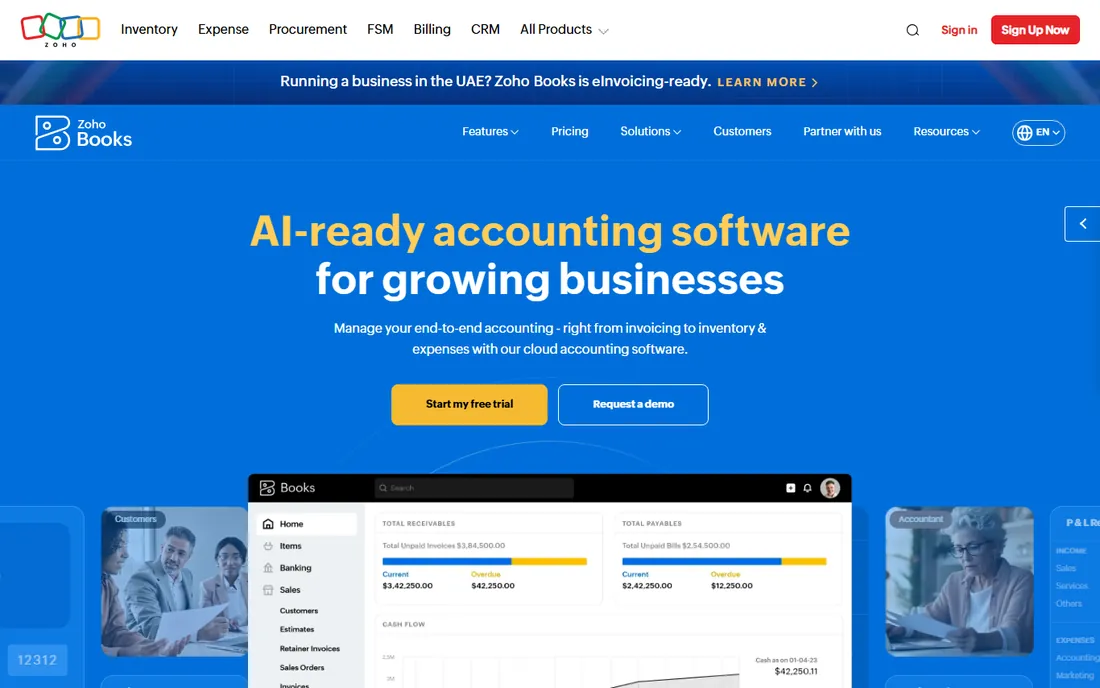
Zoho Books is the value play: a real free plan for businesses with under $50,000 annual revenue, with Standard from $20 a month beyond that. Project tracking covers timesheets, expenses and project invoicing, and the Zoho CRM integration connects sales to delivery.
The project features are basic compared with BigTime or Scoro, and the free tier's revenue cap means growing businesses graduate to paid plans. But for freelancers and micro-teams already using Zoho apps, the price is unbeatable and the project accounting covers the essentials.
What we like- Genuine free plan for businesses under $50K revenue
- Project tracking with timesheets and expenses
- Deep integration with Zoho CRM and apps
Watch out for- Project features are basic next to PSA tools
- The free plan has revenue limits
- US payroll needs third-party add-ons
Project accounting vs project management: know which you need
These categories get confused constantly. Project management tools (Asana, Monday, Trello) track tasks, deadlines and workloads; they tell you whether the project is on schedule. Project accounting tools track money: labor costs, expenses, billable hours, invoices and margins per project; they tell you whether the project is profitable. Most businesses need both, and the tools integrate: Harvest feeds QuickBooks, BigTime feeds Sage Intacct, Scoro does both natively. Before buying, decide which question hurts more: "are we on track" or "are we making money." If it is the second, buy from this list, not the task managers.
The utilization math that decides profitability
For service businesses, one number predicts project profitability better than any software feature: utilization rate, the share of paid hours your team bills to clients. A 10-person firm at 60 percent utilization bills 6 people's worth of hours; at 75 percent, 7.5. That 15-point swing is pure margin. The tools on this list that report utilization, BigTime, Scoro, Harvest, exist to move that number. Set utilization targets per role, review them weekly, and price projects from actual cost rates, not guesses. Software cannot fix a firm that does not know its hourly cost; it can only reveal it faster. Run that math before the demo, and every vendor conversation gets sharper.
How we chose
We built this list from vendor pricing pages, product documentation and 2026 accounting software comparisons, checked in October 2026. A tool made the cut only if it is actively sold today and handles real project accounting work: job costing, billable time, project expenses or project profitability reporting. Prices reflect published vendor rates and 2026 comparison data: QuickBooks Online Simple Start $38, Xero $25-$90, FreshBooks $23-$70, Harvest Teams $9/seat annual, BigTime $20/user, Scoro $17/user with a 5-user minimum, Zoho Books free to $20. Sage Intacct and NetSuite do not publish pricing, so their entries show "See website" per our pricing rule. We did not run hands-on trials. The trade-offs reflect consistent reviewer feedback.
Frequently asked questions
What is project accounting software?
Software that tracks the financial performance of individual projects: labor costs, expenses, billable hours, invoices and profit margins per project or client engagement. Unlike general accounting, which shows company-wide numbers, project accounting answers whether each specific job made or lost money.
How much does project accounting software cost?
General accounting with project features runs $20 to $99 a month: Zoho Books free to $20, FreshBooks $23-$70, Xero $25-$90, QuickBooks Online $38 and up with project tracking on Plus. Professional services tools price per user: Harvest from $9/seat, Scoro from $17/user, BigTime from $20/user. Sage Intacct and NetSuite are quote-based enterprise platforms.
Can QuickBooks track project profitability?
Yes, on Plus and Advanced plans: assign income, expenses and labor to projects, then run project profitability reports showing costs versus revenue per job. Simple Start does not include project tracking, so price the Plus tier when comparing. For deeper utilization and revenue recognition, firms pair QuickBooks with BigTime or migrate to Sage Intacct.
What is the difference between Harvest and FreshBooks?
Harvest is a time-tracking tool that creates invoices; it excels at timesheets-to-billing and integrates with your accounting system. FreshBooks is fuller accounting software with built-in time tracking, invoicing, expenses and client management. Use Harvest when you have accounting covered and need the best time workflow; use FreshBooks when you want one system for both.
Do we need separate project management software too?
Usually yes. The tools on this list track project money, not project tasks: they will not run your sprints, dependencies or resource calendars. Scoro is the exception, covering both natively. The common stack is a task tool (Asana, Monday) for delivery plus a project accounting tool for money, connected by integration.
When should we move from QuickBooks to Sage Intacct?
The usual triggers: multiple entities needing consolidated project reporting, complex revenue recognition rules, project volumes that make QuickBooks reporting slow, or audit requirements QuickBooks cannot satisfy. Most firms hit these between 50 and 200 employees. Before that point, QuickBooks Plus with a PSA add-on like BigTime covers the gap.
Sources we checked (10)
- https://biphoo.eu/the-best-small-business-accounting-software-of-2026-expert-tested
- https://fitsmallbusiness.com/best-quickbooks-alternative/
- https://www.business-software.com/blog/5-mobile-accounting-platforms-perfect-small-business/amp/
- https://www.completecontroller.com/software-alternatives-for-quickbooks/
- https://technext.it/best-time-and-expense-tracking-software/
- https://www.timecamp.com/blog/best-time-tracking-software-for-consultants/
- https://www.operating.app/blog-posts/harvest-alternatives-price-increase
- https://www.bigtime.net/blogs/time-tracking-and-invoicing-software/
- https://www.projectworks.com/blog/harvest-pricing-calculator-what-youll-actually-pay-in-2026
- https://github.com/kacky000/aitoolpick/blob/HEAD/src/content/blog/best-invoicing-software-for-freelancers-2026.md
Is your product missing or out of date?
We review this list regularly. Vendors can request a listing, send updated pricing or ask about featured placement.

Shihab Mia · Founder, Rankite
Shihab has spent more than a decade helping SaaS and e-commerce brands grow through search. He writes Rankite's software buying guides from pricing pages, documentation and public user reviews. More about Shihab.