How we make this list: we compare pricing pages, product documentation and public user reviews. Rankite is independent; if a vendor ever pays for a featured spot, that listing is clearly labeled Partner.
Key takeaways
- Retail accounting has one question that decides everything: where is your stock and what did it cost you? Tools without real inventory tracking fail the test.
- QuickBooks Online ($38/month Simple Start) is the default for retailers selling online and in person, but inventory and COGS tracking needs the Plus plan at $140/month.
- Xero ($25/month Early) includes inventory tracking on every plan and integrates with Square, Lightspeed and Shopify, which makes it the value pick for multi-channel sellers.
- Zoho Books (free under $50K revenue; Standard $20/month) bakes inventory, barcodes and shipping labels into the accounting itself.
- A2X fills the gap the accounting tools leave: reconciling Amazon and Shopify payouts, which is where most ecommerce bookkeeping breaks down.
Quick comparison
| Tool | Best for | Starting price | Free plan |
|---|
 QuickBooks Online QuickBooks Online | Retailers selling online and in person | $38/month (Simple Start) | Free trial (30 days) |
 Xero Xero | Multi-channel sellers wanting POS integrations | $25/month (Early) | Free trial |
 Zoho Books Zoho Books | Built-in inventory on a budget | Free (under $50K revenue); Standard $20/month | Yes |
 Wave Wave | Free accounting for tiny shops | Free | Yes |
 Kashoo Kashoo | Simplest books for micro-retailers | See website | Free trial |
 FreshBooks FreshBooks | Easiest invoicing and client billing | $23/month (Lite) | Free trial (30 days) |
 A2X A2X | Reconciling Amazon and Shopify payouts | See website | Free trial |
 Sage 50 Accounting Sage 50 Accounting | Inventory-heavy retailers wanting desktop control | See website | Free trial |
Is your product missing or out of date?
We review this list regularly. Vendors can request a listing, send updated pricing or ask about featured placement.
The best accounting software for retail business
A retail business is not a service business with products. The accounting has to track inventory quantities, cost of goods sold, purchase orders, sales tax across jurisdictions and sales flowing in from a POS, a website and maybe Amazon at the same time. Generic small-business accounting handles the money; retail accounting handles the stuff. The eight tools below are judged on the retail parts: inventory, COGS, POS integration and multi-channel sales.
The big three: full accounting with retail depth
Starting price$38/month (Simple Start)
Free planFree trial (30 days)
QuickBooks Online is NerdWallet's pick for retail stores that sell both online and in person, and the reasoning is integration depth. Every plan connects natively to Amazon, Shopify and eBay, and the POS integrations with Square and Lightspeed cover the physical store. Sales tax tracking with custom rates handles multi-jurisdiction selling.
The pricing catch is inventory. Simple Start at $38 a month does not track inventory or cost of goods sold; that needs Plus at $140 a month. For a retailer, inventory is not optional, so price QuickBooks at Plus, not Simple Start. If your accountant works in QuickBooks and you sell across channels, it is still the safest choice. Otherwise, Xero gives you inventory on every tier.
What we like- Built-in connections to Amazon, Shopify and eBay on every plan
- Integrates with Square and Lightspeed POS
- The largest app marketplace and the accountant network to match
Watch out for- Inventory and COGS tracking requires Plus at $140 a month, a big jump from Simple Start
- Per-seat pricing across tiers
- Expensive next to Xero and Zoho Books
#2
Xero
Best for: Multi-channel sellers wanting POS integrations
Visit xero.com
Starting price$25/month (Early)
Free planFree trial
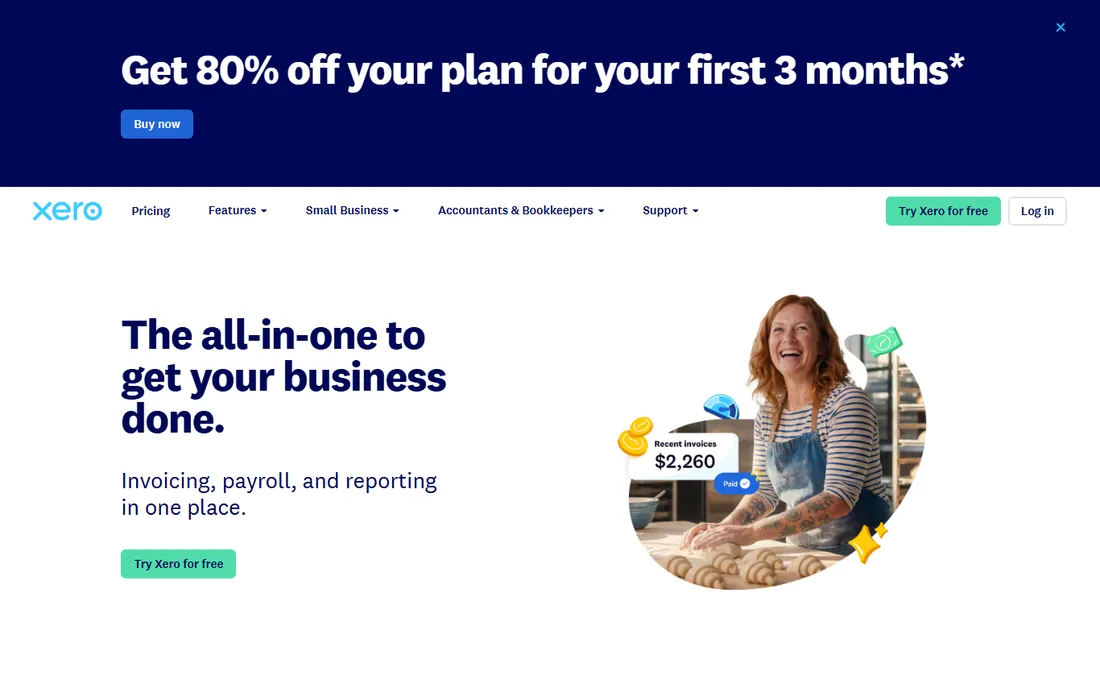
Xero's retail case is simple: inventory comes standard, not gated behind the top tier. Every plan tracks stock and calculates profit by item, and the integration ecosystem covers the retail stack: Square and Lightspeed for POS, Shopify for ecommerce, plus Gusto and ADP for payroll. Unlimited users means the whole shop can be in the books.
Early at $25 a month caps invoicing volume, so an operating retailer usually lands on Growing at $55. Even there, it undercuts QuickBooks Plus by a wide margin while including inventory. The trade-offs are familiar: US payroll via Gusto, and a smaller (though growing) US accountant network. For multi-channel retailers who resent paying $140 a month for inventory, Xero is the value answer.
What we like- Inventory tracking with up to 4,000 items and profit-by-item on every plan
- 1,000-plus integrations including Square, Lightspeed and Shopify
- Unlimited users on all plans
Watch out for- Early caps invoices and bills, so most retailers need Growing at $55
- US payroll goes through a partner
- Fewer US accountants than QuickBooks
Starting priceFree (under $50K revenue); Standard $20/month
Free planYes
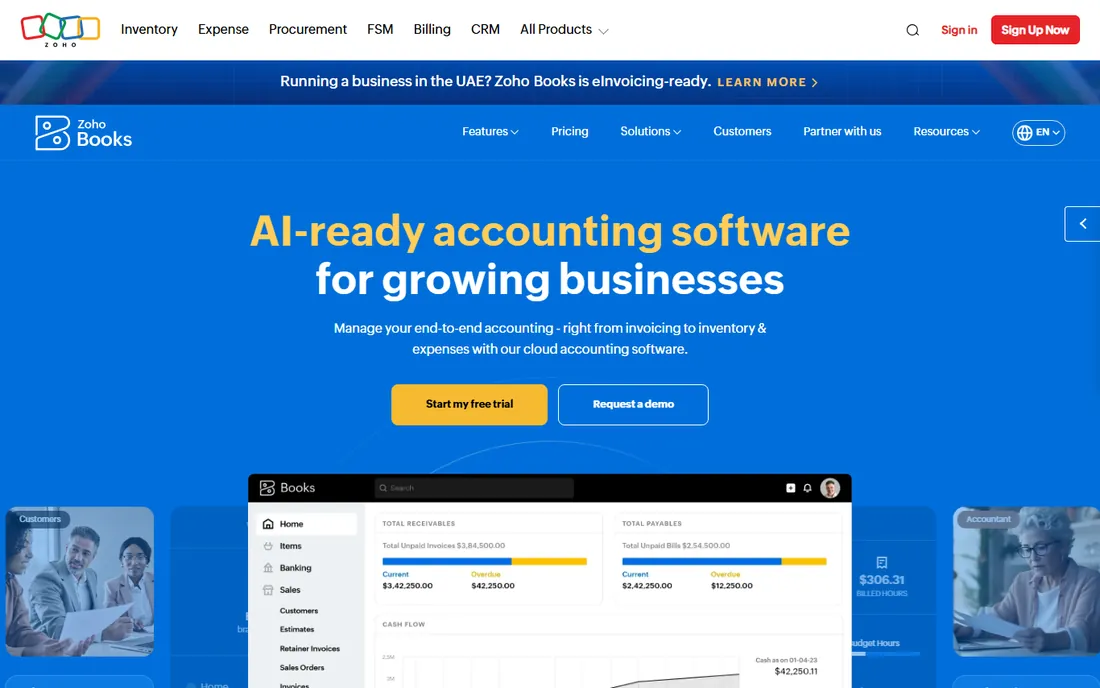
Zoho Books is the budget retail pick with unusual depth. The free plan covers businesses under $50K in revenue, and even it includes inventory basics. Paid plans from $20 a month add integrated inventory with barcode generation, shipping labels and inventory reports, plus sales tax tracking. For a small shop, that is a complete retail accounting stack at a fraction of QuickBooks Plus.
The ecosystem is the limitation: fewer POS and marketplace integrations than the big two, and accountants who live in QuickBooks will grumble. But Zoho Inventory integrates natively for businesses that outgrow the built-in features. If your retail operation is small and your budget is smaller, start here.
What we like- Free plan for businesses under $50K annual revenue
- Inventory features integrated by default with barcodes and shipping labels
- Standard at $20 a month is the cheapest paid tier here
Watch out for- Fewer integrations than QuickBooks or Xero
- The Zoho Commerce upsell adds fees
- Smaller accountant ecosystem
Starting priceFree
Free planYes
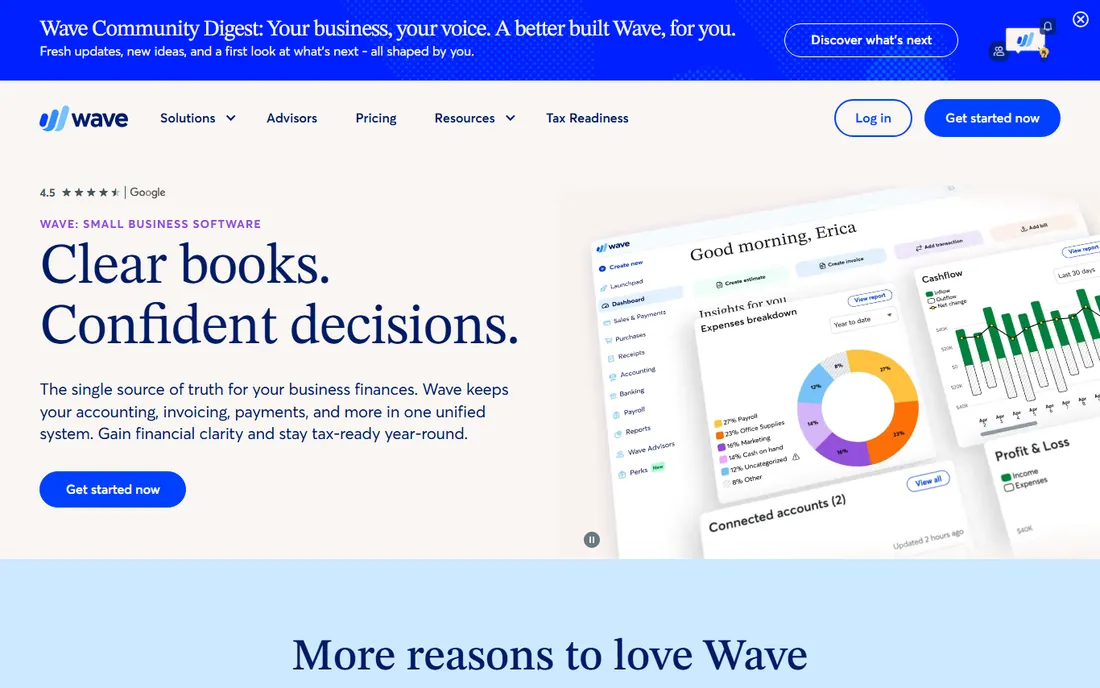
Wave covers the money half of a tiny retail operation for free: sales, expenses, invoicing and basic reporting. For a market stall, a single-product online shop or a new store testing the waters, it handles the books without a subscription.
The honest limit is inventory. Wave does not track stock or COGS properly, so the moment inventory matters, which for most retailers is immediately, you need a real retail tool. Use Wave as the free starting point and graduate to Xero or Zoho Books when the stockroom fills up. It is a bridge, not a destination, for retail.
What we like- Real accounting, invoicing and receipt scanning at zero monthly cost
- Simple enough for owners doing their own books
- Payment processing built in
Watch out for- No meaningful inventory management
- Payroll limited
- Reporting thinner than paid tools
Starting priceSee website
Free planFree trial
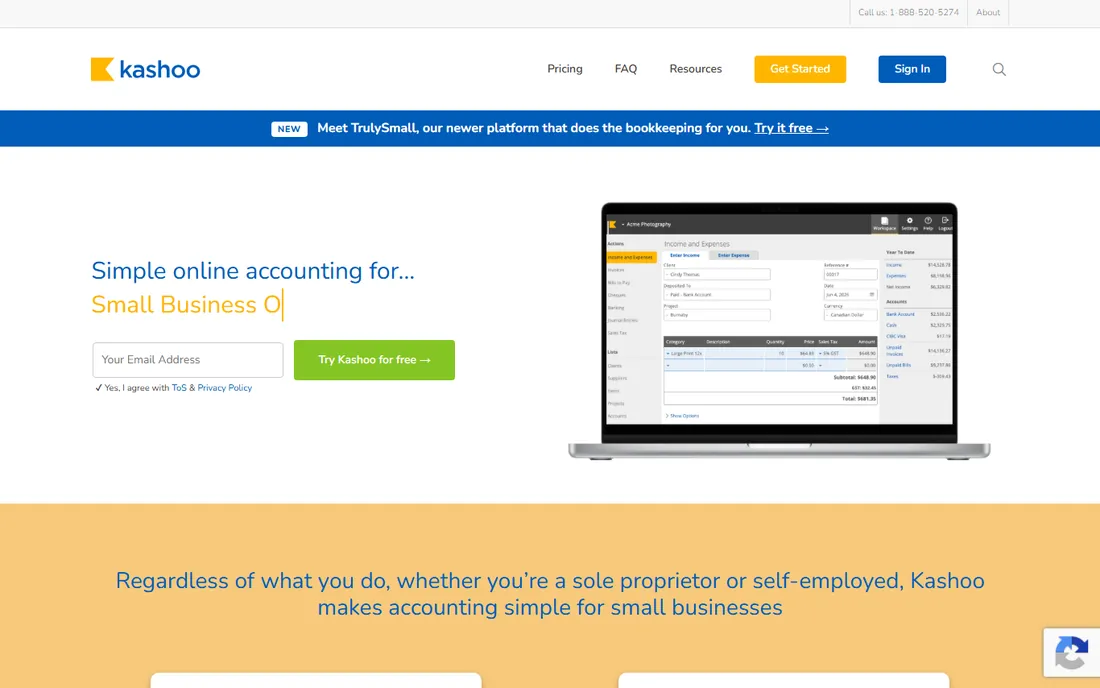
Kashoo is for the retailer who opens QuickBooks and closes it again. The interface strips accounting to its essentials: invoices, expenses, bank reconciliation and reports, done cleanly. Micro-retailers with simple operations and no staff accountants get correct books without the complexity tax.
The vendor does not publish pricing, so it shows "See website" here; third-party directories report figures around $20 a month. Inventory depth is limited, so growing retailers will outgrow it toward Xero or Zoho Books. But as the simplest real accounting a small shop can run itself, it has a loyal following.
What we like- Genuinely simple double-entry accounting without the learning curve
- Clean invoicing and expense tracking
- Good for owners who find QuickBooks overwhelming
Watch out for- No published pricing on the vendor site
- Limited inventory features
- Small ecosystem next to the leaders
Starting price$23/month (Lite)
Free planFree trial (30 days)
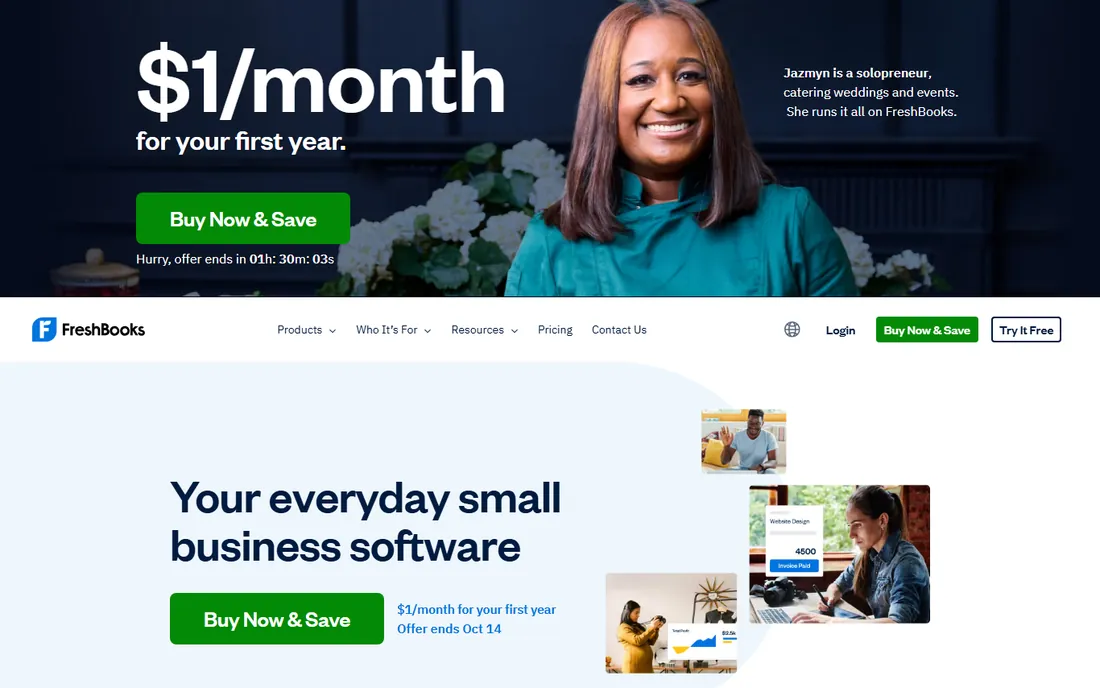
FreshBooks is the odd one on a retail list, included because many small retailers also do wholesale, custom orders or B2B invoicing where FreshBooks shines. The invoicing, estimates and payment reminders are the best in the category, and Lite at $23 a month is affordable.
Be clear-eyed about the fit: inventory management is light, which disqualifies it as a primary retail accounting tool for stock-heavy businesses. The 5-client cap on Lite and per-seat fees add up. Use FreshBooks when your retail business bills clients like a service business, for wholesale accounts or custom work, alongside a proper inventory tool, not instead of one.
What we like- The best invoicing experience in small-business accounting
- Strong time tracking and expense capture
- Clean mobile apps
Watch out for- Built for services, not retail: inventory is light
- Lite caps you at 5 billable clients
- Every plan is single-user with $11 per extra seat
Starting priceSee website
Free planFree trial
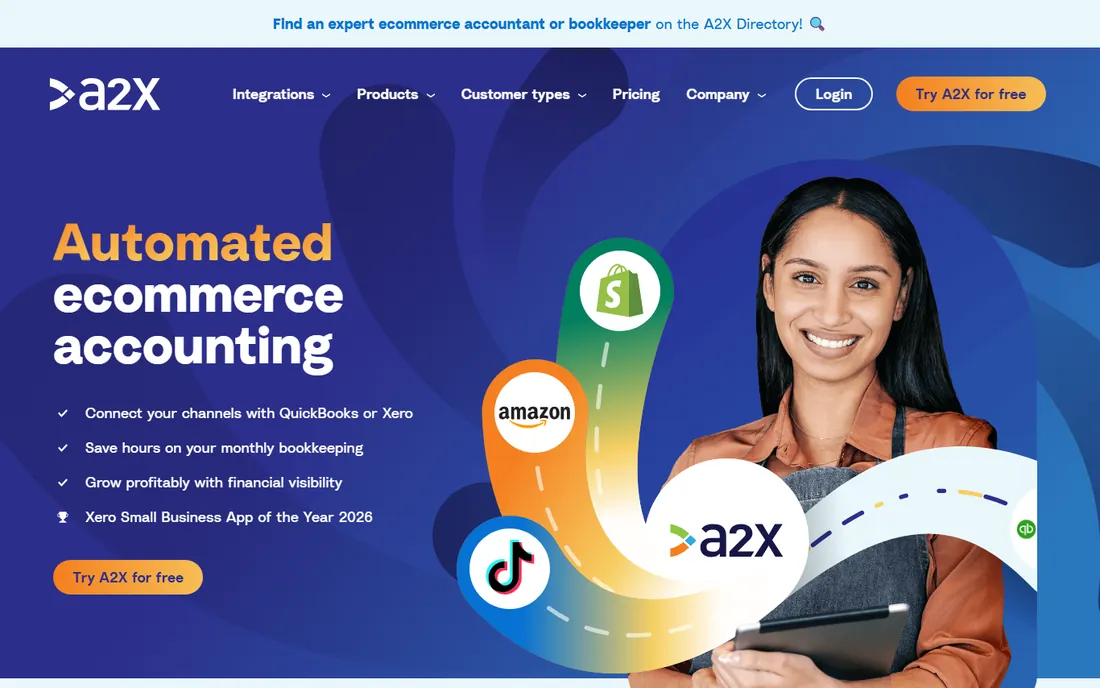
A2X solves the specific problem that breaks ecommerce bookkeeping: marketplace payouts. Amazon and Shopify pay you in lump settlements net of fees, refunds and taxes, which map badly onto accounting designed for invoices. A2X splits each payout into its components and posts clean, reconciled entries to Xero or QuickBooks automatically.
It is an adjacent tool rather than accounting software, included here because the keyword's "other keywords" include multi-channel retail realities. Pricing is not published on the vendor site, so it shows "See website." If you sell on Amazon or Shopify at any volume, A2X plus Xero is the standard stack that accountants recommend.
What we like- Automates the job nothing else does well: turning Amazon and Shopify settlement payouts into clean accounting entries
- Integrates with Xero and QuickBooks
- Handles multi-channel sellers
Watch out for- No published pricing on the vendor site
- It is a connector, not accounting software, so you still need Xero or QuickBooks
- Another subscription in the stack
#8
Sage 50 Accounting
Best for: Inventory-heavy retailers wanting desktop control
Visit sage.com
Starting priceSee website
Free planFree trial
Sage 50 is the desktop veteran for product businesses. Its inventory management is the deepest on this list: advanced stock control, assemblies, serial numbers and costing methods that cloud tools simplify away. Premium and Quantum tiers add multi-user support, advanced job costing and multi-company accounting.
The trade-offs are era and access. It is desktop software in a cloud age, the entry Pro tier supports one user, and US pricing is not published on Sage's site. Retailers with complex inventory, manufacturing-lite operations or multi-company structures still choose it deliberately. Everyone else should prefer the cloud options above.
What we like- Extensive inventory management with advanced stock control
- Job costing and multi-company support on higher tiers
- Decades of refinement for product businesses
Watch out for- No published US pricing on the vendor site (reviews cite Pro from around $59 a month)
- Desktop heritage with a steeper learning curve
- One user on the entry tier
Free and simple: accounting without the bill
Starting price$38/month (Simple Start)
Free planFree trial (30 days)
QuickBooks Online is NerdWallet's pick for retail stores that sell both online and in person, and the reasoning is integration depth. Every plan connects natively to Amazon, Shopify and eBay, and the POS integrations with Square and Lightspeed cover the physical store. Sales tax tracking with custom rates handles multi-jurisdiction selling.
The pricing catch is inventory. Simple Start at $38 a month does not track inventory or cost of goods sold; that needs Plus at $140 a month. For a retailer, inventory is not optional, so price QuickBooks at Plus, not Simple Start. If your accountant works in QuickBooks and you sell across channels, it is still the safest choice. Otherwise, Xero gives you inventory on every tier.
What we like- Built-in connections to Amazon, Shopify and eBay on every plan
- Integrates with Square and Lightspeed POS
- The largest app marketplace and the accountant network to match
Watch out for- Inventory and COGS tracking requires Plus at $140 a month, a big jump from Simple Start
- Per-seat pricing across tiers
- Expensive next to Xero and Zoho Books
#2
Xero
Best for: Multi-channel sellers wanting POS integrations
Visit xero.com
Starting price$25/month (Early)
Free planFree trial
Xero's retail case is simple: inventory comes standard, not gated behind the top tier. Every plan tracks stock and calculates profit by item, and the integration ecosystem covers the retail stack: Square and Lightspeed for POS, Shopify for ecommerce, plus Gusto and ADP for payroll. Unlimited users means the whole shop can be in the books.
Early at $25 a month caps invoicing volume, so an operating retailer usually lands on Growing at $55. Even there, it undercuts QuickBooks Plus by a wide margin while including inventory. The trade-offs are familiar: US payroll via Gusto, and a smaller (though growing) US accountant network. For multi-channel retailers who resent paying $140 a month for inventory, Xero is the value answer.
What we like- Inventory tracking with up to 4,000 items and profit-by-item on every plan
- 1,000-plus integrations including Square, Lightspeed and Shopify
- Unlimited users on all plans
Watch out for- Early caps invoices and bills, so most retailers need Growing at $55
- US payroll goes through a partner
- Fewer US accountants than QuickBooks
Starting priceFree (under $50K revenue); Standard $20/month
Free planYes
Zoho Books is the budget retail pick with unusual depth. The free plan covers businesses under $50K in revenue, and even it includes inventory basics. Paid plans from $20 a month add integrated inventory with barcode generation, shipping labels and inventory reports, plus sales tax tracking. For a small shop, that is a complete retail accounting stack at a fraction of QuickBooks Plus.
The ecosystem is the limitation: fewer POS and marketplace integrations than the big two, and accountants who live in QuickBooks will grumble. But Zoho Inventory integrates natively for businesses that outgrow the built-in features. If your retail operation is small and your budget is smaller, start here.
What we like- Free plan for businesses under $50K annual revenue
- Inventory features integrated by default with barcodes and shipping labels
- Standard at $20 a month is the cheapest paid tier here
Watch out for- Fewer integrations than QuickBooks or Xero
- The Zoho Commerce upsell adds fees
- Smaller accountant ecosystem
Starting priceFree
Free planYes
Wave covers the money half of a tiny retail operation for free: sales, expenses, invoicing and basic reporting. For a market stall, a single-product online shop or a new store testing the waters, it handles the books without a subscription.
The honest limit is inventory. Wave does not track stock or COGS properly, so the moment inventory matters, which for most retailers is immediately, you need a real retail tool. Use Wave as the free starting point and graduate to Xero or Zoho Books when the stockroom fills up. It is a bridge, not a destination, for retail.
What we like- Real accounting, invoicing and receipt scanning at zero monthly cost
- Simple enough for owners doing their own books
- Payment processing built in
Watch out for- No meaningful inventory management
- Payroll limited
- Reporting thinner than paid tools
Starting priceSee website
Free planFree trial
Kashoo is for the retailer who opens QuickBooks and closes it again. The interface strips accounting to its essentials: invoices, expenses, bank reconciliation and reports, done cleanly. Micro-retailers with simple operations and no staff accountants get correct books without the complexity tax.
The vendor does not publish pricing, so it shows "See website" here; third-party directories report figures around $20 a month. Inventory depth is limited, so growing retailers will outgrow it toward Xero or Zoho Books. But as the simplest real accounting a small shop can run itself, it has a loyal following.
What we like- Genuinely simple double-entry accounting without the learning curve
- Clean invoicing and expense tracking
- Good for owners who find QuickBooks overwhelming
Watch out for- No published pricing on the vendor site
- Limited inventory features
- Small ecosystem next to the leaders
Starting price$23/month (Lite)
Free planFree trial (30 days)
FreshBooks is the odd one on a retail list, included because many small retailers also do wholesale, custom orders or B2B invoicing where FreshBooks shines. The invoicing, estimates and payment reminders are the best in the category, and Lite at $23 a month is affordable.
Be clear-eyed about the fit: inventory management is light, which disqualifies it as a primary retail accounting tool for stock-heavy businesses. The 5-client cap on Lite and per-seat fees add up. Use FreshBooks when your retail business bills clients like a service business, for wholesale accounts or custom work, alongside a proper inventory tool, not instead of one.
What we like- The best invoicing experience in small-business accounting
- Strong time tracking and expense capture
- Clean mobile apps
Watch out for- Built for services, not retail: inventory is light
- Lite caps you at 5 billable clients
- Every plan is single-user with $11 per extra seat
Starting priceSee website
Free planFree trial
A2X solves the specific problem that breaks ecommerce bookkeeping: marketplace payouts. Amazon and Shopify pay you in lump settlements net of fees, refunds and taxes, which map badly onto accounting designed for invoices. A2X splits each payout into its components and posts clean, reconciled entries to Xero or QuickBooks automatically.
It is an adjacent tool rather than accounting software, included here because the keyword's "other keywords" include multi-channel retail realities. Pricing is not published on the vendor site, so it shows "See website." If you sell on Amazon or Shopify at any volume, A2X plus Xero is the standard stack that accountants recommend.
What we like- Automates the job nothing else does well: turning Amazon and Shopify settlement payouts into clean accounting entries
- Integrates with Xero and QuickBooks
- Handles multi-channel sellers
Watch out for- No published pricing on the vendor site
- It is a connector, not accounting software, so you still need Xero or QuickBooks
- Another subscription in the stack
#8
Sage 50 Accounting
Best for: Inventory-heavy retailers wanting desktop control
Visit sage.com
Starting priceSee website
Free planFree trial
Sage 50 is the desktop veteran for product businesses. Its inventory management is the deepest on this list: advanced stock control, assemblies, serial numbers and costing methods that cloud tools simplify away. Premium and Quantum tiers add multi-user support, advanced job costing and multi-company accounting.
The trade-offs are era and access. It is desktop software in a cloud age, the entry Pro tier supports one user, and US pricing is not published on Sage's site. Retailers with complex inventory, manufacturing-lite operations or multi-company structures still choose it deliberately. Everyone else should prefer the cloud options above.
What we like- Extensive inventory management with advanced stock control
- Job costing and multi-company support on higher tiers
- Decades of refinement for product businesses
Watch out for- No published US pricing on the vendor site (reviews cite Pro from around $59 a month)
- Desktop heritage with a steeper learning curve
- One user on the entry tier
Invoicing-first: when billing matters more than stock
Starting price$38/month (Simple Start)
Free planFree trial (30 days)
QuickBooks Online is NerdWallet's pick for retail stores that sell both online and in person, and the reasoning is integration depth. Every plan connects natively to Amazon, Shopify and eBay, and the POS integrations with Square and Lightspeed cover the physical store. Sales tax tracking with custom rates handles multi-jurisdiction selling.
The pricing catch is inventory. Simple Start at $38 a month does not track inventory or cost of goods sold; that needs Plus at $140 a month. For a retailer, inventory is not optional, so price QuickBooks at Plus, not Simple Start. If your accountant works in QuickBooks and you sell across channels, it is still the safest choice. Otherwise, Xero gives you inventory on every tier.
What we like- Built-in connections to Amazon, Shopify and eBay on every plan
- Integrates with Square and Lightspeed POS
- The largest app marketplace and the accountant network to match
Watch out for- Inventory and COGS tracking requires Plus at $140 a month, a big jump from Simple Start
- Per-seat pricing across tiers
- Expensive next to Xero and Zoho Books
#2
Xero
Best for: Multi-channel sellers wanting POS integrations
Visit xero.com
Starting price$25/month (Early)
Free planFree trial
Xero's retail case is simple: inventory comes standard, not gated behind the top tier. Every plan tracks stock and calculates profit by item, and the integration ecosystem covers the retail stack: Square and Lightspeed for POS, Shopify for ecommerce, plus Gusto and ADP for payroll. Unlimited users means the whole shop can be in the books.
Early at $25 a month caps invoicing volume, so an operating retailer usually lands on Growing at $55. Even there, it undercuts QuickBooks Plus by a wide margin while including inventory. The trade-offs are familiar: US payroll via Gusto, and a smaller (though growing) US accountant network. For multi-channel retailers who resent paying $140 a month for inventory, Xero is the value answer.
What we like- Inventory tracking with up to 4,000 items and profit-by-item on every plan
- 1,000-plus integrations including Square, Lightspeed and Shopify
- Unlimited users on all plans
Watch out for- Early caps invoices and bills, so most retailers need Growing at $55
- US payroll goes through a partner
- Fewer US accountants than QuickBooks
Starting priceFree (under $50K revenue); Standard $20/month
Free planYes
Zoho Books is the budget retail pick with unusual depth. The free plan covers businesses under $50K in revenue, and even it includes inventory basics. Paid plans from $20 a month add integrated inventory with barcode generation, shipping labels and inventory reports, plus sales tax tracking. For a small shop, that is a complete retail accounting stack at a fraction of QuickBooks Plus.
The ecosystem is the limitation: fewer POS and marketplace integrations than the big two, and accountants who live in QuickBooks will grumble. But Zoho Inventory integrates natively for businesses that outgrow the built-in features. If your retail operation is small and your budget is smaller, start here.
What we like- Free plan for businesses under $50K annual revenue
- Inventory features integrated by default with barcodes and shipping labels
- Standard at $20 a month is the cheapest paid tier here
Watch out for- Fewer integrations than QuickBooks or Xero
- The Zoho Commerce upsell adds fees
- Smaller accountant ecosystem
Starting priceFree
Free planYes
Wave covers the money half of a tiny retail operation for free: sales, expenses, invoicing and basic reporting. For a market stall, a single-product online shop or a new store testing the waters, it handles the books without a subscription.
The honest limit is inventory. Wave does not track stock or COGS properly, so the moment inventory matters, which for most retailers is immediately, you need a real retail tool. Use Wave as the free starting point and graduate to Xero or Zoho Books when the stockroom fills up. It is a bridge, not a destination, for retail.
What we like- Real accounting, invoicing and receipt scanning at zero monthly cost
- Simple enough for owners doing their own books
- Payment processing built in
Watch out for- No meaningful inventory management
- Payroll limited
- Reporting thinner than paid tools
Starting priceSee website
Free planFree trial
Kashoo is for the retailer who opens QuickBooks and closes it again. The interface strips accounting to its essentials: invoices, expenses, bank reconciliation and reports, done cleanly. Micro-retailers with simple operations and no staff accountants get correct books without the complexity tax.
The vendor does not publish pricing, so it shows "See website" here; third-party directories report figures around $20 a month. Inventory depth is limited, so growing retailers will outgrow it toward Xero or Zoho Books. But as the simplest real accounting a small shop can run itself, it has a loyal following.
What we like- Genuinely simple double-entry accounting without the learning curve
- Clean invoicing and expense tracking
- Good for owners who find QuickBooks overwhelming
Watch out for- No published pricing on the vendor site
- Limited inventory features
- Small ecosystem next to the leaders
Starting price$23/month (Lite)
Free planFree trial (30 days)
FreshBooks is the odd one on a retail list, included because many small retailers also do wholesale, custom orders or B2B invoicing where FreshBooks shines. The invoicing, estimates and payment reminders are the best in the category, and Lite at $23 a month is affordable.
Be clear-eyed about the fit: inventory management is light, which disqualifies it as a primary retail accounting tool for stock-heavy businesses. The 5-client cap on Lite and per-seat fees add up. Use FreshBooks when your retail business bills clients like a service business, for wholesale accounts or custom work, alongside a proper inventory tool, not instead of one.
What we like- The best invoicing experience in small-business accounting
- Strong time tracking and expense capture
- Clean mobile apps
Watch out for- Built for services, not retail: inventory is light
- Lite caps you at 5 billable clients
- Every plan is single-user with $11 per extra seat
Starting priceSee website
Free planFree trial
A2X solves the specific problem that breaks ecommerce bookkeeping: marketplace payouts. Amazon and Shopify pay you in lump settlements net of fees, refunds and taxes, which map badly onto accounting designed for invoices. A2X splits each payout into its components and posts clean, reconciled entries to Xero or QuickBooks automatically.
It is an adjacent tool rather than accounting software, included here because the keyword's "other keywords" include multi-channel retail realities. Pricing is not published on the vendor site, so it shows "See website." If you sell on Amazon or Shopify at any volume, A2X plus Xero is the standard stack that accountants recommend.
What we like- Automates the job nothing else does well: turning Amazon and Shopify settlement payouts into clean accounting entries
- Integrates with Xero and QuickBooks
- Handles multi-channel sellers
Watch out for- No published pricing on the vendor site
- It is a connector, not accounting software, so you still need Xero or QuickBooks
- Another subscription in the stack
#8
Sage 50 Accounting
Best for: Inventory-heavy retailers wanting desktop control
Visit sage.com
Starting priceSee website
Free planFree trial
Sage 50 is the desktop veteran for product businesses. Its inventory management is the deepest on this list: advanced stock control, assemblies, serial numbers and costing methods that cloud tools simplify away. Premium and Quantum tiers add multi-user support, advanced job costing and multi-company accounting.
The trade-offs are era and access. It is desktop software in a cloud age, the entry Pro tier supports one user, and US pricing is not published on Sage's site. Retailers with complex inventory, manufacturing-lite operations or multi-company structures still choose it deliberately. Everyone else should prefer the cloud options above.
What we like- Extensive inventory management with advanced stock control
- Job costing and multi-company support on higher tiers
- Decades of refinement for product businesses
Watch out for- No published US pricing on the vendor site (reviews cite Pro from around $59 a month)
- Desktop heritage with a steeper learning curve
- One user on the entry tier
The retail-specific layer: ecommerce reconciliation
Starting price$38/month (Simple Start)
Free planFree trial (30 days)
QuickBooks Online is NerdWallet's pick for retail stores that sell both online and in person, and the reasoning is integration depth. Every plan connects natively to Amazon, Shopify and eBay, and the POS integrations with Square and Lightspeed cover the physical store. Sales tax tracking with custom rates handles multi-jurisdiction selling.
The pricing catch is inventory. Simple Start at $38 a month does not track inventory or cost of goods sold; that needs Plus at $140 a month. For a retailer, inventory is not optional, so price QuickBooks at Plus, not Simple Start. If your accountant works in QuickBooks and you sell across channels, it is still the safest choice. Otherwise, Xero gives you inventory on every tier.
What we like- Built-in connections to Amazon, Shopify and eBay on every plan
- Integrates with Square and Lightspeed POS
- The largest app marketplace and the accountant network to match
Watch out for- Inventory and COGS tracking requires Plus at $140 a month, a big jump from Simple Start
- Per-seat pricing across tiers
- Expensive next to Xero and Zoho Books
#2
Xero
Best for: Multi-channel sellers wanting POS integrations
Visit xero.com
Starting price$25/month (Early)
Free planFree trial
Xero's retail case is simple: inventory comes standard, not gated behind the top tier. Every plan tracks stock and calculates profit by item, and the integration ecosystem covers the retail stack: Square and Lightspeed for POS, Shopify for ecommerce, plus Gusto and ADP for payroll. Unlimited users means the whole shop can be in the books.
Early at $25 a month caps invoicing volume, so an operating retailer usually lands on Growing at $55. Even there, it undercuts QuickBooks Plus by a wide margin while including inventory. The trade-offs are familiar: US payroll via Gusto, and a smaller (though growing) US accountant network. For multi-channel retailers who resent paying $140 a month for inventory, Xero is the value answer.
What we like- Inventory tracking with up to 4,000 items and profit-by-item on every plan
- 1,000-plus integrations including Square, Lightspeed and Shopify
- Unlimited users on all plans
Watch out for- Early caps invoices and bills, so most retailers need Growing at $55
- US payroll goes through a partner
- Fewer US accountants than QuickBooks
Starting priceFree (under $50K revenue); Standard $20/month
Free planYes
Zoho Books is the budget retail pick with unusual depth. The free plan covers businesses under $50K in revenue, and even it includes inventory basics. Paid plans from $20 a month add integrated inventory with barcode generation, shipping labels and inventory reports, plus sales tax tracking. For a small shop, that is a complete retail accounting stack at a fraction of QuickBooks Plus.
The ecosystem is the limitation: fewer POS and marketplace integrations than the big two, and accountants who live in QuickBooks will grumble. But Zoho Inventory integrates natively for businesses that outgrow the built-in features. If your retail operation is small and your budget is smaller, start here.
What we like- Free plan for businesses under $50K annual revenue
- Inventory features integrated by default with barcodes and shipping labels
- Standard at $20 a month is the cheapest paid tier here
Watch out for- Fewer integrations than QuickBooks or Xero
- The Zoho Commerce upsell adds fees
- Smaller accountant ecosystem
Starting priceFree
Free planYes
Wave covers the money half of a tiny retail operation for free: sales, expenses, invoicing and basic reporting. For a market stall, a single-product online shop or a new store testing the waters, it handles the books without a subscription.
The honest limit is inventory. Wave does not track stock or COGS properly, so the moment inventory matters, which for most retailers is immediately, you need a real retail tool. Use Wave as the free starting point and graduate to Xero or Zoho Books when the stockroom fills up. It is a bridge, not a destination, for retail.
What we like- Real accounting, invoicing and receipt scanning at zero monthly cost
- Simple enough for owners doing their own books
- Payment processing built in
Watch out for- No meaningful inventory management
- Payroll limited
- Reporting thinner than paid tools
Starting priceSee website
Free planFree trial
Kashoo is for the retailer who opens QuickBooks and closes it again. The interface strips accounting to its essentials: invoices, expenses, bank reconciliation and reports, done cleanly. Micro-retailers with simple operations and no staff accountants get correct books without the complexity tax.
The vendor does not publish pricing, so it shows "See website" here; third-party directories report figures around $20 a month. Inventory depth is limited, so growing retailers will outgrow it toward Xero or Zoho Books. But as the simplest real accounting a small shop can run itself, it has a loyal following.
What we like- Genuinely simple double-entry accounting without the learning curve
- Clean invoicing and expense tracking
- Good for owners who find QuickBooks overwhelming
Watch out for- No published pricing on the vendor site
- Limited inventory features
- Small ecosystem next to the leaders
Starting price$23/month (Lite)
Free planFree trial (30 days)
FreshBooks is the odd one on a retail list, included because many small retailers also do wholesale, custom orders or B2B invoicing where FreshBooks shines. The invoicing, estimates and payment reminders are the best in the category, and Lite at $23 a month is affordable.
Be clear-eyed about the fit: inventory management is light, which disqualifies it as a primary retail accounting tool for stock-heavy businesses. The 5-client cap on Lite and per-seat fees add up. Use FreshBooks when your retail business bills clients like a service business, for wholesale accounts or custom work, alongside a proper inventory tool, not instead of one.
What we like- The best invoicing experience in small-business accounting
- Strong time tracking and expense capture
- Clean mobile apps
Watch out for- Built for services, not retail: inventory is light
- Lite caps you at 5 billable clients
- Every plan is single-user with $11 per extra seat
Starting priceSee website
Free planFree trial
A2X solves the specific problem that breaks ecommerce bookkeeping: marketplace payouts. Amazon and Shopify pay you in lump settlements net of fees, refunds and taxes, which map badly onto accounting designed for invoices. A2X splits each payout into its components and posts clean, reconciled entries to Xero or QuickBooks automatically.
It is an adjacent tool rather than accounting software, included here because the keyword's "other keywords" include multi-channel retail realities. Pricing is not published on the vendor site, so it shows "See website." If you sell on Amazon or Shopify at any volume, A2X plus Xero is the standard stack that accountants recommend.
What we like- Automates the job nothing else does well: turning Amazon and Shopify settlement payouts into clean accounting entries
- Integrates with Xero and QuickBooks
- Handles multi-channel sellers
Watch out for- No published pricing on the vendor site
- It is a connector, not accounting software, so you still need Xero or QuickBooks
- Another subscription in the stack
#8
Sage 50 Accounting
Best for: Inventory-heavy retailers wanting desktop control
Visit sage.com
Starting priceSee website
Free planFree trial
Sage 50 is the desktop veteran for product businesses. Its inventory management is the deepest on this list: advanced stock control, assemblies, serial numbers and costing methods that cloud tools simplify away. Premium and Quantum tiers add multi-user support, advanced job costing and multi-company accounting.
The trade-offs are era and access. It is desktop software in a cloud age, the entry Pro tier supports one user, and US pricing is not published on Sage's site. Retailers with complex inventory, manufacturing-lite operations or multi-company structures still choose it deliberately. Everyone else should prefer the cloud options above.
What we like- Extensive inventory management with advanced stock control
- Job costing and multi-company support on higher tiers
- Decades of refinement for product businesses
Watch out for- No published US pricing on the vendor site (reviews cite Pro from around $59 a month)
- Desktop heritage with a steeper learning curve
- One user on the entry tier
Desktop depth: for inventory-heavy operations
Starting price$38/month (Simple Start)
Free planFree trial (30 days)
QuickBooks Online is NerdWallet's pick for retail stores that sell both online and in person, and the reasoning is integration depth. Every plan connects natively to Amazon, Shopify and eBay, and the POS integrations with Square and Lightspeed cover the physical store. Sales tax tracking with custom rates handles multi-jurisdiction selling.
The pricing catch is inventory. Simple Start at $38 a month does not track inventory or cost of goods sold; that needs Plus at $140 a month. For a retailer, inventory is not optional, so price QuickBooks at Plus, not Simple Start. If your accountant works in QuickBooks and you sell across channels, it is still the safest choice. Otherwise, Xero gives you inventory on every tier.
What we like- Built-in connections to Amazon, Shopify and eBay on every plan
- Integrates with Square and Lightspeed POS
- The largest app marketplace and the accountant network to match
Watch out for- Inventory and COGS tracking requires Plus at $140 a month, a big jump from Simple Start
- Per-seat pricing across tiers
- Expensive next to Xero and Zoho Books
#2
Xero
Best for: Multi-channel sellers wanting POS integrations
Visit xero.com
Starting price$25/month (Early)
Free planFree trial
Xero's retail case is simple: inventory comes standard, not gated behind the top tier. Every plan tracks stock and calculates profit by item, and the integration ecosystem covers the retail stack: Square and Lightspeed for POS, Shopify for ecommerce, plus Gusto and ADP for payroll. Unlimited users means the whole shop can be in the books.
Early at $25 a month caps invoicing volume, so an operating retailer usually lands on Growing at $55. Even there, it undercuts QuickBooks Plus by a wide margin while including inventory. The trade-offs are familiar: US payroll via Gusto, and a smaller (though growing) US accountant network. For multi-channel retailers who resent paying $140 a month for inventory, Xero is the value answer.
What we like- Inventory tracking with up to 4,000 items and profit-by-item on every plan
- 1,000-plus integrations including Square, Lightspeed and Shopify
- Unlimited users on all plans
Watch out for- Early caps invoices and bills, so most retailers need Growing at $55
- US payroll goes through a partner
- Fewer US accountants than QuickBooks
Starting priceFree (under $50K revenue); Standard $20/month
Free planYes
Zoho Books is the budget retail pick with unusual depth. The free plan covers businesses under $50K in revenue, and even it includes inventory basics. Paid plans from $20 a month add integrated inventory with barcode generation, shipping labels and inventory reports, plus sales tax tracking. For a small shop, that is a complete retail accounting stack at a fraction of QuickBooks Plus.
The ecosystem is the limitation: fewer POS and marketplace integrations than the big two, and accountants who live in QuickBooks will grumble. But Zoho Inventory integrates natively for businesses that outgrow the built-in features. If your retail operation is small and your budget is smaller, start here.
What we like- Free plan for businesses under $50K annual revenue
- Inventory features integrated by default with barcodes and shipping labels
- Standard at $20 a month is the cheapest paid tier here
Watch out for- Fewer integrations than QuickBooks or Xero
- The Zoho Commerce upsell adds fees
- Smaller accountant ecosystem
Starting priceFree
Free planYes
Wave covers the money half of a tiny retail operation for free: sales, expenses, invoicing and basic reporting. For a market stall, a single-product online shop or a new store testing the waters, it handles the books without a subscription.
The honest limit is inventory. Wave does not track stock or COGS properly, so the moment inventory matters, which for most retailers is immediately, you need a real retail tool. Use Wave as the free starting point and graduate to Xero or Zoho Books when the stockroom fills up. It is a bridge, not a destination, for retail.
What we like- Real accounting, invoicing and receipt scanning at zero monthly cost
- Simple enough for owners doing their own books
- Payment processing built in
Watch out for- No meaningful inventory management
- Payroll limited
- Reporting thinner than paid tools
Starting priceSee website
Free planFree trial
Kashoo is for the retailer who opens QuickBooks and closes it again. The interface strips accounting to its essentials: invoices, expenses, bank reconciliation and reports, done cleanly. Micro-retailers with simple operations and no staff accountants get correct books without the complexity tax.
The vendor does not publish pricing, so it shows "See website" here; third-party directories report figures around $20 a month. Inventory depth is limited, so growing retailers will outgrow it toward Xero or Zoho Books. But as the simplest real accounting a small shop can run itself, it has a loyal following.
What we like- Genuinely simple double-entry accounting without the learning curve
- Clean invoicing and expense tracking
- Good for owners who find QuickBooks overwhelming
Watch out for- No published pricing on the vendor site
- Limited inventory features
- Small ecosystem next to the leaders
Starting price$23/month (Lite)
Free planFree trial (30 days)
FreshBooks is the odd one on a retail list, included because many small retailers also do wholesale, custom orders or B2B invoicing where FreshBooks shines. The invoicing, estimates and payment reminders are the best in the category, and Lite at $23 a month is affordable.
Be clear-eyed about the fit: inventory management is light, which disqualifies it as a primary retail accounting tool for stock-heavy businesses. The 5-client cap on Lite and per-seat fees add up. Use FreshBooks when your retail business bills clients like a service business, for wholesale accounts or custom work, alongside a proper inventory tool, not instead of one.
What we like- The best invoicing experience in small-business accounting
- Strong time tracking and expense capture
- Clean mobile apps
Watch out for- Built for services, not retail: inventory is light
- Lite caps you at 5 billable clients
- Every plan is single-user with $11 per extra seat
Starting priceSee website
Free planFree trial
A2X solves the specific problem that breaks ecommerce bookkeeping: marketplace payouts. Amazon and Shopify pay you in lump settlements net of fees, refunds and taxes, which map badly onto accounting designed for invoices. A2X splits each payout into its components and posts clean, reconciled entries to Xero or QuickBooks automatically.
It is an adjacent tool rather than accounting software, included here because the keyword's "other keywords" include multi-channel retail realities. Pricing is not published on the vendor site, so it shows "See website." If you sell on Amazon or Shopify at any volume, A2X plus Xero is the standard stack that accountants recommend.
What we like- Automates the job nothing else does well: turning Amazon and Shopify settlement payouts into clean accounting entries
- Integrates with Xero and QuickBooks
- Handles multi-channel sellers
Watch out for- No published pricing on the vendor site
- It is a connector, not accounting software, so you still need Xero or QuickBooks
- Another subscription in the stack
#8
Sage 50 Accounting
Best for: Inventory-heavy retailers wanting desktop control
Visit sage.com
Starting priceSee website
Free planFree trial
Sage 50 is the desktop veteran for product businesses. Its inventory management is the deepest on this list: advanced stock control, assemblies, serial numbers and costing methods that cloud tools simplify away. Premium and Quantum tiers add multi-user support, advanced job costing and multi-company accounting.
The trade-offs are era and access. It is desktop software in a cloud age, the entry Pro tier supports one user, and US pricing is not published on Sage's site. Retailers with complex inventory, manufacturing-lite operations or multi-company structures still choose it deliberately. Everyone else should prefer the cloud options above.
What we like- Extensive inventory management with advanced stock control
- Job costing and multi-company support on higher tiers
- Decades of refinement for product businesses
Watch out for- No published US pricing on the vendor site (reviews cite Pro from around $59 a month)
- Desktop heritage with a steeper learning curve
- One user on the entry tier
The inventory test: five questions before you buy
Ask every candidate: does it track quantities and COGS natively, or through an add-on? Does it handle purchase orders and receiving? Can it value inventory with the costing method your accountant wants? Does it sync with your POS without manual imports? And does it reconcile marketplace payouts, or will you need A2X? A tool that fails the first question fails retail accounting entirely, no matter how good its invoicing looks.
How we chose
We judged every tool on the retail-specific accounting requirements: inventory tracking and COGS, purchase orders, sales tax handling, POS integration, multi-channel sales (Shopify, Amazon, eBay), and the true cost at the tier where inventory is actually included. Prices come from vendor pricing pages and vendor-published figures checked in 2026; Kashoo, A2X and Sage 50 do not publish US prices, so they show "See website." We read retailer reviews on G2, Capterra and Reddit and NerdWallet's 2026 retail accounting rankings for the recurring complaints: inventory gated behind top tiers, payout reconciliation pain and per-seat pricing.
Why inventory gating is the pricing trap
The headline price of retail accounting software is often set at a tier without inventory. QuickBooks Simple Start at $38 a month looks competitive until you learn inventory needs Plus at $140. Always price the tier that includes inventory tracking, COGS and the sales channels you use, then compare. Xero and Zoho Books include inventory on entry tiers, which is why their effective retail prices beat QuickBooks despite similar headlines.
Frequently asked questions
What is the best accounting software for a small retail business?
QuickBooks Online if you sell online and in person across Amazon, Shopify and a POS, priced at the Plus tier ($140/month) for inventory. Xero ($25/month) if you want inventory on every tier with strong POS integrations. Zoho Books (free under $50K) if budget dominates.
Do I need inventory management in my accounting software?
If you hold stock, yes, and it should be native, not an add-on. You need quantity tracking, cost of goods sold, purchase orders and profit by item. Tools without these force spreadsheet workarounds that break at tax time.
How do I account for Amazon and Shopify sales?
Connect the marketplace to your accounting tool (QuickBooks and Xero both offer it), then use A2X to reconcile settlement payouts into clean entries. Recording gross payouts as income without splitting fees, refunds and taxes is the most common ecommerce bookkeeping error.
Is QuickBooks or Xero better for retail?
QuickBooks has deeper marketplace connections and the larger accountant network; Xero includes inventory on every plan, integrates with Square and Lightspeed, and costs less at the inventory-capable tier. Multi-channel sellers on a budget usually pick Xero; businesses whose accountants demand QuickBooks pick QuickBooks.
Can I use Wave for a retail business?
For the money side of a tiny operation, yes, and it is free. But Wave lacks real inventory management, so stock-heavy retailers outgrow it fast. Treat it as a starting point and move to Xero or Zoho Books when inventory tracking matters.
Sources we checked (10)
- https://quickbooks.intuit.com/pricing/
- https://www.xero.com/us/pricing-plans/
- https://www.zoho.com/books/pricing/
- https://www.waveapps.com/pricing
- https://www.freshbooks.com/pricing
- https://www.kashoo.com
- https://www.a2xaccounting.com
- https://www.sage.com
- https://www.nerdwallet.com/article/small-business/best-retail-accounting-software
- https://www.nerdwallet.com/best/small-business/retail-accounting-software
Is your product missing or out of date?
We review this list regularly. Vendors can request a listing, send updated pricing or ask about featured placement.

Shihab Mia · Founder, Rankite
Shihab has spent more than a decade helping SaaS and e-commerce brands grow through search. He writes Rankite's software buying guides from pricing pages, documentation and public user reviews. More about Shihab.