How we make this list: we compare pricing pages, product documentation and public user reviews. Rankite is independent; if a vendor ever pays for a featured spot, that listing is clearly labeled Partner.
The best AI detection software
Starting price$14.95/month
Free planFree trial (limited scans)
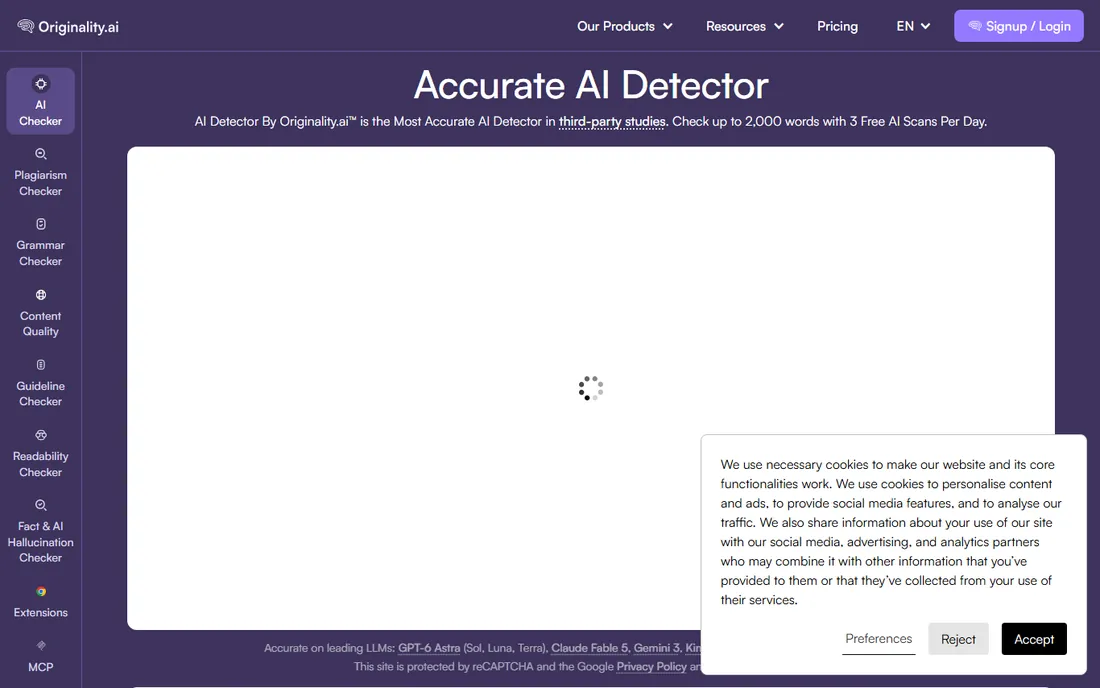
Originality.ai was built for a specific buyer: the publisher or agency paying freelancers by the article and needing to verify the work is human-written. It combines AI detection with plagiarism and fact-checking in one scan, which matches how content teams actually review submissions. The dashboard tracks writers over time, so repeat offenders surface in the data.
Pricing starts at $14.95 a month, with pay-as-you-go credit packs for irregular volume. The limited free trial covers a handful of scans, enough to test but not to run a workflow. If you publish content at volume and need a paper trail for clients, this is the most purpose-built option here.
What we like- Built for content teams
- Pay-as-you-go credits
- Plagiarism check bundled in
Watch out for- No meaningful free tier
- Per-scan costs add up for heavy users
Starting price$8.33/month (annual billing)
Free planYes (free tier, 10,000 words/month)
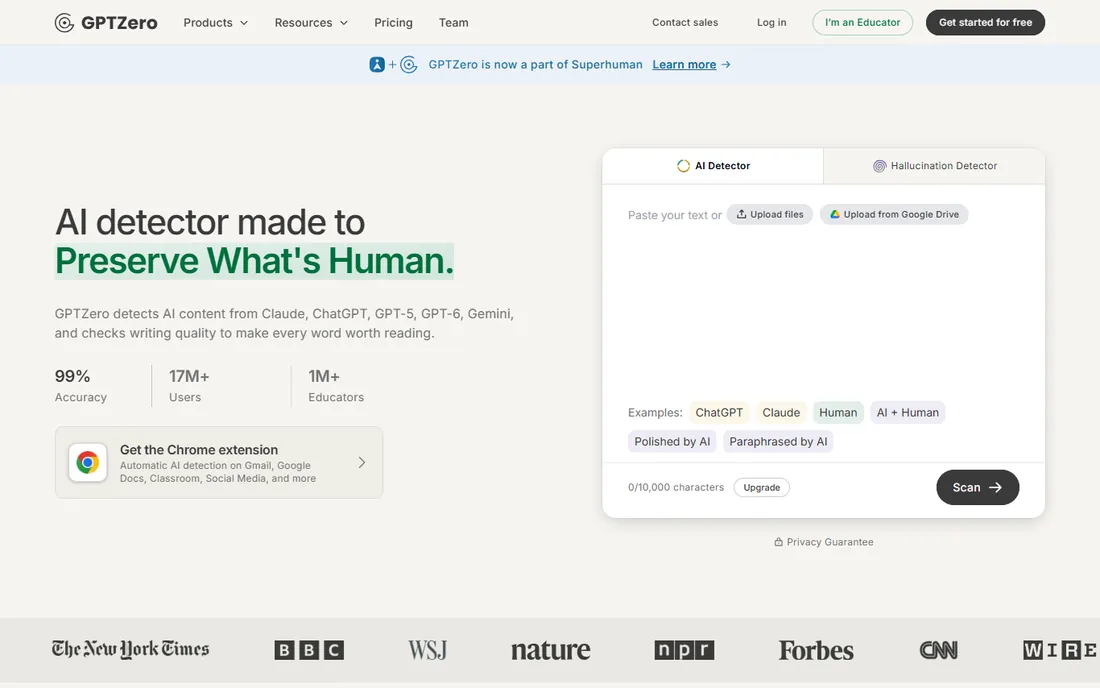
GPTZero became the classroom standard almost by accident: a Princeton student built it, teachers adopted it, and the company grew up around education. It highlights which sentences look machine-written rather than returning a single number, which gives teachers something concrete to discuss with a student instead of an accusation.
The free tier covers 10,000 words a month, enough for a teacher spot-checking assignments. Paid plans start at $8.33 a month on annual billing ($14.99 month to month) and add batch uploads, LMS integrations, and deeper analysis. For schools, the education pricing and integrations matter more than raw detection claims.
What we like- Education-focused
- Sentence-level highlighting
- Generous free tier
Watch out for- Accuracy varies by text type
- Premium features add cost
Starting price$9.99/month (AI detection only)
Free planFree (5 scans per day)
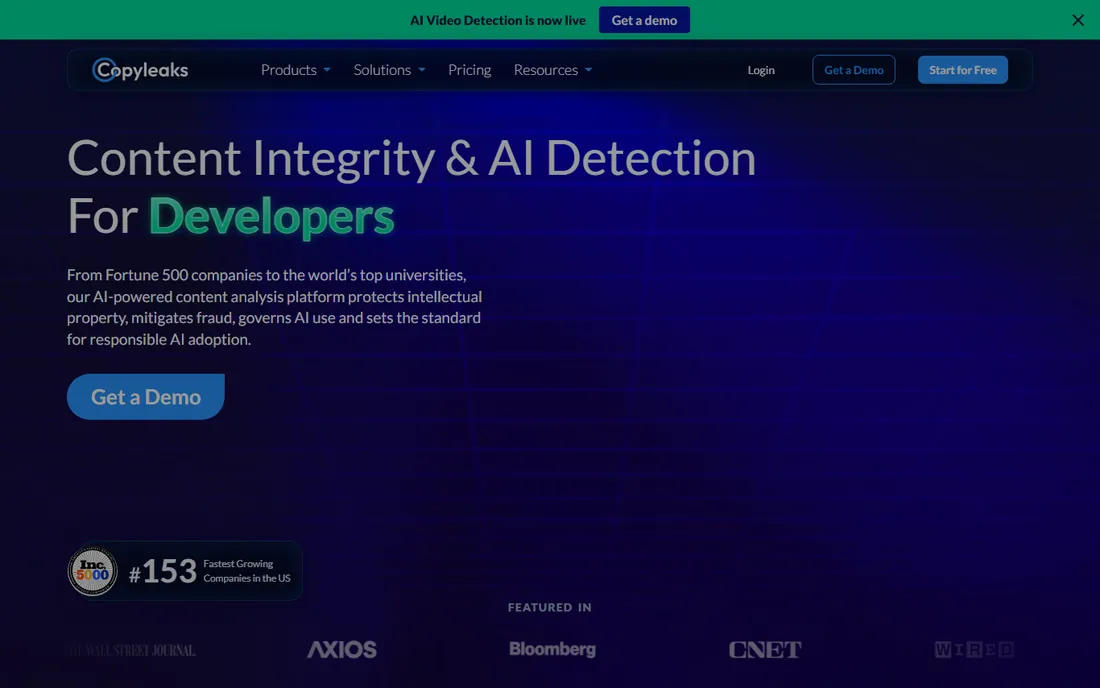
Copyleaks sells to institutions, not individuals. Universities, enterprises, and publishers plug its API into their own systems, and it detects AI-generated text, plagiarized content, and even AI-generated source code. The $9.99-a-month AI detection plan is the entry point; the full academic integrity suite is quoted per institution.
The free tier allows five scans a day, which is genuinely useful for one-off checks. What sets Copyleaks apart is infrastructure: SSO, LMS plugins, audit logs, and compliance certifications that procurement departments require. A solo blogger does not need any of that. A university rolling out detection across departments does.
What we like- Enterprise-grade platform
- API and LMS integrations
- Source-code detection
Watch out for- Full platform pricing climbs fast
- Overkill for casual checks
Starting priceSee website (institution licensing)
Free planNo
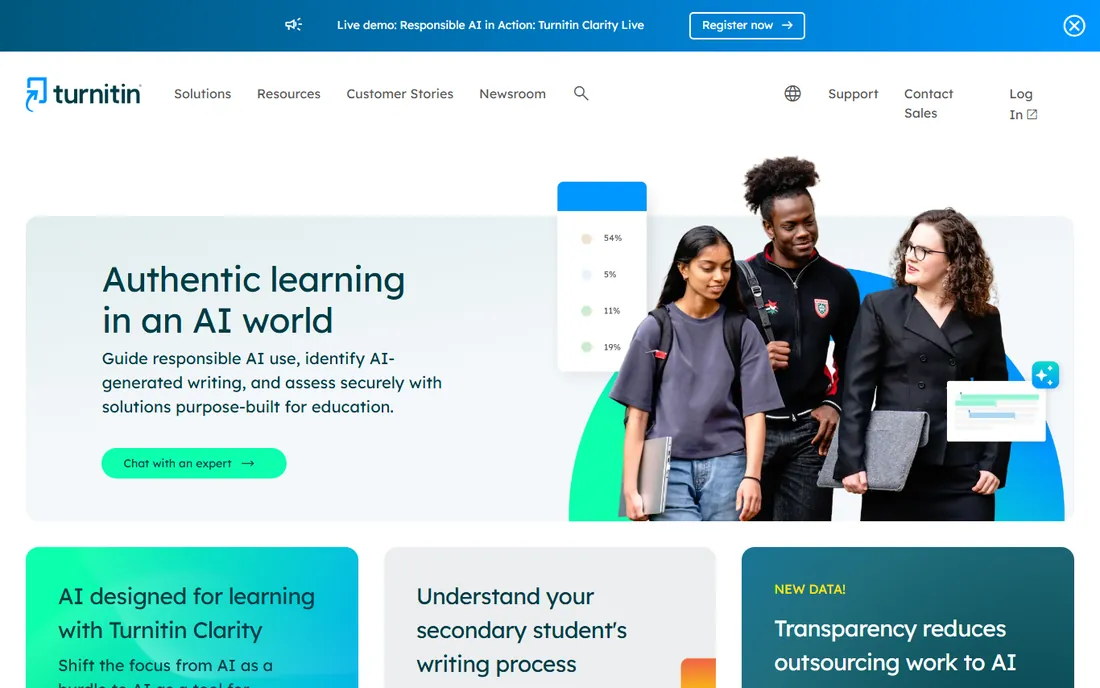
Turnitin is the name every educator knows, and its AI detection rides inside the similarity reports schools already use. It is sold as institution licensing only: a university buys it, integrates it with Canvas or Blackboard, and every submission gets screened automatically. There is no meaningful way for an individual to purchase it.
That makes Turnitin a strange entry on a buyer's list, but an essential one, because many readers are evaluating it through their school. Pricing is quote-based and not published. Its strength is workflow: detection appears where grading already happens, with draft coaching tools that try to prevent misconduct rather than just catching it.
What we like- The academic integrity standard
- Deep LMS integration
- Writing feedback tools
Watch out for- No individual purchase
- Pricing hidden behind sales
- Students cannot buy it directly
#5
Winston AI
Best for: Content teams wanting detailed, shareable reports
Visit gowinston.ai
Starting price$12/month
Free planFree trial (14 days)
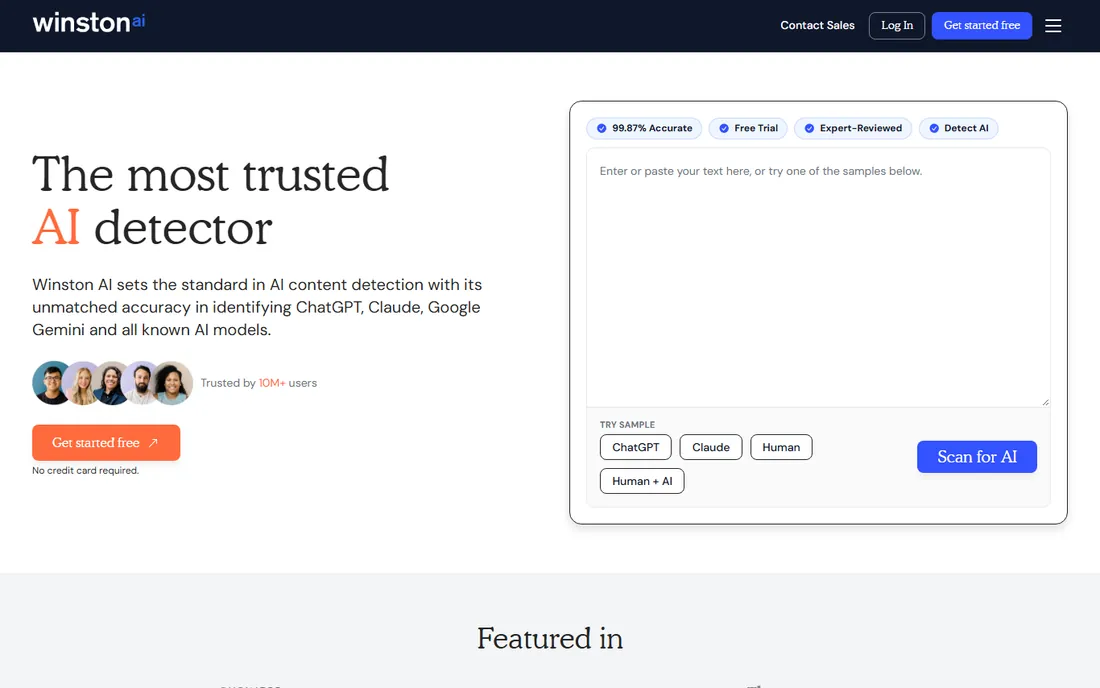
Winston AI targets the same publisher buyer as Originality.ai but differentiates on reporting. Each scan produces a detailed breakdown with readability metrics and a shareable link, so an editor can send a client or freelancer the actual evidence instead of a screenshot. It also reads text from images and scanned handwriting via OCR, a nice touch for academic use.
Plans start at $12 a month with a 14-day free trial. The per-word pricing model means costs scale with volume in a way that rewards estimating your usage honestly before committing. For small content teams that need professional-looking reports, it punches above its brand recognition.
What we like- Detailed reports with readability scores
- Shareable result links
- OCR for images and handwriting
Watch out for- Smaller brand than competitors
- Pricing per word can surprise heavy users
Starting price$9.99/month (Pro)
Free planYes
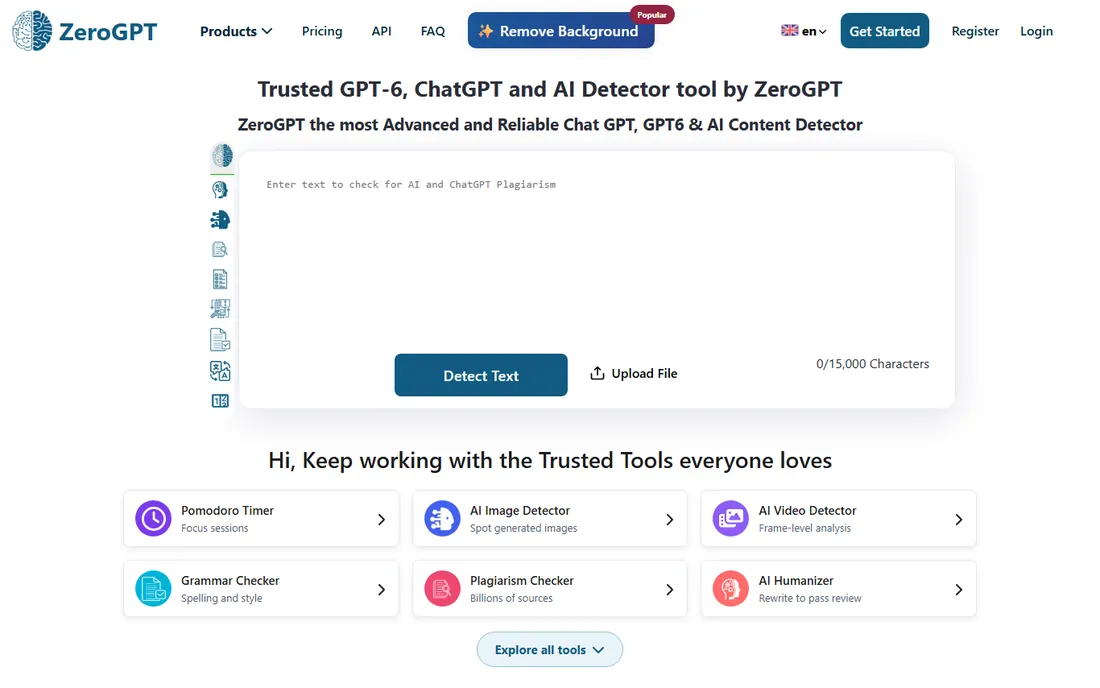
ZeroGPT is the tool people actually use most, because it is free and requires no account. Paste text, get a verdict in seconds. For a quick gut check on a suspicious paragraph, that frictionless experience beats every feature list on this page.
The Pro plan at $9.99 a month removes ads and raises limits, but the free tier is the real product here. Be realistic about what it is: a fast screening tool with less analytical depth than the paid platforms, and no team features or integrations. Use it to decide whether something deserves a closer look, not as the final word.
What we like- Free without an account
- Fast
- Simple interface
Watch out for- Ad-supported free tier
- Less depth than paid rivals
- Fewer integrations

#7
Sapling
Best for: Teams that want detection inside a writing assistant
Visit sapling.ai
Starting price$25/month (Pro)
Free planYes (limited checks)
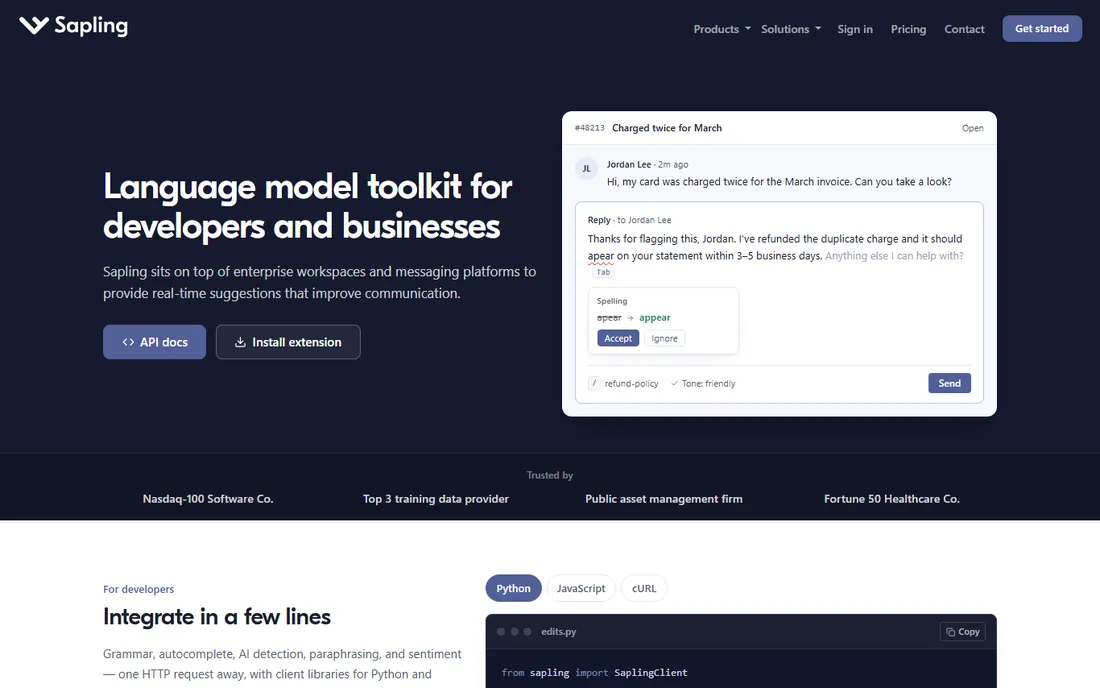
Sapling is primarily an AI writing assistant for customer-facing teams, think support agents and sales reps, with AI detection as one feature among many. The browser extension watches what your team writes and flags grammar issues, tone problems, and AI-generated text in one pass. That combination suits companies standardizing communication quality.
The Pro plan runs $25 a month, which is steep if you only want detection, but reasonable as a writing-quality suite. A limited free tier covers basic checks. Buy Sapling for the writing assistant with detection as a bonus, not the other way around.
What we like- Grammar and AI detection in one tool
- Browser extension
- Team analytics
Watch out for- Detection is secondary to the writing assistant
- Pricier than pure detectors
Starting priceFree (premium check $19.95 per document)
Free planYes
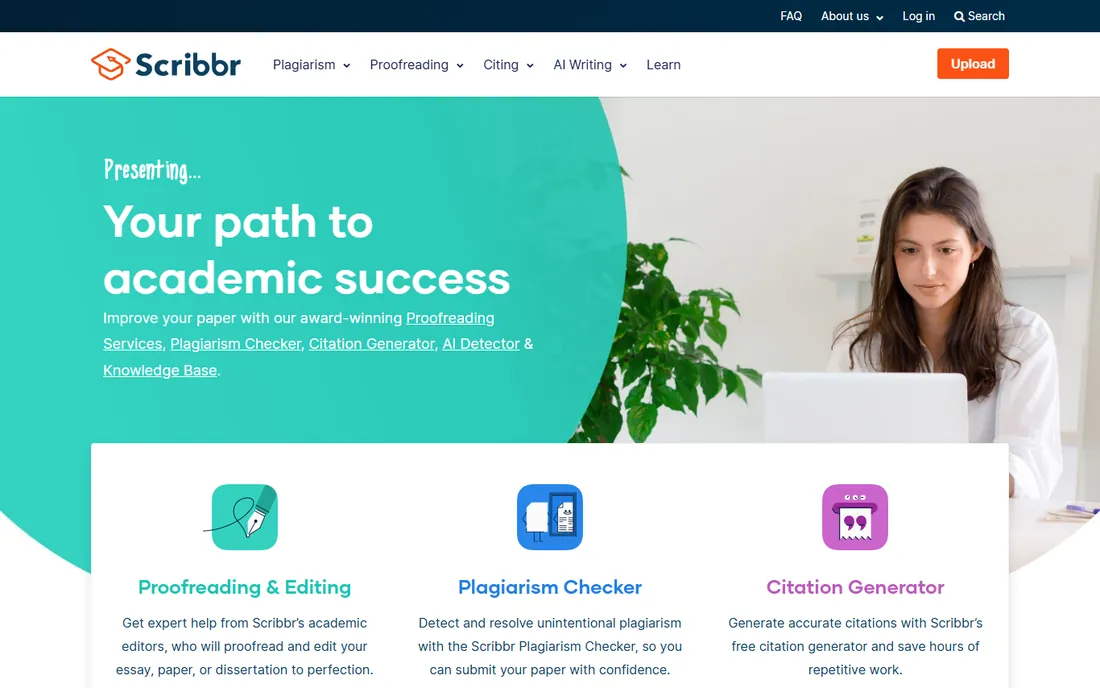
Scribbr built its reputation on citation generators and proofreading for students, and its free AI detector extends that goodwill. No account, no payment, paste your text and get a result. For a student wanting to check their own draft before submission, or a teacher doing a quick screen, it is the path of least resistance.
The premium check at $19.95 per document adds deeper analysis for high-stakes work like theses. There is no subscription, which is either a pro or a con depending on your volume. Scribbr will not replace an institutional platform, but as a free student-facing tool it is honest about what it does.
What we like- Free detector with no signup
- Trusted student brand
- Premium deep-check available
Watch out for- Limited features in free version
- Premium is per document, not subscription
Quick comparison
| Tool | Best for | Starting price | Free plan |
|---|
 Originality.ai Originality.ai | Publishers checking freelance content at scale | $14.95/month | Free trial (limited scans) |
 GPTZero GPTZero | Teachers checking student writing | $8.33/month (annual billing) | Yes (free tier, 10,000 words/month) |
 Copyleaks Copyleaks | Enterprises needing detection plus plagiarism checks | $9.99/month (AI detection only) | Free (5 scans per day) |
 Turnitin Turnitin | Universities and schools buying institution-wide | See website (institution licensing) | No |
| Winston AI | Content teams wanting detailed, shareable reports | $12/month | Free trial (14 days) |
 ZeroGPT ZeroGPT | Quick free checks with no signup | $9.99/month (Pro) | Yes |
| Sapling | Teams that want detection inside a writing assistant | $25/month (Pro) | Yes (limited checks) |
 Scribbr Scribbr | Students who need a free one-off check | Free (premium check $19.95 per document) | Yes |
Is your product missing or out of date?
We review this list regularly. Vendors can request a listing, send updated pricing or ask about featured placement.
Key takeaways
- No AI detector is fully reliable; treat every result as a screening signal, never as proof, especially with non-native English writing.
- Publishers and agencies get the most purpose-built workflows from Originality.ai and Winston AI, both priced around $12 to $15 a month.
- Teachers and students have strong free options: GPTZero's free tier, ZeroGPT, and Scribbr cover most classroom needs at no cost.
- Turnitin and Copyleaks are institutional buys sold to schools and enterprises, not tools an individual can meaningfully purchase.
How we chose
We started from the detectors with real user bases and verifiable pricing, then checked each vendor's own pricing page rather than trusting review-site figures. Tools were judged on fit for specific buyers (teachers, publishers, enterprises, students) rather than on vendor accuracy claims, which we do not treat as comparable across companies. We excluded detectors with no live product, no clear pricing, and browser extensions that existed only as marketing pages. No vendor paid for placement, and the accuracy caveats in this article apply equally to every tool listed.
The accuracy problem nobody should ignore
Every vendor publishes accuracy numbers, and none of them are directly comparable because each tests on different data. Independent research has repeatedly found two failure modes that matter more than any marketing claim. First, detectors disproportionately flag writing by non-native English speakers as AI-generated, which makes them dangerous as sole evidence in academic settings. Second, lightly editing AI text, paraphrasing tools, or simply writing in a plain style can flip results.
The practical takeaway: use detectors to prioritize human review, not to replace it. A flagged submission deserves a conversation, a look at drafts and process, and corroborating evidence. Any policy that treats a detector score as a verdict will eventually punish an innocent student or freelancer. The tools above differ in workflow and reporting, not in exemption from this limitation.
What to check before you buy
Match the buyer to the product. Individual teachers and students should stay in the free tier: GPTZero, ZeroGPT, and Scribbr cost nothing and cover spot checks. Content teams publishing at volume need dashboards, writer history, and shareable reports, which is the Originality.ai and Winston AI tier at roughly $12 to $15 a month. Institutions need LMS integration, SSO, and procurement-friendly contracts, which means Copyleaks or Turnitin through a sales process.
Check the pricing model against your volume. Per-word and per-scan pricing looks cheap until a busy month multiplies it, while flat subscriptions reward heavy use. And confirm the free plan limits before building a workflow on them: five scans a day or 10,000 words a month is plenty for sampling and nothing like enough for screening every submission.
Frequently asked questions
Can AI detectors be trusted?
As screening tools, yes, with caution. As proof of cheating or fraud, no. Research consistently shows false positives, particularly on non-native English writing, and false negatives on edited AI text. Use a detector to decide what deserves human review, and never make a consequential decision on a score alone.
Which AI detector is the most accurate?
Vendors each claim high accuracy on their own test data, and those claims cannot be meaningfully compared. Independent evaluations show performance varies widely by text type, length, and language background of the writer. Choose based on workflow fit and reporting quality rather than chasing the biggest accuracy number.
Is there a truly free AI detector?
Yes. ZeroGPT and Scribbr offer free checks without an account, GPTZero's free tier covers 10,000 words a month, and Copyleaks allows five free scans a day. These cover casual and classroom use. Sustained professional use at volume is what the paid plans are for.
Do AI detectors work on paraphrased text?
Poorly. Paraphrasing, whether by a human editor or a paraphrasing tool, is one of the most effective ways to evade detection, and short texts are harder to classify than long ones. This is a fundamental limitation of how detectors work, not a flaw in any single product.
Can students buy Turnitin themselves?
No. Turnitin is sold as institution licensing only, through schools and universities. Students and individual teachers cannot purchase it directly. GPTZero, Scribbr, and ZeroGPT are the accessible alternatives for individuals.
Should businesses use AI detectors on job applicants' writing?
Carefully, if at all. The false-positive problem is real, and rejecting a candidate over a detector score risks discarding strong applicants, particularly non-native English speakers. If you screen writing samples, use detection as one input among several and always allow the candidate to discuss the work.
Sources we checked (8)
- https://originality.ai
- https://gptzero.me
- https://copyleaks.com
- https://www.turnitin.com
- https://gowinston.ai
- https://zerogpt.com
- https://sapling.ai
- https://www.scribbr.com/ai-detector/
Is your product missing or out of date?
We review this list regularly. Vendors can request a listing, send updated pricing or ask about featured placement.

Shihab Mia · Founder, Rankite
Shihab has spent more than a decade helping SaaS and e-commerce brands grow through search. He writes Rankite's software buying guides from pricing pages, documentation and public user reviews. More about Shihab.