How we make this list: we compare pricing pages, product documentation and public user reviews. Rankite is independent; if a vendor ever pays for a featured spot, that listing is clearly labeled Partner.
Key takeaways
- Google Ad Manager is the industry default for publishers, but its free tier has real limits; growing publishers often pair it with or replace it by a dedicated ad server.
- Kevel is the pick for product teams that want to build advertising into their own product through APIs rather than buy a boxed dashboard.
- Epom publishes its pricing: ad server plans start at $250 per month with a 14-day free trial, which makes it the easiest of these platforms to evaluate on cost.
- Broadstreet and AdvertServe are built for publishers with direct sales teams, especially local and B2B media, while Revive Adserver remains the only serious free, self-hosted option.
- White-labeling matters if you sell to advertisers directly: AdGlare, Epom, and AdButler let your inventory look like your own network, not someone else's platform.
A publisher with forty sites runs direct deals in spreadsheets, remnant inventory through three different networks, and reporting stitched together by an intern. Every month-end is a reconciliation project. Ad network software exists to end that: ad servers and supply-side platforms that decide which ad appears where, track every impression, and give advertisers the self-serve or managed buying experience they expect.
This guide covers software platforms for running ad operations, not consumer ad networks you join as a publisher. Some are full ad servers, some are APIs for building your own, and one is the free open source veteran. The right choice depends on whether you sell direct, run programmatic, or both.
Quick comparison
| Tool | Best for | Starting price | Free plan |
|---|
 Google Ad Manager Google Ad Manager | publishers wanting the industry default | See website | Yes (small business tier) |
 Kevel Kevel | product teams building ad platforms via API | See website | No |
 AdButler AdButler | retail and commerce media networks | See website | No |
 Epom Epom | white-label ad serving with transparent pricing | $250 per month (Ad Server) | Free trial (14 days) |
 Broadstreet Broadstreet | local and B2B publishers selling direct | See website | No |
 AdGlare AdGlare | privacy-conscious publishers and agencies | See website | Free trial (14 days) |
 Revive Adserver Revive Adserver | self-hosted free ad serving | Free (open source) | Yes |
 AdvertServe AdvertServe | B2B and niche publishers with direct sales teams | See website | No |
 Equativ Equativ | end-to-end media platform with curation | See website | No |
Is your product missing or out of date?
We review this list regularly. Vendors can request a listing, send updated pricing or ask about featured placement.
The best ad networks software
Starting priceSee website
Free planYes (small business tier)
Almost every serious publisher touches Google Ad Manager eventually, because it connects your inventory to the largest pool of programmatic demand on earth. The free small-business tier handles direct deals, house ads, and Ad Exchange competition without a license fee, and the learning resources are endless. If your ad ops team has used any ad server before, they have used this one.
The catches are structural. Google sets the policies, takes its cut, and has a history of changing rules in ways that suit Google first. Past a certain scale you move to the paid 360 version with its own contract. Still, for most publishers this is the baseline everything else gets compared against. Evaluate the alternatives below against what Ad Manager already gives you for free.
What we like- Deepest demand pool through Google's exchange
- Unmatched documentation and community
- Free tier for smaller publishers
Watch out for- Revenue share and policy rules favor Google
- Complexity grows fast past the basics
#2
Kevel
Best for: product teams building ad platforms via API
Visit kevel.com
Starting priceSee website
Free planNo
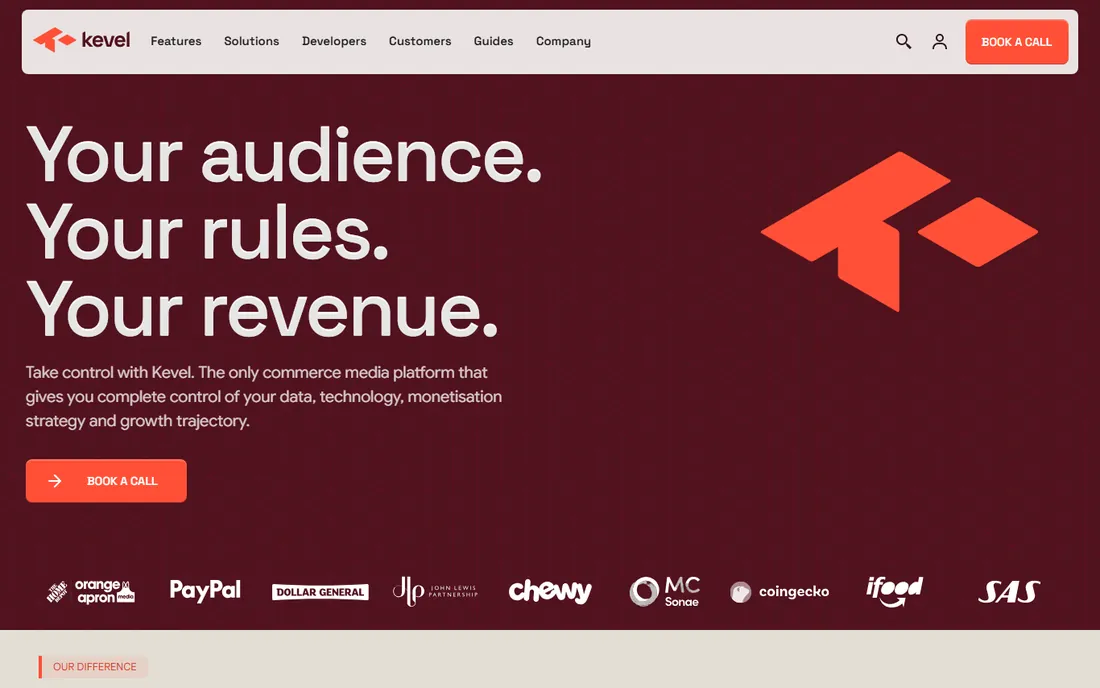
Kevel does not sell you an ad server dashboard; it sells the infrastructure to build your own advertising business. Its APIs let marketplaces, delivery apps, and retailers launch sponsored listings and display ads inside their own products, with decisioning fast enough for real-time placements. If you have engineers and a product vision, Kevel gets you to a working ad platform without building the serving layer from scratch.
That engineering requirement is the filter. A local news site with one developer will drown here; a marketplace with a product team will thrive. Pricing is custom and usage-based, so budget conversations start with your expected request volume. Kevel is the right answer when advertising is a product feature, not just a revenue line.
What we like- APIs built for custom ad products
- Sub-100ms decisioning at scale
- Strong retail media traction
Watch out for- Needs engineering resources to implement
- Not a plug-and-play dashboard for small publishers
Starting priceSee website
Free planNo
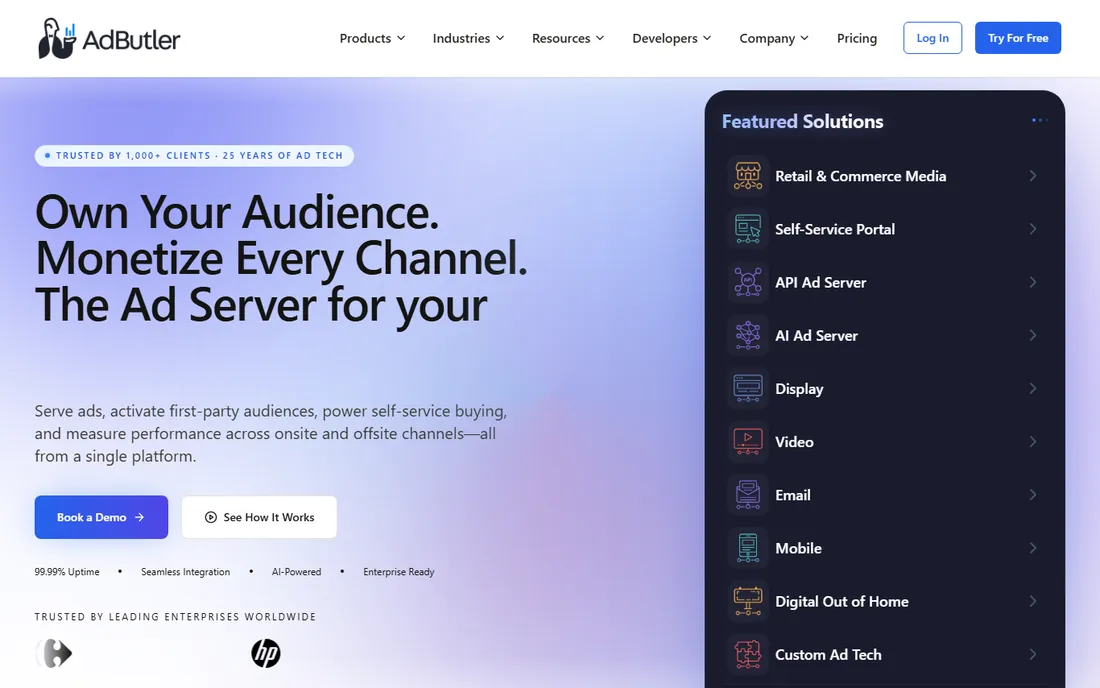
AdButler has been in ad tech since 1999, and its current platform targets the retail media boom: onsite sponsored products, offsite audience extension, self-serve buying portals, and programmatic demand in one stack. Retailers, marketplaces, and publishers that sell to their own advertisers get white-labeled portals where brands plan and buy without calling your sales team.
The platform is genuinely broad, which is both the appeal and the warning. Implementation is a project, pricing is quote-based, and you will talk to sales before you see a number. For a retailer building a media network, that is normal. For a small publisher, the process will feel heavy compared with AdGlare or Epom.
What we like- Full-stack retail media features including onsite and offsite
- Self-serve advertiser portals
- Long track record since 1999
Watch out for- Quote-based pricing with no public numbers
- Enterprise sales process
#4
Epom
Best for: white-label ad serving with transparent pricing
Visit epom.com
Starting price$250 per month (Ad Server)
Free planFree trial (14 days)
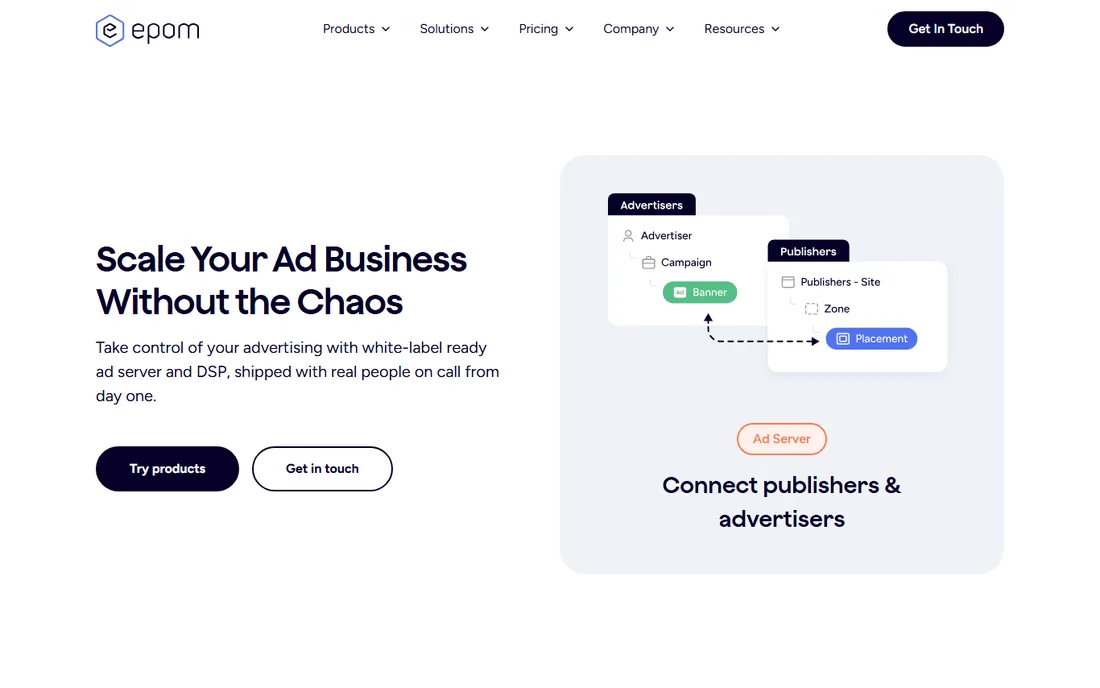
Epom wins the transparency contest: its site states that Ad Server plans start at $250 per month, the DSP starts from a $100 deposit, and both products carry a 14-day free trial. For buyers tired of "contact sales" walls, that alone is refreshing. You get a white-label ad server for direct deals and a demand-side platform for programmatic buying, usable separately or together.
The company leans on human support and customization rather than raw scale, which suits mid-size ad businesses better than giant publishers. Feature depth is solid for direct and programmatic basics, though you will not find Google's demand pool here. If you want to know the price before the first call, start your shortlist with Epom.
What we like- Published pricing starting at $250 per month
- White-label ad server plus DSP in one company
- 14-day free trial
Watch out for- Smaller ecosystem than Google
- Managed services add cost from $750 per month
Starting priceSee website
Free planNo
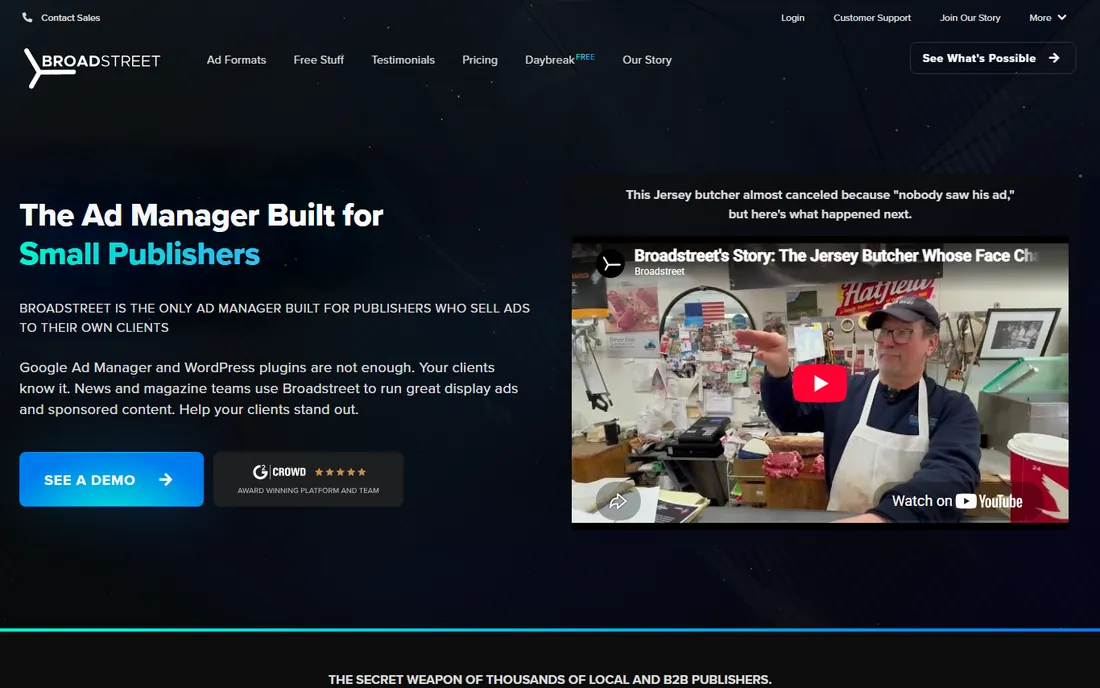
Broadstreet exists for the publisher whose revenue comes from local businesses buying banner ads and sponsored posts, not from programmatic auctions. The platform makes direct deals easy to traffic, gives advertisers reports they can actually understand, and handles the newsletter and site placements a community publisher sells every day. Its customer list is full of local news and B2B media companies.
If your business is mostly programmatic remnant, this is the wrong tool. Broadstreet's strength is the direct relationship: simple trafficking, clear reporting, and support that understands small publishing teams. Pricing is quote-based and scales with your situation, so expect a discovery call before numbers.
What we like- Built around direct-sold display and sponsored content
- Advertiser-friendly reporting
- Onboarding help for small teams
Watch out for- Not built for heavy programmatic setups
- Pricing requires a conversation
Starting priceSee website
Free planFree trial (14 days)
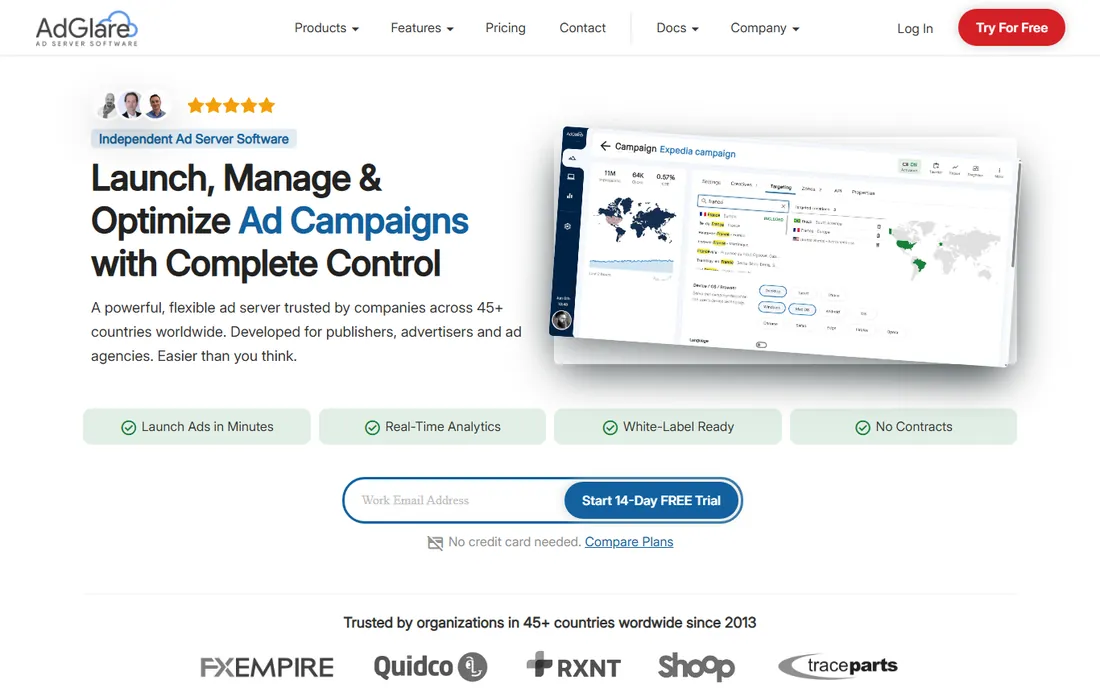
AdGlare takes privacy as a feature, not a compliance checkbox. It serves ads without cookies or personal identifiers, which simplifies GDPR and CCPA posture and sidesteps the third-party cookie mess entirely. You can serve from your own subdomain, which helps with ad blockers, and the platform covers display, native, and video with real-time reporting.
The 14-day free trial needs no credit card, so evaluation is painless. Pricing is not published on the homepage, and third-party listings put entry plans around the $200 per month mark, so confirm current numbers on a call. For publishers and agencies where privacy posture is a selling point to advertisers, AdGlare is purpose-built.
What we like- No cookies and GDPR-friendly by design
- White-label serving from your own subdomain
- 14-day free trial with no credit card
Watch out for- Pricing starts higher than hobbyist tools
- Advanced features sit on the Enterprise plan
Starting priceFree (open source)
Free planYes
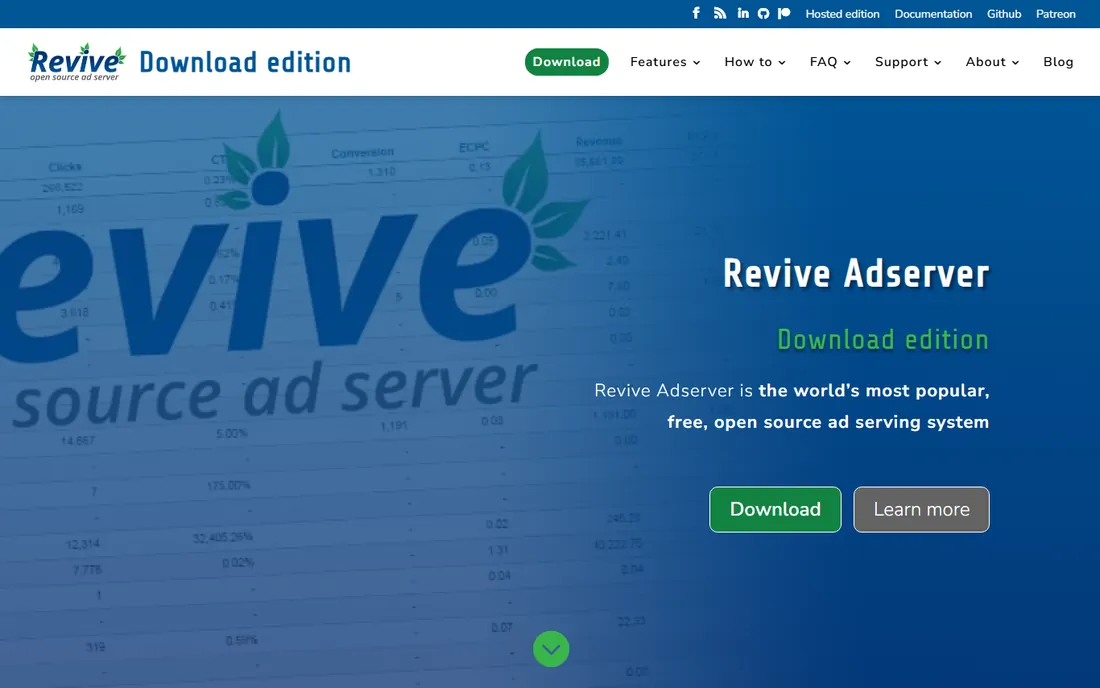
Revive Adserver is the free open source ad server, descended from a lineage that powered much of the early web's advertising. Download it, host it on your own server, and serve unlimited impressions with no license fees and no revenue share. For publishers with technical staff and a strong preference for data ownership, the economics are unbeatable.
The cost is your time. You maintain the server, apply security updates, and troubleshoot delivery issues yourself, and the interface shows its age next to modern SaaS platforms. There is also a hosted edition if you want the software without the sysadmin work. Choose Revive when control and cost matter more than convenience.
What we like- Completely free with full source code
- You own your data and infrastructure
- Long-running stable project
Watch out for- You handle hosting, security, and updates
- Interface and features lag commercial platforms
Starting priceSee website
Free planNo
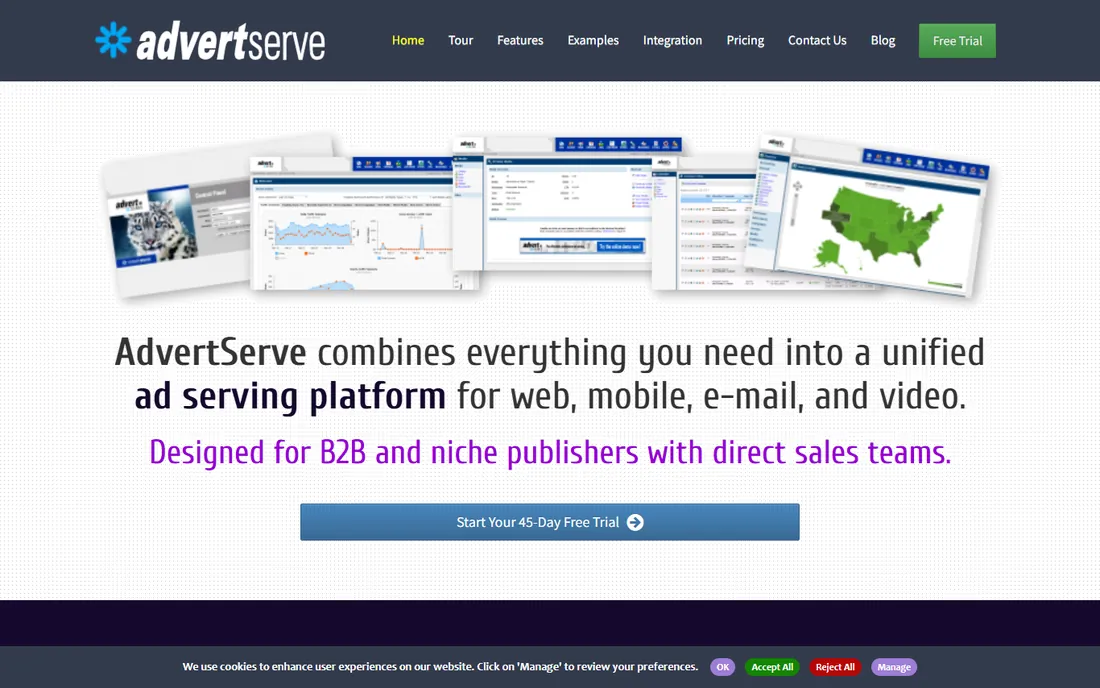
AdvertServe has served ads since 1998, and its niche is B2B and specialist publishers, the trade publications and industry sites that sell direct to a defined advertiser base. It handles web, mobile, email, and video placements, with real-time reporting and the usual targeting options. Email newsletter ad serving is a particular strength, which matters more to B2B media than most platforms admit.
The interface will not win design awards, and pricing requires talking to the company. What you get in return is a vendor that understands direct-sold B2B advertising and answers the phone. If your ad business is relationships with fifty industry advertisers rather than programmatic scale, AdvertServe speaks your language.
What we like- Built for B2B and niche publishers
- Strong email ad serving
- Long operating history since 1998
Watch out for- Interface feels dated
- Pricing not published
Starting priceSee website
Free planNo
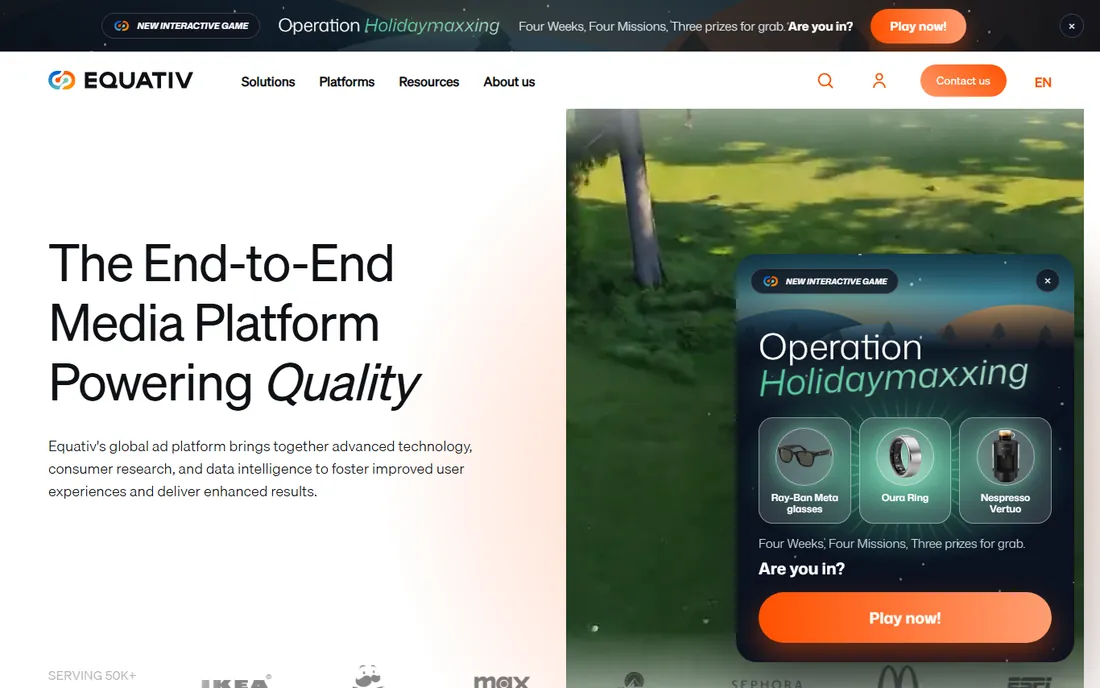
Equativ, formerly Smart AdServer, offers an end-to-end platform: ad serving, supply-side tools, and curation products that let buyers package premium inventory. It positions itself as the independent alternative to Google's stack, which resonates with publishers that want programmatic sophistication without deepening their dependence on one vendor. The Maestro product line targets attention-based and curated buying.
This is enterprise software with an enterprise buying process: demos, discovery, and custom quotes. Smaller publishers will find it heavy. For mid-size and large media companies running serious programmatic operations, especially in Europe, Equativ is one of the few genuine full-stack alternatives to Google.
What we like- Full stack from ad server to SSP with curation tools
- Strong European publisher base
- Independent from the big tech platforms
Watch out for- Enterprise sales motion
- Complexity for smaller publishers
How we chose
We evaluated ad platforms the way a buyer would: reading vendor pricing pages and documentation, checking public reviews on G2, Capterra, and SourceForge, comparing feature lists for ad serving, targeting, reporting, and white-label options, and weighing fit for different publisher sizes. We treated vendor homepages as the authority on current positioning and used third-party review sites for pricing signals we could not verify directly. No vendor paid for placement.
Ad server software is not an ad network
The terminology confuses buyers, so here is the distinction that matters. An ad network is a business that aggregates publisher inventory and sells it to advertisers, taking a cut. Ad server software is the technology that decides which ad shows in each slot, tracks delivery, and reports results. You can run an ad server without joining any network, and you can join networks without owning an ad server.
Why does it matter? Because the software on this list gives you control. With your own ad server, you set the rules: which advertisers get priority, what floor prices apply, how inventory splits between direct deals and programmatic. Joining a network hands those decisions to someone else in exchange for demand. Most serious publishers do both, using software like this to manage the mix.
Questions to ask before you sign
Ad platform contracts run for years, so the sales call is where you protect yourself. These questions separate good fits from expensive mistakes.
How do you charge, exactly?
Pricing models vary: flat monthly fees, CPM-based usage, revenue shares, or per-application pricing. Ask what happens when your traffic doubles, and get the overage math in writing. Epom publishes starting prices; most others will quote after discovery.
Who owns the data?
Your impression and audience data is an asset. Confirm that you can export raw logs, that the vendor does not reuse your data to train models or benefit competitors, and what happens to historical data if you leave.
What does migration look like?
Moving ad servers means retagging every placement and migrating campaigns without losing revenue. Ask for a migration plan, timeline, and references from publishers who switched. The vendors that do this well will have a rehearsed answer.
How is support structured?
Ad serving breaks at the worst moments. Ask about support hours, response time guarantees, and whether you get a named contact. Self-serve platforms with email-only support are fine until a major campaign misfires on a Friday night.
Frequently asked questions
What is the difference between an ad server and a DSP?
An ad server manages your own inventory: it decides which ad fills each slot on your sites and tracks delivery. A DSP, demand-side platform, is a buying tool advertisers use to purchase inventory across many publishers programmatically. Some vendors on this list, like Epom and Equativ, offer both sides.
Can small publishers use these platforms?
Yes, with caveats. Google Ad Manager has a free tier, Revive Adserver is free if you self-host, and AdGlare and Epom offer trials. Enterprise platforms like Kevel and Equativ are built for larger operations and will say so on the sales call.
What does white-label mean in ad tech?
White-label means the platform runs under your brand: your domain, your logo, your advertiser portal. Your advertisers interact with your business, not the software vendor. AdButler, Epom, and AdGlare all offer this, which matters if you sell direct.
Self-hosted or SaaS: which is better?
SaaS platforms handle infrastructure, updates, and scaling for you, at a monthly cost. Self-hosted options like Revive Adserver cost nothing in licenses but need your engineering time for hosting and security. Most publishers choose SaaS; technical teams with strict data requirements choose self-hosted.
How long does implementation take?
A basic ad server setup with standard placements can go live in days. White-labeled portals, API integrations like Kevel's, or enterprise platforms with custom workflows take weeks to months. Ask for a realistic timeline with reference customers of your size.
Sources we checked (9)
- https://admanager.google.com/
- https://www.kevel.com/
- https://adbutler.com/
- https://epom.com/
- https://broadstreetads.com/
- https://www.adglare.com/
- https://revive-adserver.com/
- https://www.advertserve.com/
- https://equativ.com/
Is your product missing or out of date?
We review this list regularly. Vendors can request a listing, send updated pricing or ask about featured placement.

Shihab Mia · Founder, Rankite
Shihab has spent more than a decade helping SaaS and e-commerce brands grow through search. He writes Rankite's software buying guides from pricing pages, documentation and public user reviews. More about Shihab.