How we make this list: we compare pricing pages, product documentation and public user reviews. Rankite is independent; if a vendor ever pays for a featured spot, that listing is clearly labeled Partner.
Key takeaways
- Bionic is the best media planning software for independent agencies that want planning, buying and reconciliation in one system without enterprise contracts.
- Basis Technologies fits mid-size and large agencies running programmatic, direct, search and social from a single workflow.
- Mediaocean and Operative serve the enterprise and publisher side of the market, with quote-based pricing and deep finance integration.
- SRDS is not planning software in the usual sense. It is the industry-standard database of media rates and contacts that planners use to build their plans.
- Small agencies on a budget should shortlist BluHorn and GaleForceMedia, both built specifically for shops that buy traditional and digital media.
It is Thursday afternoon and your agency just won a regional home-services account. The client wants TV in three markets, radio for drive time, and a digital layer with social and programmatic display, all launching in six weeks. Somewhere between the spreadsheets, the insertion orders and the invoice reconciliation, someone is going to make an expensive mistake. That is the exact moment media planning software earns its keep. It turns a pile of disconnected buys into one plan with one budget, one set of approvals and one version of the truth.
The category is wider than most buyers expect. Some tools plan and buy. Some reconcile the money. Some are databases you plan from. This guide compares eight platforms that agencies and brands actually use for media planning and buying in 2026, checked against vendor documentation and public reviews. We did not test anything hands-on, and we say so. What follows is careful research on what each tool does, who it fits, and where it disappoints.
Quick comparison
| Tool | Best for | Starting price | Free plan |
|---|
 Bionic Bionic | Independent agencies that want planning, buying and billing in one place | See website | Free trial |
 Basis Technologies Basis Technologies | Agencies that run programmatic, direct, search and social together | See website (custom pricing) | No |
 Mediaocean Mediaocean | Enterprises that need the industry's media finance backbone | See website (custom pricing) | No |
 BluHorn BluHorn | Small and midsize agencies buying traditional plus digital media | See website | Free trial (14 days) |
 Mediatool Mediatool | Advertisers and agencies that plan collaboratively across markets | See website | Free trial |
 SRDS SRDS | Planners who need verified media rates, contacts and data | See website (subscription) | No |
 Operative Operative | Media companies and publishers managing ad sales operations | See website (custom pricing) | No |
 GaleForceMedia GaleForceMedia | Agencies that want affordable buying software with responsive support | See website | Free demo |
Is your product missing or out of date?
We review this list regularly. Vendors can request a listing, send updated pricing or ask about featured placement.
#1
Bionic
Best for: Independent agencies that want planning, buying and billing in one place
Visit bionic-ads.com
Starting priceSee website
Free planFree trial
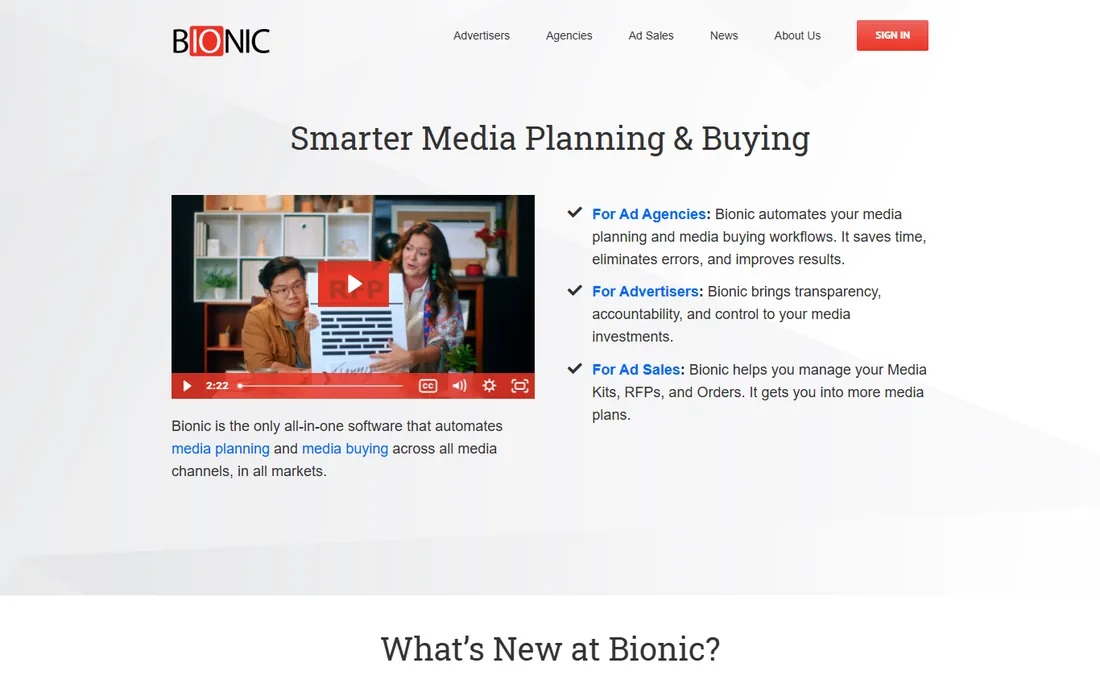
Bionic describes itself as the all-in-one software that automates media planning and media buying across every channel, and for independent agencies that claim holds up well. Media planners get flowcharts, RFP management and proposal tools. Buyers get order management and reconciliation. The finance side gets billing tied to the same data, which is where most agencies bleed hours. With more than 130 integrations connecting performance data back to the plan, the pitch is simple: plan what you will spend, see what you actually spent, and stop reconciling in spreadsheets.
The company serves three audiences, agencies, advertisers and ad sellers, which tells you how broad the product has become. That breadth is the main caveat. Smaller shops may find the full system more than they need, and since pricing is quote-based, you cannot comparison-shop without a sales conversation. For agencies doing real media buying volume across traditional and digital, though, Bionic is the most complete independent option on this list.
What we like- Covers planning, buying and reconciliation in one system
- 130+ integrations with ad platforms
- Dedicated workflows for agencies, advertisers and ad sales teams
Watch out for- Pricing is not published
- The depth of features takes time to learn
#2
Basis Technologies
Best for: Agencies that run programmatic, direct, search and social together
Visit basis.com
Starting priceSee website (custom pricing)
Free planNo
Basis Technologies, formerly known as Centro, built its reputation on solving the operational mess of digital media buying. The Basis platform combines media planning, workflow automation, reporting and financial reconciliation, with an omnichannel DSP at the center for programmatic, direct, search and social buying. In 2026 the company added Compass, an agentic AI feature that turns a campaign brief into a media plan and then into activatable campaigns. Whether AI planning lives up to the hype, the direction is clear: less blank-page work for media teams.
This is a platform for agencies and brands with meaningful digital volume. The workflow automation genuinely reduces manual steps across planning, buying and billing, which is where mid-size agencies lose margin. But Basis is not a casual purchase. Pricing is custom, onboarding is a project, and a shop that mostly buys local TV and radio will pay for sophistication it never uses. Match the tool to your channel mix before you fall for the demo.
What we like- Unified planning, operations and billing workflows
- Built-in omnichannel DSP
- Strong automation for reporting and reconciliation
Watch out for- Enterprise-grade complexity and pricing
- Overkill for traditional-only buyers
#3
Mediaocean
Best for: Enterprises that need the industry's media finance backbone
Visit mediaocean.com
Starting priceSee website (custom pricing)
Free planNo
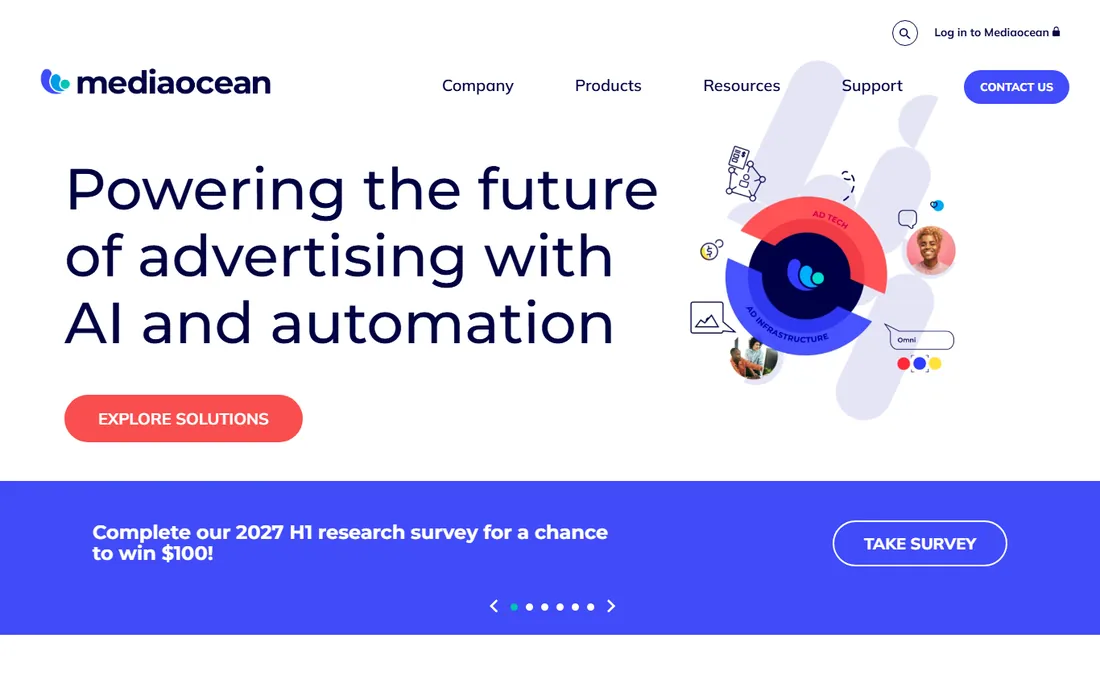
Mediaocean is the infrastructure the advertising industry runs on. Its Prisma platform is the long-standing system of record for media management and finance, used by more than 100,000 people worldwide, and the company has expanded into creative and measurement with Innovid and brand-safety verification with its Protected solution. The company says more than $200 billion in annualized ad spend flows through its platforms. When holding companies and the world's largest advertisers talk about media planning software, this is usually what they mean.
None of that is aimed at a 20-person independent agency. Mediaocean deals are enterprise engagements with enterprise timelines, training requirements and price tags. The honest way to read this entry: if your agency is big enough to need Mediaocean, you already know it, and your CFO is already in the conversation. Everyone else should look at the independent tools on this list and keep their implementation timelines measured in weeks, not quarters.
What we like- The trusted system of record for media buying and finance
- Prisma, Innovid and verification under one roof
- Massive industry adoption
Watch out for- Expensive and complex
- Designed for large operations, not small agencies
#4
BluHorn
Best for: Small and midsize agencies buying traditional plus digital media
Visit bluhorn.com
Starting priceSee website
Free planFree trial (14 days)
BluHorn was built by media buyers who were tired of enterprise contracts, and every part of the product reflects that origin. It handles the full buying workflow for broadcast TV, cable, radio, outdoor, print and digital media, with vendor and client databases, traffic management and reporting that exports to PDF or Excel. Integrations with Nielsen and Comscore cover ratings data, and QuickBooks integration keeps the money side honest. The company makes a point of no-contract pricing, which is rare in a category full of annual lock-ins.
The tradeoff for affordability and simplicity is depth. BluHorn does not try to match the workflow automation of Basis or the finance infrastructure of Mediaocean. For a small agency placing local broadcast and digital buys, that is a feature, not a bug. The 14-day free trial the company advertises is worth taking, because media buying software is one of those categories where fit becomes obvious within the first week of real use.
What we like- Affordable with no long-term contracts
- Built by media buyers for broadcast, radio, outdoor, print and digital
- Integrates with Nielsen, Comscore and QuickBooks
Watch out for- Smaller vendor with a narrower feature set than Bionic
- Pricing details require contacting sales
#5
Mediatool
Best for: Advertisers and agencies that plan collaboratively across markets
Visit mediatool.com
Starting priceSee website
Free planFree trial
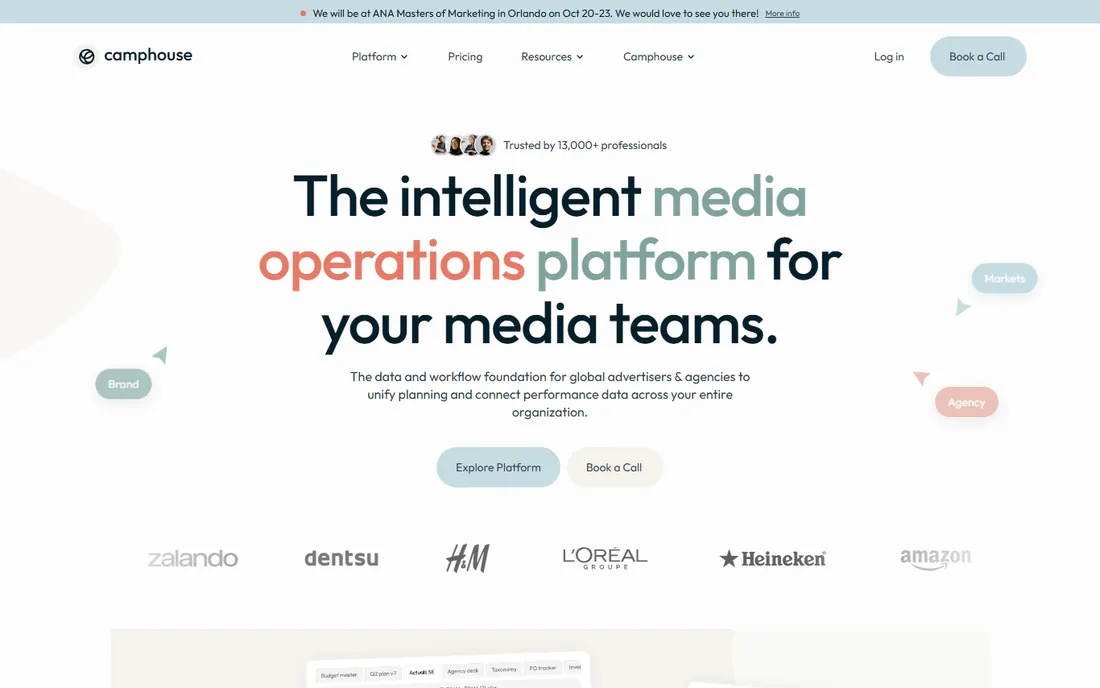
Mediatool comes from Sweden and thinks about media planning as a collaboration problem first. Instead of emailing spreadsheets between markets, teams work in one cloud hub where every campaign, budget and deadline stays current. The planned-versus-actual comparison is the heart of the product: you see what you intended to spend against what is really happening, in real time, which is exactly the visibility global advertisers struggle to maintain. Budget control, deadline alerts and visual reporting round out a package aimed at marketing teams rather than pure media buyers.
That positioning matters for the buying decision. Mediatool is excellent at the planning, tracking and alignment layer, but agencies looking for deep buying execution, order management and station-level reconciliation will find Bionic or BluHorn more complete. Pricing is quote-based, so expect a sales process. For brands coordinating media across countries and agencies, the single-source-of-truth approach can replace an embarrassing number of spreadsheets.
What we like- Clean collaborative planning hub for global teams
- Planned-versus-actual tracking in real time
- Strong budget control and reporting
Watch out for- Quote-based pricing
- Less buying execution depth than agency buying platforms
#6
SRDS
Best for: Planners who need verified media rates, contacts and data
Visit srds.com
Starting priceSee website (subscription)
Free planNo
SRDS, the Standard Rate and Data Service, has been the reference planners reach for since 1919, and it belongs on any best media planning software list because so many plans start inside it. The database covers more than 125,000 media brands across TV, radio, print, digital, out-of-home and more, with current ad rates, audience demographics and media contacts verified from the source. Now part of the Adwanted Group, SRDS has kept investing in digital coverage and data quality rather than coasting on its history.
Buyers should understand exactly what they are getting. SRDS does not build your flowchart, manage your orders or reconcile your invoices. It answers the question every plan starts with: what does this media cost, who do I contact, and who does it reach. Most agencies pair it with one of the planning and buying platforms above. If your planners are still pulling rate cards from station websites one by one, an SRDS subscription pays for itself in recovered hours.
What we like- The industry-standard database with 125,000+ media brands
- Verified rates, demographics and contacts in one place
- Over a century of continuous operation
Watch out for- A data resource, not planning software
- Subscription pricing with no public numbers
#7
Operative
Best for: Media companies and publishers managing ad sales operations
Visit operative.com
Starting priceSee website (custom pricing)
Free planNo
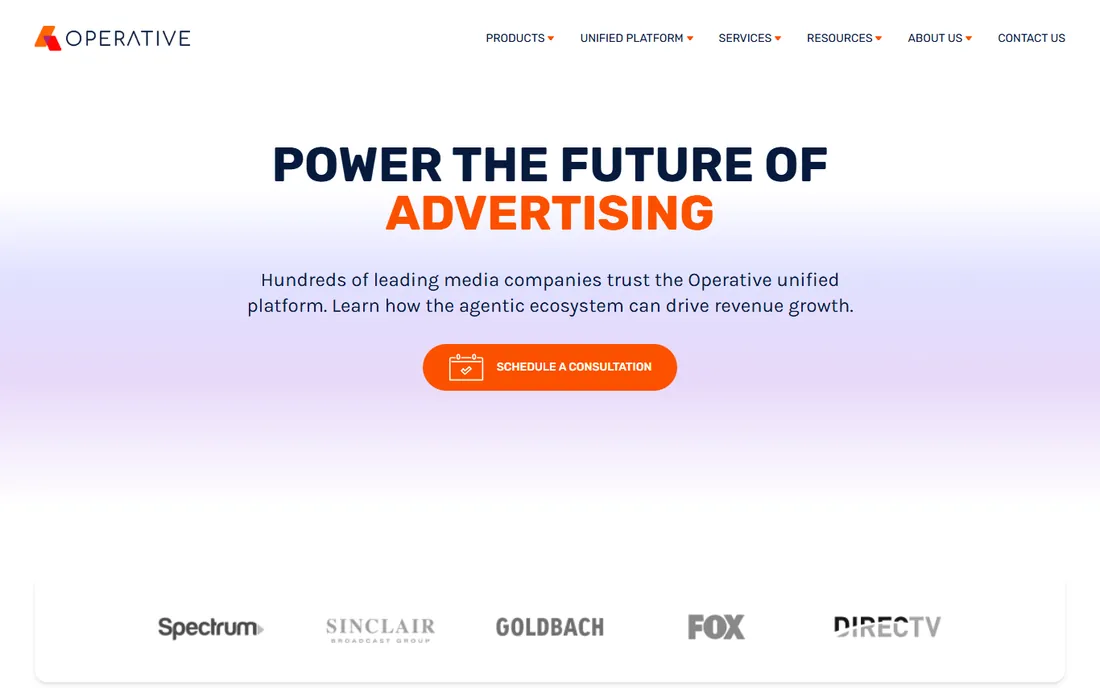
Operative sits on the sell side of the market, which is exactly why it matters to this guide. Its AOS and Operative.One platforms give broadcasters, streaming services, digital publishers and retail media networks one system for selling and managing advertising across linear, digital and converged inventory. Order management, inventory forecasting, billing and revenue recognition all live in the same workflow, which is the publisher's equivalent of what Bionic does for agencies.
If you are an agency media planner, Operative is probably not your purchase. But understanding it helps, because the publishers you negotiate with increasingly run on it, and cleaner sell-side operations mean fewer makegoods and billing disputes on your end. Pricing is custom and implementations are enterprise projects. This is infrastructure for media companies doing serious volume, and it does that job better than any repurposed agency tool could.
What we like- Purpose-built order management for converged TV, streaming and digital
- Strong inventory, billing and revenue workflow tools
- Deep publisher adoption
Watch out for- Built for sellers, not agency buyers
- Enterprise pricing and implementation
Starting priceSee website
Free planFree demo
GaleForceMedia, from GaleForce Digital, pitches itself directly at agencies fleeing spreadsheets and outdated buying systems. The cloud platform covers the whole buying workflow for TV, radio and digital: planning, order management, invoice reconciliation and reporting, with integrations to Nielsen, Comscore and QuickBooks. Client reviews consistently highlight two things: the reconciliation tools that collapse days of invoice work into hours, and a support team that actually picks up the phone. The vendor offers a free demo and trial to prove it.
The honest limitation is scale of company rather than scale of product. GaleForce Digital is a fraction of the size of Mediaocean or Basis, which matters if your procurement process requires vendor depth. For independent agencies, that smallness often cuts the other way: faster feature requests, direct access to the team, and pricing built for shops that cannot sign enterprise contracts. If BluHorn is the budget pick, GaleForceMedia is the service pick.
What we like- Cloud-based planning and buying for traditional and digital
- Invoice reconciliation that users praise
- Fast, responsive customer support
Watch out for- Smaller company than the enterprise vendors
- Pricing requires a demo conversation
Not every agency does, and vendors will never tell you that. If your media buying is a handful of digital campaigns managed inside Google and Meta, you need a PPC tool and a reporting dashboard, not a media planning platform. The software on this list earns its fee in three situations.
First, you buy traditional media. TV, radio, outdoor and print still run on insertion orders, makegoods and manual reconciliation, and that workflow collapses without dedicated software once volume grows. Second, you coordinate across markets or teams, where version control on plans becomes a real risk. Third, the money side hurts: if reconciling invoices against actual delivery eats days every month, a tool with built-in reconciliation pays for itself fast. If none of those sound familiar, save the budget. A spreadsheet and discipline will carry you further than software you do not need.
Media planning software is usually a relationship, not a purchase, so evaluate it like one. Start with contract terms. This category loves annual lock-ins, which makes BluHorn's no-contract stance and the free trials from Bionic and GaleForceMedia worth noting. Ask what happens to your historical data if you leave. An agency's plan archive is an asset, and some vendors make exporting it painful.
Next, verify the integrations you actually need before the demo ends. Ratings data from Nielsen or Comscore, accounting sync with QuickBooks, and API connections to your buying platforms are the three that most often disappoint after signing. Get each one confirmed in writing, not just shown on a slide.
Count the total cost, not the subscription
The subscription is the smallest part of what most of these tools cost. Add implementation fees, training time, data migration, and the staff hours your team spends learning the system. Enterprise platforms can take a quarter to deploy. That does not make them bad buys, but it means the ROI math should use the full number. A cheaper tool your team actually adopts beats an expensive one they work around.
Trial with a real plan, not the vendor's sample data
Every demo looks smooth with clean sample data. Insist on trialing with one real client plan, including its mess: the revised insertion orders, the makegoods, the invoice that never matched. The tool that handles your actual chaos is the tool to buy. The one that only shines on the vendor's data will disappoint by month two.
Frequently asked questions
What is the best media planning software for a small agency?
Bionic is the strongest all-around choice for independent agencies because it combines planning, buying and reconciliation in one system. BluHorn and GaleForceMedia are the budget-friendly alternatives, both built for small agencies buying traditional and digital media, with BluHorn offering no-contract pricing. Start with free trials of two finalists before committing.
What is the difference between media planning and media buying software?
Media planning is deciding where the money goes: channels, markets, budgets and schedules. Media buying is executing those decisions: negotiating rates, placing orders and reconciling delivery against invoices. Most tools on this list do both, but SRDS is purely a planning data resource and Operative is built for the sell side. Know which job you are hiring for before you shop.
How much does media planning software cost?
Most vendors in this category use quote-based pricing, so there is no useful universal range. Independent tools like Bionic and BluHorn are priced per user per month and positioned as affordable for small agencies, while Mediaocean, Basis and Operative are enterprise engagements. Always ask for total cost including implementation, training and data migration.
Is SRDS still relevant in 2026?
Yes. SRDS remains the industry-standard database for verified media rates, demographics and contacts across more than 125,000 media brands, now operated by the Adwanted Group. It does not replace planning software, but planners at agencies of every size still start their research there. If your team pulls rate cards manually from station websites, SRDS is the efficiency upgrade.
Do I need media planning software if I only buy digital?
Probably not. Digital-only buyers are better served by PPC management tools, DSPs and reporting dashboards, which handle execution inside the platforms. Media planning software earns its keep with traditional media workflows, multi-market coordination and invoice reconciliation. If your buys live entirely in Google, Meta and programmatic platforms, skip this category.
How we chose
We started with the platforms that working media planners and buyers actually name: the tools discussed in agency operations groups, compared on review sites and referenced in trade press. From that list we kept only products that are live and sold as standalone software today. One familiar name did not survive the filter. FatTail, which appears in older buying guides, was acquired by Chartbeat and no longer fits a standalone media planning list, so we replaced it with GaleForceMedia.
For each tool we read the vendor's homepage, product pages and documentation, then cross-checked against public reviews on G2, Capterra, SourceForge and agency discussion threads. Pricing is marked "See website" wherever the vendor does not publish concrete numbers, which in this category is most of the time. We never claim hands-on testing. This guide is desk research organized around a single question: which buyer does each tool actually serve.
Sources we checked (8)
- https://www.bionic-ads.com/
- https://basis.com/
- https://www.mediaocean.com/
- https://bluhorn.com/
- https://mediatool.com/
- https://srds.com/
- https://operative.com/
- https://galeforcedigital.com/
Is your product missing or out of date?
We review this list regularly. Vendors can request a listing, send updated pricing or ask about featured placement.

Shihab Mia · Founder, Rankite
Shihab has spent more than a decade helping SaaS and e-commerce brands grow through search. He writes Rankite's software buying guides from pricing pages, documentation and public user reviews. More about Shihab.