How we make this list: we compare pricing pages, product documentation and public user reviews. Rankite is independent; if a vendor ever pays for a featured spot, that listing is clearly labeled Partner.
Key takeaways
- TV advertising used to require a media buyer, a six-figure insertion order, and a prayer. In 2026, self-serve OTT platforms let a small business run streaming TV ads starting at $50 a day.
- The entry points are real: Vibe.co from $50/day with no contracts, MNTN from $5,000/month with creative bundled, Tatari self-serve retargeting from $350/week.
- Publisher platforms (Roku, Amazon, Disney/Hulu) sell their own premium inventory; DSPs (The Trade Desk, DV360) buy across everything programmatically; performance platforms (Vibe, MNTN, Tatari) package buying with measurement.
- Your creative matters more than your targeting: a weak 30-second spot will lose on every platform, while a strong one can win on the cheapest.
Quick comparison
| Tool | Best for | Starting price | Free plan |
|---|
 Vibe.co Vibe.co | Self-serve OTT for SMBs | $50/day minimum | No |
 MNTN MNTN | Performance TV with creative bundled | $5,000/month minimum budget | No |
 Tatari Tatari | Converged linear + streaming buying | $350/week (self-serve retargeting) | No |
 Roku Advertising Roku Advertising | Reaching Roku's streaming audience | See website | No |
 Amazon Ads Amazon Ads | Advertisers wanting Amazon purchase data | See website | No |
 Disney Advertising Disney Advertising | Premium Hulu and Disney+ inventory | See website | No |
 The Trade Desk The Trade Desk | Programmatic CTV via independent DSP | See website | No |
 Google DV360 Google DV360 | Advertisers in the Google stack | See website | No |
 Simulmedia Simulmedia | Data-driven linear + streaming planning | See website | No |
Is your product missing or out of date?
We review this list regularly. Vendors can request a listing, send updated pricing or ask about featured placement.
OTT (over-the-top) advertising puts your commercials on streaming TV: Hulu, Peacock, Tubi, Paramount+, Roku Channel, Fire TV and hundreds more. The platforms split three ways. Self-serve performance platforms sell streaming TV like paid search, with minimums from $50 a day. Publisher platforms sell their own networks' inventory directly. DSPs let agencies and enterprises buy programmatically across publishers. Nine platforms across all three.
Starting price$50/day minimum
Free planNo
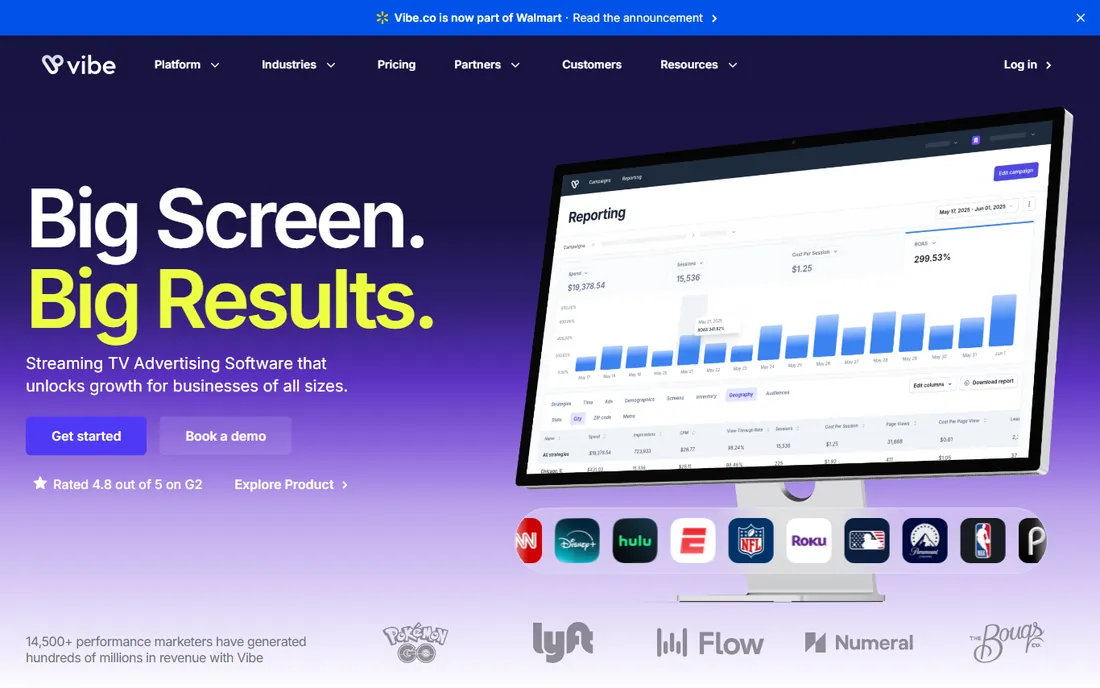
Vibe.co did for streaming TV what self-serve ad platforms did for search: it removed the gatekeepers. Any business can launch campaigns across 500+ premium streaming channels, target by location, interest, CRM data or intent signals, and measure against ROAS and customer acquisition cost with built-in holdout testing. The $50 per day minimum with no contracts or annual commitments is the most accessible entry in the category.
The trade is scope: campaigns run in the US only, and the self-serve model assumes you can plan and optimize yourself. For SMBs, DTC brands and B2B teams that want TV advertising without an agency retainer, Vibe is the starting point. Enterprises get API access and incrementality testing that rival managed platforms.
What we like- The lowest entry point in streaming TV at $50/day with no contracts
- 500+ premium channels with direct publisher relationships
- Built-in incrementality measurement
Watch out for- US market only, no international campaigns
- Self-serve means you do the work
- Smaller managed-service layer than rivals
Starting price$5,000/month minimum budget
Free planNo
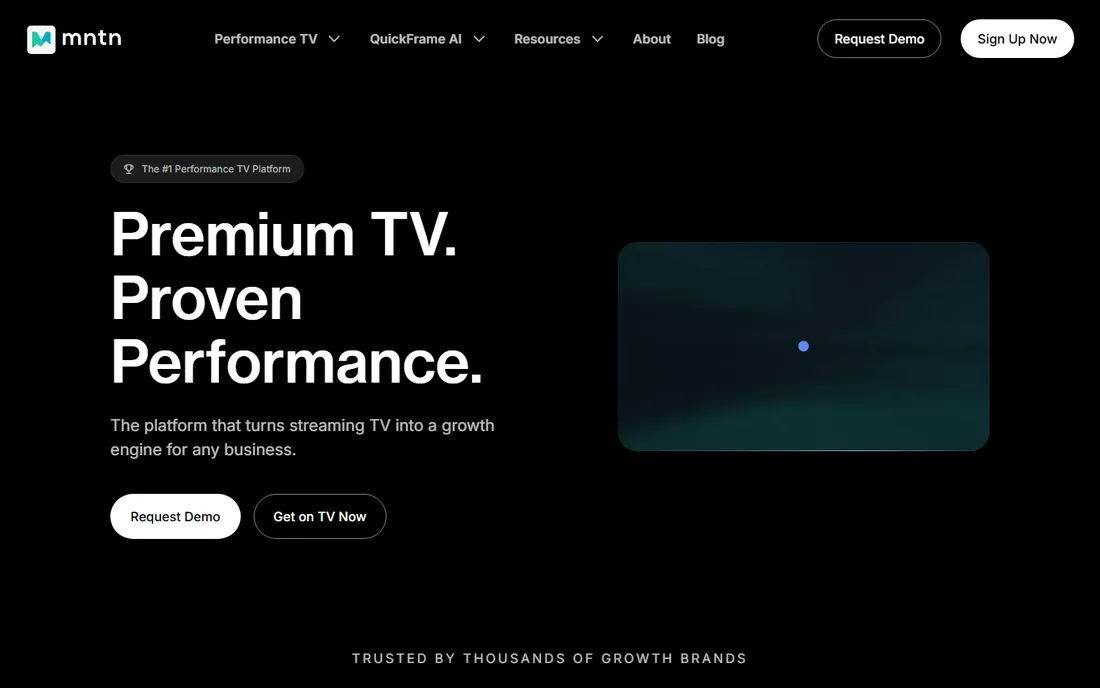
MNTN (formerly Mountain) built its name on performance TV: streaming commercials optimized for conversions, not just reach. Its standout offer is Creative-as-a-Subscription, which bundles professional video production into the media spend, solving the biggest blocker for brands without TV creative. Campaigns can go live in under an hour across 150+ premium networks.
The minimums are the filter: budget sliders start at $5,000 per month, and prospecting campaigns run higher. It operates primarily as a managed service, which adds overhead versus pure self-serve. For growth-stage brands with real budgets that need creative and media in one package, MNTN is purpose-built. Smaller advertisers should start with Vibe.
What we like- Creative-as-a-Subscription bundles video production with media spend
- Automated performance optimization
- Quick launch, live in under an hour
Watch out for- $5,000/month minimum prices out small budgets
- Operates largely as a managed service with less self-serve control
- Limited international reach
Starting price$350/week (self-serve retargeting)
Free planNo
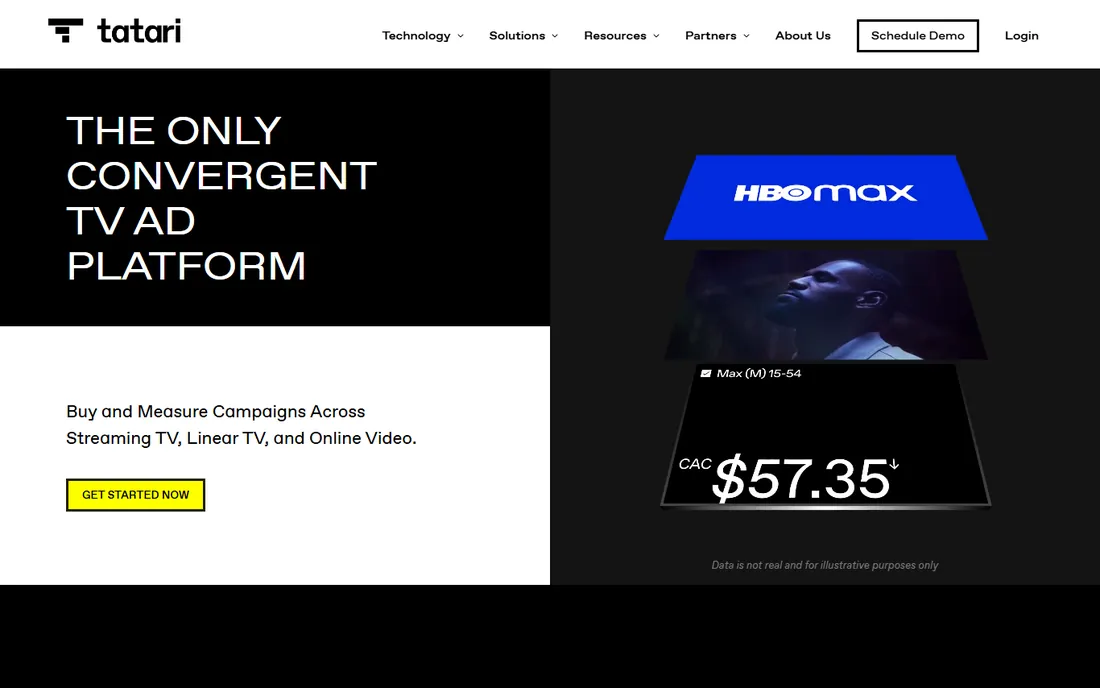
Tatari's pitch is converged TV: plan, buy and measure linear (broadcast and cable) plus streaming from one platform, with attribution that ties TV exposure to business outcomes. Self-serve retargeting starts at $350 per week; prospecting campaigns start at $5,000 per week. The measurement stack, including incrementality testing and patented attribution, is the deepest among the performance platforms.
This is the platform for brands ready to treat TV as a performance channel with real budgets. The minimums and the measurement-first approach assume marketing sophistication. For advertisers who also buy linear TV, or who outgrow pure streaming platforms, Tatari's converged buying is distinctive.
What we like- The only platform here buying linear TV and streaming together
- Strong measurement with incrementality testing
- Transparent pricing and reporting
Watch out for- Prospecting minimums run $5,000/week, so scale costs real money
- The platform rewards measurement sophistication
- Managed service adds process
Starting priceSee website
Free planNo
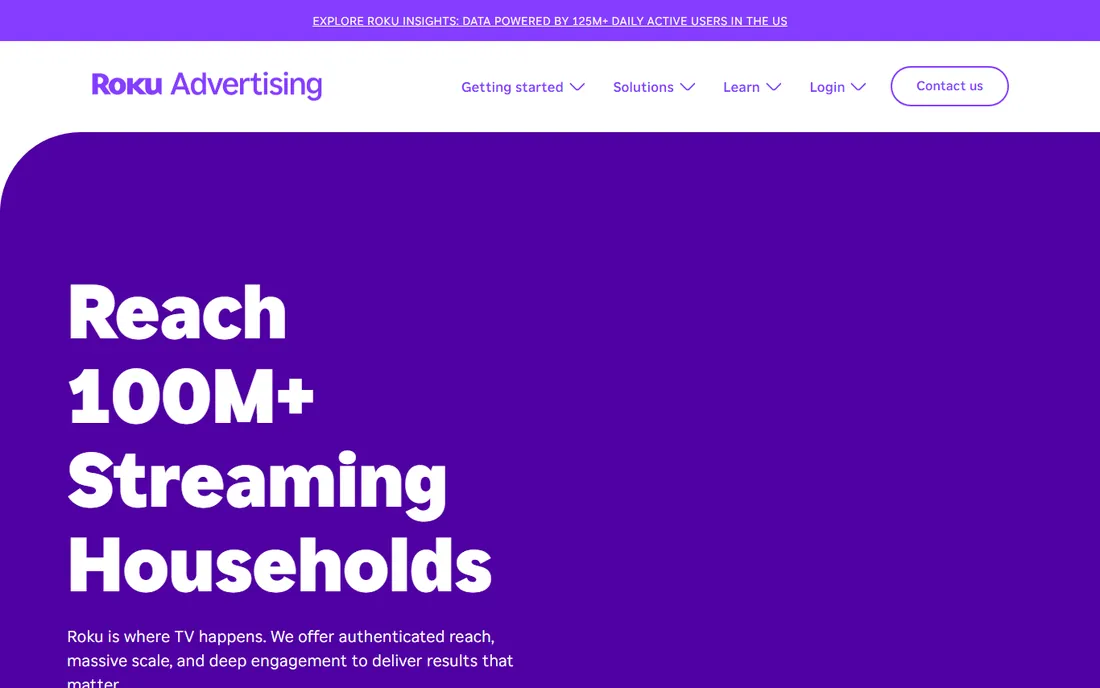
Roku is the biggest screen in American streaming, and Roku Advertising sells direct access to it: the Roku Channel, plus inventory across the platform, targeted with Roku's first-party viewing data. The self-serve Roku Ads Manager lowered the entry barrier for smaller advertisers, while managed deals serve national brands.
The limitation is definitional: you are buying Roku's world, not the whole streaming universe. Pricing is not published as a single number and varies between self-serve and managed paths. For advertisers whose audience over-indexes on Roku devices, the first-party data is a genuine advantage. For full-funnel streaming coverage, pair it with a cross-publisher platform.
What we like- Direct access to the largest US streaming platform's audience
- First-party viewing data for targeting
- Self-serve Ads Manager for smaller budgets
Watch out for- Inventory limited to the Roku ecosystem
- Pricing and minimums vary by buying path
- Measurement tied to Roku's own metrics
Starting priceSee website
Free planNo
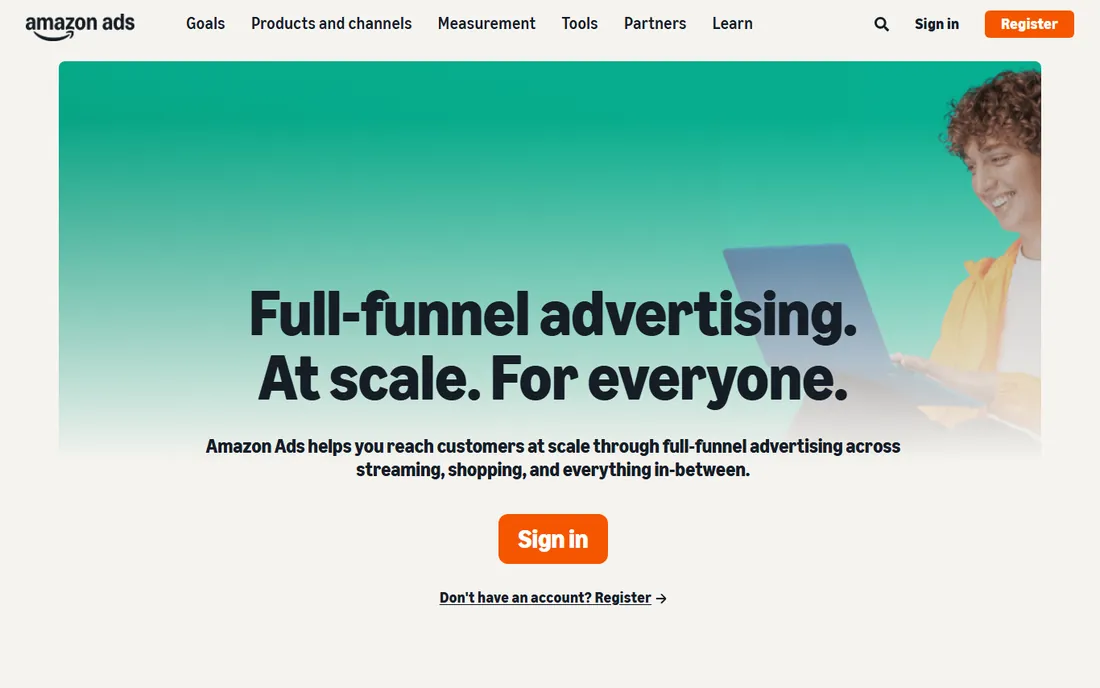
Amazon Ads brings something no other OTT platform can: the purchase graph. Streaming ads on Fire TV and Prime Video can target based on actual shopping behavior and attribute directly to sales on Amazon. For brands that sell on Amazon, the closed loop from impression to purchase is uniquely measurable.
Access comes in tiers: self-serve options exist, but premium inventory and managed service carry enterprise minimums. Pricing is not published as a flat rate. Advertisers outside the Amazon ecosystem get less of the data advantage. If Amazon is a major sales channel, its streaming inventory deserves a dedicated budget line.
What we like- Fire TV and Prime Video inventory paired with Amazon's purchase data
- Closed-loop attribution from ad view to purchase
- Massive reach
Watch out for- Premium pricing for premium inventory
- The platform favors advertisers already selling on Amazon
- Minimums for managed deals are enterprise-grade
Starting priceSee website
Free planNo
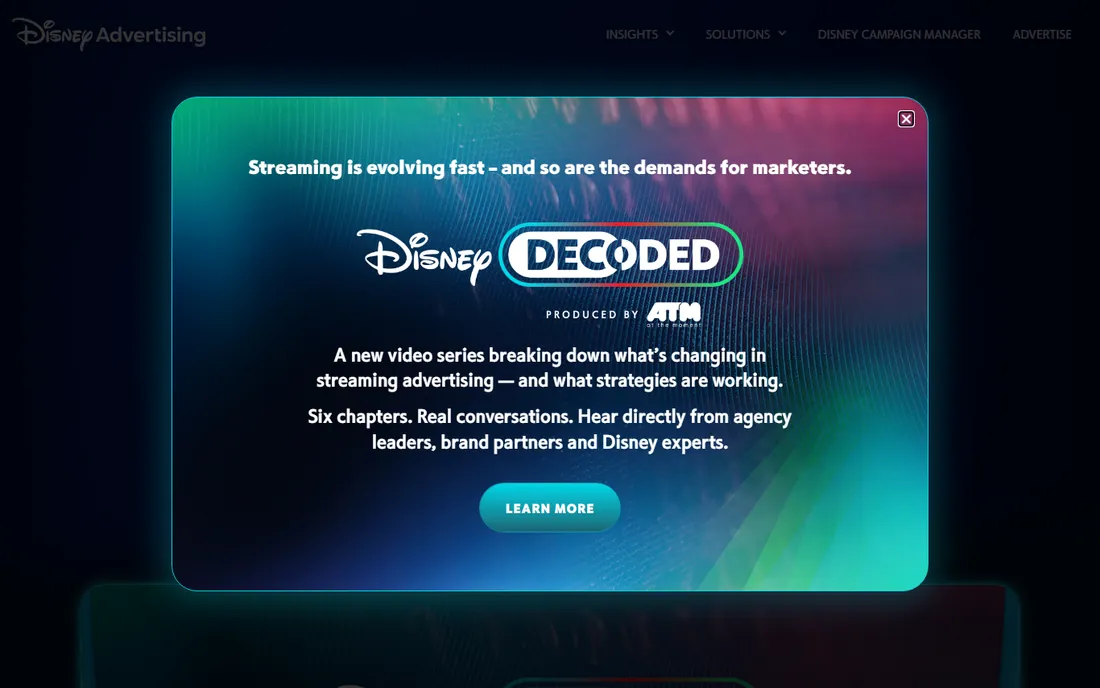
Disney Advertising controls some of the most coveted streaming inventory in the US: Hulu's engaged viewers, Disney+'s family audiences, ESPN's sports fans. Addressable targeting lets advertisers reach specific households within that premium content, and the brand-safety story is impeccable.
This is the premium end of the market: pricing is negotiated, minimums favor national budgets, and buying often runs through upfront commitments. Small businesses will find the performance platforms far more accessible. For brands where premium content environment matters, Disney's portfolio is unmatched.
What we like- Premium, brand-safe inventory across Hulu, Disney+, ESPN and ABC
- Strong original content audiences
- Advanced addressable targeting
Watch out for- Premium prices to match
- Minimums skew toward national brands
- Buying is relationship and upfront-driven
Starting priceSee website
Free planNo
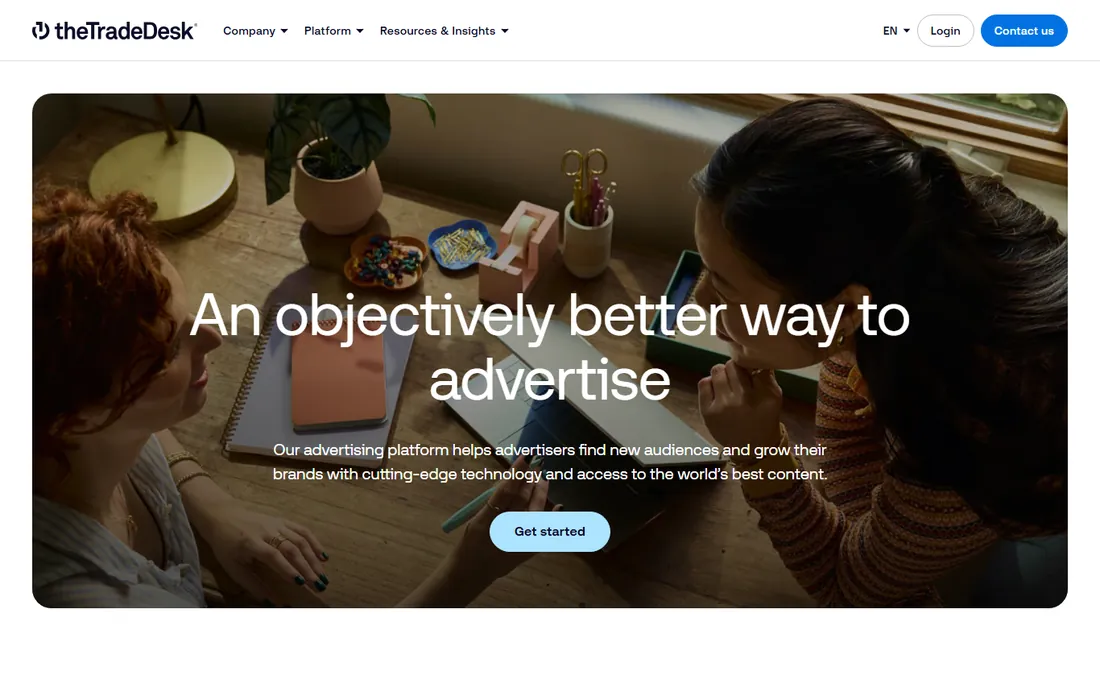
The Trade Desk is the programmatic route to streaming TV: a demand-side platform that bids on CTV inventory across publishers through open exchanges and private deals, with advanced audience targeting and measurement. Its independence (it owns no media) is the selling point versus publisher-owned platforms.
The buyer profile is specific: agencies, large advertisers and experienced programmatic teams. Minimum spends, platform fees and data costs make it uneconomical for small budgets, and operating it well requires expertise. For enterprises running CTV as part of a broader programmatic strategy, it is the default DSP. Everyone else should use the performance platforms.
What we like- The leading independent DSP with the broadest programmatic CTV inventory
- Sophisticated targeting, measurement and optimization
- No media ownership conflicts
Watch out for- Built for agencies and enterprises, not self-serve SMBs
- Minimum spends and platform fees add up
- The learning curve is steep
Starting priceSee website
Free planNo
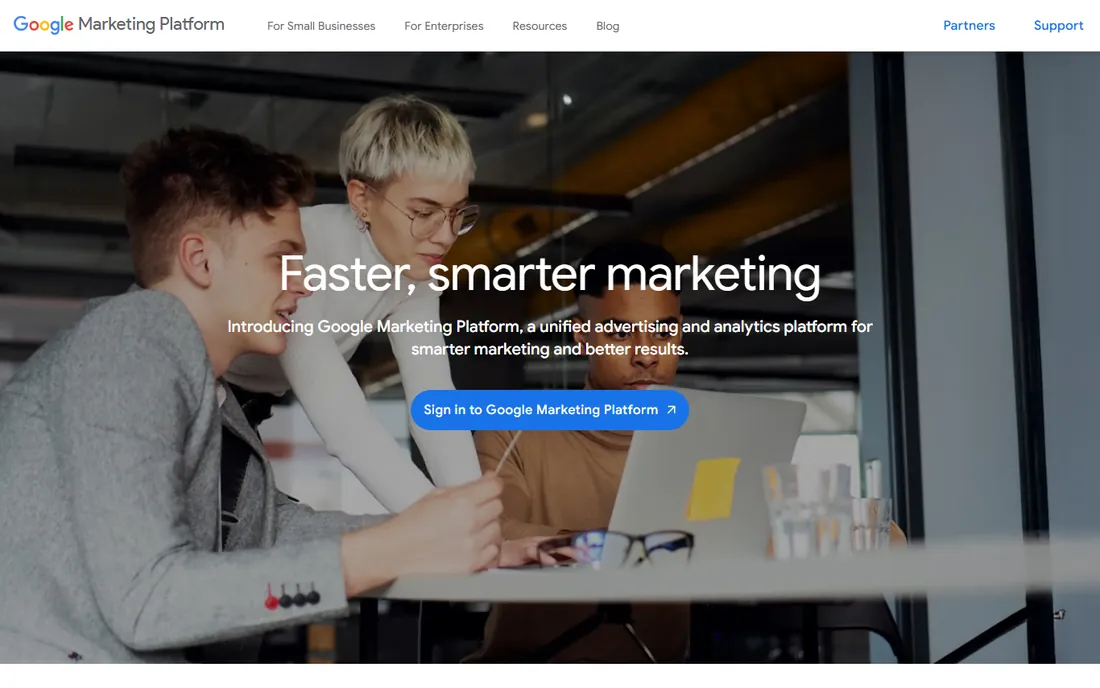
Display & Video 360 is Google's enterprise DSP, and its CTV offering comes bundled with the full Google Marketing Platform: unified bidding across display, video and streaming TV, tight Analytics integration, and YouTube as a natural companion. Teams already standardized on Google's stack get a unified workflow.
Like The Trade Desk, DV360 is enterprise infrastructure: contracts, minimums and complexity that assume dedicated programmatic staff. Small and mid-size advertisers will not buy DV360 directly. For large organizations already living in Google Marketing Platform, adding CTV through DV360 is the path of least resistance.
What we like- Deep integration with Google's ad ecosystem, Analytics and YouTube
- Strong machine-learning bidding
- Familiar to teams already on Google Marketing Platform
Watch out for- Enterprise contracts and minimums
- CTV inventory via Google's pipes, not direct publisher deals
- Complexity demands dedicated operators
Starting priceSee website
Free planNo
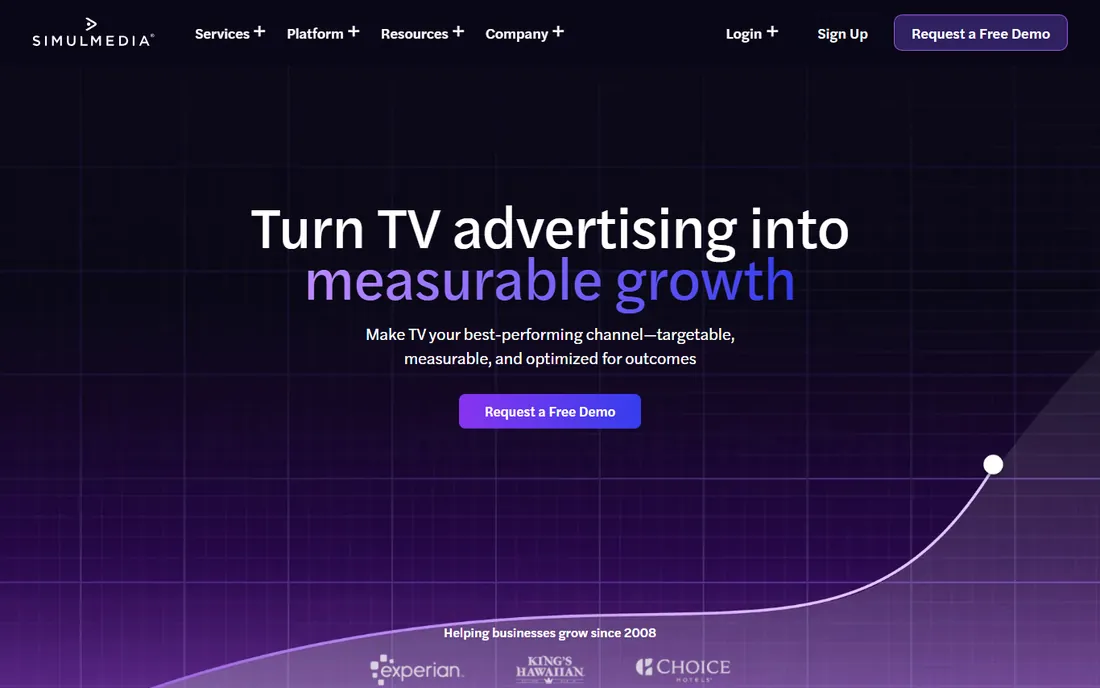
Simulmedia has spent over a decade making TV buying data-driven, spanning linear and streaming with planning tools that predict reach and outcomes. Its guaranteed-audience models appeal to direct-response advertisers who want accountability from TV spend, and it works as a managed partner rather than a software login.
Pricing is quote-based with managed minimums, and the model suits advertisers with serious TV budgets who want expert planning. For performance marketers who have outgrown pure self-serve but are not ready for a DSP seat, Simulmedia's managed approach fills the gap.
What we like- Data-driven planning across linear and streaming TV
- Strong for direct-response advertisers
- Guaranteed-audience buying models
Watch out for- Quote-based with managed-service minimums
- Less self-serve than the performance platforms
- Smaller brand profile than the giants
How we chose
We verified Vibe.co's $50/day minimum on the vendor's own site, MNTN's $5,000/month starting budget on its homepage calculator, and Tatari's published minimums on its comparison pages, marking the rest "See website" where pricing is negotiated or contract-based. We split the field into self-serve performance platforms, publisher direct platforms and DSPs, because the buying motion differs completely across the three. We read vendor documentation and practitioner discussions on measurement methodology, inventory transparency and minimum-spend realities. We weighted SMB accessibility alongside enterprise capability because the keyword attracts both.
How to budget your first OTT campaign
Start with the math that kills most first campaigns: creative. A proper 30-second streaming spot costs anywhere from a few hundred dollars (AI-generated or templated) to tens of thousands (full production). MNTN bundles creative into spend; everyone else expects you to bring your own. Budget creative separately from media, and do not launch with repurposed social clips unless they are genuinely built for the big screen.
For media, the self-serve minimums set the floor: $50/day on Vibe, $350/week for Tatari retargeting, $5,000/month on MNTN. Plan a test of at least four to six weeks; TV measurement needs time for attribution windows to mature. Set a success metric before launch, cost per acquisition, cost per site visit, or brand-lift, and insist on measurement beyond view-through impressions.
Finally, keep a control. Hold out a geo or audience segment so you can measure incrementality: the sales that happened because of the TV ads, not the ones that would have happened anyway. The platforms with built-in holdout testing (Vibe, Tatari) make this easy; on others, design it yourself.
The creative problem: your ad matters more than your targeting
Every OTT platform sells targeting sophistication, but practitioners keep rediscovering an old truth: the creative drives the outcome more than the audience slice. A compelling 30-second spot with a clear offer will outperform a mediocre one shown to a perfect audience. Before optimizing targeting, make sure the ad itself earns attention in the first three seconds, states one idea, and ends with a memorable call to action.
Test creative like you test audiences. Run two or three spot variants with different hooks, offers or lengths, and let the platform's reporting tell you which earns response. The performance platforms' placement-level and creative-level reporting exists for exactly this. Many advertisers discover their "brand" spot loses to a direct, slightly unpolished direct-response cut. Let the data, not taste, decide.
And mind the basics: captions for sound-off viewing, legible text on a TV screen (not a phone screen), and a URL or QR code viewers can actually act on. Streaming TV is a lean-back medium; your ad has to do the leaning forward.
Frequently asked questions
What is OTT advertising?
OTT (over-the-top) advertising delivers video ads through streaming services watched over the internet, bypassing traditional cable: Hulu, Peacock, Tubi, Roku Channel, Fire TV apps and hundreds more. Ads typically run as non-skippable or skippable 15- to 30-second spots, targeted by household, interest or behavior.
How much does OTT advertising cost?
Self-serve minimums start at $50/day (Vibe.co), $350/week for retargeting (Tatari), or $5,000/month (MNTN). Publisher platforms (Roku, Amazon, Disney) and DSPs (The Trade Desk, DV360) negotiate pricing with higher minimums. Add creative production costs on top of media.
Can small businesses afford streaming TV ads?
Yes, for the first time. Self-serve platforms removed the five-figure insertion orders that kept TV exclusive to big brands. A $50/day test budget buys real streaming impressions; the constraint is usually creative production, not media cost.
How is OTT measured compared to linear TV?
Streaming TV supports digital-style measurement: site visits, app installs, purchases and modeled ROAS tied to ad exposure, plus incrementality testing with holdout groups. Linear TV measurement relies more on modeled lift and panel data. Tatari bridges both with converged measurement.
What is the difference between OTT and CTV?
The terms overlap heavily. CTV (connected TV) refers to the device: a smart TV, Roku or Fire Stick connected to the internet. OTT refers to the content delivery: video streamed over the top of traditional distribution. In advertising, they describe the same inventory, and vendors use them interchangeably.
Do I need different creative for streaming vs linear TV?
The specs are similar (15- and 30-second spots), but streaming viewers expect digital-native creative: faster hooks, on-screen text, QR codes and clear calls to action. Repurposing a linear brand spot usually underperforms creative designed for streaming response.
Sources we checked (16)
- https://www.vibe.co/blog/how-to/ott-advertising-platforms
- https://www.vibe.co/p/b2b
- https://mountain.com/?mkt_tok=MjE0LVVWWC0zNzcAAAGG9mxBkaSZFtS8n6JSmjd9lvdkbz0fuhx3xwAnC--gW9BCMoAcNuDDQxjOPgmIy2TgyG4rFWavKUIg
- https://www.tatari.tv/insights/tatari-vs-mntn-which-tv-advertising-platform-comparison
- https://www.tatari.tv/insights/tatari-vs-stackadapt-tv-buying-measurement-comparison
- https://www.tvscientific.com/insight/tatari-vs.-tvscientific-which-ctv-platform-delivers-smarter-optimization
- https://lifestyle.paraskevas.net/story/874446/vibe-expands-connected-tv-platform-with-agent-access-and-six-new-integrations/
- https://www.vibe.co
- https://www.mountain.com
- https://www.tatari.tv
- https://advertising.roku.com
- https://advertising.amazon.com
- https://www.disneyadvertising.com
- https://www.thetradedesk.com
- https://marketingplatform.google.com
- https://www.simulmedia.com
Is your product missing or out of date?
We review this list regularly. Vendors can request a listing, send updated pricing or ask about featured placement.

Shihab Mia · Founder, Rankite
Shihab has spent more than a decade helping SaaS and e-commerce brands grow through search. He writes Rankite's software buying guides from pricing pages, documentation and public user reviews. More about Shihab.