How we make this list: we compare pricing pages, product documentation and public user reviews. Ratings come from G2, Capterra or Trustpilot, with the date we checked them.
Key takeaways
- There is no single best DSP, because the best choice depends on budget, channels, data, and whether you buy in house or through an agency.
- The Trade Desk suits independent, omnichannel buying, while Amazon suits advertisers who value Amazon shopping and streaming signals.
- StackAdapt and Basis suit agencies and mid sized teams that need multi channel buying with workflow help.
- Criteo and Quantcast suit commerce and performance goals, while Simpli.fi suits local and multi location campaigns.
- Pricing is usually a percentage of media spend or a platform fee, so ask for the full fee structure before testing.
Quick comparison
| Tool | Best for | Starting price | Free plan |
|---|
 The Trade Desk | Independent omnichannel buying | See website | No |
 Amazon DSP | Amazon and streaming audiences | See website | No |
 StackAdapt | Multi channel agency buying | See website | No |
 Basis Technologies | Agency workflow and automation | See website | No |
 Criteo | Commerce and retail media | See website | No |
 Quantcast | AI driven performance buying | See website | No |
 Simpli.fi | Local and multi location buying | See website | No |
Is your product missing or out of date?
We review this list regularly. Vendors can request a listing, send updated pricing or ask about featured placement.
#1The Trade Desk
Best for: Independent omnichannel buying4.4/5 on
G2 (186 reviews, checked Oct 2026)
Visit thetradedesk.com
Starting priceSee website
Free planNo
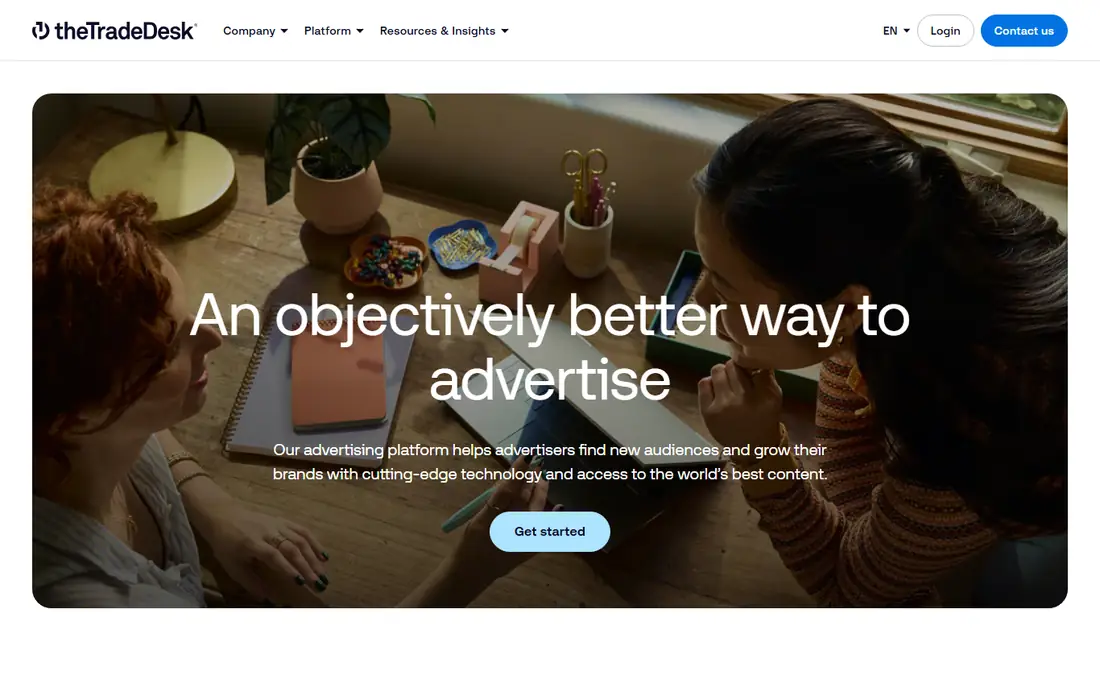
The Trade Desk suits brands and agencies that want an independent DSP, meaning one not owned by a major media seller. Buyers can run display, video, audio, connected TV, mobile, native, and digital out of home campaigns from one platform, with targeting, optimisation, and measurement across channels. For teams that value choice of inventory and measurement partners, that independence is the main attraction.
The honest catch is scale and access. The Trade Desk is built for serious programmatic spend, and smaller advertisers may find minimums, fees, or agency requirements a barrier. New buyers should ask about self service access, platform fees, minimum spend, and training before assuming it is the right first DSP. For larger, omnichannel budgets, it is often the benchmark other DSPs are judged against.
What we like- Independent platform with broad channel access
- Strong connected TV, audio, and display coverage
- Objective measurement partners
Watch out for- Minimum spend and managed service thresholds can exclude small advertisers
- Learning curve for new buyers
Starting priceSee website
Free planNo
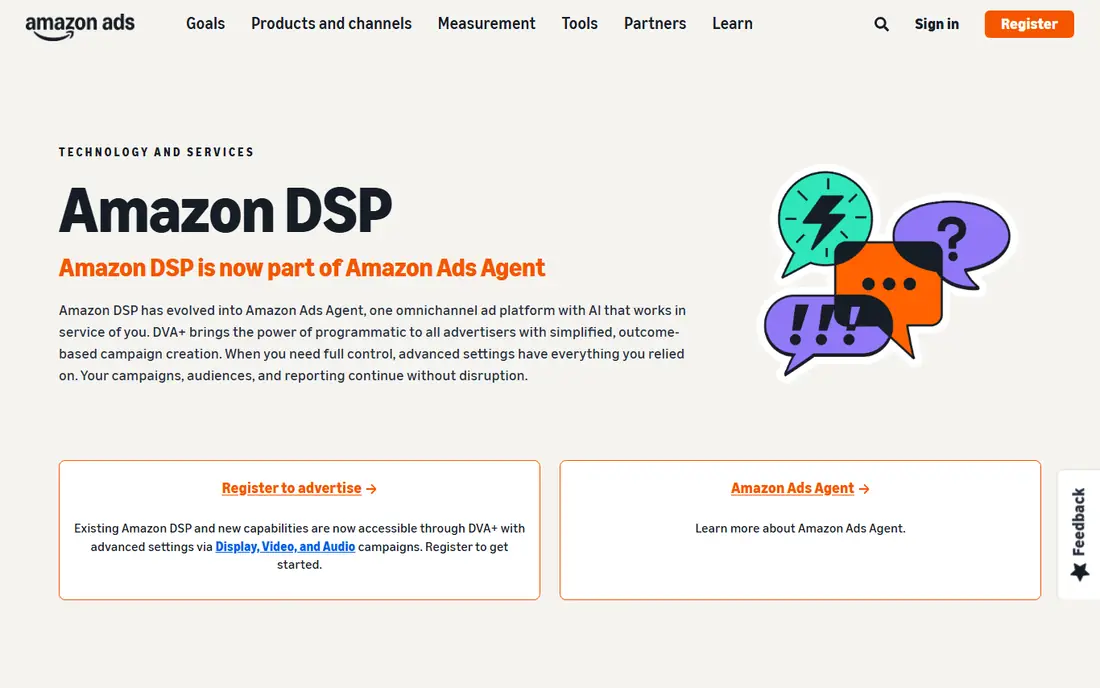
Amazon DSP suits advertisers who want to reach shoppers and streamers through Amazon properties and third party sites. The platform offered display, video, audio, and streaming TV buying, with access to Prime Video, Twitch, Fire TV, and Amazon shopping signals, for advertisers who sell on Amazon and those who do not. Note the current change: Amazon states that Amazon DSP is now part of Amazon Ads Agent, with programmatic capabilities available through advanced settings, and existing campaigns carry forward.
The trade off is focus and transition. If your audience is mainly outside Amazon, another DSP may offer broader open web coverage. If shopping intent and streaming reach matter most, Amazon remains strong, but buyers should confirm the current Amazon Ads Agent workflow, fees, and minimums with an Amazon representative before planning a campaign, because the interface and naming have changed.
What we like- Access to Amazon owned inventory and shopping signals
- Streaming TV including Prime Video
- Self service and managed options
Watch out for- Amazon DSP capabilities are now part of Amazon Ads Agent, so the buying experience has changed
- Amazon focused
#3StackAdapt
Best for: Multi channel agency buying4.7/5 on
G2 (905 reviews, checked Oct 2026)
Visit stackadapt.com
Starting priceSee website
Free planNo
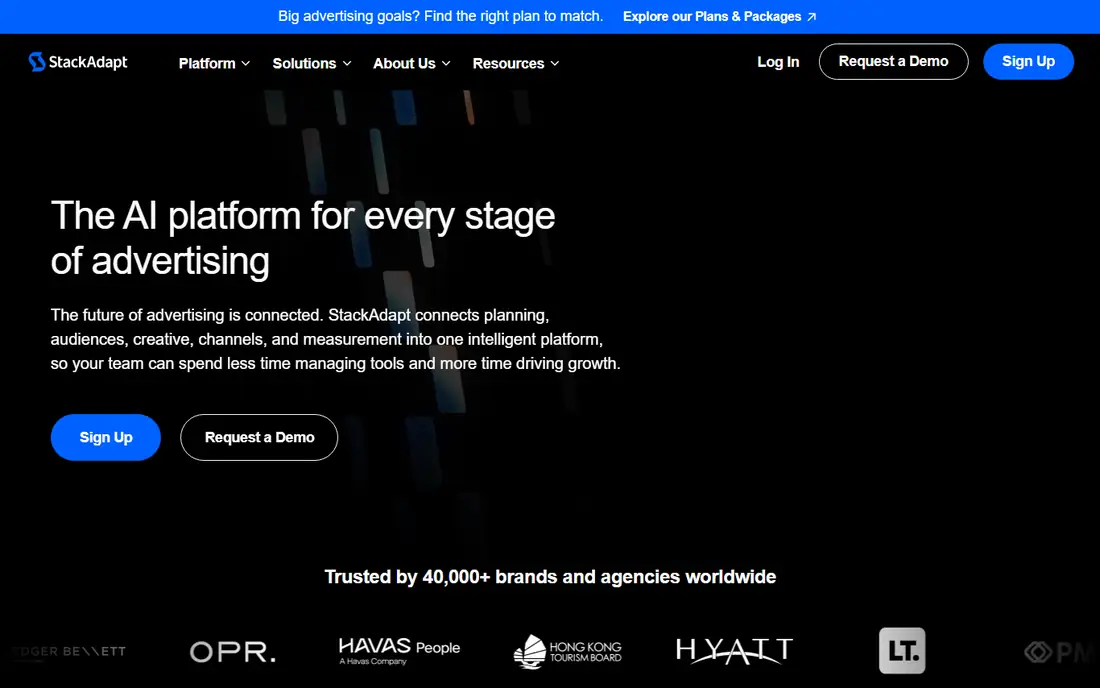
StackAdapt suits agencies and brands that run multi channel campaigns and want planning, audiences, creative, and measurement connected in one place. Its platform covers connected TV, video, display, native, audio, digital out of home, email, and direct mail, with AI tools for forecasting and optimisation. For a team that runs many campaigns across channels, that connected workflow reduces manual work and keeps measurement consistent.
The catch is pricing transparency. StackAdapt does not publish a simple starter price, so buyers need a conversation about spend, fees, and service level. It is also strongest when used as a full campaign platform, not as a one off display buy. Ask about platform fees, minimum spend, data costs, and whether self service or managed service fits your team size.
What we like- Connected TV, video, display, native, audio, and out of home in one platform
- AI planning and optimisation
- Agency friendly
Watch out for- Pricing is not published as a simple starter rate
- Smaller direct advertisers may need agency help
#4Basis Technologies
Best for: Agency workflow and automation4.5/5 on
G2 (289 reviews, checked Oct 2026)
Visit basis.com
Starting priceSee website
Free planNo
Basis Technologies suits agencies and media teams that spend as much time on operations as on buying. The platform automates workflow, integrates search, social, programmatic, connected TV, and direct buying, reconciles billing, and consolidates reporting, which helps teams that manage many clients and campaigns. For an agency, those operational savings can matter as much as media performance.
The honest limit is fit. A single brand with a few campaigns may not need full workflow automation, and may prefer a simpler DSP interface. Agencies should test Basis on real client workflows, including billing and reporting, not only on media buying, because that is where its value shows. Ask about integration with your existing tools and how much of the workflow can be automated for your client mix.
What we like- Automates campaign workflow, billing, and reporting
- Unifies search, social, programmatic, and direct buying
- Agency focused
Watch out for- Workflow strength matters most at agency scale
- Direct brand buyers may use only part of the platform
#5Criteo
Best for: Commerce and retail media3.8/5 on
G2 (242 reviews, checked Oct 2026)
Visit criteo.com
Starting priceSee website
Free planNo
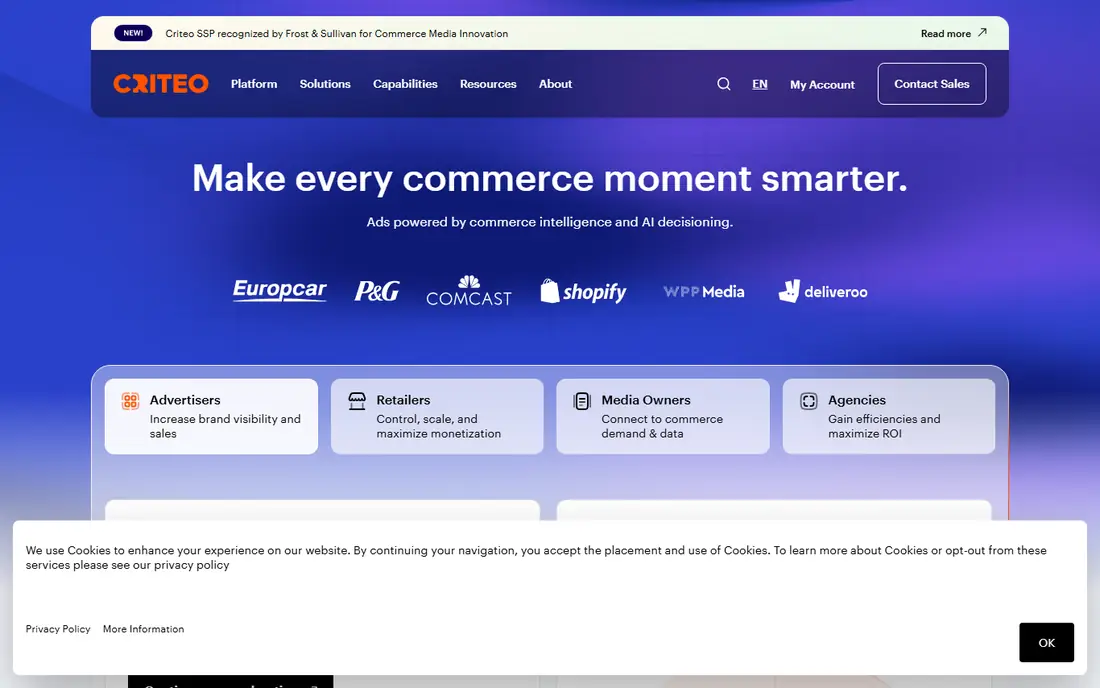
Criteo suits advertisers whose goal is sales, especially in retail and ecommerce. Its platform uses commerce signals to target shoppers, retarget site visitors with dynamic product ads, and run retail media campaigns with retailers, with closed loop measurement linking ads to sales where available. For a brand that needs to turn product interest into purchases, that commerce focus is a clear advantage.
The trade off is breadth. Criteo is strongest for performance and commerce, less so for pure brand storytelling or broad awareness campaigns outside shopping contexts. Buyers should ask about data sources, measurement methods, fees, and which retailers and publishers are available for their category. A test focused on sales outcomes, not only clicks, will show whether Criteo fits your funnel.
What we like- Commerce data and AI for shopper targeting
- Retail media access
- Strong retargeting and performance tools
Watch out for- Commerce focus narrows brand awareness use
- Retail media access depends on retailer partnerships
#6Quantcast
Best for: AI driven performance buying4.2/5 on
G2 (193 reviews, checked Oct 2026)
Visit quantcast.com
Starting priceSee website
Free planNo
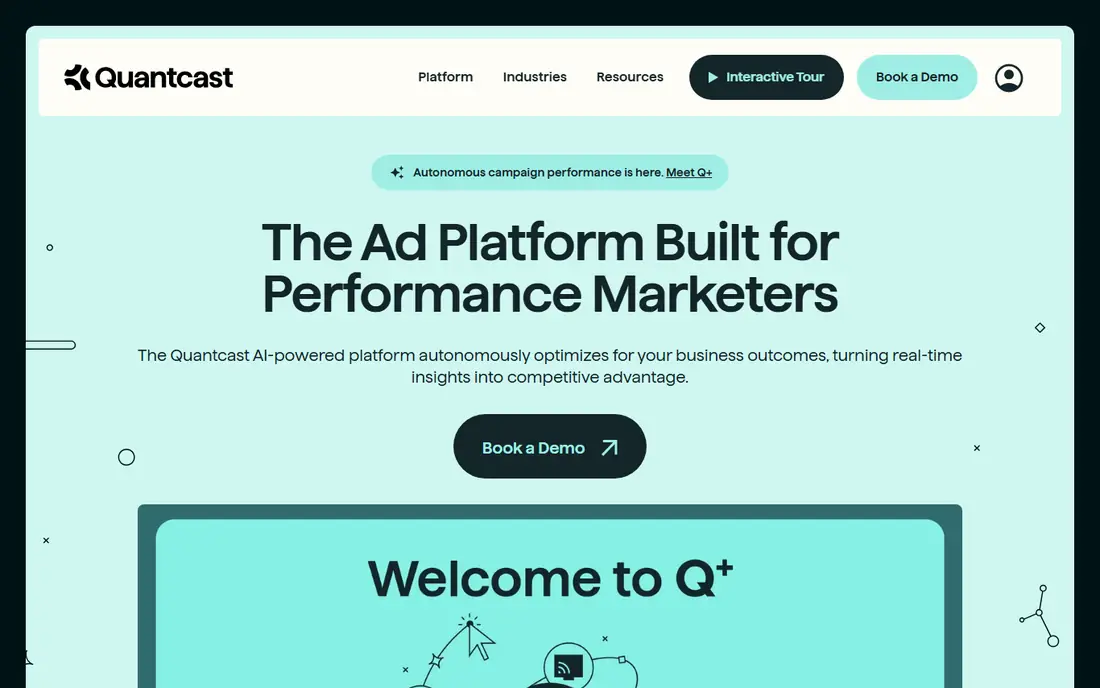
Quantcast suits performance marketers who want AI to handle much of the optimisation. Its DSP uses an audience graph built from long term audience data to find likely converters, manage campaigns end to end, and measure outcomes, with cookieless options for a changing privacy environment. For teams that want autonomous optimisation rather than manual bid management, that approach can save time and improve results.
The catch is control and fit. Autonomous optimisation works best when goals are clear and conversion data is reliable; brand campaigns with softer goals may need more manual planning. Buyers should ask how the AI uses their first party data, how measurement is defined, and what controls remain for budgets, frequency, and brand safety. A pilot with a clear conversion goal is the best test.
What we like- AI optimised DSP with audience graph
- Cookieless targeting options
- End to end campaign management
Watch out for- Performance focus may suit direct response more than brand campaigns
- Pricing is discussed with sales
#7Simpli.fi
Best for: Local and multi location buying4.5/5 on
G2 (154 reviews, checked Oct 2026)
Visit simpli.fi
Starting priceSee website
Free planNo
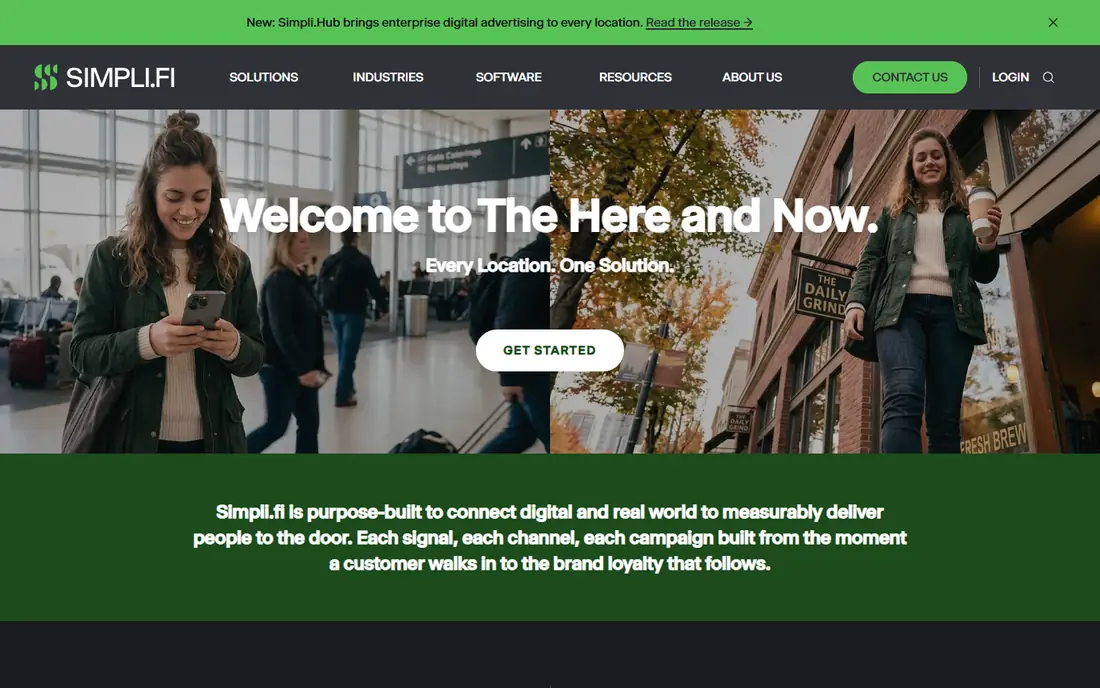
Simpli.fi suits advertisers with local or multi location goals, such as retailers, restaurants, services, and franchises. Its platform targets audiences by where they live, shop, and make decisions, manages locally customised campaigns across many storefronts from one place, and uses real time intent signals to respond when audiences are ready to act. For a business that needs foot traffic or local leads, that precision matters more than national reach.
The honest limit is scale type. Simpli.fi is built for local relevance, not as a general purpose national brand DSP, although it can run broader campaigns. Buyers should ask about location data accuracy, privacy compliance, measurement of store visits or local conversions, and fees per location. A test in a few locations, with clear local outcomes, will show value faster than a national test.
What we like- Location based targeting at household level
- Multi location campaign management
- Real time intent signals
Watch out for- Local focus is less suited to national brand campaigns alone
- Pricing is discussed with sales
How we chose
We compared vendor product pages, platform descriptions, and public reviews, and we opened each official homepage to confirm it belongs to that platform. We favoured DSPs with a clear, distinct strength, a working advertiser offer, and enough public information to compare channels, data, and workflow honestly. Where pricing is a percentage of spend or a quoted fee, we wrote See website instead of presenting a single rate as a total cost.
Answering the question honestly
The best DSP is the one that matches your goal, budget, and team. A large brand with omnichannel goals may choose The Trade Desk. A retailer focused on sales may choose Amazon or Criteo. An agency managing many clients may choose Basis or StackAdapt. A local business may choose Simpli.fi. A performance team may choose Quantcast. That is not a dodge; it is how programmatic buying works, because inventory, data, and workflow differ by platform.
Test before you commit
Run a small, controlled test on one DSP with a clear goal, a defined audience, and a fixed budget, then compare cost per outcome, not only clicks or impressions. Check brand safety, frequency, viewability, and reporting quality, and ask how fees are charged. A DSP that looks cheap on media cost but charges high platform and data fees may be expensive in total.
Watch fees, data, and measurement
Ask for platform fees, data fees, minimum spend, and any managed service charges in writing. Ask where audience data comes from, how it complies with privacy rules, and how conversions are measured. A platform that cannot explain its fees and measurement clearly is a risk, no matter how strong its targeting claims sound.
Frequently asked questions
What is a demand side platform?
A demand side platform is software that lets advertisers buy digital ad placements automatically, in real time, across websites, apps, and streaming services. Advertisers set audiences, budgets, and goals, and the DSP bids for impressions that match those settings, rather than negotiating each placement by hand.
Which DSP is best for small businesses?
Small businesses often start with a platform that offers self service access, clear fees, and local or performance focus, such as Simpli.fi for local goals or a managed service through an agency. Large independent DSPs may have minimum spend thresholds that make them less practical for very small budgets, so check minimums before choosing.
Is The Trade Desk the best DSP overall?
The Trade Desk is a strong benchmark for independent, omnichannel buying, but it is not best for every advertiser. Amazon suits shopping and streaming goals, Criteo suits commerce, and agency platforms suit workflow heavy teams. The best choice depends on your channels, data, budget, and whether you buy in house or through an agency.
How do DSPs charge?
Most DSPs charge a percentage of media spend as a platform fee, plus possible data, technology, and managed service fees. Some also have minimum spend requirements. Ask for all fees in writing, because media cost alone does not show total cost, and fee structures vary sharply between platforms.
Do I need a DSP if I already use Google or social ads?
Not necessarily. Search and social platforms are strong for intent and social audiences, while a DSP adds open web, connected TV, audio, and out of home buying with cross channel measurement. Many advertisers use both, with search and social for intent and a DSP for broader reach and frequency control.
What happened to Amazon DSP?
Amazon states that Amazon DSP is now part of Amazon Ads Agent, with its programmatic capabilities available through advanced settings in that platform. Existing campaigns, audiences, creatives, and reporting carry forward, according to Amazon. Buyers should confirm the current workflow and fees with Amazon before planning new campaigns.
Sources we checked (7)
- https://www.thetradedesk.com
- https://advertising.amazon.com/solutions/products/amazon-dsp
- https://www.stackadapt.com
- https://www.basis.com
- https://www.criteo.com
- https://www.quantcast.com
- https://www.simpli.fi
Is your product missing or out of date?
We review this list regularly. Vendors can request a listing, send updated pricing or ask about featured placement.

Shihab Mia · Founder, Rankite
Shihab has 5+ years in B2B and SaaS SEO. He writes Rankite's software buying guides from pricing pages, documentation and public user reviews. More about Shihab.