How we make this list: we compare pricing pages, product documentation and public user reviews. Rankite is independent; if a vendor ever pays for a featured spot, that listing is clearly labeled Partner.
Key takeaways
- HubSpot Marketing Hub is the only full demand gen platform with a genuinely free tier, which makes it the safe starting point for small teams.
- 6sense, Demandbase and Bombora compete on intent data and account-based marketing, and all three keep pricing behind a sales call.
- Apollo.io and ZoomInfo solve the top-of-funnel problem differently: Apollo bundles prospecting with outreach, while ZoomInfo sells deeper company data.
- Leadfeeder (formerly Dealfront) is the cheapest way to identify anonymous website visitors, with a free Lite plan and paid tiers from 79 euros a month.
Quick comparison
| Tool | Best for | Starting price | Free plan |
|---|
 HubSpot Marketing Hub HubSpot Marketing Hub | small teams that want an all-in-one platform | $20 per seat/month (Starter) | Yes |
 Adobe Marketo Engage Adobe Marketo Engage | enterprise teams running complex nurture programs | See website | No |
 Salesforce Account Engagement Salesforce Account Engagement | companies already on Salesforce | See website | No |
 6sense 6sense | ABM teams that want predictive intent | See website | No |
 Demandbase Demandbase | B2B teams running account-based campaigns | See website | No |
 ZoomInfo ZoomInfo | sales and marketing teams that need contact data | See website (usage-based credits) | Yes (ZoomInfo Lite free plan) |
 Metadata.io Metadata.io | paid media teams that want automated experiments | See website | No |
 Bombora Bombora | teams that want intent data without a full ABM suite | See website | No |
 Leadfeeder Leadfeeder | identifying anonymous B2B website visitors | From €79/month | Yes (free Lite plan) |
 Apollo.io Apollo.io | prospecting plus outreach in one workflow | $49 per user/month (Basic, annual) | Yes |
Is your product missing or out of date?
We review this list regularly. Vendors can request a listing, send updated pricing or ask about featured placement.
The best demand generation software
#1
HubSpot Marketing Hub
Best for: small teams that want an all-in-one platform
Visit hubspot.com
Starting price$20 per seat/month (Starter)
Free planYes
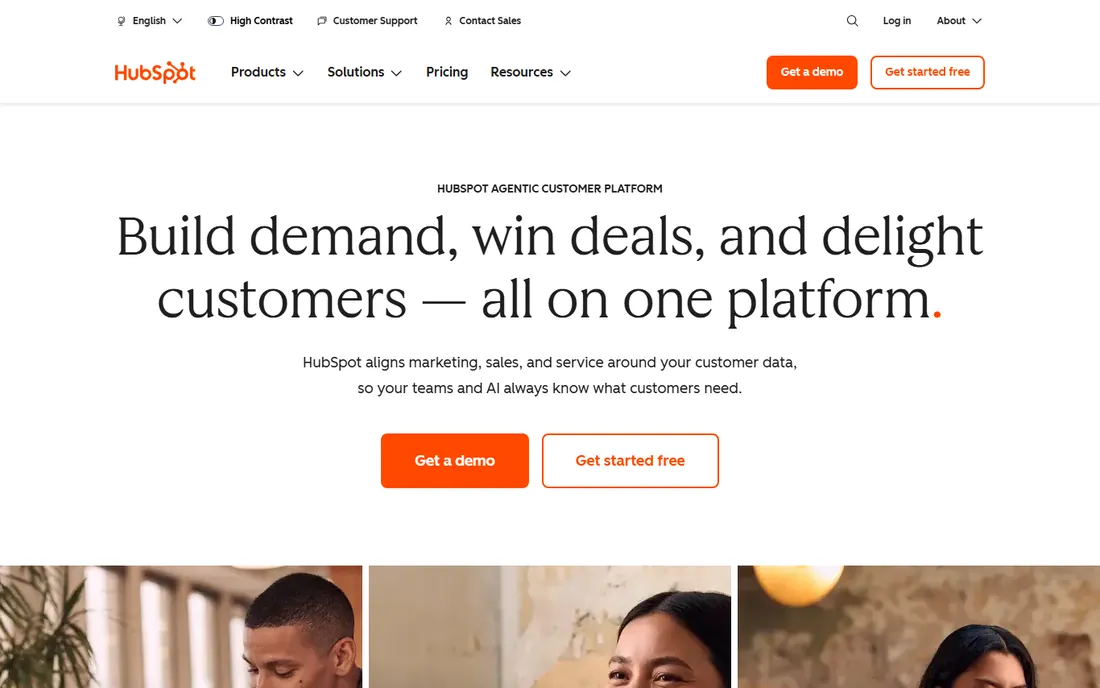
A marketing manager at a 30-person SaaS company usually starts here. The free plan handles landing pages, forms, email sends and basic lead scoring without a credit card, and the built-in CRM means every download and demo request lands in a contact record automatically. When the team is ready to pay, Starter begins at $20 per seat per month.
The tradeoff is scale economics. HubSpot prices on marketing contacts and seats, so a growing database can push the bill up quickly. Marketing Hub Professional and Enterprise add the serious automation, attribution and partitioning features, but they are priced for bigger budgets. Still, for teams that want one platform instead of five tools stitched together, HubSpot remains the reference point.
What we like- Free tier covers forms, email and basic automation
- The CRM is included so data stays in one place
- Reporting connects campaigns to revenue
Watch out for- Costs rise fast as contacts and seats grow
- Advanced features like custom objects need higher tiers
- Some users outgrow the automation builder
#2
Adobe Marketo Engage
Best for: enterprise teams running complex nurture programs
Visit marketo.com
Starting priceSee website
Free planNo
Marketo Engage is the workhorse behind many large B2B demand engines. Its smart campaigns, nested nurture streams and lead scoring can model buying journeys that simpler tools cannot, which is why enterprises with long sales cycles stay loyal. Integration with Salesforce is deep, and the API supports custom data flows.
The cost is real in both money and time. Marketo publishes no pricing and typically sells annual contracts at enterprise rates. New users face a genuine learning curve, and most companies end up hiring a Marketo admin or agency to run it. If your team is under 50 people, HubSpot will get you live months sooner.
What we like- Nurture and scoring logic handles very complex buyer journeys
- Strong integration with Salesforce and Microsoft Dynamics
- Mature API for custom workflows
Watch out for- Pricing is quote only and typically enterprise level
- The interface has a real learning curve
- Implementation often needs a consultant or admin
Starting priceSee website
Free planNo
Formerly known as Pardot, Salesforce Account Engagement is the natural pick for companies that already run on Salesforce. Prospects sync to CRM records without middleware, and Engagement Studio lets marketers build multi-step nurture programs visually. For B2B teams doing account-based marketing inside Salesforce, the fit is obvious.
Outside that ecosystem, the case weakens. Account Engagement assumes Salesforce as the system of record, and its pricing is quote based with annual contracts. Companies not on Salesforce will get more flexibility from HubSpot or Marketo. Note that we could not load the product page directly during research because Salesforce blocks automated page fetches; the URL above is the current product page from Salesforce's own site navigation.
What we like- Native connection to Salesforce CRM keeps data clean
- Engagement Studio builds visual nurture journeys
- Account-based features suit B2B teams
Watch out for- Pricing is quote only
- It works best inside the Salesforce ecosystem
- Advanced AI features sit on higher tiers
Starting priceSee website
Free planNo
6sense built its reputation on predicting which accounts are ready to buy before they raise a hand. Its intent data and predictive models score accounts across the web, then push the hot ones into your CRM, ad platforms and sales workflows. For ABM teams with real pipeline targets, that timing advantage is the whole pitch.
This is not a small-team tool. Pricing is quote only, contracts are annual, and getting value from 6sense requires enough ad spend and sales capacity to act on the account lists it produces. Companies spending six figures on demand gen annually tend to see the best return. Everyone else should start with HubSpot or Apollo and graduate later.
What we like- Predictive models identify in-market accounts early
- Intent data covers the buying journey well
- Orchestration pushes insights into CRM and ad platforms
Watch out for- Pricing is quote only and aimed at mid-market and up
- Onboarding takes time and data work
- Smaller teams may not have the ad budget to act on the insights
Starting priceSee website
Free planNo
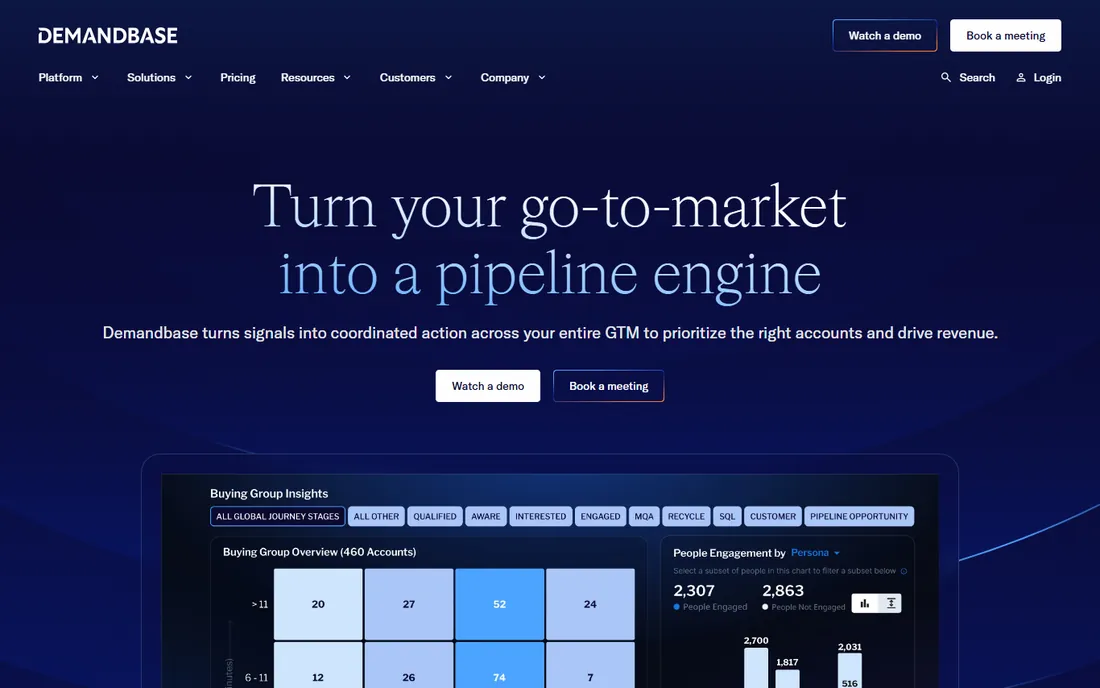
Demandbase is one of the original account-based marketing platforms, and it now covers the full ABM motion: identify target accounts, serve them ads, personalize the website experience and measure engagement at the account level. The intent data helps teams spot buying groups forming inside target companies.
Like 6sense, Demandbase is priced for mid-market and enterprise budgets, with quote-only pricing and annual contracts. It also demands organizational alignment: ABM fails when marketing buys the platform and sales ignores the account lists. Teams new to ABM should pilot with a small account list and clear handoff rules before expanding.
What we like- Account identification and advertising run in one platform
- Intent data is built for B2B buying groups
- Integrations with major CRMs are solid
Watch out for- Pricing is quote only
- The platform has a learning curve
- Best results need coordinated sales and marketing effort
Starting priceSee website (usage-based credits)
Free planYes (ZoomInfo Lite free plan)
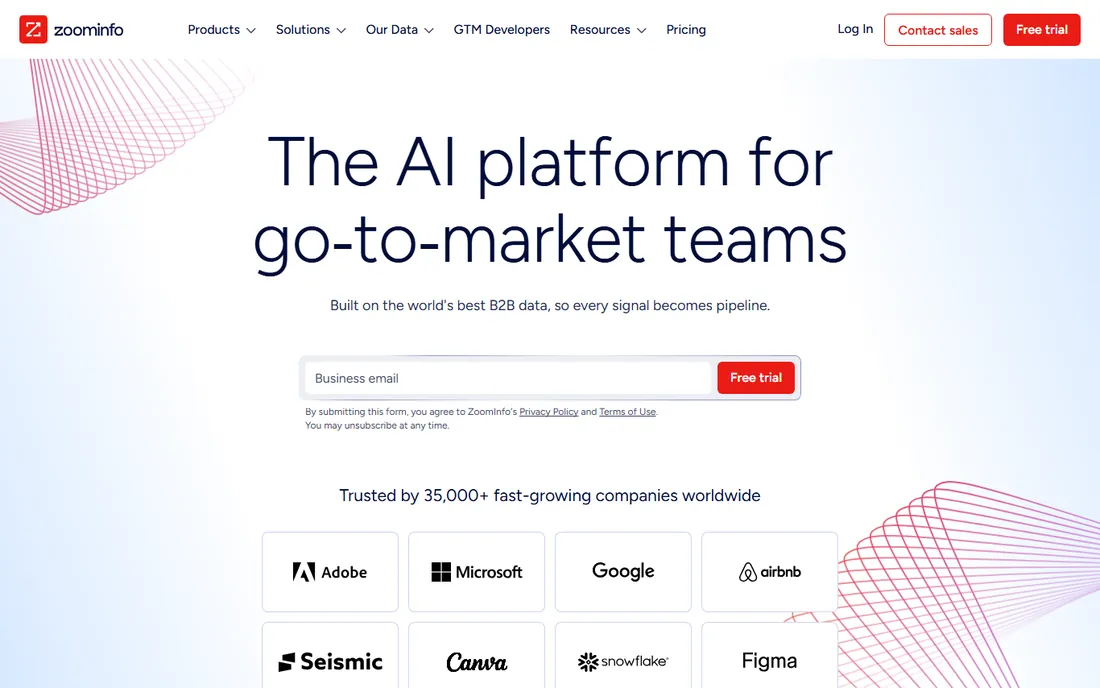
ZoomInfo sells what every outbound team needs: who to contact and how to reach them. The database covers companies, contacts, org charts and technographics, and the platform layers intent data on top to flag accounts showing buying behavior. A free Lite plan exists for basic lookups, which is useful for evaluation.
The pricing model deserves attention. ZoomInfo sells credits and platform access on annual contracts, and costs climb with seat count and data volume. Teams should negotiate credit rollover terms and confirm data coverage in their specific industry before signing. Apollo is the usual alternative for teams that want prospecting plus built-in outreach at a published price.
What we like- Contact and company database is one of the largest in B2B
- Intent signals and org charts help prioritize
- Integrations push data into CRM and sales tools
Watch out for- Pricing is quote based and can be expensive
- Credit usage needs monitoring to avoid overages
- Data accuracy varies by industry and region
#7
Metadata.io
Best for: paid media teams that want automated experiments
Visit metadata.io
Starting priceSee website
Free planNo
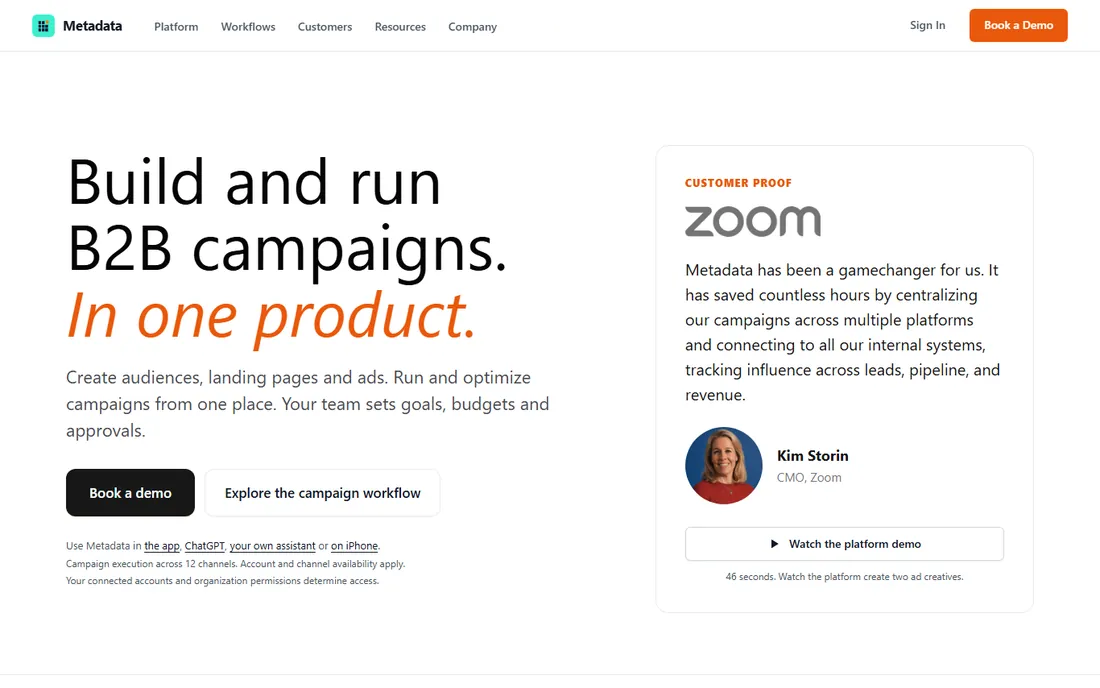
Metadata.io takes the repetitive work out of B2B paid media: it launches hundreds of creative and audience variations, shifts budget toward winners and ties spend back to pipeline. For paid media managers drowning in manual campaign work, the automation is the selling point. Attribution connects ad dollars to opportunities without spreadsheet gymnastics.
This tool only makes sense on top of real ad budgets. If your team spends less than mid five figures a month on paid, the platform fee is hard to justify. Pricing is quote only. Metadata works best for companies that already have landing pages, offers and CRM tracking in place and want to scale what works.
What we like- Automates creative and audience testing across ad channels
- Connects ad spend to pipeline automatically
- Reduces manual campaign management
Watch out for- Pricing is quote only
- It needs real ad spend to be useful
- The platform assumes a working demand gen foundation
#8
Bombora
Best for: teams that want intent data without a full ABM suite
Visit bombora.com
Starting priceSee website
Free planNo
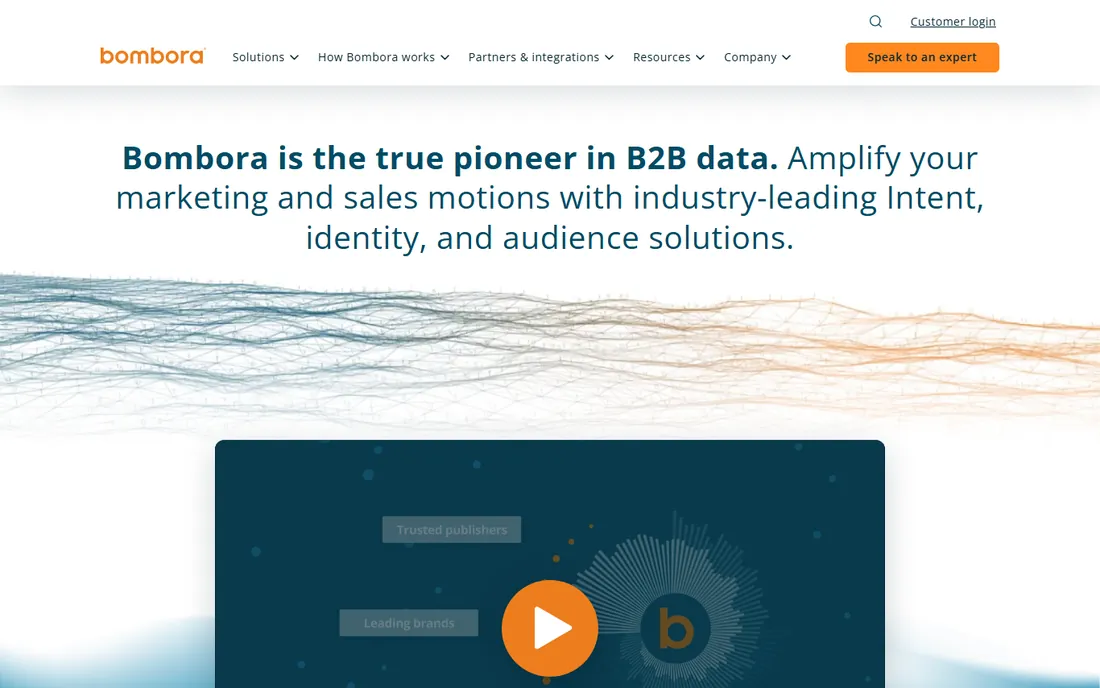
Bombora's Company Surge data tells you which companies are researching topics related to your product, based on content consumption across a large publisher network. Unlike full ABM suites, Bombora sells the data itself, which you can feed into HubSpot, Salesforce, ad platforms or sales tools you already own.
That flexibility is the appeal and the challenge. Intent data only creates pipeline when someone acts on it, so you need defined plays: which topics trigger which outreach, and who owns the follow-up. Pricing is quote only and typically annual. Teams that already run HubSpot or Salesforce and want an intent layer without switching platforms should shortlist Bombora.
What we like- Company Surge intent data is widely trusted
- Data feeds into existing marketing and sales tools
- Flexible delivery through APIs and integrations
Watch out for- Pricing is quote only
- Intent data needs interpretation to be useful
- Smaller teams may lack the volume to act on the signals
Starting priceFrom €79/month
Free planYes (free Lite plan)
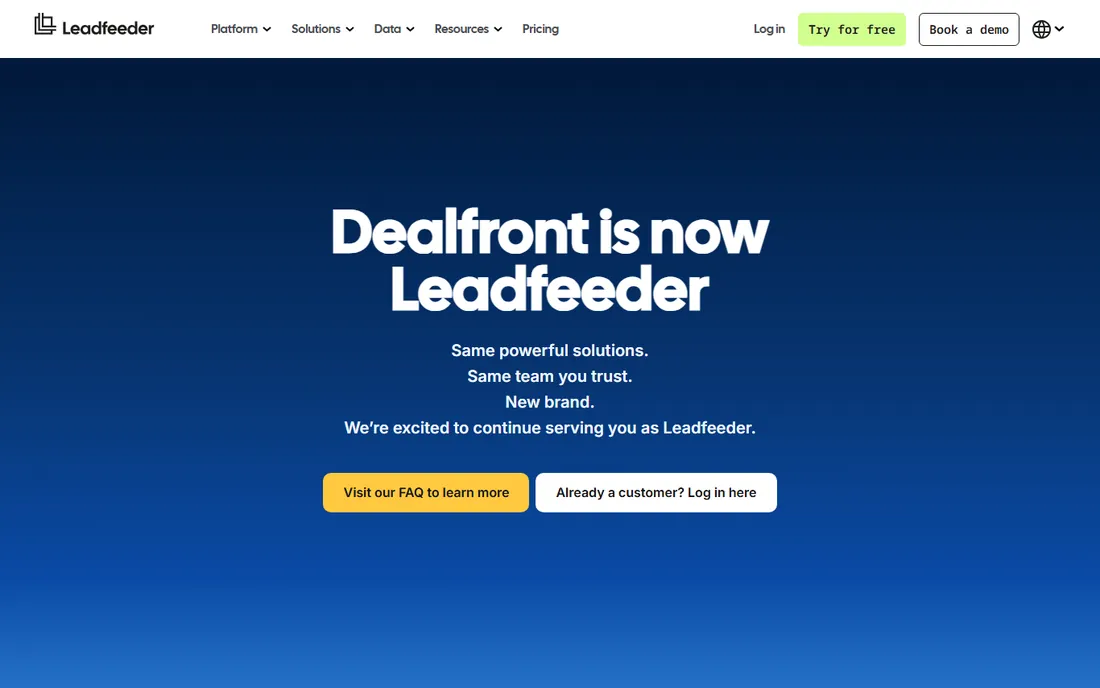
Leadfeeder, which the company formerly operated as Dealfront, answers a simple question: which companies are on your website right now. It matches visitor IP data against a company database and pushes the matches into your CRM or Slack, so sales can follow up with warm accounts instead of cold ones. The free Lite plan makes it easy to test identification rates on your own traffic.
Expectations matter here. Identification works best on desktop business traffic; mobile and small-company visits often stay anonymous. Paid plans start at 79 euros a month and scale with the number of identified companies. For the price, it is one of the cheapest intent signals a B2B team can buy.
What we like- Reveals which companies visit your site even without a form fill
- The free Lite plan covers basic identification
- Integrates with major CRMs and Slack
Watch out for- Identification rates vary by traffic source
- Contact-level data needs enrichment add-ons
- The company rebranded from Dealfront, so older reviews use the old name
#10
Apollo.io
Best for: prospecting plus outreach in one workflow
Visit apollo.io
Starting price$49 per user/month (Basic, annual)
Free planYes
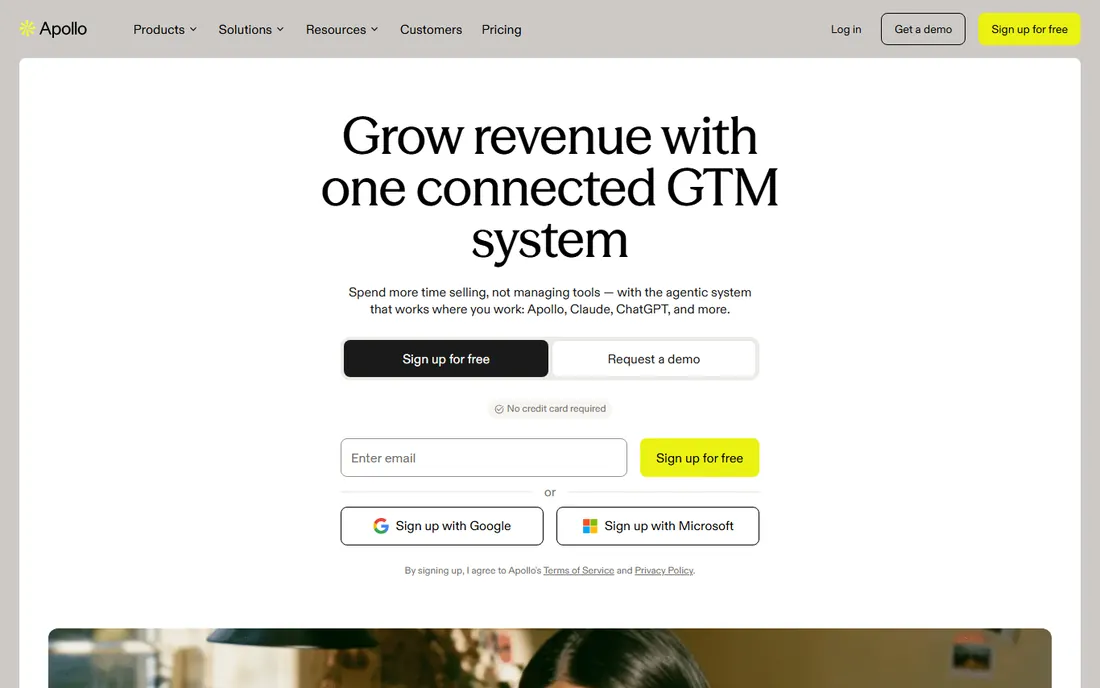
Apollo combines a B2B contact database with the outreach tools to act on it: email sequences, a dialer and task workflows live in the same platform. That combination is why so many SDR teams start here. Basic starts at $49 per user per month on annual billing, and the free plan includes enough credits to test data quality on your own market.
Apollo is a prospecting engine, not a full demand gen platform. It will not run your nurture programs or ABM advertising. Data accuracy is solid for a database product but still needs verification on high-value accounts. Set up dedicated sending domains and warm them before scaling outreach, or deliverability will suffer regardless of data quality.
What we like- Contact database plus sequences and dialer in one login
- Published pricing starts at $49 per user per month
- Free plan includes meaningful credits
Watch out for- Data accuracy is good but not perfect
- Deliverability needs proper domain setup
- Heavy users can hit credit limits
How demand generation pricing really works
Demand generation tools price in three different ways, and mixing them up leads to bad budgets. Platforms like HubSpot charge per seat and per contact, so costs grow with your database. Data vendors like ZoomInfo and Bombora charge for data volume or credits on annual contracts, so costs grow with usage. ABM suites like 6sense and Demandbase charge platform fees sized to your company, so costs are fixed but high.
The honest way to budget is to model year-two costs, not year-one. Introductory tiers, free contact allowances and pilot discounts expire, and the renewal quote is the number you will actually live with. Ask every vendor for pricing at your projected contact volume and seat count twelve months out.
Building your demand generation stack
Most B2B teams need four layers: a system of record (CRM plus marketing automation), a data source (ZoomInfo, Apollo or Bombora), a way to capture demand (forms, chat, Leadfeeder) and a way to create it (paid media, content, Metadata.io for testing). HubSpot can cover the first layer alone; the rest usually come from specialists.
Resist buying the intent data before you have the follow-up motion. A list of in-market accounts is worthless if sales takes a week to call and marketing has no nurture track ready. Build the capture and follow-up workflow first, prove it converts, then add data and ABM layers to feed it more volume.
How we chose
We researched this category through vendor pricing pages, product documentation and public reviews on G2, Capterra and Reddit. Every product was checked against its live homepage to confirm it is still sold and fits demand generation, and pricing comes only from the vendor's own published pages. Where vendors keep pricing behind sales calls, we say so. We favored tools with transparent pricing and free tiers, and we included both full platforms and specialists because real demand gen stacks mix the two.
Frequently asked questions
What is demand generation software?
It is software that creates and captures B2B buying interest: marketing automation, account-based marketing platforms, intent data, prospecting databases and visitor identification. Most teams combine several tools rather than buying one suite.
How much does demand generation software cost?
It ranges from free (HubSpot's free tier, Apollo's free plan) to six figures annually for enterprise ABM platforms. A typical small B2B stack runs $200 to $1,000 a month; mid-market teams spend $2,000 to $10,000 a month once data and ABM tools are included.
What is the difference between lead generation and demand generation?
Lead generation captures contact details, usually through forms and gated content. Demand generation is broader: it creates buying interest through content, ads and outreach, then captures and nurtures it. The tools in this list cover both sides.
Do I need intent data?
Intent data helps once you have steady traffic and a follow-up process. If your site gets fewer than a few thousand B2B visits a month, or sales cannot call new leads within a day, fix those problems before paying for Bombora or 6sense.
Can I do demand gen with just HubSpot?
Yes, for a long time. HubSpot's free and Starter tiers cover forms, email, automation and reporting. Teams add ZoomInfo or Apollo for prospecting data and 6sense or Demandbase for ABM when the basics are working and pipeline targets grow.
How do I measure demand generation success?
Track marketing-sourced pipeline and revenue, not just leads. Cost per opportunity and pipeline per dollar of spend tell you whether the machine works. Vanity metrics like email opens and ad clicks matter only when they connect to pipeline.
Sources we checked (10)
- https://hubspot.com/
- https://marketo.com/
- https://www.salesforce.com/products/marketing/account-engagement/
- https://6sense.com
- https://demandbase.com/
- https://zoominfo.com/
- https://metadata.io/
- https://bombora.com
- https://dealfront.com/
- https://apollo.io/
Is your product missing or out of date?
We review this list regularly. Vendors can request a listing, send updated pricing or ask about featured placement.

Shihab Mia · Founder, Rankite
Shihab has spent more than a decade helping SaaS and e-commerce brands grow through search. He writes Rankite's software buying guides from pricing pages, documentation and public user reviews. More about Shihab.