How we make this list: we compare pricing pages, product documentation and public user reviews. Ratings come from G2, Capterra or Trustpilot, with the date we checked them.
Key takeaways
- Email-first tools are cheaper and faster to adopt. Omnichannel platforms cost more but unify every channel.
- Four vendors publish real pricing on their own sites: Mailchimp, ActiveCampaign, Klaviyo, and Brevo. The rest require a demo or quote.
- Ecommerce brands should start with Klaviyo. B2B teams should start with HubSpot, Marketo, or ActiveCampaign. Mobile-first brands should look at Braze or Iterable.
- Contact-based pricing means your bill grows with your list. Check what 12 months of growth will cost before you commit.
Quick comparison
| Tool | Best for | Starting price | Free plan |
|---|
 HubSpot Marketing Hub HubSpot Marketing Hub | Teams wanting CRM and marketing together | See website | See website |
 Salesforce Marketing Cloud Salesforce Marketing Cloud | Enterprises running complex cross-channel campaigns | See website | No |
 Mailchimp Mailchimp | Small businesses starting email marketing | From $13/month (per vendor site) | Yes |
 ActiveCampaign ActiveCampaign | Growing teams that need real automation | From $15/month (per vendor site) | Free trial |
 Klaviyo Klaviyo | Ecommerce brands on Shopify and similar | See website | Yes |
 Braze Braze | Mobile-first brands with app and push needs | See website | Free trial |
 Iterable Iterable | B2C brands running cross-channel journeys | See website | No |
 Customer.io Customer.io | SaaS teams sending behavior-driven messages | See website | Free trial |
 Brevo Brevo | Budget-conscious teams needing email plus SMS | From $9/month (per vendor site) | Yes |
 Marketo Engage Marketo Engage | B2B teams doing lead nurturing and ABM | See website | No |
Is your product missing or out of date?
We review this list regularly. Vendors can request a listing, send updated pricing or ask about featured placement.
The best campaign management software
Campaign management software ranges from free email tools to enterprise suites that cost more than a hire. The right pick depends on list size, channels, and how much automation you will actually build.
These ten cover the full spread, with real pricing where vendors publish it.
#1
HubSpot Marketing Hub
Best for: Teams wanting CRM and marketing together
Visit hubspot.com
Starting priceSee website
Free planSee website
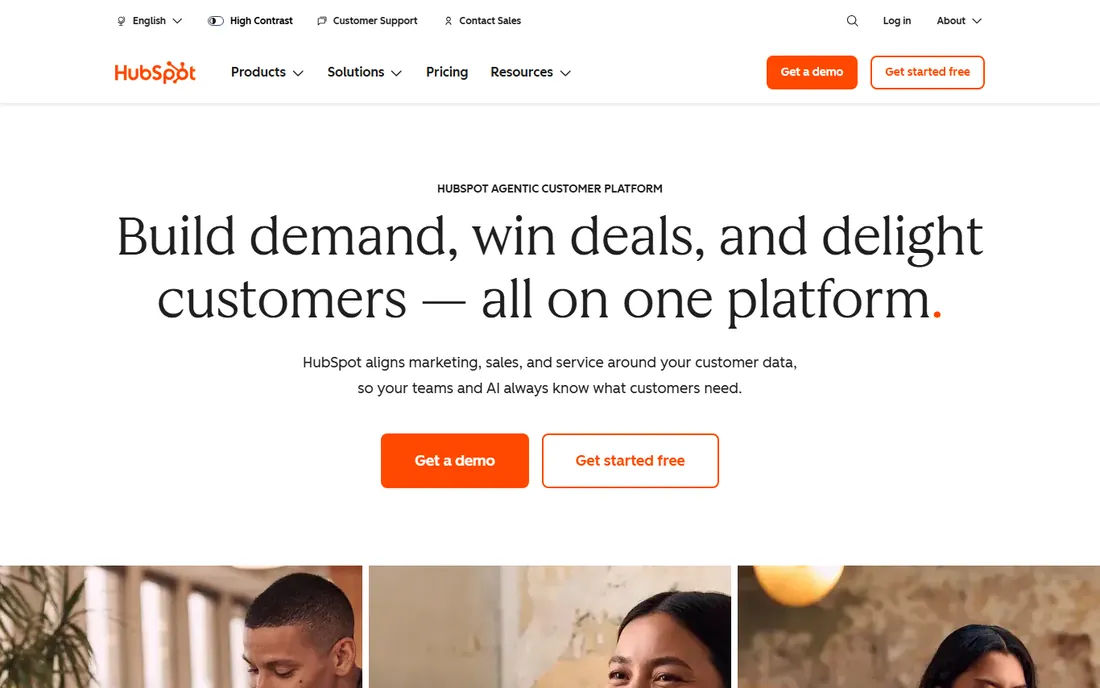
HubSpot is the all-in-one default for a reason. Marketing Hub runs email campaigns, landing pages, social, SEO, and automation on top of HubSpot's Smart CRM, so every campaign reads from the same customer record your sales team uses. That shared data is the whole pitch.
The platform now leans hard into AI agents. Built-in agents can resolve customer inquiries, flag accounts showing interest, and accelerate pipelines, all working from your CRM data. The homepage reports more than 306,000 customers worldwide, and a Small Business Bundle packages the Starter editions of each hub at one price.
Pricing is not published on the pages we checked, so expect a quote based on contacts and seats. The tradeoff is clear: you get one connected system, but contact-based billing means growth raises the bill.
What we like- CRM built in, huge integration ecosystem, AI agents included
Watch out for- Pricing is not published, costs climb as contacts grow
#2
Salesforce Marketing Cloud
Best for: Enterprises running complex cross-channel campaigns
Visit salesforce.com
Starting priceSee website
Free planNo
Salesforce Marketing Cloud sits at the enterprise end of this list. Positioned as an agentic marketing platform, it delivers real-time one-to-one personalization across email, mobile, ads, and web, powered by Data Cloud and Agentforce AI. The goal is always-on experiences that adapt to each customer.
For campaign managers, the strengths are segmentation at scale, journey orchestration, and deep CRM integration with Sales Cloud and Service Cloud. The platform handles the volume and governance that large organizations need, including compliance controls and multi-brand management.
Everything is quote-based with no public pricing and no free tier. This is a platform for companies with dedicated marketing operations teams, not a first tool for a small business.
What we like- Deep personalization, Data Cloud integration, massive ecosystem
Watch out for- Pricing is not published, enterprise complexity and cost
Starting priceFrom $13/month (per vendor site)
Free planYes
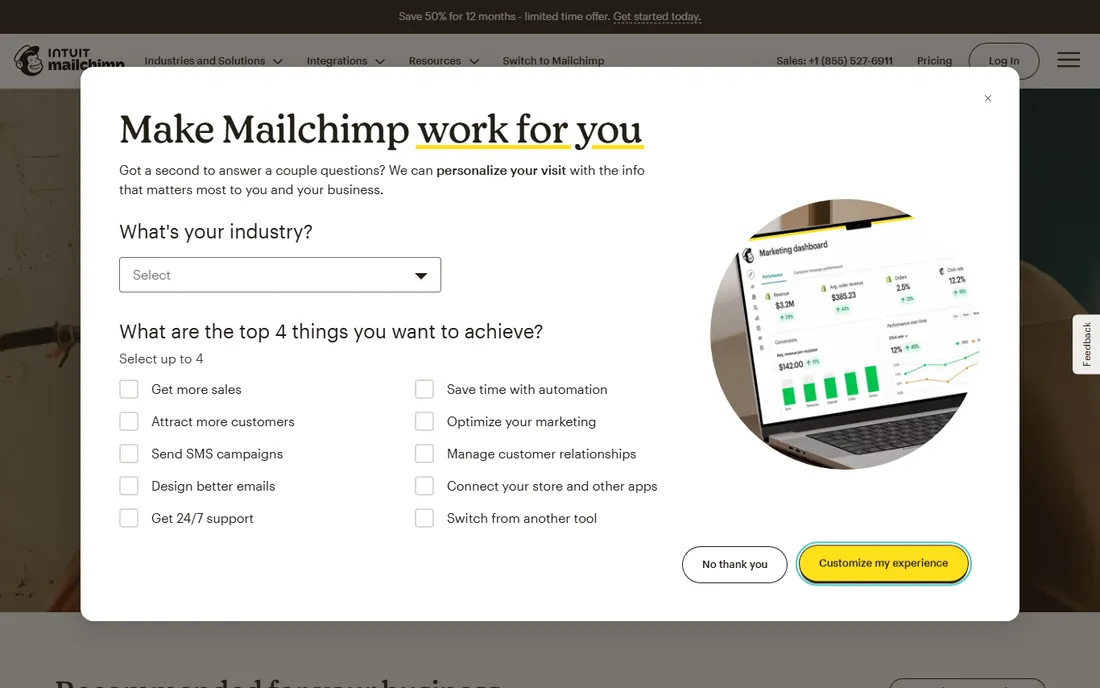
Mailchimp is where most small teams start, and many stay. The platform covers email and SMS marketing with automations, audience segmentation, AI content tools, and analytics, all wrapped in an interface built for non-specialists.
Pricing is fully published on mailchimp.com, which is rare in this market. The Free plan covers up to 250 contacts and 500 sends per month. Paid plans start at $13 per month for Essentials and $20 for Standard at the entry contact tier, with Premium from $350. Costs scale with contact count, and Mailchimp bills for every stored contact including unsubscribed ones, so list hygiene matters.
The 14-day Standard trial and the free tier make it easy to test with a real audience. For teams that mainly need email rather than a full CRM suite, it delivers the most features per dollar at the low end.
What we like- Published pricing, generous free tier, easy to learn
Watch out for- Costs rise fast with contacts, advanced automation needs higher plans
Starting priceFrom $15/month (per vendor site)
Free planFree trial
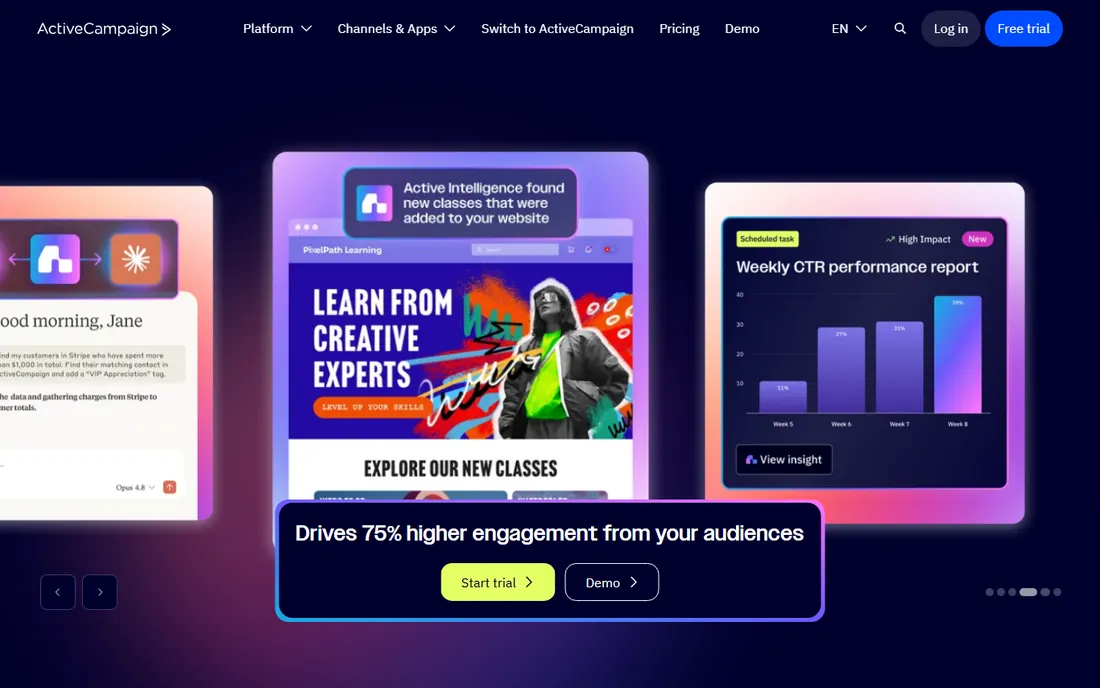
ActiveCampaign owns the middle ground between basic email tools and enterprise automation. Its visual workflow builder handles multi-branch conditional logic that simpler tools cannot, and plans include a built-in CRM so automation connects directly to the sales pipeline.
The 2026 headline feature is Active Intelligence 3.0, called Wavelength, which drafts campaigns, remembers context across workflows, and runs scheduled tasks autonomously. Pricing is published: Starter from $15 per month billed annually, scaling through Plus, Pro, and Enterprise by contact count and features.
A 14-day free trial with no credit card gives full platform access. There is no permanent free plan. For growing businesses that have outgrown Mailchimp but cannot justify HubSpot Professional, this is the natural next step.
What we like- Published pricing, powerful automation builder, 14-day trial
Watch out for- No free plan, interface can feel crowded at scale
Starting priceSee website
Free planYes
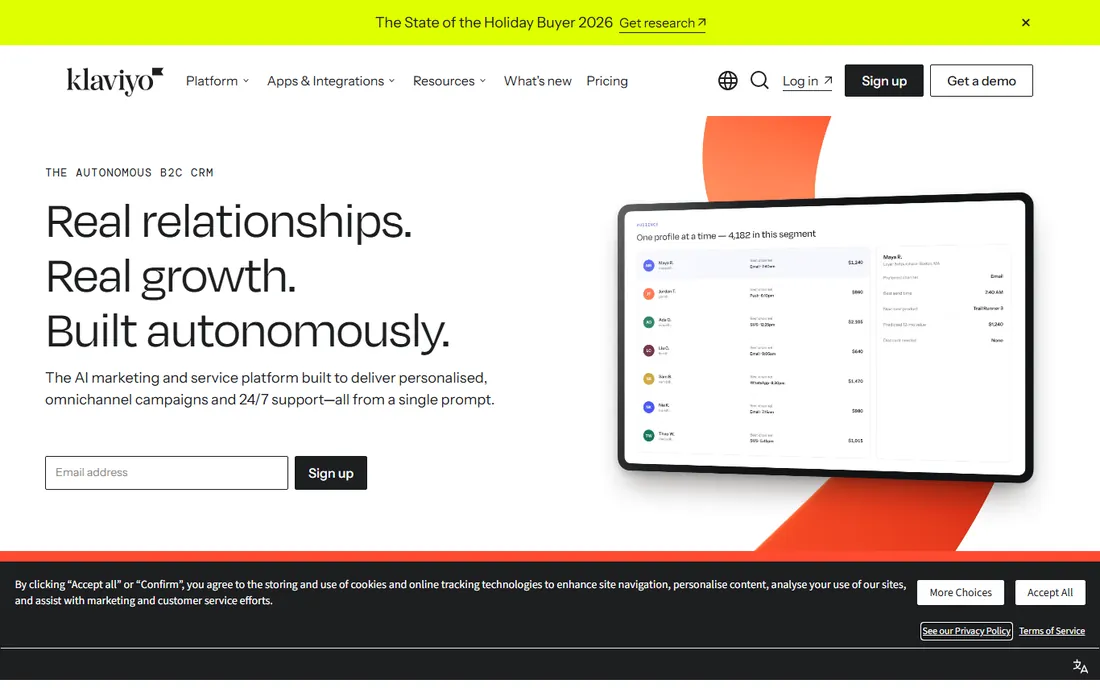
Klaviyo is the ecommerce marketer's favorite for a reason. Built as a B2C CRM, it unifies customer data with email, SMS, RCS, WhatsApp, and mobile push, so every message reacts to what customers actually do. The native Shopify integration syncs orders, products, and behavior in real time.
Segmentation is the standout. You can build audiences on products purchased, categories browsed, order value, days since last purchase, and predicted lifetime value, then trigger pre-built flows for abandoned carts, welcome series, and post-purchase follow-up. The homepage reports more than 205,000 brands and 9 billion customer profiles on the platform.
The free plan covers up to 250 profiles and 500 emails per month, which lets small stores start without paying. Paid plans scale by active profiles. If you sell online, shortlist Klaviyo first.
What we like- Best-in-class ecommerce segmentation, native Shopify integration, free tier
Watch out for- Pricing not fully published on site, costs scale with profiles
#6
Braze
Best for: Mobile-first brands with app and push needs
Visit braze.com
Starting priceSee website
Free planFree trial
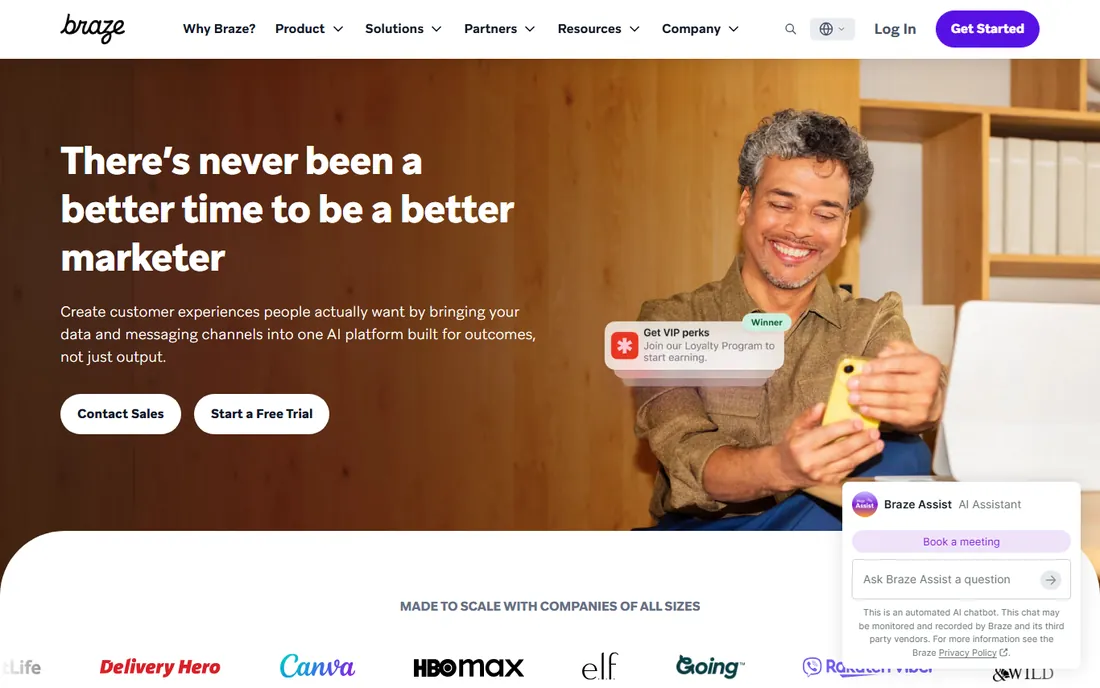
Braze is built for brands that message customers in apps, not just inboxes. The customer engagement platform connects data and messaging channels in one AI platform covering email, SMS, push, and in-app messages, with journey orchestration and experimentation built in.
BrazeAI helps marketers move from idea to execution faster: building campaigns, creating content, and optimizing performance without needing a data team. The homepage cites a 2026 Gartner Magic Quadrant leadership placement for multichannel marketing hubs, and its customer list spans retail, media, and fintech brands.
A free trial is offered through try.braze.com, but pricing is not published. For app-driven businesses that need real-time behavioral messaging, Braze and Iterable are the two names that come up most.
What we like- Real-time cross-channel messaging, AI built for marketers, free trial offered
Watch out for- Pricing is not published, overkill for email-only teams
Starting priceSee website
Free planNo
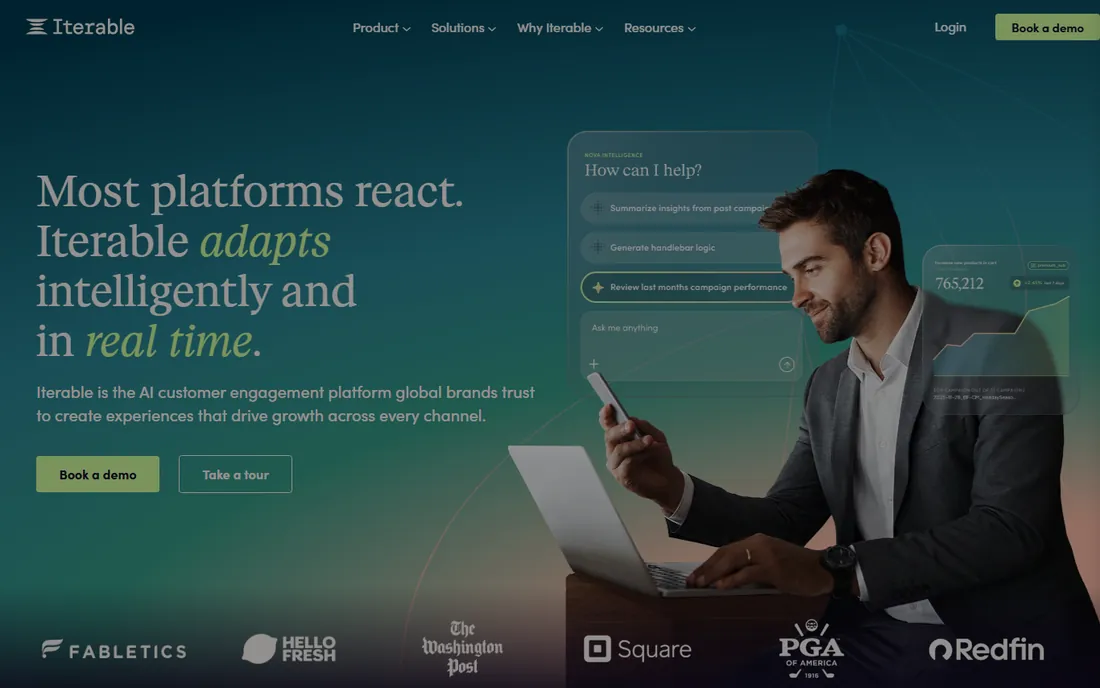
Iterable is Braze's closest rival in cross-channel engagement. Its pitch is adaptation: real-time AI decisioning powered by customer behavior, context, and performance signals, so every message gets smarter over time. The Nova intelligence layer adds agents that build audiences and journeys faster.
The platform unifies behavioral, product, and engagement data so experiences reflect what each customer cares about in the moment. Marketers get direct control over audiences, journeys, and experimentation without waiting on engineering, which speeds up execution.
Pricing is fully custom with no public numbers and no free tier on the site. Like Braze, it targets B2C brands managing large audiences across channels. Expect a sales-led evaluation.
What we like- Real-time AI decisioning, strong journey builder, enterprise reliability
Watch out for- Pricing is not published, no free tier or trial advertised
#8
Customer.io
Best for: SaaS teams sending behavior-driven messages
Visit customer.io
Starting priceSee website
Free planFree trial
Customer.io is the developer-friendly pick for product-led companies. The platform turns customer data into personalized email, SMS, push, and in-app messages through visual journeys and one-off broadcasts, all driven by real-time behavioral events.
It fits data-heavy tech stacks well, with an API-first design and support for MCP, CLI, and webhooks so AI tools can work with your messaging data. The homepage reports more than 9,000 brands on the platform and shows compliance badges for GDPR, CCPA, ISO 27001, SOC, and HIPAA.
A 14-day free trial with no credit card is advertised on the site. Pricing is not shown publicly. For SaaS and marketplace teams that want lifecycle messaging tied directly to product events, this is a strong fit.
What we like- Developer-friendly, 14-day trial, strong data integrations
Watch out for- Pricing is not published, learning curve for advanced features
#9
Brevo
Best for: Budget-conscious teams needing email plus SMS
Visit brevo.com
Starting priceFrom $9/month (per vendor site)
Free planYes
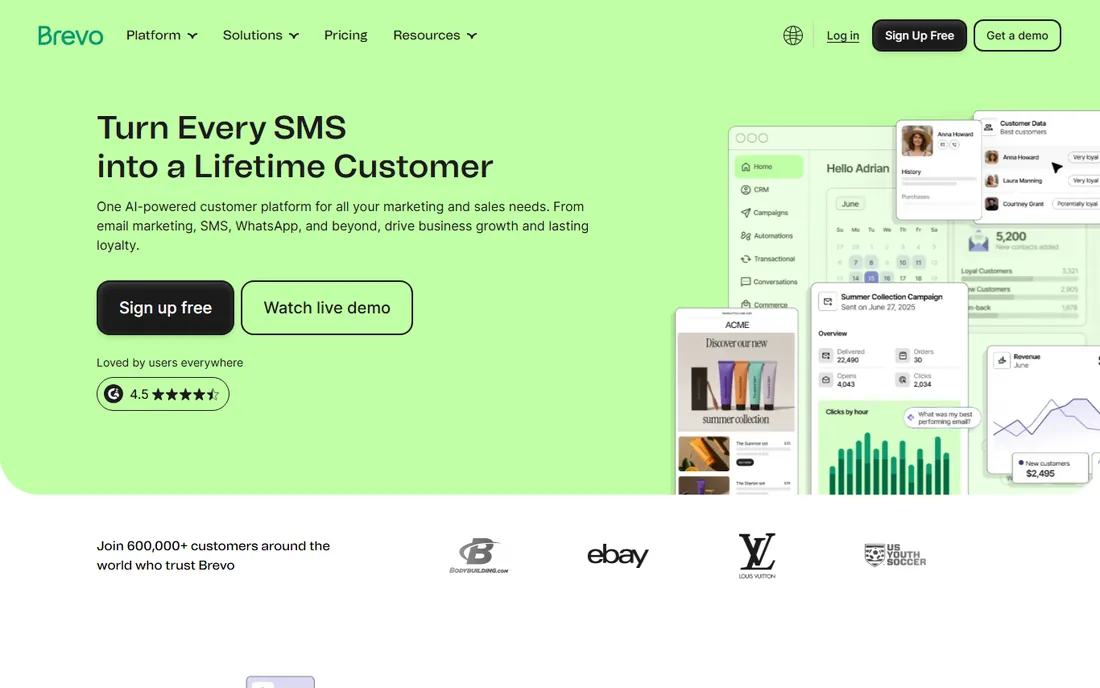
Brevo is the budget champion of this list. The platform combines email marketing, SMS, WhatsApp, automation, and a built-in CRM, with pricing that starts lower than every other tool here and a free plan that is actually usable.
The numbers are published on brevo.com: the free plan allows 300 emails per day, Starter starts at $9 per month for 5,000 emails, and full automation features start at $18 per month. Pricing is based on email volume rather than contacts, which keeps costs predictable as your list grows. The homepage claims more than 600,000 customers.
Brevo AI adds send-time optimization and product recommendations. For small businesses and agencies that want multichannel marketing without enterprise pricing, this is the value pick.
What we like- Lowest entry price here, real free plan, email plus SMS plus CRM
Watch out for- Template gallery is basic, advanced features need higher tiers
Starting priceSee website
Free planNo
Marketo Engage is the B2B specialist, now part of Adobe Experience Cloud. It runs lead and account-based marketing across the full buyer journey: audience building, omnichannel engagement, lead scoring, sales alerts, and multi-touch attribution that ties campaigns to revenue.
Standout features for B2B teams include sophisticated lead scoring, native bi-directional CRM integrations with Salesforce and Microsoft, and Marketo Measure for attribution. Adobe Dynamic Chat adds conversational marketing trained on your brand and accounts.
Pricing is quote-based with no public numbers and no free tier. Adobe cites a 2024 Gartner leadership placement for B2B marketing automation. This is a platform for marketing teams with the skills to run it, not a plug-and-play email tool.
What we like- Deep B2B automation, account-based marketing, revenue attribution
Watch out for- Pricing is not published, needs skilled operators
We opened the homepage of every vendor on this list in October 2026 and copied each URL from the browser address bar after all redirects. We then checked each vendor's own pricing page for published prices, plans, and free tiers.
Where pricing was published on the vendor's own site, we quoted it. Where it was not, we wrote "See website" instead of repeating third-party directory numbers. Free trials were listed only when the vendor advertised them on its own pages.
For fit, we weighed public reviews on G2, Capterra, and Software Advice, community discussion on Reddit and in ecommerce groups, the breadth of each integration list, and which company sizes each vendor actually serves. The final ten mix email-first tools with omnichannel platforms so teams of any size can find a starting point.
How to choose campaign management software
Start with your channels. If email carries your revenue, an email-first tool like Mailchimp, ActiveCampaign, Klaviyo, or Brevo gives you the most for the least. If you need SMS, push, and ads orchestrated together, look at the omnichannel platforms instead.
Next, model the real cost. Most tools here bill by contacts or profiles, so run your list size at 12 and 36 months through each pricing page. A tool that looks cheap at 500 contacts can become expensive at 50,000. Brevo's volume-based pricing is the exception worth noting.
Then check the integrations that matter to you. Ecommerce brands need a native store connection. B2B teams need CRM sync with Salesforce or Microsoft. SaaS teams need event-based triggers from their product. A missing integration creates manual work that erases any price advantage.
Finally, test before you commit. Mailchimp, ActiveCampaign, Klaviyo, Braze, Customer.io, and Brevo all offer free plans or trials on their own sites. Run a real campaign with a real segment during the trial, and judge the reporting as hard as the builder.
The pricing gap nobody warns you about
Contact-based pricing is the hidden cost driver in this market. Mailchimp, Klaviyo, and ActiveCampaign all raise your bill as your list grows, and some count unsubscribed or inactive contacts toward your tier. A list that doubles in a year can double your software cost without any new features.
Two ways to protect yourself. First, clean your list regularly and archive contacts you cannot email, since several vendors bill for stored contacts regardless of engagement. Second, compare volume-based pricing like Brevo's against contact-based pricing at your projected 12-month list size, not today's.
Enterprise platforms dodge this comparison entirely by quoting custom contracts. If you go that route, negotiate the contact tier and overage rates up front, in writing, before the first campaign sends.
Frequently asked questions
What is campaign management software?
Campaign management software plans, executes, and measures marketing campaigns across channels such as email, SMS, social, and ads. It typically includes audience segmentation, automation workflows, templates, and analytics that show which campaigns drive revenue.
How much does campaign management software cost?
It ranges widely. Brevo starts at $9 per month and ActiveCampaign at $15 per month on their own pricing pages, while enterprise platforms like Salesforce Marketing Cloud and Marketo Engage are custom-quoted and cost far more. Most tools bill by contacts or message volume.
Is there free campaign management software?
Mailchimp, Klaviyo, and Brevo offer free plans on their own sites with real sending limits. ActiveCampaign, Braze, and Customer.io offer free trials. The free tiers work for small lists but cap contacts and sends, so growing teams should budget for a paid plan.
What is the difference between email marketing and campaign management software?
Email marketing software focuses on sending emails. Campaign management software is broader: it coordinates campaigns across multiple channels, automates customer journeys, and attributes results to revenue. Many tools on this list do both.
Which tool is best for ecommerce?
Klaviyo is the most popular choice for ecommerce, with native Shopify integration and deep purchase-based segmentation. Brevo is the budget alternative, and Mailchimp works for smaller stores. Larger retailers also use Braze and Salesforce for cross-channel programs.
How long does implementation take?
Email-first tools can be running in days. Omnichannel platforms take longer: expect weeks for HubSpot or ActiveCampaign with CRM setup, and months for Salesforce Marketing Cloud or Marketo Engage with data migration and integration work.
Sources we checked (10)
- https://hubspot.com/
- https://www.salesforce.com/
- https://mailchimp.com/
- https://activecampaign.com/
- https://klaviyo.com/
- https://www.braze.com/
- https://iterable.com/
- https://customer.io/
- https://www.brevo.com/
- https://marketo.com/
Is your product missing or out of date?
We review this list regularly. Vendors can request a listing, send updated pricing or ask about featured placement.

Shihab Mia · Founder, Rankite
Shihab has 5+ years in B2B and SaaS SEO. He writes Rankite's software buying guides from pricing pages, documentation and public user reviews. More about Shihab.