How we make this list: we compare pricing pages, product documentation and public user reviews. Rankite is independent; if a vendor ever pays for a featured spot, that listing is clearly labeled Partner.
Key takeaways
- The best supply chain suites are all enterprise platforms with quote-based pricing; expect six-figure annual contracts and multi-month implementations.
- Oracle and SAP win when you already run their ERP; Blue Yonder, Kinaxis and Manhattan win as best-of-breed specialists in planning, concurrency and warehousing.
- NetSuite is the only realistic option here for mid-market companies; the rest target large enterprises.
- Never buy an SCM suite on features alone: implementation quality and industry fit decide the outcome more than the feature checklist.
Quick comparison
| Tool | Best for | Starting price | Free plan |
|---|
 Oracle Fusion Cloud SCM Oracle Fusion Cloud SCM | companies already running Oracle Cloud ERP | See website | Free trial (Oracle Cloud trial credits) |
 SAP Supply Chain SAP Supply Chain | global enterprises standardized on SAP S/4HANA | See website | No |
 Blue Yonder Blue Yonder | retailers, grocers and manufacturers who live on forecasting | See website | No |
 Kinaxis Maestro Kinaxis Maestro | industries where supply plans change constantly | See website | No |
 Manhattan Active Manhattan Active | warehouse-heavy operations and omnichannel fulfillment | See website | No |
 E2open E2open | companies managing global multi-tier supplier networks | See website | No |
 Infor Infor | manufacturers and distributors wanting industry-specific depth | See website | No |
 NetSuite SCM NetSuite SCM | mid-market companies outgrowing spreadsheets and entry systems | See website | No |
Is your product missing or out of date?
We review this list regularly. Vendors can request a listing, send updated pricing or ask about featured placement.
The top supply chain management software
#1
Oracle Fusion Cloud SCM
Best for: companies already running Oracle Cloud ERP
Visit oracle.com
Starting priceSee website
Free planFree trial (Oracle Cloud trial credits)
Oracle's pitch is the unified suite: planning, inventory, manufacturing, logistics, order management and procurement running on the same cloud data model as Oracle Cloud ERP and HCM. For companies already on Oracle, that native integration removes the middleware tax that multi-vendor supply chains pay forever. The manufacturing depth is real, covering shop floor execution, quality management and product lifecycle alongside the planning layer.
The catch is scale. Oracle SCM Cloud is priced by quote, deployments are measured in months and dollars with many zeros, and you need an implementation partner who has done it before. Oracle does offer cloud trial credits for evaluation. This is a platform decision for companies with hundreds of millions in revenue, not a tool purchase. If you are on Oracle ERP, it is the default. If you are not, the switching cost deserves its own business case.
What we like- Full suite from planning to logistics on one cloud platform
- Strong manufacturing and product lifecycle depth
- AI embedded across modules
Watch out for- Pricing is quote-based and enterprise-scale
- Implementation is a major program, not a project
#2
SAP Supply Chain
Best for: global enterprises standardized on SAP S/4HANA
Visit sap.com
Starting priceSee website
Free planNo

Nobody buys SAP supply chain software for a single feature. They buy it because the company runs on SAP, and the supply chain modules (EWM for warehousing, TM for transportation, IBP for planning) inherit the master data, financial integration and compliance framework the business already depends on. SAP IBP in particular is a mature planning platform used by some of the largest supply chains on earth.
Everything about SAP is enterprise-scale: quote-based pricing, implementations measured in quarters, and a partner ecosystem you will need. The complexity critics complain about is the flip side of completeness; SAP handles edge cases other suites never imagined. If your company is an SAP shop, the SCM modules are the path of least resistance. If it is not, do not start here.
What we like- Deepest integration with SAP ERP
- IBP is a proven planning platform
- Massive partner ecosystem
Watch out for- Quote-based pricing
- Implementations are long and expensive
- Complexity is the price of completeness
#3
Blue Yonder
Best for: retailers, grocers and manufacturers who live on forecasting
Visit blueyonder.com
Starting priceSee website
Free planNo
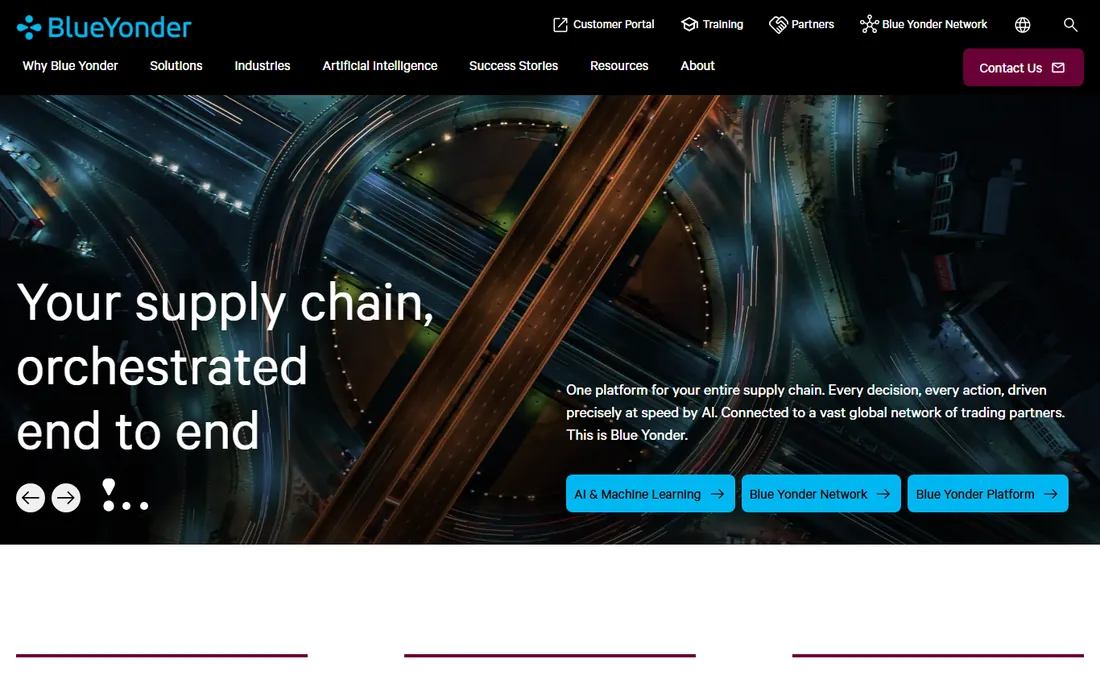
Blue Yonder (formerly JDA) built its reputation on the hardest problem in supply chain: predicting what customers will buy. Its demand planning, replenishment and allocation tools are the standard in retail and grocery, where a few percentage points of forecast accuracy translate directly into margin. The platform has expanded into warehousing, transportation and returns, making it a genuine end-to-end option.
Pricing is quote-based and the portfolio is broad enough that evaluations take time. The Panasonic ownership is worth knowing, though the product investment has continued. For retailers and consumer goods companies, Blue Yonder's planning depth is the reason to shortlist it. For everyone else, its strengths are less differentiating.
What we like- Best-in-class demand forecasting and replenishment
- Strong retail and 3PL footprint
- Machine learning throughout
Watch out for- Quote-based pricing
- Broad portfolio means long evaluations
- Owned by Panasonic, which adds roadmap questions for some buyers
#4
Kinaxis Maestro
Best for: industries where supply plans change constantly
Visit kinaxis.com
Starting priceSee website
Free planNo
Kinaxis does one thing better than anyone: concurrent planning. Change a demand number, a supply constraint or a capacity limit, and the entire plan recalculates instantly, showing the ripple effects across the network. For industries with volatile demand and complex bills of materials (semiconductors, pharma, automotive, aerospace), that speed turns planning from a monthly ritual into a daily capability.
It is a planning specialist rather than a full execution suite, so warehousing and transportation usually come from elsewhere. Pricing is quote-based and sits at the premium end. If your planners still wait overnight for plan runs, a Kinaxis demo will be eye-opening. If your supply chain is relatively stable, the concurrency advantage matters less.
What we like- Concurrent planning shows impact of changes instantly
- Strong in high-tech, pharma and automotive
- Scenario modeling is excellent
Watch out for- Quote-based pricing
- Narrower execution footprint than full suites
- Premium positioning
#5
Manhattan Active
Best for: warehouse-heavy operations and omnichannel fulfillment
Visit manh.com
Starting priceSee website
Free planNo
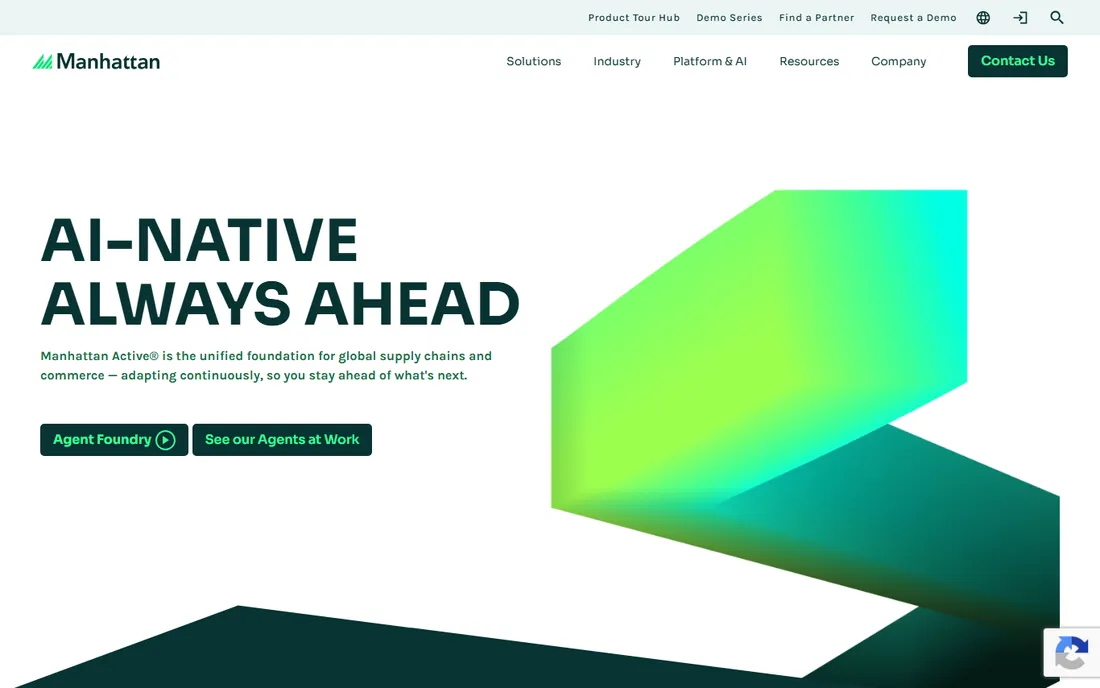
When the warehouse is the business, Manhattan Associates is the name that comes up first. Its warehouse management system leads the market, and the Manhattan Active platform rebuilt it cloud-native with continuous updates instead of version upgrades. The unified approach extends to transportation and omnichannel order management, so a retailer can promise, fulfill and deliver from one platform.
Planning is the thinner side; companies with heavy forecasting needs often pair Manhattan execution with a planning specialist. Pricing is quote-based and enterprise. For distribution-heavy operations, third-party logistics providers and omnichannel retailers, Manhattan's execution depth is unmatched.
What we like- Leading warehouse management in a cloud-native platform
- Unified commerce and fulfillment
- Versionless updates
Watch out for- Quote-based pricing
- Planning depth is thinner than the planning specialists
#6
E2open
Best for: companies managing global multi-tier supplier networks
Visit e2open.com
Starting priceSee website
Free planNo
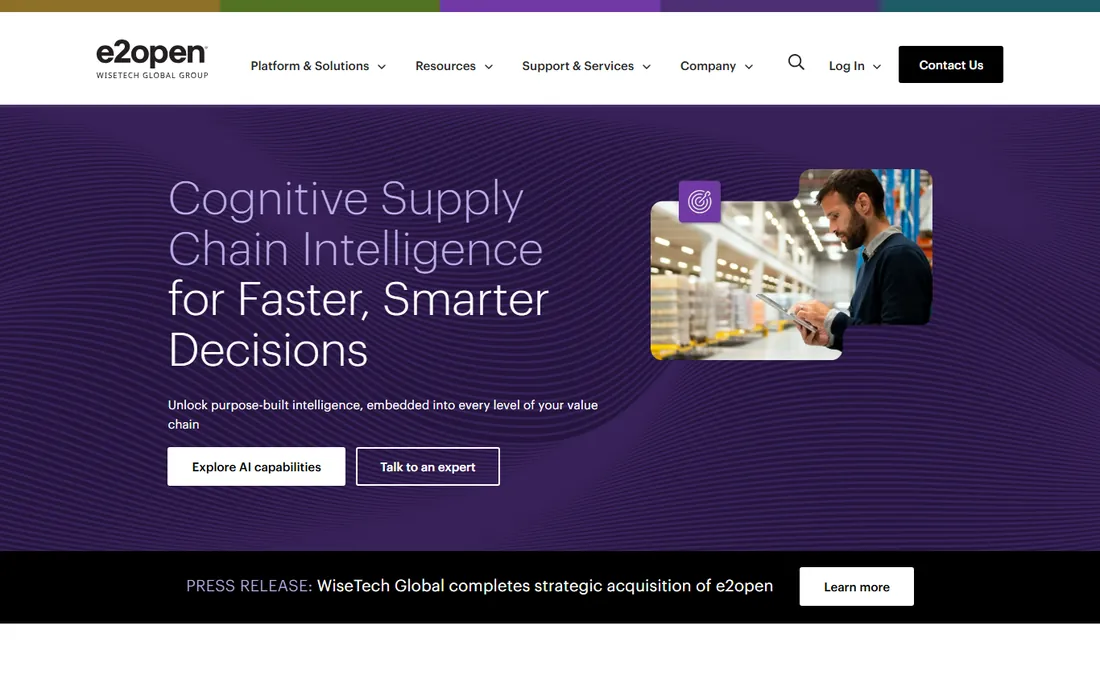
E2open's differentiator is the network. Rather than just running your own supply chain, the platform connects you with suppliers, contract manufacturers, logistics providers and distributors on shared data. For companies with deep multi-tier supply chains, especially in high-tech and industrial manufacturing, that connectivity turns partner data into planning input instead of email attachments.
The network effect cuts both ways: the value grows as your partners join, and onboarding them takes work. Global trade management and transportation are strengths. Pricing is quote-based. If your supply chain problems are really collaboration problems with external partners, E2open deserves a hard look. If your operations are mostly in-house, a conventional suite fits better.
What we like- Multi-enterprise network connects trading partners
- Strong global trade and logistics
- Good for complex sourcing
Watch out for- Quote-based pricing
- Network value depends on partner adoption
- Interface lags the newer platforms
#7
Infor
Best for: manufacturers and distributors wanting industry-specific depth
Visit infor.com
Starting priceSee website
Free planNo
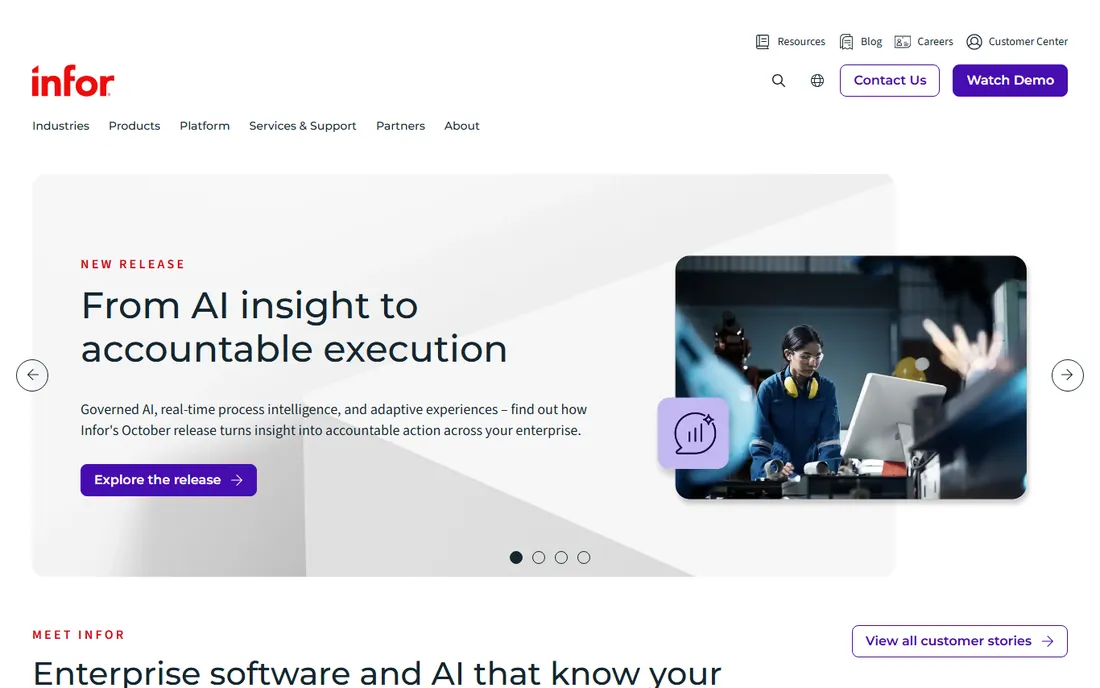
Infor's strategy is specialization. Instead of one generic suite, it ships industry-specific CloudSuites with prebuilt processes for manufacturing, distribution, healthcare and others, which shortens implementations compared to the big two. The supply chain capabilities cover planning, warehousing and transportation within those industry templates.
The ecosystem is smaller than SAP's or Oracle's, and picking the right CloudSuite takes guidance. Pricing is quote-based but generally lands below the giants for comparable scope. For mid-to-large manufacturers and distributors that want industry fit without SAP-scale programs, Infor is the pragmatic middle path.
What we like- Industry-specific CloudSuites with prebuilt processes
- Strong in manufacturing and distribution
- Good value versus the giants
Watch out for- Quote-based pricing
- Smaller ecosystem than SAP and Oracle
- CloudSuite choice adds evaluation complexity
#8
NetSuite SCM
Best for: mid-market companies outgrowing spreadsheets and entry systems
Visit netsuite.com
Starting priceSee website
Free planNo
NetSuite is the only tool on this list a $50 million company can realistically buy. Its supply chain modules (inventory, order management, procurement, warehousing, demand planning) run inside the same ERP as financials and CRM, which is exactly what growing companies need when spreadsheets break. Implementations are measured in weeks to months, not quarters to years.
The depth is mid-market by design. Very complex manufacturing, global trade compliance at scale and advanced planning will push against its limits, and some capabilities need add-ons. Pricing is quote-based but in a different universe from the enterprise suites. If you are choosing your first real SCM system, start here before talking to the giants.
What we like- Supply chain inside a full ERP suite
- Realistic for mid-market budgets
- Faster implementations than enterprise suites
Watch out for- Quote-based pricing
- Depth is mid-market, not enterprise
- Advanced planning needs add-ons
How we chose
Supply chain suites are enterprise products with quote-based pricing, so this comparison focuses on fit rather than price tags. We selected suites with proven deployments in 2026, verified each vendor's current positioning from their own sites and industry coverage, and weighed analyst recognition alongside user feedback. We did not invent prices where vendors publish none, and we ignored vendor-supplied customer counts and awards.
Why supply chain software pricing is never published
If you are wondering why every tool above says "see website," it is structural, not evasive. SCM suites are priced on user counts, modules, transaction volumes, regions and contract terms, so a list price would be meaningless. The real numbers run from tens of thousands annually for NetSuite at the mid-market end to seven figures for global Oracle, SAP or Blue Yonder deployments.
What matters more than the license is the total program cost. Implementation services typically run one to three times the first-year license, and complex deployments need change management, data migration and integration work. When evaluating, ask each vendor for total cost of ownership over three years including implementation, and ask for two reference customers in your industry at your scale. The license quote is the smallest part of the decision.
How to run an SCM evaluation without getting burned
Start with your processes, not the software. Map how demand planning, procurement, manufacturing, warehousing and transportation actually work today, including the spreadsheets and workarounds. Vendors demo best-case flows; your evaluation should test your messiest real scenarios, like the rush order that breaks the plan or the supplier that always ships late.
Second, decide the ERP question early. If you run SAP or Oracle ERP, their SCM suites have a structural advantage that best-of-breed tools must overcome with clearly better fit. Going best-of-breed means owning the integration, so budget for middleware and data governance.
Third, check industry fit ruthlessly. Ask for reference customers in your exact industry, not adjacent ones. A suite that excels in retail distribution may struggle with process manufacturing. Finally, evaluate the implementation partner as carefully as the software. In SCM, the partner's industry experience decides outcomes more than the feature list. Ask who exactly will staff your project and what they have delivered before.
Frequently asked questions
What is supply chain management software?
Supply chain management software plans and executes the flow of goods from suppliers to customers. It typically covers demand planning and forecasting, procurement, manufacturing, inventory management, warehousing, transportation and order fulfillment. Suites combine several of these; point solutions cover one deeply.
How much does supply chain management software cost?
Mid-market suites like NetSuite start in the tens of thousands per year. Enterprise suites from Oracle, SAP, Blue Yonder and Kinaxis typically run into six or seven figures annually, plus implementation services that often exceed the first-year license. Every vendor prices by quote based on users, modules and scale.
What is the difference between SCM and ERP?
ERP manages the business's core records: finance, HR, orders and inventory transactions. SCM manages the flow of goods: planning what to make, sourcing materials, running warehouses and moving freight. Modern suites blur the line, with ERP vendors embedding SCM modules and SCM suites adding financial features.
Which supply chain software is best for small businesses?
Most suites on this list target large enterprises. Small and mid-size businesses should look at NetSuite, which bundles SCM inside an affordable ERP, or at lighter tools like Cin7, Katana or Fishbowl for inventory-centric needs. Buying an enterprise suite too early is one of the most expensive mistakes in operations.
How long does SCM implementation take?
Mid-market implementations run three to nine months. Enterprise suite deployments typically take nine to eighteen months, with global rollouts extending beyond two years. Data migration, integration with existing systems and change management drive the timeline more than software configuration.
Should we choose a suite or best-of-breed tools?
Choose the suite when your ERP vendor's SCM modules fit well enough, because integration is free. Choose best-of-breed when one function is mission-critical and the suite's version is weak, for example Kinaxis for planning or Manhattan for warehousing. Best-of-breed wins on depth but you own the integration cost permanently.
Sources we checked (9)
- https://www.oracle.com/scm/
- https://www.sap.com/products/scm.html
- https://blueyonder.com/
- https://www.kinaxis.com/
- https://www.manh.com/
- https://www.e2open.com/
- https://www.infor.com/
- https://www.netsuite.com/
- https://www.decipherzone.com/blog-detail/best-supply-chain-management-tools-guide
Is your product missing or out of date?
We review this list regularly. Vendors can request a listing, send updated pricing or ask about featured placement.

Shihab Mia · Founder, Rankite
Shihab has spent more than a decade helping SaaS and e-commerce brands grow through search. He writes Rankite's software buying guides from pricing pages, documentation and public user reviews. More about Shihab.