How we make this list: we compare pricing pages, product documentation and public user reviews. Rankite is independent; if a vendor ever pays for a featured spot, that listing is clearly labeled Partner.
Key takeaways
- RFP software manages the response side of proposals: content libraries of approved answers, AI drafting from company knowledge, SME routing, and deadline governance.
- Enterprise teams handling hundreds of RFPs, RFIs, DDQs and security questionnaires a year shortlist Responsive, QorusDocs and Ombud.
- AI-native tools like Arphie, AutoRFP.ai and Inventive AI draft responses without requiring a maintained content library, which suits lean teams.
- 1Up targets high-volume repetitive questionnaires as a lighter point solution inside a larger stack.
- Pricing is almost entirely quote-based. Scope your annual RFP volume and user count before the sales call.
Quick comparison
| Tool | Best for | Starting price | Free plan |
|---|
 Responsive Responsive | enterprise teams running structured RFP programs | See website | No |
 QorusDocs QorusDocs | proposal teams that live in Microsoft 365 | See website | No |
 Ombud Ombud | large revenue teams coordinating complex responses | See website | No |
 Inventive AI Inventive AI | enterprises wanting autonomous AI drafting with human approval | See website | No |
 Arphie Arphie | lean teams that want fast drafting without library overhead | See website | No |
 AutoRFP.ai AutoRFP.ai | automated responses without maintaining answer libraries | See website | No |
 1Up 1Up | high-volume repetitive questionnaires as a point solution | See website | No |
 Expedience Software Expedience Software | template-driven proposal automation with governance | See website | No |
Is your product missing or out of date?
We review this list regularly. Vendors can request a listing, send updated pricing or ask about featured placement.
The top RFP software
Starting priceSee website
Free planNo
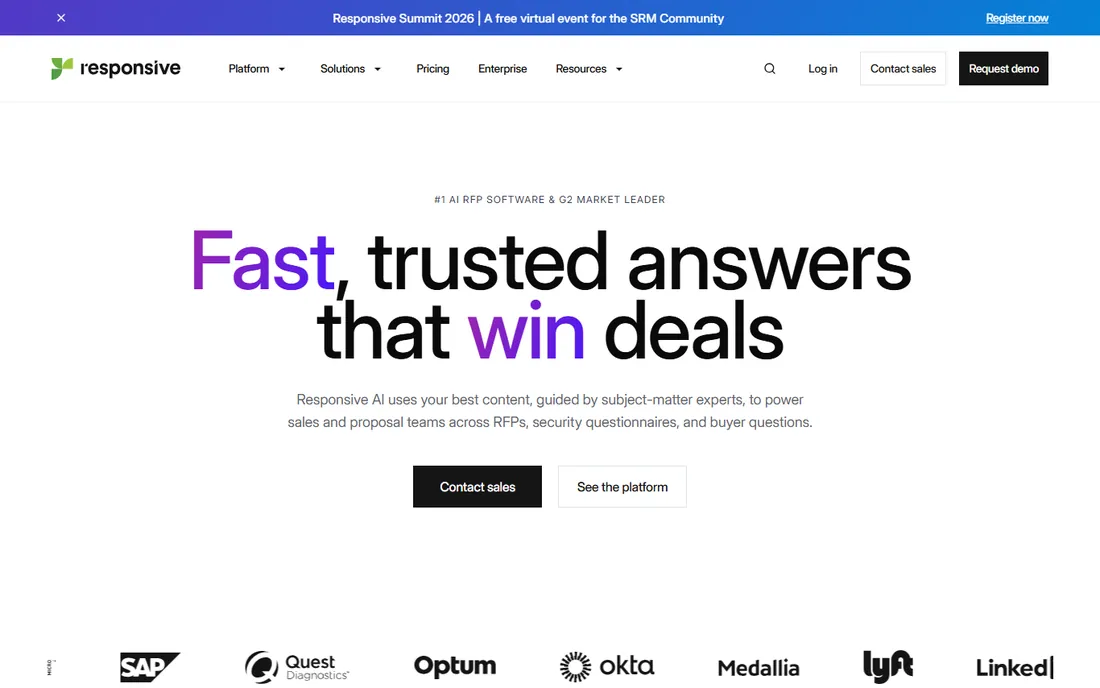
A proposal manager faces forty questions due Friday, half of them answered somewhere in last quarter's responses. Responsive (formerly RFPIO) is built for that reality. Its content library stores approved answers, the platform routes questions to the right subject-matter experts, and review workflows keep claims accurate before submission.
The model works when the library is maintained. Stale content produces confident wrong answers, so someone must own updates. Pricing is quote-based. For enterprise teams with real RFP volume and dedicated proposal staff, Responsive is the category standard.
What we like- Deep content library management
- Structured review and approval workflows
- Strong collaboration
Watch out for- Quote-only pricing
- Needs library maintenance to pay off
Starting priceSee website
Free planNo
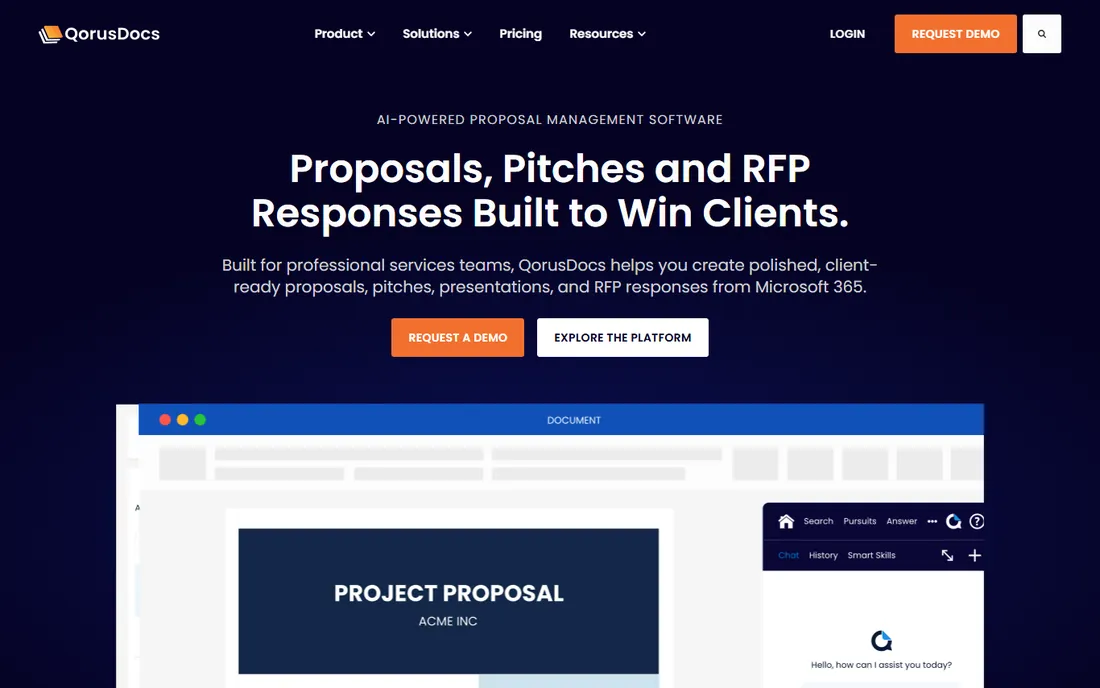
QorusDocs meets proposal teams where they already work: Word, PowerPoint and Teams. Content lives in managed templates, collaboration happens in the Microsoft apps, and governance controls keep branding and claims consistent. For organizations standardized on Microsoft 365, the adoption friction is near zero.
Outside that ecosystem the advantage fades. Pricing is quote-based. If your proposal team writes in Word and shares in SharePoint, QorusDocs fits like a glove. If they live in Google Workspace, look elsewhere.
What we like- Native Microsoft 365 experience
- Template management
- Good governance controls
Watch out for- Less compelling outside the Microsoft ecosystem
- Quote-based pricing
#3
Ombud
Best for: large revenue teams coordinating complex responses
Visit ombud.com
Starting priceSee website
Free planNo
Ombud targets the big end: large revenue organizations where RFP responses involve sales engineering, security, legal and product teams. Its response management keeps content governed and current across all those contributors, with workflows that match how enterprise deals actually get staffed.
It is more platform than a ten-person company needs. Pricing is quote-based and enterprise-grade. When your RFP process spans departments and the compliance risk of a wrong claim is real, Ombud's governance is the point.
What we like- Built for scale across revenue teams
- Strong content governance
- Handles complex questionnaires
Watch out for- Enterprise pricing
- Heavier than small teams need
#4
Inventive AI
Best for: enterprises wanting autonomous AI drafting with human approval
Visit inventive.ai
Starting priceSee website
Free planNo
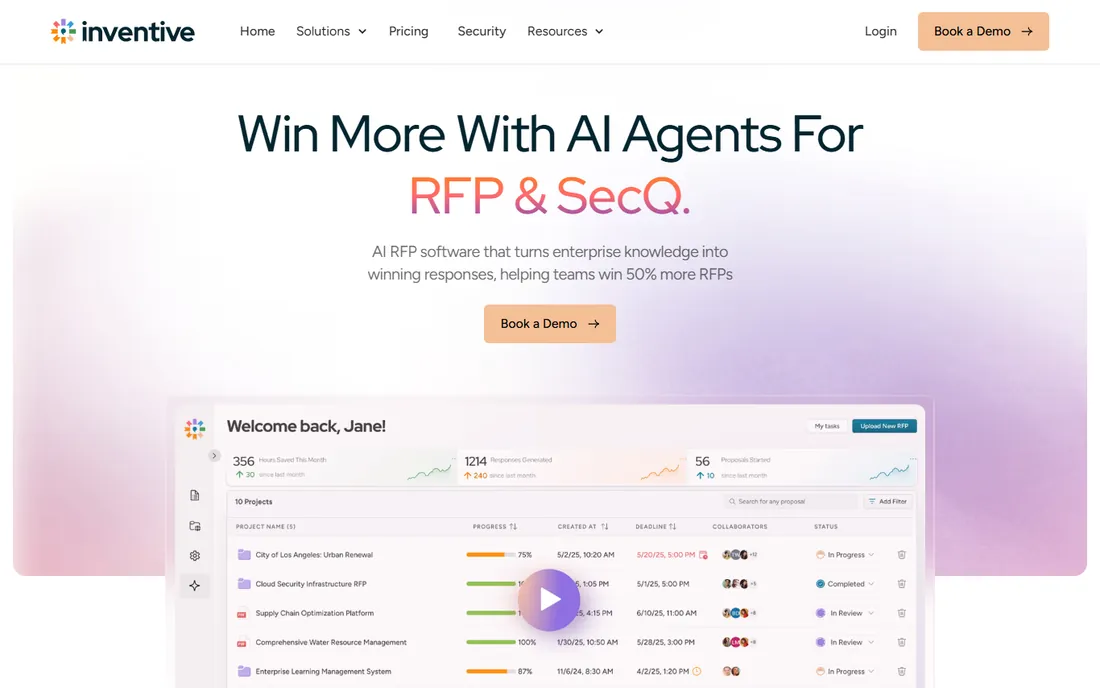
Inventive AI represents the agentic wave in RFP software. Instead of staff searching a content library, AI agents pull from connected company knowledge, draft responses, and route them to humans for approval. It handles RFPs, RFIs, DDQs and security questionnaires in the same workflow.
The autonomous approach needs trust: proposal teams must verify that AI-drafted claims are accurate before they ship. Pricing is quote-based. For enterprises drowning in questionnaire volume, the labor savings are the pitch. For teams with low volume, the traditional library model is simpler.
What we like- Agentic AI drafts from connected knowledge
- Handles RFPs, DDQs and security questionnaires
- Humans stay in the loop
Watch out for- Newer approach needs trust-building
- Quote-based pricing
#5
Arphie
Best for: lean teams that want fast drafting without library overhead
Visit arphie.ai
Starting priceSee website
Free planNo
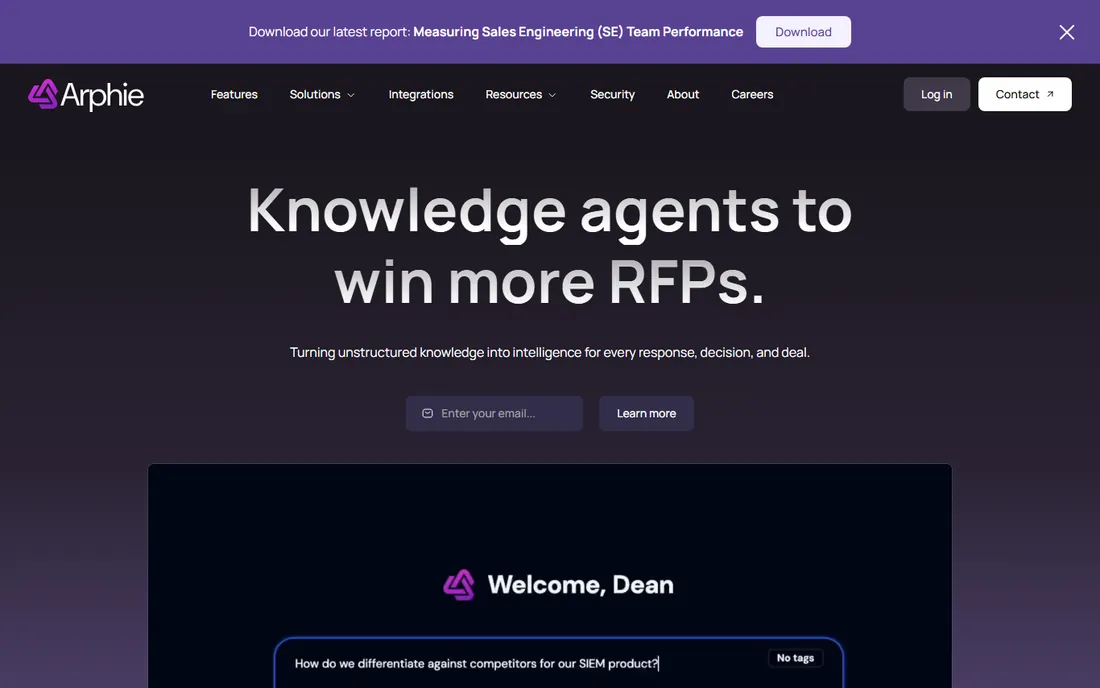
Arphie is built for teams that cannot afford a proposal department. The AI drafts RFP responses from your company knowledge without requiring anyone to build and maintain a content library first. That removes the biggest adoption barrier of traditional RFP tools.
The tradeoff is depth. Review workflows, governance controls and integrations are lighter than the enterprise platforms. Pricing is quote-based. For a lean team that answers RFPs occasionally but needs to do it well, Arphie gets you drafting in days.
What we like- AI-native drafting
- No content library to maintain
- Quick to start
Watch out for- Smaller vendor
- Less workflow depth than enterprise platforms
#6
AutoRFP.ai
Best for: automated responses without maintaining answer libraries
Visit autorfp.ai
Starting priceSee website
Free planNo
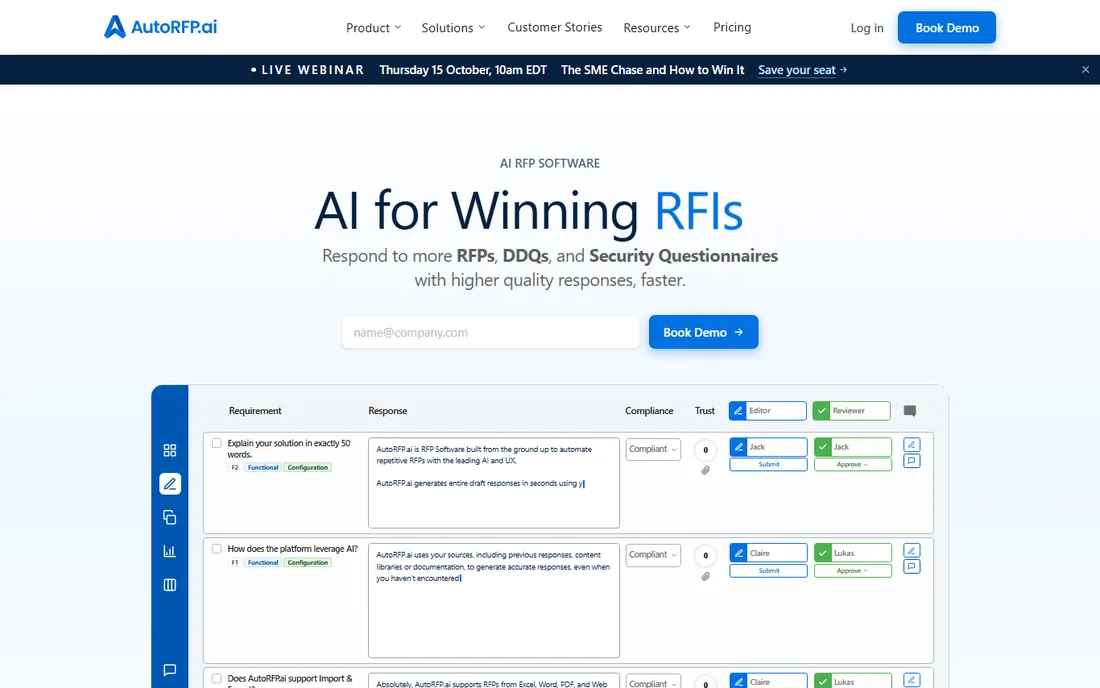
AutoRFP.ai takes the same AI-native bet: point it at your company knowledge and let it draft responses, skipping the content-library maintenance that traditional tools demand. It is positioned for teams facing repetitive questionnaires where speed matters more than bespoke proposal craft.
As with any new AI vendor, verify the accuracy controls. Who approves AI-drafted answers, and how does the system prevent stale or wrong claims from shipping? Pricing is quote-based. For high-volume, similar-questionnaire workloads, the automation case is strong.
What we like- AI generates answers from your data
- Minimal setup
- Handles repetitive questionnaires well
Watch out for- Newer product
- Verify accuracy controls before trusting it
#7
1Up
Best for: high-volume repetitive questionnaires as a point solution
Visit 1up.ai
Starting priceSee website
Free planNo
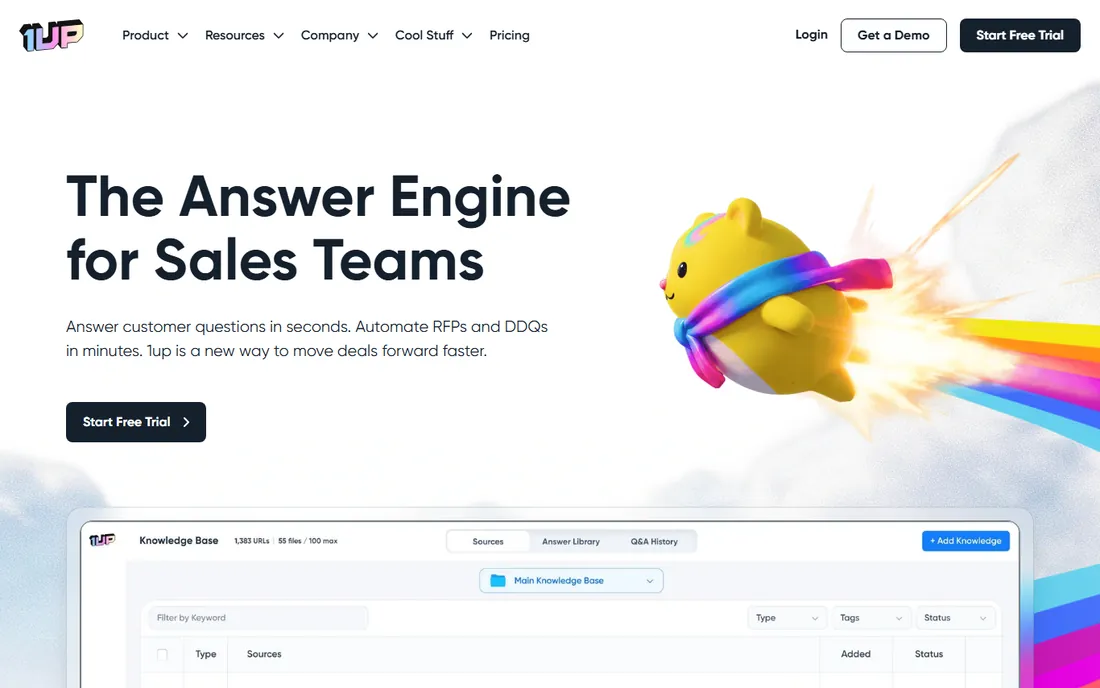
1Up does not try to be your whole RFP platform. It automates answers for high-volume, repetitive questionnaires, particularly the security questionnaires that sales teams face constantly. It slots into an existing stack as the automation layer for the most tedious slice of the work.
That focus is also the boundary. Complex narrative proposals need a fuller platform. Pricing is quote-based. Buy 1Up when questionnaires are eating your presales team's week and you want that specific pain automated.
What we like- Automated answers for repetitive questionnaires
- Lighter than full platforms
- Fast for security questionnaires
Watch out for- Point solution, not a full RFP platform
- Needs a broader stack around it
Starting priceSee website
Free planNo
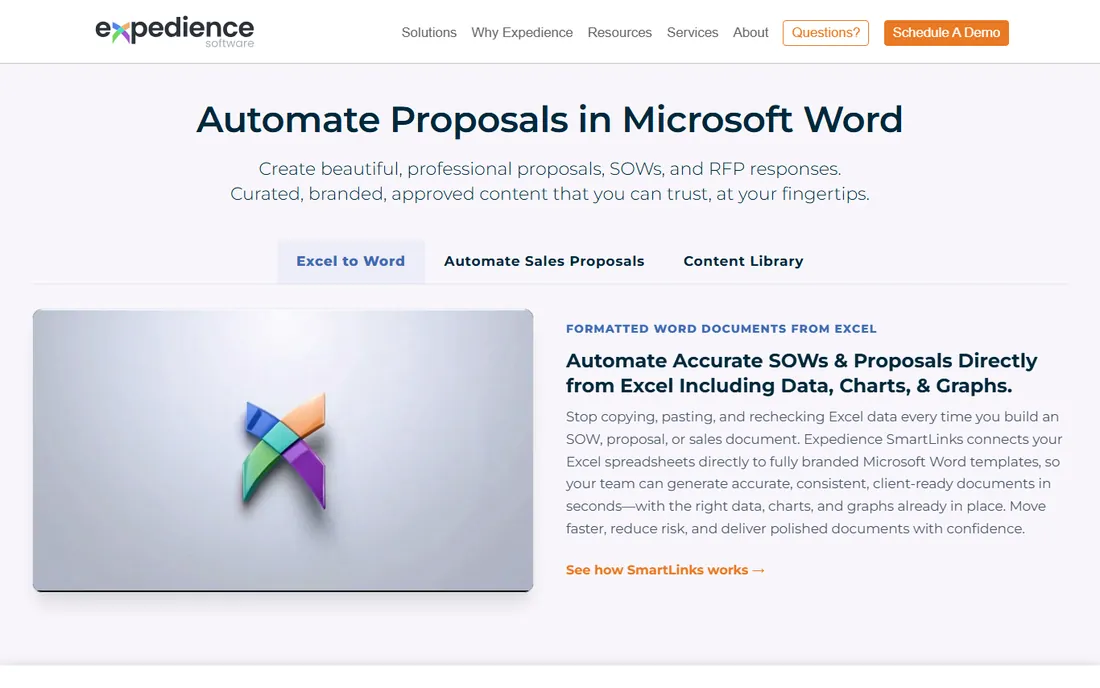
Expedience Software is the veteran of proposal automation. Template management, content libraries and document assembly produce consistent, compliant proposals at scale, with governance controls that keep distributed teams on message. It is the traditional model done well: invest in the content, and the platform multiplies it.
The traditional model needs the traditional maintenance. Someone must keep the library current, or the automation ships stale content. Pricing is quote-based. For organizations with established proposal processes and the staff to maintain them, Expedience is the proven choice.
What we like- Strong template and content management
- Proposal automation depth
- Governance controls
Watch out for- Quote-based pricing
- Traditional model needs content maintenance
What to check before you buy
First, measure your real volume. Teams answering a dozen RFPs a year need a different tool than teams answering hundreds of RFPs, RFIs, DDQs and security questionnaires. The enterprise platforms pay off at volume; the AI-native tools pay off faster at low volume.
Second, decide between the library model and the AI model. Content libraries give control and consistency but need maintenance. AI drafting removes the maintenance but needs accuracy verification. Be honest about whether your team will maintain a library, because an unmaintained library is worse than none.
Third, map the contributors. RFP responses pull answers from sales engineering, security, legal, product and finance. The platform must route questions to the right people and track them to deadline. Demo the routing workflow with your actual team structure.
Fourth, verify the knowledge grounding. AI-drafted responses are only as good as the knowledge they draw from. Ask how the system connects to your sources, how it handles conflicting information, and what the human approval step looks like before anything ships to a customer.
Building the library (or the knowledge base)
Whichever model you choose, the unglamorous work decides the outcome. For library-based tools, that means writing clear, reusable answers for your fifty most-asked questions before you go live, and assigning owners to review them quarterly. A library seeded with last year's proposals and never reviewed is a liability.
For AI-native tools, the work is connecting and curating knowledge sources: product documentation, security whitepapers, case studies, and past winning responses. The AI can only draft from what it can reach. Teams that point the tool at a messy shared drive get messy drafts. Clean sources in, clean drafts out. Either way, budget the content work as part of the implementation, not as an afterthought.
How we chose
We selected RFP software platforms that exist today and serve real proposal-team jobs: content management, AI drafting, collaboration and governance. We verified each vendor homepage, replacing three tools whose sites were unreachable, parked, or unverifiable with verified alternatives. Pricing facts come from vendor pages and documentation checked in October 2026; RFP vendors rarely publish prices, so those are listed as See website. Confirm live pricing with each vendor.
The accuracy problem
The dirty secret of RFP automation is stale content. A content library full of answers nobody updated produces proposals with wrong product claims, outdated security postures and retired feature names. One wrong claim in a response can kill a deal or create a contractual obligation you cannot meet.
Whatever platform you buy, assign a content owner and a review cadence. AI drafting does not remove this problem; it moves it. Someone must verify that the knowledge the AI draws from is current and that humans approve what ships. The teams that win with RFP software treat accuracy as a process, not a feature.
Frequently asked questions
What is RFP software?
Software that manages the response side of requests for proposals: storing approved answers in content libraries, drafting responses with AI, routing questions to experts, tracking deadlines, and governing what gets submitted. It covers RFPs, RFIs, DDQs and security questionnaires.
How much does RFP software cost?
Almost all vendors use quote-based pricing tied to user count and RFP volume. Expect annual contracts. AI-native tools for lean teams may price below the enterprise platforms, but get a written quote scoped to your volume.
Can AI write our RFP responses?
AI-native tools like Arphie, AutoRFP.ai and Inventive AI draft responses from your company knowledge, with humans approving before submission. The drafting works; the risk is stale or wrong source knowledge. Verify the accuracy controls and keep a human in the loop.
Do we need RFP software if we only answer a few RFPs a year?
Probably not a full platform. Templates in Word or Google Docs plus a shared answer document cover low volume. RFP software pays off when volume, deadlines or compliance risk make the manual process break.
What is the difference between RFP software and proposal software?
RFP software manages responding to buyer-issued questionnaires with governed answers. Proposal software (like PandaDoc or Proposify) creates the documents you send proactively: quotes, contracts and sales proposals. Some teams need both.
How long does implementation take?
AI-native tools can draft within days of connecting your knowledge sources. Library-based platforms like Responsive and QorusDocs take weeks to months, mostly spent building and organizing the content library. The content work, not the software, is the long pole.
Sources we checked (1)
- https://www.inventive.ai/blog-posts/best-top-enterprise-rfp-software-comparison
Is your product missing or out of date?
We review this list regularly. Vendors can request a listing, send updated pricing or ask about featured placement.

Shihab Mia · Founder, Rankite
Shihab has spent more than a decade helping SaaS and e-commerce brands grow through search. He writes Rankite's software buying guides from pricing pages, documentation and public user reviews. More about Shihab.