How we make this list: we compare pricing pages, product documentation and public user reviews. Rankite is independent; if a vendor ever pays for a featured spot, that listing is clearly labeled Partner.
Key takeaways
- IBM Maximo remains the enterprise EAM standard for asset-intensive industries with complex reliability programs.
- SAP EAM and Oracle Cloud Maintenance suit enterprises already running those ERP ecosystems.
- Fiix, UpKeep, MaintainX, and Limble bring modern, mobile-first CMMS to teams that find legacy EAM overwhelming.
- eMaint offers deep configurability for organizations with unusual maintenance workflows.
- Asset Panda fits teams tracking IT and facilities assets more than industrial maintenance.
Quick comparison
| Tool | Best for | Starting price | Free plan |
|---|
 IBM Maximo IBM Maximo | enterprise asset-intensive industries | See website | No |
 SAP EAM SAP EAM | SAP ERP customers | See website | No |
 Oracle Cloud Maintenance Oracle Cloud Maintenance | Oracle ERP customers | See website | No |
 Fiix Fiix | modern cloud CMMS | See website | Free trial |
 UpKeep UpKeep | mobile-first maintenance teams | See website | Free trial |
 MaintainX MaintainX | frontline worker maintenance | See website | Yes |
 Limble Limble | easy-to-use CMMS | See website | Free trial |
 eMaint eMaint | configurable maintenance management | See website | Free trial |
 Asset Panda Asset Panda | asset tracking and audits | See website | Free trial |
Is your product missing or out of date?
We review this list regularly. Vendors can request a listing, send updated pricing or ask about featured placement.
The best enterprise asset management software
#1
IBM Maximo
Best for: enterprise asset-intensive industries
Visit ibm.com
Starting priceSee website
Free planNo
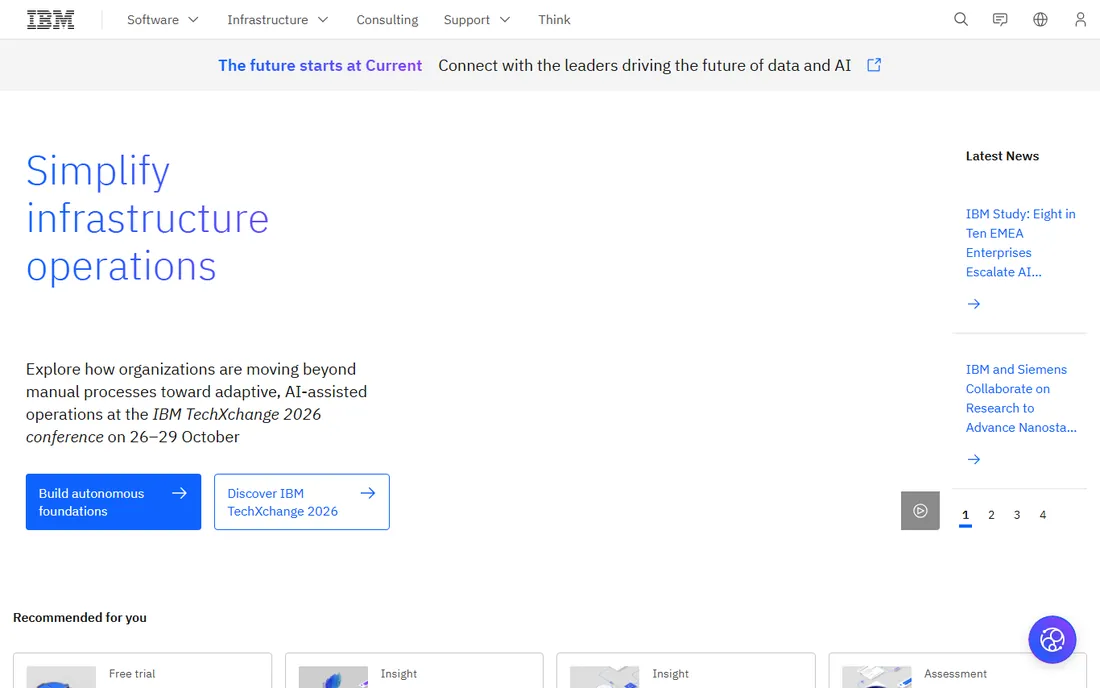
IBM Maximo Application Suite is the reference enterprise asset management platform for industries where asset failure costs millions. It covers the full lifecycle: asset registry, preventive and predictive maintenance, work order management, inventory, procurement, and reliability analytics, with AI-assisted scheduling in recent versions. Refineries, utilities, and manufacturers run their maintenance worlds on it.
Everything about Maximo is enterprise: pricing, implementation timelines, and the expertise needed to run it. Mid-size operations will drown in its depth. But for asset-intensive enterprises with regulatory obligations and complex reliability programs, nothing else matches its functional coverage.
What we like- Deepest EAM functionality
- Strong in oil, gas, utilities, and manufacturing
- Proven at scale
Watch out for- Expensive and complex
- Implementations take months
Starting priceSee website
Free planNo

SAP's Enterprise Asset Management, part of S/4HANA, is the natural choice for enterprises already running SAP. Maintenance orders, notifications, and asset histories flow directly into finance, procurement, and production planning without integration projects. Plant maintenance teams in manufacturing and process industries know it well.
Outside the SAP ecosystem the case collapses; nobody buys SAP EAM standalone. And like all SAP products, it demands configuration expertise. But for the SAP-installed base, the integration value outweighs the complexity: one system from maintenance request to financial settlement.
What we like- Native SAP integration
- Strong for plant maintenance
- Global support
Watch out for- Complex
- Best inside the SAP ecosystem
Starting priceSee website
Free planNo
Oracle Fusion Cloud Maintenance serves the Oracle ERP installed base the way SAP EAM serves SAP's. Work orders, asset tracking, and maintenance costing integrate with Oracle financials and supply chain natively. The cloud interface is more modern than legacy EAM clients.
The same ecosystem logic applies: it makes sense for Oracle shops and little sense elsewhere. Pricing is enterprise and the sales process matches. But asset-intensive businesses standardized on Oracle get maintenance management that shares data with the rest of the enterprise cleanly.
What we like- Integrated with Oracle Cloud ERP
- Good for asset-heavy Oracle shops
- Modern cloud UI
Watch out for- Oracle ecosystem lock-in
- Pricing is enterprise
Starting priceSee website
Free planFree trial
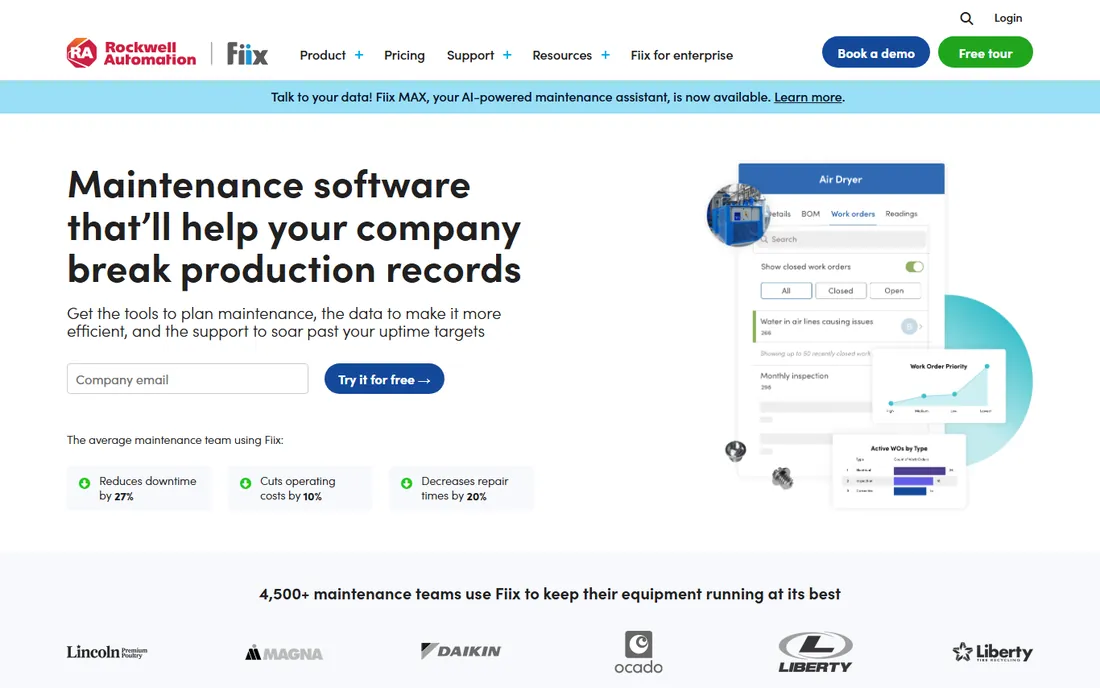
Fiix, now part of Rockwell Automation, is the modern CMMS for teams that find Maximo overwhelming. Cloud-based work orders, preventive maintenance scheduling, asset hierarchies, and parts management deploy in weeks rather than months. Manufacturing plants get professional maintenance management without enterprise IT projects.
It will not replace Maximo for refineries with regulatory complexity. But the vast middle market of manufacturing, facilities, and food processing plants needs exactly Fiix's depth: real CMMS functionality with consumer-grade usability. The Rockwell ownership adds industrial credibility.
What we like- Clean cloud interface
- Quick to deploy
- Rockwell Automation backing
Watch out for- Less depth than Maximo
- Advanced features cost more
Starting priceSee website
Free planFree trial
UpKeep won by starting with the technician's phone. The mobile app makes work orders, asset scans, and photo documentation natural for frontline workers, which drives the adoption that maintenance software usually fails at. Managers get scheduling, reporting, and inventory in the web dashboard.
Deep reliability engineering features are thinner than Fiix or eMaint. But adoption is the binding constraint in most CMMS rollouts, and UpKeep's mobile-first design solves it. Facilities teams, property managers, and multi-site operations get running fast with technicians who actually use the app.
What we like- Excellent mobile app
- Fast technician adoption
- Affordable tiers
Watch out for- Reporting less deep
- Enterprise features limited
Starting priceSee website
Free planYes
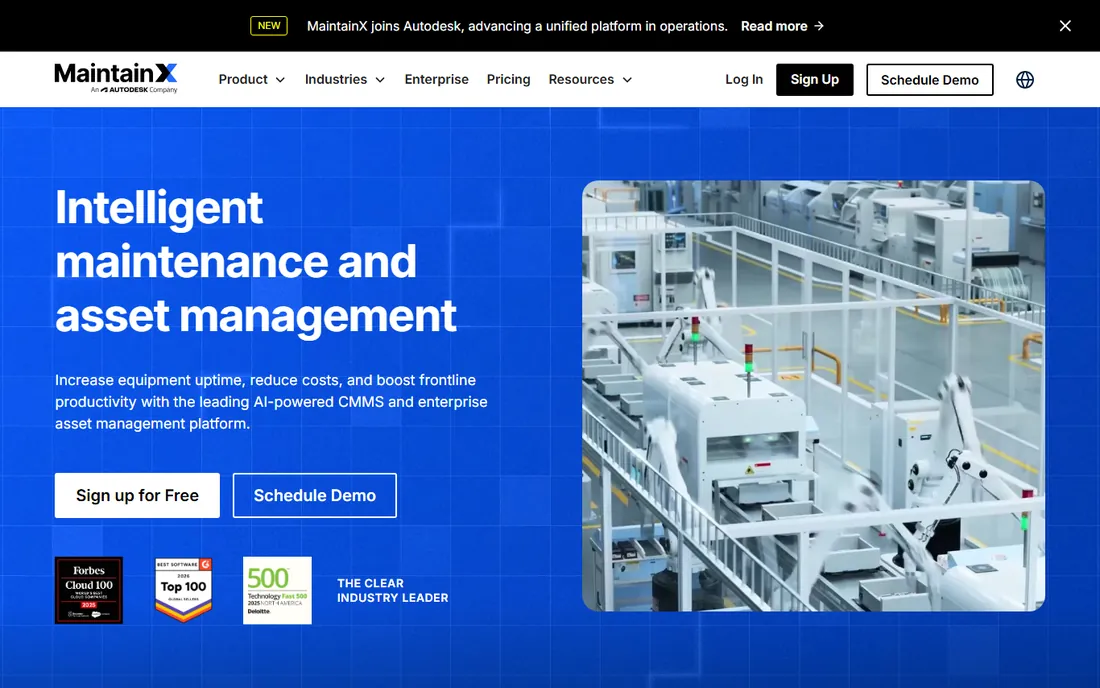
MaintainX feels like messaging apps frontline workers already use, which is the point. Work orders arrive like chats, procedures attach as checklists, and managers track everything from the dashboard. The free tier covers small teams genuinely, making it the easiest CMMS to try.
Enterprise asset management depth is not here: no complex reliability modeling or deep ERP integration. But for frontline teams doing reactive and preventive maintenance across facilities, the simplicity drives compliance that fancier systems never achieve. Start free and upgrade as the operation grows.
What we like- Free tier for small teams
- Chat-like work orders
- Easy adoption
Watch out for- Advanced EAM features limited
- Best for simpler operations
Starting priceSee website
Free planFree trial
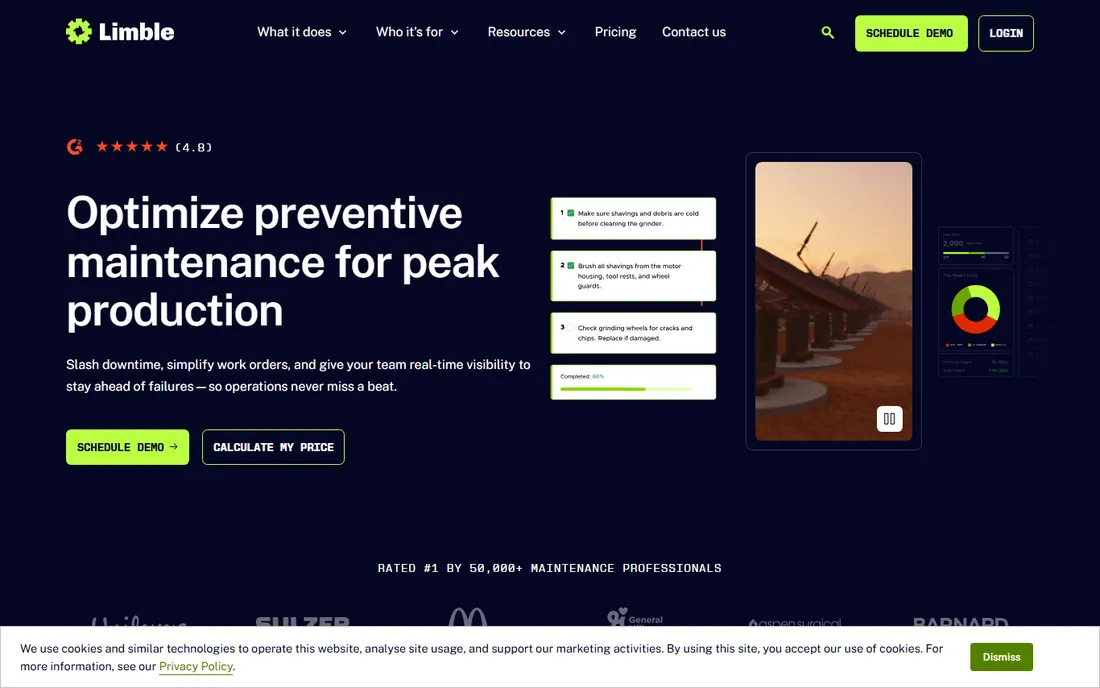
Limble's entire pitch is usability: a CMMS your technicians learn in an afternoon. Work orders, preventive maintenance, asset management, and parts inventory cover the standard needs without the configuration burden of enterprise platforms. Support gets consistent praise.
Customization is deliberately limited, which keeps it simple but constrains unusual workflows. The ecosystem of integrations is smaller than Fiix's. But for maintenance teams replacing paper or spreadsheets, Limble's ease of use is the feature that matters most. The best CMMS is the one technicians actually open.
What we like- Very easy to learn
- Fast implementation
- Good customer support
Watch out for- Less customizable
- Smaller ecosystem
Starting priceSee website
Free planFree trial
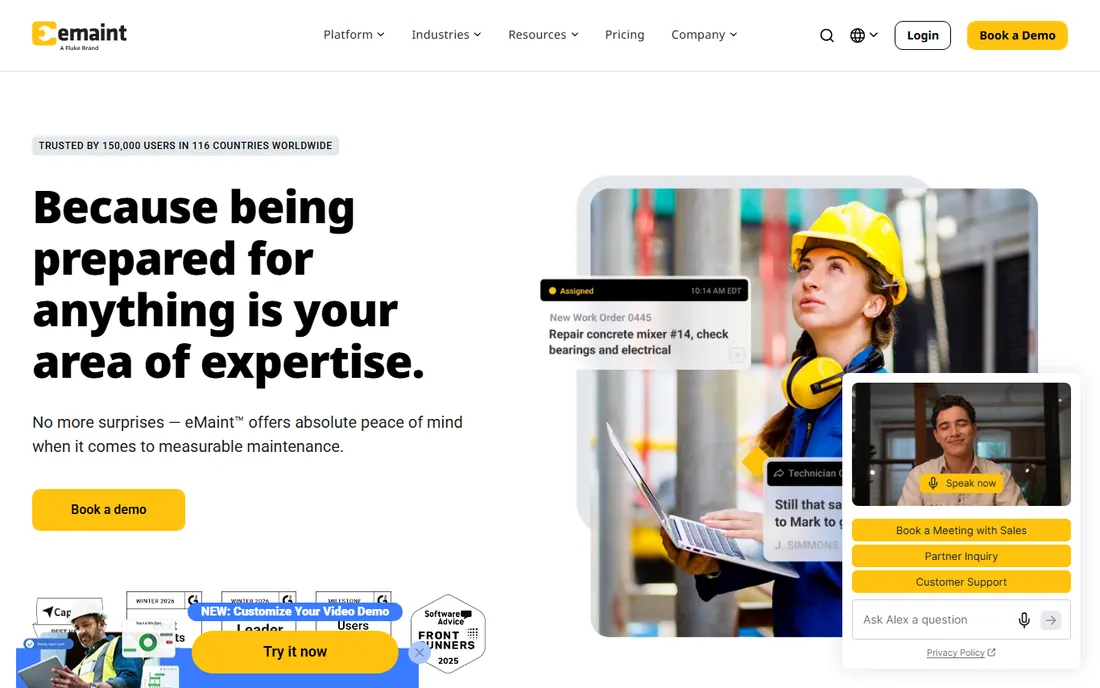
eMaint, part of Fluke, serves organizations whose maintenance workflows do not fit standard templates. Deep configurability covers custom fields, workflows, and reporting that other cloud CMMS platforms cannot match. Regulated industries and unusual operations get a system shaped to their process.
That flexibility costs configuration time and expertise. The interface prioritizes function over beauty. But when the choice is adapting your process to the software or adapting the software to your process, eMaint lets you choose the latter without Maximo-level investment.
What we like- Highly configurable
- Strong for unique workflows
- Fluke backing
Watch out for- Configuration takes effort
- Interface utilitarian
Starting priceSee website
Free planFree trial
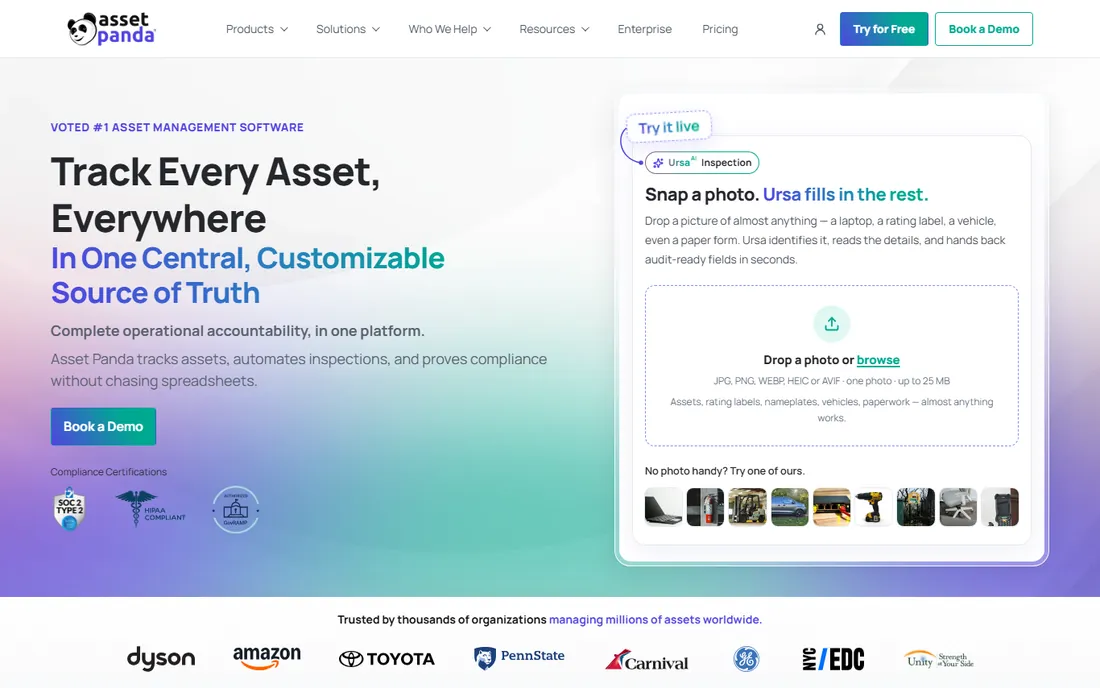
Asset Panda tracks what you own and where it is: IT equipment, facilities assets, tools, and inventory, with mobile barcode scanning and audit workflows. Custom fields and actions adapt to nearly any asset type without coding. Teams drowning in spreadsheets of equipment get order fast.
It is asset tracking, not maintenance management. Work orders and preventive maintenance exist but lack the depth of true CMMS platforms. Buy Asset Panda when the problem is knowing what you have and where it is; buy a CMMS when the problem is keeping it running.
What we like- Flexible asset tracking
- Mobile audits
- Easy customization
Watch out for- Maintenance depth limited
- Not a true EAM
EAM versus CMMS: what you need
The terms overlap but differ in scope. CMMS, computerized maintenance management systems, manage work orders, preventive maintenance, and assets for a facility or fleet. EAM covers the full asset lifecycle including procurement, reliability engineering, and financial integration across the enterprise.
Most buyers need CMMS. If your question is "how do we keep equipment running and track the work," Fiix, UpKeep, MaintainX, Limble, or eMaint fit. If your question involves asset lifecycle costing, regulatory compliance across sites, and ERP integration, you need EAM: Maximo, SAP, or Oracle. Buying EAM for a CMMS problem wastes a year; buying CMMS for an EAM problem hits a wall in eighteen months.
Implementation reality
Maintenance software fails on data, not features. Asset hierarchies must be built, preventive maintenance schedules defined, and parts catalogs cleaned before go-live delivers value. Budget weeks for data preparation alongside the software subscription.
Start with one site or asset class, prove the workflow, then expand. And involve technicians from day one: the system they helped design is the system they use. The fanciest EAM in the world produces nothing if work orders go unrecorded.
Frequently asked questions
What is enterprise asset management software?
EAM software manages physical assets across their lifecycle: acquisition, operation, maintenance, and disposal. It tracks work orders, preventive maintenance, spare parts, labor, and costs, often integrating with ERP and reliability programs. Industries like manufacturing, utilities, oil and gas, and facilities management depend on it.
How much does EAM software cost?
Cloud CMMS platforms typically start in the tens of dollars per user per month, with free tiers or trials. Enterprise EAM like Maximo, SAP, or Oracle is quote-based and can reach six or seven figures annually including implementation. Implementation services often exceed first-year license costs for enterprise deployments.
What is the difference between EAM and CMMS?
CMMS focuses on maintenance execution: work orders, preventive schedules, and asset records for facilities or fleets. EAM adds lifecycle management, procurement, reliability engineering, and deep ERP integration across the enterprise. EAM suits asset-intensive enterprises; CMMS suits most maintenance operations.
How long does implementation take?
Cloud CMMS deploys in days to weeks for standard operations. Enterprise EAM implementations run six to eighteen months including data migration, configuration, and training. The timeline depends more on data readiness and process definition than on the software itself.
Can small teams use enterprise asset management?
Yes, through modern CMMS platforms. MaintainX offers a genuinely free tier, and UpKeep, Fiix, and Limble price for small teams. Traditional enterprise EAM is overkill below fifty assets or so; start with CMMS and grow into EAM if the operation demands it.
Building the business case
Maintenance software ROI comes from avoided costs more than new revenue. Unplanned downtime is the headline number: for manufacturers, an hour of stopped production often costs tens of thousands in lost output, rush shipping, and overtime. Even modest reductions in unplanned stops pay for the software many times over.
Build the case on your own numbers. Track unplanned downtime hours for a quarter, multiply by your cost per hour, and add the maintenance overtime and expedite fees. Then estimate conservative improvements: 10 to 20 percent fewer unplanned stops is achievable with real preventive maintenance programs. Present the software cost against that figure, and include the softer wins: longer asset life, fewer safety incidents, and audit-ready compliance records.
Mobile adoption for technicians
The best CMMS fails if technicians will not use it, and mobile experience decides adoption. Choose software whose mobile app works offline: plants and facilities have dead zones, and a work order system that needs constant connectivity gets abandoned. Barcode and QR scanning should be native, letting technicians pull up asset history by scanning the equipment in front of them.
Keep the mobile workflow brutally simple. Technicians need to see today's work orders, update status, add photos and notes, and close jobs, all with gloves on and in poor lighting. Every extra tap loses compliance. Involve technicians in the app selection: a half-day trial with real work orders reveals usability problems that feature checklists miss. And close the feedback loop visibly: when technicians report issues through the app and see them fixed, adoption follows. The mobile app is not a companion to the CMMS; for the workforce, it is the CMMS.
How we chose
We covered the category by buyer: enterprise EAM for asset-intensive industries and modern CMMS for everyone else. We verified each vendor's current site, compared functional depth and pricing models, and weighed practitioner feedback from maintenance communities. We included free and trial options seriously since adoption decides success. No vendor paid for placement, and we did not claim hands-on testing.
Sources we checked (9)
- https://www.ibm.com
- https://www.sap.com
- https://www.oracle.com
- https://fiixsoftware.com
- https://upkeep.com
- https://www.getmaintainx.com
- https://limble.com
- https://www.emaint.com
- https://www.assetpanda.com
Is your product missing or out of date?
We review this list regularly. Vendors can request a listing, send updated pricing or ask about featured placement.

Shihab Mia · Founder, Rankite
Shihab has spent more than a decade helping SaaS and e-commerce brands grow through search. He writes Rankite's software buying guides from pricing pages, documentation and public user reviews. More about Shihab.