How we make this list: we compare pricing pages, product documentation and public user reviews. Rankite is independent; if a vendor ever pays for a featured spot, that listing is clearly labeled Partner.
Key takeaways
- Substack remains the simplest path to a paid newsletter, with publishing, payments, and audience in one free-to-start platform.
- beehiiv is the growth-focused alternative, built for newsletter operators who want advanced tools and ad networks.
- Kit (formerly ConvertKit) serves creators building email-first businesses with automation and commerce.
- Mailchimp and MailerLite cover general email marketing where newsletters are one channel among many.
- Ghost, Buttondown, SendFox, and Flodesk serve independent publishers, minimalists, budget buyers, and designers respectively.
Quick comparison
| Tool | Best for | Starting price | Free plan |
|---|
 Substack Substack | paid newsletters made simple | Free | Yes |
 beehiiv beehiiv | growth-focused newsletters | See website | Yes |
 Kit Kit | creator email businesses | See website | Yes |
 Mailchimp Mailchimp | general email marketing | See website | Yes |
 Ghost Ghost | independent publishing | See website | No |
 Buttondown Buttondown | minimalist newsletters | See website | Yes |
 MailerLite MailerLite | affordable email marketing | See website | Yes |
 SendFox SendFox | budget lifetime deal | See website | Free trial |
 Flodesk Flodesk | beautiful email design | See website | Free trial |
Is your product missing or out of date?
We review this list regularly. Vendors can request a listing, send updated pricing or ask about featured placement.
The best software for creating newsletters
Starting priceFree
Free planYes
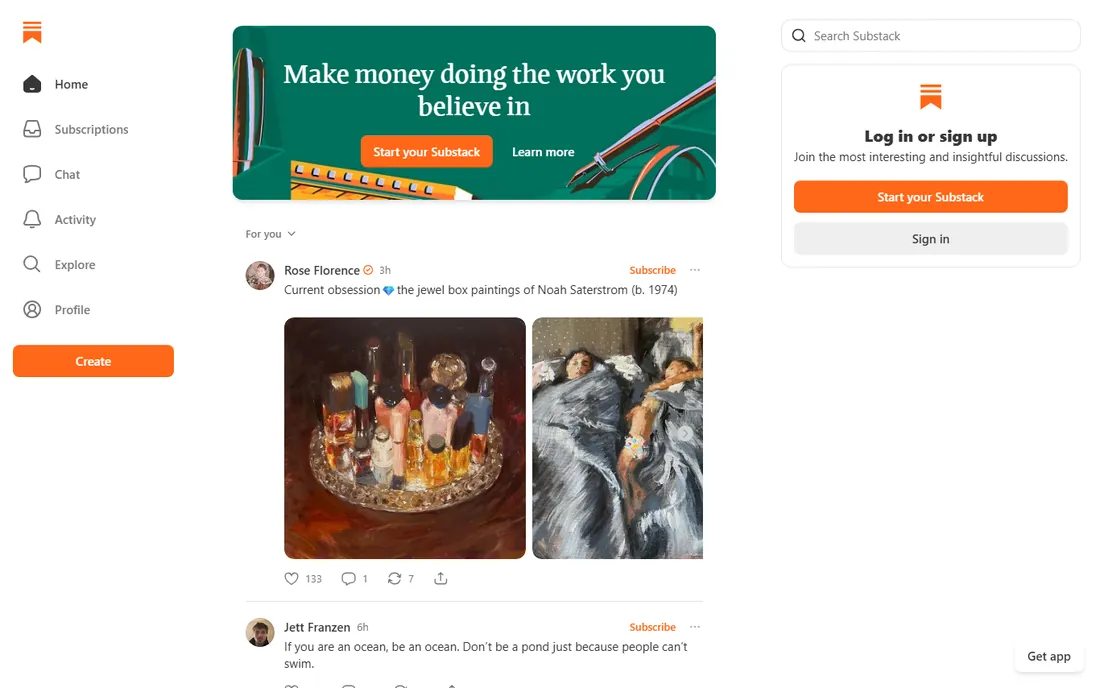
Substack made paid newsletters accessible to every writer: publish, build a free audience, flip on paid subscriptions, and keep 90% after fees. The discovery features, recommendations and the app, help new publications find readers. Starting costs nothing, which removed every barrier to launching.
The 10% revenue cut stings at scale, and customization stays within Substack's design. Writers who outgrow it migrate to beehiiv or Ghost. But for validating a paid newsletter idea, nothing beats free-to-start with payments built in. Launch here; optimize later.
What we like- Free to start
- Built-in paid subscriptions
- Discovery network
Watch out for- 10% fee on paid revenue
- Limited customization
Starting priceSee website
Free planYes
beehiiv was built by newsletter operators for newsletter operators: referral programs, recommendations, an ad network for monetization, and analytics that treat the newsletter as a business. Unlike Substack, it takes no cut of subscription revenue. Growth-focused publishers migrate here deliberately.
Brand recognition trails Substack, and the platform assumes you take newsletters seriously as a business. Casual writers may find it more than they need. But operators optimizing for growth and revenue keep choosing beehiiv, and the migration flow from Substack is well-trodden.
What we like- Built for newsletter growth
- Ad network revenue
- No revenue cut
Watch out for- Newer platform
- Less brand recognition
Starting priceSee website
Free planYes
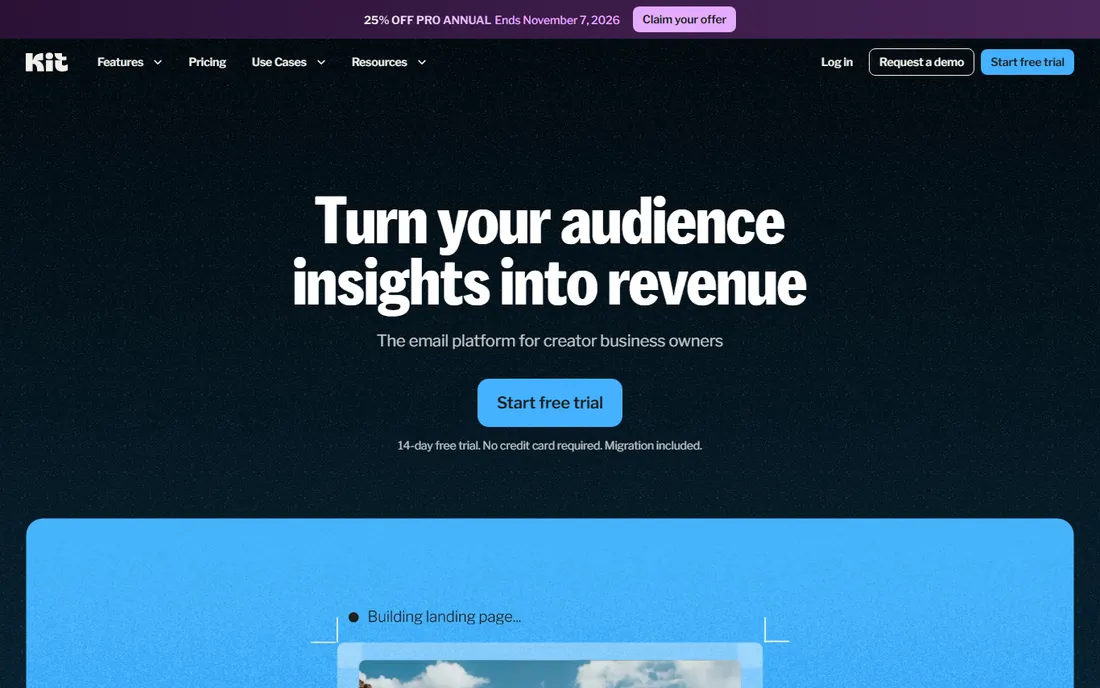
Kit, formerly ConvertKit, powers email-first creator businesses: automation sequences, visual builders, landing pages, and commerce features for selling digital products. Creators graduate from newsletters to full email businesses here. The free tier covers the starting phase genuinely.
Subscriber-based pricing climbs as lists grow, which is standard but worth modeling. Email design is functional rather than beautiful. But for creators whose business is the email list, Kit's automation and monetization depth justify the cost. It is infrastructure for creator businesses, not just a newsletter tool.
What we like- Powerful automation
- Creator commerce
- Formerly ConvertKit
Watch out for- Pricing scales with subscribers
- Design templates basic
Starting priceSee website
Free planYes
Mailchimp remains the default email marketing platform: newsletters, automation, landing pages, and basic e-commerce in one familiar package. The free tier covers small lists, and the brand recognition means every freelancer and VA already knows it. Small businesses sending newsletters alongside promotions get everything in one place.
Dedicated newsletter features trail Substack and beehiiv: no native paid subscriptions with discovery, weaker writer-focused workflows. Pricing escalates notably as lists grow. But as general email marketing that includes newsletters, Mailchimp's breadth and familiarity keep it relevant.
What we like- Everyone knows it
- Generous free tier
- Broad features
Watch out for- Pricing jumps at scale
- Newsletter-specific features thinner
Starting priceSee website
Free planNo
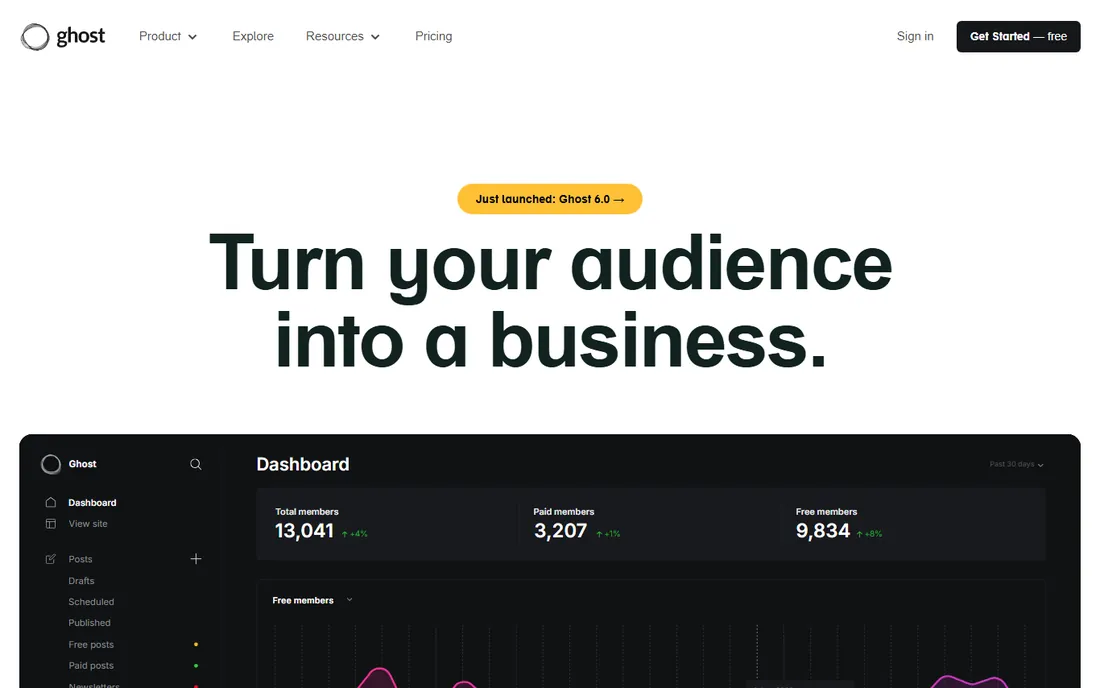
Ghost gives independent publishers complete ownership: open-source software, your domain, your data, no platform cut of revenue. Memberships and paid subscriptions work natively, and the publishing experience is the most beautiful here. Writers who want independence without building everything choose Ghost.
You host it yourself or pay for Ghost's managed hosting; either way, more responsibility than Substack. But the ownership trade is the point: no algorithm changes, no platform risk, no revenue share. Serious independent publishers accept the responsibility for the control.
What we like- Full ownership
- No revenue cut
- Beautiful publishing
Watch out for- Self-hosting or paid hosting
- Less hand-holding
Starting priceSee website
Free planYes
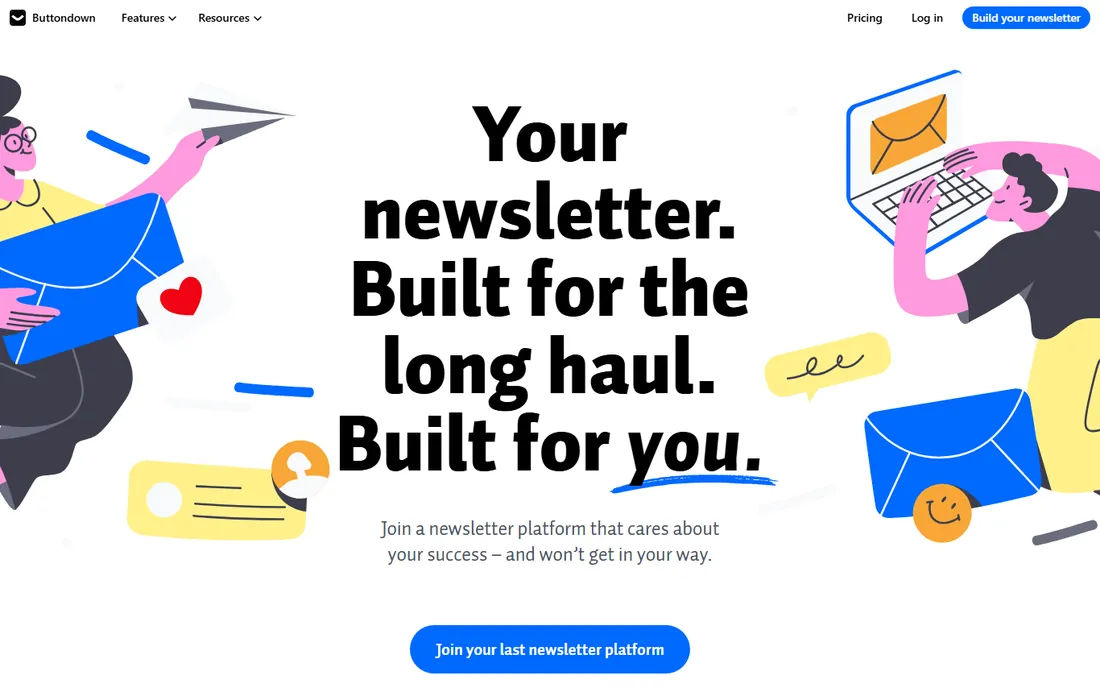
Buttondown is the newsletter tool for people who find other tools bloated: write in Markdown, send, done. The interface stays out of the way, pricing is refreshingly simple, and the free tier covers real use. Developers and writers who live in text editors feel at home.
Marketing features are deliberately absent: no automation builders, limited analytics, basic templates. But minimalism is a feature for its audience. If your newsletter is words to inboxes, Buttondown removes everything else at a fair price.
What we like- Delightfully simple
- Markdown-native
- Affordable
Watch out for- Minimal features
- Not for marketers
Starting priceSee website
Free planYes
MailerLite offers the best value in general email marketing: a generous free tier, clean usable interface, and paid plans well under Mailchimp's. Newsletters, automation, and landing pages cover small business needs completely. The simplicity suits teams without email specialists.
Advanced features and integrations trail the leaders. But most small businesses never need them. MailerLite's proposition is honest: capable email marketing at fair prices, without the upsell maze. Budget-conscious newsletter senders should start here.
What we like- Generous free tier
- Clean interface
- Good value paid plans
Watch out for- Fewer advanced features
- Smaller ecosystem
Starting priceSee website
Free planFree trial
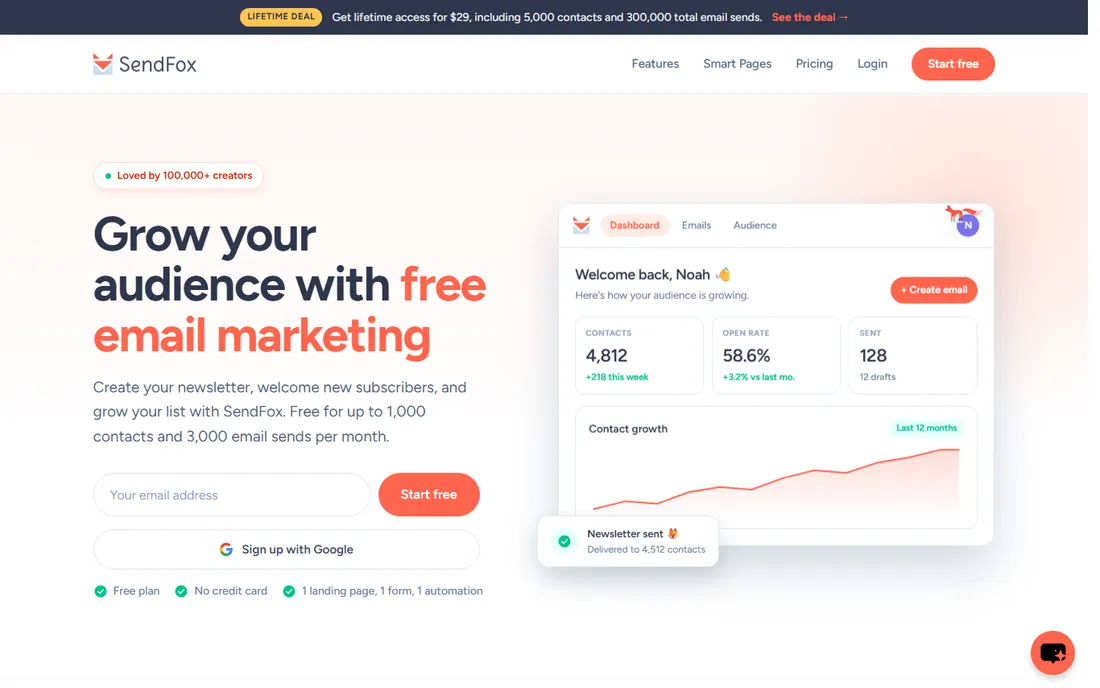
SendFox, from the AppSumo ecosystem, offers lifetime pricing that appeals to budget buyers tired of subscriptions. The features are basic but cover newsletter essentials: compose, schedule, automate lightly. Small lists cost little forever.
Feature depth and company scale are the tradeoffs; this is not a platform for serious email businesses. But bloggers and creators with modest needs get working newsletters at a one-time price. Evaluate whether the lifetime economics outweigh the feature limits for your use case.
What we like- Lifetime pricing available
- Simple
- Cheap for small lists
Watch out for- Basic features
- Smaller company
Starting priceSee website
Free planFree trial
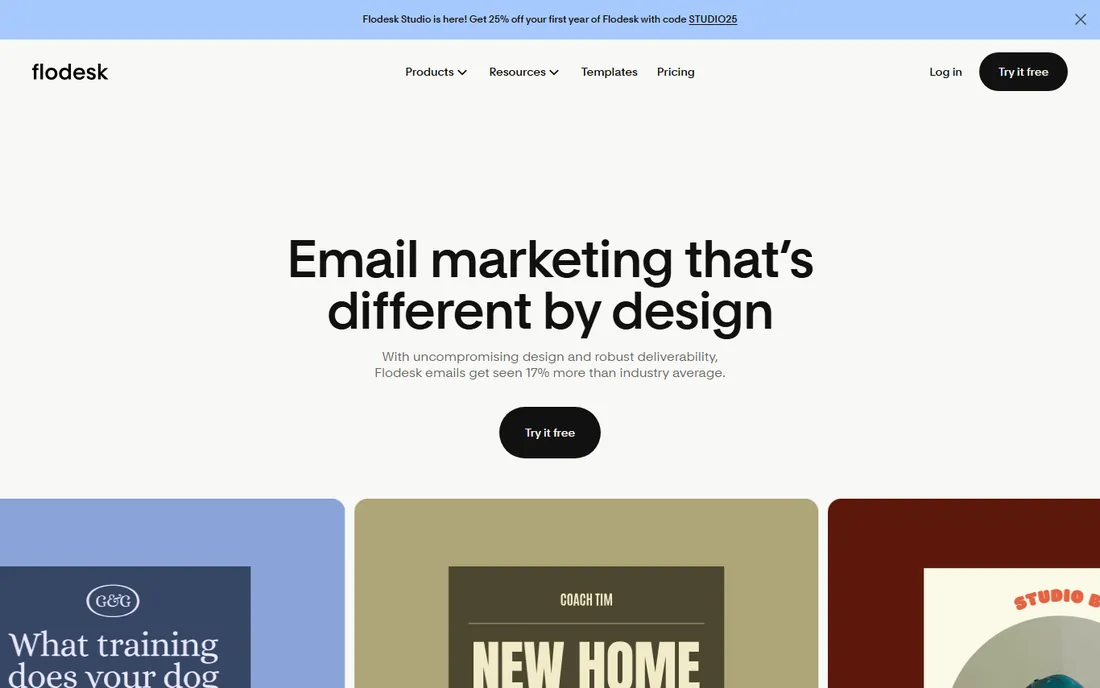
Flodesk's emails look gorgeous with minimal effort: designer templates, beautiful typography, and an interface that makes attractive newsletters inevitable. The flat pricing, unlimited emails regardless of list size, simplifies budgeting as lists grow.
Analytics and automation depth trail Kit and Mailchimp. But for creators and small brands where visual impression drives the business, Flodesk's design advantage is decisive. The flat pricing becomes a bargain as subscriber counts climb.
What we like- Stunning templates
- Flat pricing
- Easy to use
Watch out for- Analytics basic
- E-commerce features thin
Monetization models
Newsletters monetize four ways: paid subscriptions (Substack, beehiiv, Ghost), advertising and sponsorships (beehiiv's ad network), affiliate and product sales (Kit's commerce), and client acquisition (every B2B newsletter). Choose the platform that supports your model natively rather than fighting it.
Model the unit economics honestly. Paid subscriptions need conversion rates and churn assumptions. Advertising needs scale most newsletters never reach. The most reliable newsletter business is often the least glamorous: a free newsletter that generates consulting clients, course sales, or product revenue.
Growing the list
The platform matters less than the growth engine. Lead magnets, guest posts, podcast appearances, and cross-promotions with similar newsletters drive subscriptions. Referral programs, built into beehiiv and Substack, turn readers into recruiters.
Consistency compounds: publish on schedule, maintain quality, and the list grows. Most failed newsletters die from irregular publishing, not platform choice. Pick the tool that makes publishing easiest for you, then publish relentlessly.
Frequently asked questions
What is the best platform for a paid newsletter?
Substack is the easiest start with built-in payments and no upfront cost. beehiiv suits growth-focused publishers who want no revenue cut and advanced tools. Ghost fits independents wanting full ownership. Choose based on how much control versus convenience you want.
How much does newsletter software cost?
Substack and Buttondown start free, with Substack taking 10% of paid revenue. beehiiv, Kit, Mailchimp, and MailerLite have free tiers with paid plans scaling by subscribers. Ghost requires hosting fees. Flodesk charges flat pricing. Most vendors publish starting prices.
Substack vs beehiiv: which should I choose?
Substack wins on simplicity and discovery for new writers. beehiiv wins on growth tools, no revenue cut, and monetization options for serious operators. Many writers start on Substack and migrate to beehiiv when revenue justifies it. Both have free tiers, so the switching cost of trying is low.
Can I migrate my newsletter between platforms?
Yes, all major platforms support subscriber list exports and imports. Content migration varies: Substack and beehiiv offer import tools, Ghost imports from both. Expect some subscriber attrition and broken formatting. Migrate deliberately, not casually.
Do I need a website for my newsletter?
Not initially. Substack, beehiiv, and Ghost all provide hosted publication pages. A separate website helps with SEO and branding as you grow, but the newsletter platform's archive page suffices to start. Focus on writing first, websites later.
Deliverability fundamentals
The best newsletter fails in the spam folder. Authentication comes first: SPF, DKIM, and DMARC records prove your emails are legitimate, and major providers increasingly require them. Most newsletter platforms guide setup, but the DNS records live with your domain registrar, so budget an hour with whoever controls DNS.
List hygiene matters as much. Remove hard bounces immediately, sunset unengaged subscribers after six to twelve months, and never buy email lists; purchased lists destroy deliverability and violate regulations. Warm up new sending domains gradually rather than blasting day one. And watch the metrics that predict inbox placement: complaint rates above 0.1 percent signal trouble, while consistent engagement trains providers to trust your mail. Deliverability is a reputation you build with every send.
Subject lines and open rates
Subject lines decide whether great content gets read. Keep them under 50 characters so mobile inboxes show the whole thing. Front-load the interesting words; most readers scan the first three. Specificity beats cleverness: a subject promising one concrete idea outperforms vague intrigue for most audiences.
Test systematically rather than guessing. A/B test subject lines on a portion of your list and send the winner to the remainder; most platforms automate this. Track open rates by topic over time to learn what your specific audience wants, since general best practices transfer poorly across niches. And watch the relationship between subject lines and unsubscribes: clickbait subjects spike opens once and erode trust permanently. The subject line makes a promise the content must keep.
How we chose
We ranked for newsletter creators specifically: writing experience, monetization, and growth tools mattered more than general email marketing features. We verified each vendor's current site, noting ConvertKit's rebrand to Kit, and compared free tiers and pricing models. We covered paid newsletters, creator businesses, and general email tools. No vendor paid for placement, and we did not claim hands-on testing.
How often should I send my newsletter?
Consistency matters more than frequency. Weekly suits most newsletters: frequent enough to build habit, sustainable for the writer. Biweekly works for research-heavy content. Daily demands a team and burns out solo writers fast. Whatever cadence you choose, keep it for at least six months before judging; audiences form habits slowly, and erratic schedules prevent the habit from forming.
Sources we checked (9)
- https://substack.com
- https://www.beehiiv.com
- https://mailchimp.com
- https://kit.com
- https://ghost.org
- https://buttondown.com
- https://www.mailerlite.com
- https://sendfox.com
- https://flodesk.com
Is your product missing or out of date?
We review this list regularly. Vendors can request a listing, send updated pricing or ask about featured placement.

Shihab Mia · Founder, Rankite
Shihab has spent more than a decade helping SaaS and e-commerce brands grow through search. He writes Rankite's software buying guides from pricing pages, documentation and public user reviews. More about Shihab.