How we make this list: we compare pricing pages, product documentation and public user reviews. Rankite is independent; if a vendor ever pays for a featured spot, that listing is clearly labeled Partner.
Key takeaways
- In 2022, Mailchimp's free plan covered 2,000 contacts. In 2026 it covers 250. The free newsletter world has shrunk, which makes the choice of platform matter more.
- For a free newsletter with no monetization plans, Substack (free at any size) and beehiiv Launch (free to 2,500 subscribers) are the obvious starting points.
- The moment you charge readers, math flips: Substack takes 10% of subscription revenue, while beehiiv Scale starts at $49/month flat. Most paid newsletters cross that break-even point around $490/month in revenue.
- For business newsletters with automation, Kit (free to 10,000 subscribers), MailerLite ($10/month) and Brevo ($9/month) beat the newsletter-first platforms on features per dollar.
- Constant Contact ($12/month) and Mailchimp ($13/month) are the legacy picks: pricier, but with the deepest template libraries and, in Constant Contact's case, real phone support.
Quick comparison
| Tool | Best for | Starting price | Free plan |
|---|
 Substack Substack | Writers who want to publish free without paying anything | Free (10% fee on paid subscriptions plus Stripe fees) | Yes |
 beehiiv beehiiv | Newsletter operators building a real media business | Free to 2,500 subscribers (Launch); Scale from $49/month | Yes (Launch plan) |
 Kit Kit | Creators who sell through email funnels and automation | Free to 10,000 subscribers (Newsletter plan); Creator from $29/month | Yes |
 Mailchimp Mailchimp | Small businesses that want the familiar all-rounder | Free (250 contacts, 500 sends/month); Essentials from $13/month | Yes |
 Buttondown Buttondown | Technical writers who want a minimalist Markdown newsletter | Free to 100 subscribers; paid from $9/month | Yes |
 Ghost Ghost | Publishers who want to own their platform outright | $15/month (Starter, 500 members) | Free trial (14 days) |
 MailerLite MailerLite | Small businesses wanting automation on a budget | Free (500 subscribers, 12,000 emails/month); Growing Business from $10/month | Yes |
 Brevo Brevo | Businesses with big lists and modest sending frequency | Free (300 emails/day); Starter from $9/month | Yes |
 Constant Contact Constant Contact | Non-technical businesses that value human support | $12/month (Lite, 500 contacts) | Free trial (60 days) |
Is your product missing or out of date?
We review this list regularly. Vendors can request a listing, send updated pricing or ask about featured placement.
Newsletters split into two jobs that look alike but price differently. A creator newsletter is a publication: writing, audience growth, maybe paid subscriptions. A business newsletter is a marketing channel: automation, segmentation, landing pages, CRM connections. The best email marketing platform for newsletters depends on which job you are hiring for. Nine tools below, covering both.
#1
Substack
Best for: Writers who want to publish free without paying anything
Visit substack.com
Starting priceFree (10% fee on paid subscriptions plus Stripe fees)
Free planYes
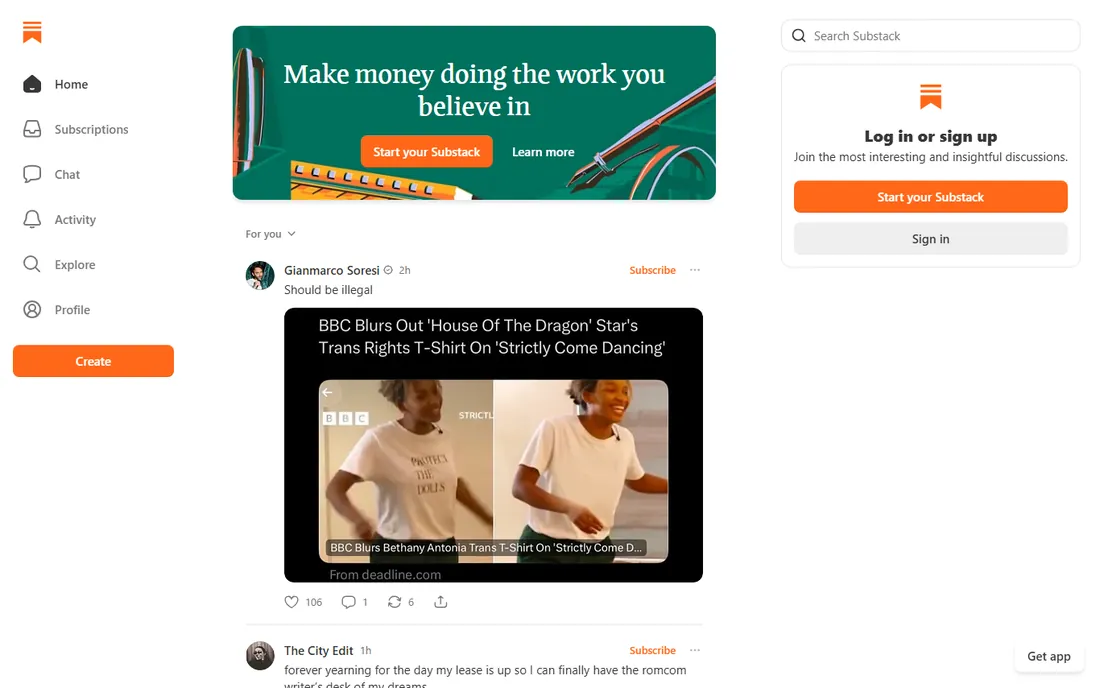
Substack is the reason "newsletter" became a business model. Publishing is free, the archive and website are included, and the network effect is real: readers discover your publication inside Substack's app and recommendations. For a writer starting a free newsletter, there is no cheaper or simpler option.
The price appears when you monetize. Substack takes 10 percent of paid subscription revenue on top of Stripe's processing fees. At $1,000 a month in subscriptions, that is $100 to Substack. Writers also complain about limited templates and thin automation. Start here if the writing is the product; move to beehiiv or Ghost when the 10 percent starts to hurt.
What we like- Completely free at any list size for free newsletters
- Built-in discovery network brings readers you did not find yourself
- Simplest setup in the category
Watch out for- 10% revenue cut on paid subscriptions adds up fast
- Limited design customization and automation compared with email platforms
#2
beehiiv
Best for: Newsletter operators building a real media business
Visit beehiiv.com
Starting priceFree to 2,500 subscribers (Launch); Scale from $49/month
Free planYes (Launch plan)
beehiiv is the platform for people who treat newsletters as businesses. Launch is genuinely free to 2,500 subscribers with unlimited email sends, a website, custom domain and the recommendation network. Scale starts at $49 a month for up to 1,000 subscribers and adds monetization, automations, the ad network and surveys, with 0 percent taken from your paid subscriptions.
The math favors beehiiv the moment you charge readers: its flat fee beats Substack's 10 percent once subscription revenue passes roughly $490 a month at small list sizes. The catch is the climb: Scale hits $109 a month at 10,000 subscribers and $199 at 50,000. It is the best newsletter app for growth-focused publishers, not the cheapest forever.
What we like- Free Launch plan to 2,500 subscribers with unlimited sends
- 0% take rate on paid subscriptions from Scale up
- Ad network, boosts and referral program built in
Watch out for- Scale pricing climbs with list size ($109/month at 10,000 subs)
- Free plan excludes automations and monetization features
#3
Kit
Best for: Creators who sell through email funnels and automation
Visit kit.com
Starting priceFree to 10,000 subscribers (Newsletter plan); Creator from $29/month
Free planYes
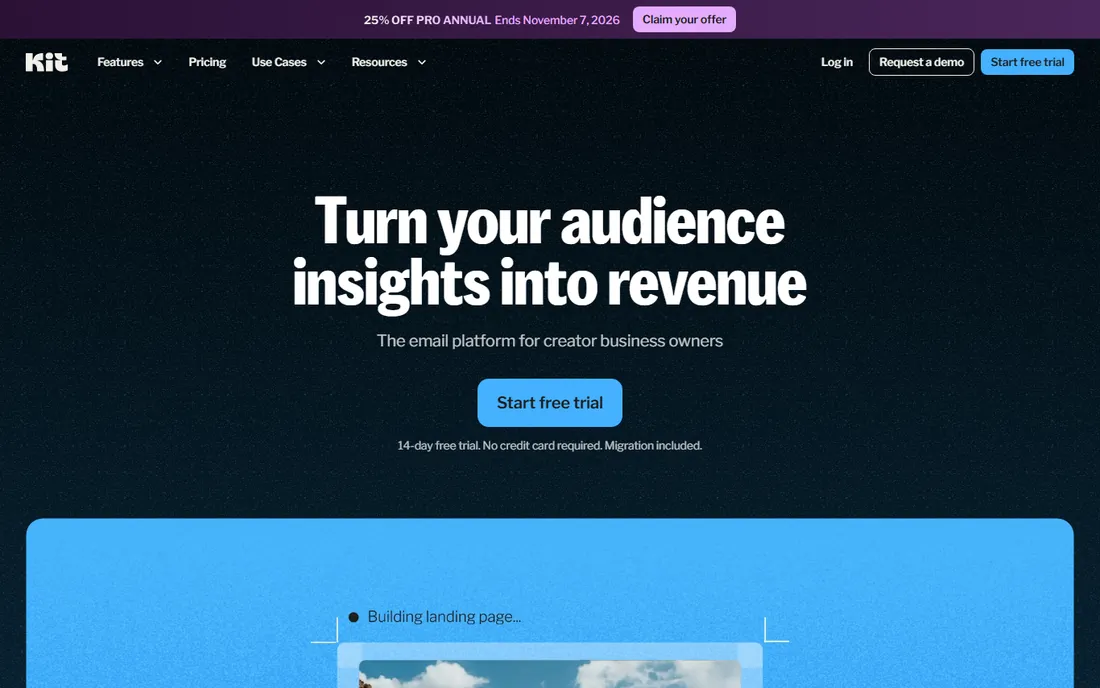
Kit, formerly ConvertKit, rebuilt its free plan into a genuine growth tool: up to 10,000 subscribers can receive broadcasts free, which no competitor matches. Paid Creator plans from $29 a month add automated sequences, visual automation builders and deeper segmentation for product launches and onboarding funnels.
The cliff is real. Cross 10,000 subscribers and you jump straight to Kit's higher paid tiers (around $139 a month annually at the 10k-15k band), with no cheap intermediate step. And the free plan limits you to one automation and one sequence. Kit suits creators whose newsletter exists to sell something. Pure writers get more from Substack or beehiiv.
What we like- The most generous free tier here: 10,000 subscribers for broadcasts
- Automation-first design built for creators who sell courses and products
- Strong deliverability reputation
Watch out for- Hitting 10,001 subscribers jumps you to a much pricier paid tier
- Landing pages and forms are functional, not beautiful
Starting priceFree (250 contacts, 500 sends/month); Essentials from $13/month
Free planYes
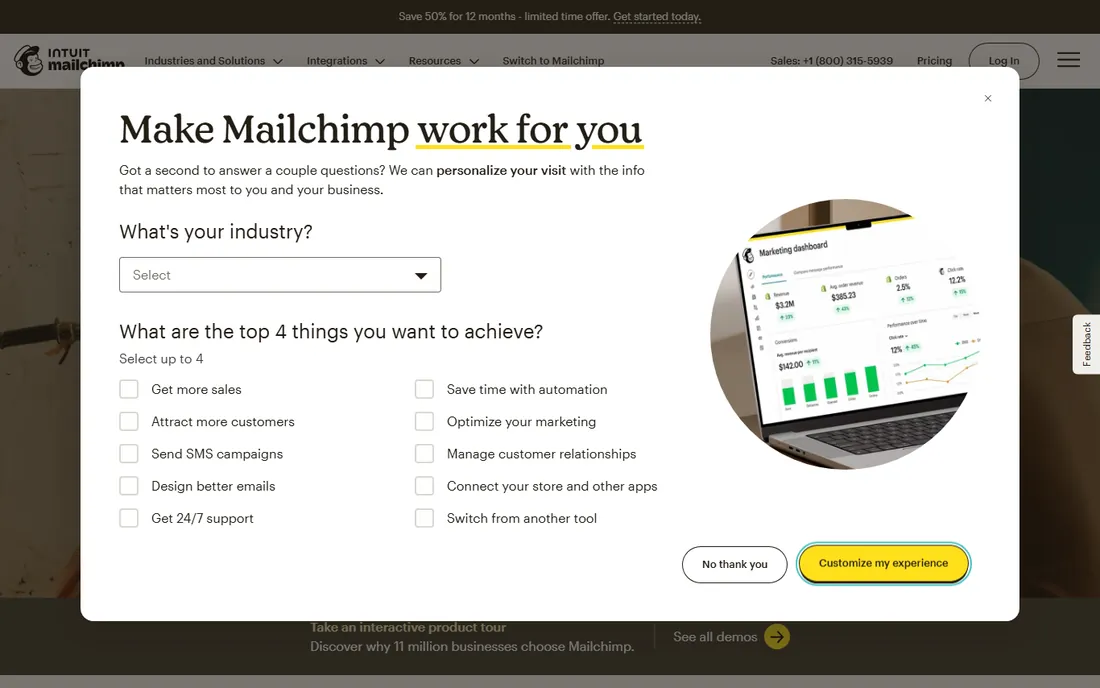
Mailchimp made newsletters normal for small businesses, and it still has the broadest toolkit: campaigns, landing pages, signup forms, retargeting ads, predictive analytics. Essentials from $13 a month covers 500 contacts with basic automation and A/B testing; Standard from $20 adds the journey builder, advanced segmentation and send-time optimization.
Two 2026 realities to know. The free plan is now a trial in all but name: 250 contacts, 500 sends a month, no automation or scheduling. And Mailchimp counts unsubscribed contacts toward your billing tier until you manually archive them. It remains a solid pick for businesses already in its ecosystem, but budget alternatives now beat it on price at every list size.
What we like- The deepest template library and 300-plus integrations
- Customer Journey builder for multi-step automation on Standard
- Landing pages and forms included
Watch out for- Free plan slashed to 250 contacts and 500 sends with no automation
- Bills for unsubscribed contacts unless you archive them
#5
Buttondown
Best for: Technical writers who want a minimalist Markdown newsletter
Visit buttondown.com
Starting priceFree to 100 subscribers; paid from $9/month
Free planYes
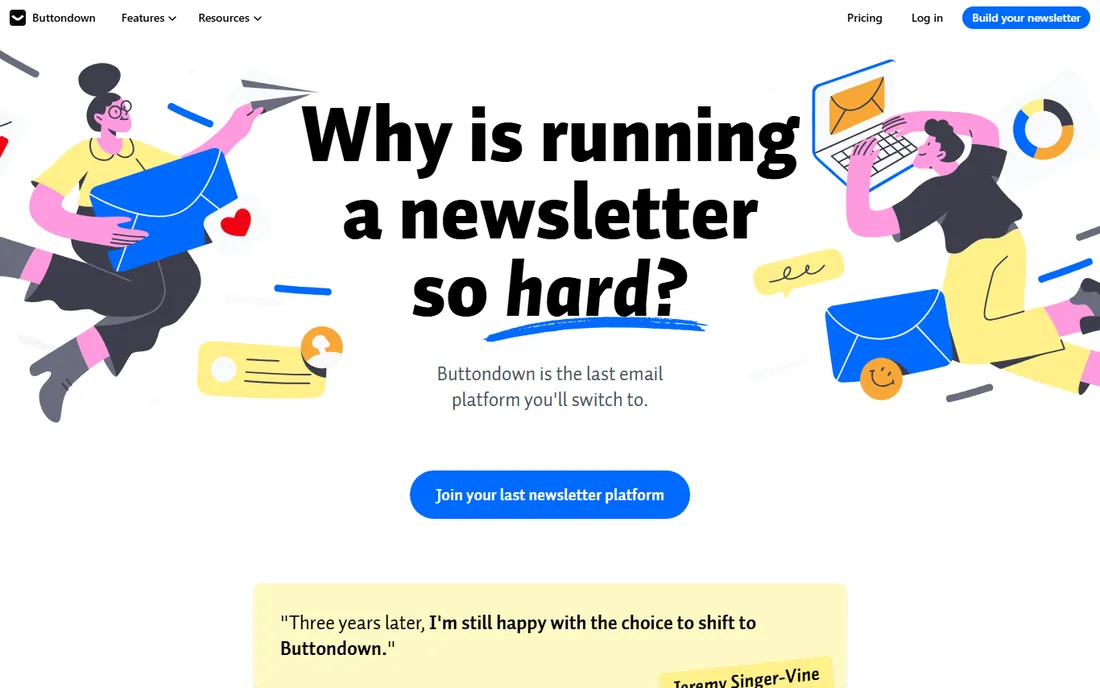
Buttondown is the indie darling: a deliberately small, bootstrapped tool for people who write in Markdown and think in APIs. The free tier covers 100 subscribers with full features. Paid plans start at $9 a month for up to 1,000 subscribers, and the pricing is modular: tagging, analytics, RSS-to-email and paid subscriptions are each small add-ons.
That modularity is both the charm and the trap. A simple newsletter stays cheap; stacking add-ons pushes the bill up fast. There are no design templates to speak of and no discovery network. Buttondown fits solo technical writers who want a tool, not a platform, and who value privacy (no tracking pixels, no ad network).
What we like- Markdown-native editor that developers love
- API-first with webhooks and custom integrations
- Charges only for active subscribers, with 0% revenue share on paid tiers
Watch out for- Free tier caps at 100 subscribers
- Features like analytics and automations are paid add-ons that stack up
#6
Ghost
Best for: Publishers who want to own their platform outright
Visit ghost.org
Starting price$15/month (Starter, 500 members)
Free planFree trial (14 days)
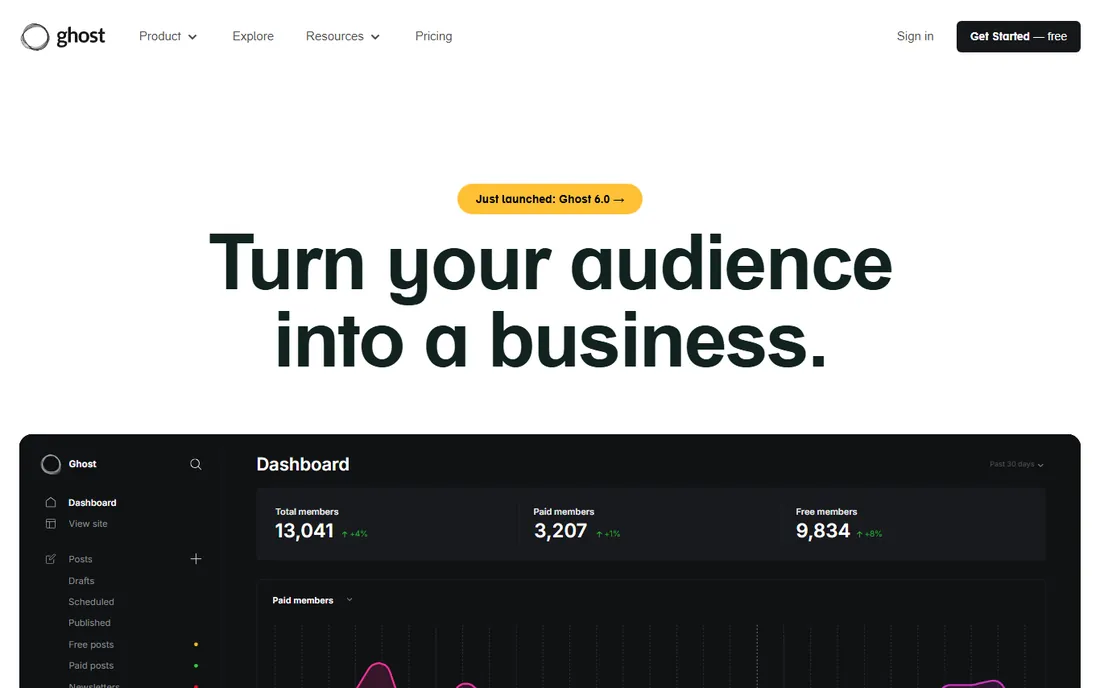
Ghost is the independent publisher's answer to Substack: the same publishing-plus-newsletter model, but you own the audience, the design and the revenue. Ghost Pro's Starter plan at $15 a month covers 500 members with unlimited email sends; Publisher at $29 adds paid memberships and automation. Everything runs on 0 percent platform fees.
The 2026 price rise moved Starter from $9 to $15, and the member-based scaling gets steep at large lists. The escape hatch is self-hosting: Ghost is open source, so a VPS plus Mailgun gives you the full platform for server costs. Ghost suits publishers playing the long game who refuse to rent their audience from a platform.
What we like- Website, blog and newsletter in one open-source platform
- 0% platform fees on paid memberships
- Self-hosting option means true ownership
Watch out for- No permanent free hosted tier
- Pricing scales steeply with member count ($199/month at 100,000 members)
Starting priceFree (500 subscribers, 12,000 emails/month); Growing Business from $10/month
Free planYes
MailerLite is the budget pick that does not feel cheap. The free plan covers 500 subscribers and 12,000 emails a month with real automation, signup forms and landing pages. Growing Business from $10 a month removes branding, adds templates, RSS campaigns and dynamic content, with unlimited sends.
The gaps are at the edges: no custom HTML editor or AI writing assistant below the $20 Advanced plan, and no phone support on any tier. For a small business newsletter with welcome sequences and light segmentation, MailerLite delivers 80 percent of Mailchimp at a fraction of the price.
What we like- The most feature-dense free tier for business email: automation, landing pages, pop-ups
- Unlimited emails on paid plans
- Clean, beginner-friendly editor
Watch out for- Free plan cut to 500 subscribers in 2025
- Advanced automation triggers and AI features need the $20 Advanced plan
#8
Brevo
Best for: Businesses with big lists and modest sending frequency
Visit brevo.com
Starting priceFree (300 emails/day); Starter from $9/month
Free planYes
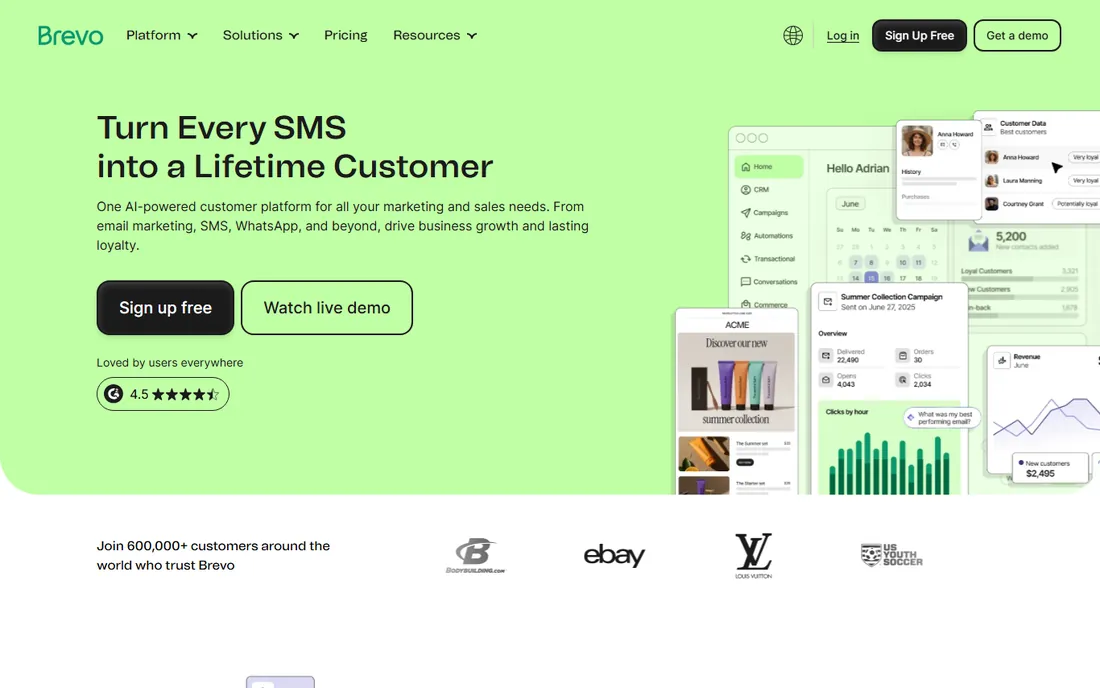
Brevo, formerly Sendinblue, prices the opposite way from everyone else: by send volume, not list size. A 30,000-contact list emailed twice a month costs far less here than on subscriber-priced competitors. The free plan allows 300 emails a day with unlimited contacts; Starter from $9 a month covers 5,000 monthly sends.
Read the fine print. Starter includes no automation at all; the cheapest plan with automation is Standard from $18 a month. And removing Brevo branding costs extra on top of any plan. Brevo wins for newsletters with large, infrequently emailed lists: associations, alumni groups, event organizers. Frequent senders should compare per-send costs carefully.
What we like- Prices by emails sent, not contacts stored, so large lists stay cheap
- Unlimited contacts even on free
- Built-in CRM and transactional email
Watch out for- Starter has no automation (that needs Standard from $18/month)
- Branding removal is a separate paid add-on
Starting price$12/month (Lite, 500 contacts)
Free planFree trial (60 days)
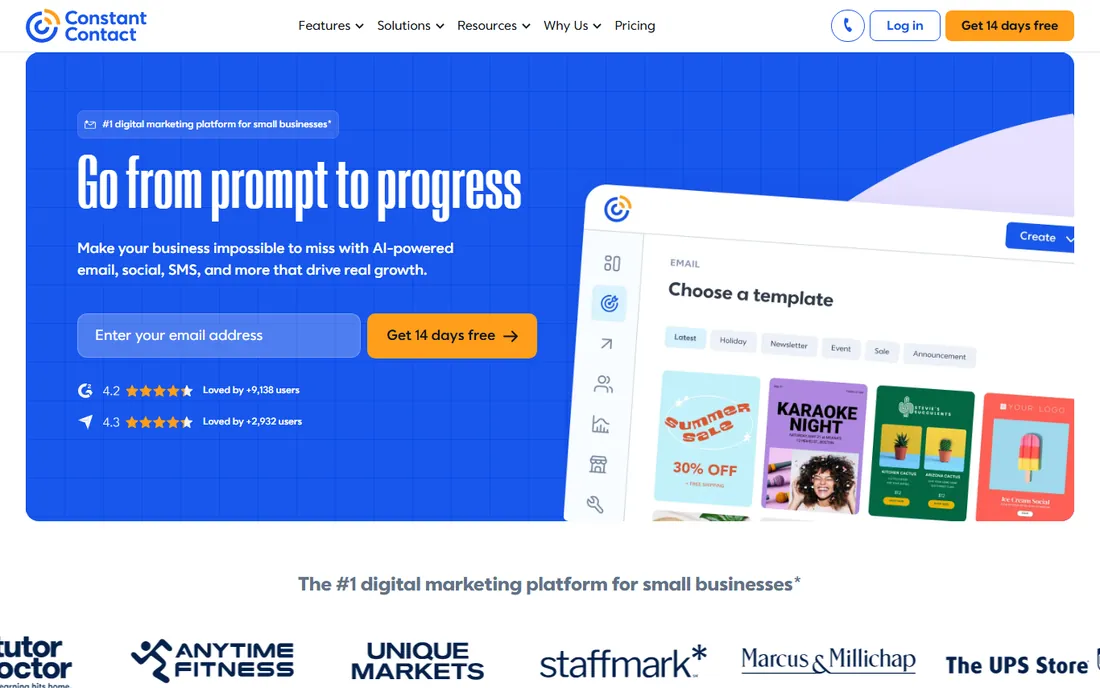
Constant Contact is the oldest name here, and its pitch has not changed: email marketing for people who do not think of themselves as marketers. Lite at $12 a month covers 500 contacts with basic broadcasts; Standard at $35 adds segmentation and automation; Premium at $80 adds advanced automation and SMS.
The 60-day free trial is the longest in the category, but there is no free tier since mid-2025. List-size scaling is the steepest here: Lite hits $50 a month at just 2,500 contacts. Nonprofits get up to 30 percent off with annual prepay, which softens the blow. Pick it when simplicity and a human on the phone matter more than features per dollar.
What we like- Phone support on all paid plans, rare at this price
- Genuinely beginner-friendly editor and templates
- Event management and social tools bundled in
Watch out for- No permanent free plan
- Pricing climbs steeply with list size ($120/month Lite at 10,000 contacts)
- Automation depth lags behind rivals
How we chose
We started from the vendors' own pricing pages, because newsletter pricing changed more in the last two years than in the previous ten: free plans shrank, tiers were renamed and take rates became the real price. Every figure above reflects 2026 published plans. We then tested the core newsletter job on each: writing experience, list growth tools, monetization options and deliverability basics. Public reviews on G2, Capterra and TrustRadius, plus hands-on pricing research from independent reviewers who captured the actual pricing pages, filled in the gaps. We covered both halves of the category, creator publishing platforms and business email tools, and weighted free-tier honesty heavily, because the best newsletter app for a beginner is usually the free one.
If the newsletter is the business, the take rate is the price. Substack's 10 percent, Kit's 0 percent on paid plans, Ghost's 0 percent platform fee, beehiiv's 0 percent from Scale: run your expected subscription revenue through each and the winner is usually obvious. Below roughly $500 a month in revenue, Substack's free start wins. Above it, flat-fee platforms pull ahead fast.
If the newsletter supports a business, forget take rates and price the automation. A welcome sequence, a lead magnet funnel and basic segmentation are the three automations that pay for the tool. Kit, MailerLite and Brevo include them cheapest. And if you never plan to monetize or automate, stop at the free tier: Substack at any size, beehiiv to 2,500 subscribers, Kit to 10,000 for broadcasts.
The limits that actually matter: sends, seats and branding
Three limits decide whether a plan works in practice. Send caps: Mailchimp's free 500 sends a month and Brevo's 300-a-day cap both break the moment you email a real list weekly. Subscriber caps: Buttondown's 100 and Mailchimp's 250 arrive fast; Kit's 10,000 is the only free tier with real headroom.
Then the soft limits. Branding: MailerLite and Brevo stamp their logo on free and cheap-plan emails, which looks unprofessional to clients. Seats: Constant Contact's Lite allows one user, which matters the moment a VA or partner needs access. And migration: exporting your list is easy everywhere, but re-warming deliverability on a new platform takes weeks, so treat the platform choice as a two-year decision, not a trial.
Frequently asked questions
What is the best free newsletter platform?
For a free publication, Substack (free at any list size) or beehiiv Launch (free to 2,500 subscribers). For business email, Kit's free plan covers 10,000 subscribers for broadcasts, and MailerLite gives 500 subscribers with real automation. The honest answer depends on whether the newsletter is the product or the marketing.
Should I use Substack or beehiiv?
Use Substack if you want the simplest free start with built-in discovery and no plans to charge readers soon. Use beehiiv if you plan to monetize: its 0 percent take rate and growth tools (ad network, boosts, referrals) beat Substack's 10 percent cut once revenue passes a few hundred dollars a month.
How much does it cost to start a newsletter?
Nothing, on Substack, beehiiv Launch, Kit's free plan or MailerLite's free tier. Paid plans start at $9 a month (Buttondown, Brevo Starter) to $15 a month (Ghost Starter). Budget $10 to $30 a month for the first year; most newsletters do not need more until the list passes a few thousand subscribers.
Which newsletter platform is best for a small business?
MailerLite ($10/month) for budget automation, Brevo ($9/month) for large infrequent lists, Kit (free to 10,000) for creator-style funnels. Constant Contact ($12/month) if you want phone support and the simplest editor. Mailchimp only if you are already invested in its ecosystem.
Can I move my email list to another platform later?
Yes, every platform here exports subscribers as CSV, and imports are free. The real cost is deliverability: a new sending domain and IP need warming, which takes two to four weeks of gradually increasing volume. Keep your list clean and your engagement high before migrating, and the move is painless.
Do I still need a website if I have a newsletter platform?
Substack, beehiiv and Ghost all include a website and archive, so many writers skip a separate site. Businesses usually keep their main site and use the newsletter platform for sending: Kit, MailerLite and Brevo all integrate with WordPress and major site builders. If SEO matters to you, a real website still beats a platform subdomain.
Sources we checked (22)
- https://www.mailercloud.com/blog/beehiiv-vs-substack
- https://findstack.com/products/beehiiv/reviews
- https://stackmatchup.com/beehiiv-vs-kit/
- https://www.aihustleguy.com/blog/beehiiv-vs-convertkit-vs-mailchimp-for-newsletters
- https://www.emailsoftwareinsights.com/reviews/beehiiv/pricing/
- https://justpricing.com/mailchimp-pricing
- https://www.sendx.io/blog/mailchimp-pricing
- https://landingi.com/mailchimp/pricing-m/
- https://www.smallbusinesstools.org/i/mailchimp
- https://dev.to/rosgluk/best-newsletter-platforms-in-2026-pricing-hosting-and-seo-46ka
- https://www.glukhov.org/web-infrastructure/newsletters/best-newsletter-platforms/
- https://woodpecker.co/blog/buttondown/
- https://dev.to/nayankyada/ghost-pricing-2026-free-self-hosted-costs-pro-plans-when-to-upgrade-52a2
- https://www.techedt.com/ghost-adds-social-syndication-and-analytics-in-major-6-0-update
- https://www.sendx.io/blog/mailerlite-pricing
- https://www.sendx.io/blog/brevo-pricing-plans-costs-alternatives-2026
- https://www.emailvendorselection.com/brevo-review/?utm_source=quuu&utm_medium=social&ref=quuu
- https://automationatlas.io/answers/brevo-pricing-explained-2026/
- https://www.sendx.io/blog/constant-contact-pricing
- https://www.omnisend.com/blog/constant-contact-pricing/
- https://ecommerceparadise.com/constant-contact-review-2026-is-it-still-worth-it-for-small-business-email-marketing/
- https://github.com/ozigi-app/ozigi/blob/HEAD/apps/blog/content/blog/9-free-newsletter-tools-2026.mdx
Is your product missing or out of date?
We review this list regularly. Vendors can request a listing, send updated pricing or ask about featured placement.

Shihab Mia · Founder, Rankite
Shihab has spent more than a decade helping SaaS and e-commerce brands grow through search. He writes Rankite's software buying guides from pricing pages, documentation and public user reviews. More about Shihab.