How we make this list: we compare pricing pages, product documentation and public user reviews. Rankite is independent; if a vendor ever pays for a featured spot, that listing is clearly labeled Partner.
Key takeaways
- CrowdStrike Falcon ($99.99/device/year) and Microsoft Defender for Business ($3/user/month) are the only leaders with fully published per-device pricing.
- SentinelOne, Sophos, Bitdefender, ESET and Trend Micro all sell through quotes or partners, so budget a sales cycle.
- Huntress ($8.99/endpoint/month) and ThreatDown bundle 24/7 human response into the product, which matters if you have no security staff.
- Already on Microsoft 365 Business Premium? Defender for Business is included, and its marginal cost is zero.
Quick comparison
| Tool | Best for | Starting price | Free plan |
|---|
 CrowdStrike Falcon CrowdStrike Falcon | Organizations that want top-tier prevention with transparent pricing | $99.99/device/year (Pro, billed annually) | Free trial (advertised on the site) |
 SentinelOne SentinelOne | Teams that want autonomous detection and response with minimal tuning | See website (sold through partners, no public list price) | No (no free trial advertised) |
 Microsoft Defender for Business Microsoft Defender for Business | Small and mid-size businesses already on Microsoft 365 | $3/user/month (standalone) | No (no free trial advertised) |
 Sophos Intercept X Sophos Intercept X | Businesses already running Sophos firewall, email or MDR | See website (sold through partners, no public list price) | No (no free trial advertised) |
 Bitdefender GravityZone Bitdefender GravityZone | SMBs that want top independent test scores | See website (online store and partner pricing) | Free trial (free GravityZone trial advertised) |
 Huntress Huntress | SMBs that want managed EDR with a human SOC attached | $8.99/endpoint/month (Managed EDR MSRP) | Free trial (full-featured trial advertised) |
 ThreatDown ThreatDown | Lean IT teams that want endpoint, patching and MDR in one console | See website (bundle pricing, quotes via store) | No (no free trial advertised) |
 ESET PROTECT ESET PROTECT | Teams that prize light agents and long track records | See website (online store and partner pricing) | No (no free trial advertised) |
 Trend Micro Trend Micro | Enterprises standardizing endpoint into a platform deal | See website (custom quote) | No (no free trial advertised) |
Is your product missing or out of date?
We review this list regularly. Vendors can request a listing, send updated pricing or ask about featured placement.
A Tuesday morning, one clicked link, and the next four hours
An accountant at a 40-person company clicks a shipping notification that is not a shipping notification. Within minutes, something is running on her machine that the old antivirus does not recognize. What happens next depends entirely on the endpoint security in place: nothing, a quarantine alert nobody reads, or an automated response that kills the process, isolates the machine and rolls back the damage before lunch. The nine platforms below are the ones IT teams actually deploy for that moment, compared on detection approach, pricing and who each fits.
#1
CrowdStrike Falcon
Best for: Organizations that want top-tier prevention with transparent pricing
Visit crowdstrike.com
Starting price$99.99/device/year (Pro, billed annually)
Free planFree trial (advertised on the site)
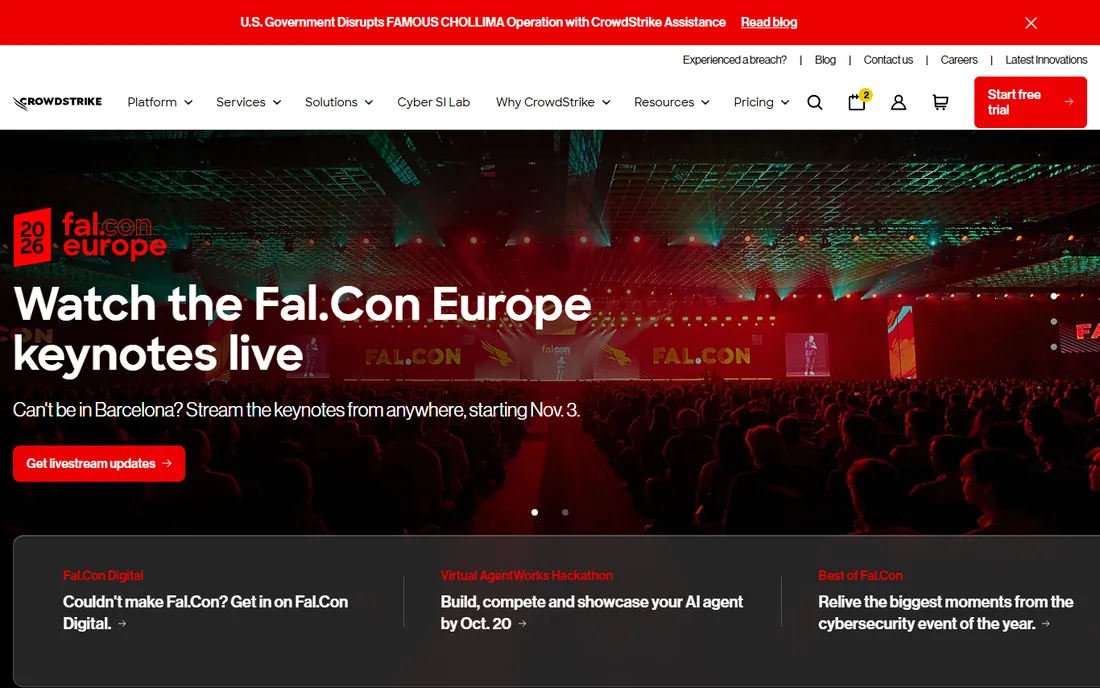
CrowdStrike remains the benchmark most endpoint vendors are measured against. Falcon combines next-gen antivirus, EDR, threat intelligence and hunting in one agent, with the cloud doing the heavy analysis so endpoints stay light. The published pricing is the real differentiator for buyers: Go at $59.99 per device per year covers basic NGAV, Pro at $99.99 adds EDR, and Enterprise at $184.99 adds the full hunting and intelligence stack.
The honest math is per-device. A 50-device shop on Pro pays about $5,000 a year, which is fair for the category but real money for a small business. Teams that want the technology without the operational load can step up to Falcon Complete, the fully managed MDR tier, at a custom quote.
What we like- Published per-device pricing across Go, Pro and Enterprise tiers, a rarity among leaders
- Single lightweight agent with cloud-native architecture
- Managed MDR tier (Falcon Complete) available when you outgrow self-management
Watch out for- Pricing climbs steeply between tiers ($59.99 to $184.99 per device per year)
- The full platform's breadth can overwhelm teams that only need antivirus plus EDR
#2
SentinelOne
Best for: Teams that want autonomous detection and response with minimal tuning
Visit sentinelone.com
Starting priceSee website (sold through partners, no public list price)
Free planNo (no free trial advertised)
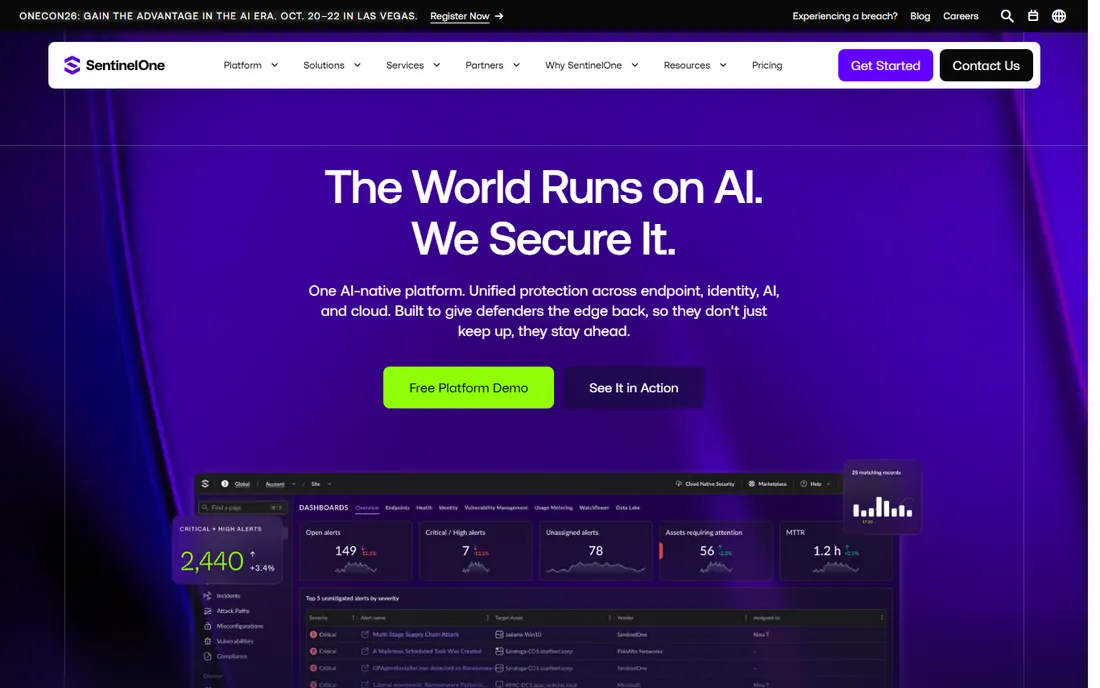
SentinelOne's pitch is autonomy. Its agent detects and responds on the endpoint itself, using local AI models that work even when the machine is offline, which suits remote sites and field devices. When ransomware encrypts files, the platform can roll them back automatically. Higher tiers add identity threat detection, managed threat hunting and longer data retention.
The buying experience is the friction. SentinelOne publishes no prices and sells through authorized partners, so you cannot comparison-shop without a sales conversation. For teams with thin security staffing, the autonomous response is worth the quote process; for price-sensitive buyers, the opacity is annoying.
What we like- AI-driven autonomous response that contains threats without waiting for an analyst
- Rollback capabilities that restore endpoints to pre-attack state
- Strong identity and cloud workload coverage in higher tiers
Watch out for- No published pricing, so every purchase runs through a partner quote
- The tier structure (Complete, Commercial, Enterprise) gates features like managed threat hunting behind higher plans
#3
Microsoft Defender for Business
Best for: Small and mid-size businesses already on Microsoft 365
Visit microsoft.com
Starting price$3/user/month (standalone)
Free planNo (no free trial advertised)
Defender for Business is the best value in endpoint security, full stop. For $3 per user per month standalone, or nothing at all if you already pay for Microsoft 365 Business Premium, you get EDR, automated investigation and remediation, and threat and vulnerability management. It runs on the same detection engine as Microsoft's enterprise Defender for Endpoint, just with a console a generalist IT admin can operate.
The catch is the Microsoft orbit. It shines in Windows-heavy, Microsoft 365 shops and gets less compelling as you add Macs, Linux servers and non-Microsoft identity. If your company lives in Microsoft 365, check whether you already own this before buying anything else: many do, and never deploy it.
What we like- Absurdly cheap at $3 per user per month standalone, and included free in Microsoft 365 Business Premium
- Enterprise-grade detection engine shared with Defender for Endpoint
- Simplified console built for teams without security specialists
Watch out for- Limited to organizations with up to 300 users
- Management assumes a Microsoft-centric environment, and non-Windows coverage is thinner
#4
Sophos Intercept X
Best for: Businesses already running Sophos firewall, email or MDR
Visit sophos.com
Starting priceSee website (sold through partners, no public list price)
Free planNo (no free trial advertised)
Intercept X is Sophos's endpoint platform, built around deep learning models plus exploit prevention, ransomware rollback and managed threat response options. Inside Sophos Central, an attack seen by the firewall can automatically trigger endpoint isolation, which is the kind of cross-product response that single-point tools cannot do.
The commercial reality is the bundle. Sophos sells through partners without published prices, and the value compounds when you run their firewall and email security too. As a standalone endpoint purchase it is competent but unremarkable; as part of a Sophos stack it is the obvious choice.
What we like- Deep-learning malware detection with anti-ransomware and anti-exploit layers
- Managed from Sophos Central alongside firewall, email and MDR
- Strong synchronized security story across the Sophos stack
Watch out for- No public pricing, with quotes running through partners
- Best economics clearly favor customers buying multiple Sophos products
Starting priceSee website (online store and partner pricing)
Free planFree trial (free GravityZone trial advertised)
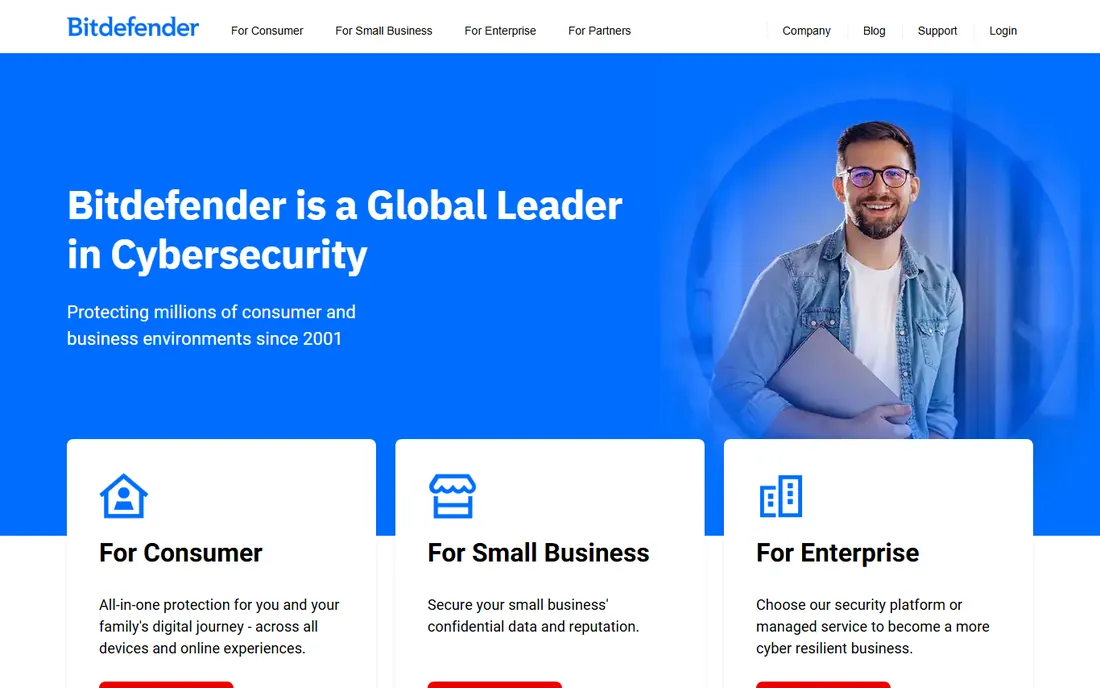
Bitdefender wins on efficacy. GravityZone's machine learning and behavioral analysis stack places first in independent tests more often than any other vendor, which matters when the buying criterion is simply stopping malware. The Business Security edition targets small and mid-size businesses with ransomware mitigation, network attack defense and risk management in one console.
The buying experience is the wrinkle: prices render through the store and partner channel rather than a clean pricing page, and the add-on modules tempt budget creep. Take the free trial, test it against your actual workload, and price the modules you need before committing.
What we like- Consistently top-ranked in independent prevention and detection tests
- Modular platform lets small businesses start with Business Security and add layers
- Single console for cloud or on-premises management
Watch out for- Pricing is dynamic through the online store and partners, so quotes vary
- The modular upsell path (email security, patch management, encryption) adds up
#6
Huntress
Best for: SMBs that want managed EDR with a human SOC attached
Visit huntress.com
Starting price$8.99/endpoint/month (Managed EDR MSRP)
Free planFree trial (full-featured trial advertised)
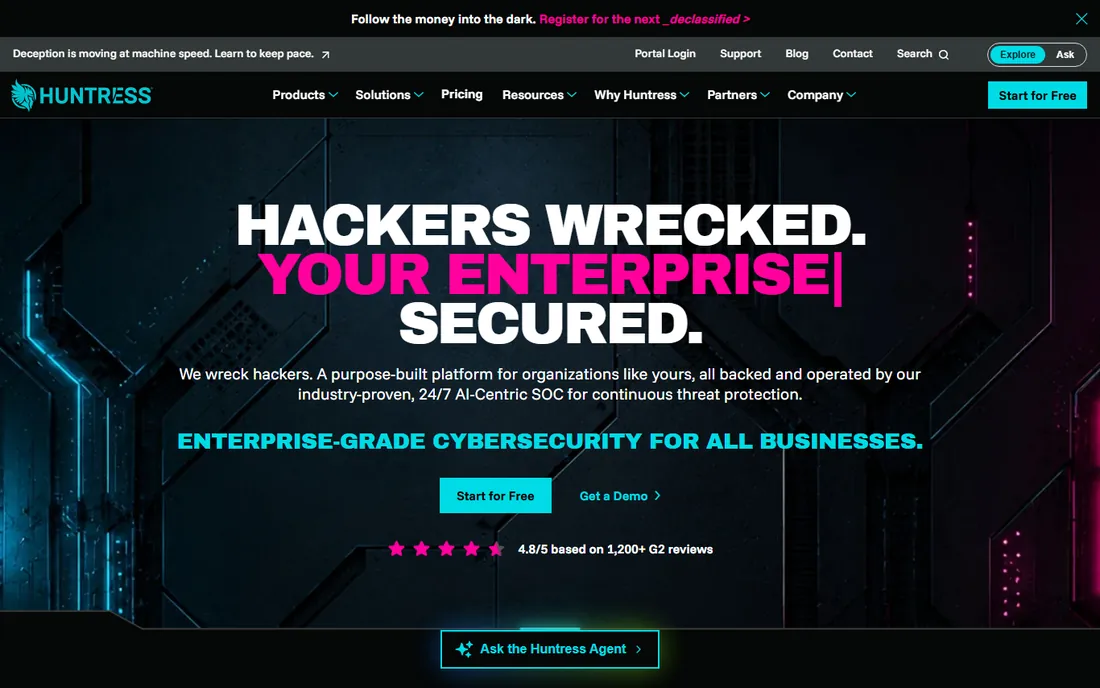
Huntress occupies the space between pure software and full MDR. You get a real EDR agent plus a 24/7 human SOC that investigates and stages remediations, at a published $8.99 per endpoint per month MSRP. Managed ITDR, SIEM and security awareness training extend the same model to identities, logs and users. Most customers buy through an MSP, which handles deployment and day-to-day management.
For endpoint security specifically, the honest comparison is against CrowdStrike Pro at $99.99 per device per year: Huntress costs slightly more per endpoint but includes the managed SOC. If you have nobody to read EDR alerts at 2 a.m., that difference is the whole decision.
What we like- Published per-endpoint pricing with the 24/7 human SOC included, not gated behind tiers
- Deploys in under an hour with no setup fees
- Channel-first model means your MSP can run it for you
Watch out for- The full stack (EDR plus identity, SIEM and training) multiplies the per-unit cost
- Direct purchase requires a 50-seat minimum per product
#7
ThreatDown
Best for: Lean IT teams that want endpoint, patching and MDR in one console
Visit threatdown.com
Starting priceSee website (bundle pricing, quotes via store)
Free planNo (no free trial advertised)
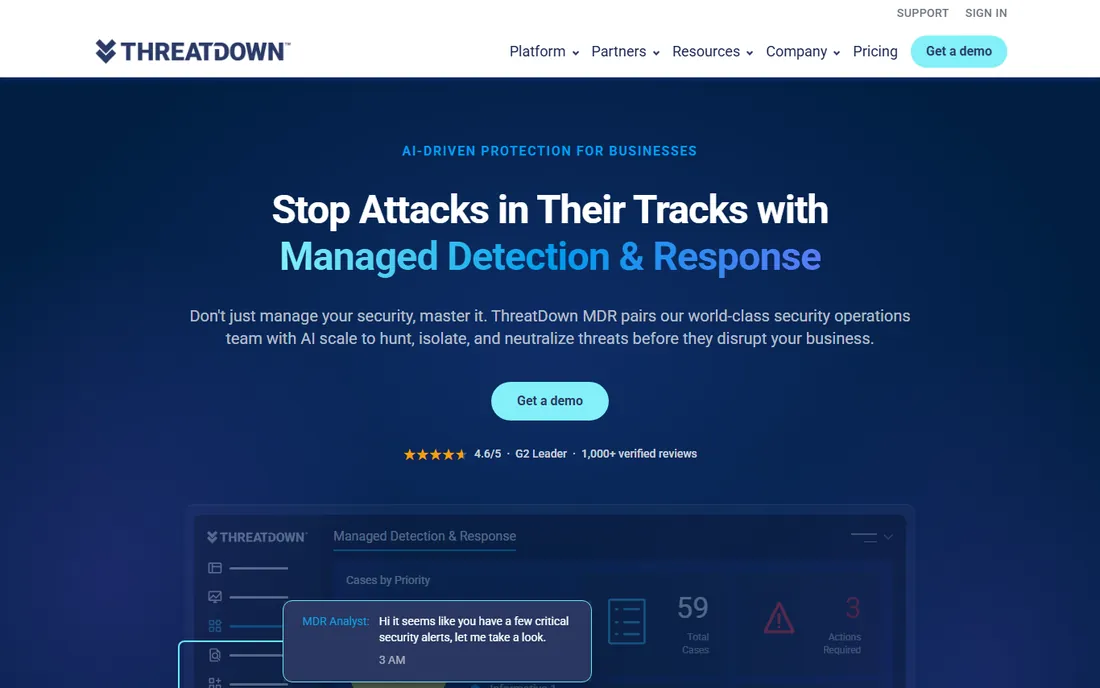
ThreatDown is the business brand of Malwarebytes, rebuilt as an all-in-one platform. The bundles run from Core next-gen AV through Advanced EDR to Elite and Ultimate MDR tiers, all managed from a single console by what the company pitches as a single IT person. Patch management, vulnerability assessment and ransomware rollback sit alongside detection, which reduces the tool sprawl that plagues small IT teams.
The pricing presentation is the weak spot: bundles with device counts and term lengths configured in a store widget, not a clean per-device number. For a lean team that wants one vendor for endpoint plus hygiene, it is worth configuring a quote; for buyers who want a simple price, the opacity grates.
What we like- One lightweight agent and one console covering EDR, patch management, DNS filtering and email security
- MDR bundles with 24/7 human analysts
- Built on Malwarebytes' two decades of detection research
Watch out for- Bundle prices render through the store configurator rather than a simple price list
- Smaller brand footprint than CrowdStrike or SentinelOne
#8
ESET PROTECT
Best for: Teams that prize light agents and long track records
Visit eset.com
Starting priceSee website (online store and partner pricing)
Free planNo (no free trial advertised)
ESET has been doing endpoint security since before it was called endpoint security, and its calling card is still performance: the agent stays out of the user's way. ESET PROTECT Core bundles next-gen antivirus, firewall and device control with AI-powered threat analysis and cloud sandboxing, with Plus packages adding email protection, patching and MFA.
The trade is modernity. The management console works but lacks the polish of CrowdStrike or SentinelOne, and pricing through the store configurator makes comparison shopping tedious. For teams with older hardware or a preference for proven, quiet protection, ESET remains a solid pick.
What we like- Famously light system footprint that users never notice
- Multilayered LiveSense protection with cloud sandboxing for zero-day threats
- Straightforward tiering from Core up through Complete
Watch out for- Prices render dynamically in the online store rather than a published list
- The console and brand feel dated next to cloud-native rivals
#9
Trend Micro
Best for: Enterprises standardizing endpoint into a platform deal
Visit trendmicro.com
Starting priceSee website (custom quote)
Free planNo (no free trial advertised)
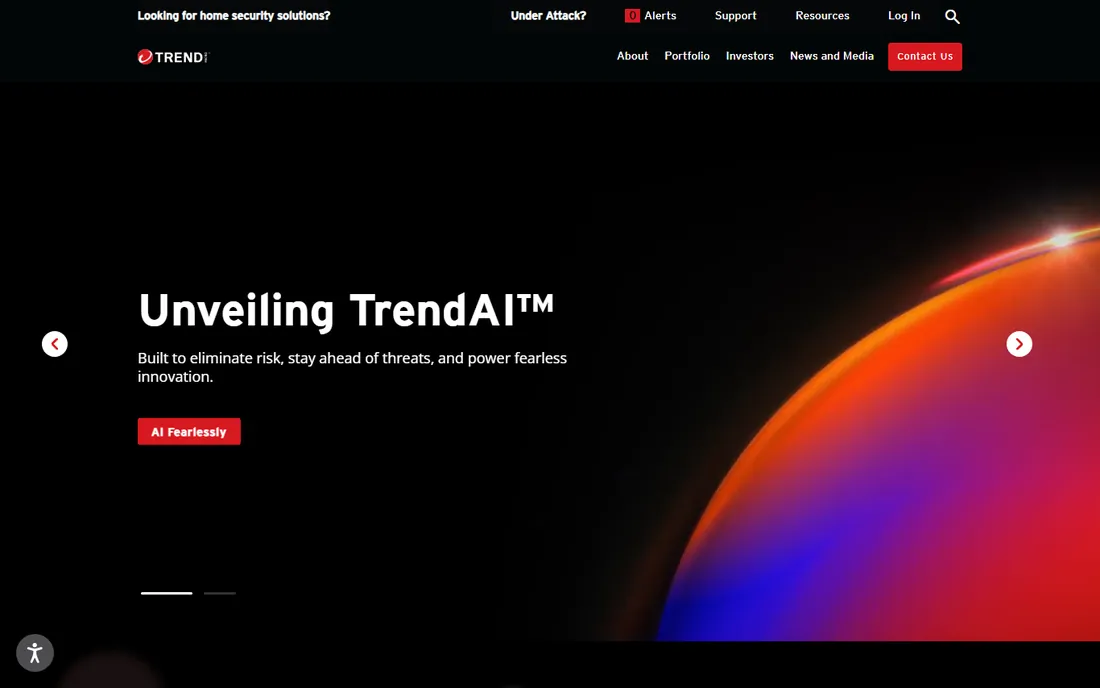
Trend Micro now positions itself as an enterprise AI security platform company, with endpoint protection as one layer of a much larger stack covering email, cloud workloads and network. For large organizations standardizing on a single vendor, the unified policy and cross-layer detection have real value, backed by decades of enterprise deployments.
For the SMB buyer this article is written for, Trend Micro is mostly a name to know rather than a quote to chase. There is no public pricing and no small-business motion to speak of. It belongs on enterprise shortlists; smaller teams should pick from the options above.
What we like- Deep platform spanning endpoint, email, cloud and network with unified policy
- Strong enterprise and public-sector installed base
- AI-native direction with its TrendAI platform push
Watch out for- Quote-only enterprise pricing with no public tiers
- The platform breadth is overkill for small businesses that need endpoint protection alone
EDR vs. antivirus: the line that actually matters
Traditional antivirus asks one question: is this file known-bad. It checks signatures and heuristics at the moment of execution, which catches commodity malware and misses everything novel. EDR, endpoint detection and response, asks a different question: what is happening on this machine. It records processes, network connections, registry changes and credential access continuously, then detects attack behavior, so it catches the intrusion that no signature knows about.
Every product on this list except the most basic tiers is EDR or better. The practical difference for buyers is response: antivirus quarantines a file and stops; EDR isolates the machine, kills the process chain, and rolls back changes. If your compliance questionnaire or cyber insurer asks whether you have EDR deployed, traditional antivirus does not count. Buy the EDR tier, even when the antivirus tier is cheaper.
Choosing endpoint security by team size
Under 25 people with no IT staff, buy simplicity: Microsoft Defender for Business if you are on Microsoft 365, Huntress through an MSP if you are not. Both give you real protection without anyone having to learn a console. The per-user math stays small and the operational load stays near zero.
From 25 to 200 people with a generalist IT admin, the field opens up. CrowdStrike Falcon Pro and Bitdefender GravityZone reward the admin who will actually open the console; ThreatDown suits the admin who wants patching and DNS filtering in the same pane of glass. Huntress remains the pick if nobody will watch alerts after hours.
Past 200 people or in regulated industries, buy the platform conversation: SentinelOne, CrowdStrike Enterprise and Trend Micro compete on autonomous response, identity coverage and compliance reporting. Get all three quoted against your actual device count and run a proof of concept with your own attack simulations before signing.
How we chose
We started with the searches buyers run: top endpoint security software, best endpoint protection for small business, CrowdStrike vs SentinelOne. For each candidate we opened the vendor's homepage and pricing page, checked plan details against public reviews on G2 and Capterra and practitioner discussion on Reddit, and compared detection approach, platform coverage, pricing transparency and fit for different team sizes. Prices come only from vendor pages; where a vendor publishes nothing we wrote "See website". We excluded consumer-only antivirus and discontinued products.
Frequently asked questions
What is the difference between EPP, EDR and XDR?
EPP (endpoint protection platform) is the prevention layer: antivirus, firewall, device control. EDR adds continuous recording and behavioral detection on the endpoint plus response actions. XDR extends detection and response across endpoints, email, identity and cloud. Most products on this list bundle all three; the labels describe which layer the vendor emphasizes.
How much does endpoint security cost per device?
Published prices range from $3 per user per month (Defender for Business) to $8.99 per endpoint per month (Huntress) to $99.99 per device per year (CrowdStrike Pro). SentinelOne, Sophos, ESET and Trend Micro are partner-quoted. Expect $5 to $15 per endpoint per month as the realistic band for business-grade EDR.
Can I use Microsoft Defender for Business if I am not on Microsoft 365?
Defender for Business standalone ($3/user/month) is sold to organizations with up to 300 users, and Microsoft positions it for businesses whose productivity stack is not necessarily Microsoft 365. In practice it integrates best with Microsoft 365 and Entra ID, so mixed environments should test identity and management coverage during the trial.
Do I still need antivirus if I have EDR?
Modern EDR platforms include next-gen antivirus as their prevention layer, so a separate traditional antivirus is unnecessary and running two real-time engines causes conflicts. The products on this list replace consumer antivirus entirely; do not stack them.
What is ransomware rollback, and which tools have it?
Ransomware rollback restores files encrypted during an attack from protected backups. SentinelOne, Bitdefender GravityZone and ThreatDown all advertise rollback capabilities. It is a safety net, not a strategy: it works best paired with the behavioral detection that stops the attack early.
How do I switch endpoint vendors without leaving gaps?
Run the new agent alongside the old one on a pilot group for one to two weeks, never fleet-wide, since dual real-time agents can conflict. Confirm the new console sees every pilot device and policies apply, then roll out in waves and remove the old agent as each wave reports healthy. Avoid switching during your busiest season.
Sources we checked (11)
- https://www.crowdstrike.com/
- https://www.sentinelone.com/pricing
- https://www.microsoft.com/
- https://sophos.com/
- https://www.bitdefender.com/en-us/business/products/gravityzone-business-security
- https://www.huntress.com/pricing
- https://www.threatdown.com/pricing
- https://eset.com/
- https://www.trendmicro.com/
- https://www.g2.com/categories/endpoint-protection
- https://www.capterra.com/endpoint-protection-software/
Is your product missing or out of date?
We review this list regularly. Vendors can request a listing, send updated pricing or ask about featured placement.

Shihab Mia · Founder, Rankite
Shihab has spent more than a decade helping SaaS and e-commerce brands grow through search. He writes Rankite's software buying guides from pricing pages, documentation and public user reviews. More about Shihab.