How we make this list: we compare pricing pages, product documentation and public user reviews. Ratings come from G2, Capterra or Trustpilot, with the date we checked them.
Key takeaways
- Boomi is the closest enterprise replacement for MuleSoft, with a low-code platform built for complex integrations.
- Workato suits enterprises that want automation and integration in one platform with strong governance.
- Zapier and Make are the best choices for smaller teams and simpler workflows, with free tiers and fast setup.
- Jitterbit and Celigo serve specific strengths: Jitterbit for API management, Celigo for NetSuite and SaaS ecosystems.
- Integration pricing is rarely transparent, so budget on the quote for your volume and connector list, not the headline price.
Quick comparison
| Tool | Best for | Starting price | Free plan |
|---|
 Boomi | Enterprise integration | See website | Free trial |
 Workato | Enterprise automation | See website | Free trial |
 Zapier | Simple app automation | $19.99/month | Yes |
 Make | Visual automation value | $9/month | Yes |
 Tray.ai | Complex multi-step flows | See website | Free trial |
 Jitterbit | API management plus integration | See website | Free trial |
 Celigo | SaaS ecosystem integration | See website | Free trial |
 SnapLogic | AI-assisted integration | See website | Free trial |
 Informatica | Enterprise data integration | See website | Free trial |
Is your product missing or out of date?
We review this list regularly. Vendors can request a listing, send updated pricing or ask about featured placement.
The best MuleSoft alternatives
#1Boomi
Best for: Enterprise integration4.4/5 on
G2 (505 reviews, checked Oct 2026)
Visit boomi.com
Starting priceSee website
Free planFree trial

Boomi is the most direct enterprise alternative to MuleSoft. Its low-code platform connects applications, data, and APIs with a large connector library, and its data management features help teams govern the data flowing between systems. For an organization replacing MuleSoft's Anypoint Platform, Boomi's breadth is the closest match.
Pricing is quote-based and varies with volume and connectors, so budget on a sales conversation rather than a published price. Advanced features also carry a learning curve, and the community is smaller than MuleSoft's. Boomi suits enterprises that want MuleSoft-class integration without MuleSoft's licensing and complexity.
What we like- Low-code enterprise integration
- Large connector library
- Strong data management features
Watch out for- Pricing is quote-based
- Learning curve for advanced features
- Smaller community than MuleSoft
#2Workato
Best for: Enterprise automation4.7/5 on
G2 (843 reviews, checked Oct 2026)
Visit workato.com
Starting priceSee website
Free planFree trial
Workato combines integration and automation, letting business users build recipes that move data between apps and trigger multi-step workflows, with governance and security controls that satisfy enterprise IT. That combination suits organizations where both IT and business teams build integrations, since recipes are readable by non-developers.
Enterprise pricing is quote-based, and the platform can be overkill for simple point-to-point automation that Zapier or Make handles cheaply. Connector depth also varies by application. Workato fits enterprises that want governed automation across many teams, not just IT-built integrations.
What we like- Integration plus automation in one platform
- Strong governance and security
- Business-user friendly recipes
Watch out for- Enterprise pricing is quote-based
- Can be overkill for simple workflows
- Connector depth varies by app
#3Zapier
Best for: Simple app automation4.5/5 on
G2 (2,088 reviews, checked Oct 2026)
Visit zapier.com
Starting price$19.99/month
Free planYes
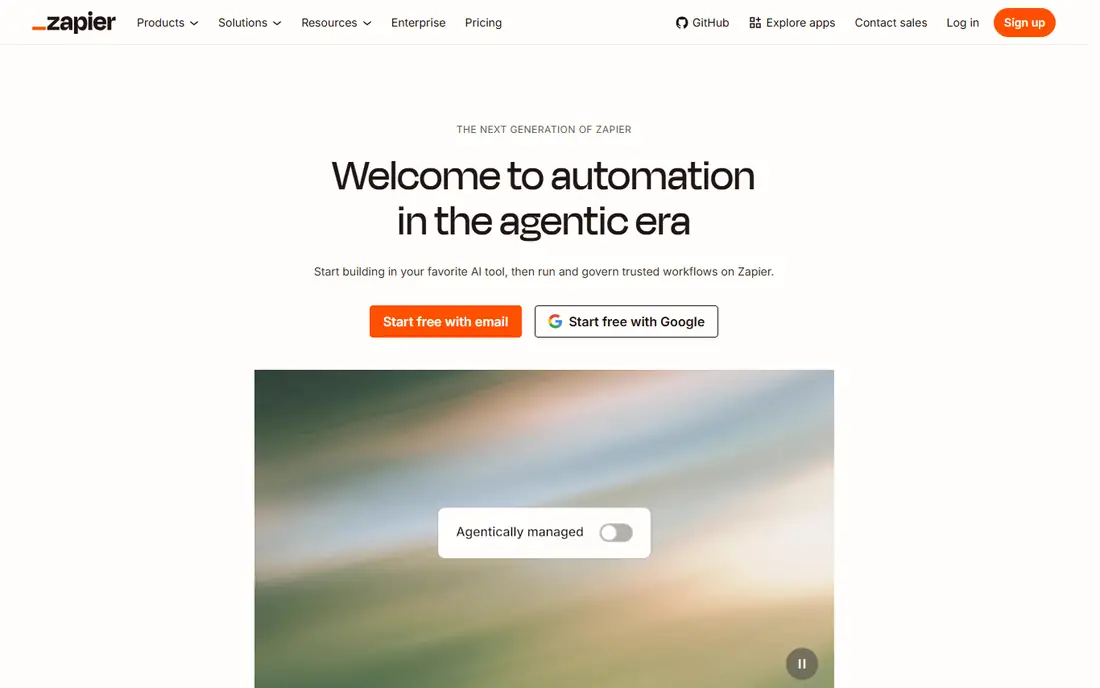
Zapier is the simplest alternative for teams whose integrations are really automations: when X happens in one app, do Y in another. Its app directory is the largest in this category, setup takes minutes, and the free tier covers light use. Paid plans start around $19.99 a month, scaling with task volume.
Costs rise with task volume, and complex branching logic or heavy data transformation needs higher tiers or a different tool. Zapier is not a MuleSoft replacement for enterprise data integration, but for the long tail of small workflows that MuleSoft was overkill for, it is the fastest and cheapest answer.
What we like- Largest app directory
- Easiest setup for simple workflows
- Free tier for testing
Watch out for- Costs scale with task volume
- Complex logic needs higher tiers
- Not built for heavy data integration
#4Make
Best for: Visual automation value4.6/5 on
G2 (347 reviews, checked Oct 2026)
Visit make.com
Starting price$9/month
Free planYes

Make, formerly Integromat, offers a visual scenario builder that shows data flowing between modules, which makes complex workflows easier to understand than Zapier's linear Zaps. The free tier is generous, and paid Core plans start around $9 a month, making Make one of the best-value options here for small and mid-size teams.
Complex scenarios carry a learning curve, and enterprise governance features are thinner than Workato's or Boomi's. Support is mainly online. Make suits teams that want visual control and low cost, and that are comfortable building workflows themselves rather than buying a governed enterprise platform.
What we like- Visual scenario builder
- Generous free tier
- Strong value at low volumes
Watch out for- Learning curve for complex scenarios
- Enterprise governance is thinner
- Support is mainly online
#5Tray.ai
Best for: Complex multi-step flows4.5/5 on
G2 (158 reviews, checked Oct 2026)
Visit tray.io
Starting priceSee website
Free planFree trial
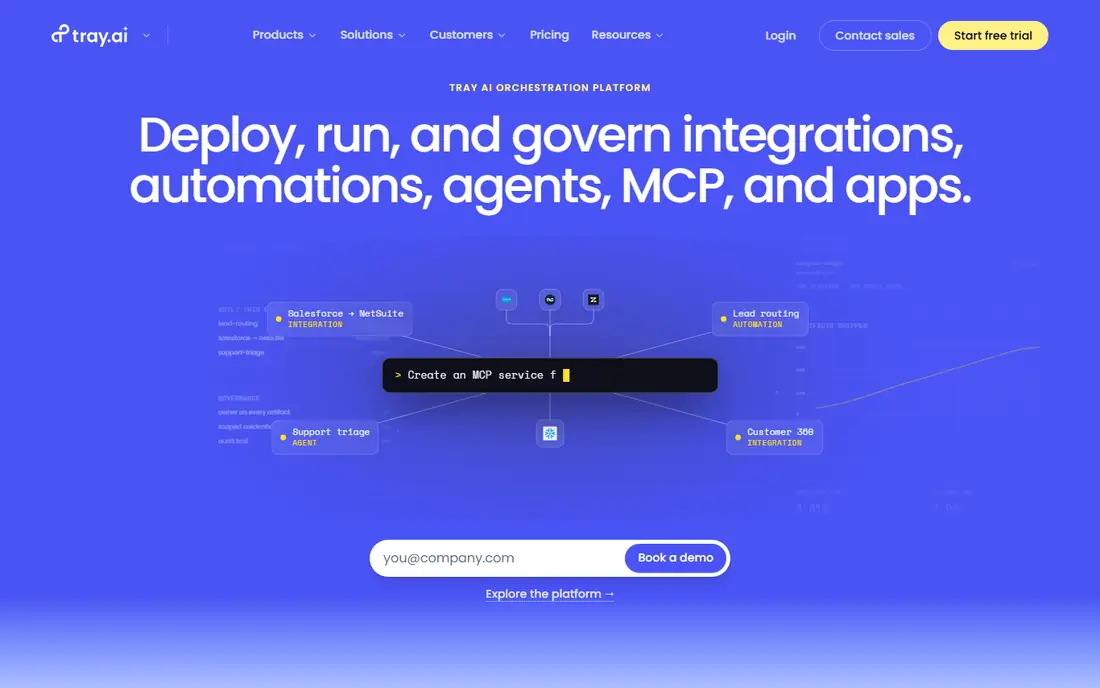
Tray.ai, formerly Tray.io, handles complex multi-step workflows with branching, data transformation, and AI-assisted building, positioning it between Zapier's simplicity and Boomi's enterprise depth. It suits teams whose workflows involve many steps, conditional logic, and large data volumes.
Pricing is quote-based, the learning curve is steeper than Zapier's, and the app directory is smaller. Tray.ai fits mid-size and enterprise teams with genuinely complex workflows that outgrow Zapier but do not need a full MuleSoft deployment.
What we like- Powerful multi-step workflow builder
- AI-assisted automation
- Strong for data-heavy flows
Watch out for- Pricing is quote-based
- Steeper learning curve than Zapier
- Smaller app directory than Zapier
#6Jitterbit
Best for: API management plus integration4.5/5 on
G2 (627 reviews, checked Oct 2026)
Visit jitterbit.com
Starting priceSee website
Free planFree trial
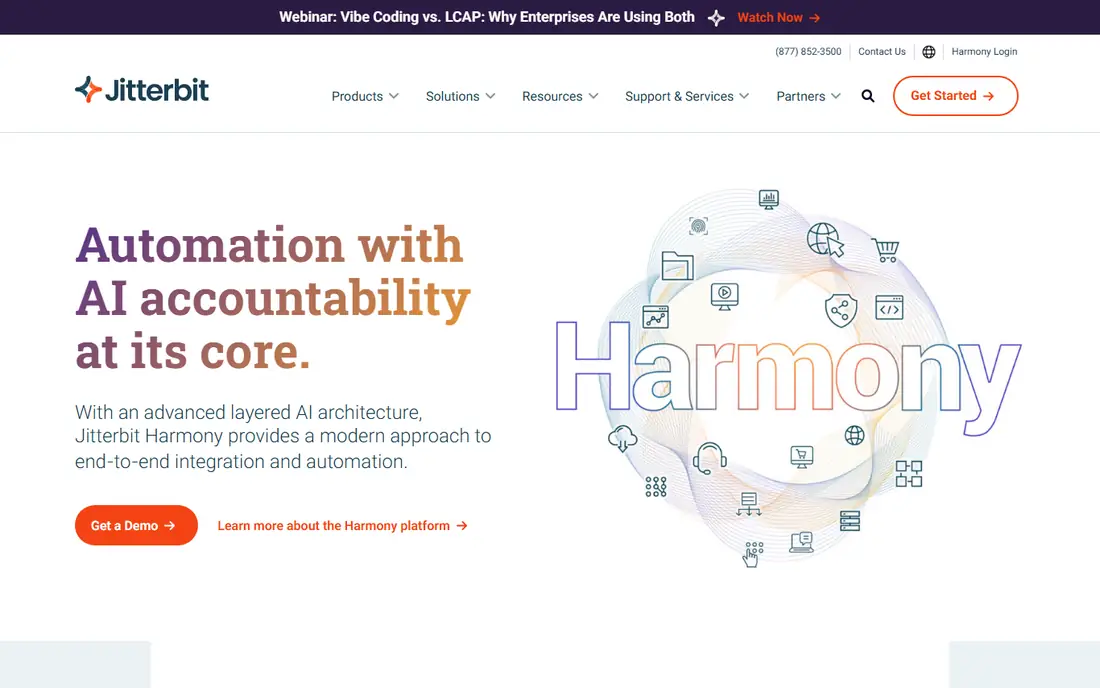
Jitterbit combines integration with API management, letting teams build, publish, and manage APIs alongside their integrations, with both low-code and code-based options. That combination suits organizations that expose APIs to partners or customers as well as connecting internal systems.
Pricing is quote-based, the interface feels enterprise-heavy, and the community is smaller than Zapier's or Boomi's. Jitterbit fits teams that need API management as a first-class feature, not an add-on, and that run hybrid cloud and on-premise environments.
What we like- Integration plus API management
- Low-code and code options
- Strong for hybrid environments
Watch out for- Pricing is quote-based
- Interface feels enterprise-heavy
- Community is smaller than rivals
#7Celigo
Best for: SaaS ecosystem integration4.6/5 on
G2 (1,105 reviews, checked Oct 2026)
Visit celigo.com
Starting priceSee website
Free planFree trial
Celigo's strength is prebuilt integrations for major SaaS ecosystems, especially NetSuite, Salesforce, and Shopify, with a low-code flow builder for customization. For a business running on one of those platforms, Celigo's ready-made flows shorten implementation dramatically compared with building from scratch.
Outside its core ecosystems, connector depth varies, and pricing is quote-based. Celigo suits SaaS-centered businesses that want proven integrations for their core platform, rather than a general-purpose integration tool for any system.
What we like- Strong prebuilt integrations for NetSuite, Salesforce, and Shopify
- Low-code flow builder
- Good for SaaS ecosystems
Watch out for- Pricing is quote-based
- Depth varies outside its core ecosystems
- Smaller general connector library
#8SnapLogic
Best for: AI-assisted integration4.4/5 on
G2 (404 reviews, checked Oct 2026)
Visit snaplogic.com
Starting priceSee website
Free planFree trial

SnapLogic uses AI assistance to help build integration pipelines, suggesting connectors and transformations as you work, with a large connector library and strong data integration capabilities. That AI help shortens development time for data-heavy workloads, such as warehouse loading and synchronization.
Pricing is quote-based with an enterprise focus, so entry costs run higher than Zapier or Make, and new users face a learning curve. SnapLogic suits data teams and enterprises that move large volumes between systems and want AI help building and maintaining pipelines.
What we like- AI-assisted pipeline building
- Large connector library
- Strong for data integration workloads
Watch out for- Pricing is quote-based
- Enterprise focus means higher entry cost
- Learning curve for new users
Starting priceSee website
Free planFree trial
Informatica is the heavyweight data integration option, with deep capabilities for data integration, quality, governance, and cloud data management at enterprise scale. For organizations whose MuleSoft use centered on large, governed data movement rather than app automation, Informatica's breadth is unmatched here.
That breadth brings enterprise pricing and complexity, and implementation can be lengthy. Informatica is overkill for simple workflows that Zapier handles in minutes. It fits large enterprises with serious data governance needs and the budget and team to run a full data management platform.
What we like- Deep enterprise data integration and governance
- Cloud data management breadth
- Strong for large data volumes
Watch out for- Enterprise pricing and complexity
- Overkill for simple app automation
- Implementation can be lengthy
How we chose
We compared integration and automation platforms that connect business applications, data, and APIs, excluding single-purpose connectors and pure ETL tools without app integration. Pricing figures come from each vendor's own pricing page, checked in October 2026, and where pricing is quote-based we say so rather than inventing a figure. We weighed connector breadth, workflow complexity support, governance, ease of use, and how well each platform fits small teams versus enterprises.
Map your integrations before choosing
List every system you need to connect, the data volumes involved, and whether workflows are simple triggers or complex transformations. That map decides the category: Zapier or Make for simple triggers, Tray.ai or Celigo for mid-complexity flows, and Boomi, Workato, SnapLogic, or Informatica for enterprise data integration. Buying the wrong tier wastes more than the license cost in implementation time.
Budget on volume, not seats alone
Integration pricing often scales with tasks, records, or connectors rather than users. Model your expected monthly volume, including peak periods, and ask vendors for a quote at that volume before comparing prices.
Migration risks to watch
Moving integrations from MuleSoft to another platform carries risks that a feature comparison alone does not show. The first is hidden logic: years of transformations, error handling, and business rules live inside existing flows, and some of it is undocumented. Before migrating, inventory every integration, note its owner, its data volume, and its failure modes, and rank them by business impact. Migrate low-risk flows first, run old and new systems in parallel for a cycle, and only cut over when outputs match exactly.
The second risk is connector behavior. Two platforms can both claim a Salesforce or SAP connector yet handle pagination, rate limits, and error retries differently, which changes results under load. Test each migrated flow with production-like volumes and failure cases, including API outages and malformed records, before trusting it. The third risk is people: the team that built the MuleSoft flows holds knowledge that no document captures, so involve them in the migration even if the new platform is meant to reduce dependence on specialists. A migration that ignores these three risks usually costs more in incident response than it saved in licensing.
Frequently asked questions
What is the best MuleSoft alternative overall?
Boomi, for enterprise integration breadth closest to MuleSoft. Workato suits enterprises that also want business-user automation, while Zapier and Make suit smaller teams with simpler workflows.
Is there a free MuleSoft alternative?
Partly. Zapier and Make offer permanent free tiers for light automation, and most enterprise platforms offer trials. Full enterprise integration is a paid product everywhere, since it involves support, governance, and volume.
Should small teams use Boomi or Workato?
Usually not. Small teams should start with Zapier or Make, which cover most app automation at low cost, and move to Tray.ai or Celigo when workflows grow complex. Boomi and Workato pay off at enterprise scale and complexity.
What is the difference between iPaaS and automation tools?
Integration platforms (iPaaS) such as Boomi and Workato handle complex, governed, high-volume data movement between systems. Automation tools such as Zapier and Make handle simpler trigger-based workflows between apps. The right category depends on workflow complexity and governance needs.
How long does it take to migrate from MuleSoft?
It depends on integration count and complexity. Simple app automations migrate in days to Zapier or Make, while enterprise integrations to Boomi or Workato take weeks to months, including testing and cutover. Audit your integration inventory before estimating.
Sources we checked (9)
- https://boomi.com
- https://www.workato.com
- https://zapier.com
- https://www.make.com
- https://tray.io
- https://www.jitterbit.com
- https://www.celigo.com
- https://www.snaplogic.com
- https://www.informatica.com
Is your product missing or out of date?
We review this list regularly. Vendors can request a listing, send updated pricing or ask about featured placement.

Shihab Mia · Founder, Rankite
Shihab has 5+ years in B2B and SaaS SEO. He writes Rankite's software buying guides from pricing pages, documentation and public user reviews. More about Shihab.