How we make this list: we compare pricing pages, product documentation and public user reviews. Ratings come from G2, Capterra or Trustpilot, with the date we checked them.
Key takeaways
- AWS and Google Cloud match Azure service depth, while DigitalOcean, Linode, and Vultr keep pricing simpler for smaller teams.
- Oracle Cloud and IBM Cloud fit regulated or database-heavy workloads better than they fit a first side project.
- Alibaba Cloud is strongest for teams serving customers in Asia, and weaker as a default choice for a US-only workload.
- The cheapest headline virtual machine price rarely predicts the monthly bill, because backups, storage, bandwidth, and managed services add up fast.
Quick comparison
| Tool | Best for | Starting price | Free plan |
|---|
 Amazon Web Services | Widest service catalog | Pay as you go | Free trial |
 Google Cloud | AI and data workloads | Pay as you go | Free trial |
 DigitalOcean | Simple developer projects | $4 per month | Free trial |
 Linode | Predictable virtual machines | $5 per month | No |
 Vultr | Low-cost global compute | $5 per month | No |
 Oracle Cloud | Databases and enterprise workloads | Pay as you go | Yes |
 IBM Cloud | Regulated and hybrid workloads | Pay as you go | Yes |
 Alibaba Cloud | Asia-focused workloads | Pay as you go | Free trial |
Is your product missing or out of date?
We review this list regularly. Vendors can request a listing, send updated pricing or ask about featured placement.
The best microsoft azure alternatives
Starting pricePay as you go
Free planFree trial
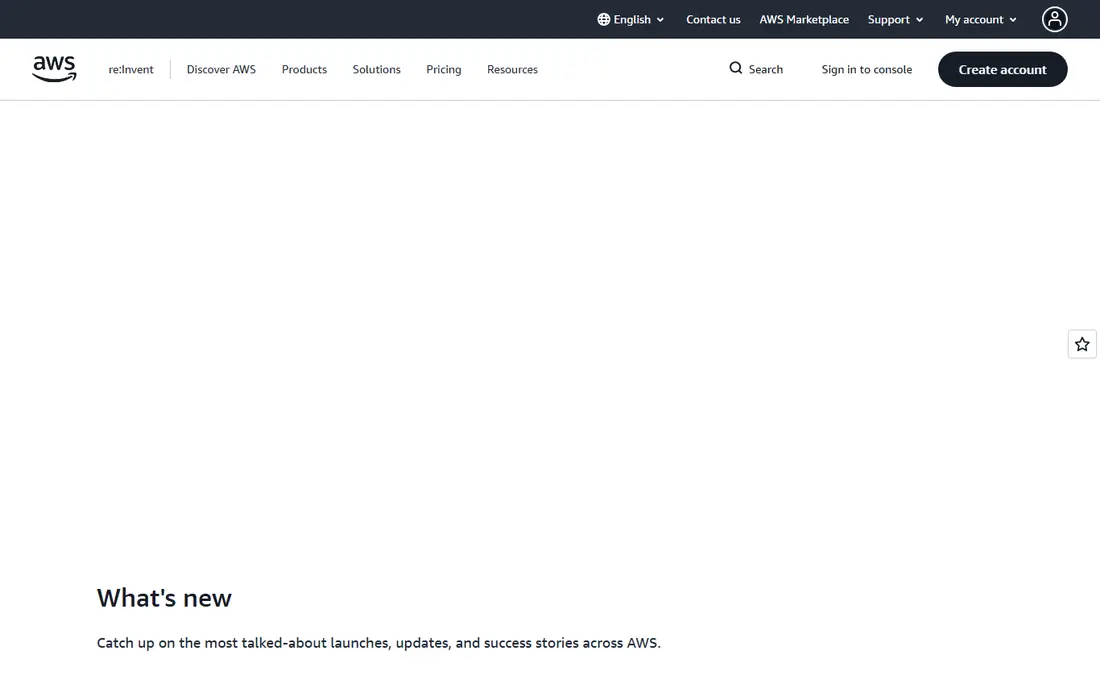
Amazon Web Services offers the widest service catalog in cloud computing, from EC2 compute and S3 storage to SageMaker AI and Bedrock managed models. Region coverage is the broadest, and the third-party ecosystem around AWS is deeper than any rival. Teams that need a managed service for almost any workload will find one here.
Pricing complexity is the main drawback. Egress fees run near 9 cents per gigabyte after the first 100 gigabytes free in 2026 price comparisons, and managed services, backups, and data transfer add up fast. AWS fits large enterprises and complex workloads, and teams that already run AWS tooling. Small projects should start with a spending alert and one region.
What we like- Largest service catalog
- Most regions
- Deepest third-party ecosystem
Watch out for- Complex pricing
- Egress fees add up
- Learning curve is steep
Starting pricePay as you go
Free planFree trial
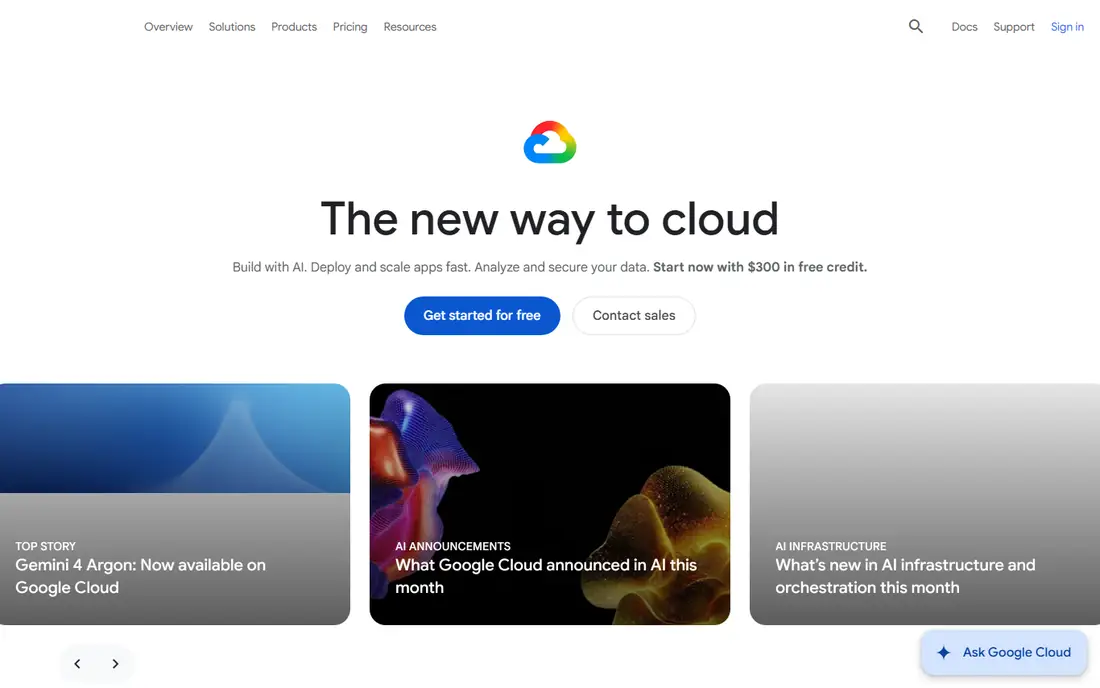
Google Cloud leads on AI and data, with Vertex AI, BigQuery analytics, and Kubernetes, which Google originated. Data teams get strong analytics tooling, and AI workloads benefit from Google custom hardware and model access. Sustained-use and committed-use discounts help steady workloads.
Region coverage trails AWS and Azure, and egress runs near 12 cents per gigabyte after a small free allowance in 2026 comparisons, the highest of the big three. Enterprise ecosystem depth is also smaller. Google Cloud fits AI-driven startups and data-heavy teams, especially those already on Google Workspace or BigQuery.
What we like- AI and analytics leadership
- BigQuery strength
- Kubernetes origin
Watch out for- Fewer regions than AWS or Azure
- Egress is pricey
- Smaller enterprise ecosystem
Starting price$4 per month
Free planFree trial
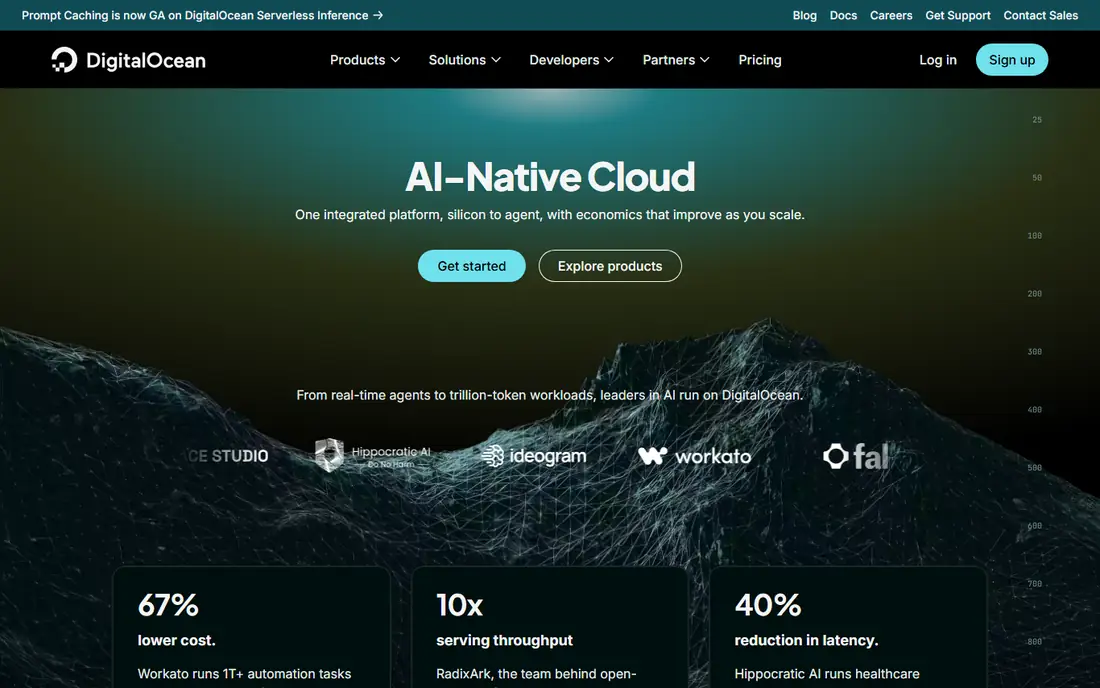
DigitalOcean is the simple developer cloud, with Droplets, managed Kubernetes, managed databases, and App Platform for platform-as-a-service deploys. Compute starts at 4 dollars per month in DigitalOcean own guides, and pooled transfer of 4,000 GiB with 1 cent per GiB overage in 2026 price comparisons keeps bandwidth predictable. The interface is the easiest in this list.
Service catalog is far smaller than hyperscalers, and enterprise features such as advanced compliance tooling are thinner. DigitalOcean fits startups, side projects, and small teams that want predictable monthly pricing without a cloud certification to understand the bill.
What we like- Simple pricing
- Easy interface
- Managed Kubernetes and databases
Watch out for- Smaller service catalog
- Fewer enterprise features
- Limited regions
Starting price$5 per month
Free planNo
Linode, now Akamai Cloud, offers predictable virtual machines with strong performance and Akamai edge integration. Compute starts at 5 dollars per month for a 1 gigabyte instance in 2026 benchmarks, and managed Kubernetes, GPU instances, and App Platform cover common needs. Egress runs near half a cent per gigabyte with no free transfer included in one 2026 comparison, so bandwidth-heavy apps should model that.
Managed service depth trails DigitalOcean slightly, and the catalog is far smaller than hyperscalers. Linode fits developers and small businesses that want predictable VMs with edge delivery, and that do not need the full hyperscaler catalog.
What we like- Predictable pricing
- Strong performance
- Akamai edge integration
Watch out for- Fewer managed services
- Smaller catalog
- No free tier
Starting price$5 per month
Free planNo
Vultr offers low-cost global compute across many regions, with cloud VMs, bare metal servers, GPU instances, and Kubernetes. Deployment is fast, and high-frequency compute options suit gaming and latency-sensitive workloads. DigitalOcean own comparison lists Vultr compute from 5 dollars per month, though some guides cite 2.50 dollars for smaller instances, so confirm the current entry price before budgeting.
Service catalog is smaller than hyperscalers, and support is more self-serve than managed clouds. Vultr fits developers and gaming workloads that need global regions at low cost, and that can manage their own infrastructure.
What we like- Wide global regions
- Fast deployment
- GPU instances
Watch out for- Smaller service catalog
- Support is self-serve
- Pricing guides disagree on entry price
Starting pricePay as you go
Free planYes
Oracle Cloud Infrastructure suits database and enterprise workloads, especially for companies already running Oracle databases or ERP. Its free tier is generous, and egress pricing is the most generous in 2026 comparisons, with the first 10 terabytes free and then 0.85 cents per gigabyte. That makes Oracle Cloud attractive for bandwidth-heavy workloads that would cost hundreds elsewhere.
Pricing can be opaque in places, and the third-party integration ecosystem is smaller than AWS or Azure. Oracle Cloud fits Oracle-centric businesses and database-heavy workloads, and teams that move large data volumes out of the cloud regularly.
What we like- Strong database services
- Generous free tier
- First 10 TB egress free
Watch out for- Opaque pricing in places
- Smaller integration ecosystem
- Learning curve
#7
IBM Cloud
Best for: Regulated and hybrid workloads
Visit ibm.com
Starting pricePay as you go
Free planYes
IBM Cloud fits regulated and hybrid workloads, with strong security, compliance tooling, and hybrid cloud support for companies that keep some systems on premises. Watsonx AI covers enterprise AI use, and virtual servers plus managed databases cover core needs. A free tier helps evaluation.
Analytics depth trails Google Cloud, and the catalog is smaller than hyperscalers. Sales focus is enterprise, so small teams may find self-serve paths thinner. IBM Cloud fits banks, healthcare, and government-adjacent workloads where compliance and hybrid deployment matter most.
What we like- Strong security and compliance
- Hybrid cloud strength
- Watsonx AI
Watch out for- Limited analytics depth
- Smaller catalog
- Enterprise sales focus
Starting pricePay as you go
Free planFree trial
Alibaba Cloud is strongest for teams serving customers in Asia, with broad service range, data centers across Asia, and competitive regional pricing. It covers compute, storage, AI, and databases, and it suits companies expanding into China and Southeast Asia where local presence improves latency and compliance.
Global ecosystem is smaller than AWS or Azure, and US support depth is weaker. Compliance rules differ by region, especially for China workloads, so legal review matters. Alibaba Cloud fits Asia-focused businesses, and is weaker as a default choice for a US-only workload.
What we like- Strong Asia presence
- Broad service range
- Competitive pricing in Asia
Watch out for- Smaller global ecosystem
- Weaker US support
- Compliance differs by region
How we chose
We compared these clouds on service catalog depth, region coverage, pricing transparency, egress costs, managed service range, and free tiers. Price comparisons from October 2026 shaped the egress figures, and we flagged every case where guides disagree on entry price, since cloud vendors change tiers often. We favored clouds with clear entry prices for small teams, and clouds whose egress model matches the workload.
We also weighed the Azure buyer. Azure buyers typically run Microsoft stacks, so the closest replacements are AWS for breadth, Google Cloud for AI and data, and DigitalOcean or Linode for simplicity. Oracle and IBM suit regulated or database workloads, while Alibaba suits Asia expansion. The right pick follows the existing stack and the dominant workload.
What to check before you switch cloud providers
Model egress, not just compute
Compute prices look similar across providers, but egress separates them sharply. Azure charges near 8.7 cents per gigabyte after 100 gigabytes free, AWS near 9 cents, and Google Cloud near 12 cents, while Oracle gives 10 terabytes free and DigitalOcean pools 4,000 GiB. Measure monthly outbound data before choosing, since a bandwidth-heavy app can cost more in egress than compute.
Start with one region, one workload, and a spending alert
Do not migrate everything at once. Move one workload to one region, set a spending alert at the expected monthly cost, and watch the real bill for a month. Backups, storage, and managed services often add 30 percent or more to the headline compute price, and a single-workload pilot reveals that before it scales.
Check managed services for your stack
A cheap VM is only cheap if you can run everything yourself. Check managed databases, Kubernetes, queues, and AI services for your stack before choosing. Hyperscalers cover nearly everything, while DigitalOcean, Linode, and Vultr cover common needs but leave specialized services to self-hosting.
Check support and SLA terms
Support quality varies more than compute prices. Hyperscalers offer tiered support plans with response-time guarantees, while smaller clouds lean on documentation and community help at entry tiers. Read the service-level agreement for uptime credits and exclusions, and test support response during the trial with a real technical question. A slow support answer during an outage costs far more than a few dollars of monthly savings.
Frequently asked questions
Is AWS cheaper than Azure?
Not reliably. Compute prices are close, but the bill depends on egress, managed services, and discounts. Azure egress near 8.7 cents per gigabyte and AWS near 9 cents are similar, while Oracle and DigitalOcean are far cheaper on bandwidth. Model your own workload rather than trusting headline VM prices.
Which Azure alternative is easiest for beginners?
DigitalOcean is easiest, with a simple interface, predictable monthly pricing, and managed services that hide cloud complexity. Linode and Vultr are close on simplicity. Hyperscalers need more learning but offer far deeper catalogs for growing teams.
Should I pick a hyperscaler or a smaller cloud?
Pick a hyperscaler when you need deep managed services, global regions, or enterprise compliance. Pick a smaller cloud when you need predictable pricing, simple VMs, and a small team that manages its own stack. Many teams run both, with production on a hyperscaler and side projects on DigitalOcean or Linode.
Does Oracle Cloud free tier really cover production?
No, the free tier suits evaluation and small projects, not production at scale. Oracle free tier is generous for trying services, but production workloads need paid plans with support and scaling. Use the free tier to test database and egress behavior before committing.
How long does a cloud migration take?
Small migrations take weeks, while enterprise migrations with databases, networking, and compliance take months. The longest parts are data transfer, networking setup, and testing failover, not VM creation. Migrate one workload at a time and keep the old environment running until the new one proves stable.
Sources we checked (12)
- https://aws.amazon.com
- https://cloud.google.com
- https://www.digitalocean.com
- https://www.linode.com
- https://www.vultr.com
- https://www.oracle.com
- https://www.ibm.com
- https://www.alibabacloud.com
- https://americancloud.com/blog/cloud-providers-no-egress-fees
- https://rankite.com/blog/google-cloud-alternatives
- https://cloudcompare.dev/reports/state-of-iaas-and-compute-2026-market-benchmark-and-cost-analysis
- http://www.digitalocean.com/resources/articles/hetzner-alternatives
Is your product missing or out of date?
We review this list regularly. Vendors can request a listing, send updated pricing or ask about featured placement.

Shihab Mia · Founder, Rankite
Shihab has 5+ years in B2B and SaaS SEO. He writes Rankite's software buying guides from pricing pages, documentation and public user reviews. More about Shihab.