How we make this list: we compare pricing pages, product documentation and public user reviews. Ratings come from G2, Capterra or Trustpilot, with the date we checked them.
Key takeaways
- Anthropic Claude is the closest direct replacement, with the Claude API, a 200,000 plus token context window family, and new 5.5 models in October 2026.
- Google Gemini API is the best free starting point, with a free tier, a 1 million plus token context window, and multimodal models.
- Azure OpenAI is the enterprise pick for companies already on Microsoft, with pay-as-you-go and provisioned throughput pricing and a 99.9 percent SLA.
- Amazon Bedrock is the multi-model pick, with hundreds of foundation models from leading AI companies behind one API.
- Groq is the speed pick, with custom LPU inference hardware built for low-latency responses at scale.
Quick comparison
Is your product missing or out of date?
We review this list regularly. Vendors can request a listing, send updated pricing or ask about featured placement.
The best alternatives to the OpenAI API
Starting pricePay as you go
Free planNo
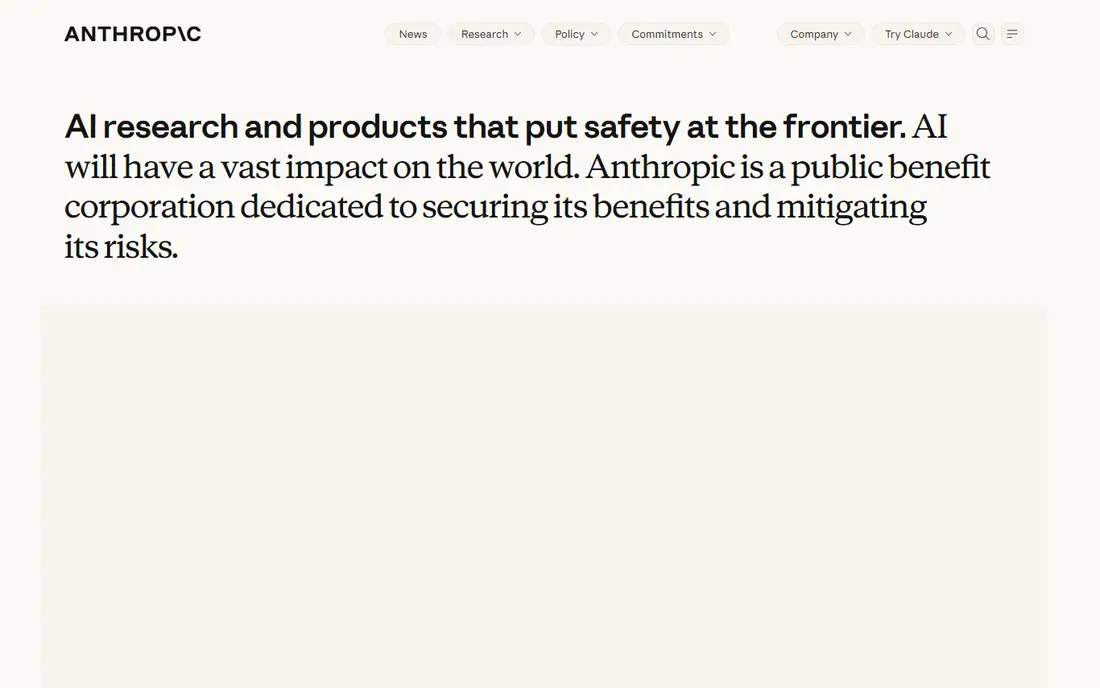
Anthropic's Claude API is the closest direct replacement for the OpenAI API, with a similar chat completions model, tool use, and structured outputs, plus a reputation for careful, well-reasoned responses. The homepage confirms the October 2026 model family: Claude Haiku 5.5, the fastest and most capable small model for high-volume work like summarization, subagents, and browser use; Claude Sonnet 5.5, running 30 percent plus faster and costing up to 30 percent less than Sonnet 5; and Claude Opus 5.5, leading in agentic coding and knowledge work while costing 40 percent less to run than Opus 5.
Anthropic is a public benefit corporation, required to balance shareholder interests with broader public benefit, and publishes system cards and a public benefit report. The API supports long context windows, extended thinking for complex reasoning, and computer use for agent workflows.
The tradeoff is cost transparency: per-token pricing varies by model and changes with each release, so check the current pricing page before committing. Anthropic Claude API is the pick for teams that want a drop-in OpenAI replacement with strong reasoning and safety.
What we like- Claude 5.5 family leads in agentic coding and knowledge work
- Haiku 5.5 is fastest for high-volume work
- Strong safety and constitutional AI approach
- Public benefit corporation structure
Watch out for- No free tier for the API
- Pricing is per-token and varies by model
- Smaller ecosystem than OpenAI for plugins and integrations
Starting pricePay as you go
Free planYes

Google's Gemini API is the best free starting point for developers leaving OpenAI. The developer homepage confirms building with Gemini, Imagen, and Veo from Google DeepMind through a single API key, plus Gemma open models built from the same research and technology as Gemini for teams that want complete control.
The platform supports text, image, video, code, and audio across models, with Google AI Studio for prototyping and the Gemini API for production. Apps built with the API include Tldraw's natural language canvas, Sourcegraph's Cody AI with large context windows, and AgentOps for LLM observability.
The tradeoff is that model names and pricing tiers shift often, with new frontier models like Gemini 4 Argon appearing in late 2026, so verify the current model and rate limits before building. Google Gemini API is the pick for developers who want a free tier, huge context windows, and multimodal models from one provider.
What we like- Free tier for experimentation
- 1 million plus token context windows
- Gemini, Imagen, and Veo from one API key
- Gemma open models for full control
Watch out for- Pricing tiers and rate limits can confuse
- Model naming changes frequently
- Enterprise support sits behind Google Cloud
Starting pricePay as you go
Free planNo
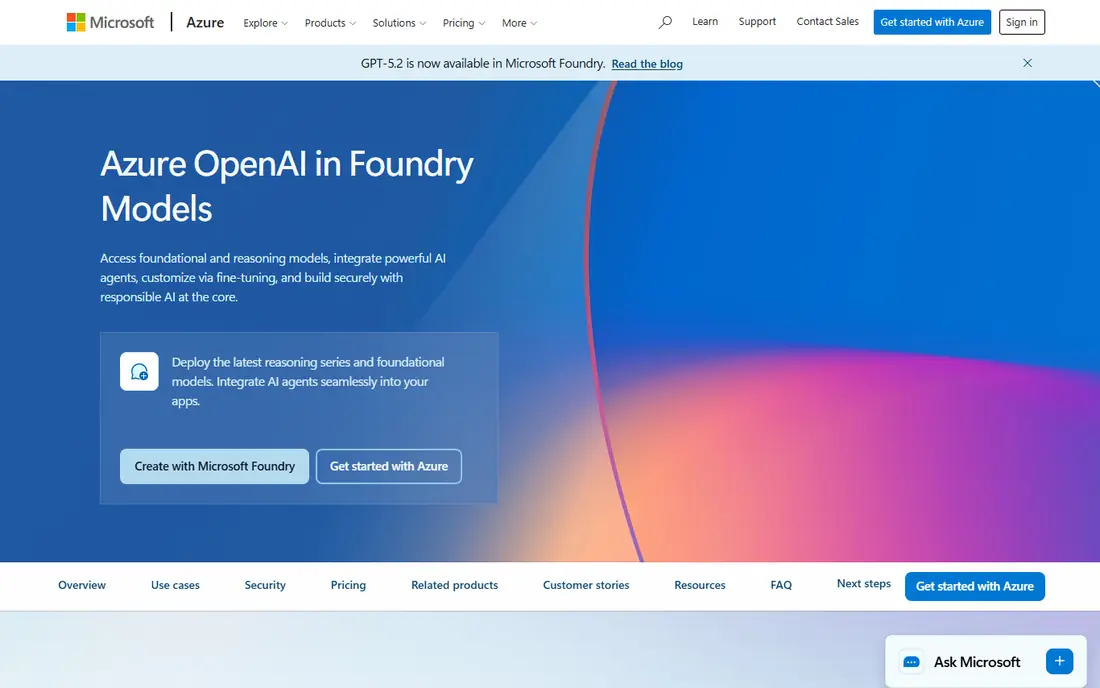
Azure OpenAI is the enterprise pick for companies that want OpenAI models without sending data outside their Azure compliance boundary. The service page confirms both pay-as-you-go pricing for variable workloads and provisioned throughput units for predictable capacity, plus a 99.9 percent availability guarantee.
The platform provides access to GPT, DALL-E, Whisper, and other OpenAI models with tools to moderate generated content, guidance for safe design, and responsible use criteria including capacity management. Data stays inside Azure, with enterprise security, private networking, and compliance certifications that direct OpenAI API usage cannot match.
The tradeoff is philosophical: you are still running OpenAI models, so this is a deployment change, not a vendor change, and some features remain under limited access. Azure OpenAI is the pick for Microsoft enterprises that need OpenAI models under Azure governance.
What we like- OpenAI models inside Azure compliance boundary
- Pay-as-you-go plus provisioned throughput units
- 99.9 percent availability guarantee
- Content moderation tools built in
Watch out for- Still OpenAI models, so not a true vendor switch
- Limited access controls for some features
- Pricing depends on Azure region and capacity

#4Amazon Bedrock
Best for: Multi-model access in AWS4.4/5 on
G2 (78 reviews, checked Oct 2026)
Visit aws.amazon.com
Starting pricePay as you go
Free planFree trial
Amazon Bedrock is the multi-model platform for teams that refuse to bet on one vendor. Its homepage confirms more than 100,000 organizations building generative AI applications and agents at production scale, with access to hundreds of foundation models from leading AI companies plus evaluation tools to pick the best model for each use case.
Bedrock AgentCore builds, connects, and optimizes agents securely at scale with any framework and model, while Bedrock Managed Agents combine OpenAI frontier models with AWS infrastructure for teams that want OpenAI models under AWS control. Cost tools include model distillation, running up to 500 percent faster and costing up to 75 percent less, prompt caching, and intelligent prompt routing cutting costs up to 30 percent.
New AWS customers receive up to 200 dollars in credits to try AWS AI for free. Amazon Bedrock is the pick for AWS shops that want model choice, enterprise security, and production agent tooling behind one API.
What we like- Hundreds of foundation models from leading AI companies
- AgentCore for production agents
- Model distillation cuts costs up to 75 percent
- New AWS customers get 200 dollars in credits
Watch out for- Model selection can overwhelm
- Pricing varies by model and region
- OpenAI models now available through managed agents, blurring the switch
Starting pricePay as you go
Free planYes
Groq is the speed pick, built on a simple insight: training creates possibility, but inference creates value, and inference is becoming the bottleneck. The homepage confirms Groq pioneered the LPU, a language processing unit designed for inference, now working alongside NVIDIA's next-generation GPUs through LPX to deliver fast, affordable inference at scale.
Groq serves open and proprietary models with extremely low latency, making it the choice for real-time applications: voice agents, live chat, interactive coding assistants, and any product where users wait on every token. The company is building hundreds of megawatts of capacity, with more on the way, to serve every customer, product, commit, and agent task.
The tradeoff is catalogue breadth: Groq runs fewer models than multi-model platforms, and fine-tuning options are thinner. Groq is the pick when latency matters more than model variety.
What we like- LPU inference hardware built for speed
- LPX works alongside NVIDIA GPUs
- Hundreds of megawatts of capacity
- Low-latency responses for real-time apps
Watch out for- Model catalogue is smaller than Bedrock or Together
- Speed focus means fewer fine-tuning tools
- Pricing is per-token and varies by model
Starting pricePay as you go
Free planYes
Together AI is the open-source model cloud, built for developers who want frontier open models without managing GPUs. Its homepage confirms serverless inference as the fastest way to run open-source models on demand, batch inference scaling to 30 billion tokens per model, dedicated inference with reserved throughput and a 99 percent uptime SLA, and GPU clusters from self-serve to thousands of GPUs.
The model catalogue spans text, image, video, code, and voice, including Kimi, Qwen, GLM, DeepSeek, MiniMax, and free models like Muse Spark Open and Ternary Bonsai. Fine-tuning improves accuracy and reduces hallucinations without managing training infrastructure, and code sandboxes, managed storage with zero egress fees, and agent skills through MCP round out the platform.
The tradeoff is that open models still trail frontier closed models on the hardest reasoning tasks, so benchmark before switching. Together AI is the pick for teams that want open-source flexibility, fast inference, and no infrastructure management.
What we like- Fastest way to run open-source models on demand
- Serverless, batch, and dedicated inference
- Fine-tuning without managing infrastructure
- Free models available
Watch out for- Open-source models trail frontier closed models on some tasks
- Pricing varies by model and deployment
- Research-heavy branding can confuse newcomers
Starting pricePay as you go
Free planNo
Mistral AI is the sovereign AI pick, built for organizations that refuse to let another company hold the strings to their AI. The homepage states the model plainly: Mistral makes the models, you keep them, with frontier open-weight models you can use as they are or tailor to your organization through Forge customization.
The platform lets you run models on-premises, in your VPC, or on Mistral infrastructure, keeping inference in-region and reserving dedicated GPU capacity for predictable throughput without managing hardware. Studio builds, governs, and improves agents and applications, and customers include AXA, ASML, Cisco, Snowflake, CMA CGM, HSBC, Ericsson, TotalEnergies, ESA, and BMW.
The tradeoff is ecosystem size: Mistral's developer community and integrations are smaller than OpenAI's or Google's. Mistral AI is the pick for European and regulated organizations that need sovereignty, open weights, and in-region control.
What we like- Frontier open models you own
- Run on-prem, in your VPC, or on Mistral infrastructure
- In-region inference for sovereignty
- Forge customization and Studio agent tools
Watch out for- Smaller ecosystem than US providers
- API pricing is per-token
- Enterprise features need sales engagement

#8Cohere
Best for: Enterprise RAG and agents4.2/5 on
G2 (27 reviews, checked Oct 2026)
Visit cohere.com
Starting pricePay as you go
Free planNo
Cohere is the enterprise RAG and agents pick, built around one promise: your AI, your rules. Its homepage confirms North by Cohere, a complete agentic enterprise AI platform that you control and deploy on your terms, with private, secure, and customizable deployment.
The platform excels at retrieval-augmented generation, semantic search, reranking, and enterprise agents, with solutions for investment teams, back-office automation, customer service, citizen services, engineering workflows, and energy operations. Security and data protection meet rigorous standards across security, availability, processing integrity, confidentiality, and privacy, and customers include Oracle, Dell Technologies, RBC, LG CNS, Fujitsu, Bell, Asana, SAP, Salesforce, TD Bank, McKinsey, and Accenture.
The tradeoff is accessibility: Cohere targets enterprises, so hobbyist tooling and free tiers are thinner than Google's or Together's. Cohere is the pick for enterprises building RAG systems and agents on private, governed infrastructure.
What we like- North agentic enterprise platform you control and deploy on your terms
- Strong RAG, search, and reranking
- Industry-leading security and data protection
- Trusted by Oracle, Dell, RBC, SAP, and Salesforce
Watch out for- Enterprise focus means less hobbyist tooling
- Pricing is per-token and quote-led for large deployments
- Smaller public developer community
How we chose
We compared OpenAI API alternatives using vendor homepages we opened on 27 October 2026 to confirm they load and belong to the vendor, plus October 2026 model announcements. Pricing is pay-as-you-go per token for all eight, so check each vendor's current pricing page for your models before committing, since per-token rates change with every model release. We did not claim hands-on testing.
What to check before you pick
Start from your migration cost. If your code uses OpenAI's chat completions format, Anthropic, Together, Groq, and Mistral offer the closest compatibility, while Bedrock and Azure need more adaptation. Test your prompts on the new model before switching, since the same prompt can produce different quality across models.
Next, check context windows, rate limits, and latency for your workload. Long-document apps need large context windows, real-time apps need Groq-level latency, and high-volume apps need provisioned throughput or dedicated capacity to avoid throttling.
Finally, check data governance and sovereignty. Azure and Bedrock keep data inside your cloud compliance boundary, Mistral and Cohere offer private and in-region deployment, and Together and Groq offer VPC and dedicated options. Confirm data retention, training opt-outs, and regional availability before sending production data.
Frequently asked questions
What is the best direct replacement for the OpenAI API?
Anthropic Claude API, for the closest combination of chat completions compatibility, tool use, structured outputs, and reasoning quality, with the new 5.5 model family from October 2026.
Is there a free alternative to the OpenAI API?
Yes. Google Gemini API offers a free tier, Together AI offers free models, Groq offers a free tier, and Amazon Bedrock offers 200 dollars in credits for new AWS customers.
Can I use OpenAI models without using OpenAI directly?
Yes. Azure OpenAI runs OpenAI models inside Azure, and Amazon Bedrock Managed Agents combine OpenAI frontier models with AWS infrastructure, both under enterprise governance.
Which alternative is fastest?
Groq, with custom LPU inference hardware built specifically for low-latency responses, making it the pick for real-time voice agents, live chat, and interactive applications.
Which alternative is best for open-source models?
Together AI, for the fastest serverless inference across frontier open models, plus fine-tuning, batch inference, and dedicated capacity without managing GPUs.
Do I need to rewrite my code to switch?
Usually not fully. Most alternatives support OpenAI-compatible endpoints or similar chat completions formats, but prompt behavior, tool schemas, and rate limits differ, so test thoroughly before migrating production traffic.
Sources we checked (8)
- https://www.anthropic.com
- https://ai.google.dev
- https://azure.microsoft.com/en-us/products/ai-services/openai-service
- https://aws.amazon.com/bedrock
- https://groq.com
- https://www.together.ai
- https://mistral.ai
- https://cohere.com
Is your product missing or out of date?
We review this list regularly. Vendors can request a listing, send updated pricing or ask about featured placement.

Shihab Mia · Founder, Rankite
Shihab has 5+ years in B2B and SaaS SEO. He writes Rankite's software buying guides from pricing pages, documentation and public user reviews. More about Shihab.
 Anthropic Claude API
 Google Gemini API
 Azure OpenAI
 Groq
 Together AI
 Mistral AI