How we make this list: we compare pricing pages, product documentation and public user reviews. Ratings come from G2, Capterra or Trustpilot, with the date we checked them.
Which is better for a small business site, Framer or Wix?
The answer depends on what the site must do. Wix is the safer pick for a small business that needs a site live this week. It offers guided setup, a large template library, built-in booking, forms and online store tools, and support that covers many common tasks in one place. A cafe, a salon, a local service firm or a small shop can start from a template, change the text and images, and publish without hiring a designer.
Framer is the better pick when design is the main selling point. It suits studios, agencies, startups and portfolio sites where the look of the site matters as much as the words. Its editor is closer to a design tool than a simple page builder, so it takes longer to learn. The result can look more polished, with smoother animation and more precise layout control.
How much do Framer and Wix really cost in 2026?
Framer charges per site. The Free plan costs $0. Basic costs $10 per month billed annually, or $15 per month on monthly billing. Pro costs $30 per month billed annually, or $45 per month on monthly billing. Scale costs $100 per month on annual billing only. Extra editors cost $20 per month on Basic and $40 per month on Pro and Scale. Content editors cost $10 per month.
Wix charges per site as well. Light costs $17 per month billed annually. Core costs $29 per month billed annually. Business costs $39 per month billed annually. Business Elite costs $159 per month billed annually. Wix often advertises a 50 percent discount for the first year. That discount ends after year one, so plan your second year budget on the full price, not the first year offer.
Framer gives more design control for a buyer who wants a custom look. It offers free-form layout, fine control over spacing and typography, and animation tools that feel closer to professional design software. You can start from a blank canvas or a template, then adjust almost every part of the page. That freedom is useful for a brand-led site, a landing page or a portfolio where the design must stand out.
Wix gives good design control with less effort. Its editor lets you drag elements into place, change fonts and colours, and use ready-made sections. You can make a clean, professional site without learning design software, and you can change a template without breaking the layout. Webflow sits above both for design control, with detailed control over layout, structure and interactions.
What should you check before you switch website builders?
Start with your content and your store. List every page, form, booking flow and product you need. Check that the new platform supports each item, either built in or through a trusted integration. A site that looks good but loses its booking form or its checkout flow is not a good move.
Next, check the domain, email and search setup. Make sure you can connect your own domain, keep your business email working, and set up redirects from old page addresses to new ones. Redirects protect your search traffic when page addresses change. Without them, visitors and search engines can land on broken pages.
How easy is it to move your site later?
Moving a site is rarely a simple copy and paste. Text and images usually move with some manual work. The design, the page structure and the built-in features often do not move. A Wix site cannot be exported as a working site to Framer or Webflow. A Framer site cannot be exported as a working site to Wix. You can rebuild the design on the new platform, but that takes time.
WordPress.org is the exception. You can move the site files and database to another host, and you can change themes without losing the content. WooCommerce follows the same model, because it runs on WordPress.
Quick comparison
| Tool | Best for | Starting price | Free plan |
|---|
 Framer | Design-led marketing sites, portfolios and startups that want a polished, modern look | Free $0; Basic $10 per month billed annually ($15 monthly); Pro $30 per month billed annually ($45 monthly); Scale $100 per month annual billing only | Yes, Free $0 per site with Framer branding and limits on pages and visitors |
 Wix | Small businesses that want a fast start, many templates and built-in business tools in one place | Light $17, Core $29, Business $39, Business Elite $159 per month billed annually | Yes, a free plan is available with Wix branding and a Wix subdomain, with limits on storage and features |
 Webflow | Designers and agencies that want full layout control and clean code for professional sites | Basic $15 per month billed annually; Premium $25 per month billed annually ($39 monthly) | Yes, a free Starter plan is available for learning and small test sites, with Webflow branding and limits |
 Squarespace | Small businesses, creatives and service firms that want strong templates and a clean, simple editor | Basic $19, Core $29, Plus $49, Advanced $99 per month billed annually | No free plan, but a free trial is available; paid plans start at Basic $19 per month billed annually |
 WordPress.org | Buyers who want full control, a large plugin range and the lowest software cost, and who can manage hosting | Free open-source software; hosting is separate, typically a few dollars to $25 or more per month | Yes, the WordPress.org software itself is free; you pay for hosting, a domain and optional themes or plugins |
 Shopify | Online stores that need reliable checkout, product management and sales tools as the main job | Basic $29 per month billed annually ($39 monthly), Grow $79 ($105), Advanced $299 ($399), Plus from $2,300 per month | No free plan, but a free trial is available; paid plans start at Basic $29 per month billed annually |
 WooCommerce | WordPress site owners who want a flexible store with full control over data and costs | Free plugin; hosting typically $25 to $350 per month; WooPayments 2.9 percent plus $0.30 per transaction | Yes, the WooCommerce plugin itself is free; you pay for hosting and optional extensions |
 BigCommerce | Growing stores that need strong built-in sales features and plan to scale beyond a small catalogue | Core $29, Growth $79, Scale $299 per month, Performance from $1,499 per month | No free plan, but a free trial is available; paid plans start at Core $29 per month |
Is your product missing or out of date?
We review this list regularly. Vendors can request a listing, send updated pricing or ask about featured placement.
8 website builders compared
#1Framer
Best for: Design-led marketing sites, portfolios and startups that want a polished, modern look4.5/5 on
G2 (144 reviews, checked Oct 2026)
Visit framer.com
Starting priceFree $0; Basic $10 per month billed annually ($15 monthly); Pro $30 per month billed annually ($45 monthly); Scale $100 per month annual billing only
Free planYes, Free $0 per site with Framer branding and limits on pages and visitors

Framer is built for buyers who care about how a site looks and feels. The editor gives precise control over layout, spacing, typography and motion, and the templates are modern and clean. A startup can launch a landing page that looks like it came from a design studio, without hiring a developer for the first version. The trade-off is scope. Framer is not a full business platform in the way Wix is, so booking, stores and forms often need extra tools that add cost.
What we like- Strong design freedom, smooth animation, fast publishing, good templates for landing pages and portfolios
Watch out for- Fewer built-in business tools than Wix, so booking, stores and forms often need paid integrations
#2Wix
Best for: Small businesses that want a fast start, many templates and built-in business tools in one place4.2/5 on
G2 (1,888 reviews, checked Oct 2026)
Visit wix.com
Starting priceLight $17, Core $29, Business $39, Business Elite $159 per month billed annually
Free planYes, a free plan is available with Wix branding and a Wix subdomain, with limits on storage and features
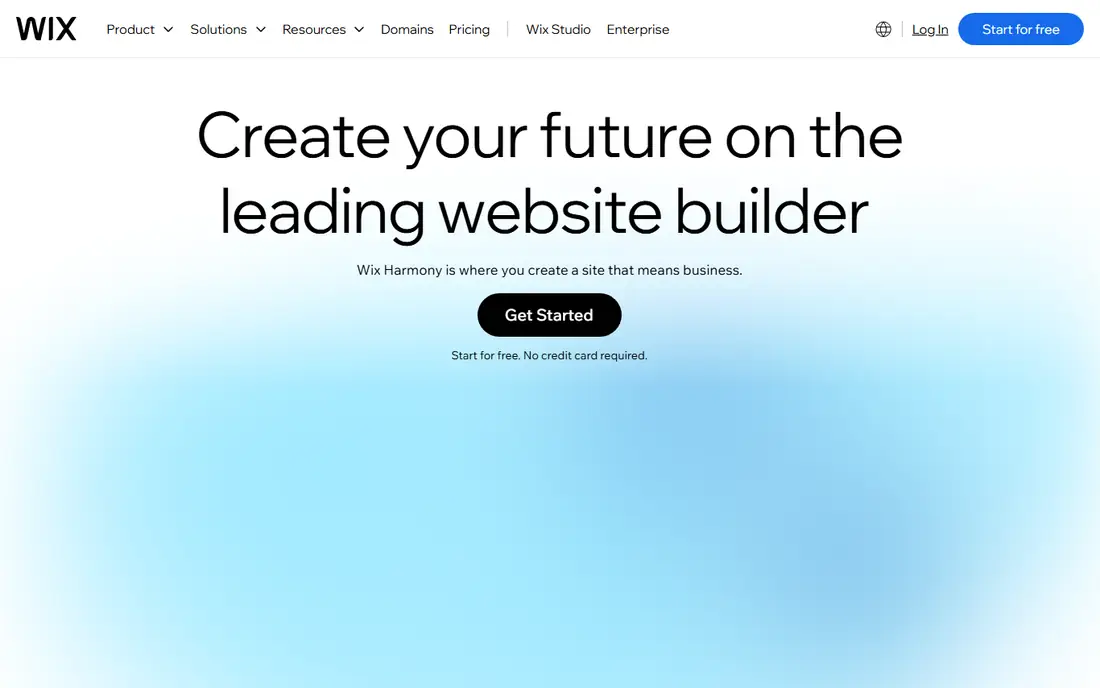
Wix is the easiest option in this list for a first business site. The setup guides you through the basics, the templates cover most industries, and the editor is simple to learn. A small business can add booking, a contact form, a blog and a small store without extra software. The app market adds more tools when you need them, though some apps cost extra. You cannot switch templates freely after you build a site, so choose the template with care and budget for the full renewal price.
What we like- Very easy to start, large template library, built-in booking, forms, blog and store tools, broad app market
Watch out for- Template switching is limited once you start, and the 50 percent first-year discount renews at full price
#3Webflow
Best for: Designers and agencies that want full layout control and clean code for professional sites4.4/5 on
G2 (995 reviews, checked Oct 2026)
Visit webflow.com
Starting priceBasic $15 per month billed annually; Premium $25 per month billed annually ($39 monthly)
Free planYes, a free Starter plan is available for learning and small test sites, with Webflow branding and limits
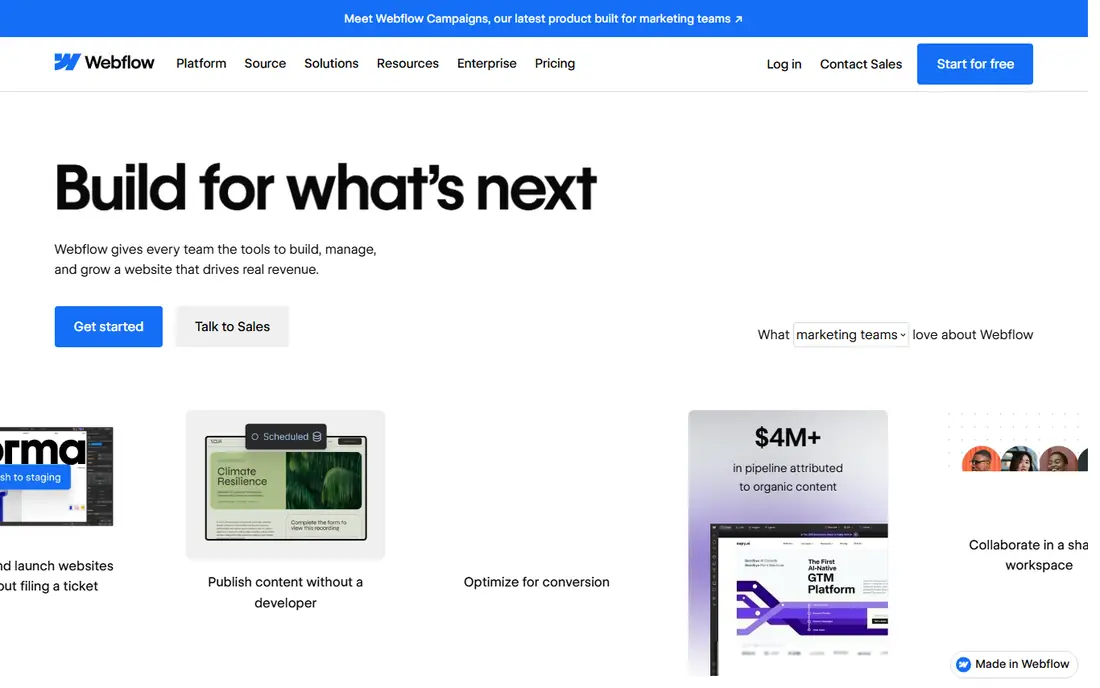
Webflow is the strongest pick when design control matters most. It lets you control layout, spacing, typography and interactions in detail, and it produces code that developers can work with. The CMS is useful for blogs, case studies and content-led sites, and the Premium plan, formed in May 2026 from the merger of the CMS and Business plans, is the right tier for most content sites. A beginner will take longer to build a first site in Webflow than in Wix, so allow time to learn the editor.
What we like- Full design control, clean code output, strong CMS for blogs and content sites, good performance for marketing sites
Watch out for- Steeper learning curve than Wix or Squarespace, and the Premium bandwidth figure should be confirmed at publication because sources conflict
#4Squarespace
Best for: Small businesses, creatives and service firms that want strong templates and a clean, simple editor4.4/5 on
G2 (1,133 reviews, checked Oct 2026)
Visit squarespace.com
Starting priceBasic $19, Core $29, Plus $49, Advanced $99 per month billed annually
Free planNo free plan, but a free trial is available; paid plans start at Basic $19 per month billed annually
Squarespace is a solid middle ground between Wix and Webflow. The templates are polished and consistent, and the editor is clean and simple to use. A photographer, a consultant or a small shop can build a site that looks professional without much design skill. Blogging and portfolio tools are strong, and the higher plans add store and scheduling features that suit a service business. Prices changed in July 2026, when the plans were renamed to Basic $19, Core $29, Plus $49 and Advanced $99 per month billed annually.
What we like- Polished templates, good blogging and portfolio tools, built-in store and scheduling features on higher plans
Watch out for- Less design freedom than Webflow or Framer, and fewer third-party integrations than WordPress or Wix
#5WordPress.org
Best for: Buyers who want full control, a large plugin range and the lowest software cost, and who can manage hosting4.4/5 on
G2 (9,546 reviews, checked Oct 2026)
Visit wordpress.org
Starting priceFree open-source software; hosting is separate, typically a few dollars to $25 or more per month
Free planYes, the WordPress.org software itself is free; you pay for hosting, a domain and optional themes or plugins
WordPress.org is free software, not a hosted service. You install it on your own hosting, choose a theme, and add plugins for the features you need. That gives you full control over the site, the data and the design, and you can move the site to another host when you want. The plugin range is the largest of any platform in this list, which makes it a good pick for a blog, a content site or a custom business site. The trade-off is work, because you must handle updates, backups and security.
What we like- Full control over design and data, huge theme and plugin range, easy to move between hosts, strong for SEO and blogging
Watch out for- You must manage hosting, updates and security yourself, and setup takes longer than a hosted builder
#6Shopify
Best for: Online stores that need reliable checkout, product management and sales tools as the main job4.4/5 on
G2 (5,144 reviews, checked Oct 2026)
Visit shopify.com
Starting priceBasic $29 per month billed annually ($39 monthly), Grow $79 ($105), Advanced $299 ($399), Plus from $2,300 per month
Free planNo free plan, but a free trial is available; paid plans start at Basic $29 per month billed annually
Shopify is the best pick in this list when selling online is the main job. The checkout is reliable, product management is clear, and the app store covers shipping, marketing, accounting and many other store needs. A small shop can start on Basic and move to Grow or Advanced as sales grow. Prices also vary by region and by read date. A 16 November 2026 read showed Grow at $89 and Advanced at $359 on yearly billing, and a non-US read showed Basic at $19 and Grow at $49. Confirm the price at checkout before you commit.
What we like- Strong checkout and store tools, large app store, reliable hosting and support for growing stores
Watch out for- Monthly costs rise with apps and transaction fees, and price reads vary by region, so confirm the price at checkout
#7WooCommerce
Best for: WordPress site owners who want a flexible store with full control over data and costs4.4/5 on
G2 (1,283 reviews, checked Oct 2026)
Visit woocommerce.com
Starting priceFree plugin; hosting typically $25 to $350 per month; WooPayments 2.9 percent plus $0.30 per transaction
Free planYes, the WooCommerce plugin itself is free; you pay for hosting and optional extensions
WooCommerce is a free plugin that turns a WordPress site into a store. It suits a buyer who already uses WordPress, or who wants full control over the store and its data. You can choose your host, your payment provider and your extensions, and you are not tied to one platform fee. The extension range covers shipping, tax, bookings, memberships and many other store needs. Hosting typically costs $25 to $350 per month, depending on traffic and the host you choose. WooPayments charges 2.9 percent plus $0.30 per transaction in the US.
What we like- Free core plugin, full control over store data, huge extension range, no monthly platform fee for the core software
Watch out for- Setup and upkeep take more work than Shopify, and hosting and extension costs can add up for a large store
#8BigCommerce
Best for: Growing stores that need strong built-in sales features and plan to scale beyond a small catalogue4.2/5 on
G2 (580 reviews, checked Oct 2026)
Visit bigcommerce.com
Starting priceCore $29, Growth $79, Scale $299 per month, Performance from $1,499 per month
Free planNo free plan, but a free trial is available; paid plans start at Core $29 per month
BigCommerce is a hosted store platform for growing businesses. It includes more sales features built in than many rivals, which suits a store with a larger catalogue or more complex needs. The plans were renamed in June 2026 to Core $29, Growth $79, Scale $299 per month, with Performance from $1,499 per month. GMV caps apply, with $30K and $100K tiers on the lower plans, and 0.9 percent overage on Scale, so a fast-growing store should check its sales volume against the cap before choosing a plan.
| Tool |
Starting price (annual billing) |
Free plan |
Best for |
| Framer |
$10 per month |
Yes, $0 |
Design-led marketing sites |
| Wix |
$17 per month |
Yes, with limits |
Small business sites |
| Webflow |
$15 per month |
Yes, Starter |
Design control and CMS |
| Squarespace |
$19 per month |
No, trial only |
Templates and portfolios |
| WordPress.org |
$0 software, hosting extra |
Yes, software free |
Full control and blogging |
| Shopify |
$29 per month |
No, trial only |
Online stores |
| WooCommerce |
$0 plugin, hosting extra |
Yes, plugin free |
WordPress stores |
| BigCommerce |
$29 per month |
No, trial only |
Growing stores |
What we like- Strong built-in store features, good for larger catalogues, no transaction fee on most plans, solid multi-channel selling
Watch out for- GMV caps apply on lower plans, with 0.9 percent overage on Scale, and the editor is less flexible than Webflow for design-led sites
Frequently asked questions
Sources we checked (8)
- https://www.framer.com/pricing
- https://www.wix.com/pricing
- https://webflow.com/pricing
- https://www.squarespace.com/pricing
- https://wordpress.org
- https://www.shopify.com/pricing
- https://woocommerce.com/pricing
- https://www.bigcommerce.com/pricing
How we picked
We picked these eight tools because they cover the main ways to build a site in 2026, from simple hosted builders to WordPress and dedicated store platforms. We compared price, ease of use, design control and business tools. Prices are search-verified, not individually homepage-opened, so check the vendor pricing page before you buy. The Webflow bandwidth figure and Shopify regional price reads are flagged as publication spot-checks.
Last verified: 19 November 2026
Is your product missing or out of date?
We review this list regularly. Vendors can request a listing, send updated pricing or ask about featured placement.

Shihab Mia · Founder, Rankite
Shihab has 5+ years in B2B and SaaS SEO. He writes Rankite's software buying guides from pricing pages, documentation and public user reviews. More about Shihab.