How we make this list: we compare pricing pages, product documentation and public user reviews. Ratings come from G2, Capterra or Trustpilot, with the date we checked them.
Key takeaways
- Sanity suits developer-led teams that want structured content defined in code and queried flexibly.
- Strapi and Directus suit teams that want to self-host and own their data and infrastructure.
- Storyblok suits marketing teams that need a visual editor for building pages without developer help.
- Hygraph suits GraphQL-native teams with federated or relational content models.
- Prismic, DatoCMS, ButterCMS, and Cosmic suit smaller teams and agencies that want fast setup and simple editing.
Quick comparison
| Tool | Best for | Starting price | Free plan |
|---|
 Sanity | Developer-led structured content | $15 per user/month | Yes |
 Strapi | Self-hosted open source CMS | See website | Yes |
 Storyblok | Visual editing for marketers | $99 per month | Yes |
 Hygraph | GraphQL-native content | $199 per month | Yes |
 Directus | Database-first backend | $99 per month | Yes |
 Prismic | Slice-based marketing pages | See website | Yes |
 DatoCMS | Clean editorial experience | $149 per month | Yes |
 ButterCMS | Fast setup for small teams | See website | Yes |
 Cosmic | Multi-brand content workspaces | $99 per month | Yes |
Is your product missing or out of date?
We review this list regularly. Vendors can request a listing, send updated pricing or ask about featured placement.
The best Contentful alternatives for websites, apps, and omnichannel content
#1Sanity
Best for: Developer-led structured content4.7/5 on
G2 (926 reviews, checked Oct 2026)
Visit sanity.io
Starting price$15 per user/month
Free planYes
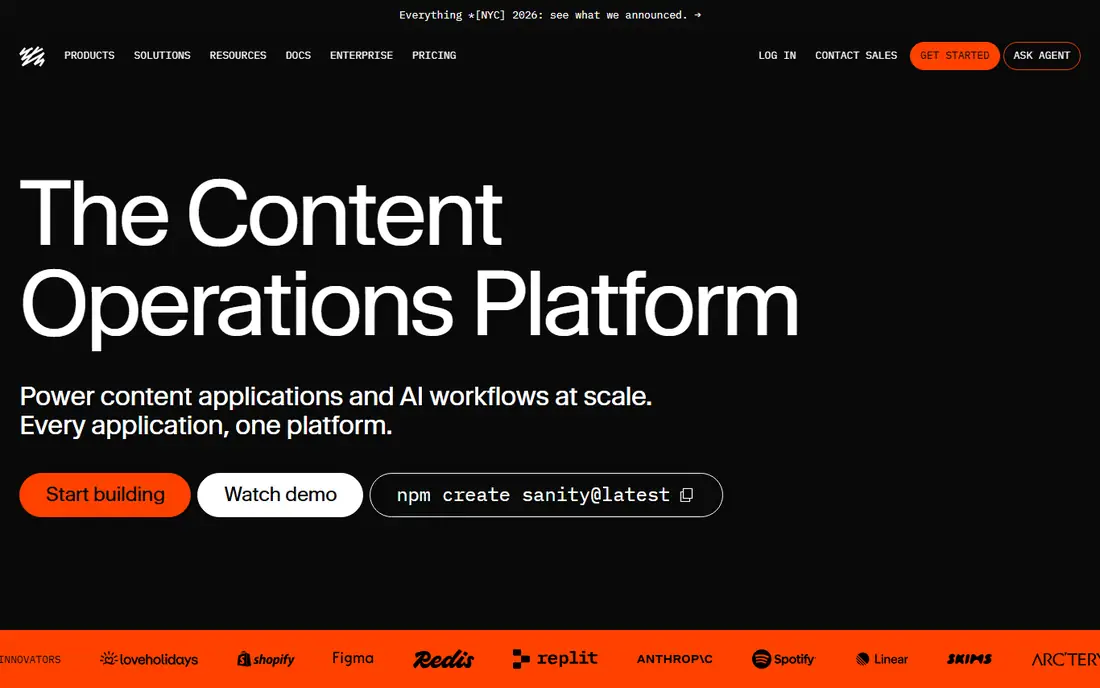
Sanity treats content as structured data, not as pages. Developers define schemas in TypeScript, store content in the Content Lake, and query it with GROQ or GraphQL for any channel, from websites to apps to AI tools. Editors work in Sanity Studio, which can be customized heavily, with live preview, releases, and multiplayer editing. That combination suits teams that publish the same content across many surfaces and want strict control over structure.
The cost is complexity at the start. A team without developer time will move slower than with Storyblok or ButterCMS, since studio customization and schema design are code work. Pricing is seat-based, which avoids the API-metering surprises some teams report with Contentful. For engineering-led content operations, Sanity is the strongest Contentful replacement.
What we like- Schema defined in code and versioned in Git
- Flexible GROQ and GraphQL queries
- Real-time collaboration
Watch out for- Learning curve for editors used to page builders
- Custom studio setup takes developer time
#2Strapi
Best for: Self-hosted open source CMS4.5/5 on
G2 (204 reviews, checked Oct 2026)
Visit strapi.io
Starting priceSee website
Free planYes
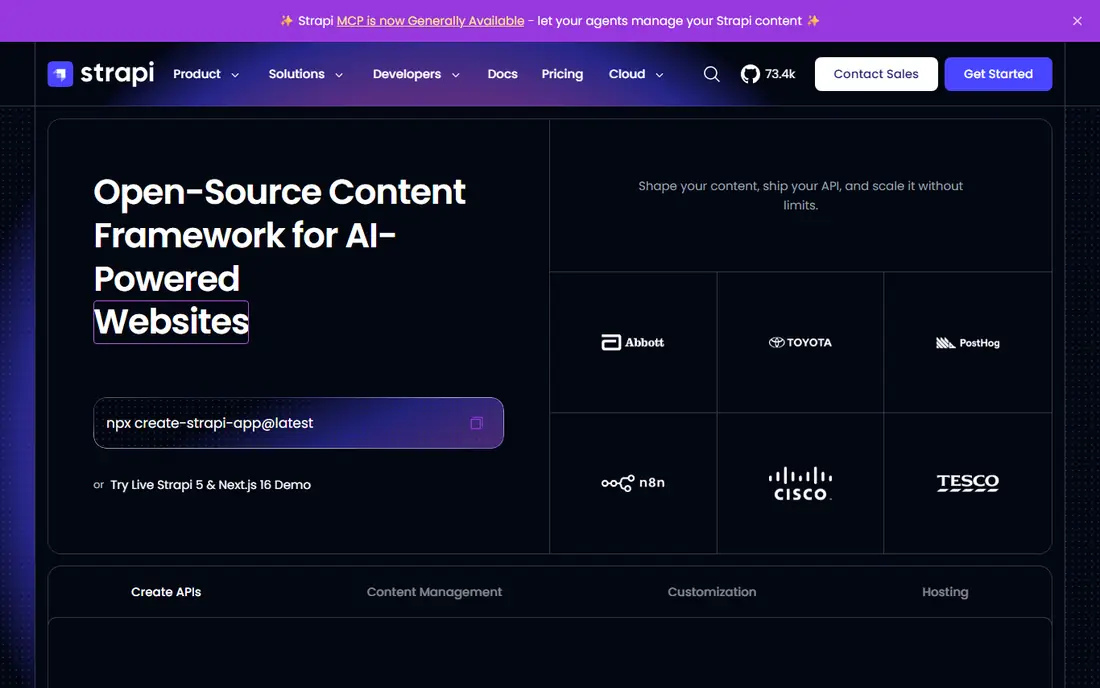
Strapi is the pick when data ownership matters most. It is open source, runs on your own servers or any host, and gives a content type builder, components, dynamic zones, and custom fields for modeling content. Developers can extend it with custom controllers, services, and plugins, and Strapi Cloud offers a managed option for teams that want hosting handled. Because the code is yours, there is no vendor lock-in on data or deployment.
Self-hosting brings responsibility. Your team handles updates, backups, scaling, and security, which suits teams with DevOps skills but not teams that want a fully managed service. Editor tools are functional rather than visual, so marketers may need developer help for complex pages. For control and long-term cost, Strapi is hard to beat.
What we like- Open source and self-hostable
- Full control over data and hosting
- REST and GraphQL APIs
Watch out for- You own hosting, updates, and security
- Editor experience is plainer than Storyblok
#3Storyblok
Best for: Visual editing for marketers4.5/5 on
G2 (592 reviews, checked Oct 2026)
Visit storyblok.com
Starting price$99 per month
Free planYes
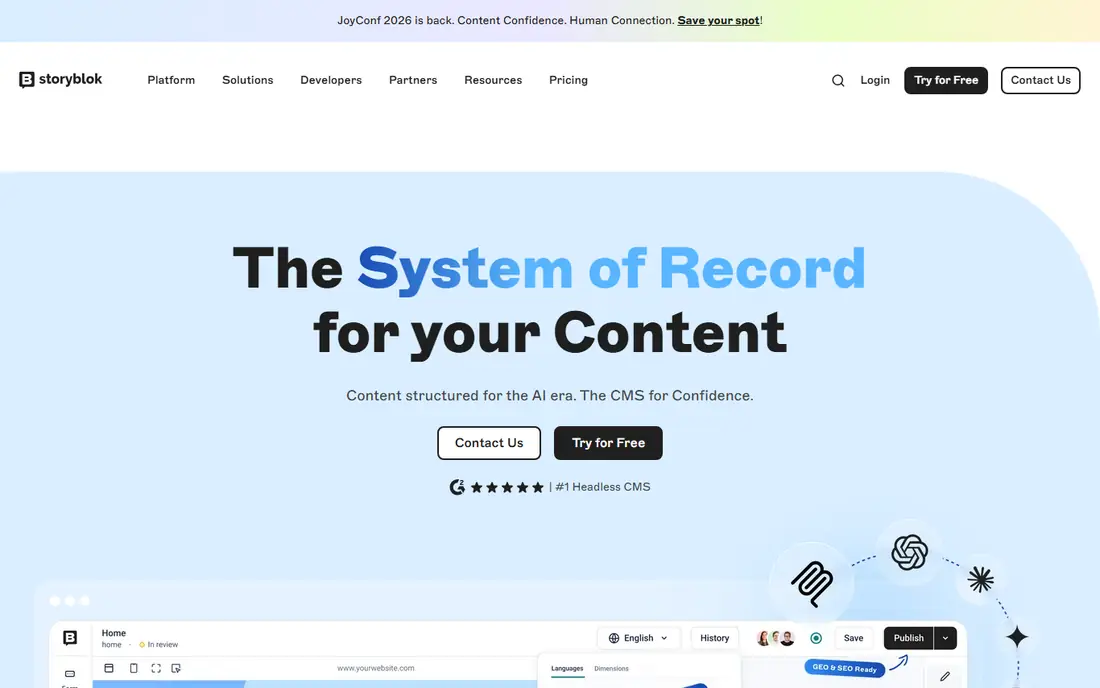
Storyblok solves the complaint many Contentful teams have: editors cannot build pages without developer help. Its visual editor lets marketers assemble pages from components, preview changes live, and publish without touching code, while developers keep control over the component definitions. That split speeds up campaign pages, landing pages, and site updates, and it explains why agencies adopt Storyblok for client sites.
Pricing starts at a moderate monthly rate, but costs rise with seats and features, so model the total at your real team size. Content modeling is component-based rather than fully code-first, which suits marketing sites more than complex data apps. If editor independence is your main goal, Storyblok is the best fit in this list.
What we like- Visual editor with live preview
- Component-based pages marketers can build
- Strong agency ecosystem
Watch out for- Higher tiers cost more as seats grow
- GraphQL access sits on higher plans
#4Hygraph
Best for: GraphQL-native content4.4/5 on
G2 (735 reviews, checked Oct 2026)
Visit hygraph.com
Starting price$199 per month
Free planYes
Hygraph, formerly GraphCMS, is built around GraphQL from the ground up. Content models are relational, queries are precise, and federation lets teams combine content with data from other systems, such as commerce or CRM platforms, in one API. That design suits enterprise teams managing brands, regions, and portals from one governed system, with environments, roles, and publishing controls to match.
Hygraph is not a beginner tool. Teams need GraphQL comfort to get full value, and the entry price reflects an enterprise focus. Small teams with a simple marketing site will find cheaper options here. For GraphQL stacks and complex content ecosystems, Hygraph gives the cleanest API story of any Contentful alternative.
What we like- GraphQL-native API and federation
- Relational content models
- Strong governance for enterprises
Watch out for- Requires GraphQL skills
- Entry price is high for small teams
Starting price$99 per month
Free planYes
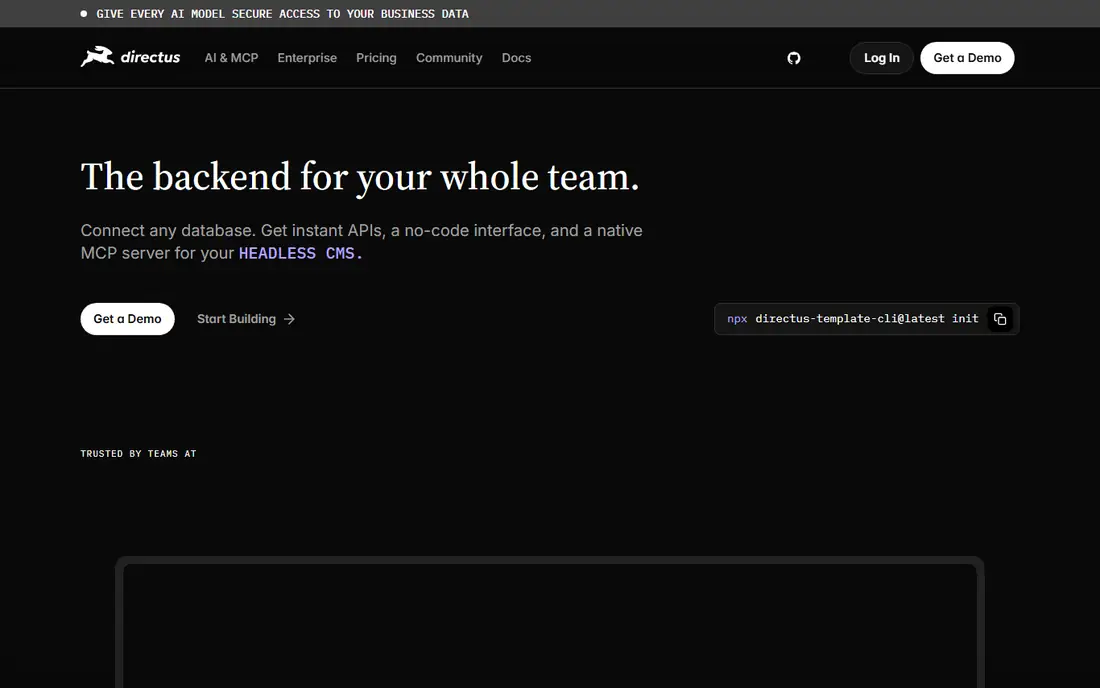
Directus takes a different route: connect it to an existing SQL database and it generates REST and GraphQL APIs, plus a no-code admin interface, on top of that data. That makes it ideal for teams that already have a database, an internal tool, or a legacy system to modernize. Permissions, dashboards, file management, and workflows sit in the same platform, and self-hosting keeps data under your control. Directus Cloud removes hosting work for a monthly fee.
Because Directus mirrors your database, content modeling feels more database-like than editorial. Marketing teams that want page building may prefer Storyblok or Prismic. For data-driven apps, internal tools, and projects where the database already exists, Directus is a practical and flexible Contentful alternative.
What we like- Wraps your existing SQL database with APIs
- Self-hostable
- No-code admin plus custom extensions
Watch out for- Content modeling follows your database schema
- Editor polish trails dedicated CMS tools
Starting priceSee website
Free planYes
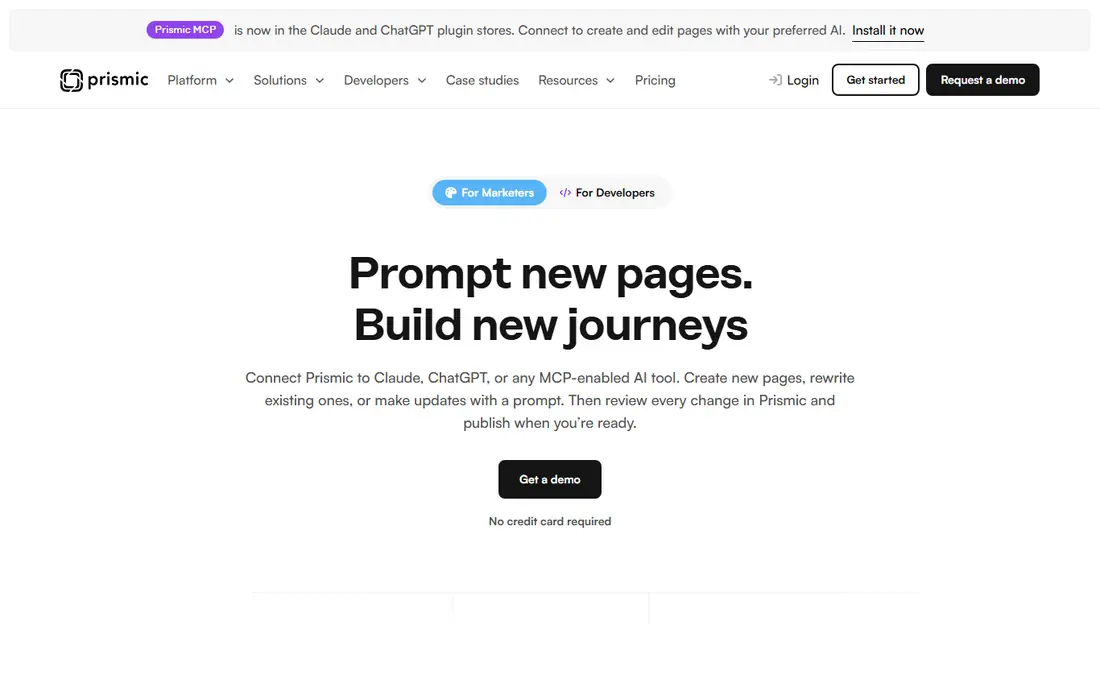
Prismic is built for marketing websites. Developers define page types and reusable slices, which are sections such as hero blocks, testimonials, or pricing tables, and marketers then assemble pages from those slices without code. Preview shows exactly how a page will look before publishing, and version history tracks every change. Integrations with Next.js, Nuxt, and SvelteKit keep developer setup smooth, and newer AI features help draft and localize pages.
Prismic suits marketing sites more than complex apps or large editorial operations. Teams that need deep workflow, many locales, or enterprise governance should check higher tiers before committing. For a marketing team that wants fast, on-brand page building with developer guardrails, Prismic is a strong, focused choice.
What we like- Slice builder for reusable page sections
- Preview before publishing
- Strong Next.js and Nuxt support
Watch out for- Pricing tiers have changed over time, so confirm the current plan
- Enterprise features need higher tiers
Starting price$149 per month
Free planYes
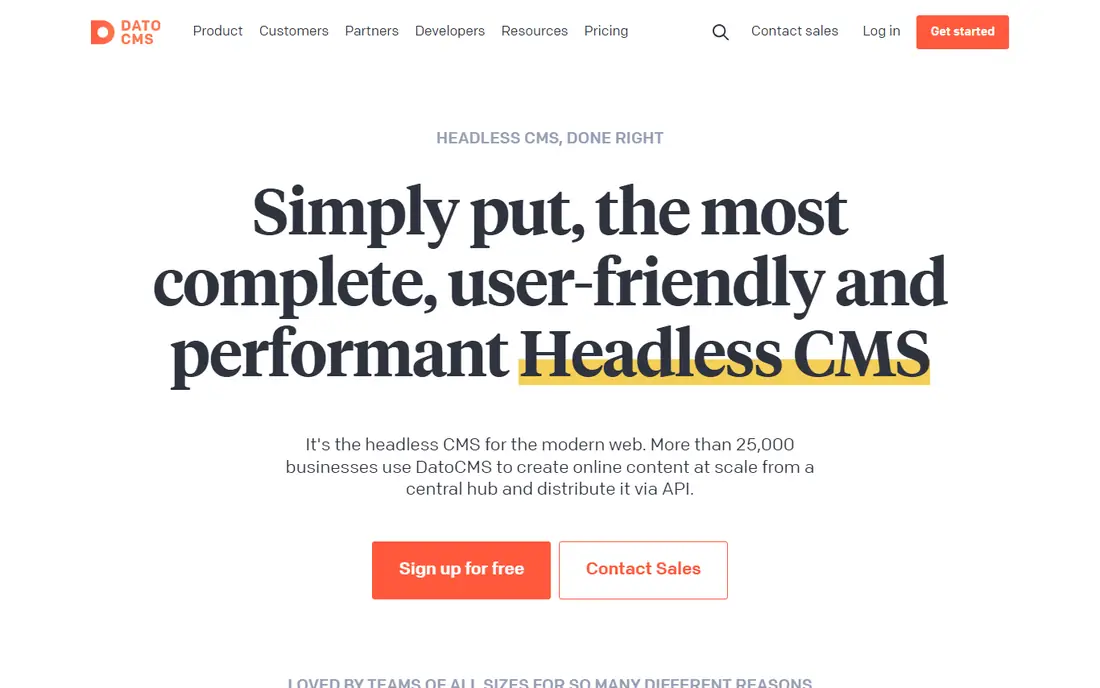
DatoCMS is known for a clean, fast editorial experience. Editors get an intuitive interface for structured content, media, and localization, while developers get GraphQL and REST APIs, webhooks, and a global CDN for delivery. The image pipeline handles optimization and transformations, which helps performance without extra tooling. DatoCMS suits agencies and product teams that want a dependable, pleasant CMS without heavy customization work.
The main cautions are price and ecosystem size. Professional pricing is in euros, so US teams should convert before budgeting, and the plugin community is smaller than Strapi's. For teams that value editorial polish and speed over deep customization, DatoCMS is one of the most enjoyable Contentful alternatives to use daily.
What we like- Polished editor interface
- GraphQL and REST APIs
- Fast global CDN and image pipeline
Watch out for- Pricing is in euros, which varies for US budgets
- Community is smaller than Strapi or Sanity
Starting priceSee website
Free planYes
ButterCMS targets teams that want to launch quickly. It offers pages, blog posts, and collections with a simple API, plus SDKs for React, Vue, Next.js, and other frameworks. Marketers can publish campaigns, landing pages, and blog content without developer help, while developers integrate in hours rather than days. Localization, SEO fields, and scheduling cover the common marketing needs without extra configuration.
ButterCMS is less suited to large, complex content operations with many workflows and governance rules. Enterprise teams may need Sanity, Hygraph, or Storyblok instead. For startups, small agencies, and marketing sites that need a headless CMS this week, ButterCMS gives the fastest path from signup to published content.
What we like- Very fast setup
- Marketer-friendly pages, blog, and collections
- Good framework SDKs
Watch out for- Less suited to complex enterprise content models
- Pricing details need a current quote
Starting price$99 per month
Free planYes
Cosmic organizes content around workspaces and buckets, which helps teams that run many brands, sites, or locales. Shared content models can be reused across properties, while each brand keeps its own bucket, team, and API keys. Hosting is fully managed with edge caching, image optimization, and version history, so teams never run servers. AI tools help draft, translate, and publish content across brands and locales.
Cosmic's ecosystem is smaller than the largest headless CMS platforms, so check integrations for your specific stack. Plan limits on objects and team members also matter for large catalogs. For agencies and multi-brand teams that juggle many sites, Cosmic reduces the overhead of separate installs and separate bills.
What we like- Workspaces for many brands under one bill
- Managed hosting and CDN
- AI-assisted content tools
Watch out for- Smaller ecosystem than Sanity or Strapi
- Object limits vary by plan
How we chose
We compared vendor pricing pages, documentation, and public reviews on G2, Capterra, and Reddit, and we checked each vendor homepage to confirm the product still exists and accepts new customers. We favored tools that replace the core Contentful job, meaning structured content modeling, API delivery, and editorial workflows, over traditional page-only CMS platforms. We also weighed self-hosting, visual editing, API style, pricing, and fit for developers versus marketers, so the list covers more than one kind of team.
Choosing the right Contentful alternative
Start with who edits and who builds
If marketers build pages, Storyblok, Prismic, and ButterCMS lead. If developers model content in code, Sanity and Strapi lead. If data already lives in a database, Directus leads. That single question narrows nine options to two or three quickly, and it prevents buying a developer tool for a marketing problem, or the reverse.
Check how pricing scales with your growth
Seat pricing, API metering, and object limits punish different growth patterns. Count editors, locales, content volume, and API traffic, then price each tool at your size in a year, not just today. Self-hosted tools shift cost from licenses to engineering time, so include hosting and maintenance in the comparison.
Migrate one content type first
Rebuild a single content type, such as blog posts, in the new CMS and deliver it to your frontend before migrating everything. That test reveals schema gaps, preview issues, and localization limits early. A full migration without a pilot often discovers those problems after the old CMS is already cancelled.
Frequently asked questions
What is the best overall Contentful alternative?
Sanity is the best overall replacement for developer-led teams, while Storyblok is the best for marketing-led teams. Strapi is the best for self-hosting. The right pick depends on whether developers, marketers, or data ownership drive your decision.
Is there a free headless CMS alternative?
Yes. Strapi and Directus are free to self-host, and Sanity, Storyblok, Hygraph, Prismic, DatoCMS, ButterCMS, and Cosmic all offer free plans with limits. Free plans suit prototypes and small sites, while production sites usually need a paid plan for seats, locales, or traffic.
Can I self-host a Contentful alternative?
Yes, with Strapi and Directus. Both are open source and run on your own infrastructure, giving full control over data and hosting. Sanity, Storyblok, Hygraph, Prismic, DatoCMS, ButterCMS, and Cosmic are cloud platforms, though some offer dedicated hosting options.
Which alternative is best for Next.js?
Sanity, Storyblok, Prismic, and Hygraph all pair well with Next.js, with SDKs, preview support, and starter templates. Sanity is the most common pick for complex Next.js content models, while Storyblok and Prismic suit marketing sites built with Next.js. Test preview and draft handling during a trial, since that workflow differs across tools.
How hard is it to migrate from Contentful?
Migration effort depends on content model complexity, assets, and locales. Simple blogs migrate in days, while large multi-locale sites with custom workflows take weeks. Most vendors offer import tools or migration help, and a pilot migration of one content type is the safest way to estimate the full effort.
Do these tools support localization?
Yes, all nine tools support multiple locales, though limits vary by plan. Free plans often cap locales, while paid plans raise or remove those caps. If you publish in many languages, confirm locale limits, fallback rules, and translation workflows before choosing.
Sources we checked (9)
- https://www.sanity.io/pricing
- https://strapi.io/pricing
- https://www.storyblok.com/pricing
- https://hygraph.com/pricing
- https://directus.io/pricing
- https://prismic.io/pricing
- https://www.datocms.com/pricing
- https://buttercms.com/pricing
- https://www.cosmicjs.com/pricing
Is your product missing or out of date?
We review this list regularly. Vendors can request a listing, send updated pricing or ask about featured placement.

Shihab Mia · Founder, Rankite
Shihab has 5+ years in B2B and SaaS SEO. He writes Rankite's software buying guides from pricing pages, documentation and public user reviews. More about Shihab.