How we make this list: we compare pricing pages, product documentation and public user reviews. Rankite is independent; if a vendor ever pays for a featured spot, that listing is clearly labeled Partner.
Key takeaways
- Substack and Medium give you built-in distribution for free, but you share revenue or pay for full access.
- Ghost and WordPress.com give you the most control, at the cost of doing your own promotion.
- Blogger remains the only completely free platform with a custom domain option.
- If newsletters are your main income, Ghost's flat pricing beats Substack's 10% cut once revenue grows.
- Wix and Squarespace are website builders first; they suit writers who want a blog plus a full site.
Quick comparison
| Tool | Best for | Starting price | Free plan |
|---|
 WordPress.com WordPress.com | zero-maintenance hosted blogs | $4/month (billed annually) | Yes |
 Medium Medium | built-in discovery and audience | Free | Yes |
 Ghost Ghost | newsletters plus paid memberships | $18/month (billed annually) | Free trial (14 days) |
 Substack Substack | email-first publishing | Free | Yes |
 Blogger Blogger | zero-cost hobby blogging | Free | Yes |
 Wix Wix | writers who want a full website | Free | Yes |
 Squarespace Squarespace | design-forward blogs | From $19/month (Basic, billed annually) | Free trial (14 days) |
Is your product missing or out of date?
We review this list regularly. Vendors can request a listing, send updated pricing or ask about featured placement.
The best blog platform for writers
Starting price$4/month (billed annually)
Free planYes
WordPress.com is the hosted version of WordPress, run by Automattic, and it removes the technical work that scares writers away from self-hosting. You write, you hit publish, and hosting, security, and updates are handled. The free plan puts your blog on a subdomain with ads; the $4-a-month Personal plan (billed annually) adds a custom domain and removes ads, while higher tiers add plugins and developer tools.
The real argument for WordPress.com is optionality: you can start simple and grow into plugins, custom themes, and even ecommerce without migrating. It is not the prettiest writing experience out of the box, and serious SEO requires plugins. But for writers who want a real home for their work that they fully control, it remains the safest long-term choice. The monthly and annual prices differ noticeably, so annual billing is the sensible default for committed bloggers.
What we like- Powers a huge share of the web
- Massive theme and plugin ecosystem
- No traffic limits
Watch out for- Ads on the free plan
- Plugin access requires higher plans
- Can feel dated next to newer platforms
Starting priceFree
Free planYes
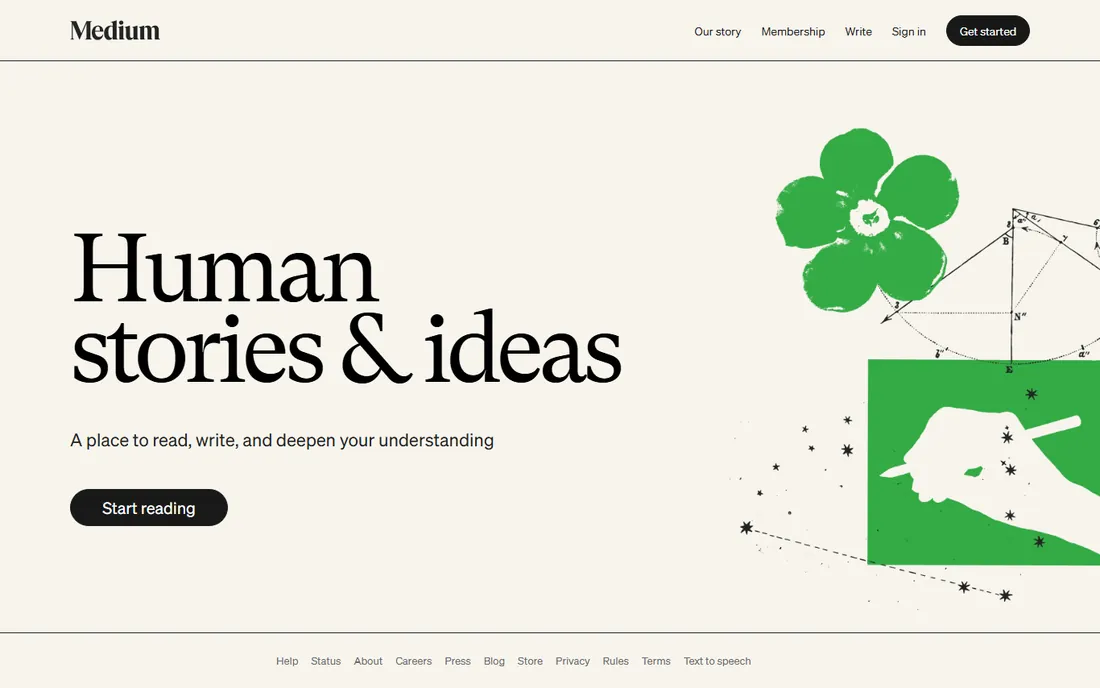
Medium is the easiest way to get your writing in front of strangers. Publishing is free, the editor is clean, and the recommendation feed does your distribution work. If you want to earn through the Partner Program, you need a membership at $5 a month or $50 a year, and you must put stories behind the paywall.
The trade-offs are control and ownership: your publication lives inside Medium's branding, the algorithm decides who sees your work, and you cannot take your audience anywhere without effort. It is a great place to practice in public and find readers, especially in popular topics like personal development, tech, and culture where the feed has the most appetite. It is not a great place to build an asset you own, because the relationship with your readers in the end belongs to the platform.
What we like- Beautiful reading experience
- Built-in audience and recommendations
- Partner Program pays for member engagement
Watch out for- You need a membership ($5/month or $50/year) for full access and the Partner Program
- Limited customization
- No custom domain for free
Starting price$18/month (billed annually)
Free planFree trial (14 days)
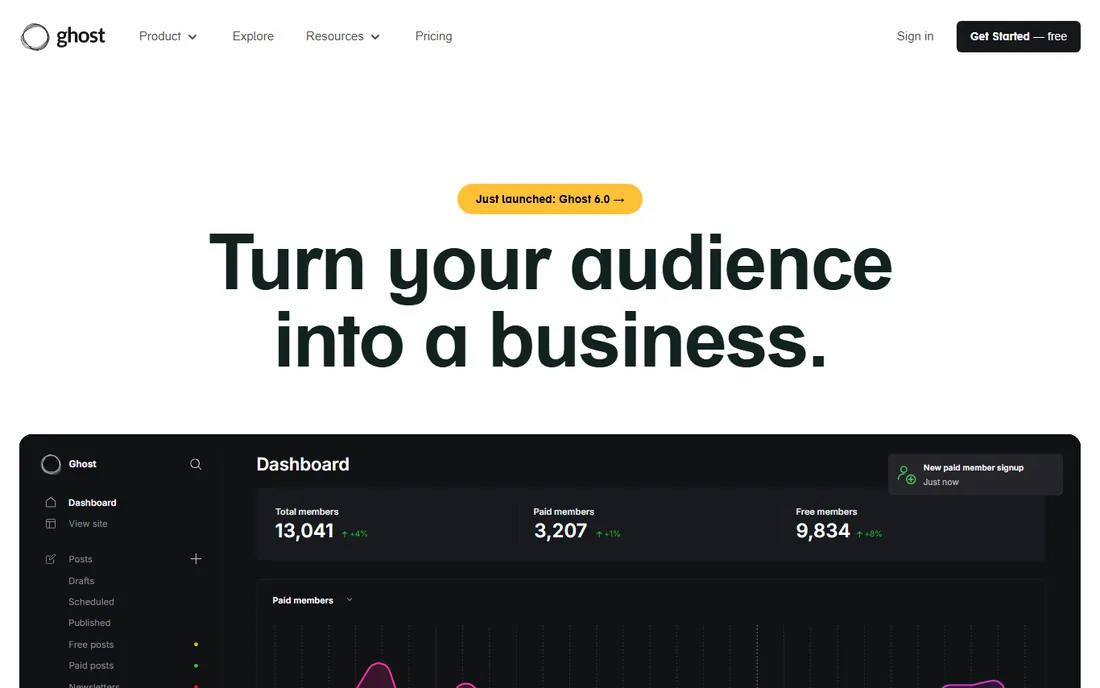
Ghost is the independent publisher's answer to Substack: a full website, newsletter, and paid membership business in one platform, with Ghost taking zero percent of your subscription revenue. Managed hosting starts at $18 a month billed annually, and the software itself is open source if you want to host it yourself.
The flat pricing is the whole point: at scale, Ghost is far cheaper than a revenue-share platform. The cost is audience: unlike Medium or Substack, Ghost does not bring you readers, so you need your own channels, whether that is social media, SEO, or collaborations with other writers. For writers treating publishing as a business, Ghost's combination of control and flat fees is hard to beat.
What we like- 0% fees on paid subscriptions
- Open source and self-hostable
- Integrated newsletter and memberships
Watch out for- No free plan
- Smallest built-in audience of the bunch
- Self-hosting requires technical comfort
Starting priceFree
Free planYes
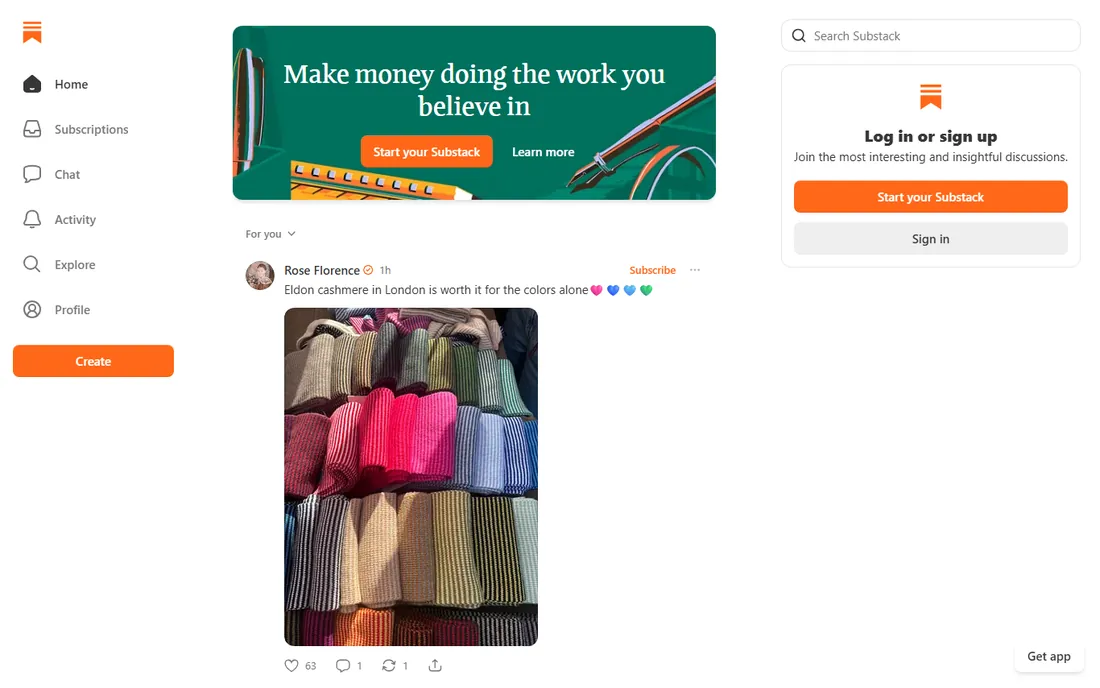
Substack made the newsletter-as-blog model mainstream: free to publish, free for unlimited free subscribers, with paid subscriptions taking a 10% platform cut plus Stripe fees. Writers own their mailing list and can export posts, subscribers, and stats. A custom domain is a one-time $50.
The recommendation network is Substack's quiet superpower: readers who subscribe to you see other publications to follow, which drives cross-growth if your niche is active there. The 10% fee stings once revenue is meaningful, and the public archive gives you less SEO control than a real blog. For email-first writers who do not want to touch website technology, Substack is the fastest credible start, and migrating later is straightforward thanks to its export tools.
What we like- Free to start at any size
- Recommendation network helps growth
- You own your list and can export it
Watch out for- Takes 10% of paid subscription revenue
- Limited design control
- Weaker SEO than a dedicated blog
Starting priceFree
Free planYes

Blogger is Google's free blogging platform and the last truly zero-cost option on this list: no plan, no fees, a blogspot.com subdomain, and the option to attach a custom domain. It integrates with Google's AdSense and Analytics, and setup takes minutes with a Google account.
It is also a platform Google has visibly deprioritized: development is slow, design options are basic, and serious SEO is limited compared with WordPress. For hobby blogs, family blogs, and first experiments in writing, that hardly matters. For anything you hope to monetize or grow professionally, start somewhere you can scale.
What we like- Completely free with Google hosting
- Easy AdSense integration
- Supports custom domains
Watch out for- Dated platform with little active development
- Basic SEO
- Migration away is painful
Starting priceFree
Free planYes
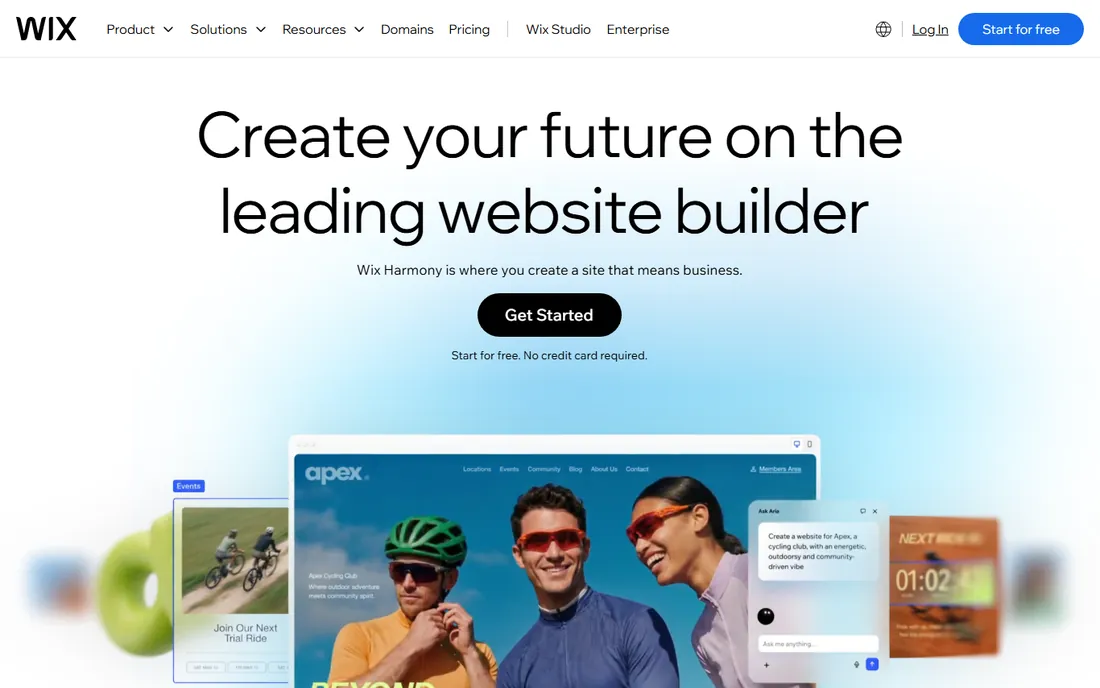
Wix is a website builder with a capable blog app, not a blogging platform first. The drag-and-drop editor, AI-generated site builder, and thousands of templates let a writer create a full professional site with a blog section, portfolio, and contact pages in an afternoon. The free plan publishes with Wix branding; paid plans start at $17 a month billed annually.
For writers whose blog is one part of a personal brand, coaching business, or portfolio, Wix's all-in-one approach is practical: one login, one bill, and a site that looks finished quickly. For pure writers, the blogging experience is competent but unremarkable, and you will get more SEO control and exportability elsewhere. Choose Wix for the website, not for the blog.
What we like- Drag-and-drop editor with 2,000+ templates
- AI site builder
- Free plan available
Watch out for- Blogging tools are secondary to the site builder
- Ads on the free plan
- History of SEO limitations
Starting priceFrom $19/month (Basic, billed annually)
Free planFree trial (14 days)
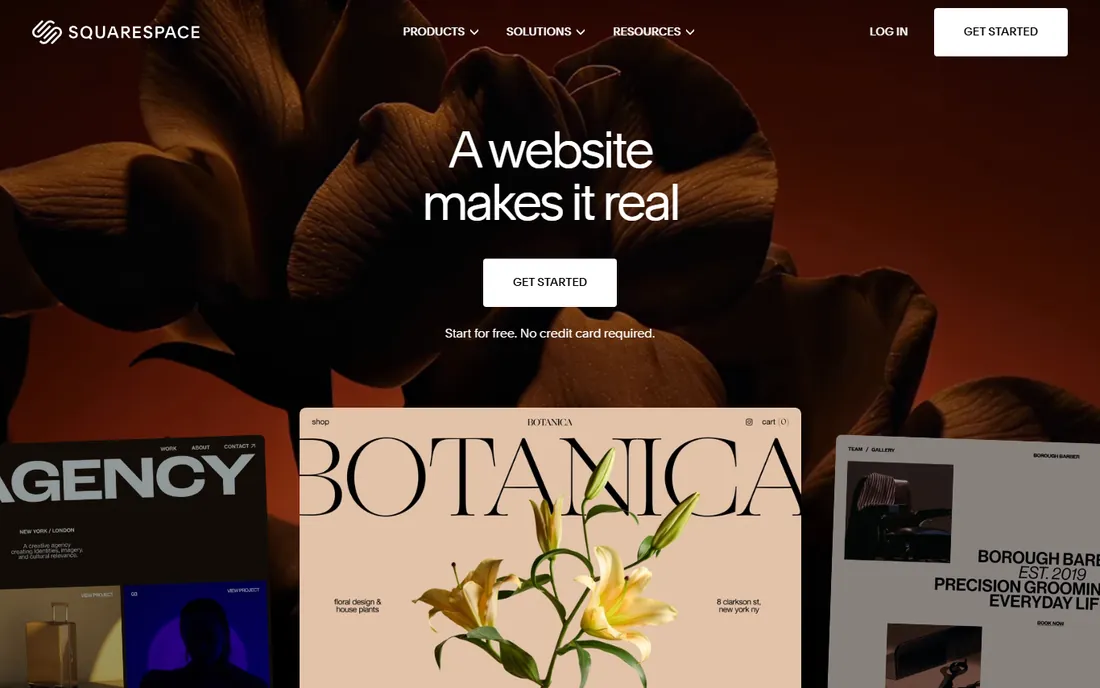
Squarespace is the choice for writers who care deeply about how their words look. Its templates are consistently the best in the industry, and the built-in blog tools handle posts, scheduling, categories, and RSS without add-ons. Plans start at $19 a month billed annually for Basic, and all plans include hosting, SSL, and a free custom domain for the first year.
The downsides are flexibility and cost: there is no free plan, the plugin ecosystem is tiny compared with WordPress, and customization has limits unless you move up a tier. For personal essays, creative writing, and visually driven blogs where design is part of the appeal, Squarespace delivers a polished result with minimal fuss.
What we like- Exceptional templates and typography
- Solid built-in blogging features
- Hosting and SSL included
Watch out for- No free plan
- Limited plugin ecosystem
- Code injection requires higher tiers
The audience vs. ownership decision
Every option here sits on a spectrum. Medium and Substack trade some control for readers you did not have to find yourself. WordPress.com, Ghost, and Squarespace give you full control and a real domain, but every reader must be earned. Most professional writers end up with both: a owned home base and one or two distribution platforms feeding it.
How to choose a blog platform as a writer
If you are starting out and want readers fast, pick Medium or Substack and publish consistently. If you are building a long-term body of work, start with WordPress.com, Ghost, or Squarespace on your own domain so you own the archive. Bloggers on a zero budget should use Blogger for practice and move when the writing gets serious. And if the blog supports a business, treat the platform as infrastructure: Ghost or WordPress.com for publishing businesses, Wix or Squarespace when the site does the selling. Revisit the decision yearly; most platforms let you import and export posts, so you are never truly trapped.
How we chose
We compared blogging platforms using vendor pricing pages and help documentation, alongside public reviews on G2, Capterra, and writer-focused publications. We weighed the writing experience, audience and distribution features, monetization options, SEO capability, and fit for solo writers. We looked especially hard at the true cost of "free" plans: platform fees, forced branding, and how easily you can leave. We did not perform hands-on testing.
Frequently asked questions
Which blog platform is best for beginners?
WordPress.com and Substack are the easiest starts: both handle all the technical work, and Substack is completely free. Medium is also simple if discovery matters more than ownership.
Is Medium better than Substack for writers?
They solve different problems. Medium is better for discovery through its recommendation feed and for essays that benefit from a built-in audience. Substack is better for building an email list you own and for subscription income.
Can I make money on these platforms?
Yes. Medium pays through its Partner Program, Substack and Ghost support paid subscriptions, and any self-hosted blog can run ads or affiliate links. Consistent publishing and a clear niche matter more than platform choice.
Is Blogger still worth using in 2026?
For hobby blogging at zero cost, yes. For anything professional, no: the platform sees little development, SEO controls are basic, and migrating later is painful. Start on a platform you can grow with.
Which platform is best for SEO?
WordPress.com with the right plugins gives the most SEO control, followed by Ghost with its clean markup and built-in structured data. Substack's public archive works for newsletter content but offers less control over technical SEO. Medium's domain authority helps individual posts rank, but the traffic belongs to Medium, not you.
Do I need a custom domain?
Eventually, yes. A custom domain looks professional, builds brand equity, and makes moving platforms painless because readers and links follow the domain. Start on a free subdomain if you must, but plan to upgrade once you are publishing regularly. Every paid plan on this list except Medium's free tier supports a custom domain.
Sources we checked (7)
- https://wordpress.com
- https://medium.com
- https://ghost.org/pricing/
- https://support.substack.com/hc/en-us/articles/360037607131-How-much-does-Substack-cost
- https://www.blogger.com
- https://www.wix.com/blog/how-much-does-a-website-builder-cost
- https://www.bloggersideas.com/squarespace-review/
Is your product missing or out of date?
We review this list regularly. Vendors can request a listing, send updated pricing or ask about featured placement.

Shihab Mia · Founder, Rankite
Shihab has spent more than a decade helping SaaS and e-commerce brands grow through search. He writes Rankite's software buying guides from pricing pages, documentation and public user reviews. More about Shihab.