How we make this list: we compare pricing pages, product documentation and public user reviews. Rankite is independent; if a vendor ever pays for a featured spot, that listing is clearly labeled Partner.
Key takeaways
- WordPress remains the affiliate standard: open source, free, with plugins for everything including link management and schema.
- Ghost is the publishing specialist with newsletters built in and a 14-day free trial.
- Wix tracks AI visibility and LLM mentions, useful as traffic shifts to AI answers.
- Squarespace starts at $19 per month with a 14-day free trial and Blueprint AI site building.
- Shopify suits affiliates focused on product commerce; Duda and Webflow serve professionals building client sites.
Quick comparison
| Tool | Best for | Starting price | Free plan |
|---|
 WordPress WordPress | SEO control and scale | See website | Yes |
 Ghost Ghost | Content publishing | See website | Free trial |
 Wix Wix | All-in-one simplicity | See website | Yes |
 Squarespace Squarespace | Design-forward sites | $19/month | Free trial |
 Shopify Shopify | Product-focused affiliates | See website | No |
 Webflow Webflow | Visual precision | See website | No |
 Duda Duda | Client-site builders | See website | No |
 Weebly Weebly | Simple free start | See website | Yes |
Is your product missing or out of date?
We review this list regularly. Vendors can request a listing, send updated pricing or ask about featured placement.
Starting priceSee website
Free planYes
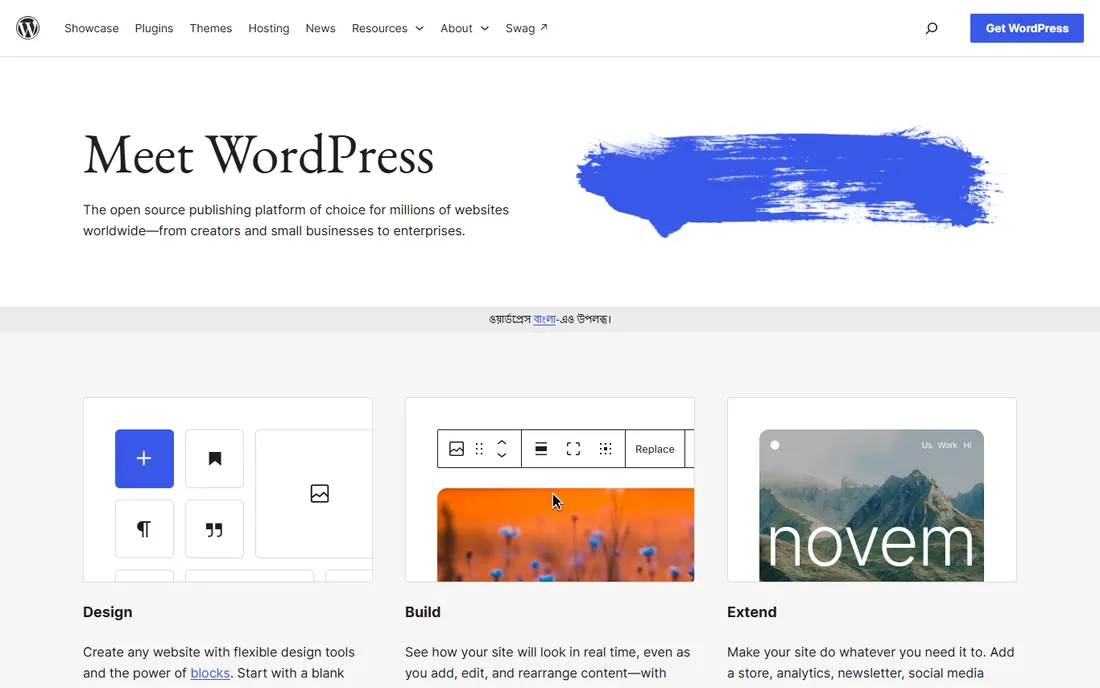
WordPress is the affiliate marketer's default for a reason. The open-source platform is free, you own everything, and the plugin library covers affiliate link management, comparison tables, review schema, and SEO tooling that hosted builders cannot match. WordPress 7.1 made styling and editing easier with block customization across screen sizes.
Millions of sites run on it, from solo bloggers to enterprises. The honest catch is responsibility: hosting, security, and plugin updates are yours to manage. For affiliates who take SEO seriously and want full control, nothing else offers this much freedom.
What we like- Open source and free to download
- Enormous plugin library for affiliate links, tables, and schema
- Powers millions of sites with full ownership
Watch out for- You arrange hosting and security yourself
- Plugins need maintenance and updates
Starting priceSee website
Free planFree trial
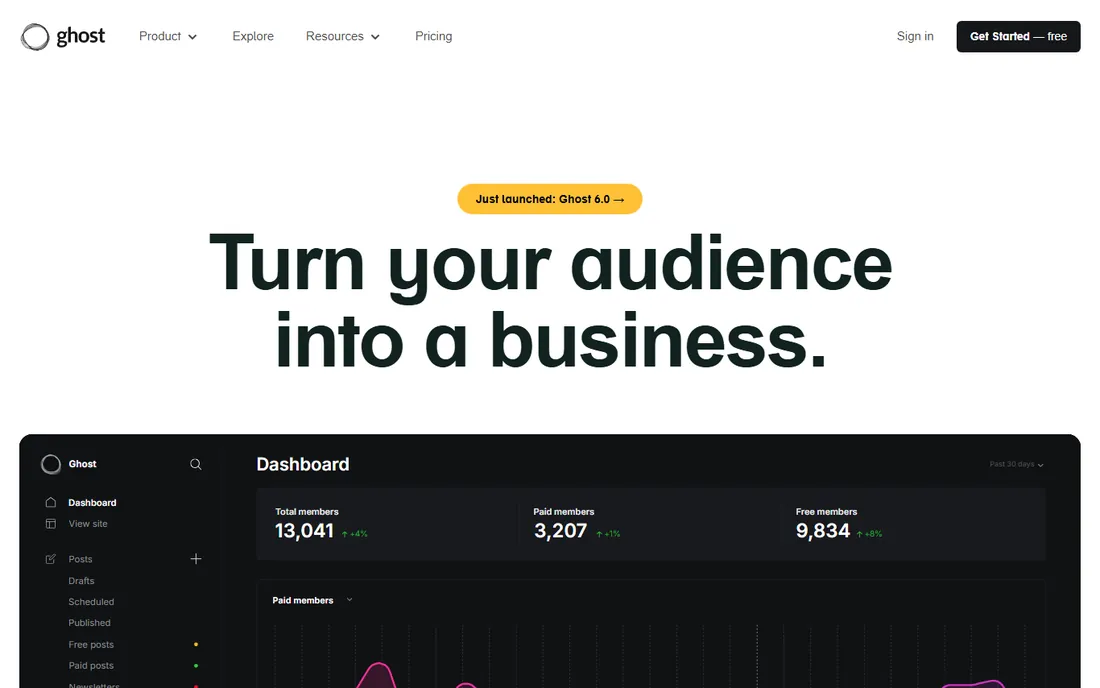
Ghost is the platform for publishers who live on content. Create, publish, and grow a business around your writing with a calm professional editor, built-in newsletters, native analytics, and membership tiers with 0% payment fees. Publications on Ghost earn over $100 million a year.
It is open source, independent, and funded by users rather than investors. The honest catch is scope: it is a publishing platform, not a general site builder, so complex affiliate architectures fit WordPress better. For content-first affiliate sites with a newsletter strategy, Ghost is excellent.
What we like- Publishing editor built for professionals
- Newsletters and memberships built in
- Open source with a 14-day free trial
Watch out for- Less flexible than WordPress for complex site structures
- Ecommerce is not the focus
Starting priceSee website
Free planYes
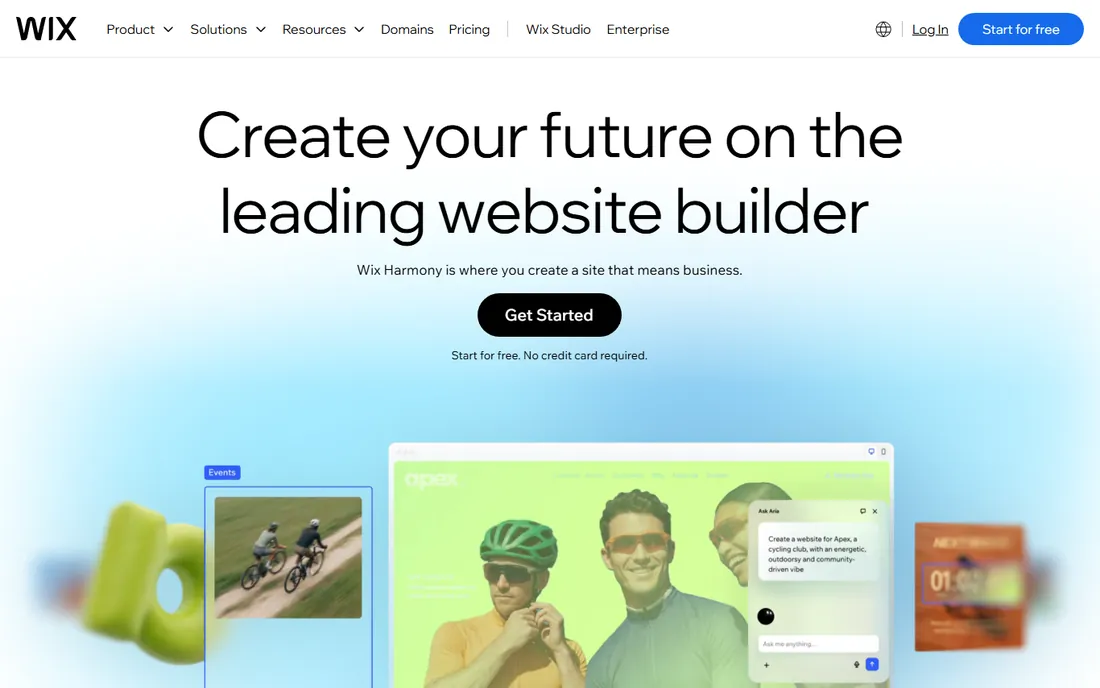
Wix is the simplest path to a live affiliate site. Start free with no credit card, pick from 2,000+ templates, and build with the AI website builder or drag and drop. Built-in SEO tools, email marketing, and analytics cover the essentials without plugins.
This year Wix added GEO and AI visibility tracking so you can see where and how AI platforms mention your brand, which matters as affiliate traffic moves into AI answers. The honest catch is control: WordPress still wins on deep SEO customization. For beginners who want everything in one place, Wix is the easiest start.
What we like- Start free with no credit card
- GEO and AI visibility tracking for LLM mentions
- 2,000+ templates and AI website building
Watch out for- Less SEO control than WordPress
- Free plan runs on a Wix subdomain
Starting price$19/month
Free planFree trial
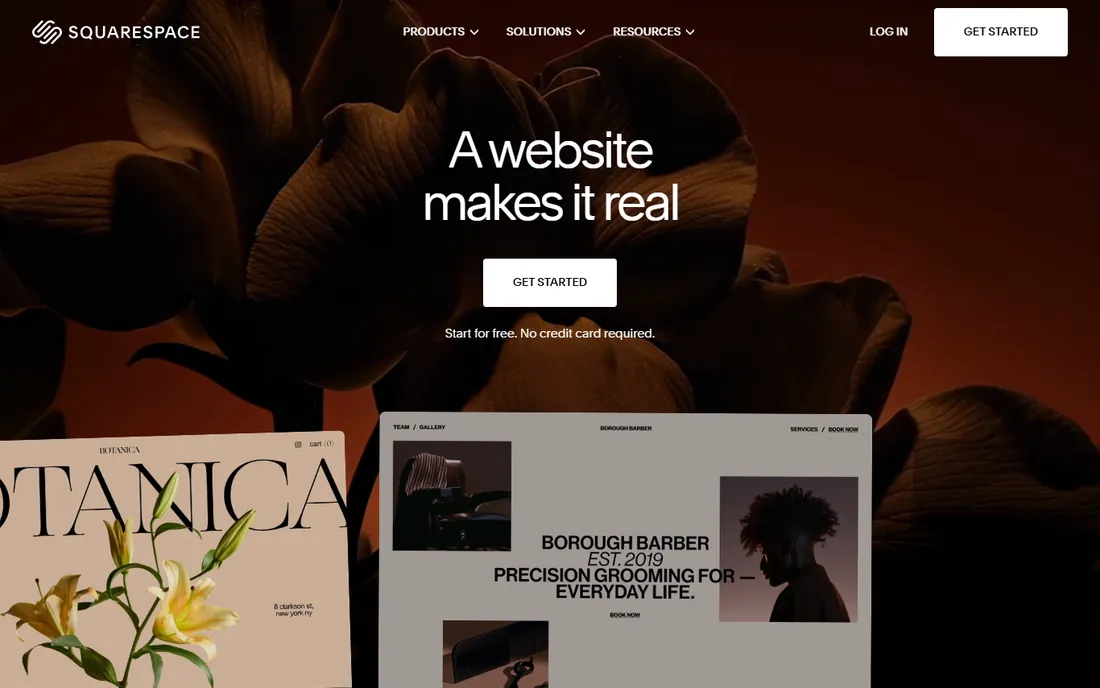
Squarespace is for affiliate sites where design matters. Blueprint AI, one of TIME's Best Inventions of 2025, builds a personalized site from your answers, and the templates are among the best-looking in the business. Built-in SEO tools, AI copy generation, and ecommerce selling cover the marketing side.
After the free 14-day trial, subscriptions start at $19 per month. The honest catch is ecosystem: fewer affiliate plugins and less SEO granularity than WordPress. For review sites and curated affiliate brands that sell on aesthetics, Squarespace shines.
What we like- Beautiful templates trusted by 14 million entrepreneurs
- Subscriptions from $19 per month after a 14-day trial
- Blueprint AI builds personalized sites in minutes
Watch out for- Fewer affiliate-specific plugins than WordPress
- Trial is 14 days, not a free tier
Starting priceSee website
Free planNo

Shopify suits affiliates who sell products, not just reviews. The commerce platform converts browsers to buyers with the world's best-converting checkout, and the app store's 21,000+ apps add whatever features your affiliate model needs. Sidekick AI helps build and manage the store.
Sell everywhere people shop: online, in person, on social, and across AI. The honest catch is cost structure and content: publishing long-form review content is weaker here than on WordPress. For affiliates whose model is product-first, Shopify is the commerce engine.
What we like- The best-converting checkout and 21,000+ commerce apps
- Sidekick AI assistant for store building
- Sells online, in person, and on social
Watch out for- Monthly fees plus transaction costs
- Content publishing weaker than WordPress or Ghost
Starting priceSee website
Free planNo
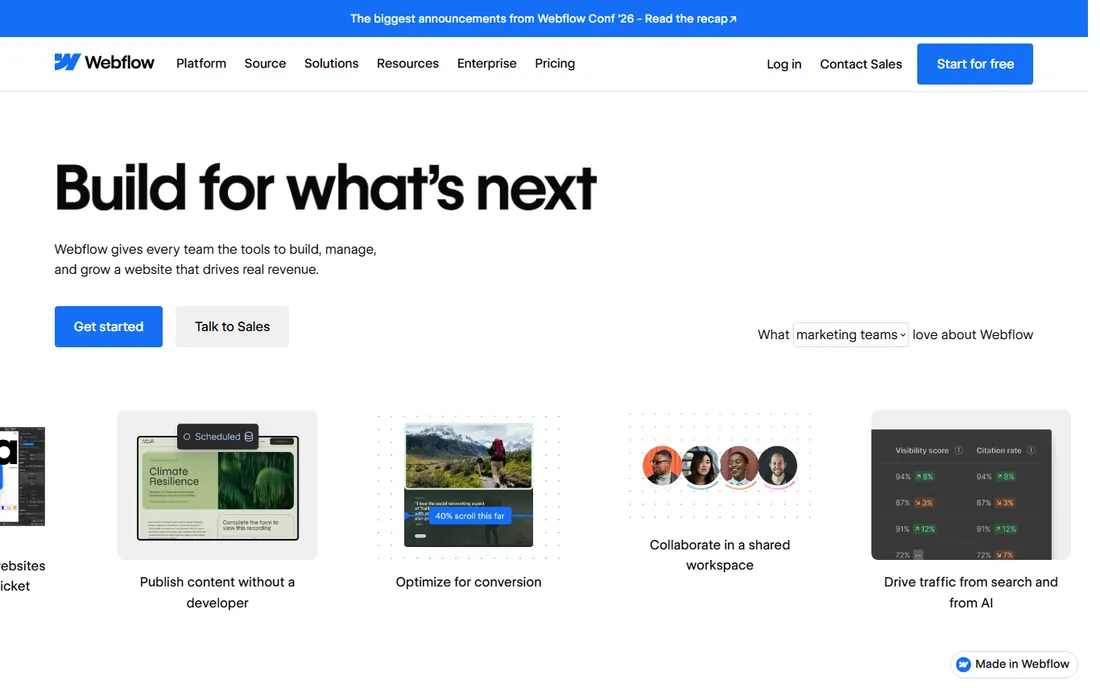
Webflow is the designer's affiliate platform. The visual canvas gives pixel-perfect control while publishing to fast, SEO-optimized sites with a CMS, analytics, and A/B testing. This year Webflow added AEO tooling: track AI visibility, see how AI crawls your site, and create content that gets cited more, which is exactly what affiliate marketers need in 2026.
300,000+ brands use it with enterprise-grade hosting and page branching for safe publishing. The honest catch is the learning curve. For affiliates who want total design control plus AI-search visibility, Webflow is the precision pick.
What we like- Pixel-perfect visual design with real published websites
- AEO features to get cited in AI answers
- Enterprise-grade hosting and SEO controls
Watch out for- Steeper learning curve than Wix or Squarespace
- No free tier shown
Starting priceSee website
Free planNo
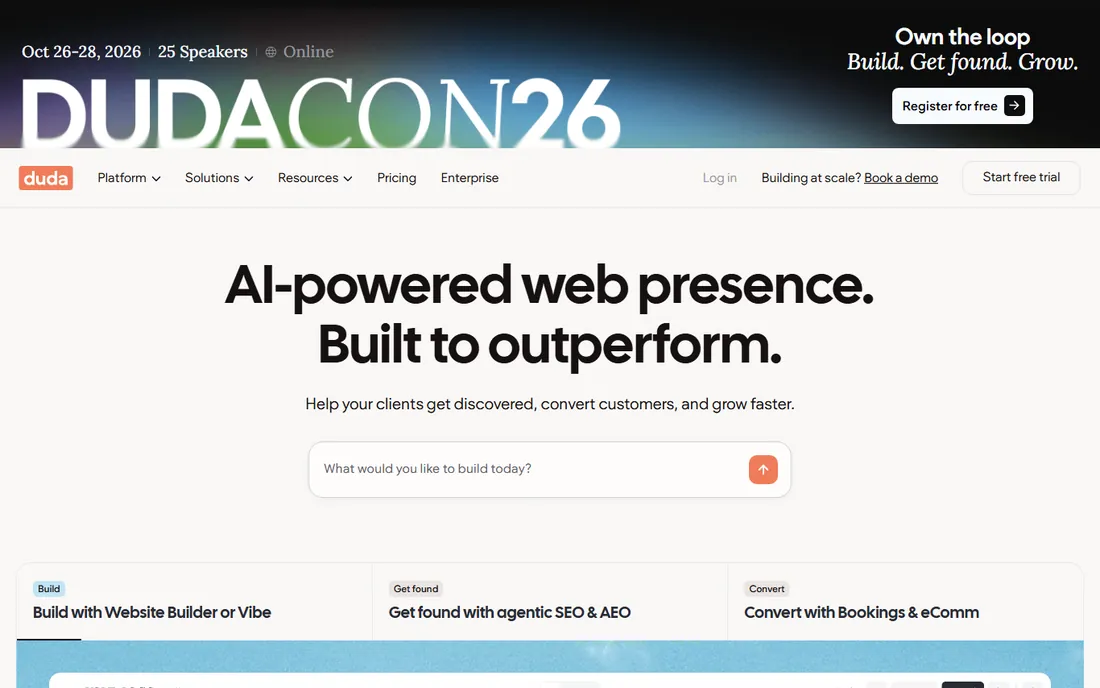
Duda is the AI web presence platform for professionals. Over 23,000 agencies and platforms trust it to build and manage client sites at scale, with white labeling, client permissions, and automation. Duda Vibe generates complex sites and full-stack web apps from a chat-first interface, and the agentic Duda Copilot completes tasks conversationally.
Built-in SEO and AEO optimization, eCommerce tools, and AWS hosting with SOC 2 compliance make it enterprise-ready. The honest catch is audience: it is built for pros managing client sites, not solo first-timers. For agencies running affiliate portfolios at scale, Duda fits.
What we like- Built for professionals managing many client sites
- Duda Vibe generates full sites and web apps from prompts
- White-label platform for agencies
Watch out for- Aimed at agencies and pros, not solo beginners
- No free tier
Starting priceSee website
Free planYes
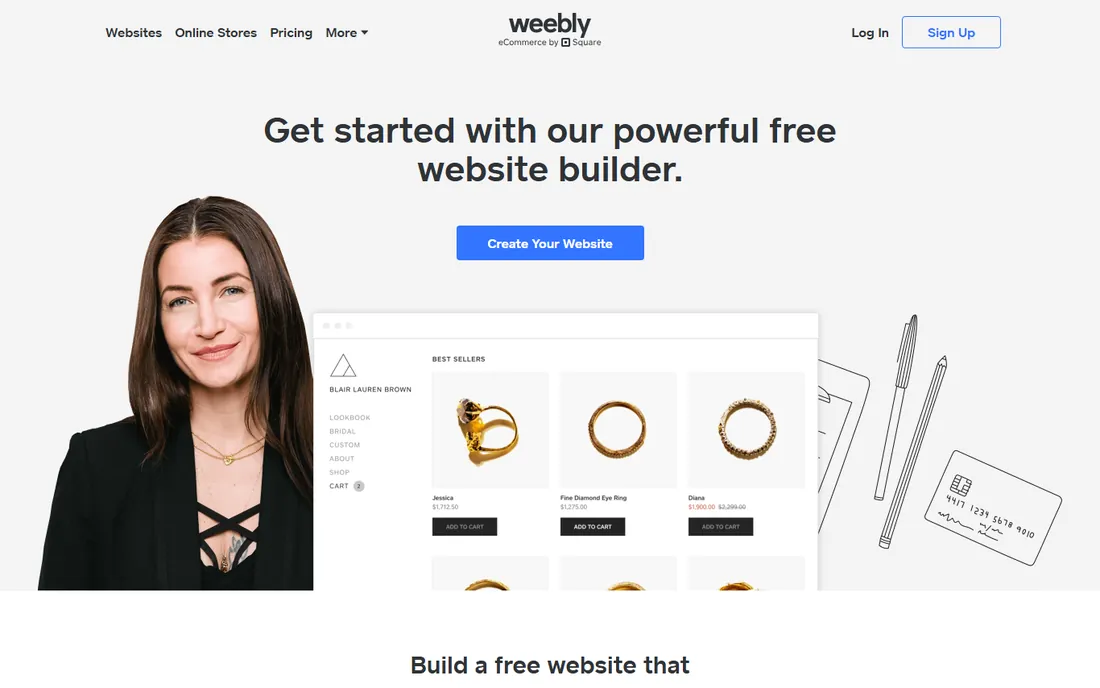
Weebly is the simple free start. Build a free website with customizable designs, then add eCommerce tools and integrated marketing as you grow. Being part of the Square product suite means payments work naturally for any commerce you add.
Step-by-step guidance and a customer success team help beginners through the hurdles. The honest catch is ceiling: fewer features than its sibling Wix and less SEO control than WordPress. For a first affiliate site on a zero budget, Weebly gets you live fast.
What we like- Free website builder to start today
- Part of the Square product suite with payments built in
- Simple drag-and-drop editing
Watch out for- Fewer templates and features than Wix
- Less SEO depth than WordPress
How we chose
We compared website platforms using each vendor's own site and documentation in October 2026, alongside G2, Capterra, and affiliate marketer reviews. We required live, verifiable platforms and covered this year's AI search visibility shift. We never claim hands-on testing.
Prioritize SEO and AI visibility
Affiliate revenue depends on being found. WordPress offers the deepest SEO control, Wix tracks AI visibility and LLM mentions, and Webflow adds AEO features. Ask any platform how your content gets found in both Google and AI answers before committing.
Check affiliate link freedom
Some hosted platforms restrict certain link types or monetization. Confirm the platform allows affiliate links, comparison tables, and the plugins or embeds you need. WordPress and Ghost give you full freedom; hosted builders deserve a check of their terms.
Start with your publishing pace
If you publish daily reviews, Ghost's editor and newsletters win. If you build occasional big guides, WordPress's structure wins. If you are still validating the niche, Wix or Weebly's free tiers let you start without spending.
The AI search shift
The 2026 affiliate playbook changed. AI answers now intercept buying research before the click, so ranking on Google is necessary but no longer sufficient. Platforms like Wix and Webflow that track and optimize for AI visibility give affiliates a second surface to win. Whatever platform you choose, structure content for citation: clear answers, comparison tables, and specific recommendations that AI systems can quote and link back to.
Frequently asked questions
What is the best website platform for affiliate marketing?
WordPress is the best overall for SEO control and affiliate plugins. Ghost suits content publishers, Wix and Weebly suit beginners, Squarespace suits design-forward sites, Shopify suits product-focused affiliates, and Webflow and Duda suit professionals.
Is WordPress free for affiliate marketing?
WordPress.org software is free and open source. You pay for hosting and a domain, and premium plugins or themes are optional. It remains the most cost-effective platform for serious affiliate sites.
Can I do affiliate marketing on Wix?
Yes. Wix supports affiliate links and content sites, with built-in SEO and AI visibility tracking. The free plan runs on a Wix subdomain; connect a custom domain on a paid plan for a professional affiliate brand.
Which platform is best for AI search visibility?
Wix's GEO tracking shows where LLMs mention your brand, and Webflow's AEO tools optimize for AI citations. WordPress can compete with the right plugins. Structure content with clear answers and comparison tables regardless of platform.
Should affiliate marketers use Shopify?
Shopify fits affiliates who sell products directly. Pure content affiliates reviewing products do better on WordPress or Ghost, where publishing and SEO tools are stronger. Many affiliates run content on WordPress and a store on Shopify.
How much does it cost to start an affiliate site?
From free to a few dollars a month. WordPress needs hosting and a domain, roughly $5 to $15 a month. Wix and Weebly offer free starts. Squarespace costs $19 per month after trial. Budget content production too; the platform is the smallest cost.
Sources we checked (8)
- https://wordpress.org/
- https://ghost.org/
- https://www.wix.com/
- https://www.squarespace.com/
- https://www.shopify.com/
- https://webflow.com/
- https://duda.co/
- https://www.weebly.com/
Is your product missing or out of date?
We review this list regularly. Vendors can request a listing, send updated pricing or ask about featured placement.

Shihab Mia · Founder, Rankite
Shihab has spent more than a decade helping SaaS and e-commerce brands grow through search. He writes Rankite's software buying guides from pricing pages, documentation and public user reviews. More about Shihab.