How we make this list: we compare pricing pages, product documentation and public user reviews. Ratings come from G2, Capterra or Trustpilot, with the date we checked them.
Key takeaways
- Bright Data is the best enterprise web scraping infrastructure with the largest proxy network.
- Apify suits teams that want a marketplace of ready-made scrapers plus cloud infrastructure.
- Octoparse is the pick for non-programmers who need visual, no-code data extraction.
- ScraperAPI fits developers who want a simple API that handles proxies and CAPTCHAs.
- Diffbot suits teams that want AI-powered automatic structuring of web data.
Quick comparison
| Tool | Best for | Starting price | Free plan |
|---|
 Bright Data Bright Data | enterprise scraping infrastructure | See website | See website |
 Oxylabs Oxylabs | premium proxies and scraping | See website | See website |
 Apify Apify | scraper marketplace and cloud | See website | See website |
 ScraperAPI ScraperAPI | simple scraping API | See website | See website |
 ParseHub ParseHub | visual web scraping | See website | See website |
 Octoparse Octoparse | no-code data extraction | See website | See website |
 ScrapingBee ScrapingBee | developer scraping API | See website | See website |
 Diffbot Diffbot | AI-powered data structuring | See website | See website |
Is your product missing or out of date?
We review this list regularly. Vendors can request a listing, send updated pricing or ask about featured placement.
Starting priceSee website
Free planSee website
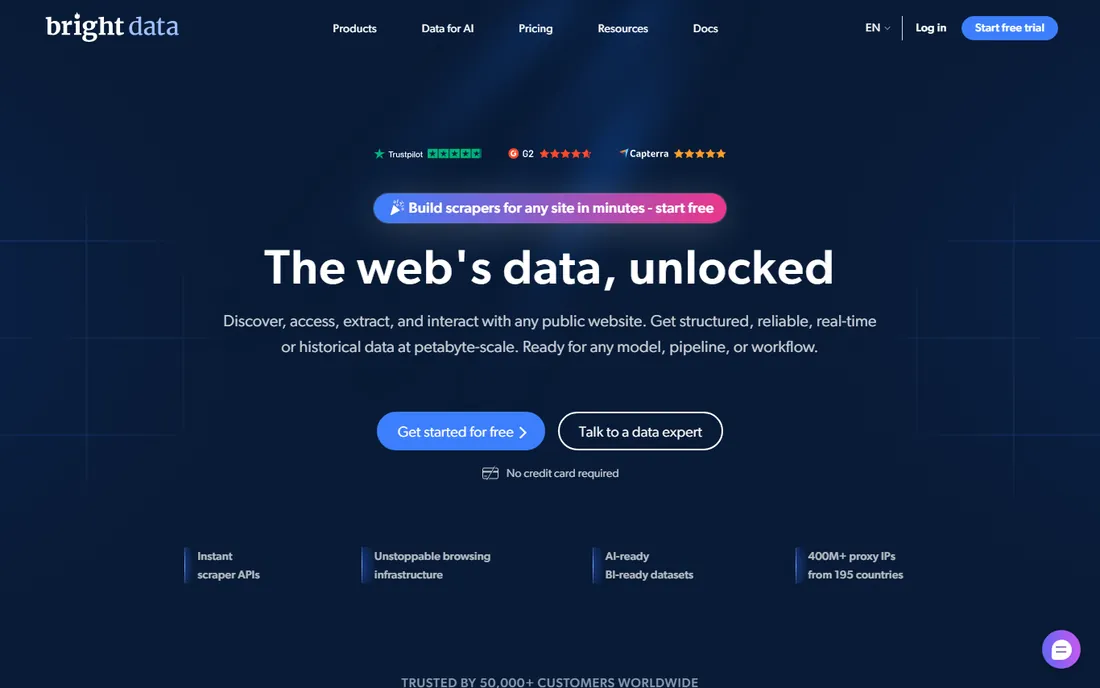
Bright Data (formerly Luminati) is the enterprise standard for web data collection: massive residential, mobile, and datacenter proxy networks plus scraping tools, datasets, and managed services. Large organizations that depend on web data at scale use Bright Data for the reliability and compliance framework that smaller providers cannot match.
Pricing reflects the enterprise positioning, and the platform's breadth can overwhelm simple projects. But for serious, large-scale data collection where reliability and legal compliance matter, Bright Data is the infrastructure most enterprises choose. Start with a defined pilot scope rather than trying to learn the whole platform at once.
What we like- Largest proxy network
- Complete scraping infrastructure
- Strong compliance posture
Watch out for- Premium pricing
- Complexity for simple projects
Starting priceSee website
Free planSee website
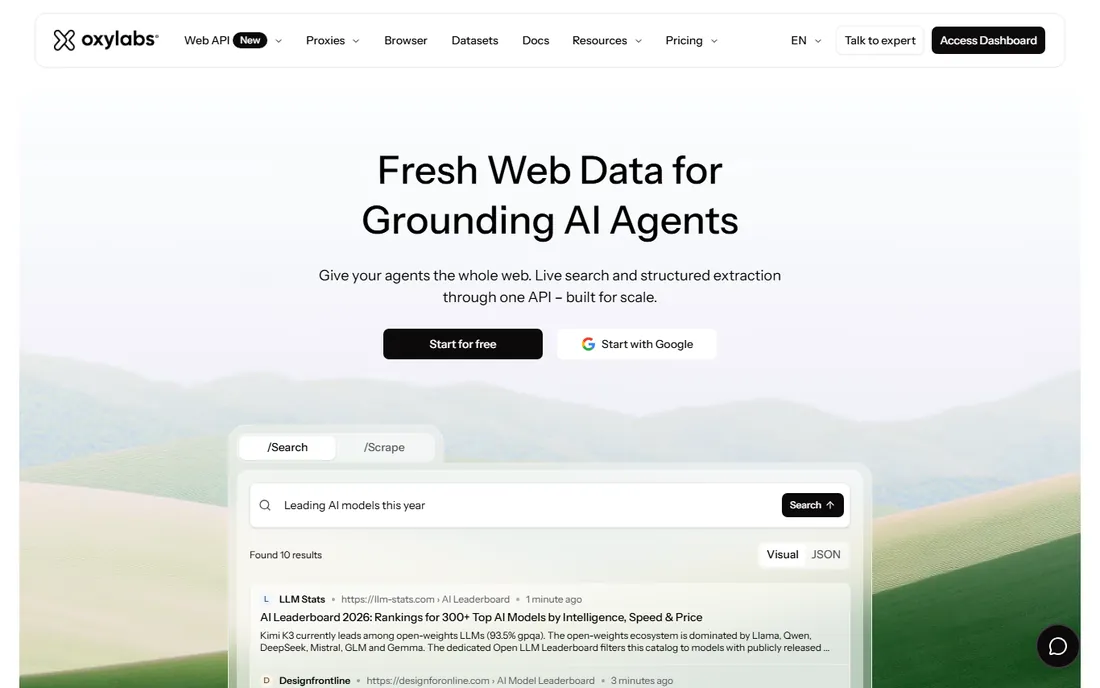
Oxylabs provides premium proxies and web scraping solutions with a focus on reliability and success rates. The proxy network covers residential, datacenter, and mobile IPs globally, with scraping APIs for common targets. Dedicated support and account management serve enterprise clients well.
Like Bright Data, it is priced for business use with an enterprise sales process. Smaller projects may find simpler APIs more practical. But for organizations that need dependable proxies with human support, Oxylabs' quality justifies the premium.
What we like- High-quality proxy network
- Dedicated account management
- Strong success rates
Watch out for- Premium pricing
- Enterprise sales process
Starting priceSee website
Free planSee website
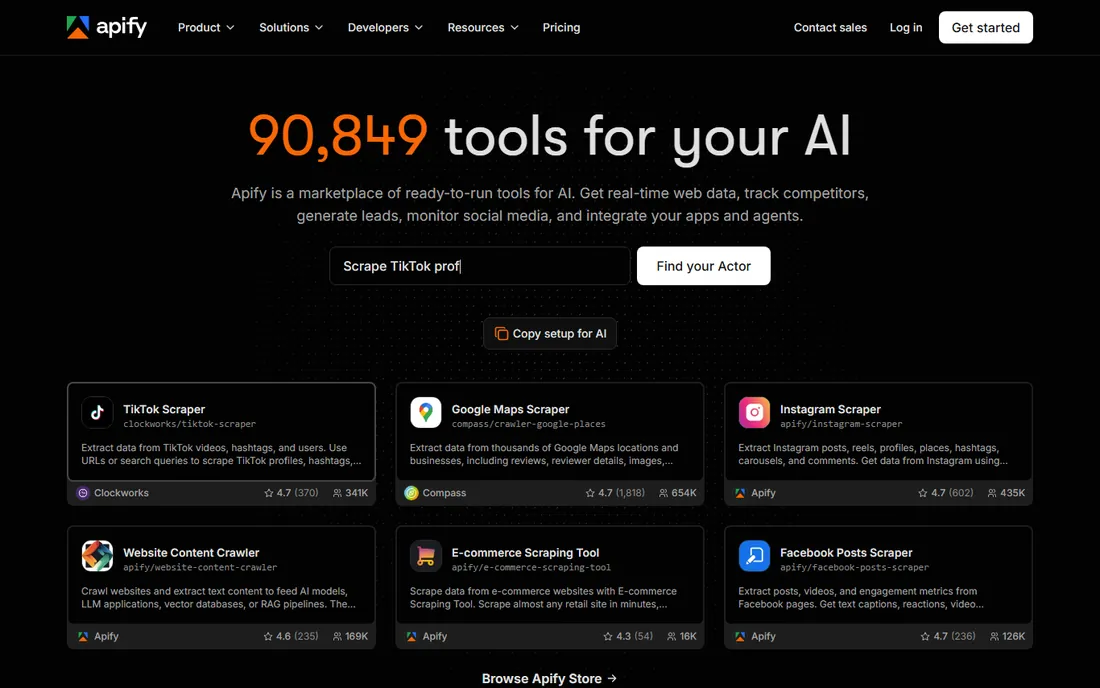
Apify combines a cloud scraping platform with a marketplace of thousands of ready-made scrapers (Actors) for popular sites. Need Google Maps data or Instagram profiles? Someone has probably built an Actor for it. Developers can also build custom scrapers on the platform with proxies, scheduling, and storage included. The free tier is genuinely useful.
Marketplace Actor quality varies, so check reviews and test before depending on one. Building custom Actors takes learning, but the documentation and community examples shorten the ramp considerably. But Apify's combination of ready-made tools and flexible infrastructure makes it the most versatile option for teams that scrape diverse targets.
What we like- Marketplace of ready-made scrapers
- Flexible cloud platform
- Generous free tier
Watch out for- Quality varies across marketplace actors
- Learning curve for custom development
Starting priceSee website
Free planSee website
ScraperAPI simplifies scraping to a single API call: send a URL, get the HTML back, with proxies, CAPTCHA solving, and retries handled automatically. Developers integrate it in minutes without managing infrastructure. Pricing is accessible, making it popular for projects that need reliable scraping without operational overhead.
It offers less control than full scraping platforms for complex scenarios. Very challenging targets may need specialized tools. But for the common case of "fetch this page reliably," ScraperAPI's simplicity is exactly right.
What we like- Simple API handles proxies, CAPTCHAs, and retries
- Easy to integrate
- Affordable plans
Watch out for- Less control than full platforms
- Advanced targets may need more
Starting priceSee website
Free planSee website
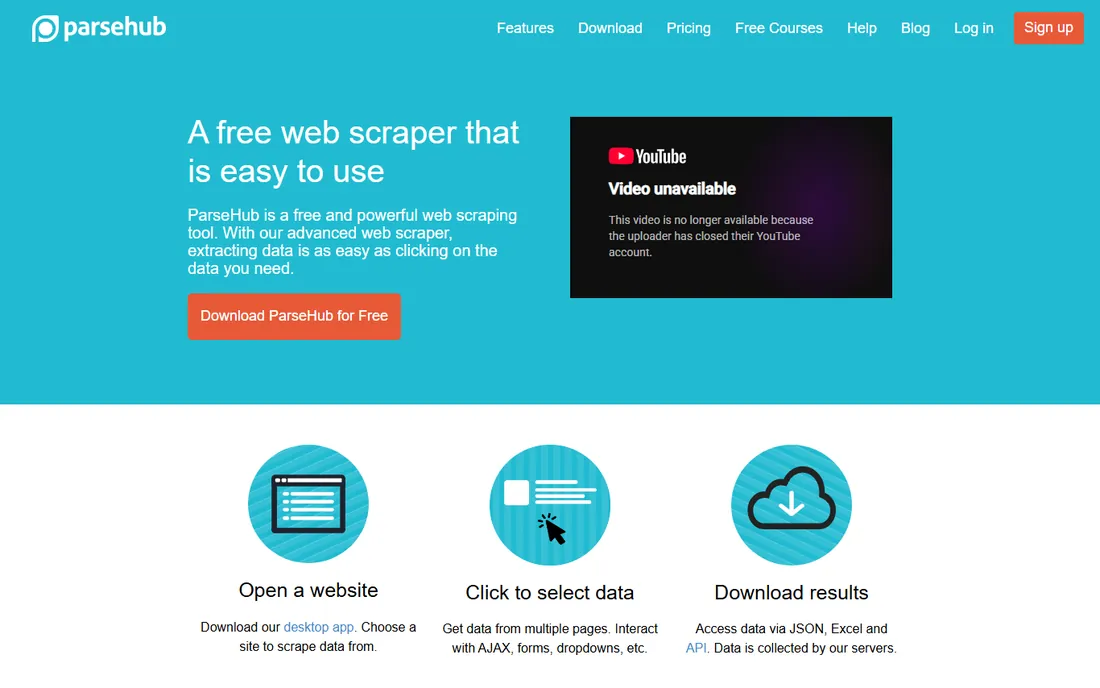
ParseHub lets users build scrapers visually by clicking on the data they want, handling JavaScript-heavy sites, infinite scroll, logins, and dropdowns without code. Data scientists, journalists, and analysts who need web data but do not program find it accessible and productive. The free tier covers meaningful usage for evaluation and small projects.
Scraper building happens in a desktop app, and very complex sites require patience to configure. But for non-programmers who need real scraping power, ParseHub's visual approach is the most capable option.
What we like- Visual point-and-click scraper building
- Handles JavaScript and logins
- Free tier available
Watch out for- Desktop app required for building
- Complex sites need patience
Starting priceSee website
Free planSee website
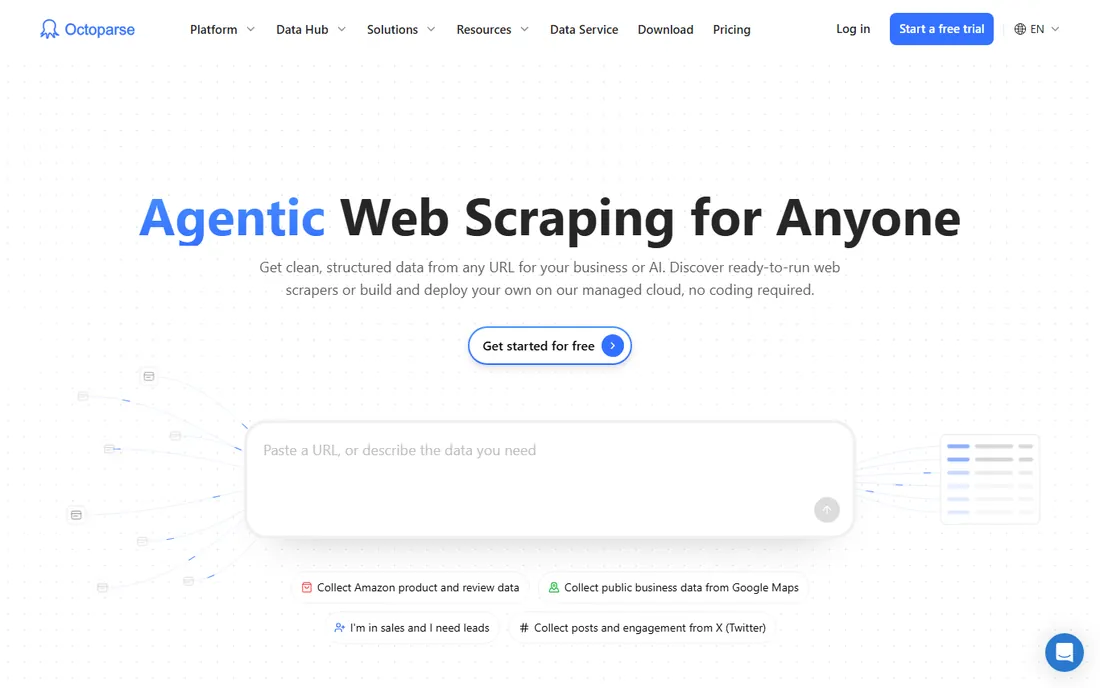
Octoparse provides no-code web scraping through a visual workflow builder, with cloud-based extraction, scheduling, and templates for popular websites. Business users extract product prices, listings, and reviews without writing code. The free tier lets teams start immediately.
The desktop client is Windows-focused, and highly custom scraping logic hits limits. But for business users who need recurring data extraction without developers, Octoparse's templates and visual builder deliver quickly.
What we like- No-code visual workflow builder
- Cloud extraction
- Templates for popular sites
Watch out for- Windows-centric
- Advanced customization limited
Starting priceSee website
Free planSee website
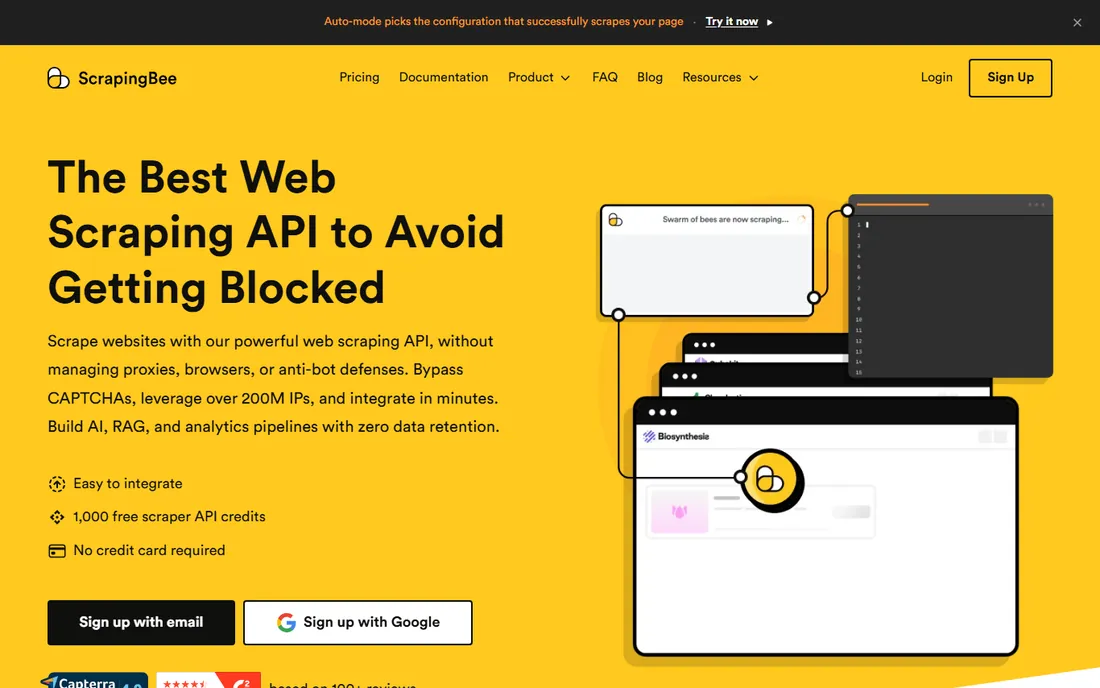
ScrapingBee offers a clean API for developers: JavaScript rendering, proxy rotation, and geotargeting through simple parameters. Documentation is excellent, pricing is transparent, and integration takes minutes. Developers who want scraping infrastructure without visual tools or enterprise sales calls appreciate the straightforward approach.
There is no no-code interface, so non-developers need other options. High volumes get expensive. But for developers building scraping into applications, ScrapingBee's API-first design is refreshingly simple.
What we like- Developer-friendly API with JavaScript rendering
- Transparent pricing
- Good documentation
Watch out for- API-only, no visual builder
- Costs scale with volume
Starting priceSee website
Free planSee website
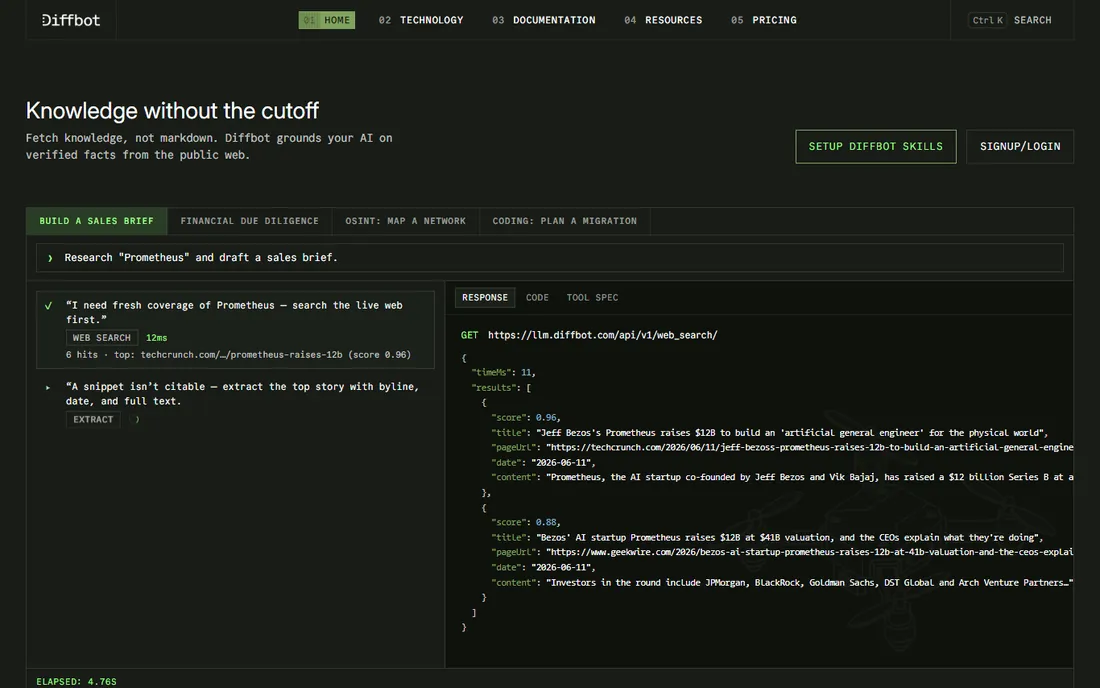
Diffbot uses computer vision and machine learning to automatically identify and structure web page content: articles, products, discussions, without manual rules per site. The knowledge graph provides structured data about entities across the web. Teams that need clean structured data from diverse sites without maintaining scrapers find it powerful.
Pricing is premium, and the automation means less control over extraction specifics. But for applications that consume web data at scale without per-site maintenance, Diffbot's AI approach eliminates the biggest cost in scraping: keeping scrapers working as sites change.
What we like- AI automatically structures web data
- Knowledge graph of the web
- No per-site configuration
Watch out for- Premium pricing
- Less control over extraction details
What to check before you buy
Start by defining your technical approach. Developers who code prefer APIs (ScraperAPI, ScrapingBee) or platforms (Apify, Bright Data). Non-programmers need visual tools (Octoparse, ParseHub). AI-automated extraction (Diffbot) suits teams that want data without building scrapers at all. The wrong interface wastes more time than any price difference, so get this decision right first.
Then evaluate anti-blocking capabilities honestly. Test each candidate against your actual target sites, not demos. Success rates, CAPTCHA handling, and JavaScript rendering quality vary enormously by target. A tool that works beautifully on one site may fail on another. Pilot with real targets before committing, and measure success rates over at least a week to catch intermittent blocking patterns.
Finally, understand the legal situation. Web scraping legality depends on jurisdiction, the site's terms of service, and what you do with the data. Scrape public data respectfully, honor robots.txt where appropriate, and get legal advice for commercial projects. The vendors provide tools; compliance responsibility stays with you. Document your compliance approach: which sites you scrape, why you believe it is permissible, and what safeguards you apply. This documentation protects you if questions arise later.
Build vs buy: the real math
Building scrapers in-house with open-source tools (Scrapy, Playwright) costs engineering time but no vendor fees. Buying managed scraping costs money but saves maintenance. The break-even usually favors buying once you have more than a few targets or need reliability: maintaining scrapers against changing sites and anti-bot measures is ongoing work that vendors amortize across customers. Prototype with open source, productionize with vendors.
The hidden cost of building is on-call burden. Scrapers break at inconvenient times: a target site redesigns overnight, an anti-bot update blocks your IPs, a CAPTCHA appears on a critical flow. Someone has to fix it, and that someone is your team. Managed services absorb this operational load. When calculating build vs buy, price the 2 AM pages, not just the development hours.
Frequently asked questions
What are web scraping tools?
They are software and services that automatically extract data from websites: prices, listings, reviews, contact information, and more. They range from no-code visual tools to developer APIs to enterprise proxy infrastructure.
Is web scraping legal?
It depends on the jurisdiction, the website's terms of service, and how the data is used. Publicly available data scraped respectfully is generally permissible in many jurisdictions, but terms of service violations and aggressive scraping can create legal risk. Consult a lawyer for commercial scraping projects.
What is the difference between proxies and scraping APIs?
Proxies provide IP addresses that hide your scraping traffic; you still build and maintain the scraper. Scraping APIs handle everything: proxies, browsers, CAPTCHAs, and retries, returning the data directly. APIs cost more but eliminate infrastructure work.
How do I avoid getting blocked while scraping?
Use rotating proxies, respect rate limits, render JavaScript like a real browser, handle CAPTCHAs, and avoid aggressive request rates. Managed scraping services handle most of this automatically, which is their main value proposition.
Can I scrape websites that require login?
Yes, tools like ParseHub, Octoparse, and Apify can automate logins and scrape authenticated pages. Be extra careful with terms of service when scraping behind logins, as the legal considerations differ from public pages.
How much does web scraping cost?
No-code tools start free with paid tiers for volume. Developer APIs charge per request or per bandwidth. Enterprise proxy infrastructure is custom-priced. Budget based on your page volume and target difficulty, not just list prices.
What data formats do scraping tools output?
Most tools export to CSV, JSON, and Excel, with APIs returning structured JSON. Cloud platforms add database and webhook integrations. Choose based on where the data goes next: analysts want spreadsheets, applications want APIs, and data teams want warehouse loads.
How we chose
We selected web scraping tools that appear consistently in data extraction shortlists on GitHub awesome lists, practitioner guides, and software comparison sites, covering APIs, no-code tools, and enterprise infrastructure. Each vendor's site was checked to confirm the product is current in 2026. Pricing details come from vendor pages where published; usage-based models are noted as such. No hands-on scraping was conducted for this guide.
Sources we checked (12)
- https://www.brightdata.com
- https://www.oxylabs.io
- https://www.apify.com
- https://www.scraperapi.com
- https://www.parsehub.com
- https://www.octoparse.com
- https://www.scrapingbee.com
- https://www.diffbot.com
- https://github.com/patwalls/awesome-b2b-leads
- https://healthitcost.com/c/web-scraping-cloud/guide/pdf
- https://Slashdot.org/software/comparison/Diffbot-vs-ParseHub/
- https://sourceforge.net/software/compare/ApiScrapy-vs-Octoparse-vs-ParseHub/
Is your product missing or out of date?
We review this list regularly. Vendors can request a listing, send updated pricing or ask about featured placement.

Shihab Mia · Founder, Rankite
Shihab has 5+ years in B2B and SaaS SEO. He writes Rankite's software buying guides from pricing pages, documentation and public user reviews. More about Shihab.