How we make this list: we compare pricing pages, product documentation and public user reviews. Rankite is independent; if a vendor ever pays for a featured spot, that listing is clearly labeled Partner.

Key takeaways
- Replit and Lovable are the purest vibe coding experiences: describe the app, get a working product.
- Bolt and v0 excel at frontend generation, with v0 tuned for the Vercel and Next.js ecosystem.
- Cursor is the choice for developers who want AI assistance inside a real code editor.
- Base44 (now part of Wix), Tempo, Create, and Emergent round out the field with different takes on prompt-to-app.
- Vibe coding shines for prototypes and MVPs; production apps still need human review of the generated code.
Quick comparison
| Tool | Best for | Starting price | Free plan |
|---|
 Replit Replit | Full apps from prompts | See website | Yes |
 Lovable Lovable | Fastest idea-to-app | See website | Yes |
 Bolt Bolt | Frontend apps in browser | See website | Yes |
 v0 v0 | Vercel-ecosystem UIs | See website | Yes |
 Cursor Cursor | AI-native code editing | See website | Yes |
 Base44 Base44 | No-code-style AI building | See website | Yes |
 Tempo Tempo | React app generation | See website | Yes |
 Create Create | Quick prototypes | See website | Yes |
 Emergent Emergent | Full-stack AI building | See website | Yes |
Is your product missing or out of date?
We review this list regularly. Vendors can request a listing, send updated pricing or ask about featured placement.
Starting priceSee website
Free planYes
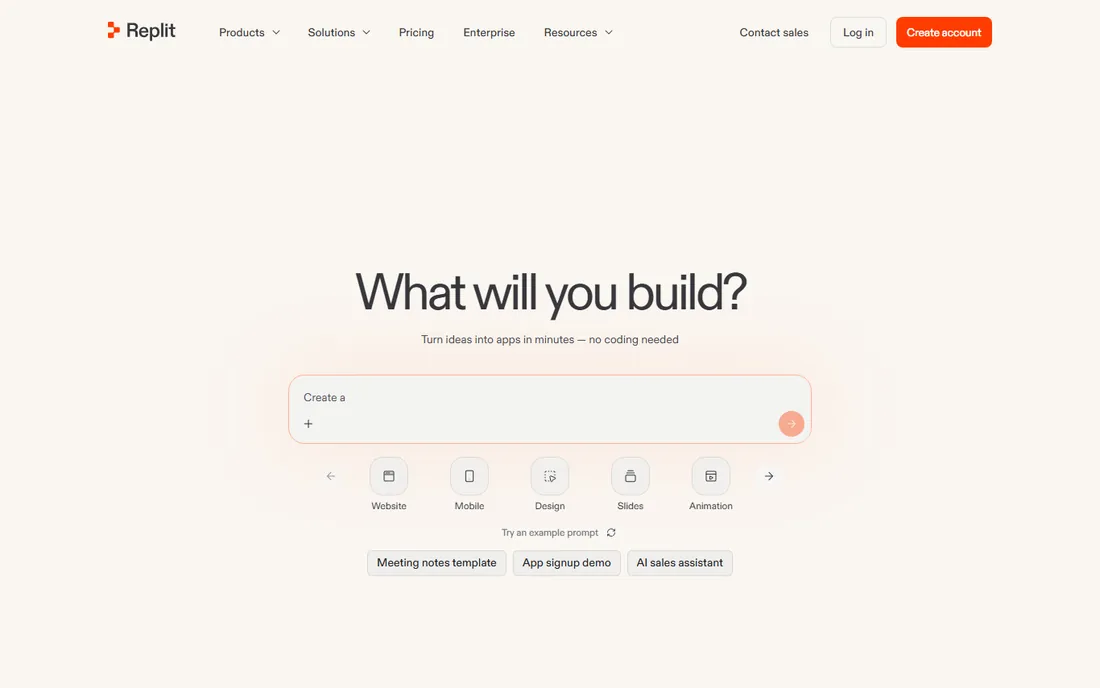
Replit turned its collaborative coding platform into a vibe coding leader with Replit Agent: describe what you want, and the AI writes the code, sets up the database, and deploys the app. The whole loop (prompt to working URL) happens in the browser. For non-developers, it is the closest thing to magic in this category.
The usage-based pricing means costs grow with the app's activity, so model that before launching publicly. And while the Agent is impressive, the generated code benefits from human review before it handles real users or real money. For prototypes, MVPs, and internal tools, Replit's completeness (build plus hosting) is unmatched.
What we like- Builds and hosts full-stack apps
- Agent handles the whole loop
- Huge community
Watch out for- Costs scale with usage
- Generated code needs review
Starting priceSee website
Free planYes
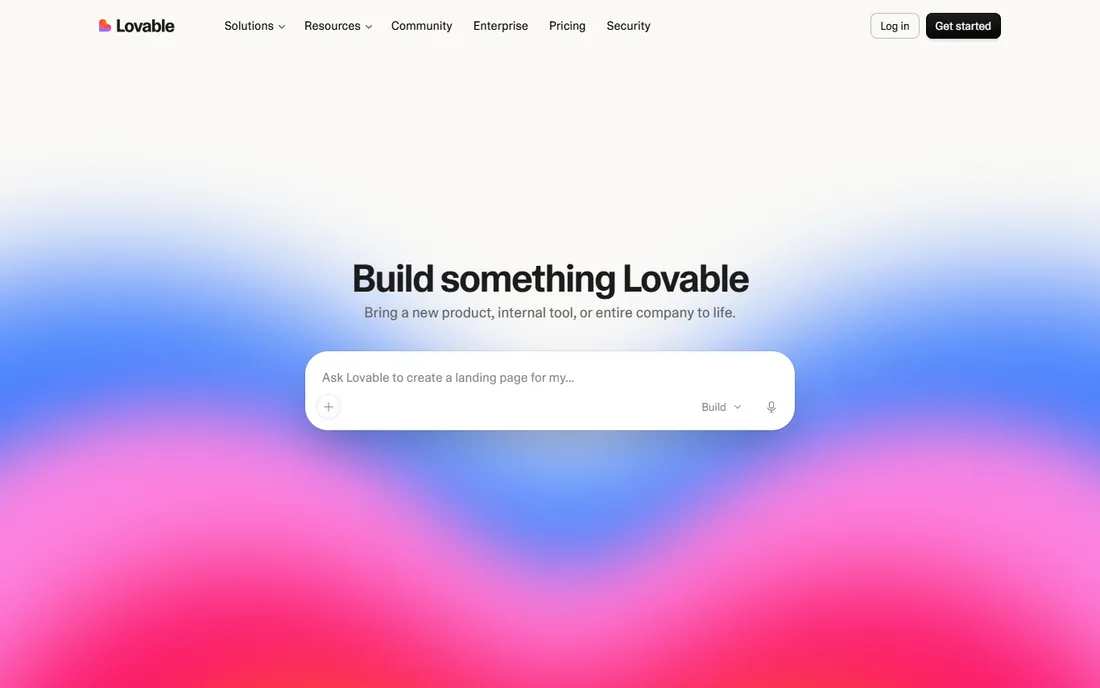
Lovable became the poster child of vibe coding by doing one thing extremely well: turning a text description into a good-looking working app in minutes. The iteration loop is conversational; describe changes in plain language and watch them appear. The output quality, especially for landing pages and web apps, surprises first-time users.
Pricing runs on credits, which makes costs somewhat unpredictable until you learn the consumption patterns. Complex backend logic may need more guidance than the marketing suggests. But for speed from idea to something you can show people, Lovable sets the pace the others chase.
What we like- Extremely fast generation
- Polished output
- Easy to iterate
Watch out for- Credit-based pricing
- Backend depth varies
Starting priceSee website
Free planYes
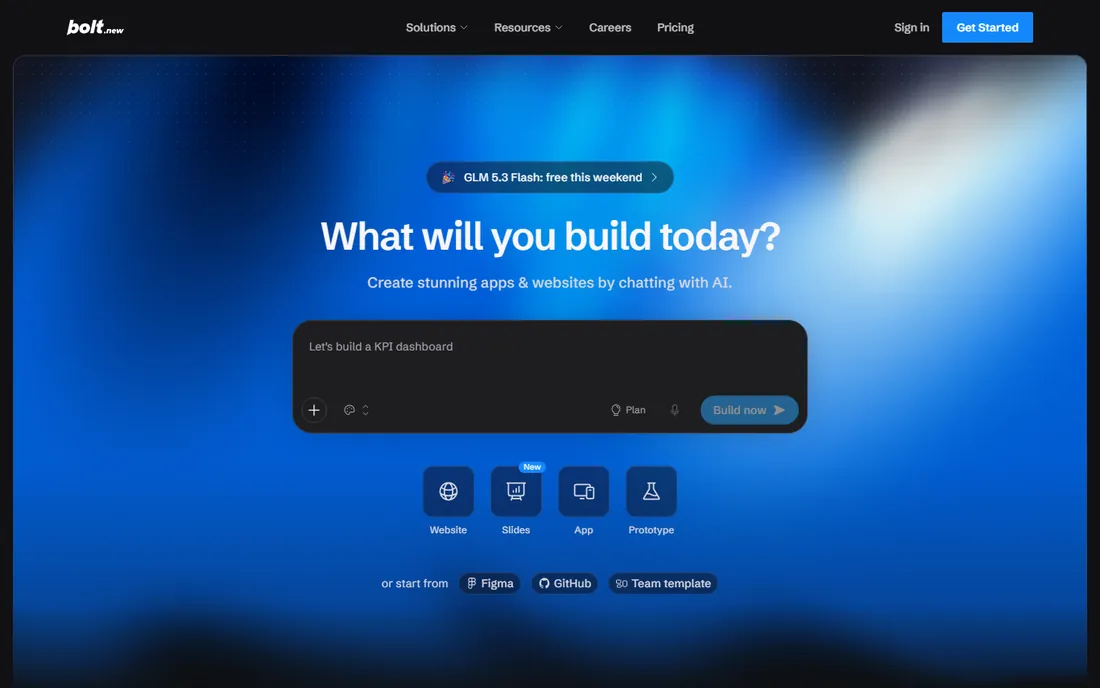
Bolt (from the StackBlitz team) generates web applications directly in the browser, with the full development environment running client-side via WebContainers. The heritage shows: the underlying technology is serious, and the generated apps are real code you can inspect and extend. It excels at frontend-heavy web applications.
Like Lovable, pricing is token-based, so heavy iteration costs real money. Full-stack applications with complex backends need more hand-holding. But for web apps where the frontend is the product, Bolt's in-browser approach removes every bit of setup friction.
What we like- Runs entirely in the browser
- StackBlitz heritage
- Good for web apps
Watch out for- Token-based pricing
- Full-stack needs extra work
Starting priceSee website
Free planYes
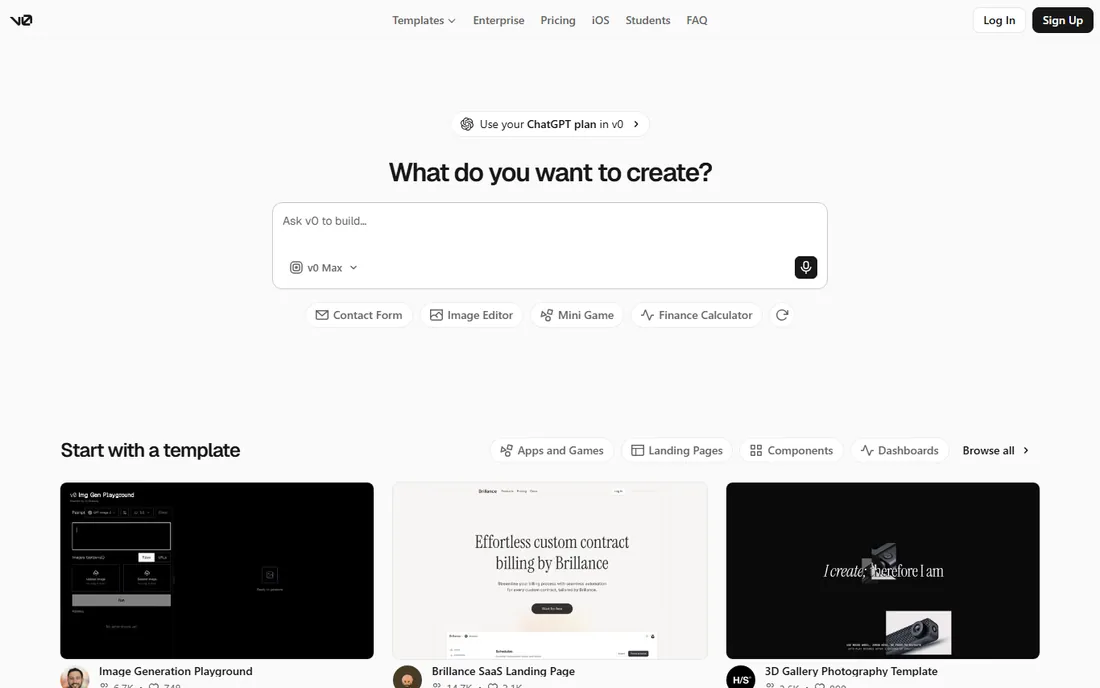
v0, from Vercel, generates user interfaces from text descriptions with remarkable design quality. Describe a dashboard, landing page, or app screen, and v0 produces React components you can deploy to Vercel in one click. For teams in the Vercel and Next.js ecosystem, the workflow from prompt to production is smooth and direct.
It is UI-focused by design; complex application logic needs your input. And while the generated code works elsewhere, the experience is tuned for Vercel deployment. For frontend developers who want AI to handle the interface while they handle the logic, v0 is the most polished tool available.
What we like- Beautiful UI generation
- Native Vercel deployment
- React and Next.js output
Watch out for- UI-focused
- Best inside the Vercel world
Starting priceSee website
Free planYes
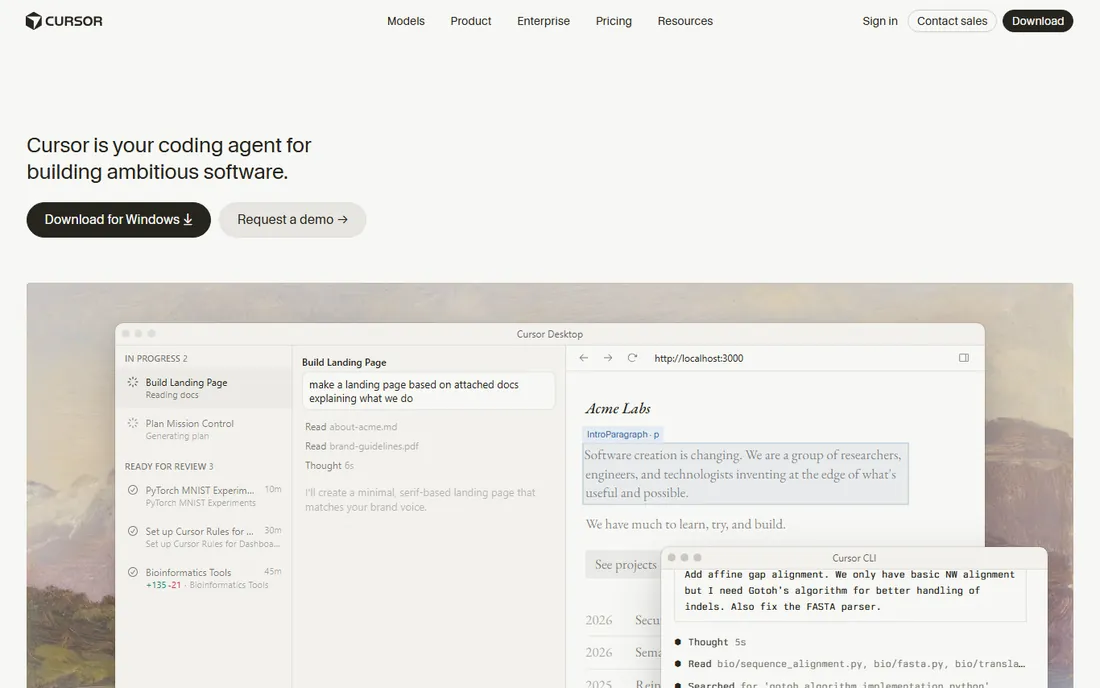
Cursor is the odd one here, and deliberately so. It is an AI-native code editor (a fork of VS Code) rather than a prompt-to-app toy. Developers describe what they want in natural language, and Cursor writes, edits, and explains real code in a real project. You keep full control of the codebase, the architecture, and the deployment.
It requires coding knowledge; this is not a tool for non-developers. But for developers who want AI acceleration without giving up control, Cursor is the professional choice. The vibe coding platforms generate apps; Cursor helps developers build software properly, faster.
What we like- Full developer control
- Excellent AI assistance
- Real codebase
Watch out for- Needs coding knowledge
- Not pure vibe coding
Starting priceSee website
Free planYes
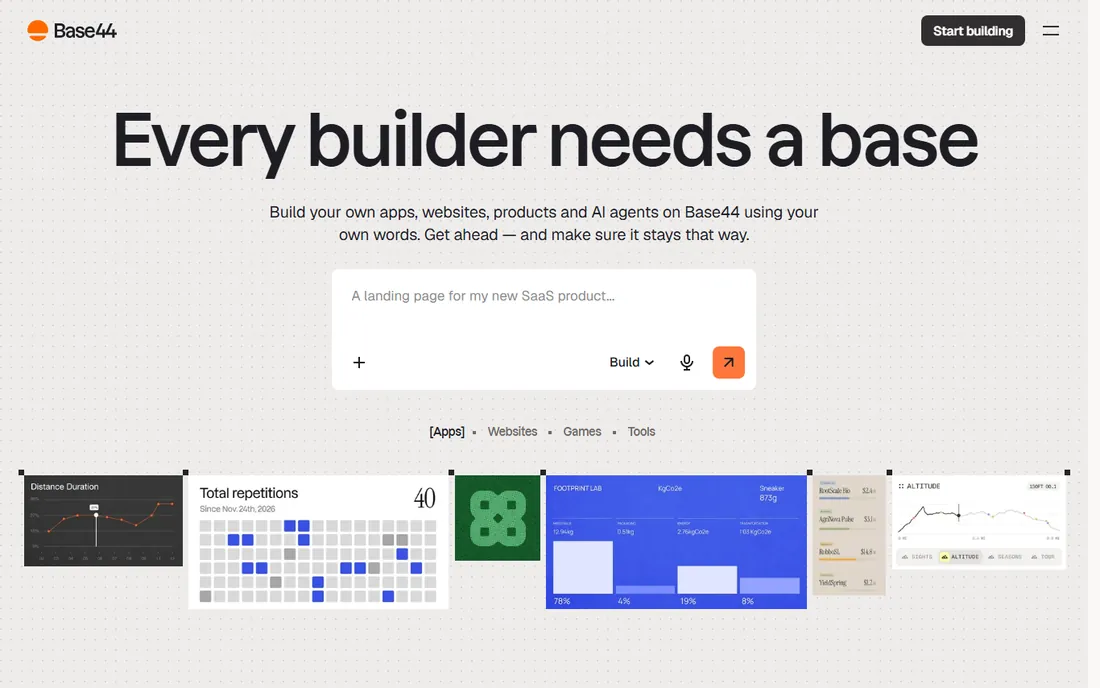
Base44 took the no-code approach to AI app building: describe your app and get a working product with less technical surface than the developer-oriented tools. Wix's acquisition brought it into a large ecosystem, which suggests longevity and integration possibilities. It suits non-technical founders who found even Lovable too code-adjacent.
Developer control is limited compared with Cursor or Replit; you work within Base44's abstractions. The Wix ownership is still settling, so the roadmap may shift. But for pure "describe it and get an app" simplicity, Base44 is among the most approachable options.
What we like- Very approachable
- Quick app creation
- Now backed by Wix
Watch out for- Less developer control
- Evolving under new ownership
Starting priceSee website
Free planYes
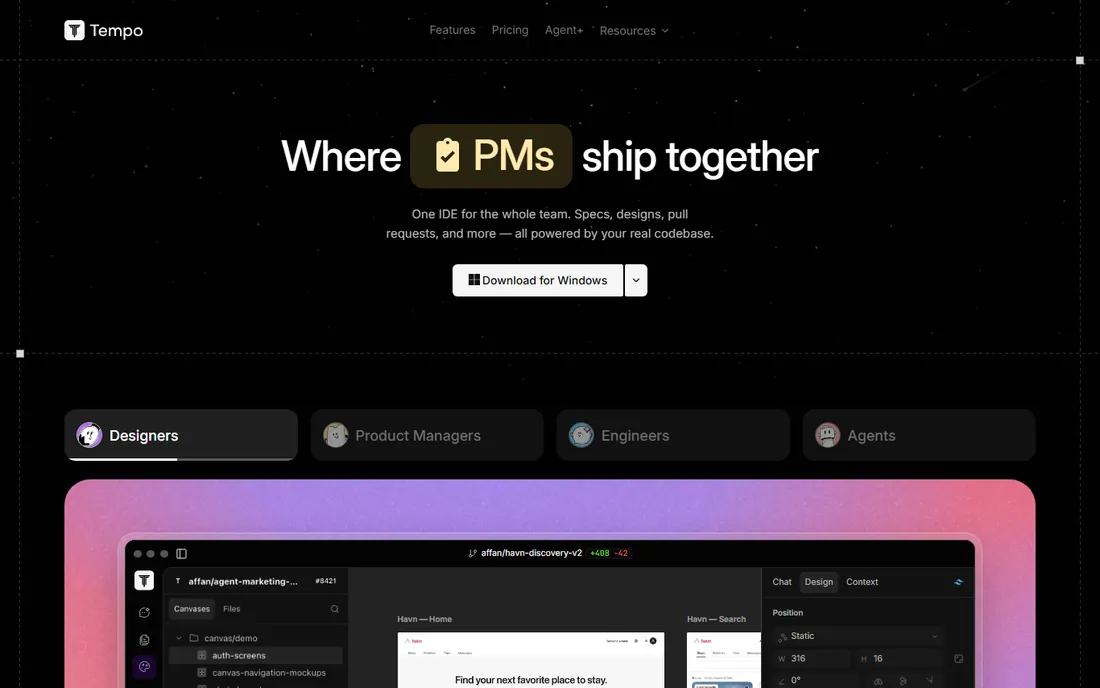
Tempo combines a visual editor with AI generation for React applications. Product teams can start from a prompt, refine visually, and export real React code. The hybrid approach (AI generation plus visual editing) suits teams that want AI speed without surrendering design control entirely.
As a newer product, the ecosystem and community are smaller than the leaders'. The React focus is a strength for React shops and a limitation for others. For product teams building React apps who want AI assistance with a visual safety net, Tempo's approach is thoughtful.
What we like- Visual plus AI workflow
- React output
- Good for product teams
Watch out for- Newer product
- React-centric
Starting priceSee website
Free planYes
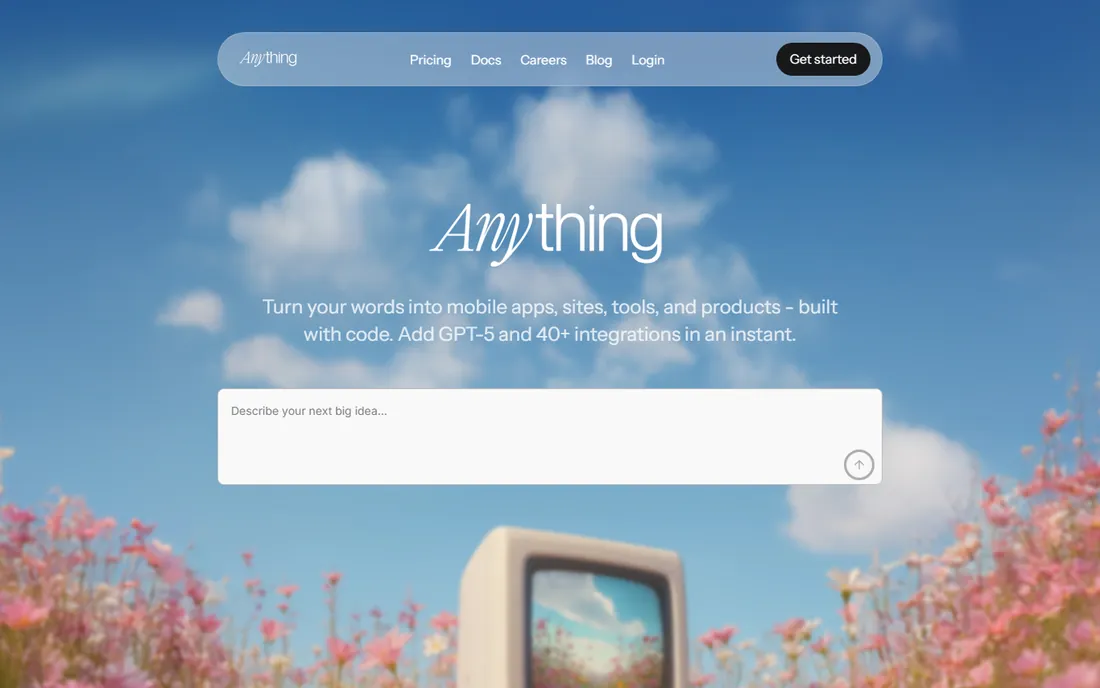
Create focuses on the earliest stage: turning an idea into a clickable prototype as fast as possible. The workflow is minimal by design; describe, generate, share. For validating ideas with users before investing real effort, that speed matters more than depth.
Production applications will likely outgrow it; the platform is optimized for prototypes, not scale. The community is smaller than the category leaders'. But as a first step in the build process, a tool that gets you to "show me" in minutes earns its place.
What we like- Fast prototyping
- Simple workflow
- Good for testing ideas
Watch out for- Less depth for production apps
- Smaller community
Starting priceSee website
Free planYes
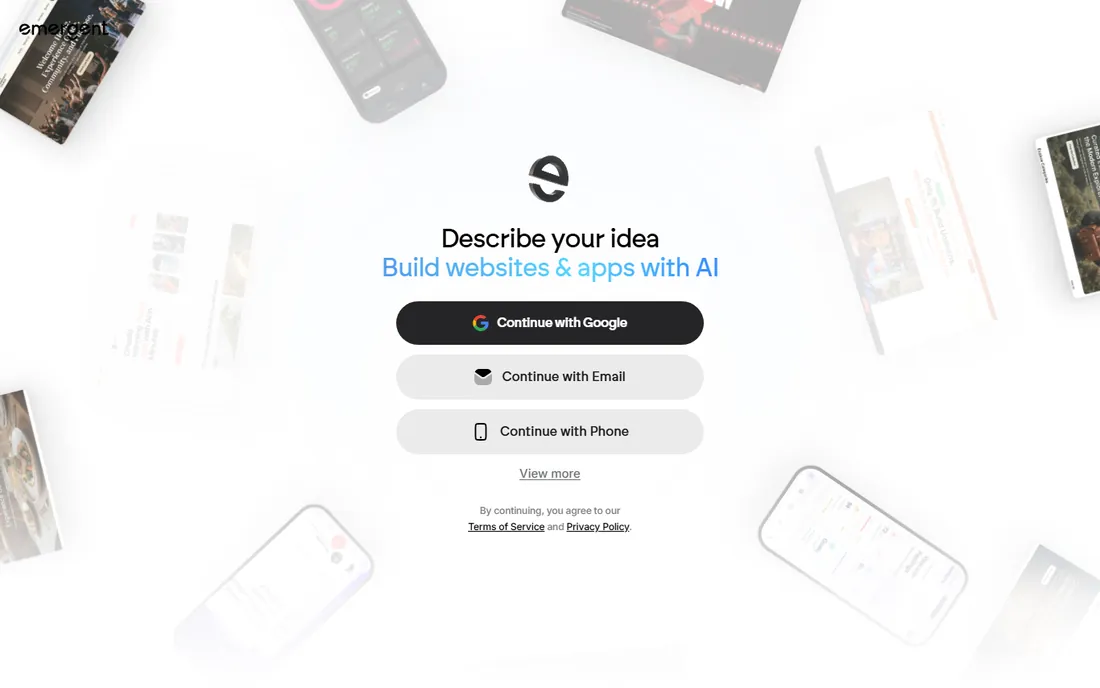
Emergent aims at the full picture: describe an application and get both frontend and backend generated, deployed, and working. The ambition is the complete vibe coding loop without the frontend-only limitations of some competitors. Early users report impressive results on standard web application patterns.
As a newer entrant, it lacks the track record and community of Replit or Lovable. Generated quality varies with the complexity of the request, as with all these tools. But for founders who want to try the most complete prompt-to-product experience, Emergent is worth a place in the evaluation.
What we like- Full-stack generation
- Handles backend and frontend
- Ambitious scope
Watch out for- Newer entrant
- Quality varies with complexity
The honest limits of vibe coding
Vibe coding is genuinely remarkable and genuinely limited, and buyers should understand both. What it does brilliantly: prototypes, MVPs, landing pages, internal tools, and demos, built in hours instead of weeks. What it does poorly: complex business logic, security-sensitive applications, high-scale systems, and anything requiring careful architecture. The generated code works until it does not, and debugging AI-written code you do not understand is its own special frustration. The practical rule: use vibe coding to validate ideas fast, then have a developer review (or rebuild) anything that will serve real users or handle real money. The platforms are honest about this in their finer print; the marketing is not always.
What to check before you commit
Who owns the generated code
Can you export the full codebase? Can you deploy it elsewhere? Replit, Cursor, and v0 give you real code you control. Some platforms keep you in their hosting ecosystem. For anything beyond a prototype, code ownership and portability are non-negotiable.
Cost at real usage
Free tiers and cheap starts are universal; the question is what a real app costs monthly. Token and credit-based pricing is hard to predict, so run a realistic prototype and measure consumption before committing to a production build. Budget for iteration, not just the first generation.
Security and data handling
AI-generated apps can have security flaws the generator does not mention. If your app handles user data, payments, or authentication, get a security review before launch. Check where your prompts and data go; some platforms train on user content unless you opt out.
The handoff to developers
Eventually, most serious apps need a developer. Check how easily a developer can take over: clean code export, standard frameworks, documentation of what was generated. Cursor and v0 shine here; pure no-code-style platforms make handoffs harder. Plan the handoff before you need it.
How we chose
We selected AI platforms that generate working software from natural language descriptions in 2026, from pure prompt-to-app tools to AI-native development environments. We evaluated generation quality reputation, code ownership, deployment options, and fit for different user types. We excluded generic AI chatbots, code completion plugins, and discontinued products. No vendor paid for placement, and we did not build test applications.
Frequently asked questions
What is vibe coding?
Vibe coding means describing the software you want in natural language and letting AI generate it, rather than writing code yourself. You guide the AI conversationally: "build a booking page for my salon," then "make the header blue." The term captures the informal, iterative feel of the process.
Can vibe coding replace developers?
For prototypes and simple apps, often yes. For production software with real users, security needs, and scale requirements, no, not yet. The realistic model is collaboration: AI generates fast, developers review, secure, and architect. Anyone telling you developers are obsolete is selling something.
How much does vibe coding cost?
Most platforms offer free tiers for trying and prototyping. Real usage runs on subscriptions plus token or credit consumption, typically tens to low hundreds of dollars monthly for active building. Heavy iteration on complex apps costs more. Measure your actual consumption on a prototype before budgeting.
Who owns the code generated by these platforms?
It varies. Most grant you ownership of generated code, but the practical question is portability: can you export it and run it elsewhere? Platforms generating standard code (React, for example) offer the most freedom. Always check the terms of service and test the export before building anything important.
Is AI-generated code secure?
Not automatically. Generated code can contain vulnerabilities, hardcoded secrets, and insecure patterns. Treat AI output like junior developer code: functional but needing review. For anything handling user data or payments, get a proper security review before launch, regardless of which platform generated it.
Sources we checked (9)
- https://replit.com
- https://lovable.dev
- https://bolt.new
- https://v0.app
- https://cursor.com
- https://base44.com
- https://www.tempo.new
- https://www.create.xyz
- https://emergent.sh
Is your product missing or out of date?
We review this list regularly. Vendors can request a listing, send updated pricing or ask about featured placement.

Shihab Mia · Founder, Rankite
Shihab has spent more than a decade helping SaaS and e-commerce brands grow through search. He writes Rankite's software buying guides from pricing pages, documentation and public user reviews. More about Shihab.