How we make this list: we compare pricing pages, product documentation and public user reviews. Rankite is independent; if a vendor ever pays for a featured spot, that listing is clearly labeled Partner.
Key takeaways
- Waystar and Experian Health lead revenue cycle management with deep claims and eligibility tools.
- Optum (which absorbed Change Healthcare) offers claims processing at massive national scale.
- Availity operates the provider-payer network connecting practices with health plans.
- Cognizant's TriZetto, athenahealth, Oracle Health, and Epic embed claims in broader healthcare platforms.
- SSI Group serves providers needing focused claims management and clearinghouse services.
Quick comparison
Is your product missing or out of date?
We review this list regularly. Vendors can request a listing, send updated pricing or ask about featured placement.
The best medical claims processing software
Starting priceSee website
Free planNo
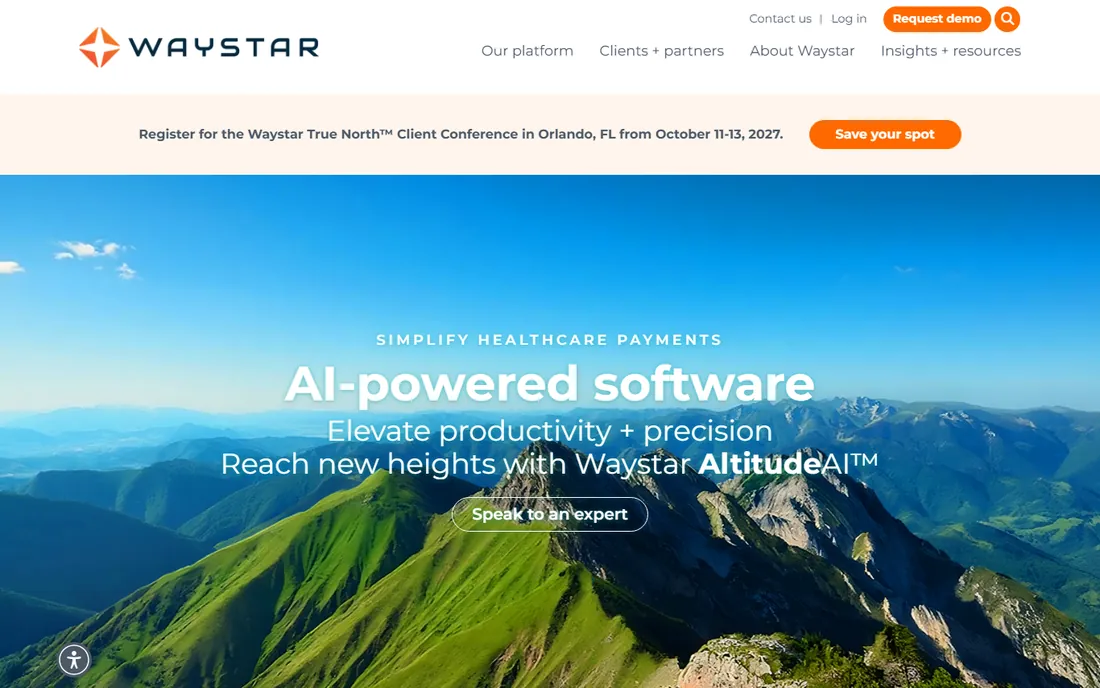
Waystar's cloud platform covers the revenue cycle end to end: eligibility verification, claims submission and tracking, denial management, and patient payments. The analytics help revenue cycle leaders find the patterns behind denials and days in A/R. Providers from small practices to large health systems use it, which speaks to the platform's range.
Pricing reflects the enterprise market and implementation takes real effort. But for organizations wanting one platform for the whole revenue cycle (rather than separate tools for eligibility, claims, and collections), Waystar's comprehensiveness is compelling. Cleaner claims mean faster payment.
What we like- Comprehensive RCM platform
- Strong analytics
- Serves all provider sizes
Watch out for- Enterprise pricing
- Implementation effort
Starting priceSee website
Free planNo
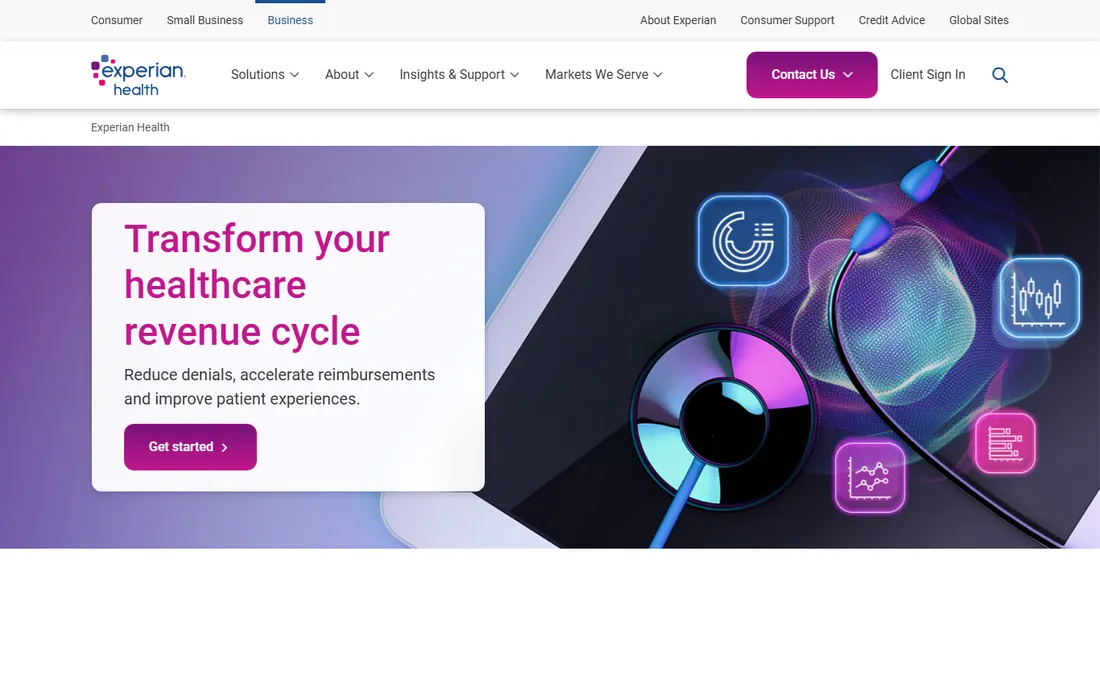
Experian Health pairs claims management with patient access: eligibility, prior authorization, and patient estimates alongside claims submission and denial workflows. The data quality emphasis (identity verification, coverage discovery) reduces the errors that cause denials upstream. Providers appreciate addressing the front-end causes of back-end claims problems.
The portfolio is broad enough to need guidance navigating. Pricing targets enterprises. But the patient-access-plus-claims combination addresses the revenue cycle as a continuum rather than isolated steps. Preventing denials beats managing them, and the data backs this up: industry analyses consistently show that reworking a denied claim costs several times more than submitting it cleanly the first time. Every dollar spent on front-end verification returns multiples in avoided rework, faster payment, and staff time freed for higher-value work.
What we like- Strong patient access tools
- Claims management
- Data quality focus
Watch out for- Enterprise pricing
- Broad portfolio to navigate
Starting priceSee website
Free planNo
Optum, which absorbed Change Healthcare, processes claims at national scale with deep connections to payers across the country. The clearinghouse heritage (from Change) plus Optum's analytics and services create a heavyweight option for large providers and payers. Scale brings reliability and comprehensive payer reach.
Smaller providers may find it more than they need, and navigating the organization takes effort. But for large health systems processing enormous claim volumes, Optum's scale and payer connectivity are unmatched. It is the infrastructure choice.
What we like- Massive scale
- Deep payer connections
- Broad services
Watch out for- Complexity
- Enterprise-only
Starting priceSee website
Free planNo
Availity operates one of the largest healthcare information networks: providers connect once and transact with hundreds of health plans (eligibility checks, claims submission, remittance, prior authorization). The network effect is the product; joining gives providers electronic access to payers they could never integrate individually.
It focuses on transactions rather than full revenue cycle management; pair it with RCM software for denial management and analytics. But as the connectivity layer between providers and payers, Availity is essential infrastructure for American healthcare practices.
What we like- Huge provider network
- Real-time transactions
- Payer relationships
Watch out for- Transaction-focused
- Less full RCM
Starting priceSee website
Free planNo

Cognizant's TriZetto business brings deep payer-side heritage: the Facets and QNXT core administration platforms process claims for health plans, while provider solutions handle the submission side. Organizations that are both payer and provider (or work closely with payers) value the dual perspective. Enterprise scale and long track record inspire confidence.
Complexity and implementation timelines reflect the enterprise market. Smaller providers should look elsewhere. But for health plans and large provider organizations, TriZetto's payer-depth is a genuine differentiator in claims processing.
What we like- Deep payer heritage
- Facets and QNXT platforms
- Enterprise scale
Watch out for- Enterprise complexity
- Implementation timelines
Starting priceSee website
Free planNo
athenahealth combines EHR with revenue cycle services: the cloud platform submits claims, works denials, and posts payments, with the company's billing teams available as backup. The network effect matters: rules learned from millions of claims across the customer base improve every practice's results. Independent practices get enterprise-grade RCM without building a billing department.
Large hospitals generally need more. The pricing model (percentage of collections for full RCM services) draws debate. But for practices wanting clinical and financial workflows unified, athenahealth's integrated approach removes the EHR-to-billing handoff where claims often break.
What we like- EHR plus RCM in one
- Network intelligence
- Good for practices
Watch out for- Less for hospitals
- Pricing model debated
Starting priceSee website
Free planNo
Oracle Health (the former Cerner) embeds revenue cycle management in its EHR: clinical documentation flows into coding and claims without re-entry. Large health systems standardized on the platform get claims processing as part of the clinical system. Oracle's ownership brings resources and a cloud roadmap.
Implementation experiences vary and the reputation requires honest reference-checking. This is enterprise-only software. But for health systems already on the platform, EHR-native claims processing eliminates the interface failures that plague best-of-breed integrations.
What we like- EHR-native claims
- Large health system focus
- Oracle backing
Watch out for- Implementation reputation
- Enterprise-only
Starting priceSee website
Free planNo
Epic's Resolute suite handles professional and hospital billing natively inside the EHR used by many of America's largest health systems. The integration depth is unmatched: scheduling, clinical, and financial data share one database, so claims reflect reality without interfaces. Large academic medical centers rely on it.
It only works with Epic, and adopting Epic is a decade-scale, nine-figure commitment. But for organizations on Epic, Resolute is the obvious claims choice; the native integration beats any third-party tool. Claims processing is one more reason the Epic ecosystem retains its customers.
What we like- Deepest EHR integration
- Resolute billing suite
- Best for large systems
Watch out for- Epic-only
- Enormous cost and commitment
Starting priceSee website
Free planNo
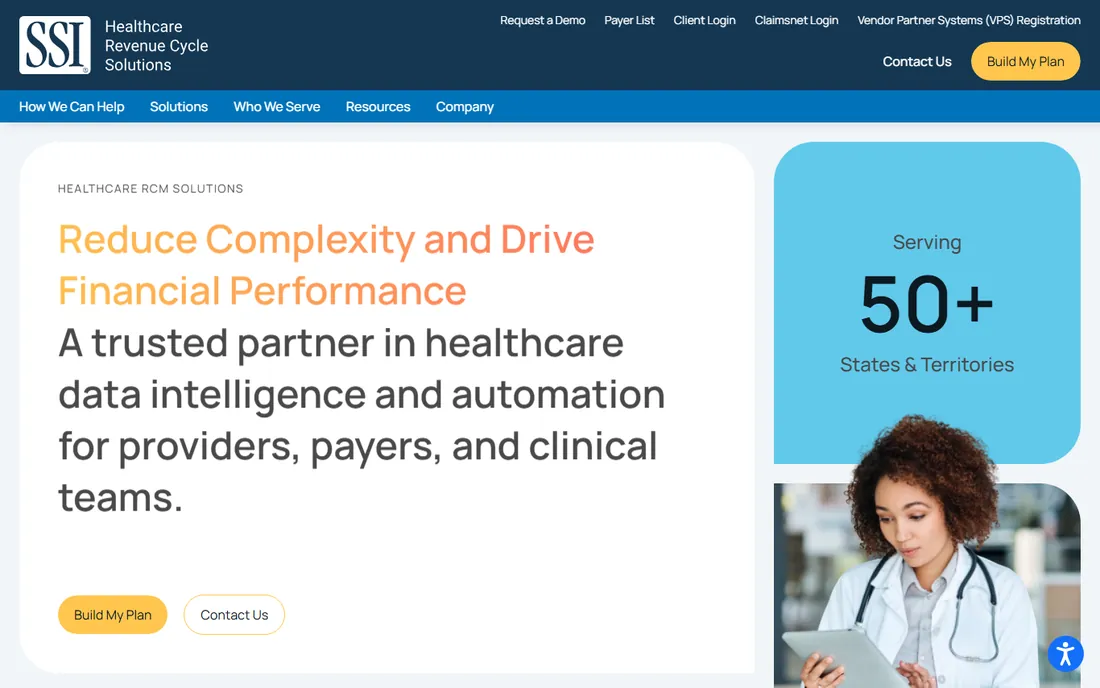
The SSI Group provides focused claims management and clearinghouse services: electronic claims submission, tracking, and remittance without the full RCM suite overhead. Mid-size providers that need reliable claims processing (rather than enterprise revenue cycle transformation) find the focus appropriate. The clearinghouse connectivity covers the payers that matter.
It does not match the analytics and automation depth of Waystar or Experian Health. Brand recognition is narrower. But focus is also a virtue: providers who know they need claims submission done right (and nothing more) get exactly that without enterprise complexity or pricing.
What we like- Focused on claims
- Clearinghouse services
- Accessible for mid-size providers
Watch out for- Narrower than RCM suites
- Less brand recognition
The denial problem
Claims processing software exists because denials are expensive: industry estimates put the cost of reworking a denied claim at multiples of clean submission, and a meaningful percentage of claims face initial denial. The software helps at three stages. Prevention: eligibility verification, prior authorization checks, and coding edits catch problems before submission. Management: denial categorization, workflow routing, and appeal tracking handle what slips through. Analysis: denial patterns reveal systemic issues (a payer's new edit, a department's coding errors) worth fixing permanently. When evaluating tools, weight prevention highest: every denial prevented saves more than every denial efficiently managed.
What to check before you buy
Payer connectivity and clean claim rates
Ask vendors for their clean claim rates and payer list specifics, not just totals. Your top ten payers by volume must be well-supported with electronic remittance. Reference customers with similar payer mixes give the honest picture. Connectivity gaps become your staff's manual work.
EHR integration depth
Claims data originates in the EHR. Verify whether the integration is native, interfaced (HL7/FHIR), or manual: each step down increases error rates and staff effort. EHR-native options (Epic Resolute, Oracle Health, athenahealth) win automatically for their own users; everyone else must prove the interface.
Denial management workflow
Every vendor claims denial management; test the actual workflow. How are denials categorized? How do appeals route and track? What analytics identify root causes? The difference between a denial dashboard and a denial resolution system is staff hours. Trial with your real denial data.
Total cost and contract terms
Healthcare IT contracts are long and expensive. Understand the pricing model (per claim, per provider, percentage of collections, flat license), implementation costs, and contract length. Percentage-of-collections models align vendor incentives with yours but cost more at scale. Get out-clauses and performance guarantees in writing.
How we chose
We selected medical claims processing tools with real provider user bases in 2026, from dedicated RCM platforms to EHR-embedded billing. We evaluated claims features, payer connectivity, denial management, and fit for different provider types. We excluded pure EHRs without claims depth, consumer billing tools, and discontinued products. No vendor paid for placement, and we did not process test claims.
Frequently asked questions
What is a clean claim rate?
The percentage of claims accepted by payers on first submission without errors or requests for more information. Higher is better; industry benchmarks vary by specialty but generally target the mid-90s. Low clean claim rates indicate front-end problems (eligibility, coding, authorization) worth fixing before buying more back-end software.
What causes most claim denials?
Eligibility and coverage issues, missing or incorrect patient information, prior authorization problems, coding errors, and timely filing limits. Most denials are preventable with front-end verification, which is why patient access tools matter as much as claims software. Analyze your own denial patterns before assuming the software is the problem.
Should we outsource billing or buy software?
It depends on scale and expertise. Small practices often do better outsourcing to billing services (or using athenahealth-style bundled RCM). Larger organizations with billing staff benefit from owning the software and process. The break-even depends on claim volume, collection rates, and staff costs. Many organizations hybridize: software for standard claims, specialists for complex denials.
How long does RCM implementation take?
For dedicated platforms, two to six months depending on integration complexity and data migration. EHR-embedded revenue cycle (Epic, Oracle Health) implementations run much longer as part of the EHR project. Plan around (not during) busy periods, and budget for workflow redesign alongside the technology.
What is a clearinghouse?
A clearinghouse sits between providers and payers, scrubbing claims for errors, routing them to the right payer, and returning remittance information. Most practices submit through a clearinghouse rather than directly to each payer because managing hundreds of individual payer connections is impractical for anyone but the largest health systems. Using one (Waystar, Availity, SSI, Optum all offer this) improves clean claim rates and simplifies payer connectivity. Most practices submit through a clearinghouse rather than directly to each payer.
Sources we checked (9)
- https://www.waystar.com
- https://www.experian.com/healthcare
- https://www.optum.com/en/
- https://www.availity.com
- https://www.cognizant.com/us/en
- https://www.athenahealth.com
- https://www.oracle.com/health/
- https://www.epic.com
- https://thessigroup.com/
Is your product missing or out of date?
We review this list regularly. Vendors can request a listing, send updated pricing or ask about featured placement.

Shihab Mia · Founder, Rankite
Shihab has spent more than a decade helping SaaS and e-commerce brands grow through search. He writes Rankite's software buying guides from pricing pages, documentation and public user reviews. More about Shihab.
 Waystar
 Experian Health
 Optum
Optum Availity
 TriZetto (Cognizant)
 athenahealth
 Oracle Health
 Epic
Epic SSI Group