How we make this list: we compare pricing pages, product documentation and public user reviews. Rankite is independent; if a vendor ever pays for a featured spot, that listing is clearly labeled Partner.
Key takeaways
- Kyriba is the market leader for enterprise treasury, with the broadest bank connectivity and the deepest cash, payments and risk modules.
- GTreasury and ION compete at the same enterprise level; the choice usually comes down to existing banking relationships and implementation fit.
- Nomentia is the European challenger worth evaluating for mid-market and mid-cap companies that find the giants oversized.
- Expect quote-only enterprise pricing across the board, plus implementation projects measured in months, not weeks.
Quick comparison
| Tool | Best for | Starting price | Free plan |
|---|
 Kyriba Kyriba | Large enterprises running global treasury | See website | No |
 GTreasury GTreasury | Treasurers wanting an integrated workstation | See website | No |
 ION Treasury ION Treasury | Complex global treasury and risk operations | See website | No |
 Nomentia Nomentia | European mid-market and mid-cap treasury | See website | No |
 TIS TIS | Cloud-based payments and bank connectivity | See website | No |
 Serrala Serrala | Treasury inside broader finance automation | See website | No |
 HighRadius HighRadius | AI-driven treasury and receivables | See website | No |
 Bottomline Bottomline | Payments-centric treasury operations | See website | No |
 Hazeltree Hazeltree | Investment managers and buy-side treasury | See website | No |
Is your product missing or out of date?
We review this list regularly. Vendors can request a listing, send updated pricing or ask about featured placement.
The best treasury software
Starting priceSee website
Free planNo
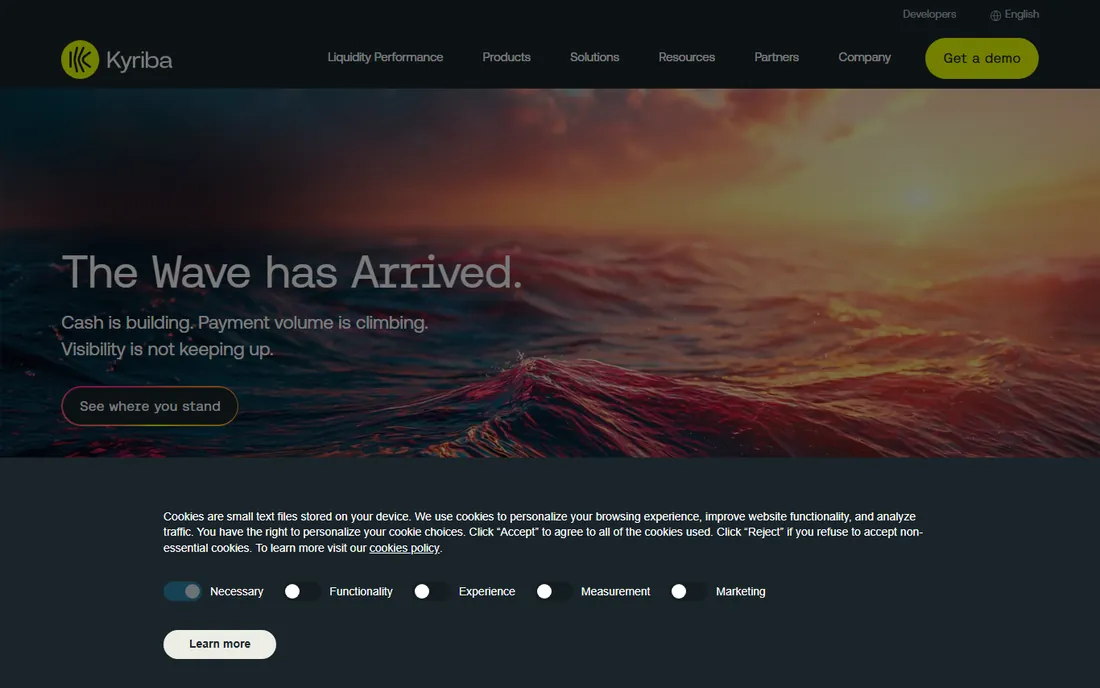
Kyriba is the name that comes up first in treasury RFPs. Its cloud platform covers cash positioning, forecasting, payments, FX risk, and working capital with connectivity to thousands of banks. The pre-built bank integrations are the real moat: connecting a new bank is configuration, not a project.
The investment matches the capability. Pricing is enterprise, implementation takes months, and the platform rewards dedicated treasury staff. But for multinationals managing cash across dozens of countries, Kyriba is the benchmark everything else is measured against.
What we like- Broadest bank connectivity in the industry
- Full cash, payments, risk and working capital modules
- Strong innovation pace
Watch out for- Enterprise pricing and implementation
- Can be more than mid-size companies need
Starting priceSee website
Free planNo
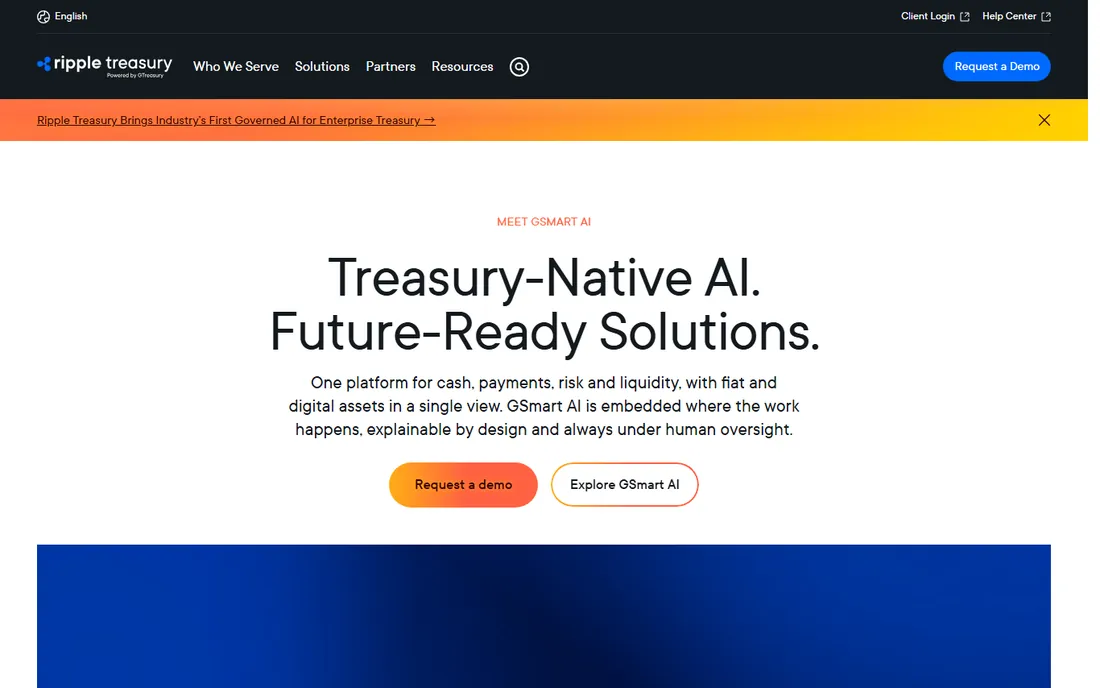
GTreasury competes head-to-head with Kyriba for enterprise treasury, with particular strength in cash positioning, forecasting and payments. Users often praise the interface, which matters in a category not known for design. Bank connectivity covers the major global banks well.
It lacks Kyriba's market momentum, which can matter in procurement. But evaluations between the two are usually close, and the right choice often comes down to which vendor's implementation team and banking relationships fit your footprint better.
What we like- Strong cash management and payments
- Good user experience for a treasury tool
- Solid bank connectivity
Watch out for- Brand recognition trails Kyriba
- Implementation still an enterprise project
Starting priceSee website
Free planNo
ION's treasury business combines several acquired products (including Wall Street Systems and Reval heritage) into a portfolio for complex global treasury. The depth in FX risk, hedge accounting and treasury operations suits sophisticated finance organizations. Being part of ION's larger markets software business helps where trading and treasury overlap.
The acquisition history means asking exactly which product you are buying. Packaging and pricing need careful review. But for treasury operations with real complexity, the functional depth is among the best available.
What we like- Deep functionality for complex organizations
- Strong in risk and hedge accounting
- Broad financial software portfolio
Watch out for- Portfolio assembled by acquisition
- Pricing and packaging can confuse
Starting priceSee website
Free planNo

Nomentia (built partly from the OpusCapita treasury business) is the European challenger: cloud treasury with strong regional bank connectivity, aimed at mid-market and mid-cap companies. It covers cash management, payments and forecasting without the enterprise weight of the global leaders.
US and Asian buyers will find the footprint thinner. But European treasurers who find Kyriba oversized and spreadsheets terrifying have a credible middle option here.
What we like- Strong European bank connectivity
- Good fit for mid-size companies
- Cash management plus payments
Watch out for- Less presence outside Europe
- Smaller ecosystem than the giants
Starting priceSee website
Free planNo
TIS built its name on cloud bank connectivity and payments: connect your banks once, manage payments and cash from one cloud platform. Deployment is faster than a full treasury suite, which appeals to companies whose primary pain is payments rather than risk management.
Coupa acquired TIS, folding it into its spend management portfolio. That brings resources but also roadmap questions for pure-treasury buyers. If payments and connectivity are your core needs, TIS remains strong.
What we like- Cloud-native bank connectivity
- Strong payments focus
- Faster to deploy than full suites
Watch out for- Now part of Coupa, so roadmap questions apply
- Less full treasury depth
Starting priceSee website
Free planNo
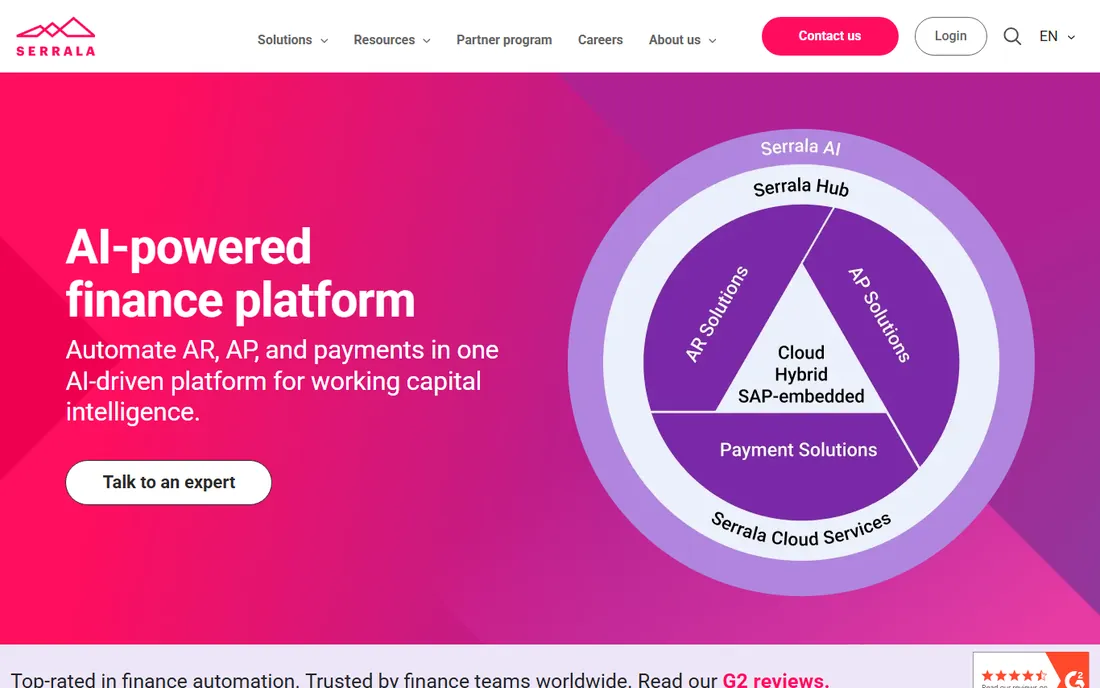
Serrala combines treasury with the surrounding finance automation: accounts payable, payments and cash management in one portfolio. SAP-centric organizations find the integration natural. The acquisition of treasury specialists added depth to the cash and forecasting side.
Pure-treasury buyers may find the broader finance positioning distracting. But CFOs looking to consolidate treasury, AP and payments vendors will appreciate the single-vendor story.
What we like- Treasury plus AP and payments automation
- Strong SAP ecosystem fit
- European roots with global reach
Watch out for- Breadth can dilute treasury focus
- Enterprise sales process
Starting priceSee website
Free planNo
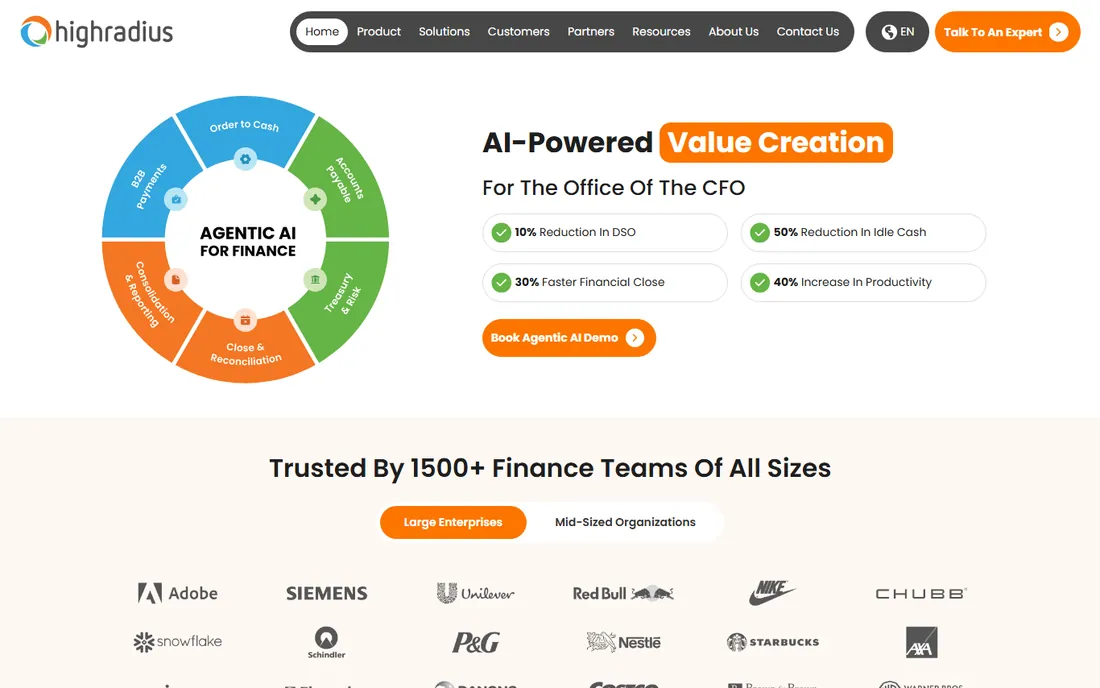
HighRadius came from autonomous receivables and expanded into treasury, bringing AI-driven cash forecasting with it. The forecasting models learn from your actual cash flows, which beats spreadsheet extrapolation. Collections and deductions automation remain best-in-class.
Treasury depth is newer than the receivables side, so complex risk management buyers should verify coverage. But for treasurers whose biggest pain is forecast accuracy and working capital, the AI-first approach is compelling.
What we like- AI-based cash forecasting
- Strong receivables and collections automation
- Modern cloud platform
Watch out for- Treasury is newer than its receivables heritage
- Enterprise pricing
Starting priceSee website
Free planNo
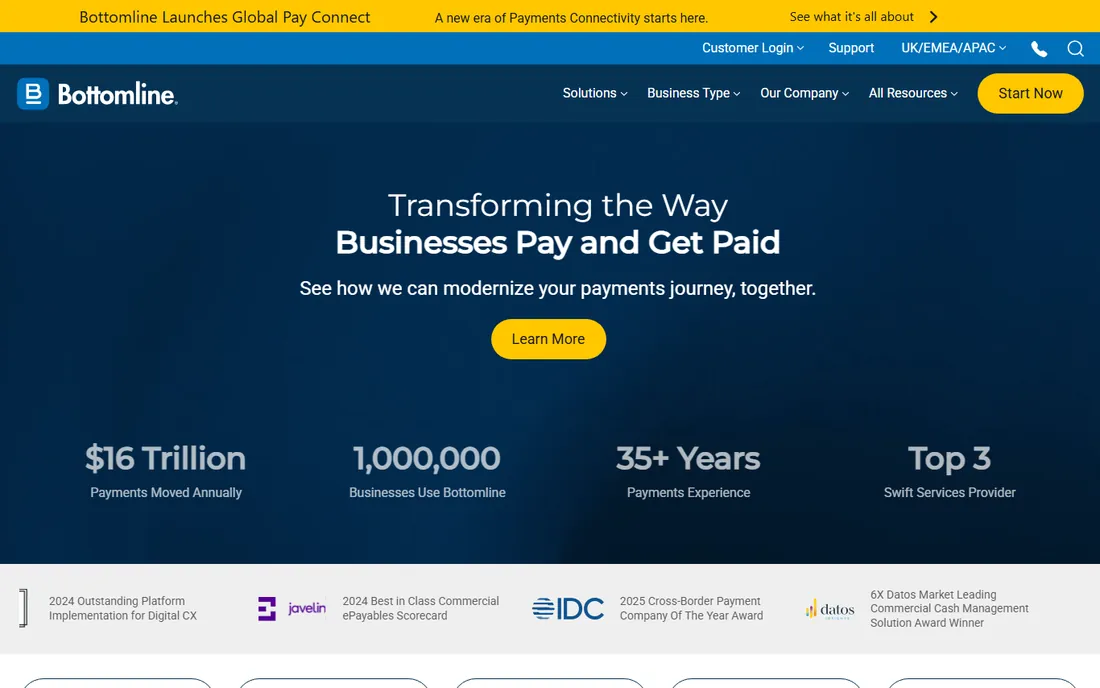
Bottomline approaches treasury from payments: its strength is moving money securely across banks and borders, with fraud prevention built in. Treasury teams whose daily reality is payments execution rather than risk modeling will find it fits.
Full treasury workstations offer deeper cash forecasting and risk. But if your treasury operation centers on paying the right people the right amounts on time, Bottomline's payments DNA is an advantage.
What we like- Deep payments expertise
- Strong bank connectivity
- Good for AP and treasury payments
Watch out for- Treasury management depth trails the specialists
- Portfolio is payments-first
Starting priceSee website
Free planNo
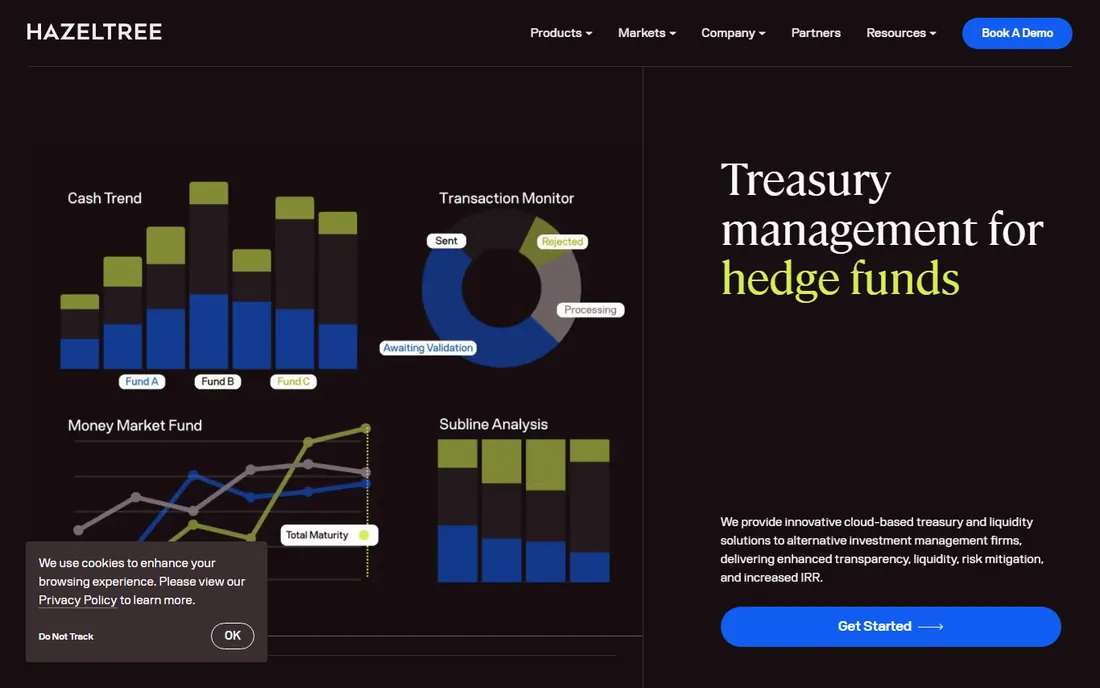
Hazeltree is the specialist for the buy side: asset managers, hedge funds and fund administrators managing cash, collateral and margin. Corporate treasury tools do not understand fund structures; Hazeltree does. Securities finance and liquidity management are core, not add-ons.
Corporate treasurers should look elsewhere. But investment firms running treasury on spreadsheets or generic tools will find Hazeltree speaks their language.
What we like- Built for asset managers and hedge funds
- Cash and collateral management
- Strong in securities finance
Watch out for- Niche focus
- Not built for corporate treasury
What to evaluate beyond the demo
Bank connectivity decides more treasury purchases than any feature list. Ask which of your banks connect out of the box, what the connection method is (SWIFT, host-to-host, API), and who does the work of onboarding each bank. A beautiful forecast means nothing if your cash positions arrive a day late.
Then probe forecasting honestly. Every vendor demos impressive AI forecasting; ask for reference customers with similar business models and ask those references how accurate the forecasts actually are. Finally, clarify the implementation: timeline, your team's time commitment, and what happens to pricing when you add entities, users or banks in year two.
How we chose
We compared platforms on cash management depth, bank connectivity, payments capability, risk management, forecasting, and fit for different company sizes and types. We verified each vendor's homepage and current positioning, reviewed analyst coverage and practitioner feedback, and noted acquisitions affecting product lineups. We did not implement treasury systems or connect live bank feeds.
Cash forecasting: where treasury software earns its keep
The most valuable thing treasury software does is also the hardest: telling you how much cash you will have, and when. Accurate forecasting prevents the two expensive failures, borrowing you did not need and shortfalls you did not see coming. Companies that forecast well borrow less, invest idle cash better and sleep better.
Forecasting works in layers. The short-term cash position, days to weeks, comes from known payables, receivables and payroll: mostly arithmetic. The medium-term forecast, weeks to quarters, blends historical patterns with business plans: seasonality, growth assumptions, planned investments. Treasury platforms automate the arithmetic layer and structure the judgment layer, which is where spreadsheets usually collapse.
Data quality is the whole game. Forecasts built on stale receivables or incomplete payables are worse than no forecast, because they create false confidence. Before evaluating software, audit your source data: how current are your AR aging reports, how reliable are your AP schedules, and who updates them? The software cannot fix broken inputs.
Start measuring forecast accuracy from day one. Compare predicted versus actual cash weekly, track the variance, and improve the inputs driving the errors. Treasurers who can show the CFO a forecast that was right three months running earn the credibility to make bigger calls. The software provides the machinery; the discipline provides the value.
A practical note on AI forecasting claims: machine learning helps most where you have long, stable history and repeating patterns. Young companies, acquisitive companies and businesses with lumpy cash flows will find the models less magical. Ask vendors for accuracy benchmarks from companies shaped like yours, not just the demo.
Where treasury software purchases go wrong
The most expensive mistake is buying for the demo, not for the daily work. Demos show the beautiful forecast dashboard; daily work is bank statement imports, payment approvals and exception handling. Spend your evaluation time on the unglamorous workflows your team touches every morning, not the executive dashboard they will open monthly.
Underestimating bank onboarding is the second classic failure. Connecting every bank account, with the right formats, cut-off times and approval chains, takes longer than the software implementation itself. Start the bank onboarding workstream on day one of the project, in parallel with configuration, or the go-live will wait on the last bank's paperwork.
A third pitfall is buying modules nobody will use. Treasury suites bundle risk management, hedge accounting and working capital tools that sound impressive and sit idle. License what your team will actually operate in year one; add modules when the need is real. Shelfware is expensive at enterprise prices.
Finally, neglecting the human side. Treasury software changes how the finance team works daily, and teams that thrived on spreadsheets need training, patience and a clear reason to change. Involve the daily users in the selection, not just the treasurer, and plan for a quarter of parallel running before you trust the new system completely.
Frequently asked questions
What does treasury software do?
It helps companies manage cash positions, forecast liquidity, execute payments, manage financial risk (like currency exposure), and handle bank relationships and account administration.
How much does treasury software cost?
Enterprise treasury platforms are quote-based and typically run from tens of thousands to hundreds of thousands annually depending on modules, banks and entities. Implementation services add significantly to year-one cost.
Do mid-size companies need treasury software?
Once you operate multiple bank accounts across entities or countries, spreadsheets become risky. Mid-market options like Nomentia and TIS exist precisely for companies outgrowing Excel but not ready for Kyriba-scale investment.
How long does implementation take?
Typically three to nine months for enterprise platforms, including bank onboarding, which is often the longest pole. Cloud payments-focused tools can go live faster.
Can treasury software prevent payments fraud?
Modern platforms include fraud detection, approval workflows and secure payment execution that reduce fraud risk significantly. No software eliminates it entirely; controls and processes matter too.
What is the difference between treasury and ERP cash management?
ERP cash modules handle basic positioning within the ERP's world. Dedicated treasury software adds multi-bank connectivity, advanced forecasting, risk management and payments execution across the whole banking footprint.
Sources we checked (9)
- https://www.kyriba.com/
- https://www.gtreasury.com/
- https://www.iongroup.com/
- https://www.nomentia.com/
- https://www.tispayments.com/
- https://www.serrala.com/
- https://www.highradius.com/
- https://www.bottomline.com/
- https://www.hazeltree.com/
Is your product missing or out of date?
We review this list regularly. Vendors can request a listing, send updated pricing or ask about featured placement.

Shihab Mia · Founder, Rankite
Shihab has spent more than a decade helping SaaS and e-commerce brands grow through search. He writes Rankite's software buying guides from pricing pages, documentation and public user reviews. More about Shihab.