How we make this list: we compare pricing pages, product documentation and public user reviews. Rankite is independent; if a vendor ever pays for a featured spot, that listing is clearly labeled Partner.

Key takeaways
- TurboTax and H&R Block are the safe DIY choices for agents with straightforward commission income.
- Keeper finds the deductions agents miss: mileage, home office, and business expenses.
- Stessa is built for agents who also invest in rentals, tracking property income and expenses automatically.
- TaxAct, FreeTaxUSA, Shoeboxed, and Expensify cover budget filing, receipt management, and expense tracking.
Quick comparison
| Tool | Best for | Starting price | Free plan |
|---|
 TurboTax TurboTax | DIY filing with guidance | See website | Free trial |
 H&R Block H&R Block | DIY plus in-person help | See website | Free trial |
 Keeper Keeper | finding missed deductions | See website | Free trial |
 Stessa Stessa | agents with rental properties | See website | Free trial |
 TaxAct TaxAct | affordable DIY filing | See website | Free trial |
 FreeTaxUSA FreeTaxUSA | budget federal and state filing | See website | Free trial |
 Shoeboxed Shoeboxed | receipt scanning and organization | See website | Free trial |
 Expensify Expensify | expense tracking for teams | See website | Free trial |
Is your product missing or out of date?
We review this list regularly. Vendors can request a listing, send updated pricing or ask about featured placement.
The best tax software for real estate agents
Starting priceSee website
Free planFree trial
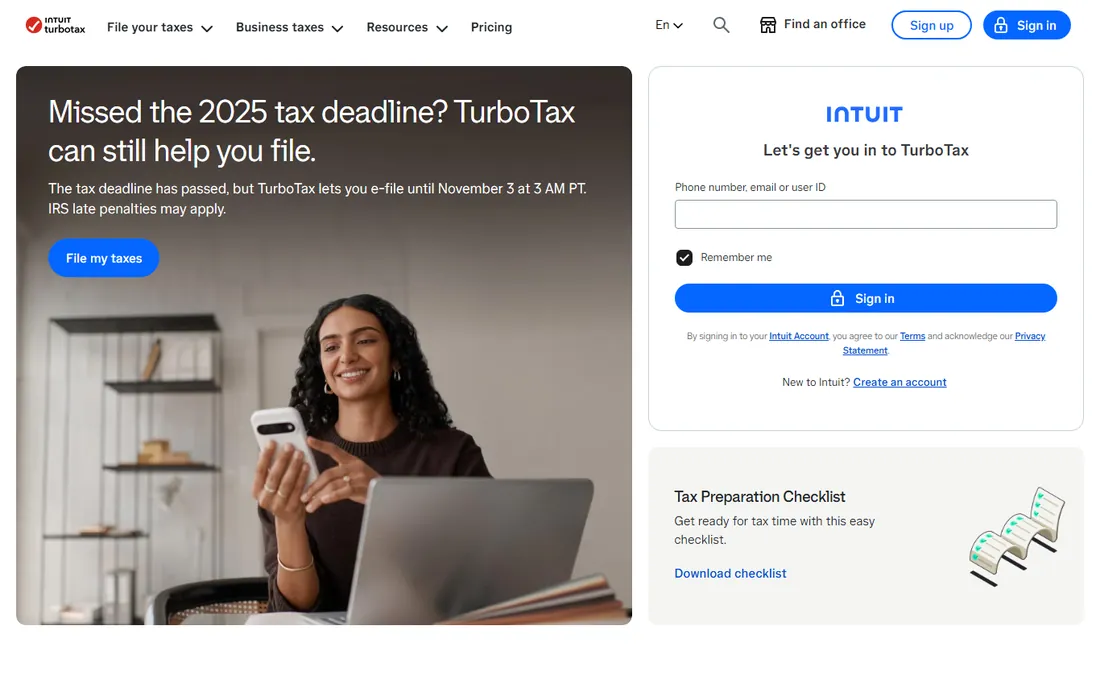
TurboTax is the default DIY tax software for good reason: the interview-style guidance walks self-employed filers through Schedule C without requiring tax knowledge. Real estate agents report commission income, deduct business expenses, and handle estimated taxes with the software asking the right questions.
The self-employed tier covers the agent-specific needs: home office deduction, vehicle expenses, and business asset depreciation. Integration with QuickBooks helps agents who track books there year-round.
The price rises steeply as complexity increases, and the upsell screens irritate everyone. But for agents comfortable filing themselves who want maximum hand-holding, TurboTax's guidance remains the most thorough.
What we like- The most guided experience
- Handles self-employment well
- Huge support resources
Watch out for- Pricing climbs with complexity
- Upsells throughout
Starting priceSee website
Free planFree trial
H&R Block's advantage is the hybrid model: file online yourself, but walk into an office when the situation gets complicated. Real estate agents with messy years, multiple income streams, audit notices, or first-time rental income value that safety net.
The online software handles self-employment filing competently, with guidance comparable to TurboTax for standard agent situations. Pricing is often friendlier, and the office network means human help is nearby.
The software experience trails TurboTax slightly in polish, and in-person help costs extra. But for agents who want DIY filing with a professional backup option, the combination is reassuring.
What we like- Online plus office support
- Good for complex situations
- Transparent pricing
Watch out for- Office visits cost more
- Software less polished than TurboTax
Starting priceSee website
Free planFree trial
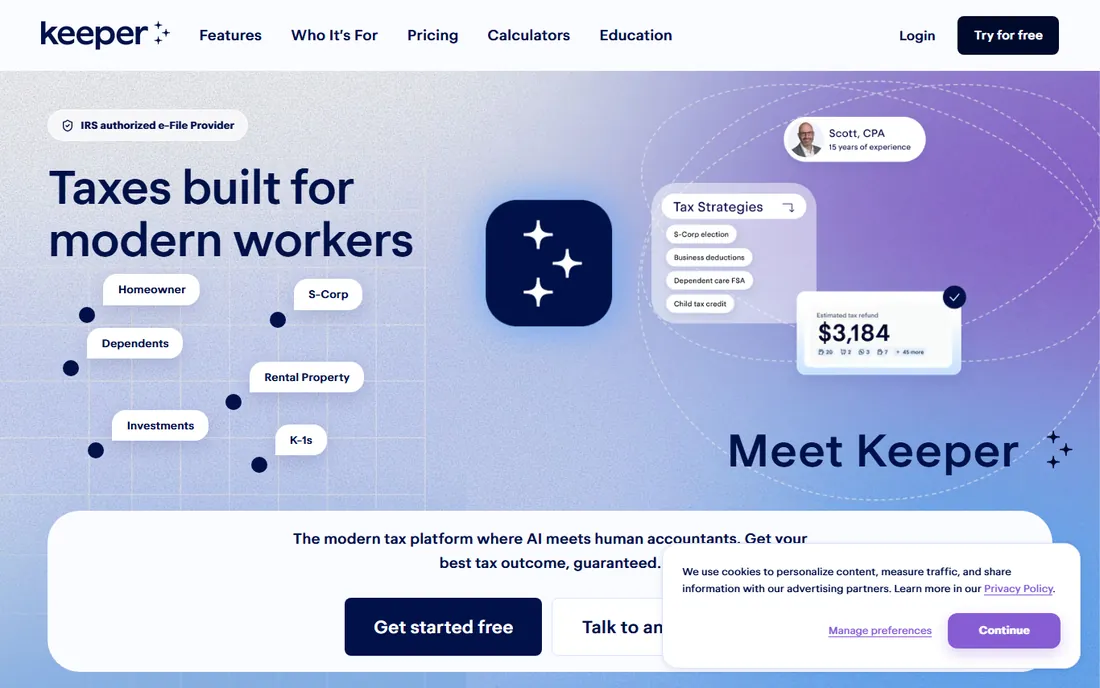
Keeper (formerly Keeper Tax) watches your bank and card transactions year-round, flagging tax-deductible expenses that freelancers and agents miss. The average user discovers significant overlooked deductions, which is the entire pitch.
For real estate agents, the missed deductions are familiar: mileage between showings, client meals, home office costs, marketing expenses, and professional dues. Keeper's tax assistant reviews transactions and learns your patterns, getting smarter over time.
The subscription is the cost of the vigilance; tax filing itself is a separate service. Agents who already track everything diligently get less value. But for busy agents whose expense tracking is aspirational, Keeper's automated discovery pays for itself.
What we like- Finds deductions automatically
- Built for freelancers
- Expense tracking included
Watch out for- Subscription cost
- Filing is an add-on
Starting priceSee website
Free planFree trial
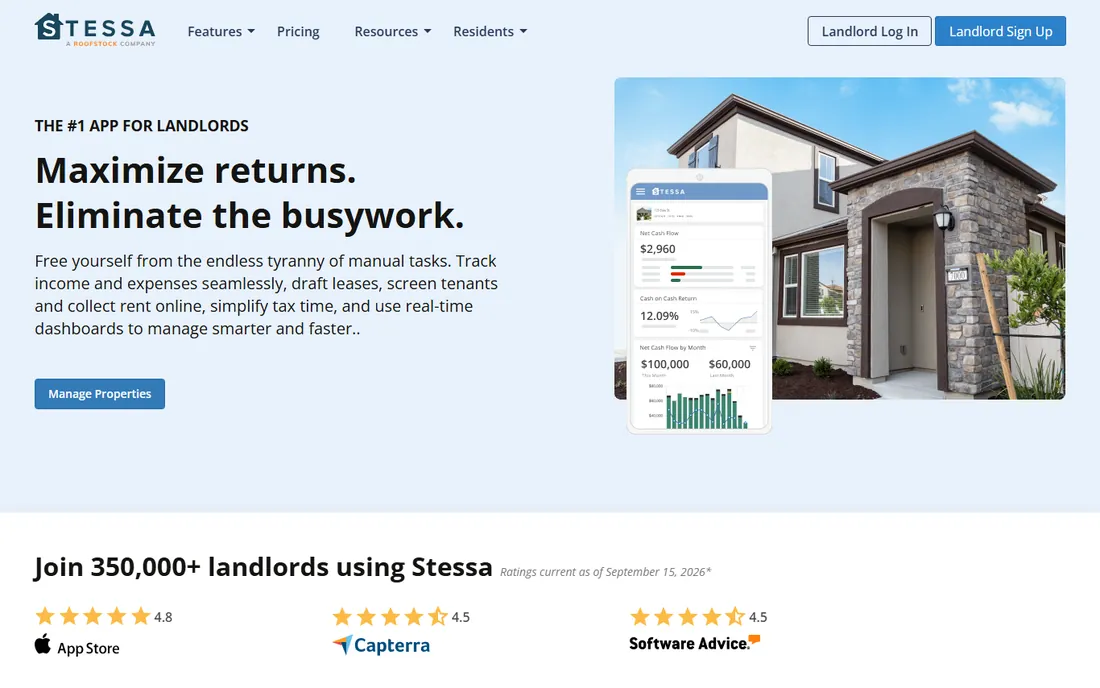
Stessa is the financial platform for rental property owners, and many agents are also landlords. It aggregates bank and property management accounts, categorizes income and expenses automatically, and produces the Schedule E-ready reports that make tax time painless.
The property-level tracking is the value: income, expenses, and documents organized per property, with performance dashboards showing how each investment performs. Tax preparation becomes exporting reports rather than reconstructing a year's records.
It is not tax filing software; you still file with TurboTax or an accountant, armed with clean Stessa reports. And the automation works best with connected accounts. But for agents building rental portfolios, Stessa turns property bookkeeping from dread to routine.
What we like- Built for rental property accounting
- Automatic transaction categorization
- Tax-ready reports
Watch out for- Rental-focused, not general tax filing
- Best with connected accounts
Starting priceSee website
Free planFree trial
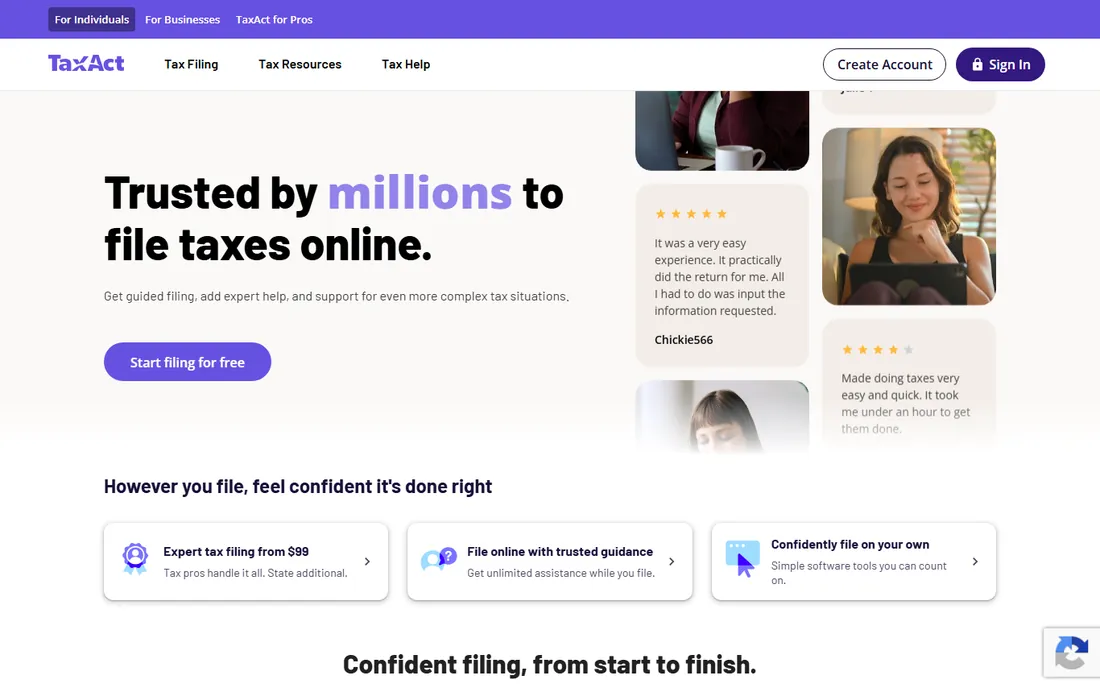
TaxAct delivers competent DIY tax filing at prices consistently below TurboTax and H&R Block. The self-employed version handles Schedule C, home office, and business expenses without drama, at a cost that respects tight budgets.
The experience is more straightforward and less guided than the leaders; confident filers appreciate the efficiency, while nervous first-timers may miss the hand-holding. Accuracy guarantees and support are solid.
Agents comfortable with their tax situation who resent paying premium prices for guidance they do not need find TaxAct the rational choice. The savings compound yearly.
What we like- Lower prices than leaders
- Solid self-employment support
- Straightforward
Watch out for- Less hand-holding
- Interface less refined
Starting priceSee website
Free planFree trial

FreeTaxUSA's proposition is blunt: federal filing free, state filing cheap, with full support for self-employment schedules. Agents with straightforward situations file complete returns for a fraction of the big-brand cost.
The software covers Schedule C and the common agent deductions competently. The trade is guidance depth and support access; help beyond the basics costs extra, and the interview is less nurturing than TurboTax's.
For agents who know their numbers and just need reliable filing software, the value is undeniable. Complexity or uncertainty argues for more guidance; simplicity argues for keeping the money.
What we like- Very affordable
- Federal free
- Handles self-employment
Watch out for- Upsells for support
- Less guidance
Starting priceSee website
Free planFree trial
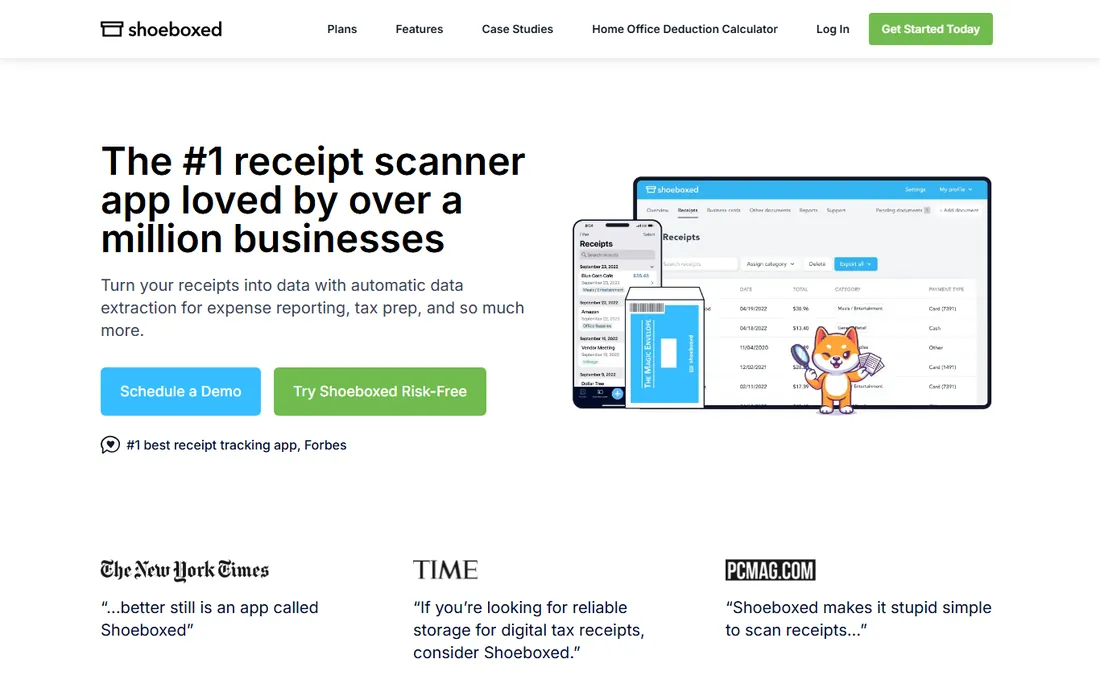
Shoeboxed solves the receipt problem: snap photos of receipts, and the service scans, categorizes, and archives them with human verification for accuracy. Come tax time, every deductible expense is documented and organized.
The mileage tracking complements receipt management for agents whose cars are offices. The combination covers the two most-audited deduction categories with real documentation, which is worth more than the subscription if the IRS ever asks questions.
Free apps scan receipts too, but without the verification and organization. Shoeboxed is best viewed as insurance and organization rather than filing software; pair it with your filing tool of choice.
What we like- Receipt scanning with human verification
- Mileage tracking
- Organized archives
Watch out for- Subscription for what apps do free
- Best as a complement
Starting priceSee website
Free planFree trial

Expensify is the expense management standard for teams, and real estate teams and brokerages use it to handle agent expenses professionally. SmartScan captures receipts, expenses flow through approval, and reimbursements process automatically.
For team leaders, the value is control and visibility: spending policies enforced automatically, expenses categorized correctly, and accounting integrations that keep the books clean. Individual agents benefit from effortless tracking.
Solo agents find it more than they need; simpler tools suffice. But brokerages and teams managing expenses across many agents find Expensify's structure worth the per-user cost.
What we like- Excellent receipt scanning
- Team expense management
- Accounting integrations
Watch out for- Overkill for solo agents
- Pricing per user
The deductions agents most often miss
Mileage tops every list. Agents who do not log every business mile leave thousands in deductions unclaimed. Automatic mileage tracking, through Keeper, Shoeboxed, or a dedicated app, is the single highest-ROI tax habit.
Home office deductions go unclaimed by agents who assume they do not qualify. If you have a dedicated workspace used regularly for business, the simplified method takes minutes and the actual-expense method often yields more.
Marketing, professional development, licensing fees, E&O insurance, and client entertainment all add up. The pattern is consistent: agents under-deduct because tracking feels like work. Software that automates the tracking captures money that manual methods miss.
Quarterly taxes: the agent's reality
Commission income means no employer withholding, which means quarterly estimated taxes. Agents who ignore this face penalties and painful April surprises. The software on this list helps, but the habit matters more than the tool.
A practical system: separate tax money immediately (25 to 30 percent of each commission into a dedicated account), track income quarterly, and pay estimates on time. Keeper and similar tools estimate quarterly amounts; accountants refine them.
New agents should get professional help the first year. The cost of a CPA consultation is small against the penalties and missed deductions of a DIY first year. Graduate to software-only filing once you understand your situation.
Record-keeping systems that survive audits
The IRS does not require perfection; it requires contemporaneous records. A mileage log reconstructed at tax time invites skepticism; one generated automatically by an app stands up. The same applies to receipts and expense records.
Build the system once: automatic mileage tracking, receipt capture at purchase, and monthly reconciliation. The tools on this list automate most of it. The habit that matters is consistency, not completeness on day one.
Store records digitally with backups. Paper fades and gets lost; cloud-stored records persist. Keep business and personal finances separated at the account level, which makes every other record-keeping task easier.
Planning beyond April
Tax strategy happens year-round, not in March. Quarterly reviews with your numbers catch problems early: underpaid estimates, missed deductions, and opportunities like retirement contributions that must happen before year-end.
Retirement accounts are the biggest lever most agents ignore. SEP-IRAs and Solo 401(k)s shelter significant income, and the contribution deadlines reward planning. A December conversation with your CPA beats an April scramble.
Entity and structure decisions deserve periodic review as income changes. What worked at $80,000 in commissions may not work at $300,000. The software tracks the numbers; professional advice turns them into strategy.
How we chose
We compared tax tools relevant to real estate agents' specific situations: commission income, business deductions, and rental properties, based on vendor documentation, agent community discussion, and reviews on software directories and app stores. We covered DIY filing, deduction discovery, rental accounting, and expense management because agents' tax needs span all four. Pricing changes yearly, so we link to vendors for current numbers.
Frequently asked questions
Should agents hire a CPA or use software?
Many do both: software for tracking and organization, a CPA for filing and planning, at least initially. The CPA's value is strategy (entity choice, retirement plans, deduction planning), not data entry. As situations stabilize, some graduate to software-only filing.
What business structure is best for tax purposes?
It depends on income level and state. Many agents start as sole proprietors and elect S-corp status as income grows, for payroll tax savings. This is CPA territory; the wrong choice costs real money. Do not decide from internet articles alone.
Can I deduct my car?
Yes, via the standard mileage rate or actual expenses, for business use. Commuting from home to the office generally does not count, but driving between appointments, showings, and business errands does. Log every mile; the deduction is substantial.
What records do I need to keep?
Receipts for all business expenses, mileage logs, and records supporting home office and other deductions. Digital records are fine. Keep everything at least three years from filing, longer for property records. Tools like Shoeboxed automate this.
How do rental properties change my taxes?
Rental income and expenses report on Schedule E, with depreciation as a major benefit. Stessa organizes the records; the filing itself needs care around passive activity rules and depreciation. Many agent-investors use a CPA for the property side even when self-filing commissions.
Sources we checked (8)
- https://turbotax.intuit.com/
- https://www.hrblock.com/
- https://www.keepertax.com/
- https://www.stessa.com/
- https://www.taxact.com/
- https://www.freetaxusa.com/
- https://www.shoeboxed.com/
- https://www.expensify.com/
Is your product missing or out of date?
We review this list regularly. Vendors can request a listing, send updated pricing or ask about featured placement.

Shihab Mia · Founder, Rankite
Shihab has spent more than a decade helping SaaS and e-commerce brands grow through search. He writes Rankite's software buying guides from pricing pages, documentation and public user reviews. More about Shihab.