How we make this list: we compare pricing pages, product documentation and public user reviews. Rankite is independent; if a vendor ever pays for a featured spot, that listing is clearly labeled Partner.
Key takeaways
- Bearable (free; $34.99 optional subscription) is the most complete daily tracker, with correlation reports that show what improves or worsens your symptoms.
- Flaredown is free forever and auto-tracks weather against your symptoms, a feature chronic illness communities specifically asked for.
- Ada and Symptomate are checkers, not trackers: they assess symptoms you enter now rather than logging them over time. Both are free.
- Privacy varies more than features do. Bearable and Clue state they never sell health data; Flaredown shares anonymized data with researchers, which its FAQ discloses openly.
Quick comparison
| Tool | Best for | Starting price | Free plan |
|---|
 Bearable Bearable | People managing ongoing conditions who want correlation reports | Free (optional subscription $34.99, 7-day free trial) | Yes (unlimited custom symptom tracking free) |
 Symple Symple | Quick daily logging you can show your doctor | Free (SympleComplete upgrade via the App Store) | Yes (track up to 5 symptoms and 5 factors free) |
 Flaredown Flaredown | Chronic illness tracking with automatic weather data | Free | Yes (free forever, per the project's own site) |
 CareClinic CareClinic | All-in-one tracking of symptoms, medications and vitals | Free | Yes |
 Ada Ada | AI symptom assessment before deciding on care | Free | Yes |
 WebMD WebMD | Checking symptoms against a large condition library | Free | Yes |
 Symptomate Symptomate | Fast, anonymous symptom checks with no account | Free | Yes |
 Flo Flo | Tracking cycle-related symptoms like PMS, cramps and mood | See website (free app; Flo Premium subscription priced in-app) | Yes |
 Clue Clue | Privacy-focused cycle and symptom tracking | See website (free app; Clue Plus subscription priced in-app) | Yes |
Is your product missing or out of date?
We review this list regularly. Vendors can request a listing, send updated pricing or ask about featured placement.
The best symptom tracker app
Your doctor asks how you have been feeling since March, and your mind goes blank. Was the fatigue worse in April or May? Did the headaches start before or after the new medication? A symptom tracker exists for exactly this moment: it turns vague memory into a dated log you can hand to a clinician. These nine apps cover the two jobs in this category, daily tracking over time and on-demand symptom checking, with honest notes on price and privacy.
#1
Bearable
Best for: People managing ongoing conditions who want correlation reports
Visit bearable.app
Starting priceFree (optional subscription $34.99, 7-day free trial)
Free planYes (unlimited custom symptom tracking free)
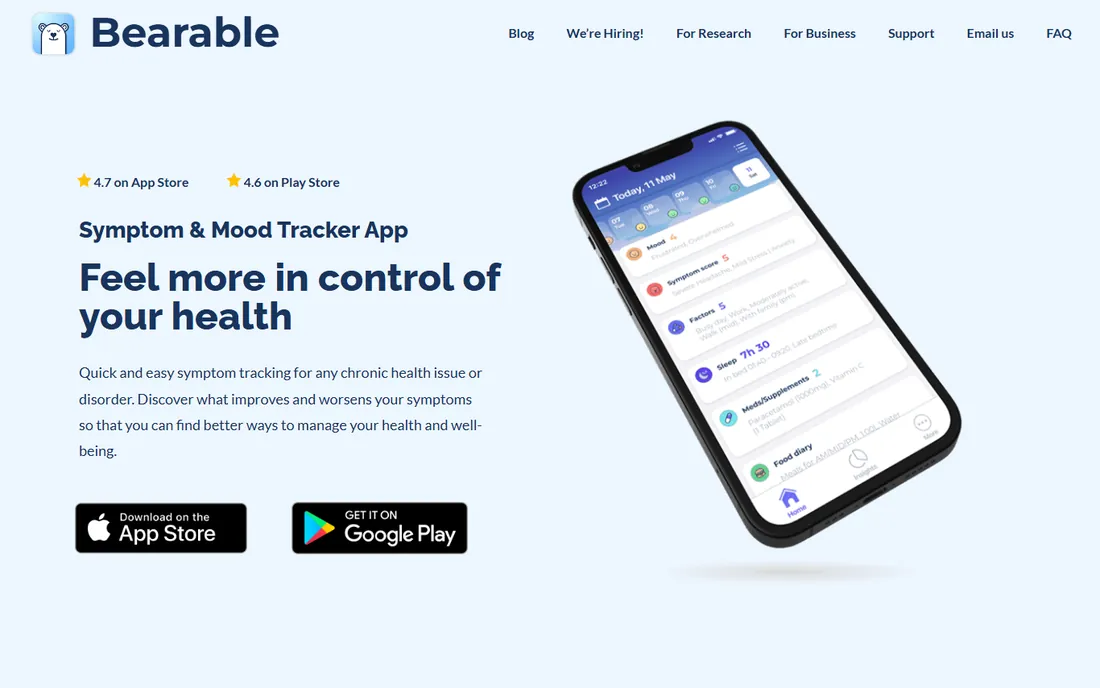
Bearable is built around one idea: log a little each day, then let the app find the patterns. Mood, sleep, symptoms, energy, medication, habits and factors all feed into reports that surface correlations, like caffeine consistently preceding poor sleep. The free tier is unusually generous: unlimited custom symptoms, weekly reports and the correlation graph cost nothing.
The $34.99 subscription adds unlimited goals, custom experiments, full correlation reports and history beyond 30 days, with a 7-day trial. The company states plainly that it will never sell your data, a meaningful promise in a category where free apps often monetize information. Setup takes minutes, and the daily check-in is designed to survive brain fog and bad days.
What we like- Free tier covers unlimited custom symptoms with weekly reports
- Correlation and experiment reports show what affects your health
- Encrypted data you can export or delete anytime
Watch out for- Advanced reports and full history beyond 30 days need the subscription
- The breadth of metrics can feel like a lot at first
Starting priceFree (SympleComplete upgrade via the App Store)
Free planYes (track up to 5 symptoms and 5 factors free)
Symple keeps the daily ritual deliberately small: pick your symptoms, rate how you feel, note the factors that might matter. That simplicity is the point. The Doctor's Report turns weeks of entries into a one-page overview, which is exactly what a clinician needs when you have fifteen minutes together. Timestamped photos let you document visible symptoms or medication changes.
The free version covers 5 symptoms and 5 factors. SympleComplete, sold as an in-app upgrade, removes those caps and adds the smart journal, longer graphing intervals and passcode protection. It is an iPhone-first app with a long track record, and it remains one of the fastest ways to start a usable health log today.
What we like- Logging takes seconds a day with a clean, simple interface
- The Doctor's Report summarizes your history for appointments
- Imports steps, sleep and heart rate from Apple Health
Watch out for- Free tier caps you at 5 symptoms and 5 factors
- The app feels dated next to newer trackers
Starting priceFree
Free planYes (free forever, per the project's own site)
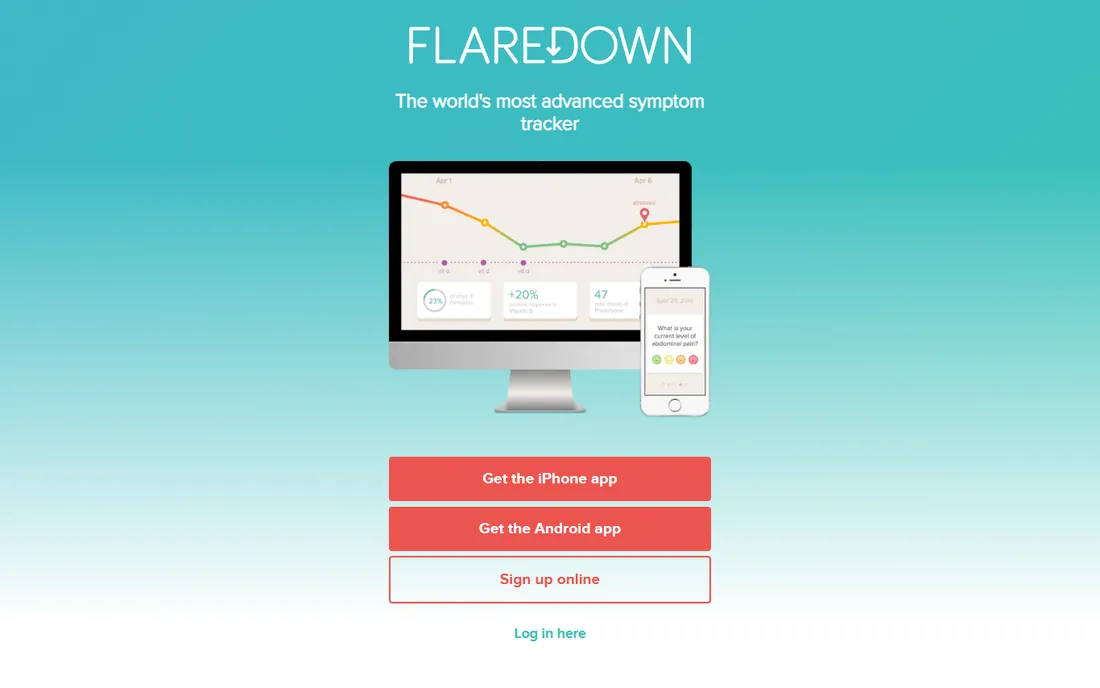
Flaredown started as a crowdfunded project and its site still says it will always be free. The daily check-in covers symptoms, treatments, mood, activity and food, and the standout feature is automatic weather tracking: temperature, humidity and precipitation are logged for you, so you can see whether barometric pressure or heat maps to your flare-ups without manual entry.
The privacy model is transparent. Your personal history is visible only to you, but Flaredown anonymizes the dataset and shares it with researchers studying chronic illness triggers, and its FAQ links to the exact dataset researchers receive. If contributing to research bothers you, pick another app. If it appeals to you, nothing else in this list does it as openly.
What we like- Free forever with no paid tier at all
- Auto-tracks temperature, humidity and precipitation against your symptoms
- Community features connect you with people tracking the same conditions
Watch out for- The interface is simpler and less polished than Bearable or CareClinic
- Development pace depends on a small team and donations
#4
CareClinic
Best for: All-in-one tracking of symptoms, medications and vitals
Visit careclinic.io
Starting priceFree
Free planYes
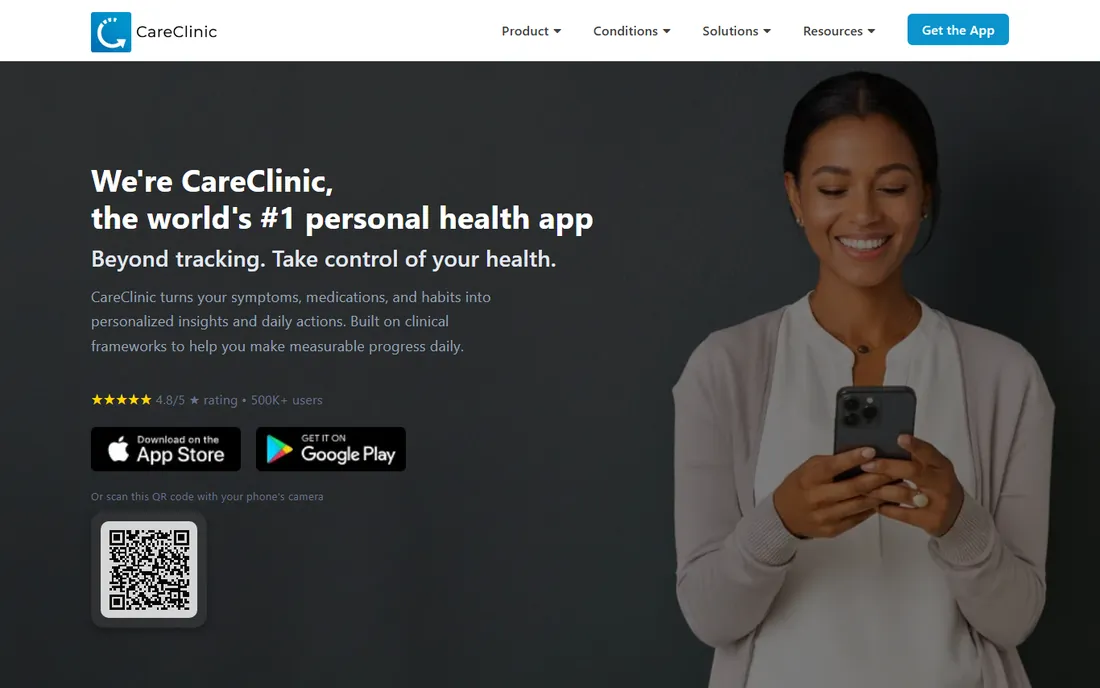
CareClinic is the closest thing to a personal health record among these apps. Beyond 500+ trackable symptoms with a body map for location, it handles medication schedules with refill reminders, blood pressure and glucose logging, and standardized clinical assessments with automatic scoring. Reports export as PDFs formatted for appointments.
The vendor states HIPAA compliance and 256-bit encryption, and its own site lists the app price as $0. It syncs with Apple Health, Google Fit and wearables from Fitbit, Garmin and others. If your health picture involves medications, vitals and multiple conditions at once, this is the most complete free option. If you only want to log headaches, it is more app than you need.
What we like- Combines symptom, medication, vitals and measurement tracking in one app
- Includes validated clinical questionnaires like PHQ-9 and GAD-7
- HIPAA-compliant with 256-bit encryption per the vendor
Watch out for- The breadth of trackers can overwhelm someone who only wants symptom logging
- Some advanced features sit behind in-app purchases
#5
Ada
Best for: AI symptom assessment before deciding on care
Visit ada.com
Starting priceFree
Free planYes
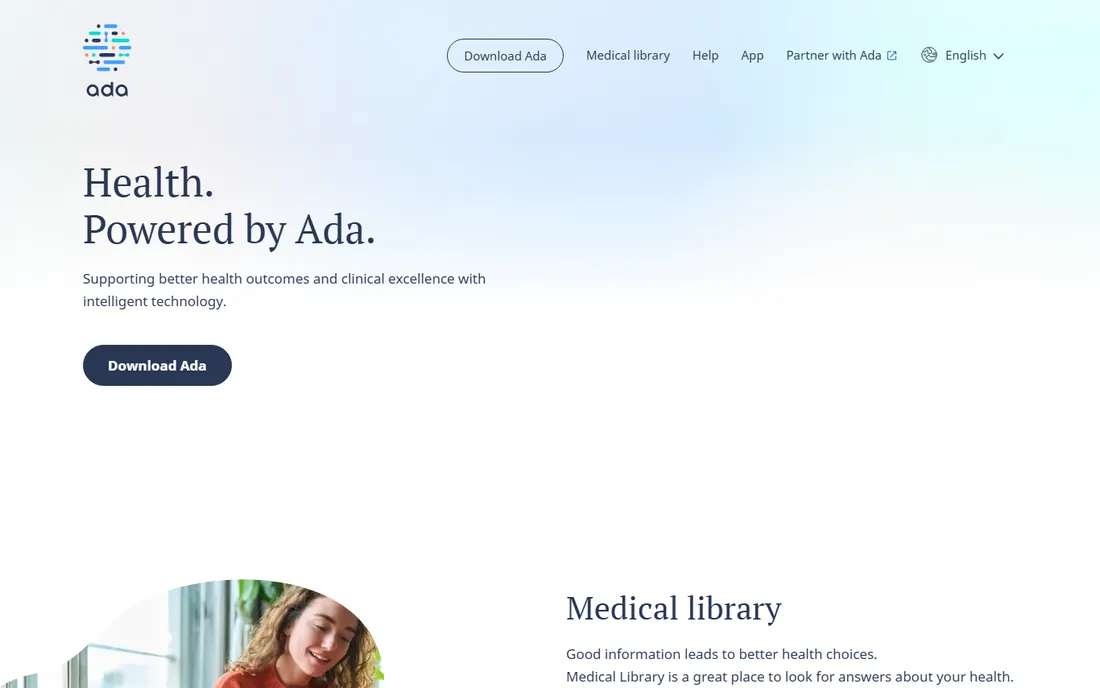
Ada works differently from the trackers above. You describe what you are feeling now, answer its questions, and it suggests possible causes with guidance on next steps. The company says clinical studies back its accuracy and its medical library is written by its own doctors. It is a triage tool: useful at 11 PM when you are deciding whether something can wait until morning.
The app is free with no subscription tier. Treat its output as a starting point for a conversation with a professional, not an answer. For ongoing conditions, pair it with one of the daily trackers on this list rather than using it alone.
What we like- Free AI-powered symptom assessment built with clinician input
- Covers a wide range of conditions with follow-up questions
- No account needed to start a basic assessment
Watch out for- It assesses current symptoms rather than tracking them over time
- Results are informational and cannot replace a clinician
#6
WebMD
Best for: Checking symptoms against a large condition library
Visit webmd.com
Starting priceFree
Free planYes

WebMD's Symptom Checker, at symptoms.webmd.com, is the tool most people have already used without thinking of it as an app. Enter symptoms, answer questions about location and severity, and it returns possible conditions with plain-language explanations and links to deeper articles. It has been refined since 2005 and benefits from WebMD's physician-reviewed content operation.
It is free and requires no account. What it does not do is remember you: there is no diary, no trend charts, no export for your doctor. Use it for one-off research when something new appears, and use a dedicated tracker for anything you need to monitor over weeks.
What we like- The symptom checker draws on WebMD's huge editorial health library
- No app install required, it runs in the browser
- Includes related articles on each possible condition
Watch out for- No longitudinal tracking or personal health log
- Ad-supported pages can feel cluttered
Starting priceFree
Free planYes
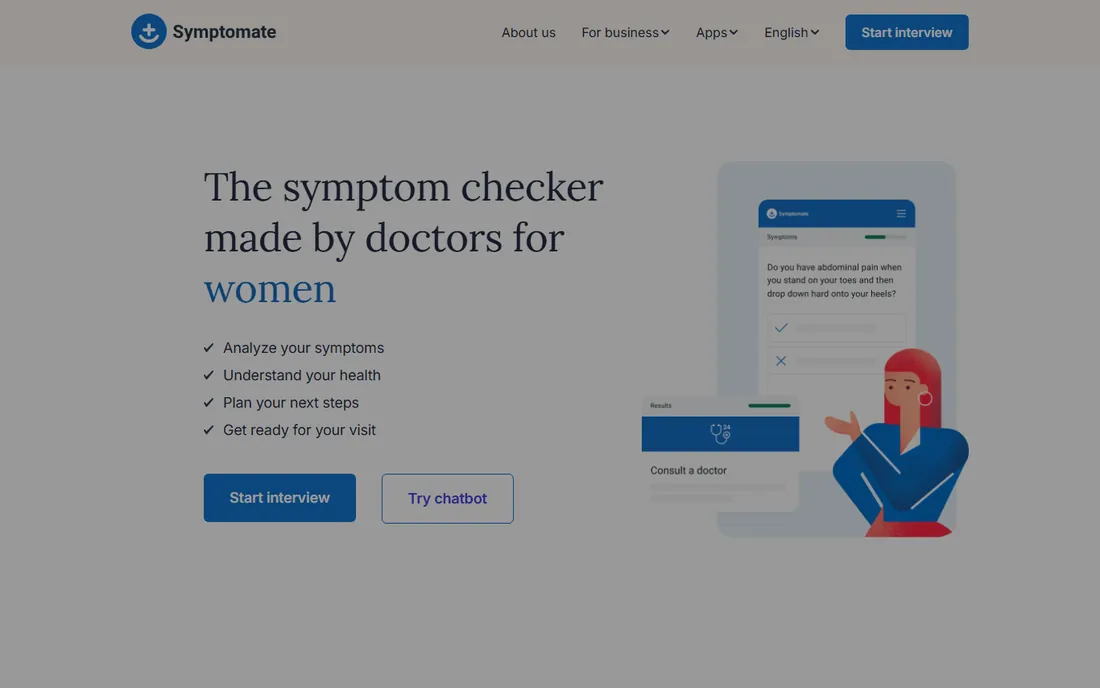
Symptomate is the simplest tool on this list to start using: open the site, enter symptoms, answer questions, get a list of likely conditions with recommended care levels and which type of doctor to see. It does not store your data, which the vendor states explicitly, making it the most private option for a one-time check.
One caution from recent history: the iOS app was removed from the App Store in 2026, though the Android app and the web checker remain available. The website is the reliable entry point. Like Ada, this is assessment, not tracking, and not a diagnosis.
What we like- Web-based checker requires no install and stores no personal data
- Built by Infermedica with physician-validated content
- Gives triage levels and suggested medical specialties
Watch out for- No tracking or history features at all
- The iOS app was delisted in 2026, so mobile users should use the website or Android app
#8
Flo
Best for: Tracking cycle-related symptoms like PMS, cramps and mood
Visit flo.health
Starting priceSee website (free app; Flo Premium subscription priced in-app)
Free planYes
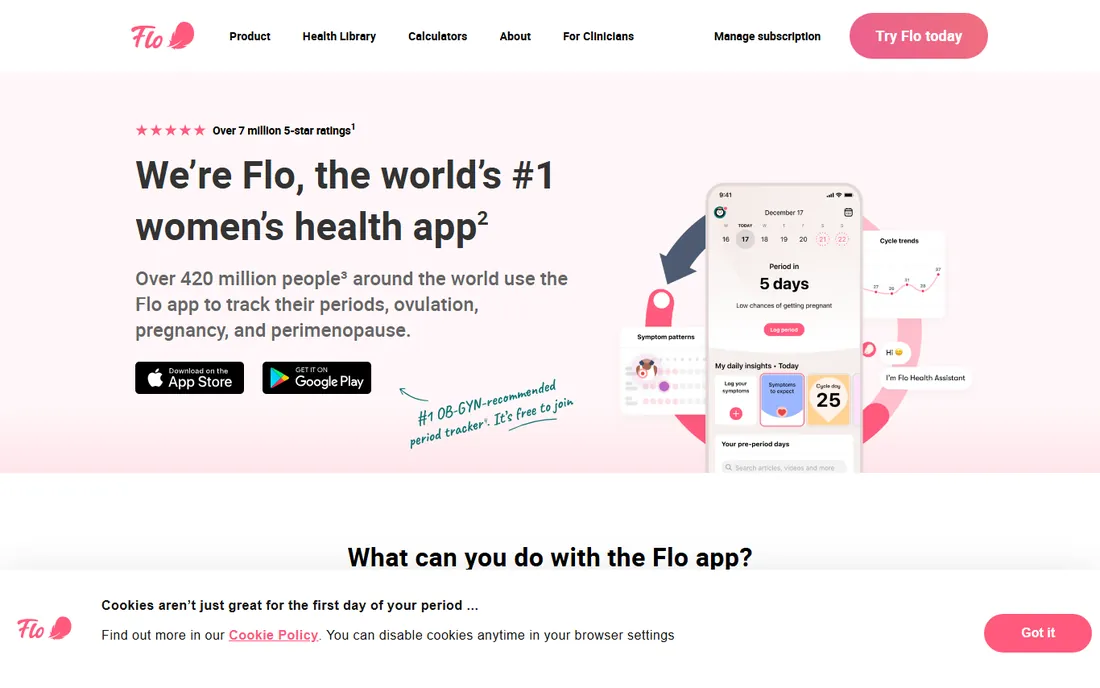
Flo is the most widely used app on this list, and for cycle-related symptom tracking it earns the position. Logging periods, symptoms, moods and physical signs feeds predictions for periods, ovulation and fertile windows, plus perimenopause and pregnancy modes. The symptom history view makes PMS patterns visible across cycles, which is genuinely useful data for a gynecologist visit.
The app itself is free; Flo Premium adds personalized insights, expert content and partner sharing, with pricing shown in-app. Flo offers an anonymous mode and states GDPR-grade data controls. If your symptoms follow a hormonal pattern, start here rather than with a general tracker.
What we like- Excellent cycle predictions that improve as you log
- Symptom logging covers mood, discharge, pain and dozens of cycle-related symptoms
- Anonymous mode for extra privacy
Watch out for- Premium pricing is only shown inside the app and varies by promotion
- Advanced insights and content sit behind the subscription
Starting priceSee website (free app; Clue Plus subscription priced in-app)
Free planYes
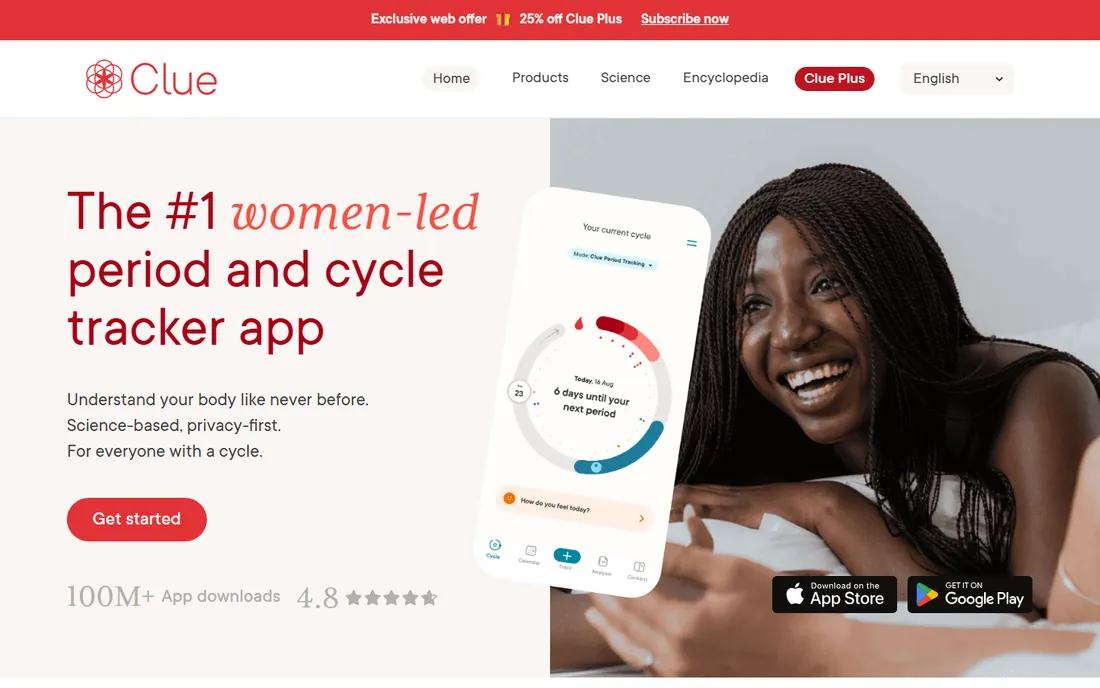
Clue takes the opposite approach to Flo's breadth: fewer features, stricter privacy, science-first positioning. You can track pain, mood, sleep, energy, cravings and more against your cycle, with predictions for periods, PMS and fertile days. The Berlin-based company states it has never sold health data and will not share it with authorities, with EU privacy law applying to all users regardless of location.
The free tier covers essential cycle statistics and basic predictions. Clue Plus adds advanced insights, tracking modes for conception and pregnancy, and partner sharing. For anyone whose main privacy worry is who sees their reproductive health data, Clue's jurisdiction and stated policies are the strongest on this list.
What we like- Strong privacy stance under German and EU data protection law with a stated never-sell policy
- Clean tracking of 30+ symptom categories across the cycle
- Science-driven content and research partnerships
Watch out for- Cycle-focused, so less useful for non-hormonal conditions
- Advanced predictions and analysis need Clue Plus
Privacy first: read the policy before you log anything
A symptom tracker holds some of the most sensitive data you own, so the privacy policy matters more here than in any other app category. The approaches on this list differ sharply. Bearable and Clue state they never sell health data. CareClinic states HIPAA compliance with encrypted storage. Flaredown is transparent that anonymized data goes to researchers, and links the actual dataset. That is honest, but it is still data leaving your control.
Before you commit to any tracker, check three things. First, whether the company sells or shares data with third parties, and whether "anonymized" sharing is disclosed. Second, whether you can export and permanently delete everything from inside the app. Third, where the company is based and which privacy laws apply: EU-based vendors answer to stricter rules than most US consumer apps. Free apps have to make money somehow; make sure you know how yours does.
How we chose
We searched the terms buyers use, symptom tracker app, health diary app and symptom checker, and tested the field for tools that are actually maintained in 2026. For each candidate we opened the vendor's own site, confirmed the current price and free-tier terms on official pages, checked whether the product tracks over time or only assesses once, and reviewed the stated privacy and data policies. We excluded apps that had been shut down or delisted, and noted where availability had recently changed.
How to pick the right symptom tracker
First decide which job you need done. Daily trackers (Bearable, Symple, Flaredown, CareClinic, Flo, Clue) log symptoms over time and reveal patterns. Checkers (Ada, WebMD, Symptomate) assess what you feel right now and suggest next steps. Many people need one of each, not one or the other.
For a tracker, the features that matter are speed of daily entry, useful reports, and export for your doctor. A tracker you abandon after a week is worthless, so pick the one whose daily check-in you will actually complete. Reminders, Apple Health or Google Fit sync, and medication tracking separate the serious tools from the simple ones.
For a checker, accuracy of the underlying medical content and clear triage guidance matter most. All three checkers here state they are not a substitute for professional care; believe them. None of these apps diagnose you, and none should change what you do about a serious symptom without a clinician involved.
Frequently asked questions
Can a symptom tracker app diagnose my condition?
No. Trackers log and organize your symptoms; checkers suggest possibilities. Neither provides a medical diagnosis, and every reputable app in this category says so explicitly. Use the data to have a better conversation with your doctor, not to replace one.
Are these apps free?
Mostly, yes. Bearable, Symple, Flaredown, CareClinic, Ada, WebMD and Symptomate all offer genuinely usable free tiers. Bearable's $34.99 subscription and the premium tiers in Flo and Clue add reports and insights, but the core tracking costs nothing in every app on this list.
Which symptom tracker is best for chronic illness?
Bearable and Flaredown are the two most purpose-built for it. Bearable has the stronger analytics and the larger feature set; Flaredown is completely free and adds automatic weather tracking, which matters for conditions like migraines and arthritis. CareClinic fits if medications and vitals are part of the picture.
Should I share my tracker data with my doctor?
Yes, that is one of the main reasons to keep a log. Symple's Doctor's Report, Bearable's reports and CareClinic's PDF exports are all designed for appointments. A dated record of symptom frequency and severity helps a clinician far more than your best recollection.
How do I know my health data is private?
Read the privacy policy and check three things: whether the company sells or shares data, whether you can export and delete everything, and which country's laws apply. Bearable, Clue and CareClinic publish the strongest commitments on this list; Flaredown openly shares anonymized data with researchers.
What is the difference between a symptom tracker and a symptom checker?
A tracker logs symptoms day after day to reveal patterns over time. A checker takes the symptoms you have right now and suggests possible causes and next steps. Bearable, Symple, Flaredown, CareClinic, Flo and Clue are trackers; Ada, WebMD and Symptomate are checkers.
Sources we checked (9)
- https://bearable.app/
- https://www.sympleapp.com/
- https://flaredown.com/
- https://careclinic.io/
- https://ada.com/
- https://www.webmd.com/
- https://symptomate.com/
- https://flo.health/
- https://helloclue.com/
Is your product missing or out of date?
We review this list regularly. Vendors can request a listing, send updated pricing or ask about featured placement.

Shihab Mia · Founder, Rankite
Shihab has spent more than a decade helping SaaS and e-commerce brands grow through search. He writes Rankite's software buying guides from pricing pages, documentation and public user reviews. More about Shihab.