How we make this list: we compare pricing pages, product documentation and public user reviews. Rankite is independent; if a vendor ever pays for a featured spot, that listing is clearly labeled Partner.
Key takeaways
- Calm remains the strongest all-rounder for sleep and daily stress relief, but its annual price rose to $79.99.
- Headspace suits beginners who want a structured path, while Insight Timer offers the largest free library anywhere.
- Breathwrk and Moodfit take narrower, practical approaches, with breathing exercises and mood-tracking CBT tools respectively.
- Medito is the only fully free, nonprofit option on this list, with no ads and no upsells.
- Employers comparing benefits should look at Wysa, which sells to teams as well as individuals.
Running a small business means stress never really clocks out. The owner absorbs it, the team absorbs it, and by quarter end everyone is sleeping worse and snapping faster. A stress management app will not fix a broken workload, but the right one gives people a practical daily habit, a five minute breathing session between meetings, a sleep story that actually quiets a racing mind. We reviewed the nine best stress management apps available in 2026 with that buyer in mind: someone choosing for themselves and, maybe, for a small team too.
Quick comparison
| Tool | Best for | Starting price | Free plan |
|---|
 Calm Calm | Sleep problems and end-of-day stress | $79.99/year | Free trial (7 days) |
 Headspace Headspace | Beginners who want a structured path | See website | Free trial |
 Insight Timer Insight Timer | Maximum content for zero dollars | Free | Yes |
 Breathwrk Breathwrk | Fast stress relief through breathing | $48.96/year (billed annually) | Yes |
 Wysa Wysa | AI-guided support for teams and individuals | See website | Yes |
 Moodfit Moodfit | Data-driven people who want to track what works | See website | Yes |
 BetterSleep BetterSleep | Custom sleep soundscapes | $9.99/month | Free trial |
 Aura Aura | Personalized daily meditation plans | See website | Free trial |
 Medito Medito | Free meditation with no strings attached | Free | Yes |
Is your product missing or out of date?
We review this list regularly. Vendors can request a listing, send updated pricing or ask about featured placement.
The best stress management apps
Starting price$79.99/year
Free planFree trial (7 days)
Calm is the default recommendation for a reason. Its library of more than 500 Sleep Stories, narrated by familiar voices, is genuinely useful for people whose stress shows up at bedtime. The 60-second Breathe Bubble is the fastest in-the-moment tool of any app on this list, and the 7 Days of Calm starter program gives beginners a clear first week. The app also covers work-specific stress, with series on burnout and anxiety built in partnership with clinical psychologists.
The catch is the price, which now sits at $79.99 a year after a recent increase. There is a 7-day free trial, and the company runs promotions, but it is still the priciest mainstream option here. Calm also stays in its lane: meditation, sleep and audio content. If you want fitness tracking or nutrition planning alongside stress tools, you will need a second app. For pure stress relief and better sleep, though, nothing on this list is more polished.
What we like- Huge Sleep Stories library
- 60-second Breathe Bubble for acute stress
- Polished, easy interface
Watch out for- Annual price went up
- Little fitness or nutrition content
Starting priceSee website
Free planFree trial
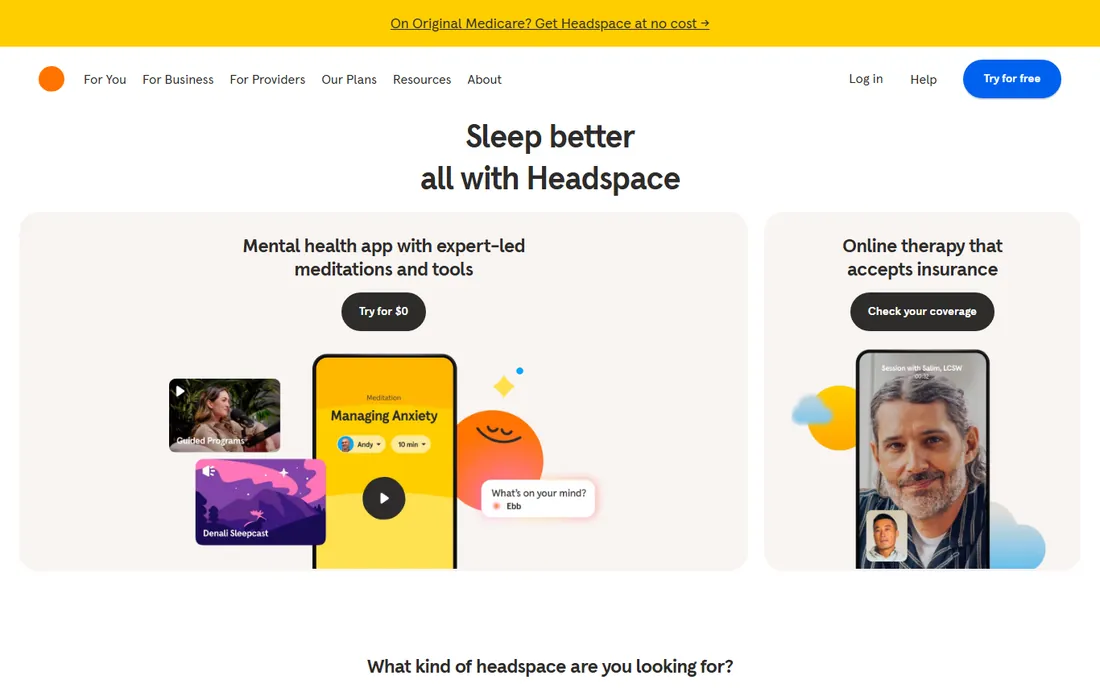
Headspace takes the opposite approach to Calm: instead of a giant library, it gives you a course structure. The Basics program walks new users through 30 sessions, then themed courses cover stress, anxiety, sleep, focus and more. That structure is the reason many reviewers call it the best app for people who have tried meditation before and given up. Co-founder narration and short daily meditations keep sessions approachable, and the app has more than a thousand expert-led exercises plus sleepcasts and wind-downs.
On the buyer side, Headspace has an interesting advantage. It is distributed through thousands of employers and health plans, so you may already have access through your company or insurer at no extra cost. The standalone price is not listed on the homepage, which is annoying, and the app gets occasional complaints about bugginess. But for a first-timer who wants guidance rather than a content firehose, it remains the pick.
What we like- Clear progressive courses
- Strong research backing
- Employer and health-plan distribution
Watch out for- Prices not published on the homepage
- Occasional app performance complaints
Starting priceFree
Free planYes
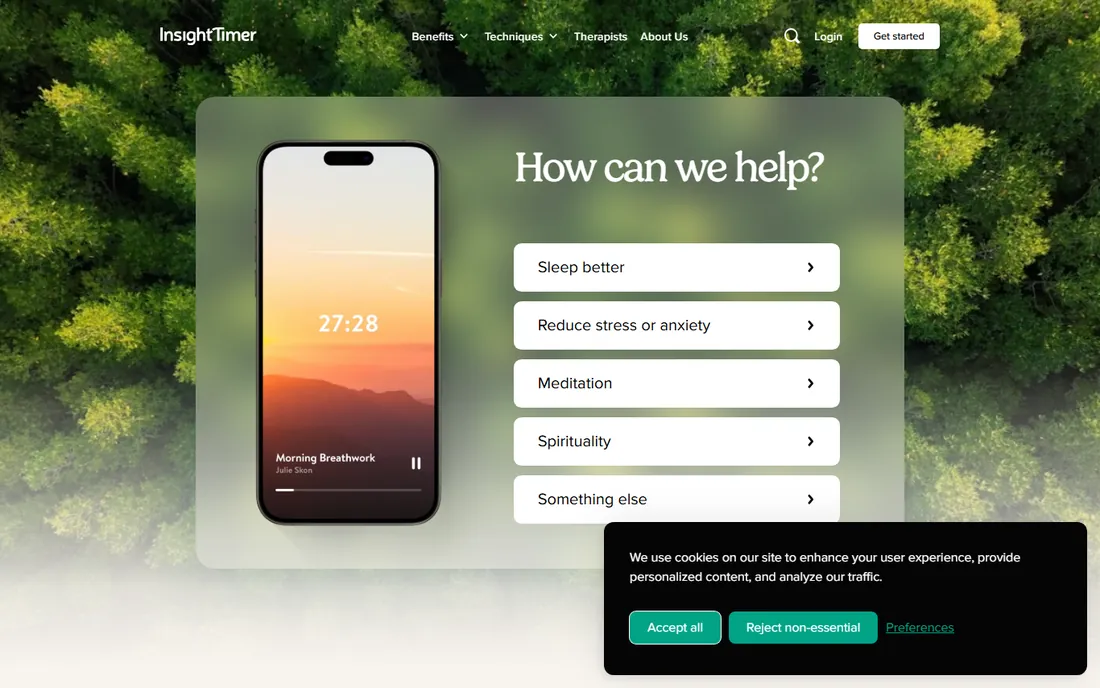
If your budget is zero, stop reading and download Insight Timer. It hosts the largest free meditation library in the world, with hundreds of thousands of guided meditations, talks and music tracks from more than 20,000 teachers. Live yoga and breathwork sessions stream through the day at no cost, and unlike most competitors the full library also runs in a web browser, so desk workers do not need to pull out a phone.
The trade-off of a free library that big is discovery. Finding the right session takes more effort than in Calm or Headspace, where curation does the work for you. Insight Timer also sells a premium tier, and you will see it promoted. Even so, the free tier is deeper than most paid apps, and the company says more time is spent on its platform than on all other meditation apps combined. For cost-conscious teams, it is hard to argue with free.
What we like- Enormous free library
- Live yoga and breathwork
- Works in the browser too
Watch out for- Library size can overwhelm
- Premium upsells inside the app
Starting price$48.96/year (billed annually)
Free planYes
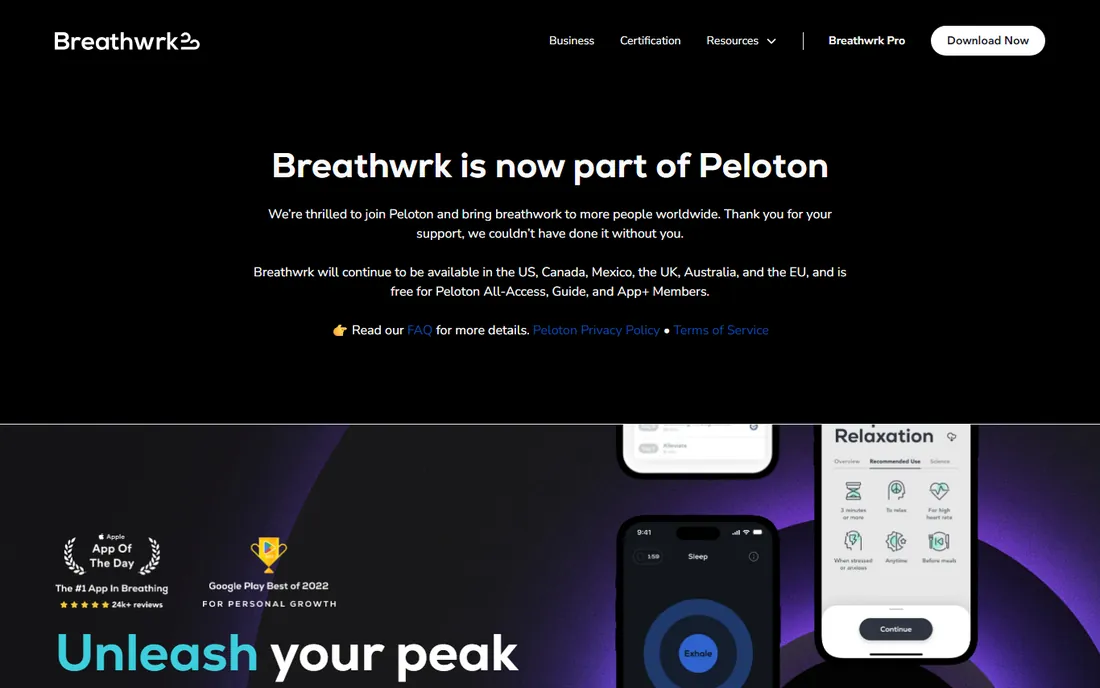
Breathwrk does one thing: guided breathing exercises, and it does it well. The app offers more than 50 exercises across calming, sleep, energy, focus and performance categories, with protocols like 4-7-8 breathing and box breathing that have real evidence behind them. A session can take as little as 60 seconds, which makes it the most practical option here for a workday. The company also sells to organizations, and its homepage notes it is trusted by leading organizations.
Pricing is refreshingly honest: the free tier gives limited access, Pro Monthly is $9 a month, and Pro Annual works out to $4.08 a month when billed yearly, saving about $75 versus monthly. A 7-day free trial comes with Pro. The honest catch is scope. If you want sleep stories, courses or community features, Breathwrk does not have them. But for a manager who just needs a reliable way to decompress between calls, the narrow focus is a feature.
What we like- Science-based breathing protocols
- Sessions work in about a minute
- Cheaper than Calm
Watch out for- Narrow focus on breathwork
- Annual plan is the only good-value option
#5
Wysa
Best for: AI-guided support for teams and individuals
Visit wysa.com
Starting priceSee website
Free planYes
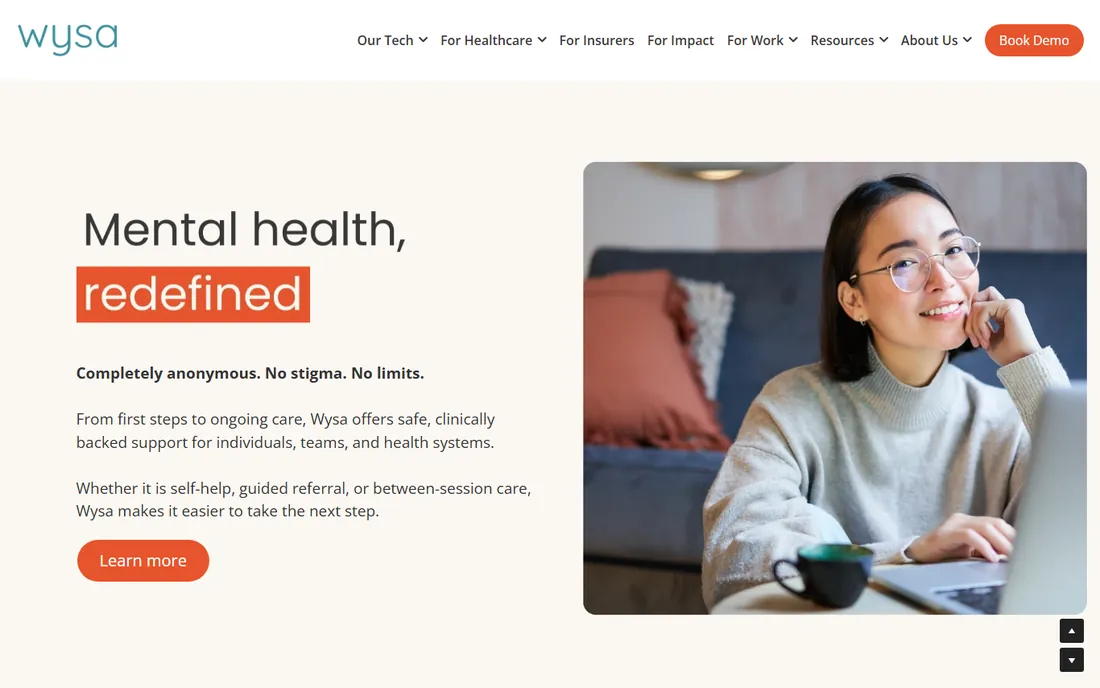
Wysa sits at the more serious end of this list. It is an AI conversational agent built around cognitive behavioral therapy techniques, meditation, breathing exercises and micro-actions for building resilience. The company reports more than a billion AI conversations, support across 105 countries, and backing from over 45 peer-reviewed publications. For business owners, the relevant detail is that Wysa sells a workplace solution that plugs into existing benefits like employee assistance programs, with aggregated reporting that never exposes individual conversations.
The free self-help app is genuinely useful for everyday stress, and the anonymity design lowers the barrier for people who would never call an EAP helpline. Pricing is not published, which is standard for enterprise wellness, so expect a quote process. And it is worth being clear: Wysa is a self-help and triage tool, not a replacement for a therapist. Used that way, it is one of the strongest options here for companies.
What we like- Evidence-based CBT techniques
- Anonymous by design
- Enterprise and employer options
Watch out for- Enterprise pricing requires a sales call
- AI chat is not therapy
Starting priceSee website
Free planYes
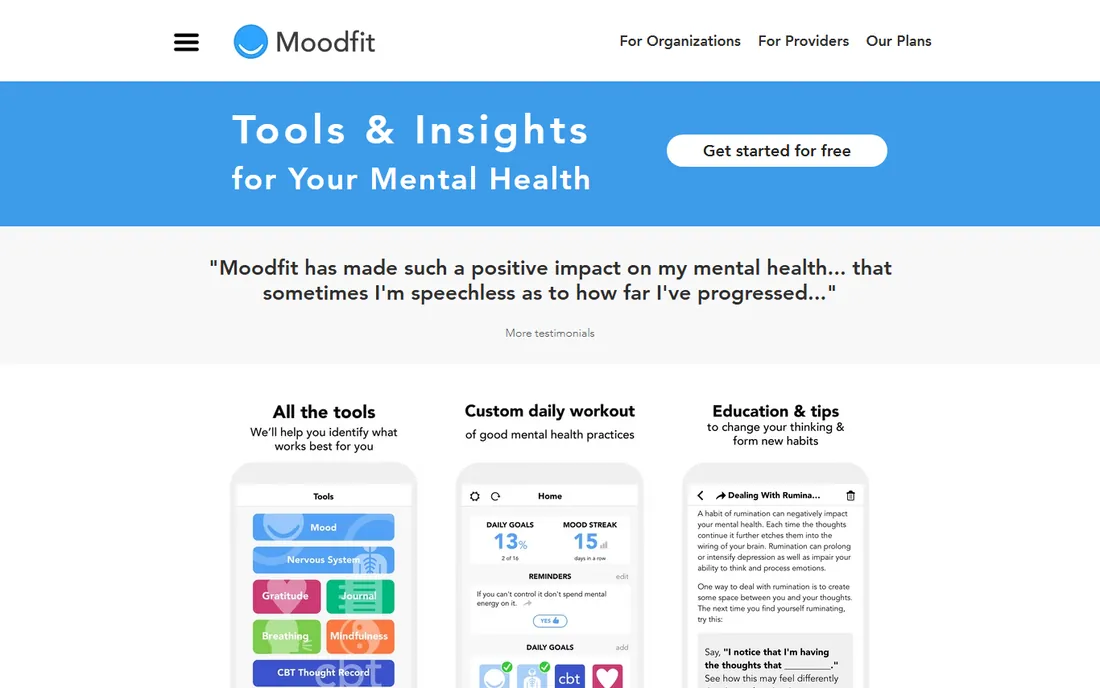
Moodfit treats mental health like fitness, which will appeal to analytical types. The app combines a mood journal, CBT thought records, breathwork, gratitude journaling and guided mindfulness with validated assessments like the PHQ-9 and GAD-7 for tracking depression and anxiety over time. Its standout feature is the insights view: it correlates your mood with sleep, exercise, nutrition and social activity, so you can see what actually moves the needle. There is even a therapist companion mode for sharing progress with a clinician.
Pricing is not published on the homepage, though a 7-day trial of Premium is offered, and the company has been voted best overall mental health app by Verywell Mind three years running. The weakness is content depth. Calm and Headspace have far richer audio libraries; Moodfit is a toolkit, not a content platform. If you like tracking and experimenting, it is the best fit on this list. If you want someone to talk you to sleep, look elsewhere.
What we like- Mood journal plus CBT thought records
- Validated assessments
- Insights on sleep and habits
Watch out for- Less audio content than rivals
- Interface is functional, not beautiful
Starting price$9.99/month
Free planFree trial
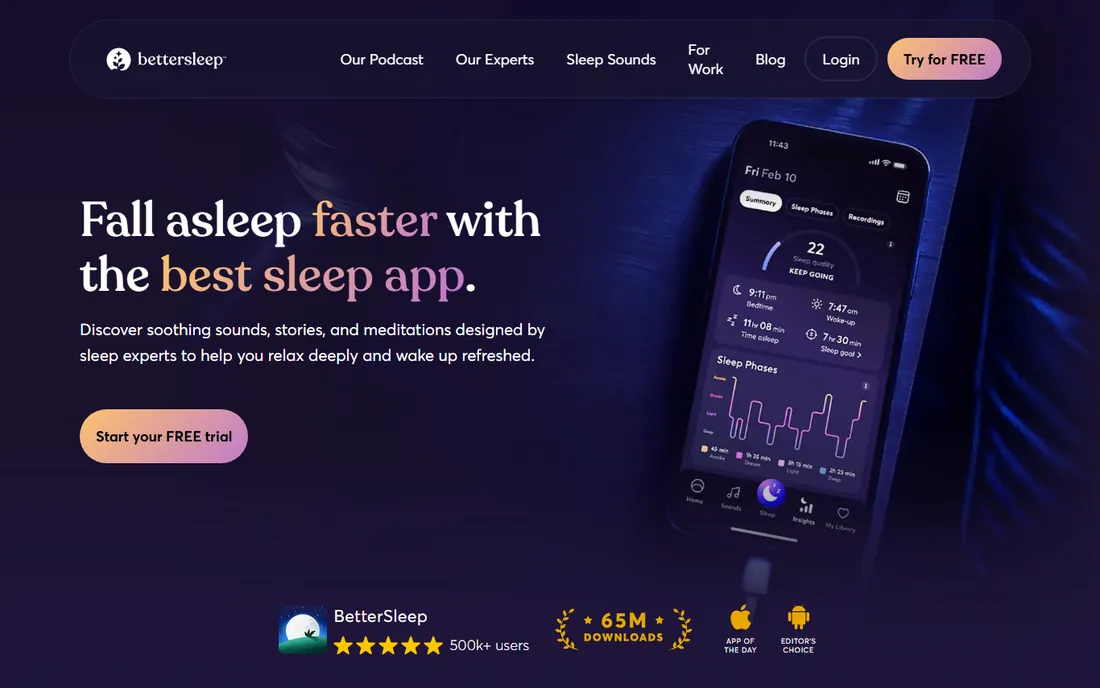
BetterSleep, formerly Relax Melodies, is the sound engineer's choice. Its signature feature lets you layer more than 300 sounds, from rain and campfire to brown noise and binaural beats, into a personal mix, with a smart-mix option that smooths out distracting audio loops. A sleep tracker and snore recorder add utility, and the app claims more than 65 million users and a 4.8-star rating across hundreds of thousands of reviews.
The homepage lists $9.99, which works out expensive if you pay monthly all year, so look for an annual option before subscribing. A free trial is available, and a limited selection of content stays free afterward. The other limitation is focus: BetterSleep is a sleep app first. Its stress and anxiety meditations exist, but they are not the core of the product. For founders whose stress lands at 2 a.m., that is exactly the point.
What we like- Deep customizable sound mixing
- Sleep tracker and recorder
- Large SleepTales library
Watch out for- Monthly price adds up fast
- Focused on sleep, not daytime stress
Starting priceSee website
Free planFree trial
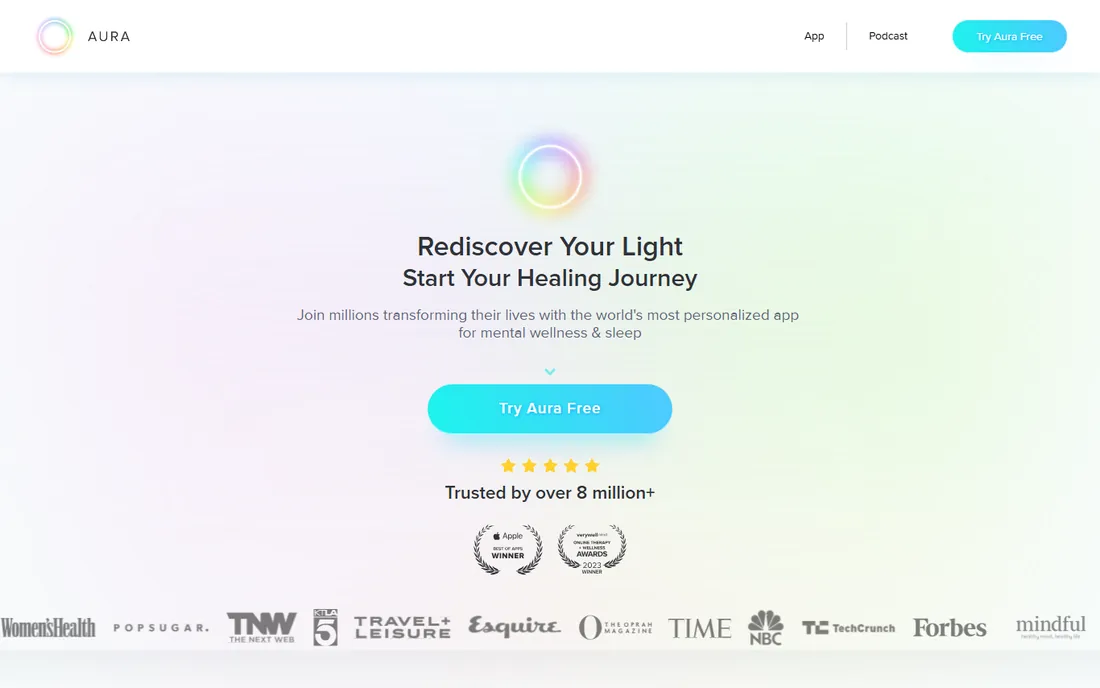
Aura pitches itself as the all-in-one mental wellness app, and personalization is its differentiator. The app builds a daily plan from your mood, goals and habits, drawing on more than 20,000 meditations, sleep tracks and wellness sessions, plus live events and one-on-one coaching with hundreds of coaches. Topics range from stress and anxiety to hypnosis, ASMR and sound healing, which is a wider spread than most competitors.
Pricing is not published on the website, and the free tier only goes so far, so most users will need a subscription. A free trial is offered. One caution from public reviews: a few users report billing confusion around cancellation, so set a calendar reminder if you start a trial. The coaching marketplace is a genuine plus for people who want human guidance without committing to therapy.
What we like- AI-personalized track recommendations
- 1-on-1 coaching options
- Large track library
Watch out for- Free tier is limited
- Billing complaints appear in app store reviews
Starting priceFree
Free planYes
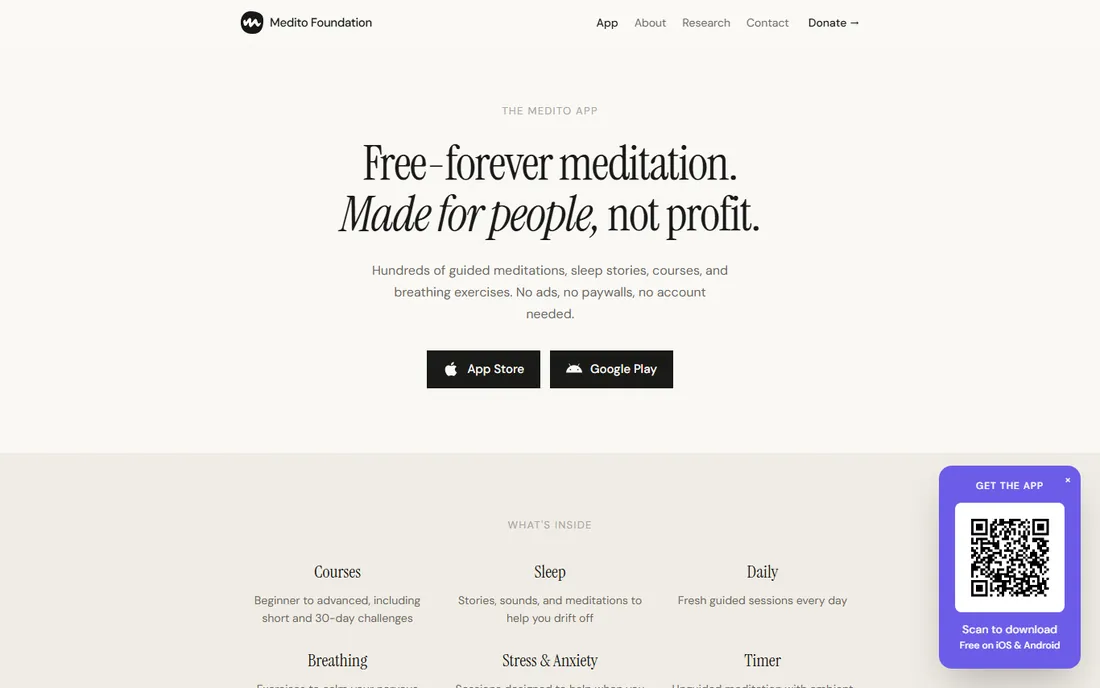
Medito is the outlier on this list and deserves the spot. It is built by the Medito Foundation, a nonprofit, and the app is free forever: no ads, no subscriptions, no account required. It still covers the essentials well, with guided meditations, mindfulness courses, breathing exercises and sleep stories, plus offline downloads and background audio. A 2024 randomized controlled trial found regular use improved wellbeing, which is more evidence than most free apps can claim.
The library is smaller than Insight Timer's, and there are no live classes or coaches. For a free app, that is a fair trade. Medito is also open source, which appeals to the privacy-minded. If cost is the barrier, whether for you personally or for handing something to a team, Medito removes the excuse entirely.
What we like- Completely free, nonprofit
- No ads, no subscriptions
- 2024 RCT showed wellbeing gains
Watch out for- Smaller library than giants
- No live sessions or coaching
How we chose
We started with the apps that dominate the category on the App Store and Google Play, then widened the net to include breathing-focused tools, CBT-based trackers, an AI support platform and a nonprofit free option, because stress management is not one thing. Every price and plan detail above comes from the vendor's own homepage or pricing page, checked this week. Where a vendor does not publish pricing, we say so instead of guessing. We also read public reviews on G2, the app stores and Reddit to catch recurring complaints, like billing friction and app stability, that never appear in marketing copy. No vendor paid for placement, and none was told it was being reviewed.
What to check before you download
Start with the actual problem. If stress hits at bedtime, prioritize sleep content: Calm, BetterSleep and Medito all target this directly. If it hits mid-afternoon, Breathwrk's 60-second sessions fit a workday better than a 30-day course. People who quit meditation apps usually quit because the content did not match their moment, not because the app was bad.
Check the free tier before paying. Insight Timer and Medito are free in ways that cover most users. Calm, Headspace and Aura gate most content behind subscriptions, though trials let you test. Note trial lengths, they range from 7 to 14 days, and cancel before renewal if the habit did not stick.
For employers, look past the consumer app. Wysa and Breathwrk both offer workplace versions with aggregated analytics, and Headspace is distributed through many health plans and employers already. A quick check with your benefits broker may reveal your team already has access to one of these at no added cost. Whatever you choose, treat the app as a habit tool, not a fix: the evidence supports regular short sessions, not weekend binges.
How small teams can roll these out without an HR department
You do not need a corporate wellness program to make this useful. Pick one app, buy a handful of seats or use a free option like Insight Timer or Medito, and name a two-week trial with the team. The apps with sharing plans, like Calm, let family members in too, which raises perceived value without raising cost.
Set the tone from the top. A five-minute breathing break before the weekly meeting, led by whoever owns the agenda, does more for adoption than any email announcement. Track nothing personal. If you want engagement data, choose a vendor that reports aggregate usage only, as Wysa and Headspace do for employers, and say so in writing. Keep the commitment light: a monthly subscription for a few people costs less than one team lunch, and the apps that fail to stick can be cancelled in the first trial period.
Frequently asked questions
Are stress management apps a replacement for therapy?
No. Apps like Calm and Headspace teach relaxation and mindfulness skills, and Wysa offers structured self-help, but none of them diagnose or treat mental health conditions. If stress is persistent, physical, or getting worse, a licensed professional is the right call. Think of apps as daily maintenance, not treatment.
Which stress management app is actually free?
Medito is fully free with no ads or subscriptions, and Insight Timer's free library is the largest in the category. Breathwrk, Wysa and Moodfit all have usable free tiers. Calm, Headspace and Aura are effectively paid apps with free trials.
How much do the paid apps cost?
Calm is $79.99 a year, Breathwrk Pro is about $48.96 a year when billed annually, and BetterSleep lists $9.99 a month. Headspace, Wysa, Moodfit and Aura do not publish prices on their homepages, so you will need to check in the app or contact sales for team plans.
Can I offer one of these to my employees?
Yes. Headspace, Wysa and Calm all have employer offerings, and Breathwrk works with organizations. Headspace is also included in many employer health plans, so check your benefits first. For very small teams, buying individual annual subscriptions or using a free app is often simpler than an enterprise contract.
Do these apps work offline?
Most do. Medito, Calm and Headspace all let you download sessions for offline use, which matters for commutes and travel. Insight Timer's live sessions need a connection, but its library downloads work offline too.
How long until I feel a difference?
Breathing exercises can calm acute stress in minutes, which is why Breathwrk's 60-second sessions are popular. For lasting change, the research generally points to a few weeks of daily short sessions. A 2024 trial on Medito found measurable wellbeing gains from regular use, and Headspace cites studies showing stress reduction after about 10 days of practice.
Sources we checked (9)
- https://www.calm.com
- https://www.headspace.com
- https://insighttimer.com
- https://breathwrk.com
- https://wysa.com
- https://www.getmoodfit.com
- https://medito.app
- https://bettersleep.com
- https://www.aurahealth.io
Is your product missing or out of date?
We review this list regularly. Vendors can request a listing, send updated pricing or ask about featured placement.

Shihab Mia · Founder, Rankite
Shihab has spent more than a decade helping SaaS and e-commerce brands grow through search. He writes Rankite's software buying guides from pricing pages, documentation and public user reviews. More about Shihab.