How we make this list: we compare pricing pages, product documentation and public user reviews. Ratings come from G2, Capterra or Trustpilot, with the date we checked them.
Key takeaways
- Fidelity and Vanguard suit long-term investors best, with $0 stock and ETF commissions, fractional shares and strong retirement accounts.
- Robinhood and Webull suit mobile-first traders, with simple apps, extended hours and paper trading to practice before risking real money.
- Interactive Brokers is the pick for active and international traders, with access to 175 plus markets and low margin rates.
- Commission-free does not mean cost-free: options contract fees, spreads, margin interest and cash sweep terms still affect what you pay.
Quick comparison
| Tool | Best for | Starting price | Free plan |
|---|
 Fidelity | Overall choice for US investors | $0 commission on US stocks and ETFs | Yes |
 Robinhood | Simplest mobile trading | $0 commission on stocks and ETFs | Yes |
 E*TRADE | Balanced research and tools | $0 commission on stocks and ETFs | Yes |
 Webull | Charts and paper trading | $0 commission on stocks, ETFs and options | Yes |
 Interactive Brokers | Active and international trading | $0 commission on IBKR Lite US trades | Yes |
 SoFi Invest | Simple investing plus banking | $0 commission on stocks and ETFs | Yes |
 Public | Multi-asset investing with research | $0 commission on stocks and ETFs | Yes |
 Vanguard | Low-cost long-term investing | $0 commission on stocks and ETFs | Yes |
Is your product missing or out of date?
We review this list regularly. Vendors can request a listing, send updated pricing or ask about featured placement.
The best stock trading apps US
Starting price$0 commission on US stocks and ETFs
Free planYes
Fidelity is the strongest all-round starting point for most US investors. You pay $0 commission on online US stock and ETF trades, there is no minimum to open a core brokerage account, and fractional shares start at $1, so a high-priced stock is no barrier to getting started. Retirement accounts, including traditional and Roth IRAs, sit in the same app, and the research library covers analyst reports, screeners and educational courses that actually help a beginner learn.
The trade-offs are modest. The app packs in a lot of features, which can feel busy on a first visit, and options traders pay $0.65 per contract, in line with most full-service brokers. Fidelity also keeps its focus on long-term investing rather than social trading or prediction markets. If your goal is steady investing with low costs and room to grow into more advanced tools, Fidelity is the default recommendation.
What we like- $0 commissions and no account minimum on core accounts
- Fractional shares from $1
- Deep research and education
Watch out for- App can feel dense for absolute beginners
- Options cost $0.65 per contract
- Crypto offering is narrower than some rivals
Starting price$0 commission on stocks and ETFs
Free planYes
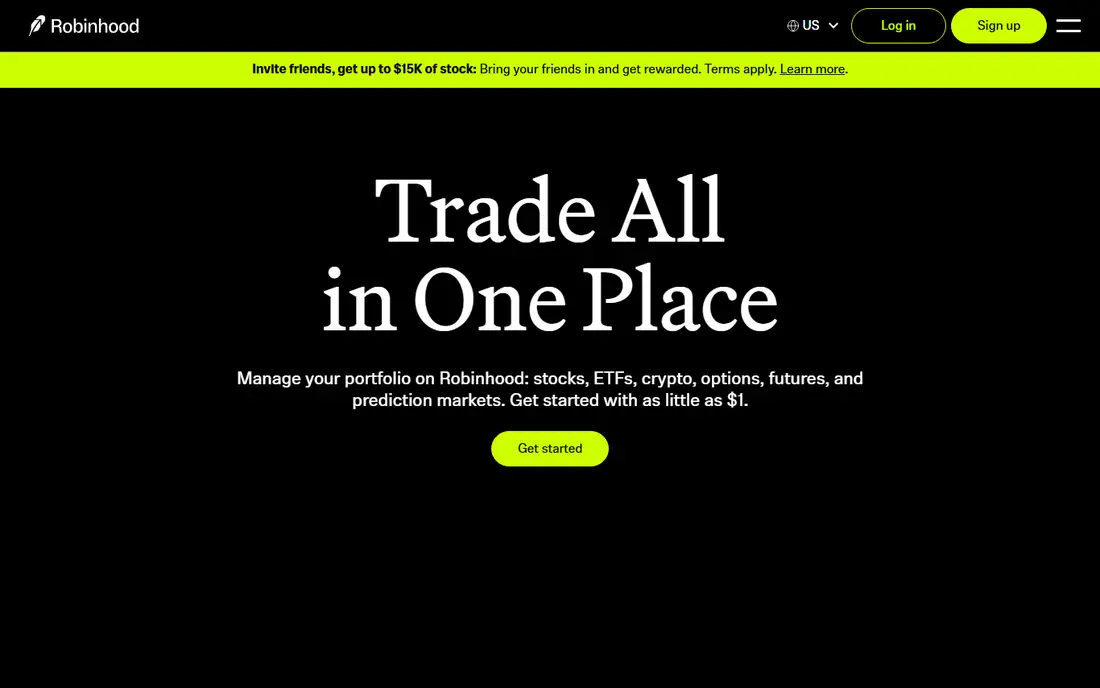
Robinhood remains the easiest app to place a first trade. The interface strips away clutter, fractional shares start at $1, and you can trade stocks, ETFs, options and crypto without juggling several accounts. The optional Gold subscription, at $5 per month, adds larger instant deposits, professional research and a higher rate on uninvested cash, plus a lower options contract fee.
Simplicity has a cost. Research tools and education are lighter than at Fidelity or E*TRADE, and the app design makes trading feel almost too easy, which can encourage frequent trades that hurt long-term returns. Robinhood suits investors who know what they want to buy and value a fast mobile experience. Beginners who want guidance should pair it with outside reading, or start with Fidelity instead.
What we like- Clean mobile app with fractional shares from $1
- Stocks, ETFs, options, crypto and futures in one place
- 24/5 trading on eligible stocks
Watch out for- Research is thinner than Fidelity or E*TRADE
- Gold subscription costs $5 per month
- Options and crypto carry extra risks
#3E*TRADE
Best for: Balanced research and tools4.0/5 on
G2 (24 reviews, checked Oct 2026)
Visit etrade.com
Starting price$0 commission on stocks and ETFs
Free planYes
ETRADE, now part of Morgan Stanley, sits between a beginner app and a professional platform. The standard app covers $0 stock and ETF trades, retirement accounts and a large education library, while Power ETRADE adds advanced charting, options tools and paper trading for people who want to practice strategies. Research from Morgan Stanley analysts is a genuine plus that most mobile-first rivals cannot match.
The main drawback is that the experience is split across platforms, and new users can take a while to learn which tool does what. Options cost $0.65 per contract, dropping to $0.50 per contract for traders placing 30 or more trades per quarter. E*TRADE fits investors who want solid research and a path toward active trading without jumping straight to a professional terminal.
What we like- $0 stock and ETF commissions
- Strong research and education
- Power E*TRADE platform for active traders
Watch out for- Options cost $0.65 per contract, falling to $0.50 with heavy volume
- Interface spans two platforms
- Morgan Stanley banking tie-ins add complexity
Starting price$0 commission on stocks, ETFs and options
Free planYes
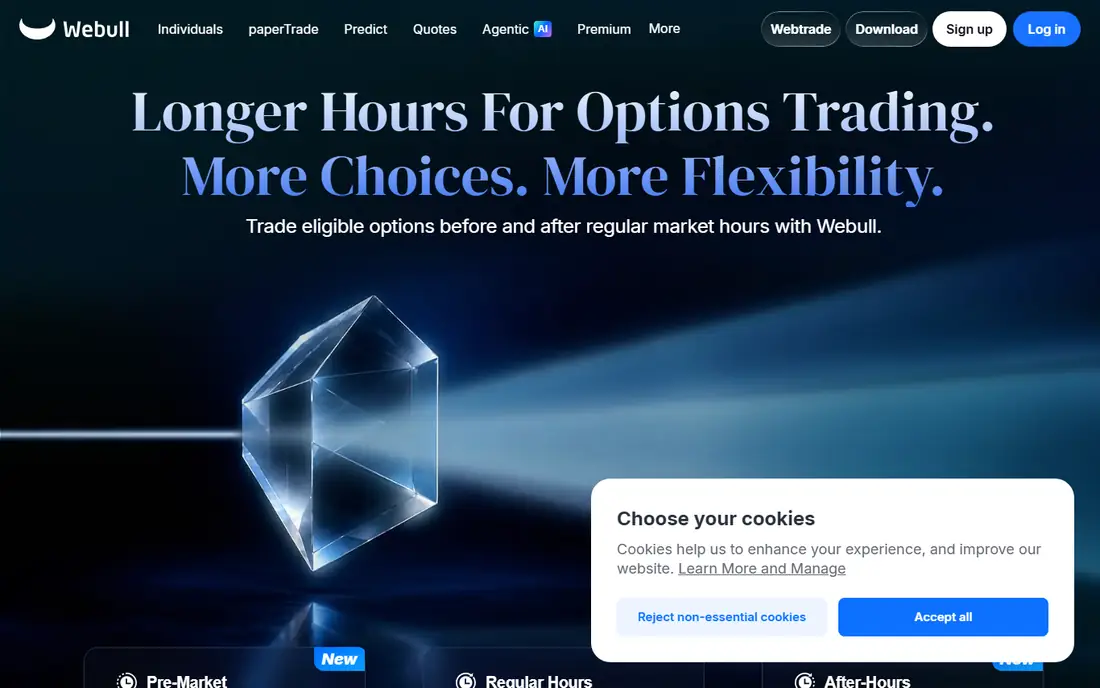
Webull gives active traders professional-grade tools at no commission. Charts support a wide range of indicators and drawing tools, Level 2 quotes show market depth, and extended hours trading runs from early morning to evening. Paper trading lets you test a strategy with real-time quotes before risking money, which is the single most useful feature for a new active trader.
Webull does not offer mutual funds, so long-term fund investors will need another account for those holdings. Support is largely digital, which suits confident users but frustrates anyone who wants a phone call at a stressful moment. The in-app community can also push traders toward popular stocks without a plan of their own. Used with discipline, Webull is the best free toolkit for chart-focused traders.
What we like- $0 commissions on stocks, ETFs and options
- Advanced charts with many indicators
- Free paper trading and extended hours
Watch out for- No mutual funds
- Customer support is mainly digital
- Community features can encourage herd behavior
Starting price$0 commission on IBKR Lite US trades
Free planYes
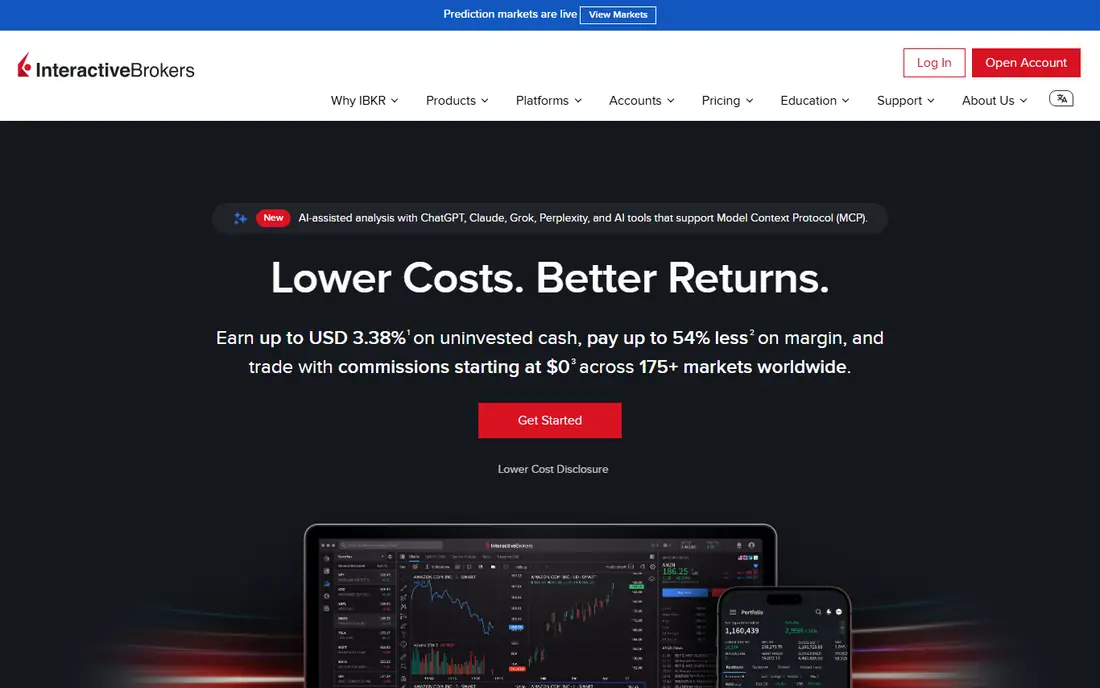
Interactive Brokers is the broker serious traders graduate to. IBKR Lite offers $0 commissions on US stock and ETF trades, while IBKR Pro uses low per-share pricing that suits high-volume traders. The headline advantage is global reach: stocks, options, futures, currencies and bonds across 175 plus markets from one account, with margin rates that undercut most US rivals.
That power comes with complexity. Trader Workstation, the flagship desktop platform, assumes you already know order types, margin rules and market structure, and beginners can feel lost in it. The mobile app is simpler but still denser than Robinhood or SoFi. Choose Interactive Brokers when you trade internationally, trade frequently, or borrow on margin and care about the rate. For a first brokerage account, Fidelity is friendlier.
What we like- Access to 175 plus markets worldwide
- Very low margin rates
- Powerful desktop and mobile platforms
Watch out for- Platform learning curve is steep
- Pro pricing charges per-share commissions
- Interface can overwhelm beginners
Starting price$0 commission on stocks and ETFs
Free planYes
SoFi Invest suits people who want investing to sit next to their everyday banking. Active investing starts from $5, automated portfolios start from $50, and the same app holds checking, savings, loans and a credit score monitor. That single-app view helps people who would otherwise put off investing because it feels like a separate chore.
The investing tools themselves are deliberately simple. Research is lighter than at Fidelity or E*TRADE, and there is no advanced desktop trading platform for chart-heavy traders. SoFi also nudges users toward its wider product range, which is convenient but worth noticing. If you want a low-friction start and like keeping money matters in one place, SoFi Invest is a good fit. If you want deep research, look elsewhere.
What we like- $0 stock and ETF commissions
- Active investing from $5 and automated investing from $50
- Banking and loans in the same app
Watch out for- Research tools are basic
- No advanced desktop platform
- Fractional share coverage is narrower than Fidelity
Starting price$0 commission on stocks and ETFs
Free planYes
Public has grown from a social investing app into a broad multi-asset platform. You can hold stocks, ETFs, bonds, treasuries, options and crypto in one account, and its research features include AI-generated earnings summaries and market briefings that help beginners understand why a stock moved. Active options traders can earn per-contract rebates based on monthly volume, which is unusual among free brokers.
Public is younger than Fidelity or Vanguard, so its long-term record is shorter, and its feature set changes quickly as it adds AI tools and new asset types. Crypto holdings also carry different protections from stocks and ETFs, a distinction worth reading in the disclosures before buying. Public fits investors who want many asset types in one modern app and like research presented in plain language.
What we like- Stocks, ETFs, bonds, options and crypto in one app
- AI research summaries and earnings coverage
- Options rebates for active traders
Watch out for- Newer platform with a shorter track record
- Options rebates depend on volume
- Crypto held in Public is not SIPC-protected like securities
Starting price$0 commission on stocks and ETFs
Free planYes
Vanguard built its name on low costs, and that still defines the experience. Its own index funds and ETFs carry some of the lowest expense ratios available, stock and ETF trades are $0 commission, and retirement accounts pair naturally with its advisory services for people who want a managed portfolio. For buy-and-hold investors, the fee advantage compounds over decades in a way no trading feature can match.
The trade-off is the trading experience itself. The app and website feel dated next to Robinhood or Public, charting is basic, and active traders will miss extended hours tools and advanced order types. Vanguard knows its audience and serves it well: patient investors who buy broad funds and hold them. If you trade often or want a slick mobile experience, pick another app on this list and hold your index funds there instead.
What we like- $0 stock and ETF commissions
- Famously low-cost index funds and ETFs
- Strong retirement and advisory options
Watch out for- App and website feel dated
- Active trading tools are limited
- Customer service wait times draw complaints
How we chose
We compared these apps on the costs and features that matter to US investors: stock and ETF commissions, options contract fees, account minimums, fractional share minimums, retirement account support, research quality, and platform ease of use. We checked vendor homepages and fee schedules, and weighed public reviews and broker comparisons, with attention to the costs that hide behind a $0 commission headline, such as spreads, margin rates and cash sweep yields. We did not claim hands-on testing of every account, and fees change, so check the broker fee schedule before you fund an account.
This is not financial advice. Investing involves risk, including possible loss of principal, and the right broker depends on your goals, time horizon and tolerance for risk. Consider speaking with a qualified financial adviser before making major investment decisions.
How to choose the right app for you
Start with how you actually invest, not with the app that looks best in an advert. A long-term investor who buys index funds monthly needs low fund costs, automatic investing and a good IRA. An active trader needs fast charts, extended hours and low options fees. A beginner needs clear education and a simple first trade. Write down your top three needs before you compare, and the shortlist will narrow itself quickly.
Then look past the $0 commission headline. Check the options contract fee if you trade options, the margin rate if you borrow, and what your uninvested cash earns, since a low cash yield is a hidden cost for anyone who holds cash. Check whether fractional shares cover the stocks you want, whether the app offers the retirement account you need, and how you can reach support when something goes wrong. Open the account, fund it with a small amount, place a test trade, and try a withdrawal before you move a large sum. That short trial tells you more than any review.
Questions to ask before you fund an account
- Does the app offer the account type I need, such as a Roth IRA or a joint account?
- What are the options, margin and account transfer fees, not just the stock commission?
- What rate does uninvested cash earn, and can I choose a money market sweep?
- Can I trade fractional shares in the stocks I want, and from what minimum?
- How do I reach a human if an order, transfer or tax form goes wrong?
Frequently asked questions
Which stock trading app is best for beginners in the US?
Fidelity is the best overall beginner app, with $0 commissions, fractional shares from $1, strong education and retirement accounts. Robinhood is simpler for a first mobile trade, while SoFi Invest suits beginners who want investing next to banking. Start with one account, learn the basics, and only add a second app when you have a clear reason for it.
Are stock trading apps really free?
Stock and ETF trades are $0 commission at every app on this list, but other costs remain. Options usually cost per contract, margin borrowing carries interest, currency conversion and spreads apply to some assets, and uninvested cash may earn a low rate. Read the fee schedule for the trades you actually plan to make, rather than assuming everything is free.
Can I trade with $1?
Yes, at several apps on this list, including Fidelity, Robinhood and SoFi, fractional shares let you invest from $1 or $5 in many stocks and ETFs. Fractional availability varies by stock, so check whether the specific company you want is eligible. Fractional shares are a good way to start, but they do not change the risk of the investment itself.
Is my money safe in a trading app?
US brokerages on this list are regulated and members of SIPC, which protects securities up to $500,000, including $250,000 for cash claims, if a brokerage fails. That protection does not cover market losses, and crypto held through a brokerage may carry different protections. Keep your account secured with two-factor authentication and a strong, unique password.
Should I use more than one trading app?
One good app is enough for most people, and splitting accounts can make taxes and record-keeping harder. A second app makes sense when you have a distinct job for it, such as active trading at Webull alongside long-term funds at Vanguard, or international access at Interactive Brokers. Avoid opening many accounts just to collect sign-up offers.
Do I pay taxes on trades in these apps?
Yes, selling investments at a gain in a taxable brokerage account generally creates a tax liability, and dividends and interest are also taxable, while trades inside a Roth IRA or traditional IRA follow retirement account tax rules. Brokers send tax forms each year, but they do not give tax advice. Keep records of your trades and speak with a tax professional if your situation is complex.
Sources we checked (10)
- https://www.fidelity.com
- https://robinhood.com
- https://etrade.com
- https://www.webull.com
- https://www.interactivebrokers.com
- https://www.sofi.com
- https://public.com
- https://investor.vanguard.com
- https://www.consumervoice.org/top-fractional-share-trading-apps
- https://rankite.com/blog/best-trading-app-for-beginners
Is your product missing or out of date?
We review this list regularly. Vendors can request a listing, send updated pricing or ask about featured placement.

Shihab Mia · Founder, Rankite
Shihab has 5+ years in B2B and SaaS SEO. He writes Rankite's software buying guides from pricing pages, documentation and public user reviews. More about Shihab.