How we make this list: we compare pricing pages, product documentation and public user reviews. Ratings come from G2, Capterra or Trustpilot, with the date we checked them.
Key takeaways
- Fidelity is the strongest all-around pick for most US investors, pairing $0 stock and ETF trades with deep research and retirement accounts.
- Charles Schwab suits active traders who want thinkorswim, while Robinhood suits beginners who want the simplest mobile experience.
- Webull offers $0 options contract fees in many cases, which changes the math for frequent options traders.
- Vanguard remains the best home for long-term index fund investors, even though its app trails rivals for active trading.
- This is not financial advice. Trading carries risk, and the cheapest app is not the best app if its tools push you toward trades you do not understand.
Quick comparison
| Tool | Best for | Starting price | Free plan |
|---|
 Fidelity | Best overall | $0 per trade | Yes |
 Charles Schwab | Active traders | $0 per trade | Yes |
 Robinhood | Simple mobile trading | $0 per trade | Yes |
 Webull | Low-cost options | $0 per trade | Yes |
 E*TRADE | Options and research | $0 per trade | Yes |
 Vanguard | Long-term index investing | $0 per trade | Yes |
 Interactive Brokers | Global and advanced trading | $0 per trade | Yes |
 SoFi Invest | Banking plus investing | $0 per trade | Yes |
 Public | Social and fractional investing | $0 per trade | Yes |
Is your product missing or out of date?
We review this list regularly. Vendors can request a listing, send updated pricing or ask about featured placement.
The best stock trading app
Starting price$0 per trade
Free planYes
Fidelity covers more investor needs in one place than any rival in this guide. Stock and ETF trades cost $0 online, fractional shares start at $1, and the same account can hold a Roth IRA, a taxable account, and a cash management account. Research, screeners, and educational content are extensive, and customer service is consistently rated among the best in the industry. Zero-expense-ratio index funds are available for investors who want to keep fund costs at zero.
The main drawback is density. New investors may find the app and website busy compared with Robinhood, and options traders pay $0.65 per contract while some rivals charge $0. Fidelity fits beginners who want room to grow, long-term investors, and retirement savers who want one provider for decades. Pure options traders and global traders may find a better fit elsewhere, but for most readers Fidelity is the default to beat.
What we like- $0 stock and ETF trades
- Fractional shares from $1
- Strong research and retirement accounts
Watch out for- App can feel dense for absolute beginners
- Options cost $0.65 per contract
Starting price$0 per trade
Free planYes
Schwab pairs $0 stock and ETF trades with thinkorswim, the advanced trading platform inherited from TD Ameritrade. Thinkorswim offers detailed charting, multi-leg options tools, screeners, and paper trading, on desktop and mobile. Schwab also offers banking, a wide fund lineup, and in-person branches, which appeals to investors who want human help alongside digital tools.
The catch sits in idle cash. Schwab's default sweep for uninvested brokerage cash pays a low yield, so investors who hold large cash balances should proactively choose a money market fund or another cash option. Options cost $0.65 per contract, standard for large brokers but above Webull and Robinhood. Schwab fits active traders and investors who value thinkorswim and branch access. Cash-heavy investors should check the sweep terms before opening an account.
What we like- $0 stock and ETF trades
- Thinkorswim platform included
- Large branch network and banking
Watch out for- Default cash sweep yield is low unless you choose a money market fund
- Options cost $0.65 per contract
Starting price$0 per trade
Free planYes
Robinhood remains the easiest trading app to learn. The interface strips trading down to a few taps, fractional shares start at $1, and options contracts carry no per-contract fee. Crypto trading sits in the same app, and Robinhood Gold, at $5 per month, adds a higher cash yield, larger instant deposits, and an IRA match for eligible users. For a first-time investor, that simplicity is a real advantage.
The limits show up as investors grow. Research, screeners, and retirement planning tools are thinner than at Fidelity or Schwab, and moving assets out costs $100 for a full transfer. Robinhood fits beginners, casual investors, and mobile-first traders who value speed over depth. Investors who want detailed research, advisor access, or frequent use of advanced order types should start with Fidelity or Schwab instead.
What we like- Cleanest mobile interface
- $0 options contract fees
- Fractional shares from $1
- Crypto in the same app
Watch out for- Research tools are thinner than Fidelity or Schwab
- Outgoing transfer fee is $100
- Gold subscription costs $5 per month
Starting price$0 per trade
Free planYes
Webull targets intermediate and active traders who want strong tools without paying for a full-service broker. The app offers detailed charts, technical indicators, extended-hours trading, and paper trading for practice. Stock and ETF trades cost $0, and options pricing undercuts most large brokers, which matters for traders who place many options orders each month.
The trade-off is breadth. Webull lacks branches, and its retirement planning, mutual fund lineup, and advisory services are thinner than at Fidelity or Schwab. Customer support is digital-first, which suits self-directed traders but not investors who want a phone call with an advisor. Webull fits active traders, options traders, and chart-focused investors. Long-term retirement savers should compare it against Fidelity before committing.
What we like- $0 stock and ETF trades
- Low or $0 options fees in many cases
- Strong charting and paper trading
Watch out for- No branch network
- Retirement and banking features are thinner
- Transfer-out fee applies
#5E*TRADE
Best for: Options and research4.0/5 on
G2 (24 reviews, checked Oct 2026)
Visit etrade.com
Starting price$0 per trade
Free planYes
ETRADE, part of Morgan Stanley, offers $0 stock and ETF trades plus Power ETRADE, a dedicated platform for options traders with risk analysis, strategy builders, and streaming data. The standard app covers everyday investing well, with research, screeners, and a broad account lineup including IRAs. Active options traders can qualify for a reduced $0.50 per contract rate, which narrows the gap with low-cost rivals.
The main drawbacks are familiar: a standard options fee, a transfer-out fee, and an ecosystem that rewards Morgan Stanley customers more than standalone users. E*TRADE fits options traders who want a polished dedicated platform and investors who already bank or hold accounts with Morgan Stanley. Beginners may find Fidelity simpler, and the cheapest options traders may prefer Webull or Robinhood.
What we like- $0 stock and ETF trades
- Power E*TRADE platform
- Strong options tools and education
Watch out for- Options cost $0.65 per contract, $0.50 for active traders
- Transfer-out fee applies
- Owned by Morgan Stanley, so some features sit behind that ecosystem
Starting price$0 per trade
Free planYes
Vanguard built its reputation on low-cost funds, and that reputation still drives its appeal. The company is owned by its funds, which are owned by shareholders, and its index funds charge some of the lowest expense ratios in the industry. Stock and ETF trades cost $0, fractional trading is available for Vanguard ETFs, and retirement accounts are a natural home here. For a buy-and-hold investor, fund cost matters more than app polish, and Vanguard wins on fund cost.
Active traders will notice the gaps. The app is simpler and slower for frequent trading, charting is basic, and options cost up to $1 per contract. Vanguard fits long-term investors, retirement savers, and index fund loyalists who trade rarely. Active traders, options traders, and investors who want the best mobile experience should choose Fidelity or Schwab and hold Vanguard funds there if they wish.
What we like- Low-cost index funds with average expense ratios near 0.07 percent
- $0 stock and ETF trades
- Investor-owned structure
Watch out for- Mobile app trails rivals for active trading
- Options cost up to $1 per contract
- Service can feel slow for complex requests
Starting price$0 per trade
Free planYes
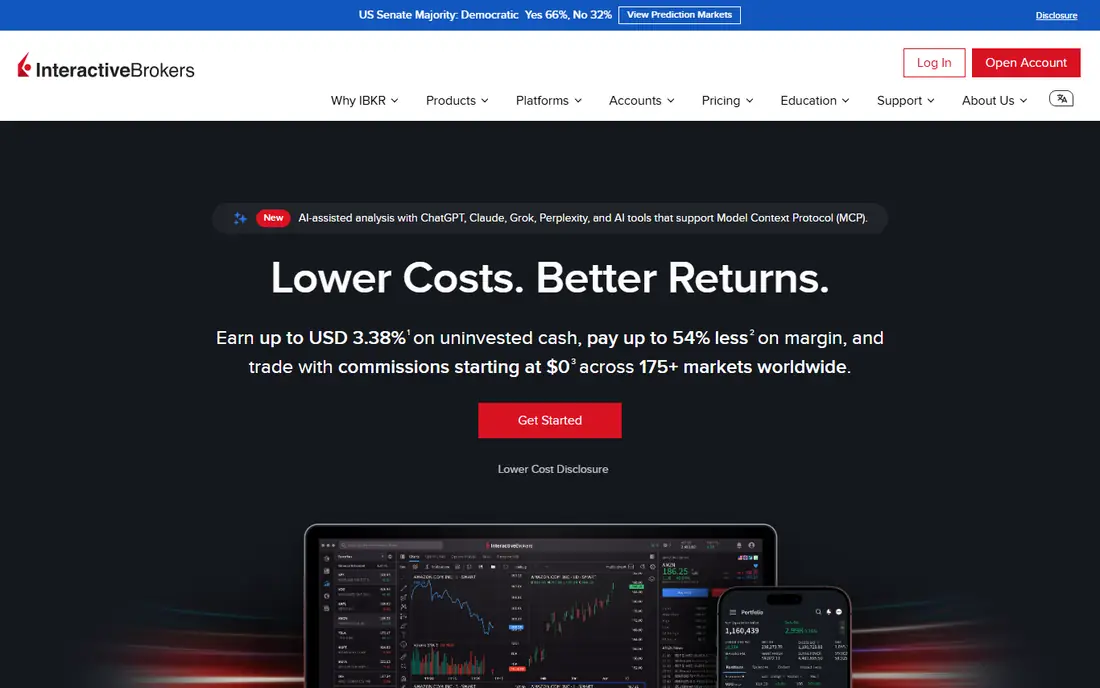
Interactive Brokers is the professional choice in this guide. IBKR Lite offers $0 US stock and ETF trades, while IBKR Pro adds tiered pricing for active and high-volume traders. The platform covers stocks, options, futures, forex, and bonds across many countries, with margin rates among the lowest available. Traders who need global access or sophisticated order types will not find a broader US broker.
Complexity is the price. The desktop platform, Trader Workstation, carries a steep learning curve, and the choice between Lite and Pro confuses newcomers. Interactive Brokers fits advanced traders, global investors, and professionals who need breadth and low margin costs. Beginners should start elsewhere and graduate to Interactive Brokers only when they need markets or tools their current broker lacks.
What we like- Access to many global markets
- Low margin rates
- $0 stock trades on IBKR Lite
- Professional-grade tools
Watch out for- Platform complexity overwhelms beginners
- Pricing tiers confuse new users
- Support is geared to self-directed traders
Starting price$0 per trade
Free planYes
SoFi Invest suits readers who want investing alongside banking in a single app. Stock and ETF trades cost $0, fractional shares are available, and automated investing builds a diversified portfolio for hands-off investors. SoFi also offers checking, savings, loans, and financial planning access, which appeals to younger investors consolidating their finances.
The limits are in depth. Research, charting, and options tools are basic compared with Schwab or Webull, and active traders will outgrow the platform quickly. SoFi fits beginners, hands-off investors, and SoFi banking customers who want a simple investing add-on. Investors who plan to trade options, study charts daily, or build complex portfolios should pick Fidelity, Schwab, or Webull.
What we like- $0 stock and ETF trades
- Automated investing available
- Banking, loans, and investing in one app
Watch out for- Research tools are basic
- Options and advanced trading features are limited
- Crypto availability varies
Starting price$0 per trade
Free planYes
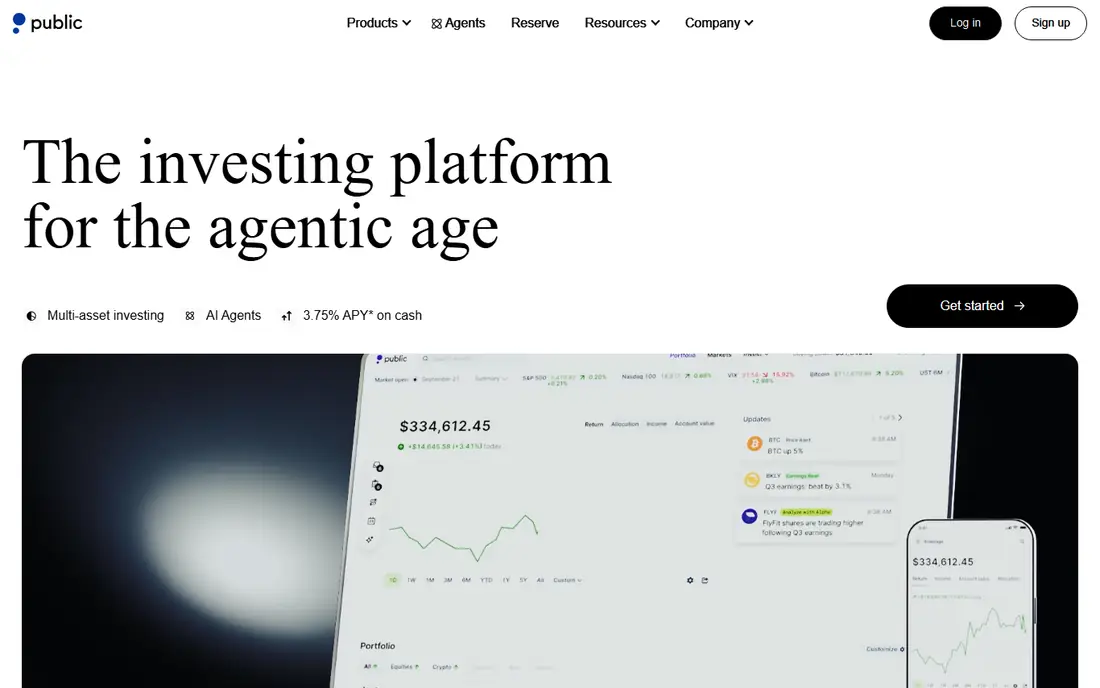
Public combines commission-free trading with a social feed where investors share ideas, follow themes, and learn from other members. Fractional shares let readers start with small amounts, and the app covers stocks, ETFs, crypto, bonds, and alternative assets in one place. The design feels approachable for new investors who learn by watching what others discuss and by reading short explainers.
The catch is depth and scale. Public cannot match Fidelity or Schwab on research, retirement planning, or advisor access, and its social features, while useful for learning, should not replace independent research. Public fits new investors who want a social, educational entry point and small fractional positions. Serious long-term savers should still compare Fidelity for retirement accounts and lower fund costs.
What we like- $0 stock and ETF trades
- Fractional shares
- Community features and educational content
- Thematic investing
Watch out for- Smaller research library than large brokers
- No branches
- Advanced trading tools are limited
How we chose
We compared fee schedules, options contract costs, account minimums, fractional share rules, and platform tools from vendor pricing pages and documentation, then checked public reviews on G2, Capterra, and Reddit for recurring issues with transfers, cash sweep yields, and support. Brokers that charged commissions on US stocks, hid transfer fees, or lacked a usable mobile app scored lower. We favored brokers with $0 stock trades, transparent options pricing, and a clear fit for a specific investor type, and we mixed large full-service brokers with mobile-first and specialist platforms.
How to choose the right trading app
Start with how you will actually invest, not with the app that looks most modern. Your trading frequency and account goals narrow the field fast.
For beginners
Pick an app you will open without confusion, with $0 trades, fractional shares, and retirement accounts. Fidelity is the safest default, Robinhood is the simplest, and SoFi suits readers who want banking included. Avoid margin and options until you understand the risks, and set up automatic contributions before chasing individual stocks.
For active and options traders
Compare options contract fees, charting, extended hours, and paper trading. Schwab with thinkorswim and Webull lead here, with E*TRADE close behind for dedicated options tools. Check transfer-out fees too, since a cheap trading app becomes expensive if you later move a large portfolio elsewhere.
For long-term investors
Fund expense ratios and account features matter more than trading tools. Vanguard funds, Fidelity zero-expense funds, and Schwab funds all keep costs low, and any of the three brokers can hold them. Prioritize IRA options, automatic investing, and customer service you can reach when markets fall and questions arise.
Frequently asked questions
What is the best stock trading app for beginners?
Fidelity is the best beginner app for most readers, since it pairs $0 trades with fractional shares, retirement accounts, research, and strong support. Robinhood is simpler to learn, and SoFi is a good fit for readers who want banking in the same app. Beginners should favor the app that makes steady investing easy, not the app with the flashiest interface.
Are stock trades really free on these apps?
Online US stock and ETF trades cost $0 at every app in this guide, but other costs still apply. Options contracts, margin interest, transfer-out fees, and fund expense ratios vary widely. Read the full fee schedule before opening an account, and check what your broker charges for the trades you will actually place.
Which app is best for options trading?
Webull and Robinhood lead on options cost, with low or $0 contract fees, while Schwab and ETRADE lead on options tools through thinkorswim and Power ETRADE. Cost matters most for high-frequency options traders, while tools matter most for complex spreads. Beginners should learn options risk thoroughly before trading them at all.
Do I need a minimum balance to start?
Most apps in this guide have a $0 account minimum, and fractional shares let you start with $1 at Fidelity, Robinhood, and others. Some automated portfolios and margin accounts have higher minimums. Check the minimum for your specific account type, not just the headline brokerage minimum.
Is my money safe with a trading app?
US brokerage accounts at SIPC member firms are protected up to $500,000 in securities, including $250,000 in cash, if the firm fails, subject to SIPC rules. That protection does not cover market losses. Confirm SIPC membership and read the account agreement before depositing funds, and keep records of your holdings.
Sources we checked (9)
- https://www.fidelity.com
- https://www.schwab.com
- https://www.robinhood.com
- https://www.webull.com
- https://www.etrade.com
- https://www.vanguard.com
- https://www.interactivebrokers.com
- https://www.sofi.com
- https://www.public.com
Is your product missing or out of date?
We review this list regularly. Vendors can request a listing, send updated pricing or ask about featured placement.

Shihab Mia · Founder, Rankite
Shihab has 5+ years in B2B and SaaS SEO. He writes Rankite's software buying guides from pricing pages, documentation and public user reviews. More about Shihab.