How we make this list: we compare pricing pages, product documentation and public user reviews. Ratings come from G2, Capterra or Trustpilot, with the date we checked them.
Key takeaways
- Fidelity is the best overall beginner app, with $0 stock and ETF commissions, fractional shares from $1, strong research, and retirement accounts.
- Charles Schwab is close, with $0 commissions, thinkorswim paper trading, and extensive education for new investors.
- Robinhood is the simplest first app, while Webull suits beginners who want charts and paper trading from the start.
- SoFi Invest and Public suit beginners who want automated investing or simple multi-asset accounts in one app.
- Commission-free does not mean cost-free: check options fees, spreads, account fees, and cash sweep terms before you fund an account.
Quick comparison
| Tool | Best for | Starting price | Free plan |
|---|
 Fidelity | Best overall for beginners | $0 commission | Yes |
 Charles Schwab | Education and practice trading | $0 commission | Yes |
 Robinhood | Simplest first trades | $0 commission | Yes |
 Webull | Charts and paper trading | $0 commission | Yes |
 SoFi Invest | Simple plus automated investing | $0 commission | Yes |
 Public | Simple multi-asset investing | $0 commission | Yes |
 Interactive Brokers | Global platform for growth | $0 commission | Yes |
 E*TRADE | Balanced research and tools | $0 commission | Yes |
 Moomoo | Active learning with data | $0 commission | Yes |
Is your product missing or out of date?
We review this list regularly. Vendors can request a listing, send updated pricing or ask about featured placement.
The best trading app for beginners
Starting price$0 commission
Free planYes
Fidelity is the strongest all-around starting point for US beginners. It charges $0 commission on online US stock and ETF trades, offers fractional shares from $1, and pairs trading with IRAs, 401(k) rollovers, and low-cost index funds, including zero-expense-ratio funds. Its research, screeners, and education library help new investors learn why a fund or stock fits a plan, not just how to place an order.
The app is less sleek than Robinhood, and its depth can overwhelm a first-time trader who only wants to buy one ETF. That depth becomes a benefit quickly, since you do not need to switch brokers when you want retirement accounts, better research, or more account types. Fidelity fits beginners who want to start simple and stay with one broker as they learn. This is not financial advice.
What we like- $0 online US stock and ETF commissions
- Fractional shares from $1
- Excellent research, education, and retirement accounts
Watch out for- App can feel dense for pure beginners
- Fractional shares have limits on some stocks
Starting price$0 commission
Free planYes
Charles Schwab pairs a full-service broker with one of the best practice tools for beginners. Its thinkorswim platform includes paperMoney, which lets you trade with virtual money and real market data before risking real cash. Combined with $0 commissions, extensive education, and retirement planning tools, Schwab gives beginners a safe place to learn active trading skills without real losses.
The breadth of accounts, funds, and platforms can feel complex on day one, and fractional share coverage is narrower than Fidelity or Robinhood for some stocks. Schwab fits beginners who want to practice first, learn with structured education, and keep banking, brokerage, and retirement planning in one place. Its customer support is also a strong reason to start here if you want help by phone.
What we like- $0 online listed stock and ETF commissions
- Thinkorswim paperMoney practice trading
- Strong education and customer support
Watch out for- Product range can feel complex at first
- Fractional shares focus mainly on S&P 500 stocks
Starting price$0 commission
Free planYes
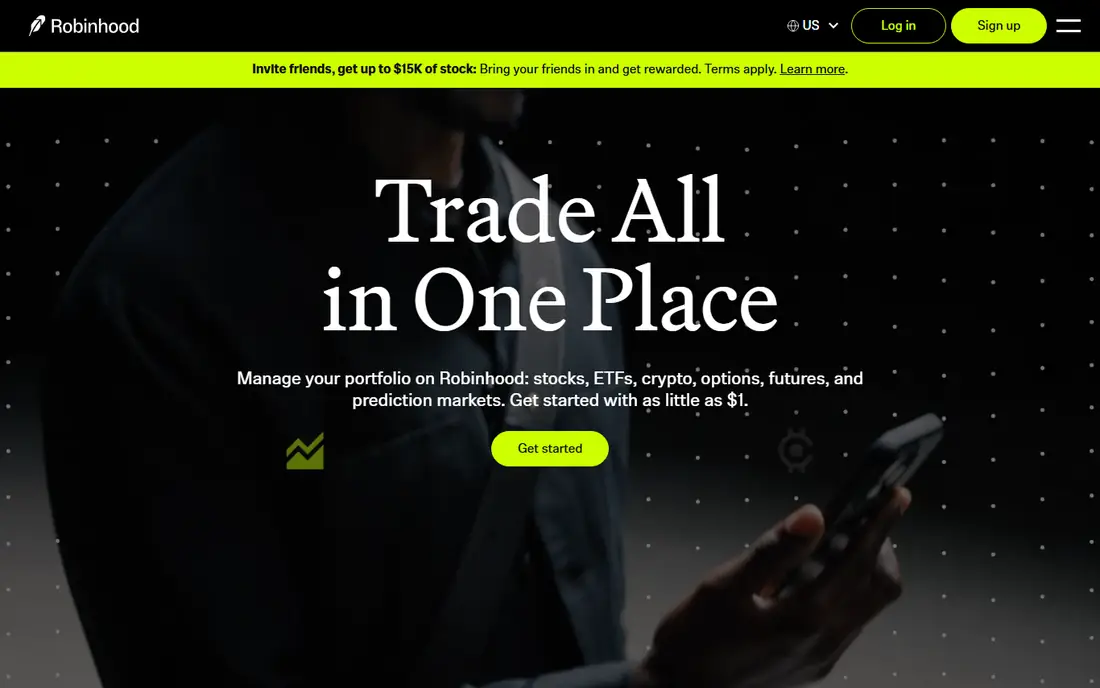
Robinhood made commission-free trading standard, and it remains the simplest app for a first trade. You can open an account, fund it, and buy a fractional share from $1 in minutes, with recurring investments and a clean mobile interface that hides complexity. Crypto trading sits in the same app in many regions, which suits beginners who want stocks and crypto in one place.
The simplicity has limits. Research is thinner than full brokers, there is no paper trading mode, and there are no mutual funds, so retirement-focused investors may need a second broker later. Robinhood fits beginners who want the lowest friction first trade, small recurring investments, and a mobile-first experience, with a plan to learn research elsewhere if needed.
What we like- Cleanest mobile onboarding
- $0 stock, ETF, and options commissions with no options contract fee in many cases
- Fractional shares from $1
Watch out for- Research tools are lighter than Fidelity or Schwab
- No paper trading mode
- No mutual funds
Starting price$0 commission
Free planYes
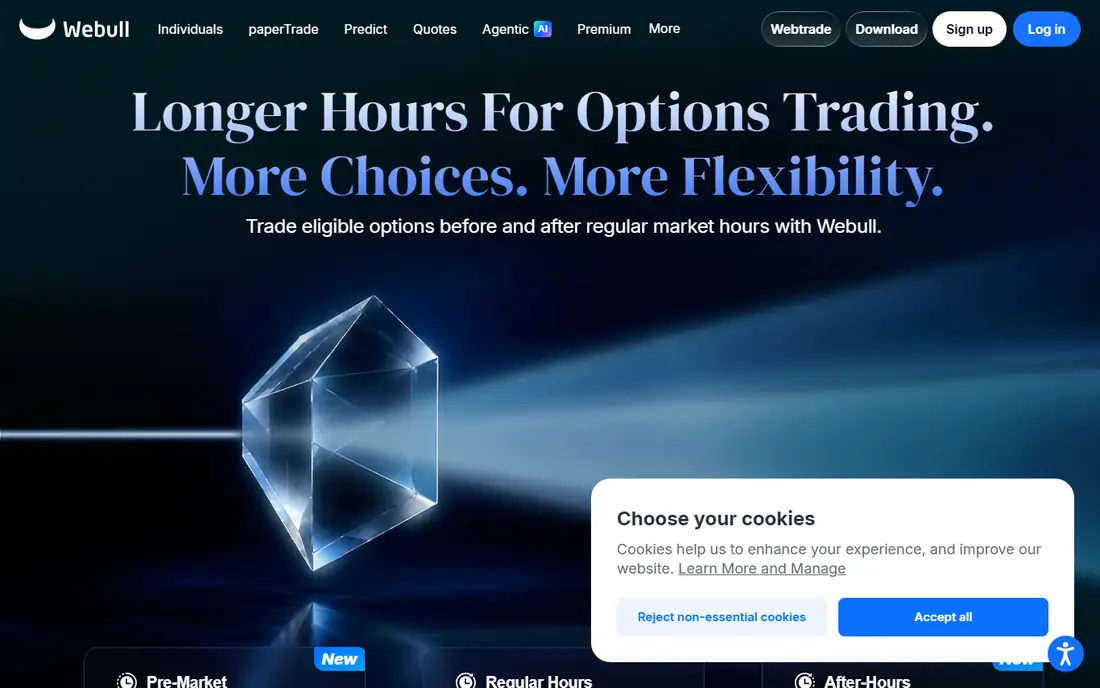
Webull is the beginner app for people who want to learn active trading properly. Its paper trading mode uses real pricing, so you can practice strategies without risk, and its charting tools, indicators, and extended-hours trading from 4 a.m. to 8 p.m. Eastern in many cases give you professional-grade data at no commission cost. That combination is rare at $0 commission.
The interface is denser than Robinhood or SoFi, and it can push new traders toward frequent trading if they are not careful. Webull fits beginners who are curious about charts, want to practice before trading live, and want to learn technical analysis without paying for a data platform. Long-term fund investors will still find Fidelity or Schwab simpler for retirement accounts.
What we like- $0 commissions on US stocks, ETFs, and many options
- Free paper trading
- Over 50 technical indicators and extended-hours trading
Watch out for- Learning curve is steeper than Robinhood
- Less suited to simple retirement fund investing
#5
SoFi Invest
Best for: Simple plus automated investing
Visit sofi.com
Starting price$0 commission
Free planYes
SoFi Invest suits beginners who are not sure whether they want to pick stocks or let automation handle it. Its app offers self-directed trading and automated portfolios in one place, with $0 stock commissions and fractional investing from $5. That pairing lets a beginner start with automation, then try self-directed trades later without switching brokers.
Research and advanced trading tools are lighter than Fidelity, Schwab, or Webull, so active learners may outgrow SoFi. SoFi fits beginners who want a clean app, automated investing as a default, and the option to pick stocks occasionally, especially if they already use SoFi for banking or loans. Check current account fees and crypto terms, since those vary by product.
What we like- $0 stock commissions
- Self-directed and automated investing in one app
- Fractional investing from $5
- Simple interface
Watch out for- Research and trading tools are lighter than specialist brokers
- Some account types and features vary by plan
Starting price$0 commission
Free planYes
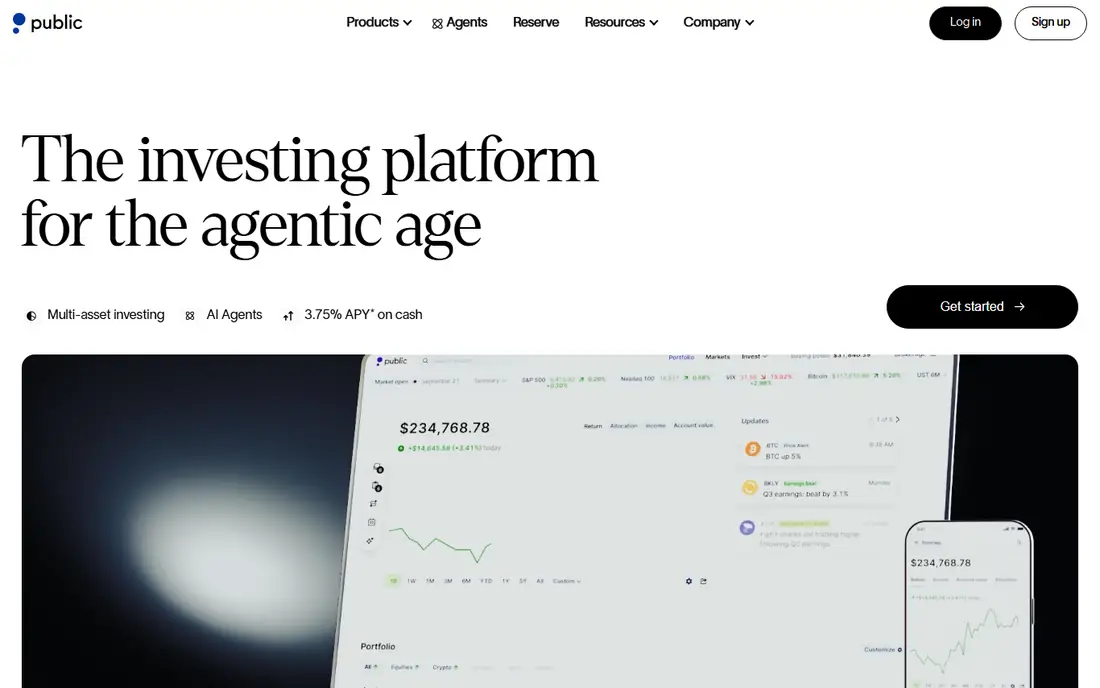
Public is built for long-term, multi-asset beginners who want more than stocks alone. You can buy stocks, ETFs, bonds, and Treasuries, set recurring investments, and build a diversified plan without juggling separate apps. Its interface emphasizes investing themes and long-term plans over day trading, which helps beginners avoid impulsive trades.
Fees need attention. While stock commissions are $0, some plans, subscriptions, and asset types carry separate fees, and fractional minimums differ by asset. Public fits beginners who want a simple, diversified portfolio in one app, value recurring investing, and do not need advanced charting or mutual funds. Read the fee schedule for the assets you plan to use before funding.
What we like- Stocks, ETFs, bonds, Treasuries, and recurring plans in one app
- Fractional investing
- Clean interface for long-term plans
Watch out for- Some plans, subscriptions, and asset types carry separate fees
- Research is lighter than full brokers
Starting price$0 commission
Free planYes
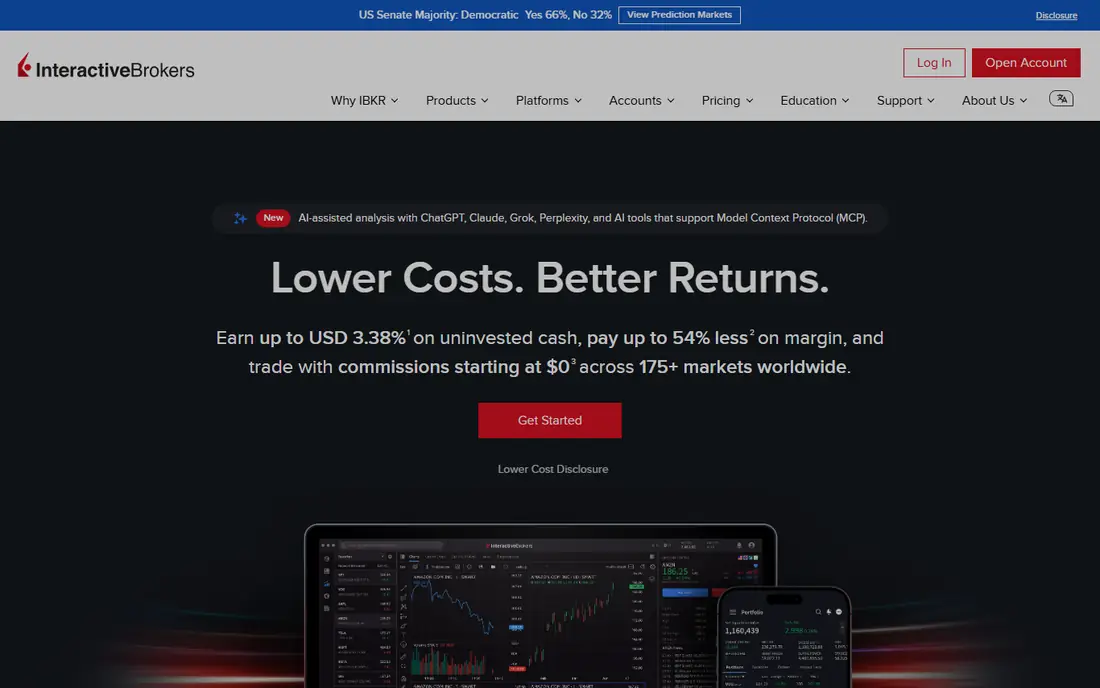
Interactive Brokers is the growth path for beginners who may later trade globally. Its IBKR Lite tier offers $0 US stock and ETF commissions for eligible clients, while its full platform gives access to many markets, currencies, and asset types that beginner apps do not cover. That breadth makes it a broker you can grow into for years.
The learning curve is the barrier. Trader Workstation and the account structure feel complex compared with Robinhood or SoFi, and beginners should use paper trading and education before live trading. Interactive Brokers fits ambitious beginners, international investors, and traders who want global access and are willing to learn a professional platform slowly.
What we like- IBKR Lite offers $0 US stock and ETF commissions for eligible clients
- Access to many global markets
- Powerful research and tools
Watch out for- Platform complexity is high for beginners
- Account structure and pricing tiers take time to learn
#8E*TRADE
Best for: Balanced research and tools4.0/5 on
G2 (24 reviews, checked Oct 2026)
Visit etrade.com
Starting price$0 commission
Free planYes
ETRADE, now part of Morgan Stanley, offers a balanced middle ground between simple apps and professional platforms. It charges $0 commission on online US stock and ETF trades, provides research, screeners, and education that beat Robinhood and SoFi, and pairs brokerage with banking and retirement accounts. Its Power ETRADE platform adds charting and options tools for learners who want more depth.
The mobile app is functional but less polished than Robinhood, and the full platform range can feel scattered at first. E*TRADE fits beginners who want better research than simple apps, a trusted large broker, and room to grow into options and retirement planning without switching firms.
What we like- $0 online US stock and ETF commissions
- Solid research, screeners, and education
- Banking and retirement accounts from Morgan Stanley
Watch out for- Mobile app is less sleek than Robinhood
- Some advanced features sit on higher tiers or desktop platforms
Starting price$0 commission
Free planYes
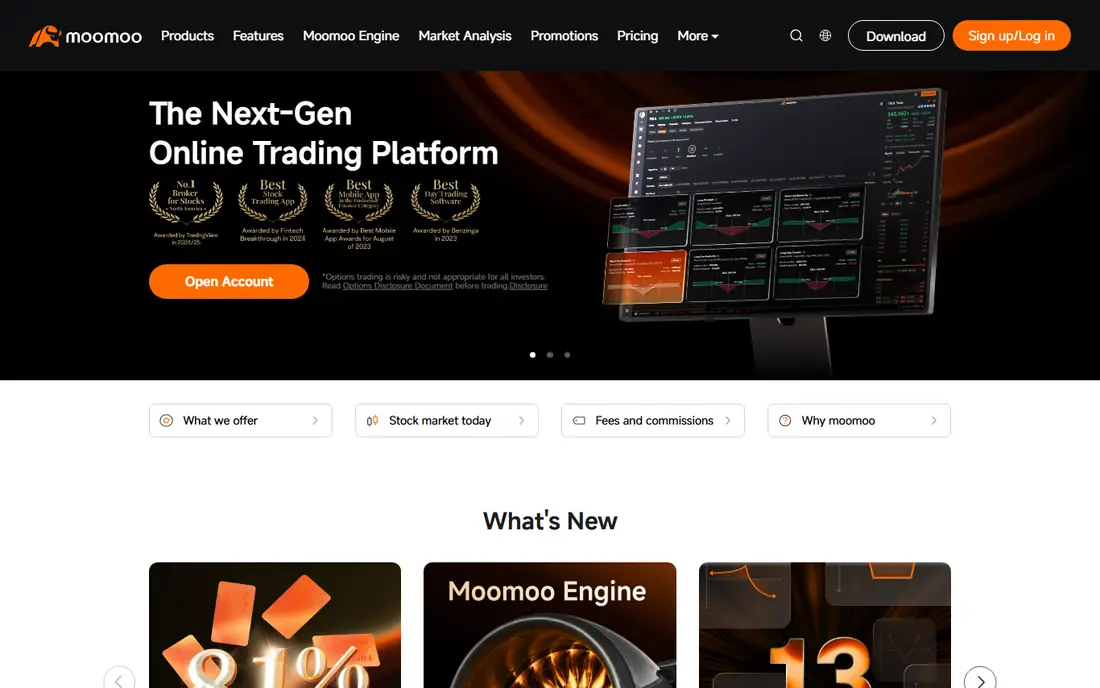
Moomoo suits beginners who learn by watching data. It offers $0 commissions on US stocks and ETFs in many cases, free paper trading, detailed charts, Level 2 data options, and an active community where traders share ideas and earnings calendars. For a beginner who wants to understand market data from the start, Moomoo gives more depth than Robinhood or SoFi at a similar commission cost.
Data density is also the risk. A beginner can feel overwhelmed by indicators, news feeds, and community posts, and the social features can encourage overtrading. Moomoo fits curious beginners who want charts, paper trading, and market data in one app, and who will set a clear investing plan before following community ideas.
What we like- $0 commissions on US stocks and ETFs in many cases
- Rich market data, charts, and paper trading
- Active community and learning content
Watch out for- Interface is data-dense for pure beginners
- Promotions and community content can encourage frequent trading
How we chose
We compared commissions, fractional share minimums, paper trading, education, research, account types, and public reviews on G2, Capterra, and Reddit, with attention to US availability and SIPC membership. We favored apps that exist today, charge $0 commission on online US stock and ETF trades, publish clear fee schedules, and fit a distinct beginner: simple first trades, practice trading, automated investing, or global growth. We left out apps with opaque fees or no US brokerage access.
How to start without common beginner mistakes
Start with a plan, not a stock tip
Decide your goal, time horizon, and risk tolerance before you buy anything. A retirement goal, a house fund, and a learning account need different portfolios, and a single hot stock rarely fits any of them well. Low-cost diversified ETFs suit many beginners better than individual stock picks.
Practice before you trade with real money
Use paper trading at Schwab, Webull, or Moomoo to learn order types, market hours, and position sizing without losses. Practice for a few weeks, track your results honestly, and only fund a live account when you understand why you are buying and when you would sell.
Keep costs and taxes in view
Commission-free trading still involves spreads, options fees where applicable, and taxes on gains. Avoid frequent trading in a taxable account without understanding short-term capital gains, and prefer retirement accounts for long-term investing where eligible. This guide is not financial advice, and a qualified advisor can help with tax and retirement planning.
Frequently asked questions
What is the best trading app for beginners overall?
Fidelity is the best overall beginner app, thanks to $0 commissions, fractional shares from $1, strong research, and retirement accounts. Charles Schwab is close for education and paper trading, while Robinhood is simplest for a first trade.
Are trading apps safe?
US brokerage apps from regulated firms are generally safe when they are SEC and FINRA registered and SIPC members, which protects customers up to $500,000 if a firm fails, with limits. Crypto holdings are usually not SIPC-insured. Use two-factor authentication, strong passwords, and biometric login on every investing app.
How much money do I need to start trading?
Many apps in this guide have no account minimum, and fractional shares let you start with $1 at Fidelity and Robinhood, or $5 at SoFi and Public. Start small, learn order types and risk, and add money only as your plan and confidence grow. You do not need a large sum to learn.
What is paper trading, and should I use it?
Paper trading lets you trade with virtual money and real market prices, so you can practice without risk. Schwab paperMoney, Webull paper trading, and Moomoo paper trading all offer this. Yes, use it for a few weeks before live trading, especially if you want to learn charts or options.
Do commission-free apps have hidden fees?
Commission-free usually means $0 commission on online US stock and ETF trades, not zero costs overall. Check options contract fees, spreads, account transfer fees, margin rates, and cash sweep terms. Read the fee schedule for the assets you trade, since crypto, bonds, and options carry separate costs.
Should beginners pick stocks or ETFs?
Many beginners do better starting with diversified ETFs, which spread risk across many stocks, than picking individual stocks. ETFs suit long-term goals and retirement accounts, while individual stocks suit learners who will research companies and accept higher volatility. This is education, not financial advice.
Sources we checked (9)
- https://www.fidelity.com
- https://www.schwab.com
- https://www.robinhood.com
- https://www.webull.com
- https://www.sofi.com/invest
- https://public.com
- https://www.interactivebrokers.com
- https://www.etrade.com
- https://www.moomoo.com
Is your product missing or out of date?
We review this list regularly. Vendors can request a listing, send updated pricing or ask about featured placement.

Shihab Mia · Founder, Rankite
Shihab has 5+ years in B2B and SaaS SEO. He writes Rankite's software buying guides from pricing pages, documentation and public user reviews. More about Shihab.