How we make this list: we compare pricing pages, product documentation and public user reviews. Ratings come from G2, Capterra or Trustpilot, with the date we checked them.
Key takeaways
- Delivery brokerage is free at some brokers and about Rs 20 per order at others, so your trading style decides which pricing wins.
- Most discount brokers charge around Rs 20 per intraday or futures and options order, plus taxes and exchange charges on top.
- Beginners gain more from a simple app, clear charges, and learning material than from advanced charting they will not use yet.
- Active traders should weigh chart quality, order speed, margin rules, and support during volatile sessions, not headline brokerage alone.
Quick comparison
| Tool | Best for | Starting price | Free plan |
|---|
 Zerodha | Reliable all-round trading | Rs 0 delivery; Rs 20 or 0.03% intraday and F&O | Free trial |
 Groww | Beginners and long-term investors | Rs 20 or 0.1% per order, whichever is lower | Yes |
 Upstox | Low-cost active trading | Rs 20 per order | Yes |
 Angel One | Research and guided investing | Rs 20 or 0.1% per order, whichever is lower | Yes |
 Dhan | Options and intraday traders | Rs 0 delivery; Rs 20 per F&O order | Yes |
 mStock | Frequent F&O traders | Rs 5 per F&O order | Yes |
 5paisa | Low flat brokerage | Rs 10 per trade | Yes |
 ICICI Direct | Bank-linked full service | Percentage-based pricing, varies by plan | No |
Is your product missing or out of date?
We review this list regularly. Vendors can request a listing, send updated pricing or ask about featured placement.
The best stock trading apps in India
Starting priceRs 0 delivery; Rs 20 or 0.03% intraday and F&O
Free planFree trial
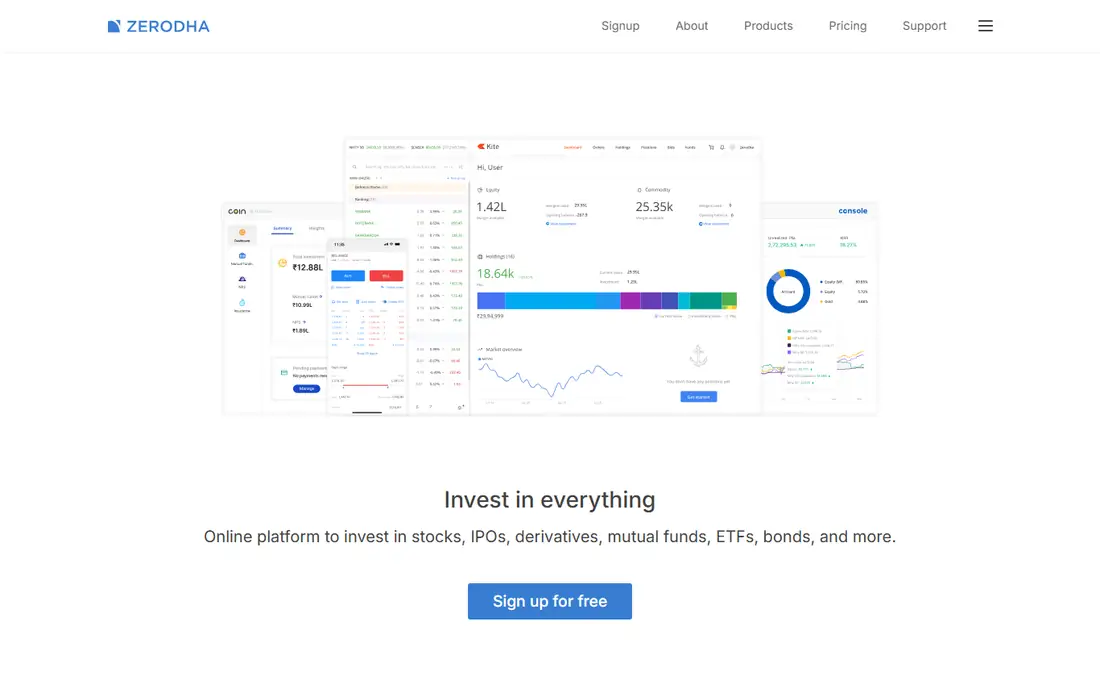
Zerodha remains the default recommendation for many Indian investors because the pricing is simple to understand and the platform is stable across market sessions. Equity delivery costs nothing in brokerage, while intraday and futures and options orders cost Rs 20 or 0.03 percent, whichever is lower. Kite offers clean charts, many indicators, and a web and mobile experience that stays consistent, which matters when you place orders from a phone during a busy session.
The costs beyond brokerage still need attention. Demat maintenance is charged annually, and taxes, exchange charges, and GST apply on every trade. Zerodha also suits learners well, since Varsity explains market basics in plain language and the brokerage calculator shows the full cost before you trade. It is a strong pick for investors and traders who value stability and clear pricing over flashy features.
What we like- Free equity delivery
- Strong charting on Kite
- Large learning library through Varsity
Watch out for- Demat maintenance charge applies
- Interface feels plain next to newer apps
- Support can be slow at peak times
Starting priceRs 20 or 0.1% per order, whichever is lower
Free planYes
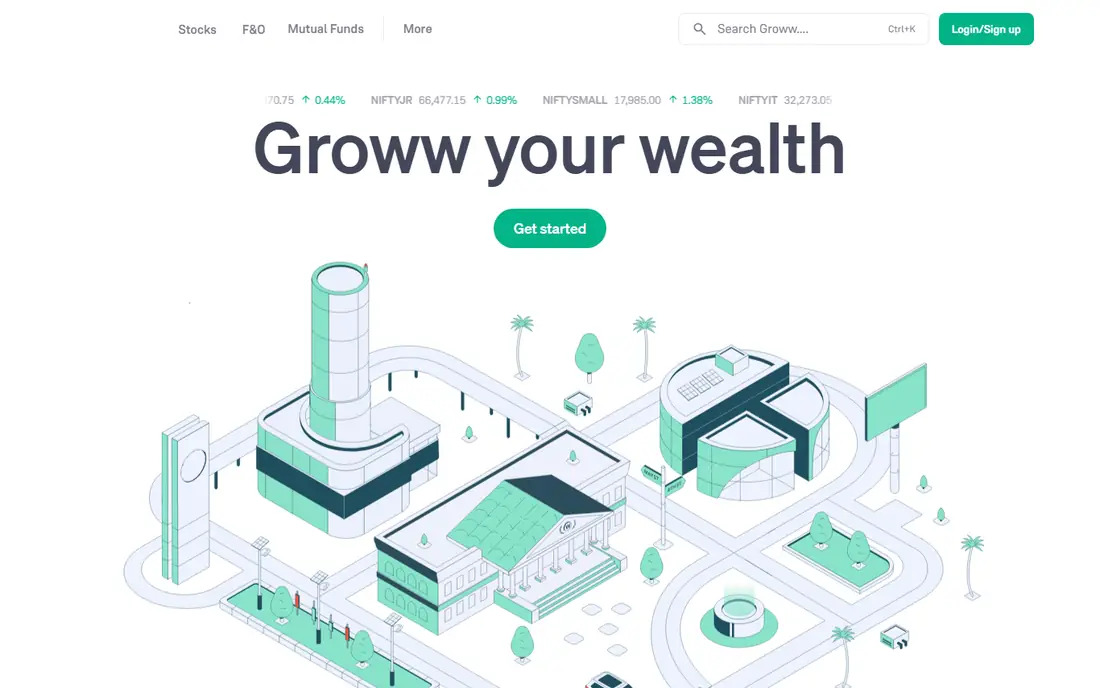
Groww is built for people who are opening a first demat account and want the process to feel simple. Account opening is paperless, funding works through UPI, and the app keeps stocks, mutual funds, exchange-traded funds, and SIPs in one view. That single view helps long-term investors track a portfolio without switching between apps, and the clean layout reduces the chance of tapping the wrong order type.
The pricing trade is clear. Groww charges Rs 20 or 0.1 percent per order, whichever is lower, with a small minimum, so delivery is not free as it is at Zerodha. For a buy-and-hold investor who trades rarely, that difference is small. For a frequent intraday trader, it adds up. Choose Groww when simplicity and an all-in-one investing view matter more than advanced charting or the lowest possible per-order cost.
What we like- Very simple app design
- Stocks, mutual funds, and SIPs in one place
- No demat maintenance charge
Watch out for- Charting depth is limited for advanced traders
- Delivery is not free
- Fewer pro trading tools
Starting priceRs 20 per order
Free planYes
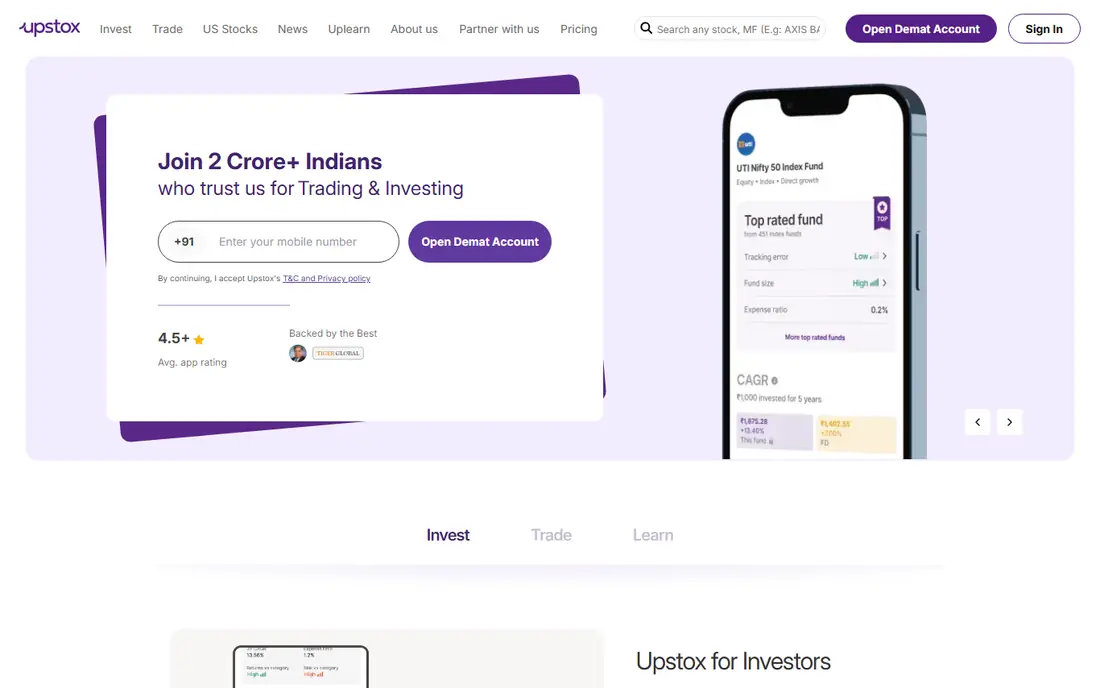
Upstox appeals to traders who want a modern app, quick orders, and flat pricing without a full-service price tag. Intraday and F&O orders cost Rs 20 per order, and the app covers equities, derivatives, commodities, and mutual funds. The interface is easy to learn, with watchlists, price alerts, and charts that suit most retail traders, while the web platform adds room for a larger workspace.
The limits show up for traders who rely on deep charting, strategy builders, or detailed screeners. Upstox covers the basics well but does not match a specialist charting platform on every indicator or drawing tool. Check the current demat maintenance charge and any platform fees before opening an account, since those recurring costs affect low-volume traders more than headline brokerage does.
What we like- Fast order placement
- Modern app design
- Stocks, F&O, mutual funds, and commodities in one account
Watch out for- Demat maintenance charge applies
- Charting depth trails specialist platforms
- Support quality varies
Starting priceRs 20 or 0.1% per order, whichever is lower
Free planYes
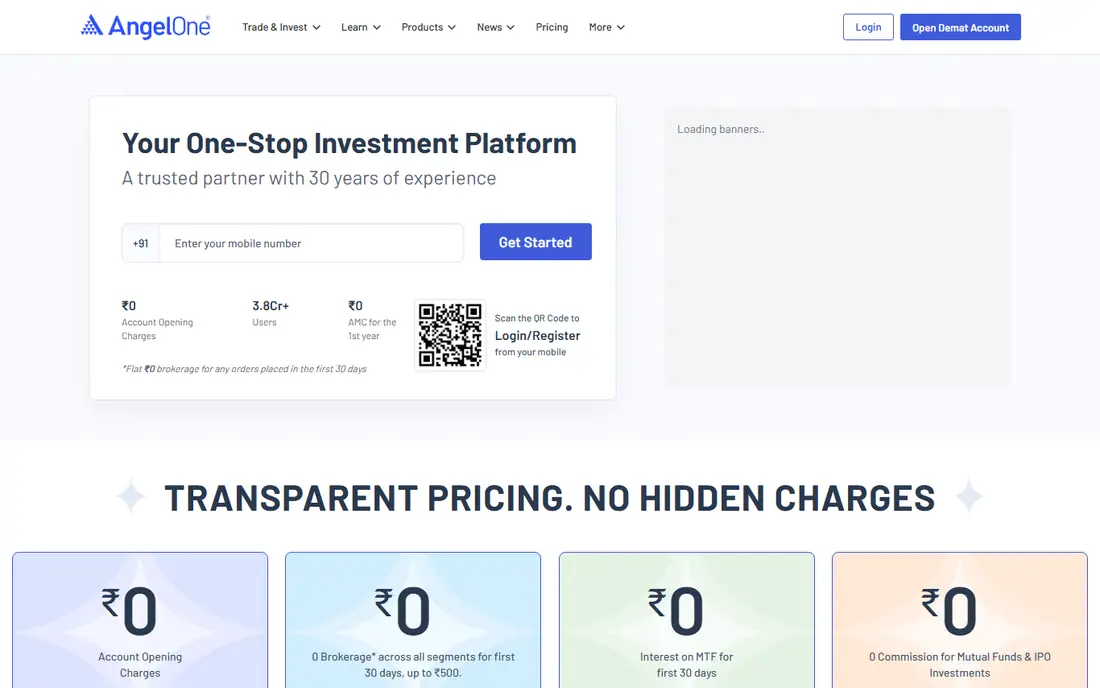
Angel One sits between a discount broker and a full-service broker. It charges flat-style brokerage for many orders while also offering research, stock ideas, and advisory content that pure discount brokers keep lighter. That mix suits investors who want some guidance, such as curated baskets, market commentary, or analyst notes, without paying percentage-based brokerage on every trade.
The downside is noise. Promotions for paid services and premium research can feel frequent, and the full cost depends on which plan you pick, so read the charge sheet before you trade. Angel One works best for investors who will actually read research and use the guidance, rather than traders who only need a fast order ticket and clean charts.
What we like- Research reports and recommendations
- Advisory and learning content
- Wide product range
Watch out for- Upselling of paid services can be frequent
- Delivery is not free
- Pricing has several plan layers
Starting priceRs 0 delivery; Rs 20 per F&O order
Free planYes
Dhan has grown quickly among active traders because its web terminal feels built for trading rather than adapted from an investing app. The options chain, strategy builder, and order placement flow suit people who trade options regularly, while delivery brokerage is free and F&O orders cost Rs 20. The app also covers stocks, ETFs, futures, commodities, and currencies, so a trader can keep several segments in one account.
The trade is research depth. Dhan gives you tools and data, but less hand-holding and fewer analyst reports than Angel One or ICICI Direct. That is fine for traders who form their own views from charts and option data, and less ideal for beginners who want recommendations. Dhan is a strong choice for intraday and options traders who value a fast terminal and a clear charge structure.
What we like- Modern trading terminal
- Options strategy builder
- No demat maintenance charge
Watch out for- Research content is thinner than full-service brokers
- Newer brand than Zerodha or ICICI Direct
Starting priceRs 5 per F&O order
Free planYes
mStock stands out on one number: F&O brokerage of Rs 5 per order, well below the Rs 20 flat rate used by most discount brokers. For a trader who places many options orders each week, that gap can save a large sum over a year, even after taxes and exchange charges. Delivery brokerage is also low or free depending on the plan, which keeps the overall cost picture attractive for active accounts.
The catch is the plan structure. Some mStock pricing relies on a one-time fee, so you pay upfront for the low rate and need enough trading volume to make that fee pay for itself. Read the plan terms, the demat charge, and any conditions on the low rate before committing. mStock suits high-frequency F&O traders who have done that math, rather than occasional investors who will not trade enough to recover an upfront fee.
What we like- Very low F&O brokerage
- Zero brokerage on delivery in some plans
- One-time fee model available
Watch out for- One-time fee must be paid upfront
- Platform is less proven for beginners
- Check plan terms carefully
Starting priceRs 10 per trade
Free planYes
5paisa offers a flat Rs 10 per trade, which undercuts the common Rs 20 rate and helps traders who place many small orders. The app also bundles robo advisory, research ideas, mutual funds, and portfolio tracking, so a user can manage several money goals without a second app. For cost-sensitive traders, that combination of low brokerage and broad product coverage is hard to ignore.
The app experience is the compromise. The interface packs in many features, which can feel crowded for a new user, and charting tools do not match a specialist terminal. 5paisa works best for traders who care most about per-order cost and who are comfortable with a busy app, provided they check the full charge list for account and demat fees.
What we like- Flat Rs 10 brokerage is lower than most rivals
- Robo advisory and research tools included
- Mutual funds and insurance in one app
Watch out for- App design feels busy
- Advanced charting is limited
- Support can be uneven
Starting pricePercentage-based pricing, varies by plan
Free planNo
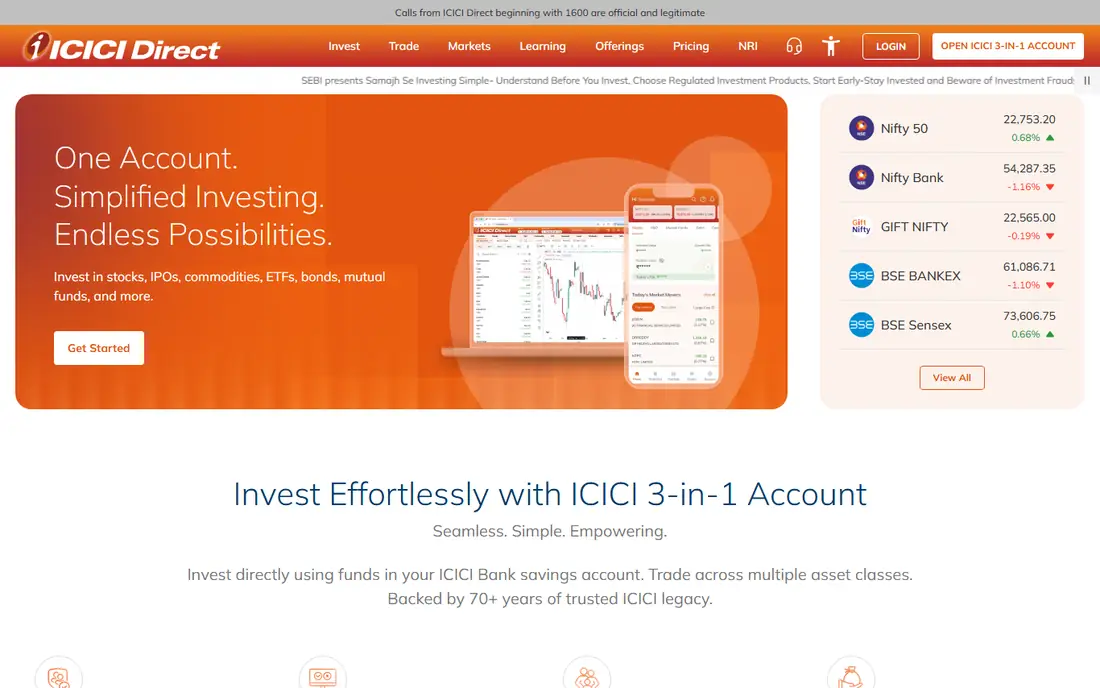
ICICI Direct is the full-service option on this list, and its value is convenience and research rather than low cost. A 3-in-1 account links a bank account, trading account, and demat account, so money movement is simple and settlement feels familiar for existing ICICI Bank customers. Research reports, advisory services, and relationship support add guidance that discount brokers do not offer at the same level.
The price is the clear downside. Percentage-based brokerage, often around 0.29 percent to 0.55 percent depending on plan, costs far more than Rs 20 flat on larger orders. ICICI Direct suits investors who trade rarely, value bank linkage and research, and are willing to pay for service. Active traders who place many orders will usually save a large amount at a discount broker.
What we like- 3-in-1 bank, trading, and demat account
- Deep research and advisory
- Trusted bank backing
Watch out for- Percentage brokerage costs far more for large orders
- Demat maintenance charge is higher
- App feels complex
How we chose
We compared SEBI-registered brokers using their published charge sheets, app store listings, and public reviews, focusing on delivery and F&O brokerage, demat charges, charting, research, and account opening. We included discount and full-service brokers so beginners, long-term investors, and active traders each have a relevant option. Prices change, so every figure here should be confirmed on the broker charge page before you open an account. This is not financial advice, and trading in equities and derivatives carries risk of loss.
How to pick the right broker for your style
Start by counting how you actually trade. A long-term investor who buys a few times a month should focus on delivery charges, demat maintenance, and app simplicity, since brokerage per order matters less than a clean portfolio view. An intraday or options trader should focus on per-order F&O cost, margin rules, order speed, and chart quality, since those factors affect every session. A trader who places hundreds of orders a month should run the numbers on a low-rate plan such as mStock before assuming Rs 20 flat is cheapest.
Next, look at the total cost, not just brokerage. Add demat maintenance, DP charges on sales, platform fees where they apply, STT, exchange charges, stamp duty, and GST. Two brokers with the same headline brokerage can cost different amounts once those charges are included. Use the broker brokerage calculator with a realistic order size and frequency, and check whether a first-year waiver or a subscription plan changes the math.
Finally, test the app before you fund it in full. Open the account, build a watchlist, try a small order, and check how charts, alerts, and support behave during market hours. A broker that feels confusing on a calm day will feel worse on a volatile day. Keep your first trades small while you learn the order types, and never trade with money you cannot afford to lose.
Frequently asked questions
Which is the cheapest stock trading app in India?
It depends on how often you trade. For delivery, Zerodha and Dhan charge no delivery brokerage. For frequent F&O trading, mStock at Rs 5 per order is lower than the common Rs 20 rate, but its one-time fee must be weighed against your volume.
Is Groww good for beginners?
Yes, for many beginners. Groww has a simple app, paperless account opening, and stocks, mutual funds, and SIPs in one place. Its charting is lighter than a specialist terminal, so active traders may later add a second platform for analysis.
Do I need a demat account to trade stocks in India?
Yes. Shares are held in a demat account linked to your trading account, and brokers open both together. You will need PAN, Aadhaar, bank details, and a KYC check, and approval often takes a day or two.
What extra charges apply beyond brokerage?
Taxes and statutory charges apply at every broker, including STT, exchange transaction charges, SEBI charges, stamp duty, and GST. Demat maintenance and DP charges on sales also apply at many brokers, so check the full charge sheet.
Can I trade F&O as a beginner?
You can, but F&O carries high risk and losses can exceed your starting capital if borrowed money is used. Learn order types, position sizing, and risk rules first, start small, and treat any broker research as information, not a promise of profit.
Is my money safe with a discount broker?
SEBI-registered brokers must keep client securities in your demat account and follow SEBI rules, which is a baseline safety check. Always verify SEBI registration, use strong passwords and two-factor authentication, and never share OTPs or login details with anyone.
Sources we checked (8)
- https://www.zerodha.com
- https://www.groww.in
- https://www.upstox.com
- https://www.angelone.in
- https://www.dhan.co
- https://www.mstock.com
- https://www.5paisa.com
- https://www.icicidirect.com
Is your product missing or out of date?
We review this list regularly. Vendors can request a listing, send updated pricing or ask about featured placement.

Shihab Mia · Founder, Rankite
Shihab has 5+ years in B2B and SaaS SEO. He writes Rankite's software buying guides from pricing pages, documentation and public user reviews. More about Shihab.