How we make this list: we compare pricing pages, product documentation and public user reviews. Rankite is independent; if a vendor ever pays for a featured spot, that listing is clearly labeled Partner.
Key takeaways
- Ramp and Brex lead the modern spend management market, combining corporate cards with expense, bill pay and accounting automation.
- Airbase and Mesh Payments offer strong alternatives with procurement and global payment depth.
- Coupa and Zip serve the enterprise procurement side: Coupa for full source-to-pay, Zip for intake orchestration.
- Navan and Payhawk cover the travel-plus-expense and European markets respectively.
Quick comparison
| Tool | Best for | Starting price | Free plan |
|---|
 Ramp Ramp | companies wanting cards, expenses and bill pay unified | Free; paid plans (see website) | Yes |
 Brex Brex | startups and tech companies scaling spend | Free; paid plans (see website) | Yes |
 Airbase Airbase | procurement-led spend control | See website | No |
 Mesh Payments Mesh Payments | global companies managing multi-entity card spend | See website | No |
 Coupa Coupa | large enterprises needing full source-to-pay | See website (custom quote) | No |
 Zip Zip | fixing procurement intake chaos | See website | No |
 Navan Navan | unifying business travel and expenses | See website | No |
 Payhawk Payhawk | European companies managing spend | See website | No |
Is your product missing or out of date?
We review this list regularly. Vendors can request a listing, send updated pricing or ask about featured placement.
#1
Ramp
Best for: companies wanting cards, expenses and bill pay unified
Visit ramp.com
Starting priceFree; paid plans (see website)
Free planYes
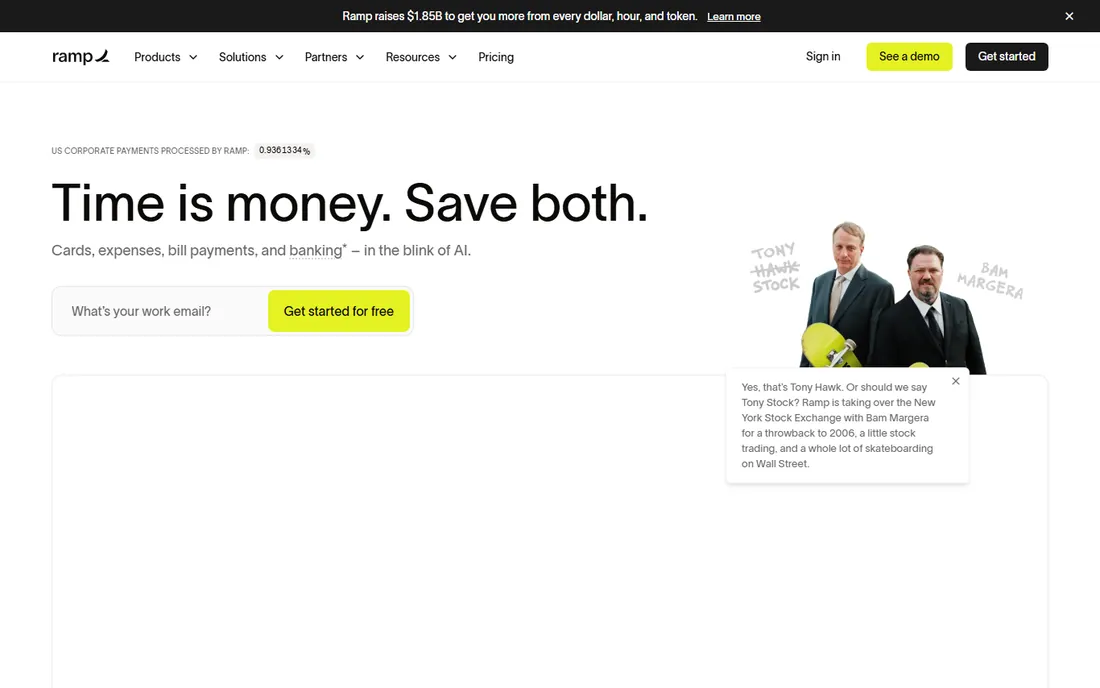
Ramp attacked the corporate card market with software that actually controls spend: virtual cards with limits, automated expense policies, bill pay and accounting integrations, much of it free. The automation depth (receipt matching, policy enforcement, approval flows) reduces finance busywork dramatically. Growth has been explosive for good reason.
The free tier's limits nudge growing companies toward paid plans, and support experiences vary as the company scales. But the value proposition is undeniable: sophisticated spend management that starts free. Finance teams drowning in expense reports find immediate relief.
What we like- Generous free tier
- Excellent automation
- Fast-growing feature set
Watch out for- Free tier limits push upgrades
- Support at scale varies
#2
Brex
Best for: startups and tech companies scaling spend
Visit brex.com
Starting priceFree; paid plans (see website)
Free planYes
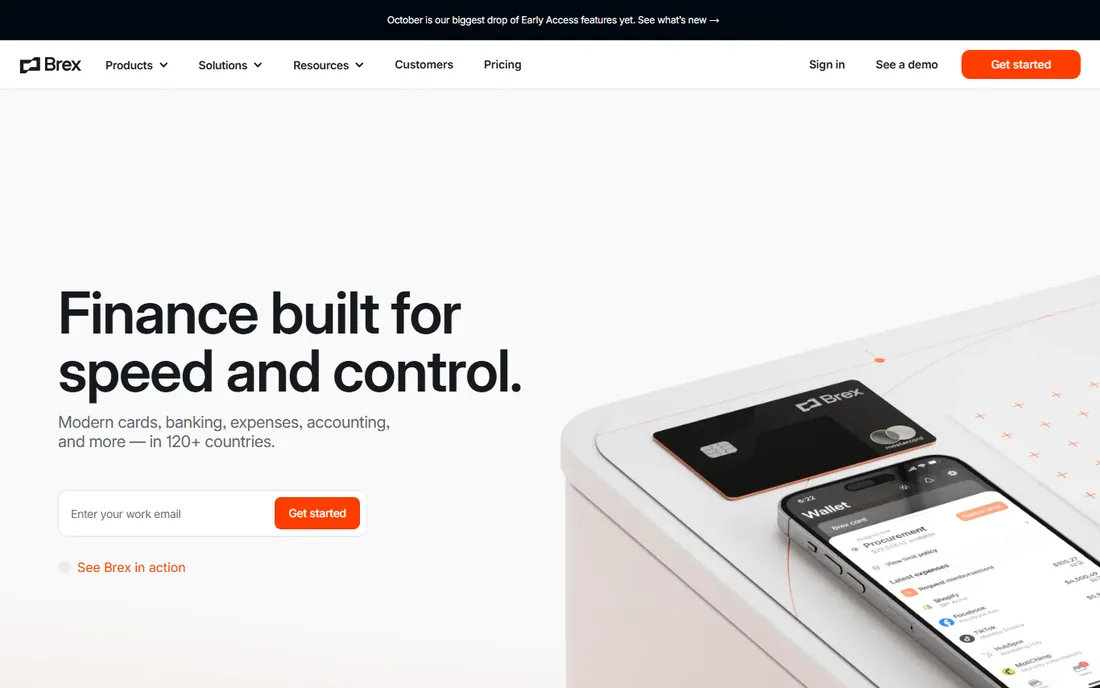
Brex built its name serving startups that traditional banks ignored, with corporate cards based on company cash rather than personal credit. The interface is clean, rewards are competitive, and the expense management covers startup needs well. Tech companies with venture funding are the core audience.
Brex's strategic pivots (away from small business, toward enterprise) created uncertainty for some segments. In direct feature comparisons, Ramp often leads on automation depth. But the startup ecosystem integration and brand trust remain strong.
What we like- Startup-friendly underwriting
- Good rewards
- Clean interface
Watch out for- Pivoted away from small business
- Feature depth less than Ramp in areas
Starting priceSee website
Free planNo
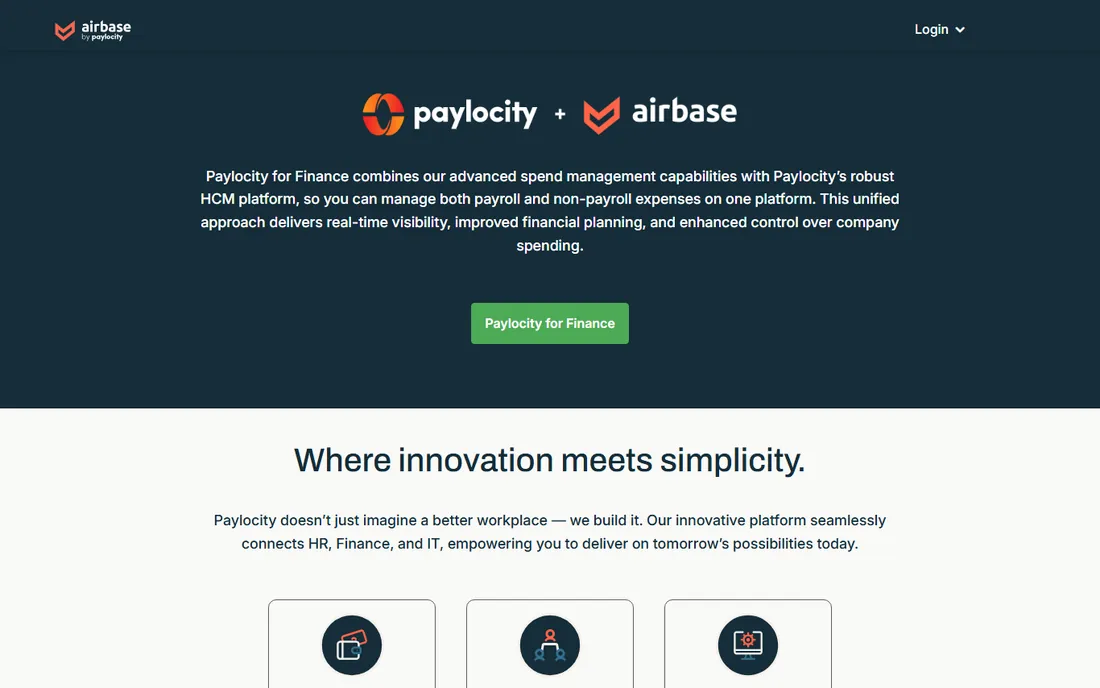
Airbase approaches spend from procurement: purchase requests, approvals, POs and vendor management unified with cards and expenses. Companies where purchasing discipline matters (not just expense reporting) get the control layer they need. The accounting integrations are solid.
It is less card-and-rewards focused than Ramp or Brex, which matters to some buyers. Pricing is not published. For finance teams that think in procurement terms, the workflow fit is better than the card-first competitors.
What we like- Strong procure-to-pay
- Good approval workflows
- Solid accounting sync
Watch out for- Pricing not published
- Less card-centric than Ramp/Brex
Starting priceSee website
Free planNo
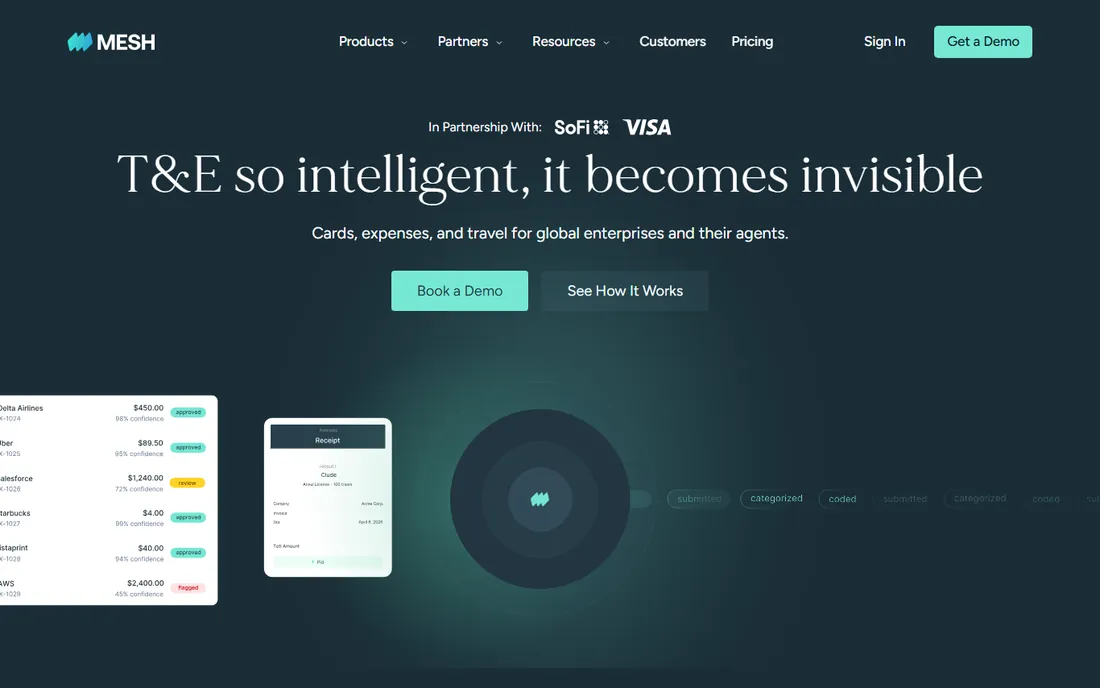
Mesh Payments handles the complexity global companies face: multiple entities, currencies and tax jurisdictions unified in one spend platform. The corporate cards work globally with local compliance handled. Finance teams managing international spend get clarity that domestic tools cannot provide.
The US market presence is smaller than Ramp or Brex. Pricing requires engagement. For multinational companies, the global-first architecture outweighs the brand recognition gap.
What we like- Strong multi-currency and multi-entity
- Good global coverage
- Clean UX
Watch out for- Pricing not published
- Smaller US presence
#5
Coupa
Best for: large enterprises needing full source-to-pay
Visit coupa.com
Starting priceSee website (custom quote)
Free planNo
Coupa is the enterprise procurement standard: sourcing, contracts, purchasing, invoicing and expenses in a unified business spend management platform. The supplier network effects and the depth of procurement functionality serve global enterprises with complex needs. The track record at scale is unmatched.
Everything is enterprise: pricing, implementation timelines, complexity. Mid-market companies find it heavy. For large organizations where procurement is strategic, Coupa remains the safe, deep choice.
What we like- Deepest procurement suite
- Massive supplier network
- Proven at scale
Watch out for- Enterprise complexity and pricing
- Implementation is major
Starting priceSee website
Free planNo
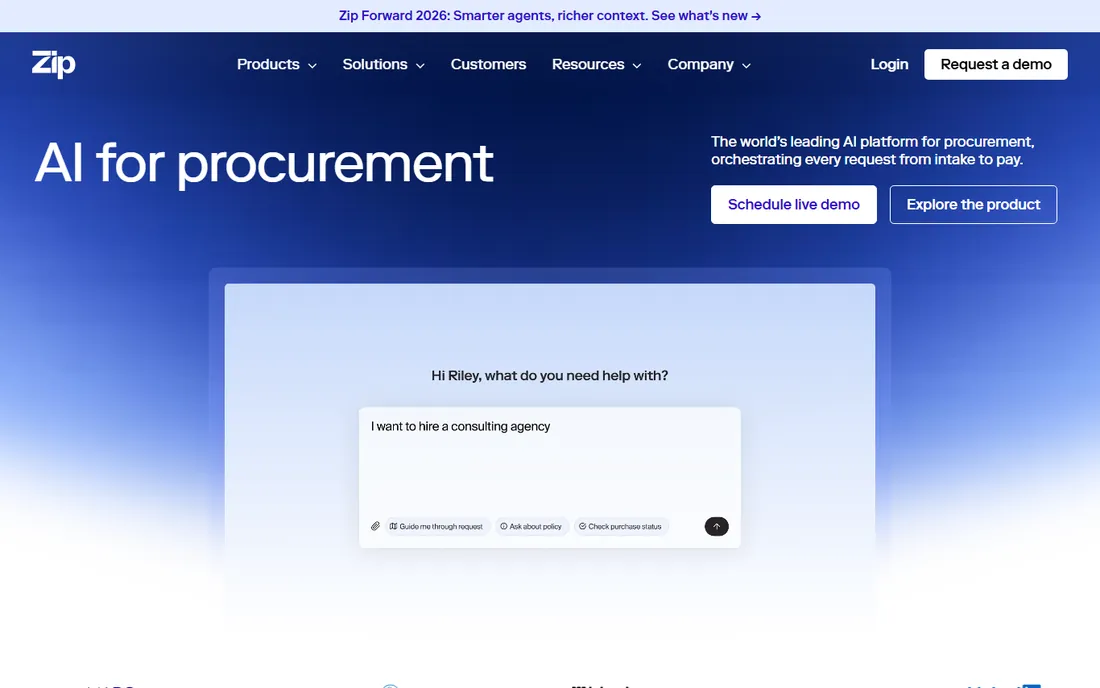
Zip solves the specific pain of procurement intake: employees need to buy something, and the process is chaos. The intelligent intake guides requests, routes approvals automatically, and creates POs in your ERP without training. Adoption rates are famously high because employees actually like using it.
It is not a full procure-to-pay suite: it orchestrates intake and sits atop your ERP. Pricing is not published. Companies whose procurement problem is intake chaos (most of them) get fast, visible wins.
What we like- Brilliant intake orchestration
- High employee adoption
- Fast time to value
Watch out for- Intake-focused, not full suite
- Pricing not published
Starting priceSee website
Free planNo
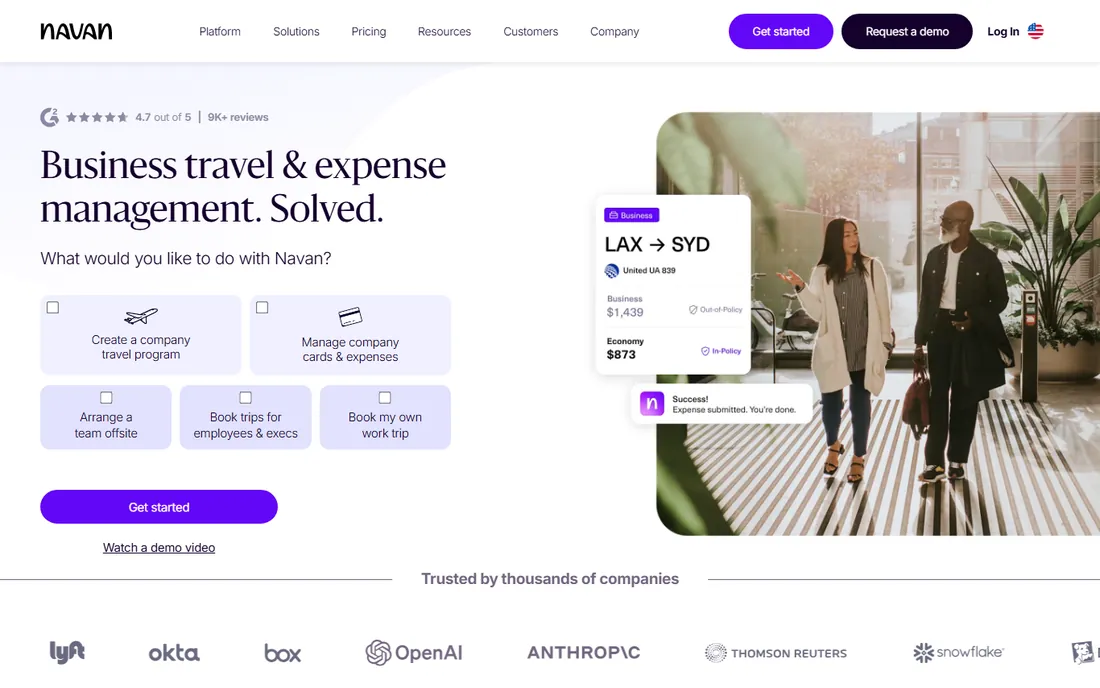
Navan (formerly TripActions) unified the two halves of T&E: book travel and expenses flow automatically, with policy enforced at booking time rather than in expense reports. Travelers get a consumer-grade booking experience; finance gets control and visibility. The integration eliminates the expense-report-after-travel toil.
Companies with minimal travel get less value; this is T&E software. Pricing is not published. For travel-heavy enterprises, the unified model beats separate travel and expense tools.
What we like- Best travel-plus-expense integration
- Good traveler experience
- Strong policy controls
Watch out for- Travel-centric
- Pricing not published
Starting priceSee website
Free planNo
Payhawk built spend management for European complexity: multiple countries, currencies, languages and tax regimes handled natively. The multi-entity support and localization exceed US-centric competitors in European markets. Cards, expenses, bill pay and procurement in one platform.
US companies have better domestic options. Pricing is not published. For European enterprises and scale-ups, the regional depth is decisive.
What we like- Strong European coverage
- Multi-entity support
- Good localization
Watch out for- US presence smaller
- Pricing not published
How we chose
We evaluated current spend management platforms on capability breadth, automation depth, global coverage and enterprise readiness, cross-checked against analyst reports and finance practitioner feedback. Every tool listed is actively maintained with a live homepage as of October 2026. We covered cards, expenses, procurement and travel because enterprise spend spans all four. Pricing reflects each vendor's own published tiers; quote-based vendors are marked.
The consolidation question
Enterprise finance stacks are consolidating: separate tools for cards, expenses, bill pay, procurement and travel create reconciliation nightmares. The platforms on this list attack different slices of the consolidation. Ramp and Brex consolidate cards plus expenses plus bill pay. Coupa consolidates procurement end-to-end. Navan consolidates travel plus expense. Zip orchestrates intake across whatever you have.
The right consolidation depends on your pain. If expense reports are the nightmare, Ramp or Brex. If procurement chaos is the problem, Coupa or Zip. If travel spend is uncontrolled, Navan. Do not consolidate for its own sake: pick the platform that solves your actual bottleneck, and ensure it integrates with the systems you keep.
What to check before you sign
Start with your spend categories. Map where money actually goes: cards, invoices, travel, procurement. The platform should cover your largest categories deeply; shallow coverage of your main spend type defeats the purpose. Ask for customer references in your industry and size.
Then verify the accounting integration. Every transaction must flow to your ERP (NetSuite, Sage Intacct, QuickBooks) with correct coding, automatically. Test the specific integration during a trial with your chart of accounts. Reconciliation failures are the number one reason spend management implementations disappoint.
Finally, check the approval and policy engine. Can it enforce your actual policies (spending limits by role, category restrictions, multi-level approvals) without workarounds? The policy engine is where control lives. Vendors demo the happy path; test your edge cases.
Also evaluate the vendor's financial stability and card program backing. Corporate card programs depend on banking partners and credit facilities: understand who issues the cards, what happens if the vendor faces difficulties, and how your funds and credit lines are protected. The fintech failures of recent years taught finance teams to diligence the balance sheet, not just the software.
Frequently asked questions
What is spend management software?
Software that controls and tracks company spending: corporate cards, expense reports, bill payments, procurement and travel, unified with policies, approvals and accounting integration. The goal is visibility and control over every dollar spent.
How much does spend management software cost?
Ranges from free tiers (Ramp, Brex) to custom enterprise pricing (Coupa). Mid-market platforms typically cost $10-30 per user per month or are bundled with card programs. Model against your transaction volume and user count.
Should we use one platform or best-of-breed?
One platform for your core spend categories reduces reconciliation pain and improves adoption. Best-of-breed makes sense when one category (like travel or procurement) has specialized needs the platform handles poorly. Most enterprises land on a primary platform plus one or two specialists.
How do corporate cards differ from traditional ones?
Modern corporate cards (Ramp, Brex) offer virtual cards with spending limits, real-time policy enforcement, automatic receipt matching and no personal liability. Traditional corporate cards are just credit cards with expense reports attached. The software layer is the difference.
Can spend management prevent fraud?
It reduces it significantly: spending limits, merchant restrictions, real-time alerts and policy enforcement catch misuse early. No software eliminates determined fraud, but the visibility makes it much harder to hide. Pair with sensible approval workflows.
How long does implementation take?
Card and expense platforms (Ramp, Brex) deploy in days to weeks. Procurement suites (Coupa) take 3-9 months. The accounting integration and policy configuration determine the timeline more than the software itself.
Should finance or procurement own spend management?
Both, with clear boundaries. Finance typically owns cards, expenses and bill pay; procurement owns sourcing, POs and vendor management. The platform should serve both without forcing a single workflow. Organizational clarity matters more than software: decide ownership before implementation, not during.
How do I drive employee adoption?
Make the compliant path the easy path. If submitting expenses the right way takes two minutes and the workaround takes twenty, adoption follows. Mobile apps, automatic receipt capture and instant virtual cards remove friction. Communicate the why (faster reimbursements, less paperwork) not just the policy. The platforms with the best UX (Ramp, Zip) win adoption effortlessly.
Pilot with a friendly department first, gather feedback, and refine before company-wide rollout. The pilot's lessons about training and communication prevent the resistance that kills implementations. Celebrate early wins publicly: when the pilot team closes expenses in half the time, everyone else wants in. Nothing drives adoption like peer proof that the new way is genuinely better. Track adoption metrics (submission times, policy compliance rates, user satisfaction) and share the improvements: data convinces skeptics more than mandates. The finance team that publishes its own efficiency gains earns credibility for the next transformation project. Spend management is often the first successful finance automation; use the win to fund the next one. The credibility compounds: each successful transformation makes the following one easier to approve and adopt. Finance teams that demonstrate ROI consistently become the organization's automation leaders, shaping how the whole company thinks about operational efficiency.
Sources we checked (8)
- https://www.ramp.com
- https://www.brex.com
- https://www.airbase.com
- https://www.meshpayments.com
- https://www.coupa.com
- https://www.ziphq.com
- https://www.navan.com
- https://www.payhawk.com
Is your product missing or out of date?
We review this list regularly. Vendors can request a listing, send updated pricing or ask about featured placement.

Shihab Mia · Founder, Rankite
Shihab has spent more than a decade helping SaaS and e-commerce brands grow through search. He writes Rankite's software buying guides from pricing pages, documentation and public user reviews. More about Shihab.