How we make this list: we compare pricing pages, product documentation and public user reviews. Ratings come from G2, Capterra or Trustpilot, with the date we checked them.
Key takeaways
- No single app covers speaking, grammar, reading, and listening equally well, so most learners do best with one core app plus conversation practice.
- Duolingo is the easiest free habit to start, while Babbel gives clearer grammar explanations for learners who want to understand sentences.
- Audio learners should start with Pimsleur, and readers should start with LingQ once they know basic vocabulary.
- Live tutoring through italki costs more per hour, but it is the fastest way to turn app knowledge into real conversation.
- Prices vary by platform and promotion, so confirm the current plan in the app store or on the vendor site before subscribing.
Quick comparison
| Tool | Best for | Starting price | Free plan |
|---|
 Duolingo | daily habit and vocabulary | $6.99/month (billed annually) | Yes |
 Babbel | structured grammar and conversation | See website | Free trial |
 Rosetta Stone | immersion without translation | $11.99/month | Free trial |
 Busuu | lessons with native speaker feedback | See website | Yes |
 Pimsleur | audio-first speaking practice | $20.95/month | Free trial |
 Mondly | short, fun lessons for beginners | $9.99/month | Yes |
 LingQ | reading and listening to real Spanish | $14.99/month | Yes |
 Memrise | vocabulary with native speaker video | $89.99/year | Yes |
 italki | live lessons with real tutors | See website | No |
Is your product missing or out of date?
We review this list regularly. Vendors can request a listing, send updated pricing or ask about featured placement.
The best Spanish learning app
#1Duolingo
Best for: daily habit and vocabulary4.5/5 on
G2 (145 reviews, checked Oct 2026)
Visit duolingo.com
Starting price$6.99/month (billed annually)
Free planYes
Duolingo is where most people start, and that is not an accident. Lessons last a few minutes, the path is clear, and streaks, hearts, and levels keep daily practice going when motivation dips. Spanish lessons cover vocabulary, basic grammar patterns, listening, and speaking, and the free tier includes the core curriculum with ads and some daily limits. Super removes ads and adds extra features, and Max adds AI conversation practice in some markets.
The limit shows up when you try to talk. Duolingo teaches patterns more than explanations, so learners often recognize words yet struggle to form their own sentences at natural speed. It also underplays longer listening and real conversation. Treat Duolingo as a foundation builder: excellent for the first few months, and best paired later with a tutor, a podcast, or a reading app. If you only have five minutes a day, it is still the easiest way to keep Spanish in your life.
What we like- Free core lessons
- Streaks and short lessons build a habit
- Speaking and listening practice included
Watch out for- Grammar explanations are thin
- Conversation practice is limited
Starting priceSee website
Free planFree trial
Babbel feels more like a course than a game. Lessons explain why a sentence works, then practice it through dialogues about travel, work, food, and everyday life. That structure helps learners who get frustrated when an app only shows patterns without explaining them. Review sessions revisit vocabulary at intervals, and speech recognition gives feedback on pronunciation. Babbel offers monthly and annual plans, and prices differ between its website and app stores, so check the current offer before buying.
Advanced learners may outgrow Babbel sooner than beginners will. Upper-level content exists, but it does not match the depth of reading real books or taking live lessons. Babbel also lacks the community corrections that Busuu offers. For a learner who wants a clear, classroom-like path from beginner to intermediate Spanish, Babbel is a strong core choice, especially when combined with weekly speaking practice.
What we like- Clear grammar explanations
- Dialogues based on real situations
- Review sessions built in
Watch out for- Price varies by offer and platform
- Less content for advanced learners
#3Rosetta Stone
Best for: immersion without translation4.2/5 on
G2 (113 reviews, checked Oct 2026)
Visit rosettastone.com
Starting price$11.99/month
Free planFree trial
Rosetta Stone has used the same idea for decades: learn Spanish the way a child learns a first language, through pictures, spoken words, and context, without translating into English. Its TruAccent speech engine gives detailed pronunciation feedback, and lessons build from single words to full sentences. Plans include monthly subscriptions and a lifetime purchase for one language, which suits learners who dislike recurring bills and plan to study for years.
Immersion has a cost. Some learners find it slow at first, because nothing is translated and grammar rules are never stated outright. That approach works well for pronunciation and listening, but learners who want to understand verb conjugations quickly may prefer Babbel alongside it. Rosetta Stone also feels less modern than newer apps in places. For patient learners who like learning by ear and by image, it remains a dependable, focused choice.
What we like- Strong pronunciation feedback
- Pictures and context teach meaning
- Lifetime option available
Watch out for- No translation can confuse absolute beginners
- Grammar is learned by feel, not explained
#4Busuu
Best for: lessons with native speaker feedback4.4/5 on
G2 (71 reviews, checked Oct 2026)
Visit busuu.com
Starting priceSee website
Free planYes
Busuu combines structured lessons with a community that corrects your work. You complete a lesson, submit a written or spoken exercise, and native Spanish speakers give feedback, which is a rare feature in a subscription app. Study plans set a weekly goal, grammar summaries explain key points, and vocabulary review keeps older words in rotation. A free tier covers basic lessons, while Premium adds full courses, offline access, and certificates, with prices varying by plan length and platform.
The community is the reason to choose Busuu, and also the reason to manage expectations. Corrections depend on other users, so quality and speed vary, and you are expected to correct other learners in return. Advanced learners will find less to stretch them than beginners will. For a learner who wants human feedback without paying for a tutor every week, Busuu offers a useful middle ground between a solo app and live lessons.
What we like- Native speakers correct writing and speaking
- Clear study plans
- Offline lessons on paid plans
Watch out for- Free tier is limited
- Advanced content is thinner than beginner content
#5Pimsleur
Best for: audio-first speaking practice4.3/5 on
G2 (2 reviews, checked Oct 2026)
Visit pimsleur.com
Starting price$20.95/month
Free planFree trial
Pimsleur is built for people who learn by listening and speaking. Each lesson lasts about 30 minutes, introduces a small number of new words, and prompts you to recall them at increasing intervals while a conversation unfolds. That method builds spoken recall better than tapping multiple-choice answers, and it fits driving, walking, and housework in a way screen-based apps do not. A subscription costs $20.95 a month for a single language or all languages in recent listings, with annual options also offered.
The price is the main barrier, and the focus is narrow by design. Reading, writing, and grammar explanations receive less attention than speaking, so Pimsleur works best as a speaking core paired with reading or a grammar app. Learners who study mainly on a screen, or who need written Spanish for work, may prefer Babbel or LingQ. Learners who want to speak confidently on a trip, and who study mostly by audio, will find Pimsleur hard to beat.
What we like- Excellent for speaking and listening
- 30-minute lessons fit commutes
- Builds recall through spaced prompts
Watch out for- Most expensive app here
- Reading and writing get less attention
Starting price$9.99/month
Free planYes
Mondly keeps lessons short, visual, and varied, which helps beginners who bounce off longer courses. Daily lessons, vocabulary builders, and a chatbot for simple conversations give a taste of speaking without the pressure of a live tutor. Speech recognition checks pronunciation, and a free tier lets you try the first lessons before paying. A single-language plan costs $9.99 a month or $47.99 a year in recent listings, and a lifetime all-language option is also offered at times.
Depth is the trade-off. Mondly covers beginner topics well, but intermediate learners will soon want more grammar, longer reading, and real conversation. The chatbot helps confidence, yet it cannot replace a human tutor for correcting natural phrasing. As a first app for a trip, or as a fun second app beside Babbel or Duolingo, Mondly earns its place. As the only app for a serious long-term goal, it will feel thin after a few months.
What we like- Short daily lessons
- Chatbot conversation practice
- Speech recognition for pronunciation
Watch out for- Depth is limited for intermediate learners
- Grammar explanations are brief
Starting price$14.99/month
Free planYes
LingQ suits learners who already know basic Spanish and want to grow through reading and listening. You read articles, stories, and transcripts, mark unknown words, and review them as flashcards, while audio follows the text. The library covers many topics and dialects, including Latin American and Spain Spanish, and you can import books, articles, and podcast transcripts to study content you actually care about. Premium costs $14.99 a month, with annual billing lowering the monthly equivalent, and a limited free tier lets you test the method.
Beginners should not start here alone. Without basic vocabulary and grammar, reading real content feels slow and frustrating, and LingQ offers little hand-holding compared with Duolingo or Babbel. It also provides no live speaking practice unless you add community tutors at extra cost. For intermediate learners who read daily and want vocabulary to stick, LingQ is one of the most effective tools in this guide, because it turns content you enjoy into study material.
What we like- Huge library of Spanish texts and audio
- Vocabulary tracking
- Import your own content
Watch out for- Needs some basic Spanish first
- Less structured than a course
Starting price$89.99/year
Free planYes
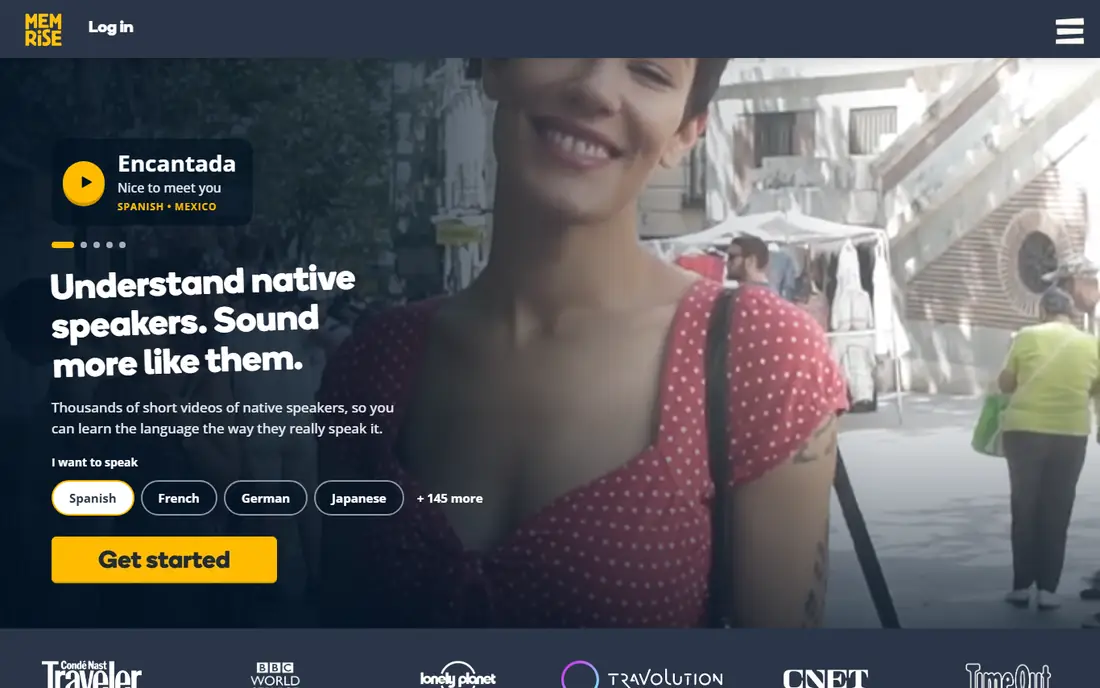
Memrise focuses on what many learners need most after a few weeks: words they can actually recognize and say. Short video clips show native speakers using phrases in real contexts, which helps with listening speed and natural pronunciation. Spaced repetition schedules reviews so words return before you forget them, and newer AI features add simulated conversations for practice. A free tier covers basic learning, while a paid plan costs $22.99 a month or $89.99 a year in recent listings, so annual billing is far better value.
Grammar is the weak point. Memrise teaches vocabulary and phrases well, but it does not explain sentence structure in the depth Babbel provides. Learners who only use Memrise may know many words yet struggle to build sentences. Pair it with a grammar-focused app or a tutor, and use it for daily vocabulary top-ups. For building a large, usable word bank quickly, Memrise is a strong supporting app.
What we like- Short videos of native speakers
- Spaced repetition for vocabulary
- AI conversation practice on paid plans
Watch out for- Grammar teaching is limited
- Monthly price is high compared with the annual rate
#9italki
Best for: live lessons with real tutors3.8/5 on
G2 (19 reviews, checked Oct 2026)
Visit italki.com
Starting priceSee website
Free planNo
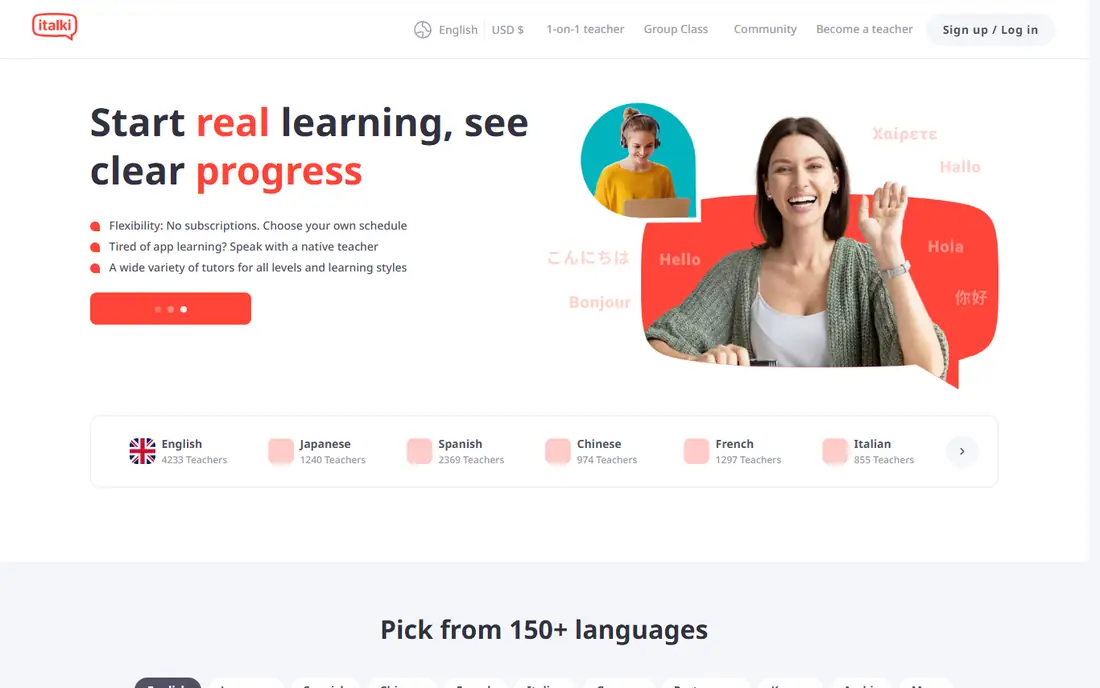
italki is not an app course at all, which is exactly why it belongs here. It connects learners with professional teachers and community tutors for one-to-one video lessons, with prices set by each tutor rather than by a single subscription. You can choose a tutor from Mexico, Spain, Colombia, Argentina, or another region, focus on travel Spanish, business Spanish, or exam preparation, and schedule lessons around work and family life. Trial lessons at lower prices help you test a tutor before committing.
The open format needs a plan. Without a curriculum, a learner who only chats may repeat the same easy topics, so ask a tutor for homework, corrections, and a progression plan. Weekly lessons also cost more over a year than any subscription app here. Even so, nothing in this list replaces live conversation for fluency. One italki lesson a week, combined with daily app practice, will move speaking ability faster than any app alone.
What we like- Real conversation with native tutors
- Flexible scheduling
- Tutors for every budget and dialect
Watch out for- No set curriculum unless the tutor provides one
- Costs add up with weekly lessons
How we chose
We compared vendor pricing pages, app store listings, product documentation, and public reviews on G2, Capterra, and Reddit, and favored apps that are currently available, teach Spanish specifically, and cover different learning styles rather than repeating the same quiz format nine times. Prices were checked in October 2026, and any price that varied sharply by platform or promotion is shown as See website. We did not claim hands-on testing, and we weighted free plan usefulness, speaking practice, grammar depth, and the path from beginner to intermediate alongside price.
Building a Spanish routine that actually sticks
A routine beats a perfect app. Most learners quit because the plan demands an hour a day, not because the app is bad. Start with fifteen minutes a day, at the same time, and protect that slot for a month before adding more. A short daily habit you keep matters more than a long weekend session you abandon.
Pair one core app with one speaking habit
Choose one core app for your level, then add one speaking habit. Beginners can pair Duolingo or Babbel with a weekly italki lesson or a language exchange partner. Intermediate learners can pair LingQ reading with a tutor who corrects writing. The app builds knowledge, and speaking turns that knowledge into usable skill.
Learn the Spanish you will actually use
Travel Spanish, work Spanish, and family Spanish use different words. Pick content that matches your reason for learning, whether ordering food, talking to relatives, or writing work emails. LingQ imports and italki tutors make this easy, because you can study your own topics rather than a generic course. Motivation lasts longer when lessons connect to real conversations.
Review, do not just complete lessons
Finishing lessons feels productive, but vocabulary fades without review. Use built-in review sessions in Babbel, Busuu, or Memrise, and revisit old LingQ words each week. Keep a short list of phrases you got wrong in tutoring, and practice those first. Review is less exciting than new content, yet it is what turns app progress into lasting Spanish.
Frequently asked questions
What is the best app to learn Spanish for beginners?
Duolingo is the easiest free start, and Babbel is the best structured start for learners who want grammar explanations. Mondly also suits beginners who prefer short, visual lessons. Whichever you pick, add speaking practice early, even if it is only repeating phrases aloud each day.
Can an app alone make me fluent in Spanish?
No app alone reliably produces fluency, because fluency needs live conversation, listening to natural speech, and reading real texts. Apps build vocabulary, grammar, and listening foundations, and italki lessons, podcasts, and books carry you further. A mix of one app, regular speaking, and real content works better than any single subscription.
How long does it take to learn Spanish with an app?
It depends on daily time, prior language experience, and whether you speak with people. Daily practice for several months usually builds basic conversation, while comfortable intermediate Spanish often takes a year or more of steady work. Consistency matters more than speed, and weekly speaking practice shortens the path noticeably.
Is Duolingo or Babbel better for Spanish?
Duolingo is better for building a free daily habit and basic vocabulary, while Babbel is better for understanding grammar and practicing realistic dialogues. Many learners start free with Duolingo, then move to Babbel when they want clearer explanations. Using both for a short trial can show which teaching style you prefer.
Should I learn Latin American or Spain Spanish?
Choose the variety you will hear most. Latin American Spanish suits travel and family in the Americas, while Spain Spanish suits travel or work in Spain. The differences mainly involve vocabulary, pronunciation, and some verb forms, and a good tutor can explain them. Most apps teach a general form, so a tutor from your target region helps with local usage.
Is Pimsleur worth the price for Spanish?
Pimsleur is worth it for audio-first learners who want to speak confidently and study during commutes, because its recall method builds spoken ability well. It is less good value for learners who study on screen, need reading and writing, or want grammar explanations. Try the free trial during a week of commutes before subscribing.
Sources we checked (9)
- https://www.duolingo.com/pricing
- https://www.babbel.com/pricing
- https://www.rosettastone.com/pricing
- https://www.busuu.com/pricing
- https://www.pimsleur.com/pricing
- https://www.mondly.com/pricing
- https://www.lingq.com/pricing
- https://www.memrise.com/pricing
- https://www.italki.com/pricing
Is your product missing or out of date?
We review this list regularly. Vendors can request a listing, send updated pricing or ask about featured placement.

Shihab Mia · Founder, Rankite
Shihab has 5+ years in B2B and SaaS SEO. He writes Rankite's software buying guides from pricing pages, documentation and public user reviews. More about Shihab.