How we make this list: we compare pricing pages, product documentation and public user reviews. Ratings come from G2, Capterra or Trustpilot, with the date we checked them.
Key takeaways
- Mandarin needs three skills at once, tones, characters, and speaking, and no single app covers all three equally well.
- HelloChinese is the strongest structured starting point for beginners, with tone practice, grammar, and character writing in one course.
- Duolingo suits daily habit building for the first weeks, while Pleco becomes essential later as a dictionary and flashcard tool.
- Skritter covers character writing, Du Chinese covers graded reading, and ChinesePod covers listening, so a full routine often pairs two or three apps.
- HelloTalk and Pimsleur add real speaking practice, with HelloTalk for chat with native speakers and Pimsleur for audio drills on the move.
Quick comparison
| Tool | Best for | Starting price | Free plan |
|---|
 HelloChinese | Structured beginner Mandarin | $11.99 per user/month | Yes |
 Duolingo | Daily habit for beginners | See website | Yes |
 Pleco | Dictionary and flashcards | See website | Yes |
 LingoDeer | Grammar focused learning | See website | Yes |
 Skritter | Character writing practice | $14.99 per user/month | Free trial |
 Du Chinese | Graded reading practice | $12.00 per user/month | Yes |
 ChinesePod | Listening and dialogues | See website | Free trial |
 HelloTalk | Speaking with native speakers | See website | Yes |
 Pimsleur | Audio speaking drills | See website | Free trial |
Is your product missing or out of date?
We review this list regularly. Vendors can request a listing, send updated pricing or ask about featured placement.
The best Chinese language learning app
Chinese is often called hard because it combines tones, characters, and a grammar system that differs from English. A tone change can change a word meaning, a character must be recognized and often written, and spoken fluency needs listening to natural speed speech. An app that only teaches vocabulary will leave gaps in all three areas, which is why many learners end up with a small stack rather than a single app.
The stack idea works well here. Start with one structured course for the core path, add one tool for the weakest skill, and add speaking practice once basic sentences are ready. A beginner might pair HelloChinese with Pleco, an intermediate learner might pair Du Chinese with Skritter, and a commuter might pair Pimsleur with HelloTalk. The nine tools below are grouped by the skill they serve best, so the stack is easy to build.
Starting price$11.99 per user/month
Free planYes
HelloChinese is built for Mandarin from the ground up, rather than as one course among many languages. Lessons cover pinyin, tones, vocabulary, grammar, reading, writing, and speaking in a clear order, with speech recognition for pronunciation and stroke order guidance for characters. Native speaker videos add listening variety, and spaced repetition reviews help vocabulary stick beyond the lesson day.
The limit is ceiling. HelloChinese carries a learner well through beginner and lower intermediate levels, but advanced learners will need graded readers, native media, and tutor feedback to keep progressing. Premium pricing is also tiered, with monthly, quarterly, and annual options, so the vendor page or app store listing should be checked before purchase. For a true beginner who wants one clear path, HelloChinese is the best starting point on this list.
What we like- Structured course with tones, pinyin, grammar, and writing
- Speech recognition and native speaker videos
- Spaced repetition reviews
Watch out for- Content thins at higher levels
- Advanced learners will outgrow the course
#2Duolingo
Best for: Daily habit for beginners4.5/5 on
G2 (145 reviews, checked Oct 2026)
Visit duolingo.com
Starting priceSee website
Free planYes
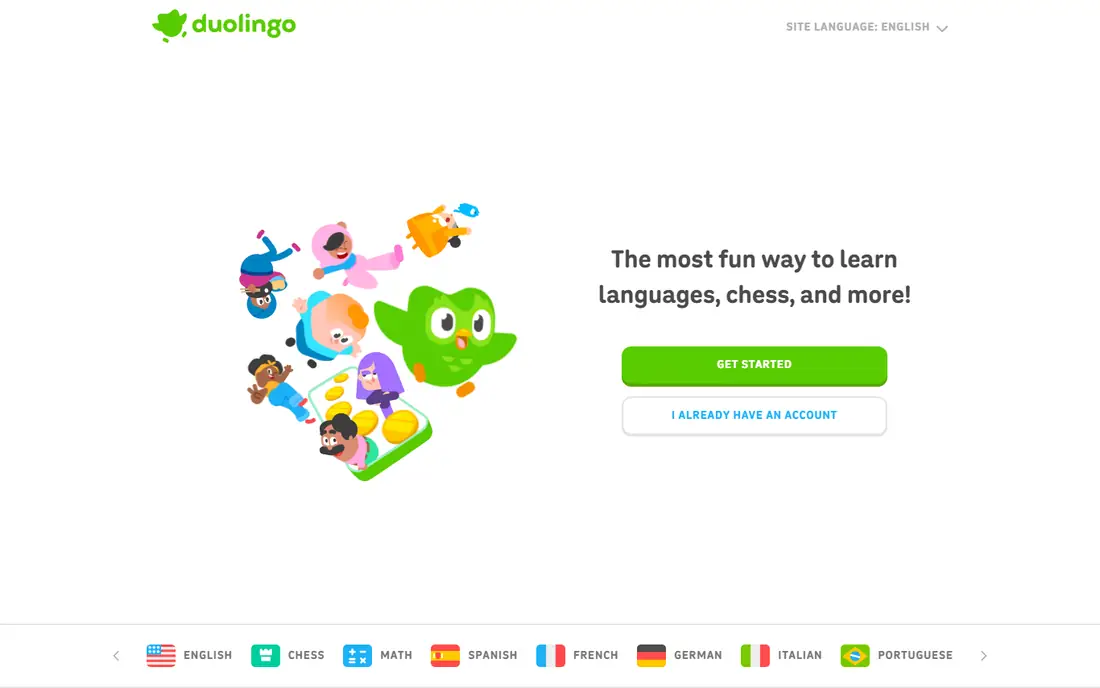
Duolingo is the easiest app to start with, since lessons are short, free, and built around streaks that encourage daily use. A new learner can pick up pinyin, basic tones, common words, and simple sentences in a few weeks, and the game style keeps a five minute habit alive on busy days. For a user who is unsure whether they will stick with Mandarin, Duolingo is a low risk first step.
The honest limit is depth. Tone production, character writing, and natural conversation receive less attention than in HelloChinese, and the course does not carry a learner far into intermediate Mandarin on its own. Paid plans remove ads and add extra features, but they do not turn Duolingo into a full Mandarin curriculum. Use Duolingo to build a habit, then pair it with HelloChinese or Pleco for tone and character work.
What we like- Free daily lessons with streaks and games
- Good pinyin and basic vocabulary start
- Easy five minute sessions
Watch out for- Tone drilling and character writing are thin
- Course depth is limited for serious learners
Starting priceSee website
Free planYes
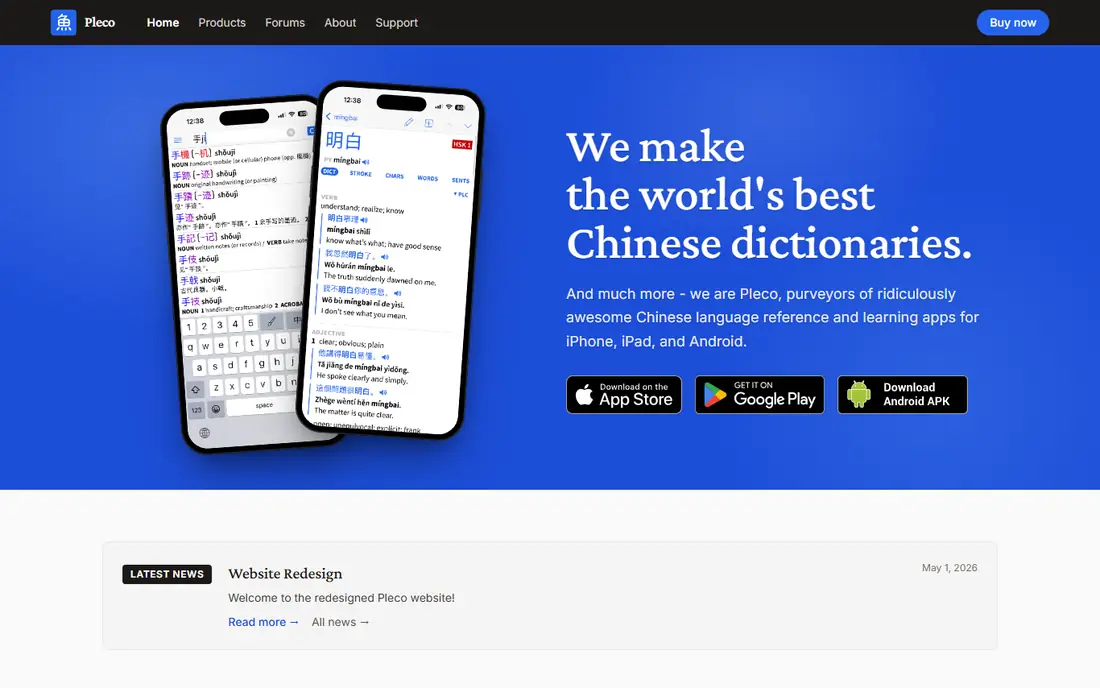
Pleco is the dictionary almost every serious Mandarin learner ends up using. A user can look up a word by typing, drawing it by hand, or pointing a camera at text, and get definitions, audio, example sentences, and stroke order animations. The flashcard system lets users build decks from dictionary entries or imported lists, which makes it a long term vocabulary tool, not just a lookup app.
Pleco is not a course, so it will not teach a beginner in order, and its paid add ons, such as extra dictionaries, flashcard features, and a document reader, cost extra. The base app is free and already useful, and add ons can be bought as needed. Every Mandarin learner should install Pleco early, even if the main course comes from another app, since lookup speed shapes daily study.
What we like- Fast dictionary with handwriting and camera lookup
- Stroke order and audio
- Powerful flashcard system
Watch out for- Not a structured course
- Paid add ons add up over time
Starting priceSee website
Free planYes
LingoDeer is a language app with a strong focus on Asian languages, and its Mandarin course gives grammar more attention than a purely game style app. Lessons explain sentence patterns, particles, and word order, with exercises for reading, listening, and speaking. That structure helps learners who get frustrated when an app shows a pattern without explaining why it works.
The limits are level depth and speaking practice. Higher level content is thinner than beginner content, and LingoDeer does not offer live conversation with native speakers. It is best as a main or second course for a learner who wants grammar clarity, paired with Pleco for vocabulary and HelloTalk or a tutor for speaking. Check current pricing on the vendor site, since plans vary by platform.
What we like- Clear grammar explanations
- Structured lessons for Asian languages
- Speaking and listening exercises
Watch out for- Content depth varies by level
- Less community and speaking practice than HelloTalk
Starting price$14.99 per user/month
Free planFree trial
Skritter solves one problem very well, which is learning to write Chinese characters by hand. Users write characters on screen, receive stroke level feedback, and review characters through spaced repetition, with lists drawn from textbooks and community decks. That feedback loop is far more effective than passively reading a character list, and it builds recognition as well as writing skill.
The trade off is scope and price. Skritter does not teach full conversation, grammar, or listening in depth, so it works best as a companion to a course such as HelloChinese or LingoDeer. The monthly price is also high for a single skill, though longer plans lower the monthly rate. For a learner who wants to read and write characters, not just recognize pinyin, Skritter is the specialist pick.
What we like- Handwriting recognition with stroke feedback
- Spaced repetition for characters
- Lists from textbooks and user decks
Watch out for- Focus is narrow, mainly writing and vocabulary
- Monthly price is high for a single skill tool
Starting price$12.00 per user/month
Free planYes
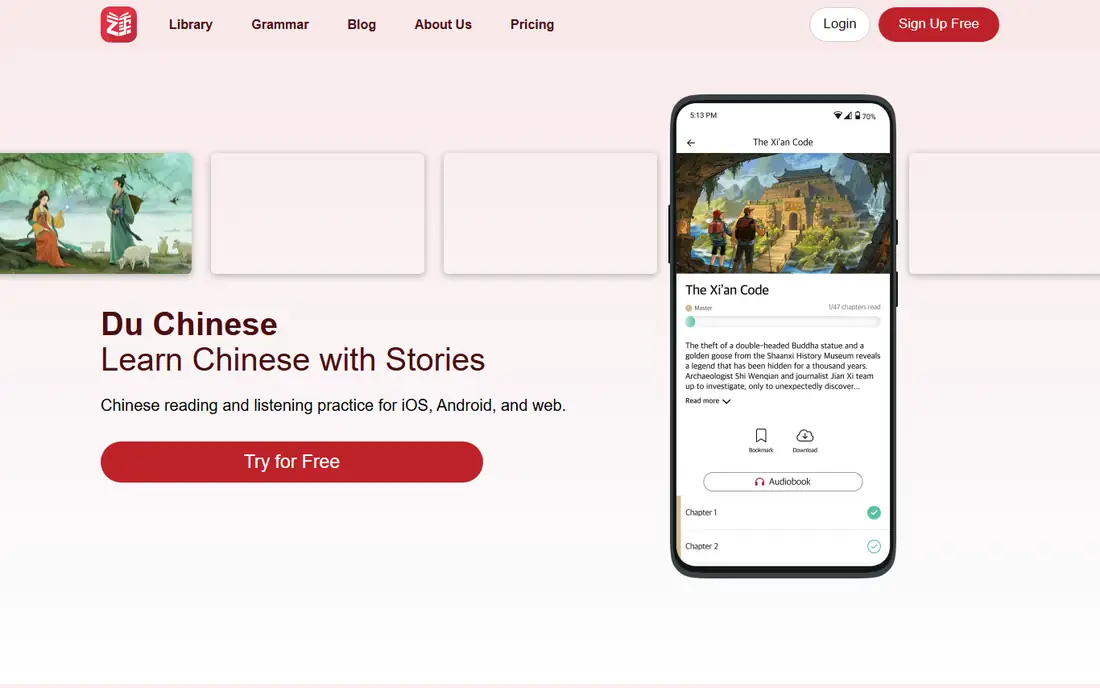
Du Chinese offers graded reading material that matches a learner's level, from beginner stories to advanced texts aligned with HSK levels. A user can tap any character for a definition and audio, listen to the full text, and track new words, which turns reading from a struggle into a study method. That graded approach matters, since native texts are too hard for most learners for a long time.
The limit is that Du Chinese is a reading tool, not a complete course. It does not teach grammar from scratch, drill tones systematically, or provide live speaking practice. The free tier offers limited content, with the full library behind a subscription. Pair Du Chinese with a course app for grammar and with Pleco for dictionary depth, and reading progress will move much faster.
What we like- Graded readers by HSK level
- Tap any character for definition and audio
- Reading and listening in one app
Watch out for- Reading only, no full course
- Subscription needed for full library
Starting priceSee website
Free planFree trial
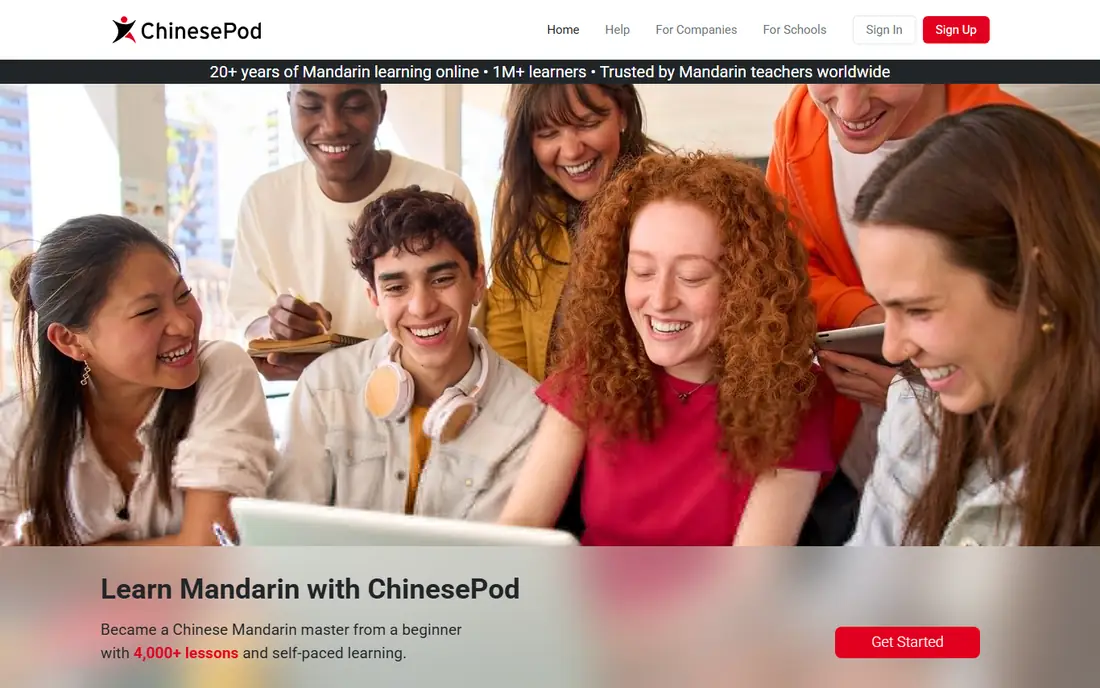
ChinesePod teaches Mandarin through dialogues and podcast style lessons, with levels from newbie to advanced and topics drawn from everyday life, work, and travel. Each lesson includes audio, transcripts, vocabulary lists, and review exercises, which helps a learner move from slow textbook speech to natural speed conversation. For listening, it is one of the most practical tools on this list.
The catch is that ChinesePod is audio first, so character writing and structured grammar progression receive less focus than in HelloChinese or LingoDeer. New users may also feel lost in the large lesson library until they pick a level and follow a series. ChinesePod fits best as a listening companion to a course app, especially for learners who want to understand real dialogues rather than only lesson sentences.
What we like- Dialogue based lessons at many levels
- Transcripts, vocabulary, and review tools
- Practical everyday topics
Watch out for- Less character writing focus
- Lesson library can feel large and hard to navigate at first
Starting priceSee website
Free planYes
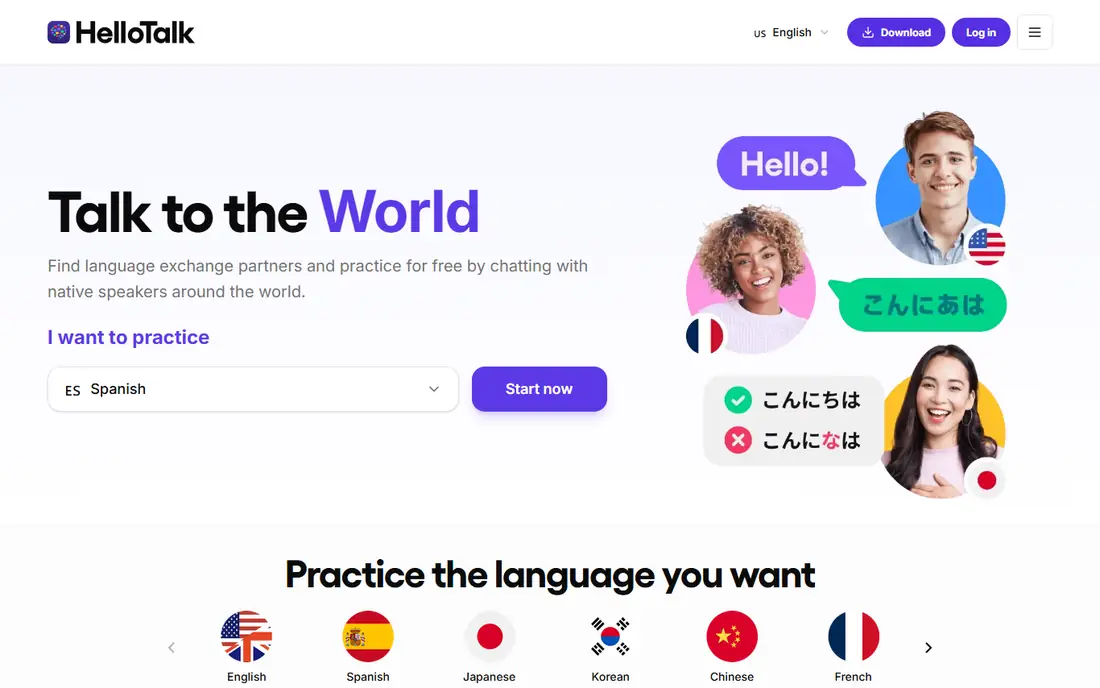
HelloTalk connects language learners with native speakers for text, voice, and video exchange, with built in correction, translation, and pronunciation tools. A Mandarin learner can practice real sentences, ask about tones and usage, and hear natural speech from different speakers. That real interaction is something no automated course can fully replace, especially for tone feedback and natural phrasing.
The limits are partner quality and time. Some partners are reliable and helpful, while others are casual or inconsistent, so finding two or three good partners takes patience. Free features cover basic chat, while some advanced features need a paid plan. HelloTalk is best once a learner has basic sentences ready, and it works well alongside a course app that supplies grammar and vocabulary to use in conversation.
What we like- Chat, voice, and video with native speakers
- Correction tools and translation help
- Large language community
Watch out for- Quality of partners varies
- Free plan limits some features
- Safety and time management need care
#9Pimsleur
Best for: Audio speaking drills4.3/5 on
G2 (2 reviews, checked Oct 2026)
Visit pimsleur.com
Starting priceSee website
Free planFree trial

Pimsleur teaches through audio lessons that prompt a learner to recall and speak phrases, with spaced repetition built into the sequence. That method builds listening and speaking reflexes, and it works well for commuters or walkers who cannot look at a screen. A beginner can start speaking simple Mandarin sentences from the first lessons, with tone awareness built into the drills.
The clear limit is reading. Pimsleur does not teach characters or reading in depth, so a learner who only uses Pimsleur will not learn to read Chinese. The subscription price is also high for an audio only tool, though it covers many languages on one plan. Use Pimsleur as an audio companion to a course and character app, not as a sole Mandarin method.
What we like- Audio lessons that build speaking reflexes
- Strong for commuters
- Gradual recall based method
Watch out for- No character reading or writing focus
- Subscription price is high for audio only learning
How we chose
We reviewed vendor pricing pages, product documentation, and public reviews on G2, Capterra, and Reddit, and we grouped apps by skill, such as structured courses, dictionary use, character writing, reading, listening, and speaking. We favored apps that exist today, serve US learners, and offer a free plan or trial, so a reader can test tone, character, and lesson style before paying. We did not claim hands on lab results, and prices are shown as See website where the vendor uses app store or regional pricing.
Building a weekly routine that covers tones, characters, and speaking
A simple routine might include fifteen minutes of course lessons, ten minutes of character or vocabulary review, ten minutes of reading or listening, and a short speaking session twice a week. That mix covers the three core skills without requiring hours each day. Keep the total time realistic, since a routine that fits a busy week will beat an ambitious plan that stops after two weeks.
Test tones early with a partner or tutor
Automated speech recognition helps, but it can accept tones that a native speaker would find unclear. Once basic sentences are ready, a short session with a HelloTalk partner or a tutor can reveal tone errors that an app missed. Record a few sentences, compare them with native audio, and focus on the tones that cause confusion, rather than trying to perfect every word at once.
Move from pinyin to characters at your own pace
Pinyin helps pronunciation at the start, but reading Chinese requires characters. A practical path is to learn pinyin and tones first, add high frequency characters with Skritter or Pleco flashcards, and start graded reading with Du Chinese once a few hundred characters are familiar. That staged path avoids the frustration of facing native text too early, while still building reading skill steadily.
Frequently asked questions
Which app is best for a complete beginner?
HelloChinese is the best structured beginner app, since it covers pinyin, tones, grammar, vocabulary, and writing in order. Duolingo is a good free habit builder for the first weeks, but HelloChinese offers deeper Mandarin specific instruction. Pair either with Pleco for dictionary lookup.
Can I learn Chinese with only an app?
Apps can carry a learner through beginner and intermediate levels for reading, vocabulary, and listening, but speaking and tone accuracy improve faster with real conversation. Most successful learners pair an app with speaking practice, graded reading, and, when possible, tutor feedback for tones.
Is Duolingo good for Chinese?
Duolingo is good for building a daily habit and learning basic vocabulary and pinyin, but it is thin on tone drilling and character writing. It works well as a starter or a second app, while HelloChinese, Skritter, and Pleco cover the deeper Mandarin skills.
Which app is best for learning Chinese characters?
Skritter is the best app for writing characters, with stroke feedback and spaced repetition. Pleco is the best dictionary and flashcard companion for character lookup and review. Together, they cover both writing practice and daily lookup.
How long does it take to hold a basic conversation?
Many learners can hold simple conversations after several months of consistent daily study, though progress varies by time, method, and speaking practice. Regular speaking with a partner or tutor speeds this up more than extra vocabulary study alone.
Should I learn simplified or traditional characters?
Most learners in the US start with simplified characters, which are used in mainland China and in most beginner courses. Traditional characters are used in Taiwan, Hong Kong, and some overseas communities. Choose based on where you plan to use Mandarin, and check that your app supports that character set.
Sources we checked (9)
- https://www.hellochinese.cc
- https://www.duolingo.com
- https://pleco.com
- https://www.lingodeer.com
- https://skritter.com
- https://www.duchinese.net
- https://chinesepod.com
- https://www.hellotalk.com
- https://www.pimsleur.com
Is your product missing or out of date?
We review this list regularly. Vendors can request a listing, send updated pricing or ask about featured placement.

Shihab Mia · Founder, Rankite
Shihab has 5+ years in B2B and SaaS SEO. He writes Rankite's software buying guides from pricing pages, documentation and public user reviews. More about Shihab.