How we make this list: we compare pricing pages, product documentation and public user reviews. Rankite is independent; if a vendor ever pays for a featured spot, that listing is clearly labeled Partner.
Key takeaways
- Coursera Plus ($59/month or $399/year) is the best all-rounder for career certificates from Google, IBM and top universities.
- Udemy wins for single courses: pay $19.99 to $199.99 once, keep the course forever, no subscription.
- Khan Academy (free) and edX (free audit) are the best zero-cost options for genuine learning.
- Skillshare ($13.99/month annual) suits creative skills; Udacity ($249/month) suits committed tech career-changers who want human project reviews.
Quick comparison
| Tool | Best for | Starting price | Free plan |
|---|
 Coursera Coursera | Employer-recognized certificates and university-backed courses | $59/month ($399/year Coursera Plus) | Free audit (no certificate) |
 Udemy Udemy | Owning individual courses outright with no subscription | $19.99-$199.99 per course (frequent sales) | Free courses available |
 Skillshare Skillshare | Creative skills taught through hands-on projects | $13.99/month ($167.88/year annual) | Free trial |
 LinkedIn Learning LinkedIn Learning | Workplace skills that show on your LinkedIn profile | $39.99/month (via LinkedIn Premium) | Free trial (LinkedIn Premium trial) |
 MasterClass MasterClass | Inspiration and craft insight from world-famous instructors | $10/month (billed annually) | No (30-day money-back guarantee) |
 edX edX | University courses you can audit free | Free audit (paid verified certificates) | Yes (audit track) |
 Udacity Udacity | Tech career-changers who need human feedback | $249/month | No |
 Pluralsight Pluralsight | Technology teams measuring and building skills | See website | Free trial |
 Khan Academy Khan Academy | Free foundational learning, K-12 through early college | Free | Yes (everything free) |
Is your product missing or out of date?
We review this list regularly. Vendors can request a listing, send updated pricing or ask about featured placement.
The myth is that the platform decides whether you learn. It does not. Completion rates for online courses are famously low across every platform, which means the real choice is narrower than the marketing suggests: pick the platform whose format matches your goal (a certificate, a skill, or inspiration), because the best platform is the one you will actually finish. These nine are the serious options, from free to $249 a month, with what each one is genuinely for.
#1
Coursera
Best for: Employer-recognized certificates and university-backed courses
Visit coursera.org
Starting price$59/month ($399/year Coursera Plus)
Free planFree audit (no certificate)
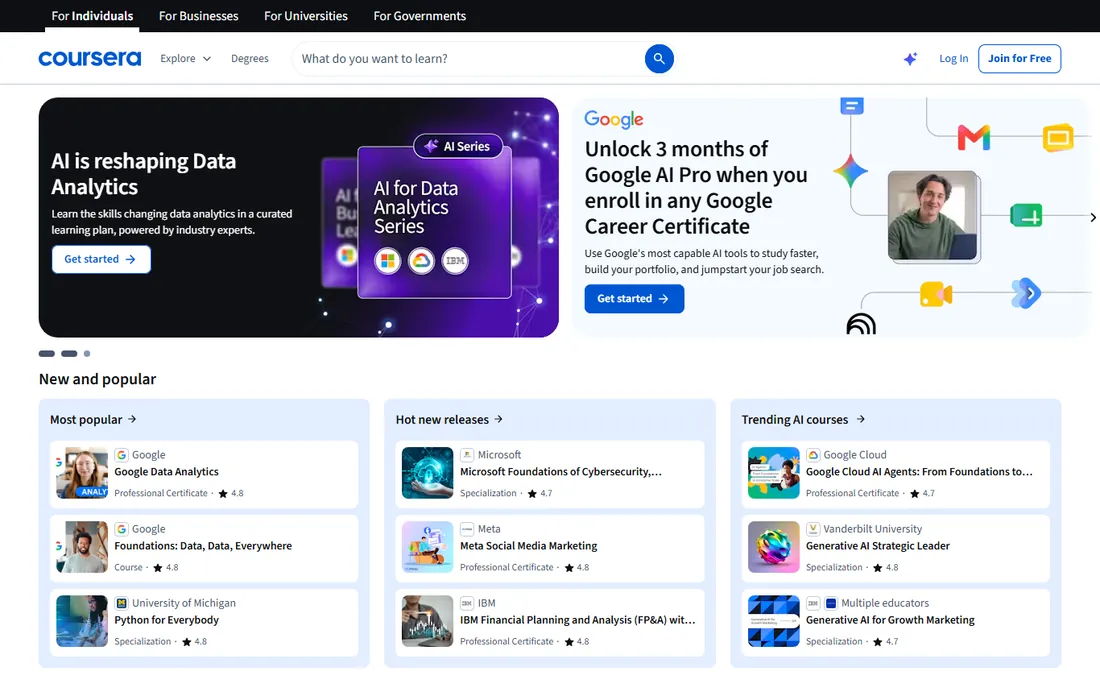
Coursera is the closest online learning gets to a university registrar. The Google, IBM and Meta Professional Certificates appear in actual job postings as accepted qualifications, which no other platform here can claim at this scale. Coursera Plus at $59 per month or $399 per year covers thousands of courses and most certificates under one subscription, and the math favors it if you will complete two or more programs in a year.
The fine print matters. Degrees, MasterTrack certificates and some premium programs sit outside Plus. Feedback is auto-graded and peer-graded; nobody reads your work personally. And the monthly meter means a six-month certificate costs $354 at monthly rates, so slow learners should do the annual math. For career credentials on a budget, Coursera is the default.
What we like- Professional certificates from Google, IBM and Meta that employers recognize
- 10,000+ courses from 300+ universities and companies
- Free auditing for most courses
Watch out for- Plus excludes degrees and some premium programs
- Auto-graded feedback rather than human review
- Monthly billing penalizes slow learners
#2
Udemy
Best for: Owning individual courses outright with no subscription
Visit udemy.com
Starting price$19.99-$199.99 per course (frequent sales)
Free planFree courses available
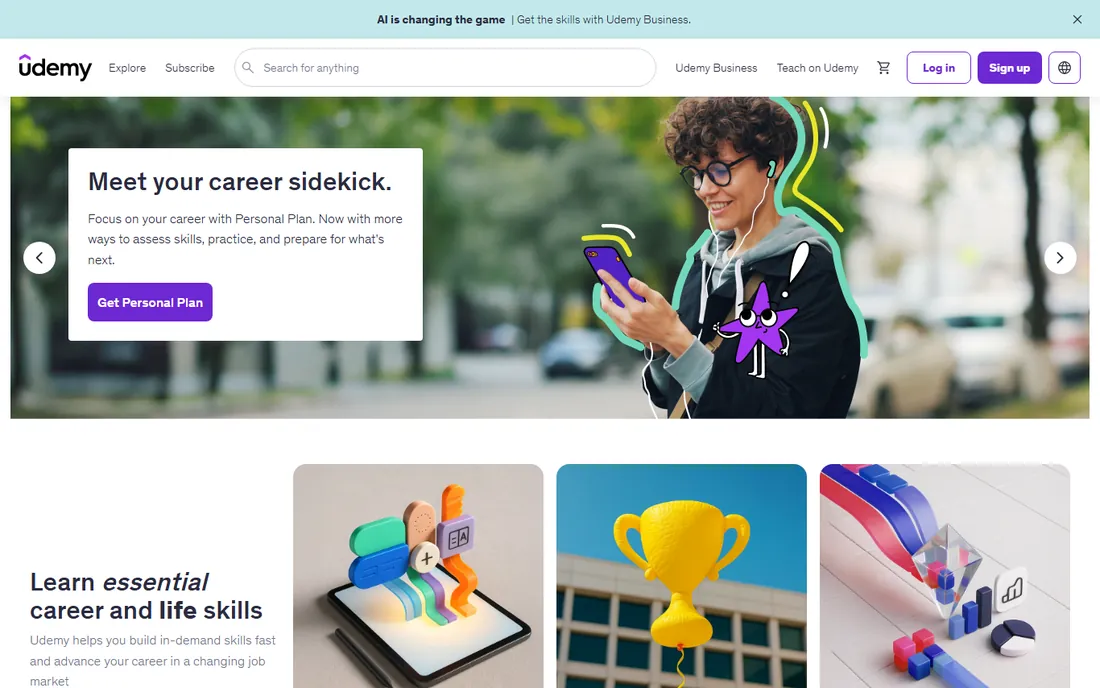
Udemy's model is the anti-subscription: pay per course, own it forever. During the perpetual sales, most courses cost $19.99 or less, which makes it the cheapest way to learn a specific skill like Excel pivot tables or watercolor basics. The catalog's breadth is unmatched precisely because publishing is open: obscure topics that would never justify a Coursera production exist here.
Open publishing is also the weakness. Course quality ranges from excellent to embarrassing, so check ratings, review counts, preview videos and instructor credentials before buying. Certificates of completion carry no accreditation weight. Udemy is a skill-vending machine, not a school; use it to learn things, not to prove things.
What we like- Buy once, keep forever with lifetime access
- Enormous catalog covering niche topics other platforms ignore
- 30-day refund window on eligible courses
Watch out for- Quality varies wildly since anyone can publish
- No accredited certificates
- The fake "discount" pricing theater never ends
Starting price$13.99/month ($167.88/year annual)
Free planFree trial
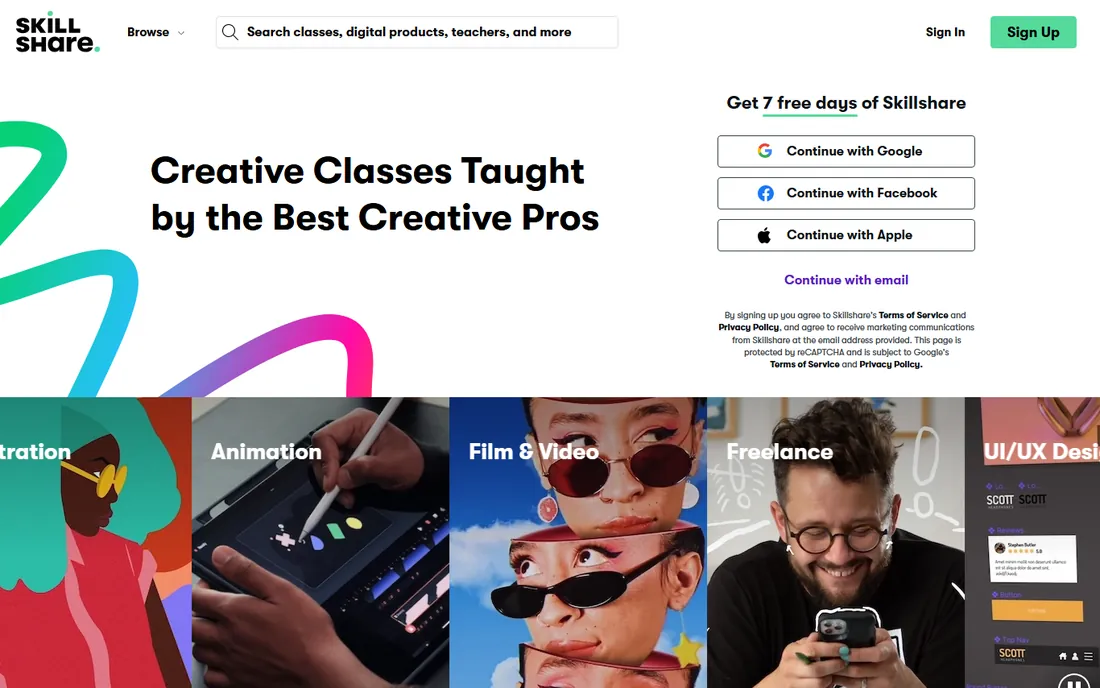
Skillshare is where working creatives teach practical skills in short, project-based classes. The format (watch, then make) suits design, illustration, photography and freelancing topics better than lecture-style platforms. At $13.99 per month on the $167.88 annual plan, it is among the cheapest subscriptions here for unlimited learning.
It is not a credential platform: no certificates employers care about, no accreditation. Depth varies by teacher, and the $32 monthly option exists mainly to make annual look good. Take Skillshare when the goal is doing creative work better, not when the goal is a line on a resume.
What we like- 30,000+ project-based classes in design, illustration, photo, video and business
- Short classes built around making something
- Affordable annual effective rate
Watch out for- No accredited certificates or transcripts
- Class depth varies
- The monthly plan ($32/month) is poor value versus annual
#4
LinkedIn Learning
Best for: Workplace skills that show on your LinkedIn profile
Visit linkedin.com
Starting price$39.99/month (via LinkedIn Premium)
Free planFree trial (LinkedIn Premium trial)
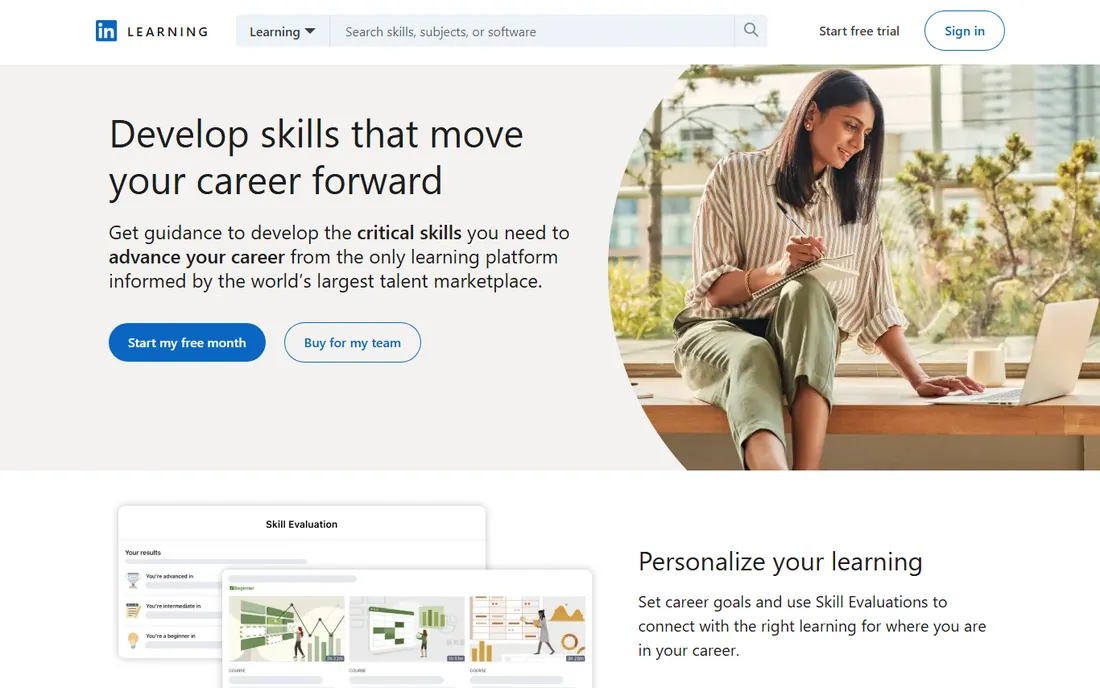
LinkedIn Learning's distribution is its superpower: completed courses appear on your LinkedIn profile, visible to recruiters searching for those skills. The courses are short and workplace-practical (Excel, management, software tools), designed for lunch-break learning. Many users get it free through employers, universities or public libraries, which changes the value equation entirely.
Note the 2026 reality: LinkedIn no longer sells a standalone Learning subscription; access comes through LinkedIn Premium at $39.99 per month. That is expensive if learning is all you want, reasonable if you also use Premium's job-seeker features. Check your library and employer first; free access is common.
What we like- Short, practical business and software courses
- Completed courses display on your LinkedIn profile where recruiters look
- Often free through employers and libraries
Watch out for- No standalone subscription anymore
- Course depth is introductory
- The $39.99 bundles much more than learning
#5
MasterClass
Best for: Inspiration and craft insight from world-famous instructors
Visit masterclass.com
Starting price$10/month (billed annually)
Free planNo (30-day money-back guarantee)
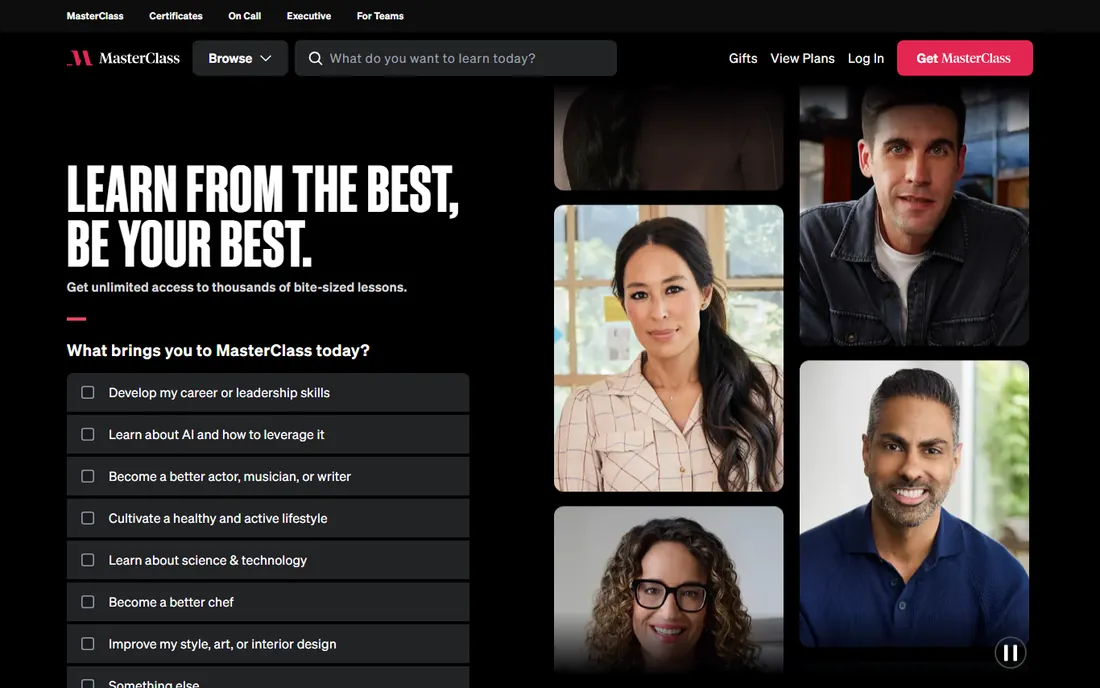
MasterClass sells access to greatness, and the production values deliver it. Watching a master think through their craft is genuinely valuable for creative motivation and high-level insight. At $10 per month billed annually ($120 per year), it is cheaper than most subscriptions here.
Do not confuse it with training. Classes inspire more than they instruct; you will not learn to cook like Ramsay from videos alone, and there are no certificates, projects or feedback. It is the platform you buy for someone who loves learning as entertainment, or for yourself when motivation matters more than curriculum.
What we like- Celebrity instructors (Gordon Ramsay, Annie Leibovitz, Aaron Sorkin) at cinematic production quality
- Genuinely insightful on creative process
- Affordable annual entry price
Watch out for- Inspiration over instruction: light on structured skill-building
- No certificates or credentials
- No free trial
#6
edX
Best for: University courses you can audit free
Visit edx.org
Starting priceFree audit (paid verified certificates)
Free planYes (audit track)
edX is the non-profit-rooted platform for serious academic content: actual university courses from institutions like Harvard and MIT. The audit track is genuinely free and includes lectures and readings, making it one of the best zero-cost learning options anywhere. When you need proof, verified certificates are available per course.
The audit limits are real: no graded work, no certificate, which removes both accountability and credential. The experience is academic rather than hand-holding; self-direction is assumed. For learners who want university-grade content without university prices, edX and Khan Academy are the free champions.
What we like- Real courses from Harvard, MIT and other top universities
- Free auditing includes most content
- Verified certificates available when you need proof
Watch out for- Audit excludes graded assignments and certificates
- Paid certificates cost per course
- Platform feels academic rather than guided
Starting price$249/month
Free planNo
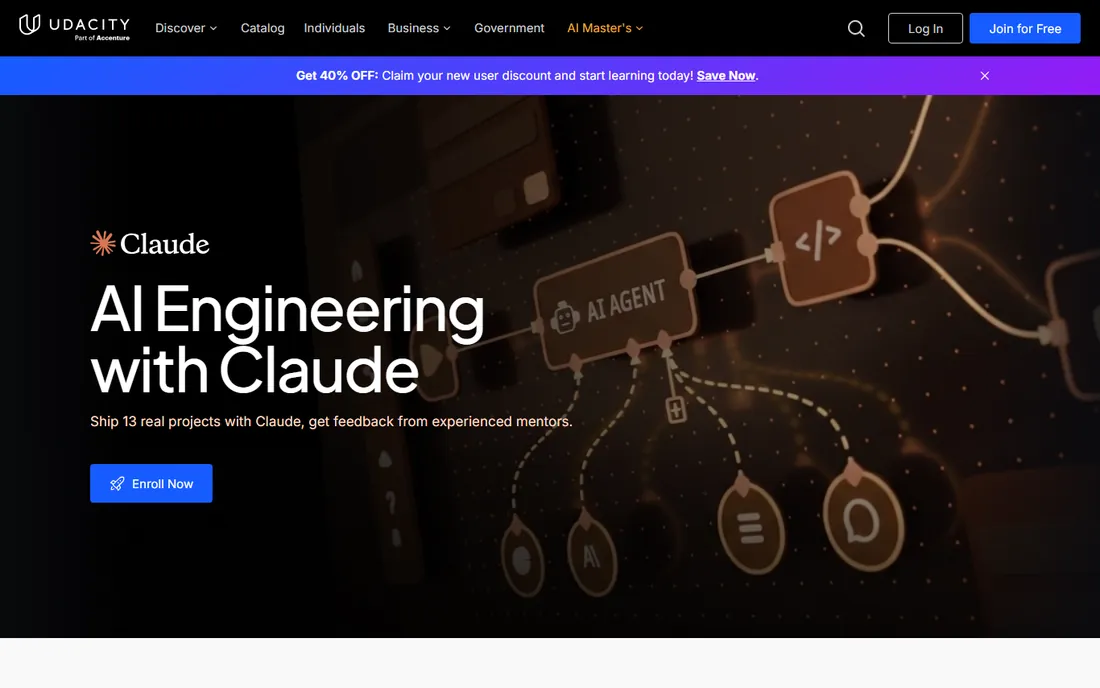
Udacity's entire pitch is one feature: a real expert reviews your projects. That human feedback loop is what separates it from every auto-graded platform here, and for career-changers building a portfolio, it matters enormously. Nanodegrees in data science, AI and programming are structured as job preparation, with career services attached.
At $249 per month (with discounted multi-month bundles), it costs roughly four times Coursera Plus. The catalog is narrow, focused on tech. This only makes sense as an intensive, time-boxed investment: enroll, work full tilt, finish in months, get the job. As casual learning it is indefensible; as a career accelerator with a deadline, the reviews justify the premium.
What we like- Nanodegrees with structured projects reviewed by industry experts
- Career coaching included
- Focused tech curriculum (data, AI, programming)
Watch out for- By far the most expensive subscription here
- Narrow catalog versus Coursera
- The price demands full-time commitment to justify
Starting priceSee website
Free planFree trial
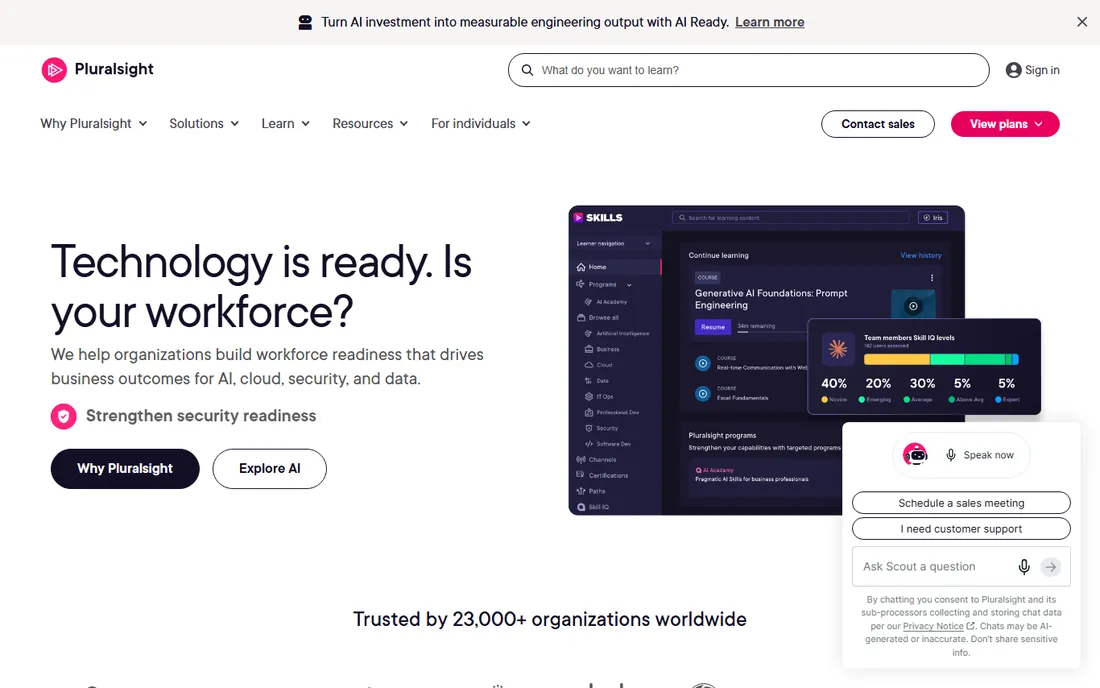
Pluralsight is built for technology organizations rather than individual hobbyists. Skill IQ assessments measure what engineers actually know, learning paths close the gaps, and managers get analytics on team progress. The technology catalog is deep, with labs and projects beyond video lectures.
Individual learners get less of the magic: the assessments and analytics shine in team deployments. Pricing has shifted over the years, so check the current plans page. If you are an engineering manager upskilling a team, Pluralsight belongs on the shortlist; if you are learning Python solo, cheaper options serve as well.
What we like- Skill assessments benchmark your team's actual ability
- Deep technology catalog with hands-on labs
- Analytics for managers tracking team progress
Watch out for- Individual pricing is less compelling than team value
- Content skews heavily technical
- Verify current plans on the site
Starting priceFree
Free planYes (everything free)
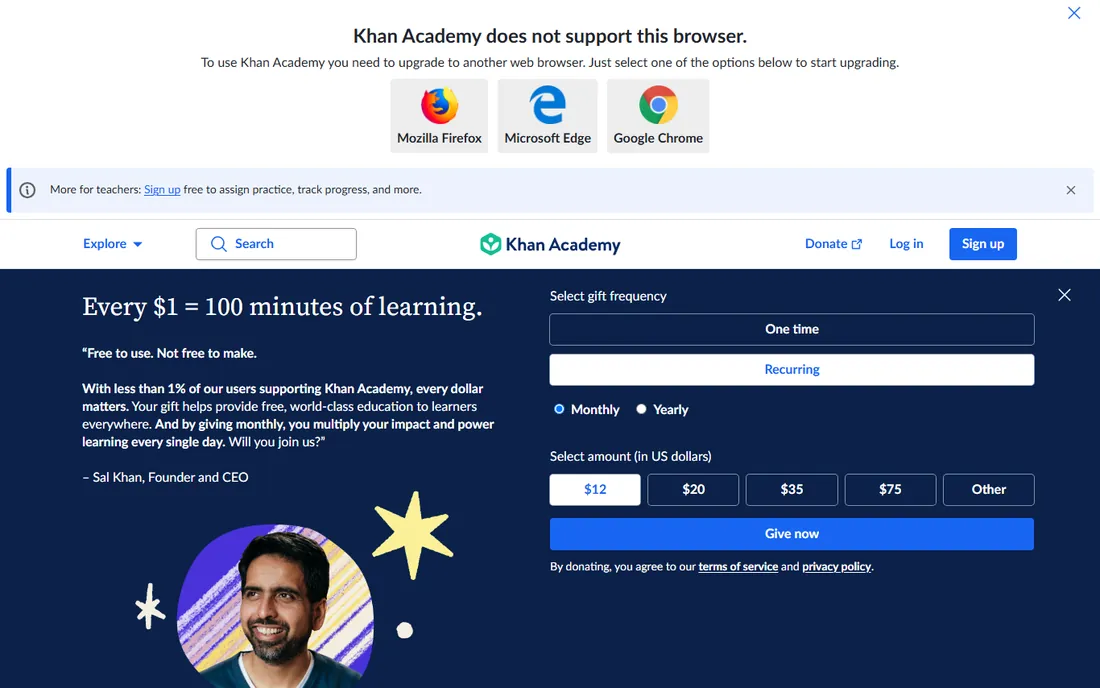
Khan Academy is the non-profit that proves free can be excellent. Every course costs nothing, forever, with no account walls on content. The math and science sequences are genuinely superb, and SAT and other test prep is free where competitors charge hundreds. Schools and parents rely on it worldwide.
The scope is the limit: K-12, test prep and foundational college topics, with little for professional skills, creative work or advanced careers. There are no certificates. For its mission, though, it is unmatched, and every learner should know it exists before paying for basics anywhere else.
What we like- Completely free with no tiers, trials or upsells
- Excellent math, science and test-prep content
- Trusted by schools worldwide
Watch out for- Limited professional and creative topics
- No certificates
- Aimed at students rather than working professionals
How we chose
We started with the platforms learners actually choose between: the credential giants, the course marketplaces, the creative subscriptions, the tech career schools and the free champions. For each candidate we checked the vendor's own pricing page for current 2026 prices, compared catalog breadth and depth, credential value, learning format (video, projects, human review), and free-tier honesty. We weighted outcomes (finished courses, earned credentials, demonstrated skills) over marketing claims, and favored platforms with clear pricing over those hiding it.
Frequently asked questions
Which online learning platform is best for getting a job?
Coursera, for its Google, IBM and Meta Professional Certificates that employers recognize, or Udacity, for nanodegrees with human-reviewed projects in tech. Certificates help most in fields with clear credential expectations (IT, data, project management); in creative fields, portfolios outweigh certificates from any platform.
Are free platforms like Khan Academy actually good?
Yes, within their scope. Khan Academy's math and science content rivals paid courses, and edX's free audit track delivers real university lectures. Free platforms lack certificates, graded feedback and career services, but for pure learning they are excellent. Pay when you need proof, feedback or structure.
Is Coursera Plus worth it?
If you will complete two or more courses or a Professional Certificate within a year, yes: at $399 annually it undercuts per-course pricing quickly. If you want a single course, buy it individually or audit free. The 7-day free trial and seasonal discounts (often 25 to 40 percent off annual) improve the math further.
Udemy vs Coursera: which should I choose?
Choose Udemy when you want to learn one specific skill cheaply and keep the course forever. Choose Coursera when you want recognized certificates or structured multi-course programs. They solve different problems; many learners use both.
Do employers care about online course certificates?
Some do, some do not. Professional Certificates from Google, IBM and Meta on Coursera carry real weight in job postings. University-backed certificates help in traditional industries. In creative and technical fields, what you built (portfolio, GitHub) usually matters more than where you studied. No certificate compensates for unfinished courses.
Why do so few people finish online courses?
Because starting is easy and continuing is hard: no schedule, no cohort, no consequences. Platforms with structure (Udacity's deadlines, Coursera's peer cohorts) finish better than pure libraries. The fix is personal, not platform: schedule sessions, join a study group, or pay for the version with accountability. The best platform is the one whose format you will actually complete.
The completion problem: why most online courses go unfinished
Every platform here shares an embarrassing statistic: single-digit to low-double-digit completion rates are the industry norm. The cause is structural, not motivational. On-demand video removes every forcing function that makes classrooms work: no schedule, no peers noticing your absence, no sunk cost beyond a subscription you forgot about. Platforms know this, which is why the expensive ones (Udacity, Coursera's cohort features) add deadlines, reviews and cohorts.
Choose your platform against this reality, not the catalog. If you finish things solo, the cheapest library works. If you do not, buy structure: programs with human review, deadlines and cohorts. Before subscribing anywhere, answer one question honestly: what will make me open this next Tuesday? The platform with the best answer to that question is your platform, regardless of price or prestige.
Three goals, three platform types. Goal one is proof: you need a credential for a job application, promotion or visa. Buy Coursera (recognized professional certificates) or Udacity (reviewed nanodegree projects); audit-tracks and MasterClass cannot help you here. Goal two is skill: you need to do something better at work or in a hobby. Buy Udemy for specific skills, Skillshare for creative practice, Pluralsight for team tech skills, or learn free on Khan Academy and edX.
Goal three is inspiration: you want to think differently or enjoy learning. MasterClass dominates this category by design. Mismatching goal and platform is the most common waste in online learning: buying MasterClass for a promotion, or grinding Coursera certificates for a watercolor hobby. Name the goal first, in one sentence. The platform choice usually becomes obvious.
Sources we checked (9)
- https://www.coursera.org
- https://www.udemy.com
- https://www.skillshare.com/en/pricing
- https://www.linkedin.com/learning
- https://www.masterclass.com
- https://www.edx.org
- https://www.udacity.com
- https://www.pluralsight.com
- https://www.khanacademy.org
Is your product missing or out of date?
We review this list regularly. Vendors can request a listing, send updated pricing or ask about featured placement.

Shihab Mia · Founder, Rankite
Shihab has spent more than a decade helping SaaS and e-commerce brands grow through search. He writes Rankite's software buying guides from pricing pages, documentation and public user reviews. More about Shihab.