How we make this list: we compare pricing pages, product documentation and public user reviews. Rankite is independent; if a vendor ever pays for a featured spot, that listing is clearly labeled Partner.
Key takeaways
- Duolingo remains the best free starting point, with paid Super plans that mainly remove ads and add offline access.
- Babbel and Pimsleur suit different brains: Babbel builds reading and grammar, Pimsleur builds speaking confidence through audio repetition.
- italki and Preply win for speaking practice because you talk with a real tutor at prices you set lesson by lesson.
- Lingoda is the closest thing to a real language school online, with live certified-teacher classes on a CEFR-aligned curriculum.
- Mondly and Memrise stand out for listening to real native speakers, which helps more than textbook audio.
Quick comparison
| Tool | Best for | Starting price | Free plan |
|---|
 Duolingo Duolingo | casual learners who want a free daily habit | See website | Yes |
 Babbel Babbel | practical conversation skills with structure | See website | Free first lessons |
 Rosetta Stone Rosetta Stone | immersive learning with no English crutch | See website | No |
 Busuu Busuu | learners who want community feedback | See website | Yes |
 Pimsleur Pimsleur | audio-first learners who want to speak fast | See website | Free trial |
 italki italki | affordable 1-on-1 tutoring, pay per lesson | $5-$25/hour tutor-set prices | No |
 Memrise Memrise | understanding real native speech | See website | Yes |
 Lingoda Lingoda | live classes with certified teachers | See website | Free 7-day trial |
 Preply Preply | finding a tutor matched to your goals | See website | No |
 Mondly Mondly | quick daily lessons across 41 languages | See website | Yes |
Is your product missing or out of date?
We review this list regularly. Vendors can request a listing, send updated pricing or ask about featured placement.
The hard part of choosing the best language learning platform is not the price, it is the method. Some people learn by drilling grammar, others by talking, others by listening on repeat. The platforms below split along exactly those lines. An app that gamifies vocabulary will not teach you to hold a conversation, and an audio course will not teach you to read. Match the method to your goal first, then worry about the subscription.
Starting priceSee website
Free planYes
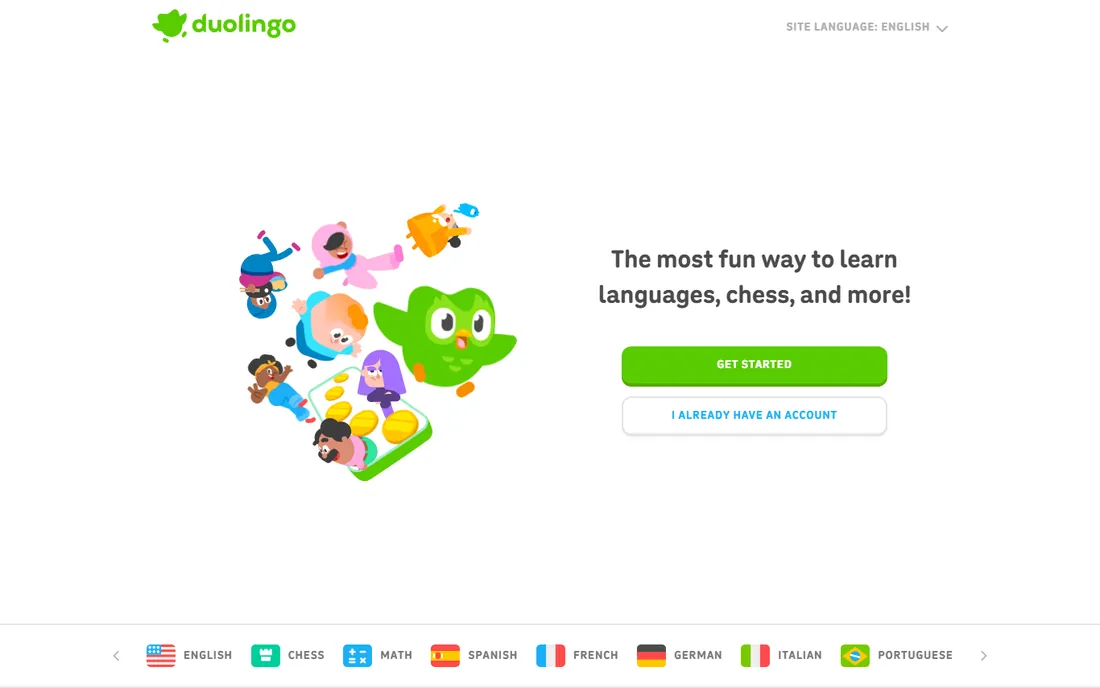
Duolingo is the default first answer for a reason: it is free, fun and genuinely effective at the beginner stage. Short lessons, streaks and the owl mascot turn language practice into a daily habit, and the free tier covers reading, writing, listening and speaking exercises. For someone starting Spanish or French from zero, nothing else offers this much for nothing.
The catch shows up past the beginner levels. The free tier interrupts with ads and limits mistakes through a hearts system, and the lessons rarely teach you to hold an unscripted conversation. Super Duolingo removes those frictions and adds offline lessons, but it does not change the teaching method. Use Duolingo to build the habit, then graduate to a platform with real speaking practice when you are ready.
What we like- Genuinely free core product
- Bite-sized lessons that build habits
- Wide course catalog
Watch out for- Ads and hearts limit the free tier
- Weak on real conversation practice
#2
Babbel
Best for: practical conversation skills with structure
Visit babbel.com
Starting priceSee website
Free planFree first lessons
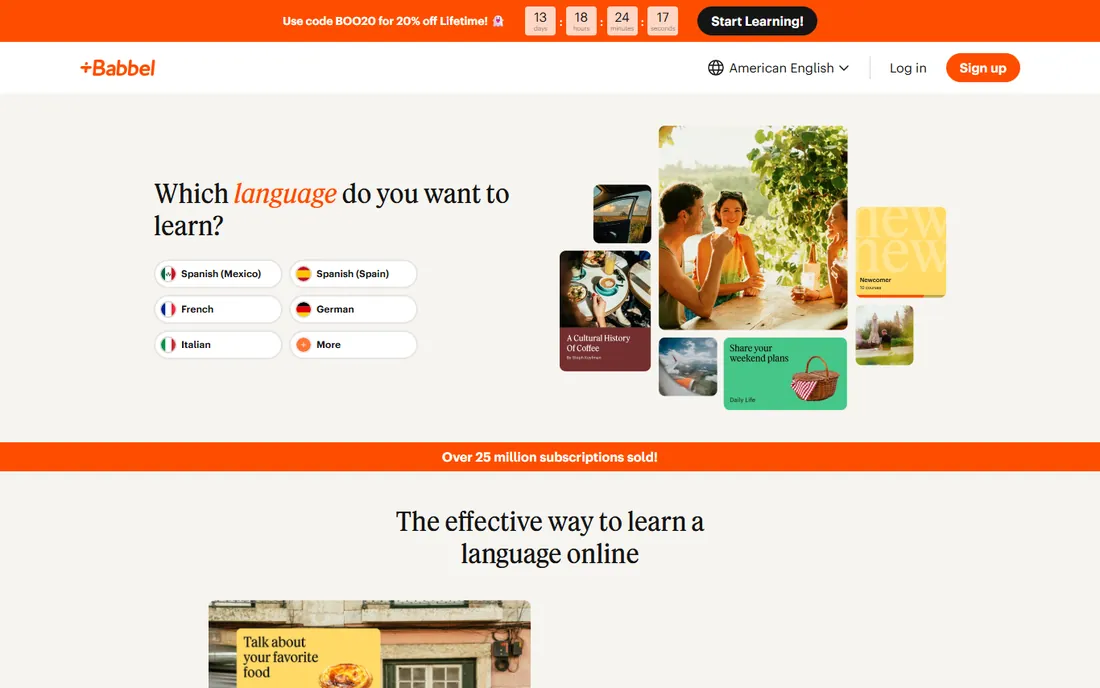
Babbel takes a more grown-up approach than the gamified apps. Courses are built by linguists around real-life conversations, with grammar explained in context rather than drilled in isolation. Lessons run 10 to 15 minutes, speech recognition checks your pronunciation, and you can try the first lesson of every course free before paying. The 14-language catalog covers the major European languages plus Turkish, Indonesian and others.
Fourteen languages is the honest limitation. If you want Japanese, Arabic or Korean, you are out of luck. Babbel also sits firmly in the self-study camp: there are live tutor classes as an add-on, but the core product is lessons on a screen. For European languages and structured self-study, it is one of the strongest options here.
What we like- Courses built by 200+ language experts
- 15-minute lessons fit busy schedules
- Speech recognition practice
Watch out for- 14 languages only
- Full value needs a paid subscription
Starting priceSee website
Free planNo
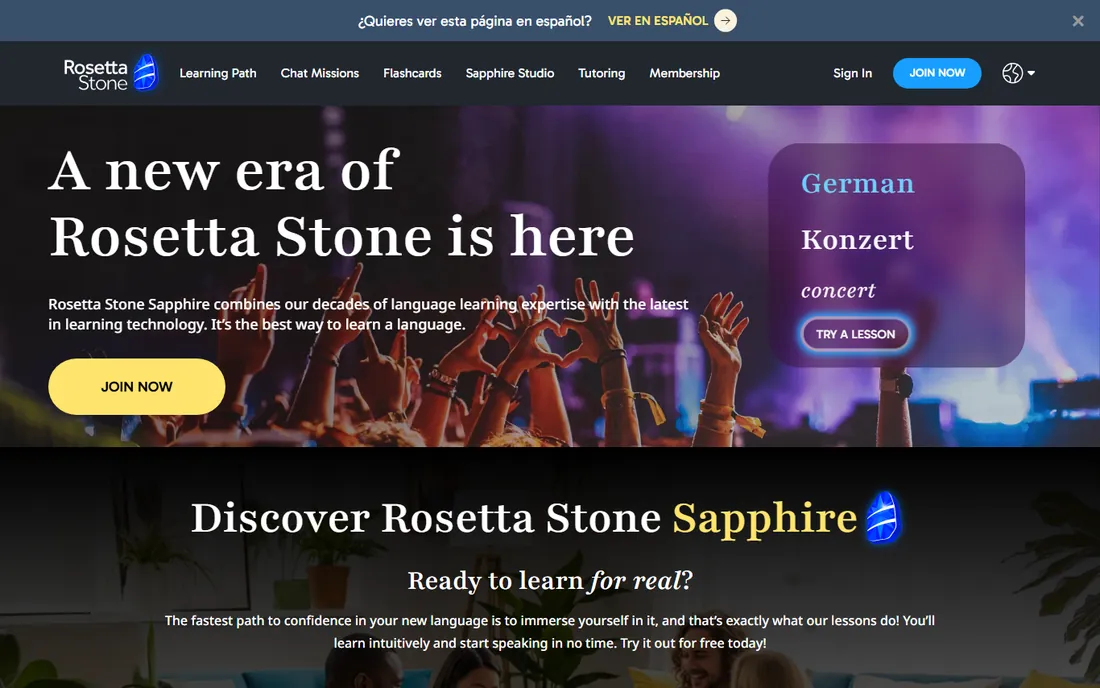
Rosetta Stone's pitch has not changed in decades: learn like a child, through images and repetition, with no translation to your native language. The new Sapphire experience updates the technology around that method. It suits learners who want to think in the new language rather than translate, and the curriculum is genuinely thorough across reading, listening and speaking. Schools and corporations buy it in bulk, which says something about its track record.
The immersion method is a double-edged sword. Beginners often find the first weeks confusing without any English explanations, and there is no free tier to test whether the style suits you. Rosetta Stone is a commitment: pay upfront, trust the method, and give it a month before judging. For patient learners who dislike translation-based apps, it remains a solid pick.
What we like- Full-immersion method from day one
- Decades of curriculum refinement
- Enterprise and school editions
Watch out for- No real free tier
- Immersion frustrates absolute beginners
Starting priceSee website
Free planYes
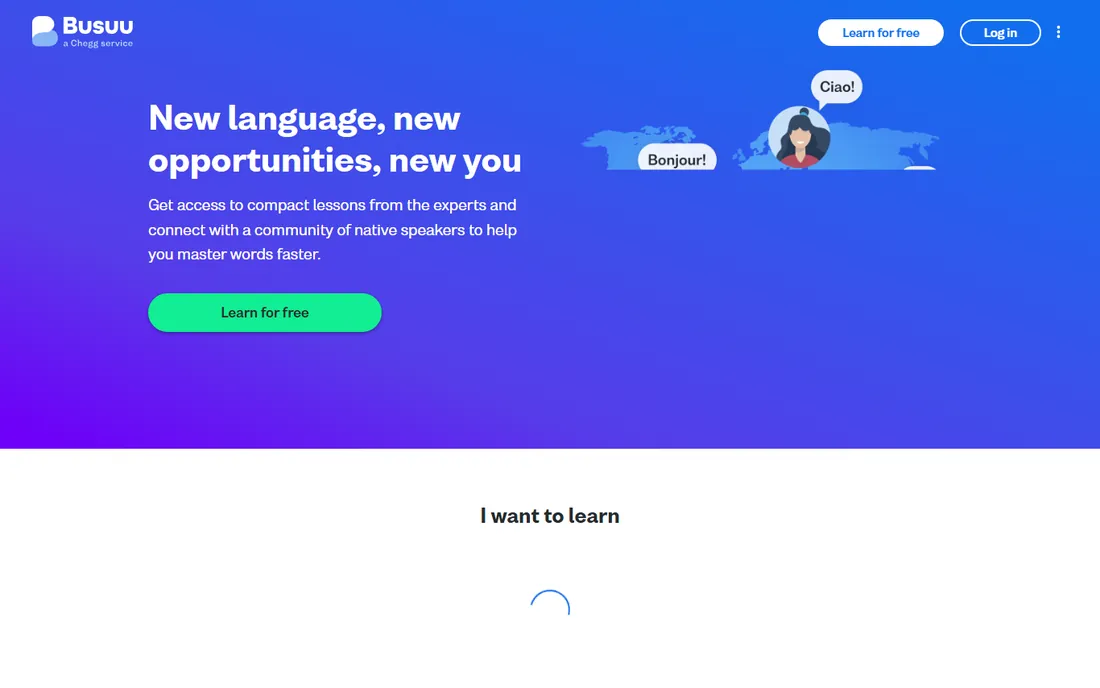
Busuu's standout feature is its community: you submit writing and speaking exercises and native speakers correct them, and you return the favor for learners of your language. That feedback loop gives you something no algorithm does, a real human telling you what sounds natural. Courses are structured with levels and checkpoint assessments, study plans keep you on schedule, and the free tier lets you start without paying.
Feedback quality depends on who is online. Corrections can be excellent or shallow, and the free tier gates the grammar tools and offline mode behind a subscription. Busuu also suits European languages best. But if you learn by doing and want human eyes on your mistakes, the community model is worth trying before you pay for anything.
What we like- Writing and speaking corrected by native speakers
- Structured courses with checkpoints
- Study plans
Watch out for- Community feedback quality varies
- Premium features locked behind subscription
Starting priceSee website
Free planFree trial
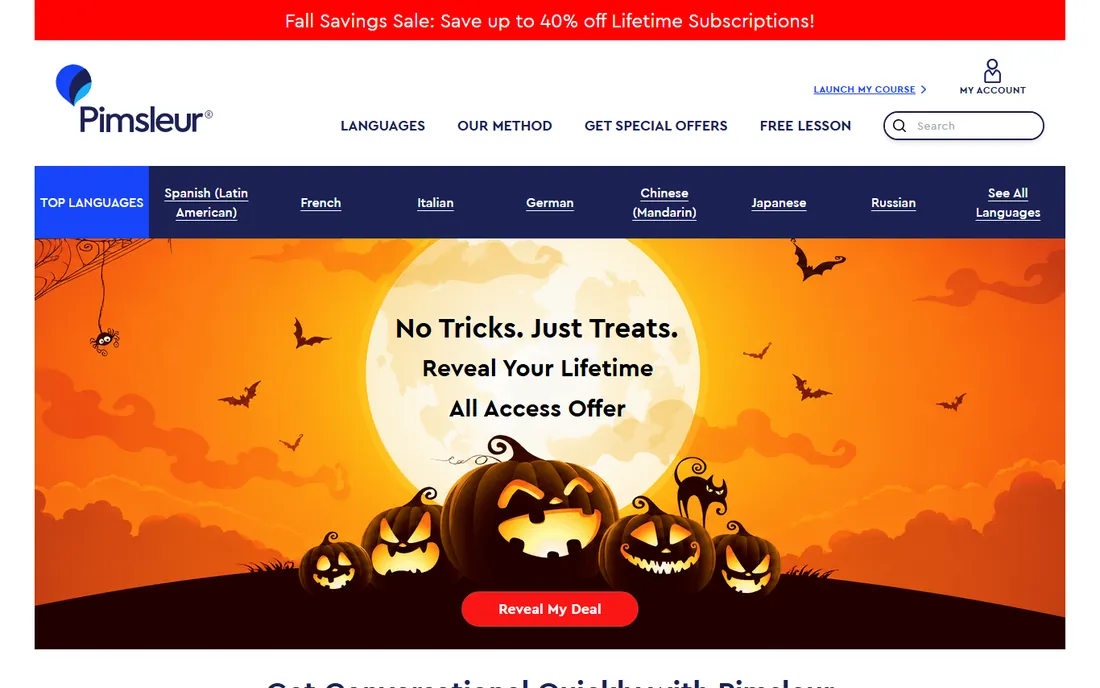
Pimsleur is built around one skill: speaking. The method uses spaced repetition and graduated recall to get you producing sentences from lesson one, and the app's hands-free driving mode turns commute time into study time. With 50+ languages, including less common ones, and All Access or single-language Premium subscriptions, it covers more ground than most competitors. Many learners report holding basic conversations within weeks.
The audio focus is also the weakness. Reading and writing exercises exist but feel secondary, and grammar explanations are thin. If your goal is travel conversation or phone calls, that tradeoff is fine. If you need to read contracts or write emails in the language, pair Pimsleur with a reading-focused tool. For pure speaking confidence, few platforms match it.
What we like- Speaking confidence from the first lesson
- Hands-free driving mode
- 50+ languages
Watch out for- Subscription pricing
- Reading and writing get less attention
Starting price$5-$25/hour tutor-set prices
Free planNo
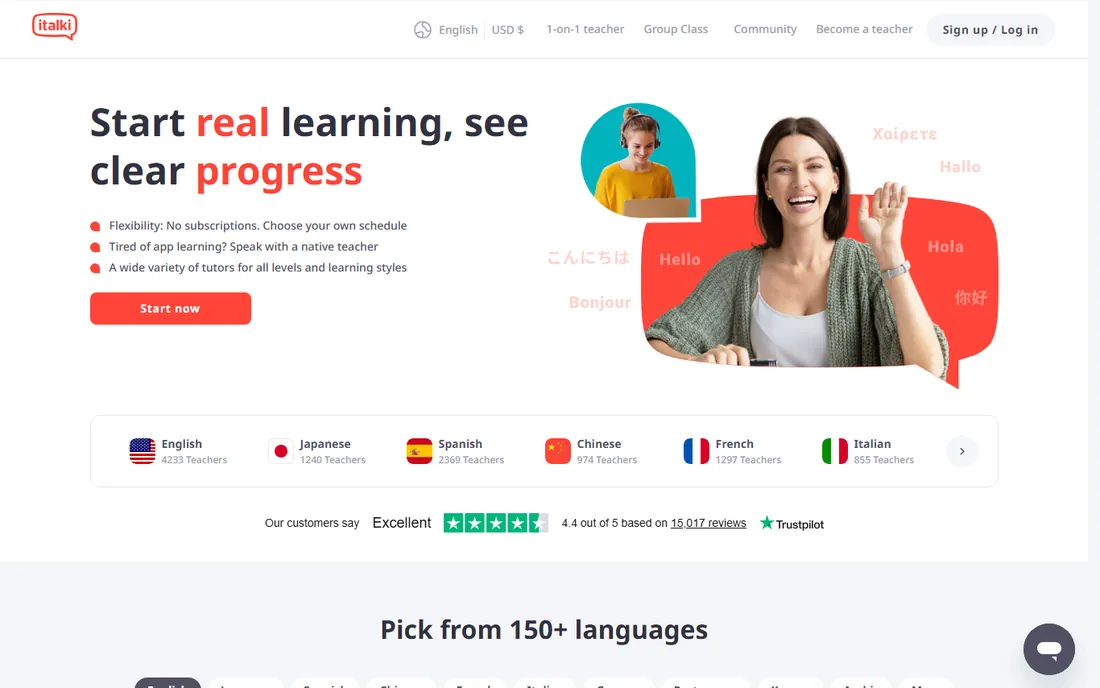
italki is a marketplace, not a course, and that is its strength. You browse thousands of professional teachers and community tutors, check reviews and prices, and book 1-on-1 lessons with no subscription. Prices listed on the site run from about $5 to $25 an hour, and community tutors (enthusiastic native speakers without formal credentials) cost less than professional teachers. You can take as many or as few lessons as you want.
Quality varies because anyone can apply to teach. Read reviews, take trial lessons, and do not settle for a tutor who does not correct you. Scheduling across time zones and finding a consistent slot takes some administration. But nothing builds speaking skill like regular conversation with a patient teacher, and italki makes that cheaper and more flexible than any language school.
What we like- Teachers set their own prices
- No subscription lock-in
- Community tutors are cheap
Watch out for- Teacher quality varies
- Scheduling across time zones takes effort
Starting priceSee website
Free planYes
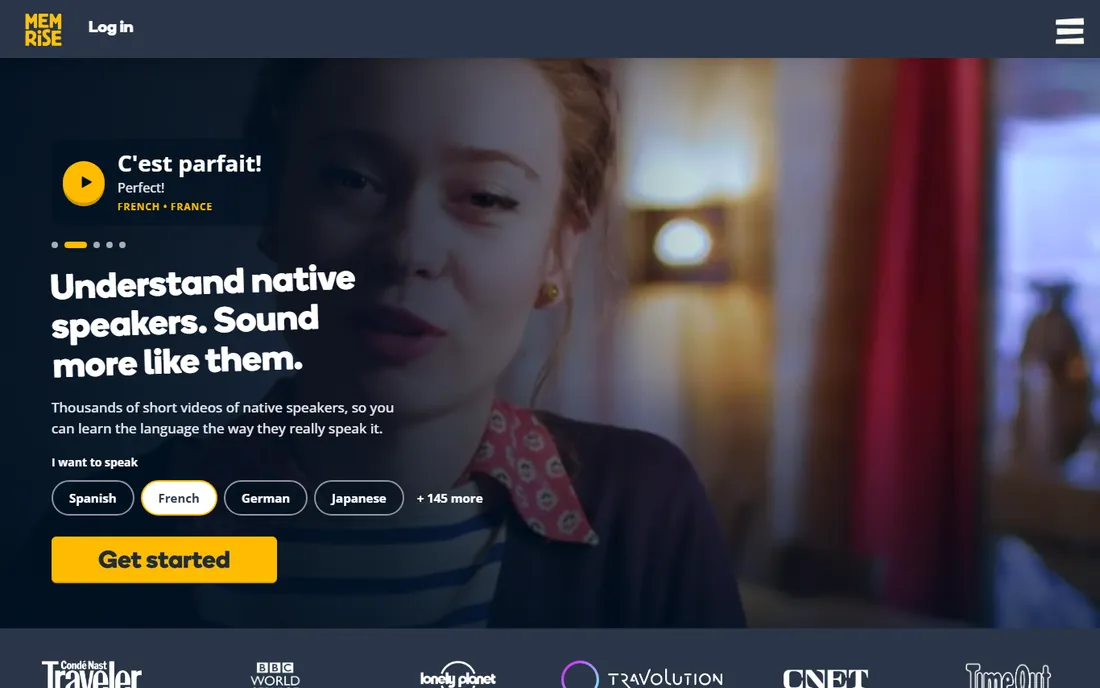
Memrise rebuilt itself around a simple insight: textbooks teach words, but people speak in rhythm, stress and slang. The platform pairs vocabulary with thousands of short videos of native speakers, so you hear how phrases actually sound in Madrid, Mexico City or Paris, then record yourself copying them. Smart review schedules repetition, and you can start learning free, with paid plans opening up extra features.
Structure is lighter than Babbel or Rosetta Stone. Memrise is excellent at making speech stick but thinner on grammar explanation and curriculum progression. It works best as a companion to a course or tutor: use it for the 15 minutes a day that trains your ear. If your listening comprehension lags behind your reading, Memrise is the fastest fix on this list.
What we like- Thousands of native-speaker videos
- Learn the rhythm and stress of real speech
- Free to start
Watch out for- Less structured than course-based apps
- Paid plan needed for full features
Starting priceSee website
Free planFree 7-day trial
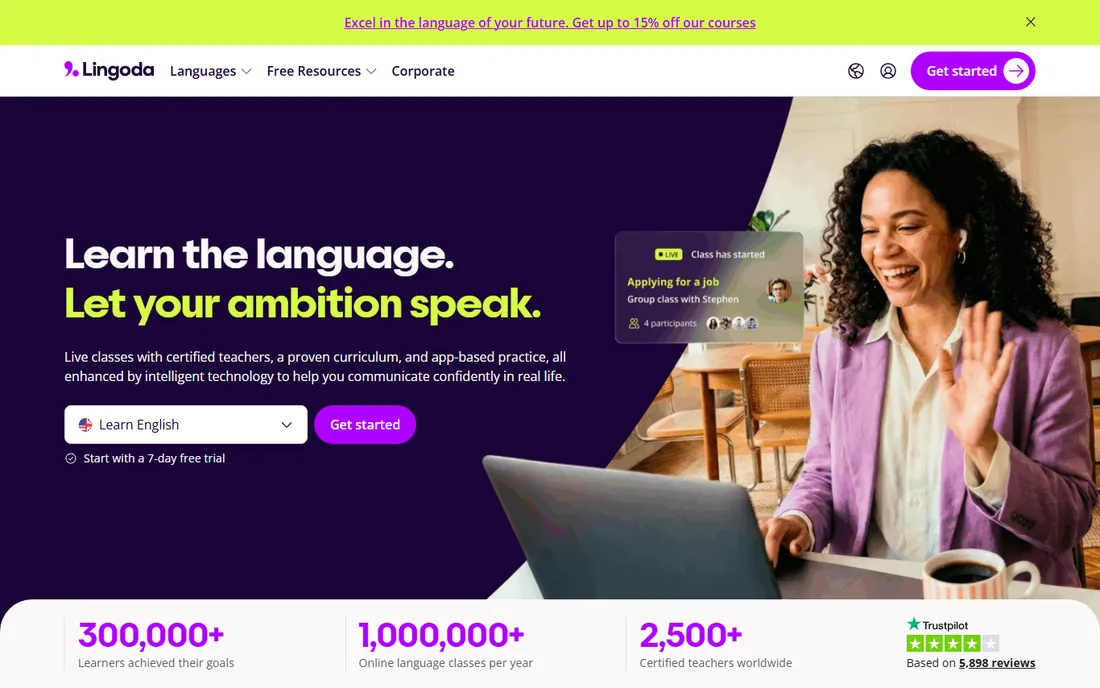
Lingoda is the closest thing to enrolling in a real language school online. You take live classes with certified native-level teachers, in small groups of two to four or one-on-one, following a CEFR-aligned curriculum that runs from A1 to C1. Finish a level and you get a certificate verifying your skills. A free 7-day trial gives you three group classes or one private class with no commitment.
The structure that makes Lingoda effective also demands planning: you schedule classes in advance, and the subscription model rewards regular attendance. It costs more than self-study apps, but you get a teacher, a curriculum and accountability, which is what most app-only learners are missing. If you have tried apps for a year without progress, this is the upgrade that changes the outcome.
What we like- Live small-group or private classes
- CEFR-aligned curriculum with certificates
- Free 7-day trial
Watch out for- Subscription pricing
- Class schedules need planning
Starting priceSee website
Free planNo
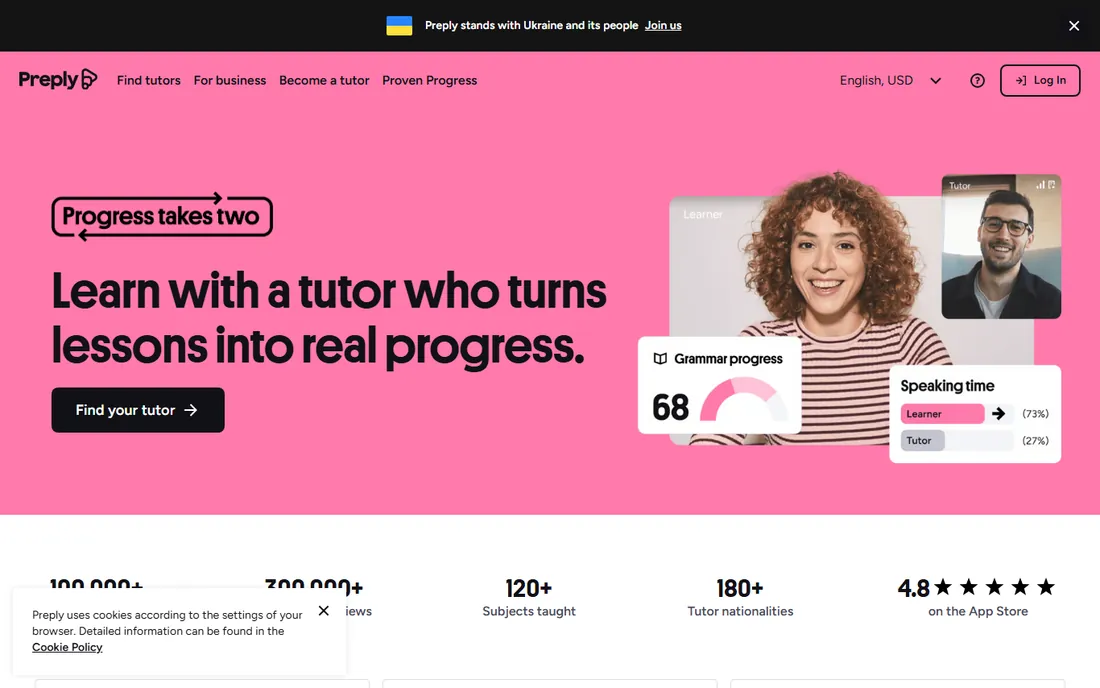
Preply operates on the same marketplace model as italki, with its own flavor: a matching process that pairs you with a tutor based on your goals, budget and schedule, from a pool of over 100,000 tutors. Lessons are bought in bundles, tutors tailor the curriculum to you, and you can switch tutors for free if the fit is wrong. Corporate training plans exist for teams.
The bundle model is the honest downside. Buying lesson packages upfront creates pressure to commit before you know a tutor well, though the free switch policy softens that. Tutor quality varies as with any marketplace, so trial lessons matter. Compared to italki, Preply feels more guided; compared to Lingoda, it is more flexible. It suits learners who want a personal tutor without school scheduling.
What we like- 100,000+ tutors to choose from
- Matching quiz finds your fit
- Free tutor switch if unhappy
Watch out for- Subscription bundles can pressure you to buy bulk hours
- Tutor quality varies
Starting priceSee website
Free planYes
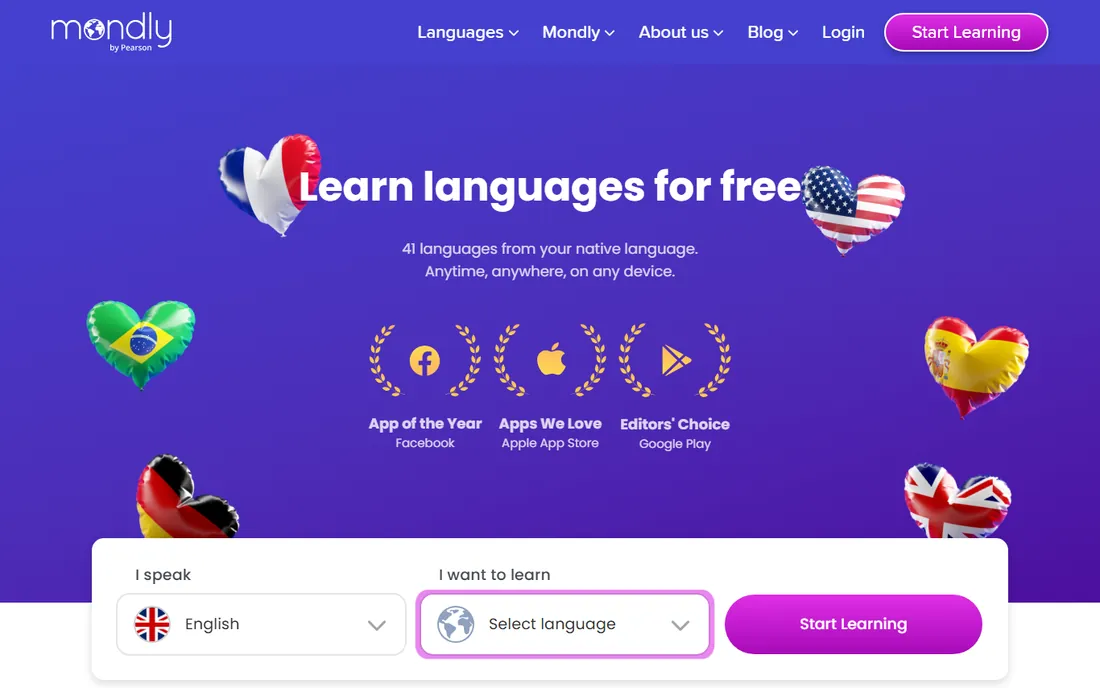
Mondly, now backed by Pearson, covers 41 languages, far more than most competitors, with daily lessons built around 50 practical topics. The chatbot conversations give you low-pressure speaking practice, speech recognition scores your pronunciation, and Mondly VR offers an immersive mode for the curious. It is free to start and works on any device.
Depth is where Mondly concedes to the course-builders. Lessons stay at the phrase and topic level, and grammar gets lighter treatment than in Babbel or Rosetta Stone. It is a good daily-practice app and a strong choice for languages other platforms skip, but serious learners will want to pair it with something deeper. For broad coverage and habit-building, it earns its place.
What we like- 41 languages, unusually broad
- Speech recognition with chatbot conversations
- VR mode for immersive practice
Watch out for- Lessons stay shallow
- Depth lags behind Babbel for European languages
We verified each homepage and its final URL directly, then checked pricing pages, plan pages and help centers for current prices, free tiers and trial terms. Where vendors gate pricing behind signup or show region-specific prices, we marked it as "See website" rather than guessing. We cross-checked teaching methods against public reviews on app stores, G2, Capterra and language-learning communities on Reddit, and confirmed tutor pricing claims against the vendors' own published ranges. We did not enroll in courses or take lessons ourselves.
Start by naming your actual goal. Travel conversation in six months points to Pimsleur or italki. Reading proficiency for work points to Babbel or Rosetta Stone. A credential for your resume points to Lingoda's CEFR certificates. A free daily habit points to Duolingo or Mondly. The best language learning platform for a college student is not the best one for a traveling salesperson, and admitting that saves you from buying the wrong subscription.
Then be honest about your learning style. If you have quit apps before, the problem was probably accountability, not content, and you need a tutor or a class. If you hate scheduling, do not buy Lingoda or Preply bundles; buy Babbel or Pimsleur and protect a daily 15-minute slot. If you can understand writing but freeze when natives speak, add Memrise for listening or book italki conversation lessons. Stack tools by weakness: one course for structure, one tutor or community for speaking, one app for vocabulary review.
Watch the true cost. Free tiers from Duolingo, Busuu, Memrise and Mondly are genuinely usable, not demos. Subscriptions typically run on monthly or annual billing, with annual plans cutting the monthly rate substantially. Tutor platforms look expensive per hour until you compare one weekly italki lesson against a year of unused app subscriptions. And most platforms offer trials or free lessons: use them, because method fit is personal and a week of real use tells you more than any comparison.
Frequently asked questions
Can I become fluent using only a language app?
Apps build vocabulary, grammar and listening comprehension well, but fluency needs live conversation. The strongest path pairs a self-study app like Babbel or Pimsleur with regular speaking practice through italki, Preply or Lingoda. Most learners who reach real fluency credit tutors or immersion, not apps alone.
What is the cheapest way to learn a language?
Duolingo, Busuu, Memrise and Mondly all offer genuinely free tiers that cover serious beginner material. Add free community feedback on Busuu and italki's free community content, and you can learn for nothing. When you are ready to pay, community tutors on italki start around $5 an hour, which is the cheapest path to live speaking practice.
How long does it take to learn a language with these platforms?
Expect basic conversational ability in two to six months with 15 to 30 minutes of daily practice, depending on the language's distance from your own. Lingoda's CEFR structure and Memrise both cite visible progress within about two months of consistent use. Reaching professional fluency typically takes a year or more, and apps alone rarely get you there without conversation practice.
Which platform is best for business language learning?
Lingoda offers corporate plans with CEFR-aligned live classes and certificates, which HR departments like. Preply has corporate training with matched tutors. Rosetta Stone sells enterprise editions used by large companies. For individual professionals, italki lets you find tutors who specialize in business topics and interview prep.
Do I need to pay to get real value from Duolingo?
No. The free tier teaches the same lessons as the paid tier; Super Duolingo mainly removes ads, eliminates the hearts system and adds offline access. If ads do not bother you and you supplement with other resources, the free version is enough for beginner and intermediate study.
Which is better, Babbel or Duolingo?
Babbel suits structured learners who want grammar explained and conversations that mirror real life, with lessons built by linguists. Duolingo suits casual learners who need gamification to stay consistent, and it is free. Many learners use both: Duolingo for the daily habit and Babbel for depth.
Sources we checked (10)
- https://www.duolingo.com
- https://babbel.com/
- https://rosettastone.com/
- https://www.busuu.com
- https://pimsleur.com/
- https://www.italki.com
- https://www.memrise.com
- https://www.lingoda.com
- https://www.preply.com
- https://mondly.com/
Is your product missing or out of date?
We review this list regularly. Vendors can request a listing, send updated pricing or ask about featured placement.

Shihab Mia · Founder, Rankite
Shihab has spent more than a decade helping SaaS and e-commerce brands grow through search. He writes Rankite's software buying guides from pricing pages, documentation and public user reviews. More about Shihab.