How we make this list: we compare pricing pages, product documentation and public user reviews. Rankite is independent; if a vendor ever pays for a featured spot, that listing is clearly labeled Partner.
What to know first
- SQL remains one of the most in-demand data skills: DataCamp alone lists over 740,000 learners on its SQL Fundamentals track, per its homepage.
- You do not need to pay anything to reach a working level. SQLZoo, SQLBolt, W3Schools, Kaggle Learn and Khan Academy are free end to end.
- Codecademy and DataCamp teach SQL well but keep their deeper content behind paid plans; use their free tiers to start, then decide.
- The fastest path is interactive practice, not videos. Platforms where you write queries from lesson one beat passive watching every time.
The lineup
| Platform |
Best for |
Starting price |
Free plan |
| SQLZoo |
Learning by doing, free |
Free |
Yes |
| Khan Academy |
True beginners, video lessons |
Free |
Yes |
| Codecademy |
Structured interactive courses |
Free (Basic) |
Yes |
| DataCamp |
Data career tracks |
Free account |
Yes |
| W3Schools |
Quick reference and syntax |
Free |
Yes |
| Mode |
Analyst-style SQL practice |
Free tutorial |
Yes |
| SQLBolt |
Fast, no-nonsense basics |
Free |
Yes |
| Kaggle Learn |
Real datasets, free certificates |
Free |
Yes |
| DataLemur |
SQL interview preparation |
Free tier |
Yes |
Every data job posting seems to ask for SQL, and every analyst remembers the moment a query finally clicked. The good news is that learning SQL costs nothing: the language has not changed much in decades, and the best teaching tools are free. The nine platforms below all teach SQL without charging you, though they take very different approaches, from gamified exercises to real interview questions.
Starting priceFree
Free planYes (fully free)
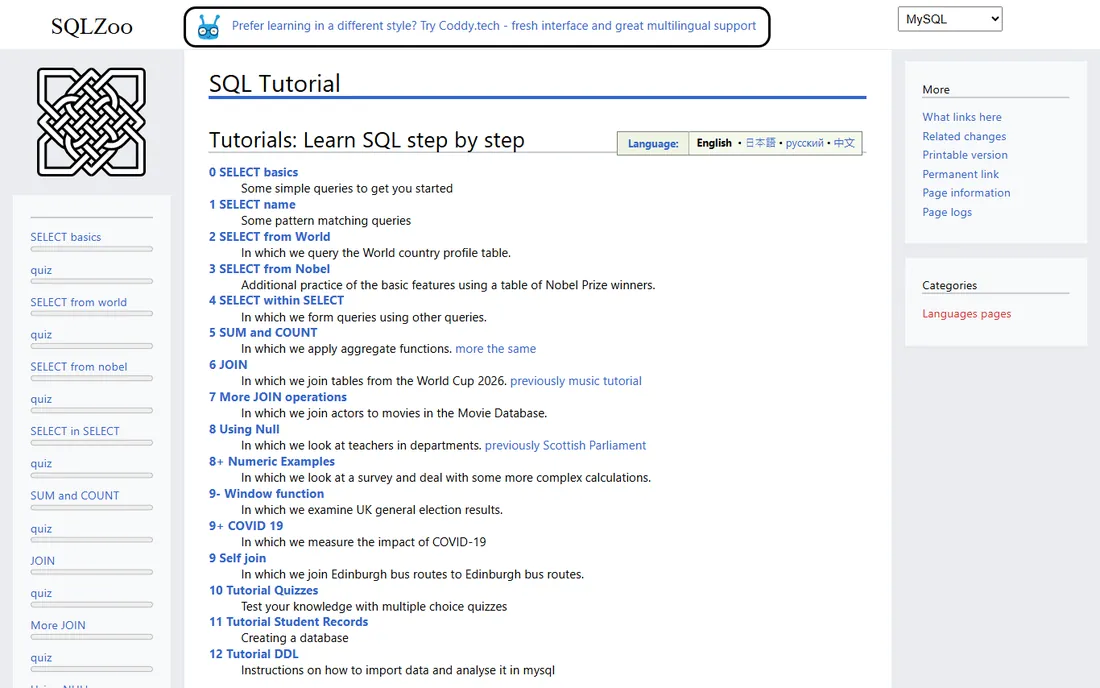
SQLZoo has been teaching SQL interactively since before most of its competitors existed, and the formula still works: short explanations followed by exercises you solve against real sample databases. You learn SELECT, JOIN, aggregation and subqueries by writing them, getting it wrong, and fixing it. There is no account, no paywall and no upsell, which makes it the easiest recommendation on this list.
The rough edges are real. The design belongs to an earlier internet era, and a few exercises reject correct answers over formatting quirks, which frustrates beginners. But as a free practice ground to build query muscle, nothing else on this list gives you as many reps per hour. Pair it with a video course if you want more explanation.
What we like- Interactive exercises run right in the browser
- Covers basics through advanced topics
- Available in several languages
Watch out for- Interface looks dated
- Some exercises are picky about syntax
- Explanations are thinner than video courses
Starting priceFree (nonprofit)
Free planYes (everything free)
Khan Academy's intro to SQL course is built for people who have never seen a database. The videos walk through each concept slowly, with Sal Khan's trademark whiteboard style, and the in-browser challenges let you practice without installing anything. As a nonprofit, everything is free with no premium tier waiting at the end, which is rare.
Treat it as a starting ramp, not a complete education. The course stops well short of the window functions, CTEs and query optimization that job interviews probe. Plan to graduate to SQLZoo or Mode once the basics feel comfortable. For a nervous beginner, though, this is the kindest possible introduction.
What we like- Gentle video-based teaching style
- Free forever as a nonprofit
- Ideal for learners starting from zero
Watch out for- SQL course covers introductory material only
- Less hands-on than interactive rivals
- Pacing can feel slow
Starting priceFree (Basic plan); Pro plans: See website
Free planYes (free courses on the Basic plan)
Codecademy made its name on interactive coding lessons, and its SQL courses follow the same pattern: bite-size instructions, a code editor in the browser, and instant feedback on every query. The structure suits learners who want a path laid out for them rather than a reference to wander through. The free Basic plan covers introductory SQL, which is enough to learn the fundamentals.
The business model is the catch. The most useful SQL content, including career paths and interview prep, requires Pro, and the free tier is clearly a funnel toward it. That is fine if you treat the free courses as a trial: learn the basics free, then decide whether Pro is worth it or whether to continue on SQLZoo and Kaggle Learn for nothing.
What we like- Interactive in-browser coding with instant checks
- Guided learning paths
- Large catalog beyond SQL
Watch out for- Deeper SQL content sits behind the Pro paywall
- Free tier is limited
- Pacing can feel hand-holdy for fast learners
Starting priceFree account; Premium plans: See website
Free planYes (introductory courses free, including Introduction to SQL)
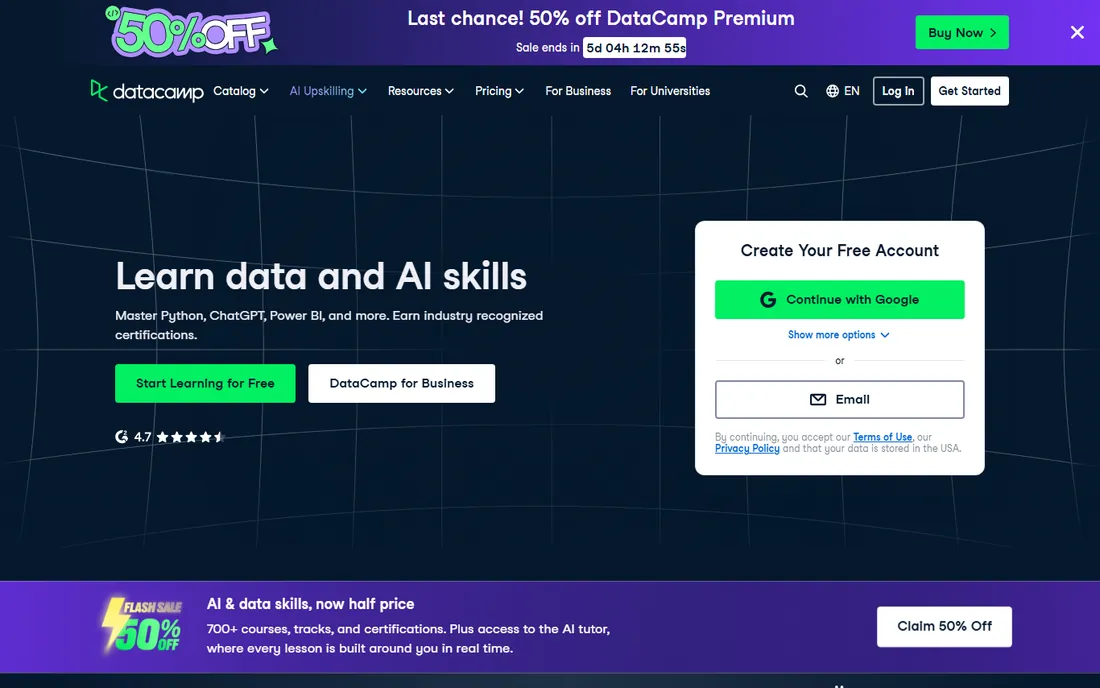
DataCamp's scale is hard to argue with: its SQL Fundamentals track alone counts over 740,000 learners, and the Introduction to SQL course is free. The format mixes short videos with interactive exercises, and the career tracks place SQL alongside Python, statistics and BI tools, which mirrors how the skills combine in real analyst jobs. A free account gets you through the introductory material.
Beyond the intro, the paywall arrives. Full courses, projects and certificates require Premium, which is a real monthly cost. Use the free tier to learn the basics and to judge whether the teaching style fits you; there is no reason to pay until you have finished everything free. For committed career changers, the tracks are coherent, but free alternatives cover the same SQL ground.
What we like- Introduction to SQL course is free
- Career tracks bundle SQL with Python and BI skills
- Mobile app for practice
Watch out for- Full tracks and certificates need Premium
- Video-plus-exercise format suits some learners less
- Premium is pricey
Starting priceFree
Free planYes (learning is free with or without an account)
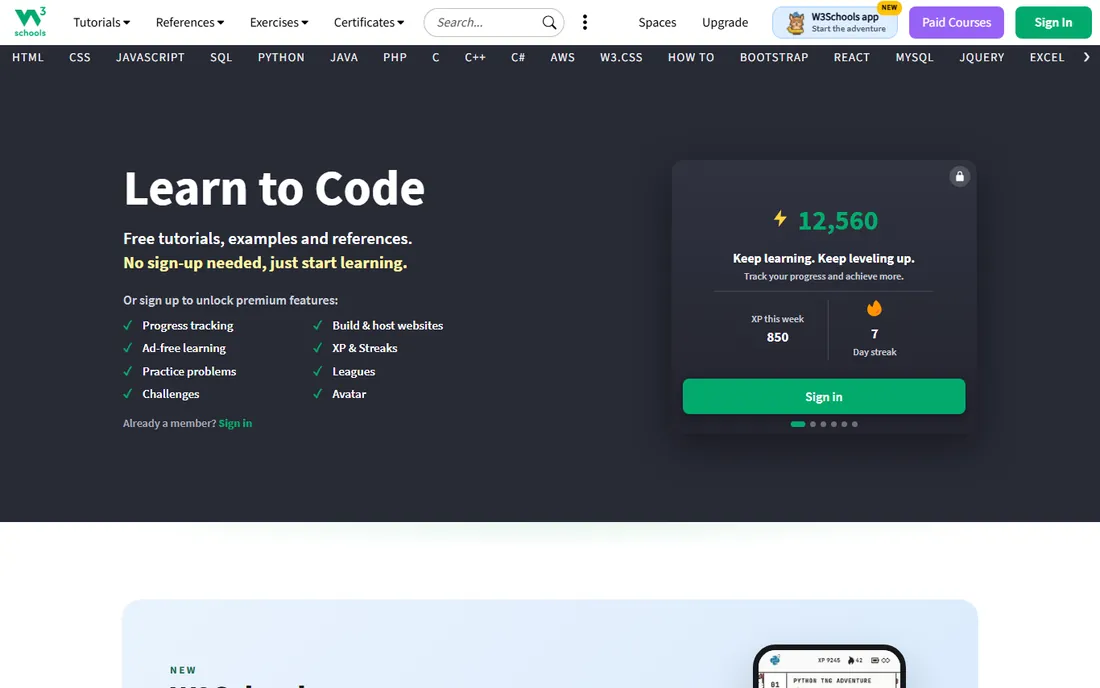
W3Schools is the site developers actually open when they forget syntax, and its SQL tutorial works the same way for learners. Every concept gets a short explanation and a live editor where you run the query immediately. The homepage states plainly that learning is free with or without an account, and a free account adds progress tracking and an ad-free experience.
It is a reference first and a course second. The tutorial walks through the language systematically but will not teach you how analysts think about data problems, and advanced topics get brief treatment. Use it as your syntax companion while you learn elsewhere: when SQLZoo or Kaggle asks for something you half-remember, W3Schools answers in thirty seconds.
What we like- Try-it-yourself editor for every concept
- Clear, concise reference documentation
- Free account saves progress
Watch out for- Shallow on advanced and applied topics
- Exercises are less guided than course platforms
- Certificates cost extra
Starting priceFree
Free planYes (SQL tutorial is free)
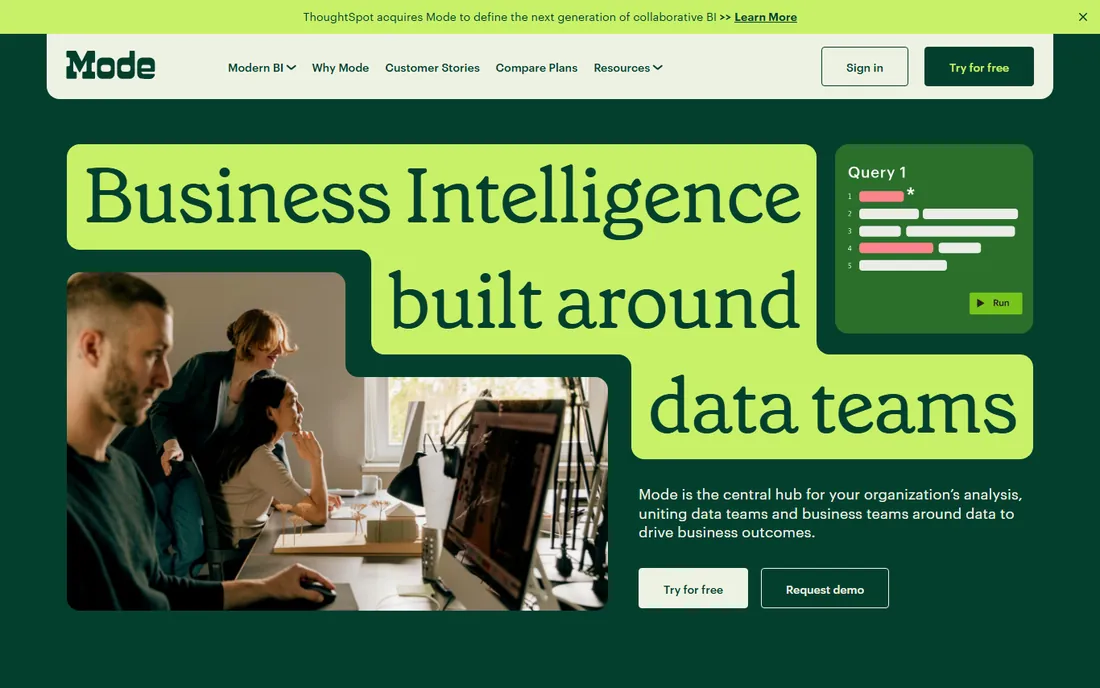
Mode's SQL tutorial stands out because it teaches with business scenarios: the exercises ask the kinds of questions a product analyst actually answers, like measuring retention or comparing cohorts. That context matters. Syntax without judgment produces people who can write queries but cannot decide which query to write. The tutorial is free and runs in the browser.
It is one tutorial, not a school. There is no progression beyond it, no certificate and no community, and Mode itself was acquired by ThoughtSpot, so the tutorial's long-term home bears watching. Still, as a bridge between textbook SQL and applied analysis, it fills a gap the pure exercise sites leave open. Do it after SQLBolt or SQLZoo basics.
What we like- Tutorial built around realistic business questions
- Teaches the analyst workflow, not just syntax
- Completely free
Watch out for- A single tutorial, not a full curriculum
- No certificates or community
- Parent company now ThoughtSpot after acquisition
Starting priceFree
Free planYes (fully free)
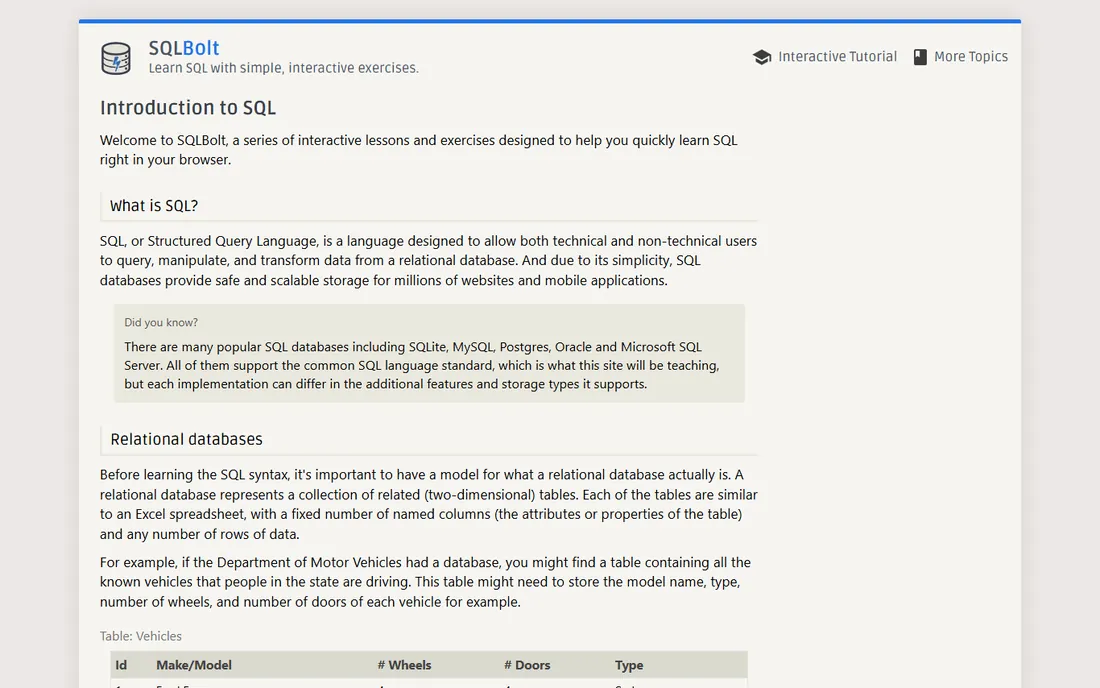
SQLBolt is SQLZoo's leaner cousin: a series of short lessons, each ending with an interactive exercise, covering the core language from SELECT through JOINs, aggregation and schema changes. There is no account to create and nothing to install. A focused learner can work through the whole thing in a weekend and emerge able to write real queries.
It does not pretend to be more than it is. Advanced topics, interview prep and applied analysis live elsewhere. But for raw efficiency, getting from zero to functional SQL with the least friction, SQLBolt is excellent. It is the tool to recommend to a colleague who says they need SQL by next month.
What we like- Concise lessons with immediate exercises
- No signup or setup
- Clean learning progression
Watch out for- Covers fundamentals only
- Plain presentation
- No certificates or community features
Starting priceFree
Free planYes (courses free, certificates included)

Kaggle Learn's SQL courses, Intro to SQL and Advanced SQL, run on real data through Google BigQuery, which changes the feel completely. You are querying actual datasets, not toy tables, and the skills transfer directly to analyst work. The courses are free, take a few hours each, and now come with certificates. The page states plainly that courses are provided at no cost.
The audience is aspiring data practitioners rather than total beginners: if you have never seen a spreadsheet pivot, start with Khan Academy or SQLBolt first. But for anyone targeting a data job, Kaggle is where learning turns into evidence. Completed courses, plus a competition or two, become portfolio material that hiring managers recognize.
What we like- Teaches SQL against real datasets with BigQuery
- Free certificates on completion
- Natural path into competitions and portfolios
Watch out for- Assumes basic comfort with data concepts
- Less hand-holding than beginner courses
- Requires a Google-linked account
Starting priceFree tier; premium plans: See website
Free planYes (free practice questions)
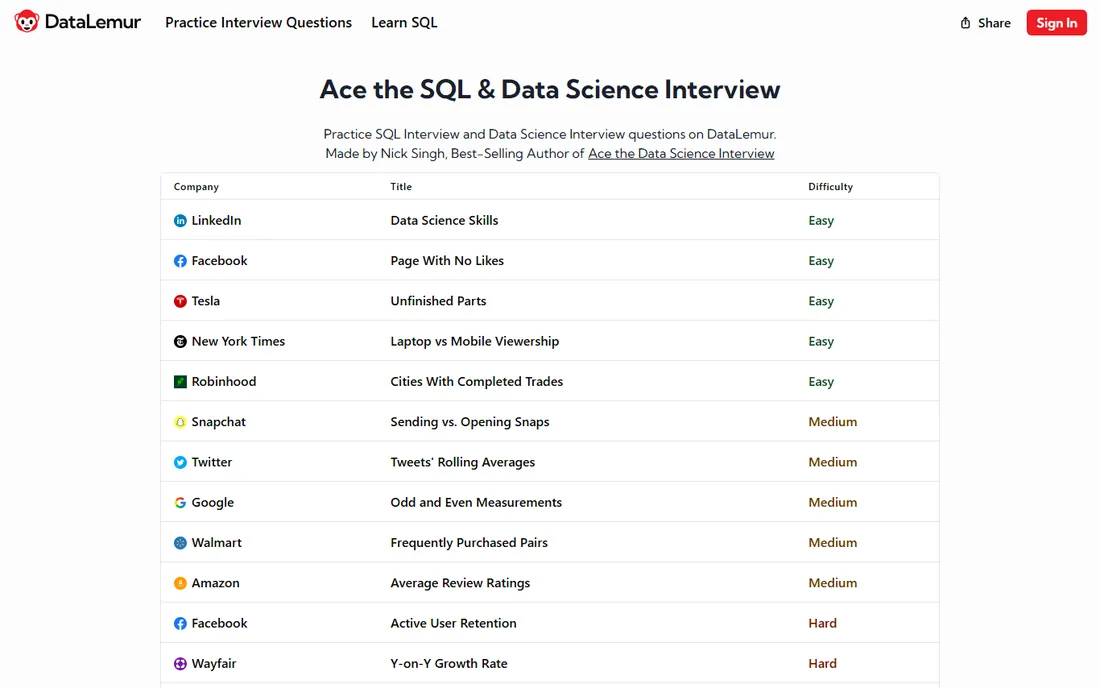
DataLemur was built by the author of a best-selling data science interview book, and it shows: the platform offers SQL interview questions modeled on real ones from companies like Google, Meta and Amazon, with hints and full solutions. Once you know SQL basics, this is where you convert knowledge into interview performance. A free tier covers a solid set of questions.
Do not start here. DataLemur assumes you can already write queries and focuses on the tricky patterns interviews test: window functions, complex joins, aggregation puzzles. Learn the language on SQLZoo or Kaggle first, then use DataLemur for the final month before interviews. Used in that order, it is the highest-value free tool on this list for job seekers.
What we like- Real interview questions from tech companies
- Hints and detailed solutions
- Laser-focused on job prep
Watch out for- Interview-focused, not a beginner course
- Full question bank needs premium
- Narrower scope than learning platforms
How we picked these
We did not take these courses ourselves for this guide. We worked from each platform's own site and documentation, the actual free tier boundaries (not marketing claims), public learner reviews on Reddit and course forums, and how well each platform serves a US learner targeting analyst or data roles. Every price and free-tier claim above comes from the vendor's own pages; where a paid price could not be verified, we wrote See website. We excluded platforms without a genuinely free SQL offering.
From learning to interviews: what comes after the basics
The basics, SELECT, WHERE, GROUP BY, JOIN, get you further than most beginners expect, but interviews test the next layer: window functions, common table expressions, date math and query optimization. Plan your progression deliberately. Start with SQLBolt or Khan Academy for syntax, move to SQLZoo for reps, then do Mode's tutorial for applied thinking and Kaggle Learn for real datasets.
Then switch modes entirely. DataLemur's interview questions train pattern recognition under time pressure, which is a different skill from writing queries at your desk. Give yourself three to four weeks of daily practice before interviews. One more thing employers notice: a public artifact. A Kaggle notebook, a small analysis on a dataset you care about, or a GitHub repo of practice queries says more than any certificate.
How to choose your starting point
Match the platform to your starting level, not your ambition. Never written a line of code? Khan Academy, then SQLBolt. Comfortable with spreadsheets and want speed? SQLBolt straight into SQLZoo. Targeting a data analyst job within months? Kaggle Learn plus DataLemur, with W3Schools open in a tab for syntax. The wrong choice is not any of these platforms; it is watching videos for a month without writing queries.
Also consider how you learn. Video-first learners do better on Khan Academy and DataCamp; readers and tinkerers do better on SQLZoo, SQLBolt and W3Schools. And be honest about the paywall question: Codecademy and DataCamp are good products, but their free tiers are appetizers. If you will not pay, commit to the fully free platforms from the start rather than stalling at a paywall halfway through.
Frequently asked questions
Can I really learn SQL completely free?
Yes. SQLZoo, SQLBolt, W3Schools, Khan Academy, Mode's tutorial and Kaggle Learn are free end to end and cover everything from basics to advanced topics. Paid platforms add structure and certificates, but the language itself is fully learnable for free.
How long does it take to learn SQL?
Most learners write basic queries within a week or two of daily practice. Reaching interview readiness, including window functions and complex joins, typically takes one to three months depending on pace. Consistency matters more than total hours.
Which free platform is best for SQL beginners?
SQLBolt and Khan Academy are the gentlest starts: short lessons, no setup, immediate practice. SQLZoo adds more exercises once the basics click. Avoid interview-focused tools like DataLemur until the fundamentals feel easy.
Do I need to install a database to practice?
No. Every platform on this list runs queries in the browser. You only need a local database if you want to practice on your own data later, at which point free options like SQLite or Postgres are one download away.
Will free certificates help me get a job?
They help a little, mainly as proof of initiative. Kaggle Learn certificates carry some weight because employers know the platform. But a small portfolio project with real queries impresses hiring managers far more than any certificate.
Is SQL still worth learning in 2026?
Yes. SQL remains the standard language for working with relational data, and AI tools have not replaced the need to understand queries, they have raised the value of people who can verify what the AI generates. Job postings for analysts, data scientists and engineers still list it near the top.
Sources we checked (9)
- https://sqlzoo.net
- https://www.khanacademy.org
- https://codecademy.com/
- https://www.datacamp.com
- https://www.w3schools.com
- https://mode.com
- https://sqlbolt.com
- https://www.kaggle.com/learn
- https://datalemur.com
Is your product missing or out of date?
We review this list regularly. Vendors can request a listing, send updated pricing or ask about featured placement.

Shihab Mia · Founder, Rankite
Shihab has spent more than a decade helping SaaS and e-commerce brands grow through search. He writes Rankite's software buying guides from pricing pages, documentation and public user reviews. More about Shihab.