How we make this list: we compare pricing pages, product documentation and public user reviews. Rankite is independent; if a vendor ever pays for a featured spot, that listing is clearly labeled Partner.
Key takeaways
- General Assembly and Flatiron School remain the most recognized names, with full-time software engineering programs priced around $15,000 to $17,000.
- Springboard and TripleTen are the strongest value picks: mentor-led, fully online programs starting under $10,000.
- App Academy charges no upfront tuition through its income share agreement, which suits career changers who cannot pay before they earn.
- Nucamp is the cheapest credible route into web development, ideal for testing whether you actually enjoy coding before spending five figures.
- Job guarantees vary widely in their fine print, so read the refund terms before letting one sway your decision.
Quick comparison
| Tool | Best for | Starting price | Free plan |
|---|
 General Assembly General Assembly | Brand recognition and campus network | Around $16,450 (Software Engineering Immersive) | No (free intro workshops) |
 Flatiron School Flatiron School | Structured curriculum with career coaching | $14,900 | No (free prep course) |
 Springboard Springboard | Mentor-led online learning | From $9,900 (upfront payment) | No |
 App Academy App Academy | No upfront tuition (ISA) | $0 upfront (income share agreement) | No |
 Coding Dojo Coding Dojo | Learning three full stacks | From $9,995 | No (free intro course) |
 Fullstack Academy Fullstack Academy | Live online evening classes | From $4,995 | No |
 TripleTen TripleTen | Career changers new to tech | From $4,935 | No |
 Nucamp Nucamp | Budget-friendly part-time learning | See website | No |
 Hack Reactor (Galvanize) Hack Reactor (Galvanize) | Advanced JavaScript depth | See website | No (free prep) |
Is your product missing or out of date?
We review this list regularly. Vendors can request a listing, send updated pricing or ask about featured placement.
The best software engineering bootcamps
Quitting a stable job to learn coding is frightening. The tuition rivals a year of college, the programs demand 60 or more hours a week, and the entire bet rests on landing a developer job in a market where entry-level hiring has tightened. Every bootcamp website shows smiling graduates and six-figure salaries, which makes it harder, not easier, to tell which program actually delivers.
The deeper problem is that bootcamps are not interchangeable. Some screen hard for aptitude and graduate strong cohorts; others accept almost anyone and leave job hunting to you. Financing ranges from income share agreements to private loans with real interest. Choosing the best software engineering bootcamp means matching the program structure, cost, and career support to your life, not just picking the biggest brand.
This guide compares nine established programs with current tuition figures from late 2026. Every price should be confirmed on the school's own site before you enroll, since bootcamps change tuition and financing terms frequently.
Starting priceAround $16,450 (Software Engineering Immersive)
Free planNo (free intro workshops)
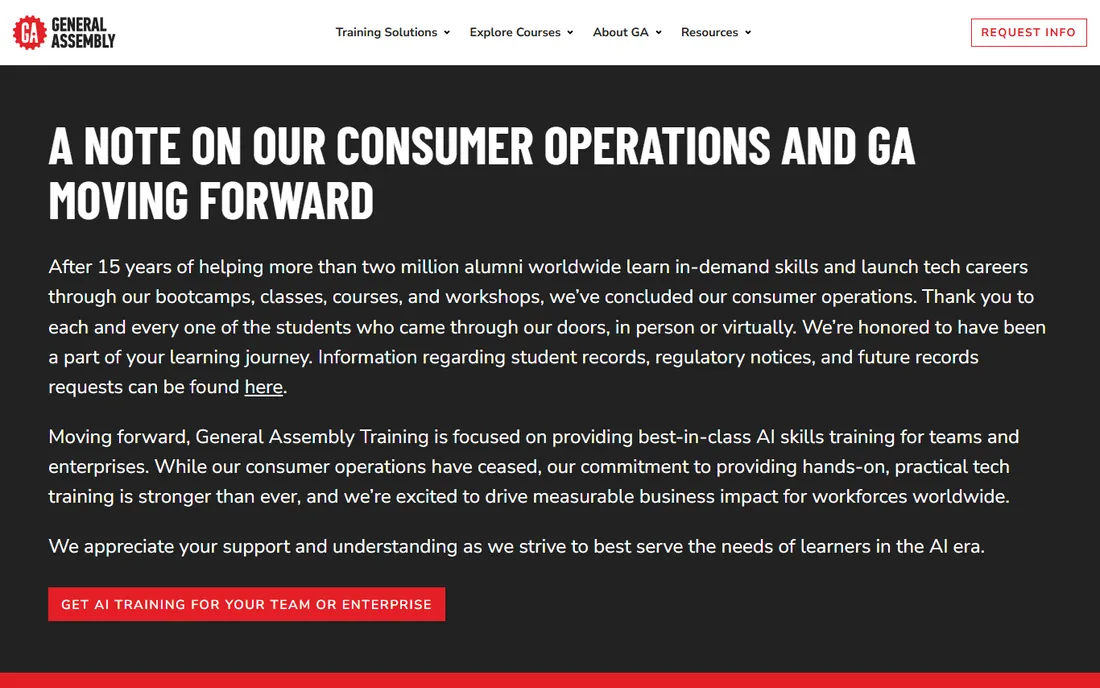
General Assembly is the name most hiring managers already know, which is a genuine advantage when your resume lists a bootcamp. The Software Engineering Immersive runs 12 weeks full-time (or 24 weeks part-time) covering JavaScript, React, Node, and Python, and the school operates campuses and online cohorts across the country. Its outcomes program includes one-on-one career coaching, portfolio reviews, and introductions to hiring partners.
The trade-offs are cost and intensity. At around $16,450, it is one of the most expensive programs here, and the immersive schedule leaves no room for a part-time job. Financing options include upfront payment, loans, and income share agreements depending on the campus. If you want maximum brand recognition and can study full-time, General Assembly is the safe mainstream pick. If the price stings, several programs below teach similar stacks for substantially less.
What we like- Widely recognized brand with employers
- Large alumni network across US cities
- Full-time and part-time formats
Watch out for- Among the priciest options
- Curriculum pace can overwhelm true beginners
Starting price$14,900
Free planNo (free prep course)
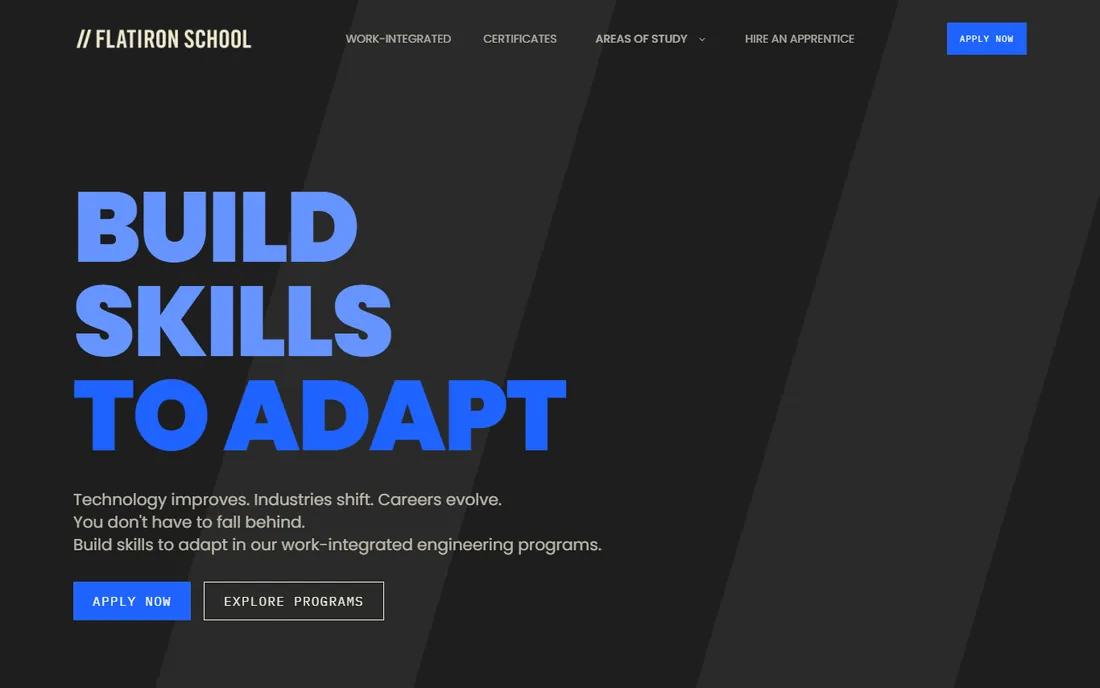
Flatiron School has been running bootcamps since 2012, and the curriculum reflects that experience: it builds from fundamentals to full-stack projects in a deliberate sequence rather than rushing to frameworks. Programs run online with weekly live sessions, and pacing ranges from an intensive four months to a 15-month flexible track for people studying alongside work. Career services include coaching, mock interviews, and employer connections.
At $14,900, Flatiron sits just below General Assembly on price, which makes the comparison between them mostly about format and culture. Flatiron free prep course is a good way to test fit before applying, and its job placement reporting has historically been more transparent than the industry average. The catch is selectivity: the admissions process includes interviews and technical assessments that filter out casual applicants. If you want a proven curriculum and structured support, Flatiron delivers. If you need the cheapest path, look further down this list.
What we like- Well-structured curriculum with strong fundamentals
- Weekly live sessions and career coaching
- Flexible 4 to 15 month pacing
Watch out for- $14,900 is steep for a mostly online program
- Admissions process is selective and slow
Starting priceFrom $9,900 (upfront payment)
Free planNo
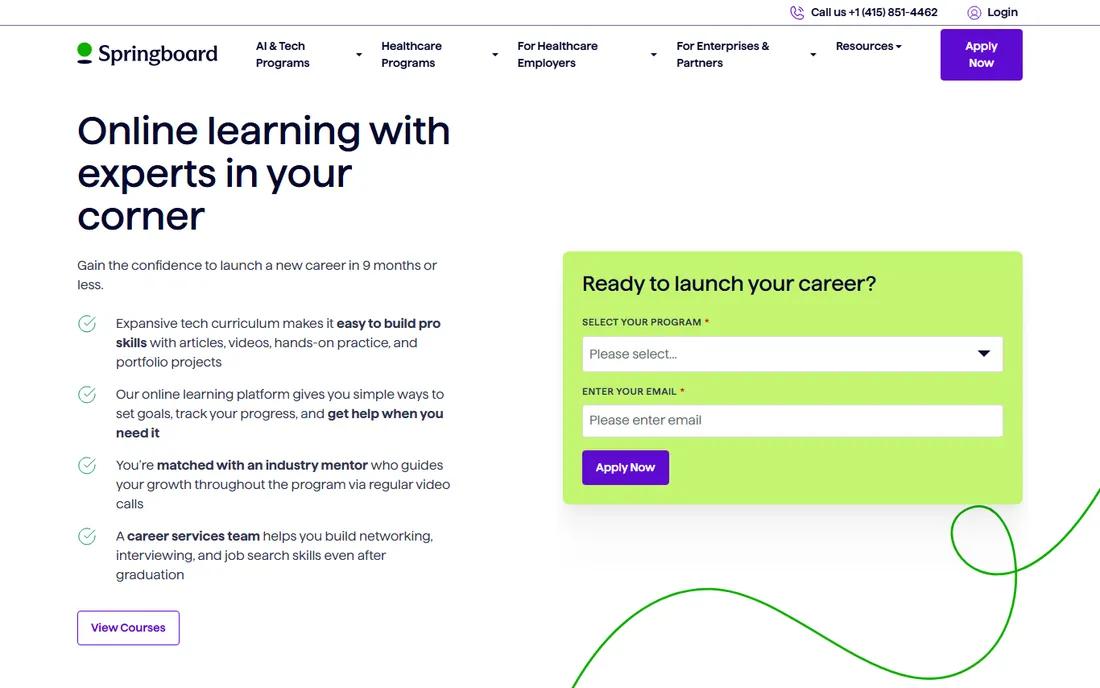
Springboard signature feature is mentorship: every student is paired with an industry engineer for weekly video calls throughout the nine-month Software Engineering Career Track. That relationship is where most of the value lives, since a mentor reviews your code, your projects, and your job applications with the eye of someone who hires. The program also offers a job guarantee: if you do not land a qualifying job within a set period, you get a refund, subject to terms you should read carefully.
Pricing rewards commitment: the advertised upfront price of $9,900 reflects a substantial discount off the list price, while deferred and financed options cost considerably more (up to around $16,500 total on deferred plans). There are no live lectures, so the program suits self-motivated learners who want guidance without a classroom schedule. For career changers who need a mentor in their corner, Springboard is one of the best software engineering bootcamp options at this price.
What we like- 1-on-1 mentorship from working engineers
- Job guarantee with tuition refund terms
- Fully online and self-paced within deadlines
Watch out for- No live classes, so self-discipline is mandatory
- The full list price is significantly higher than the discounted upfront figure
Starting price$0 upfront (income share agreement)
Free planNo
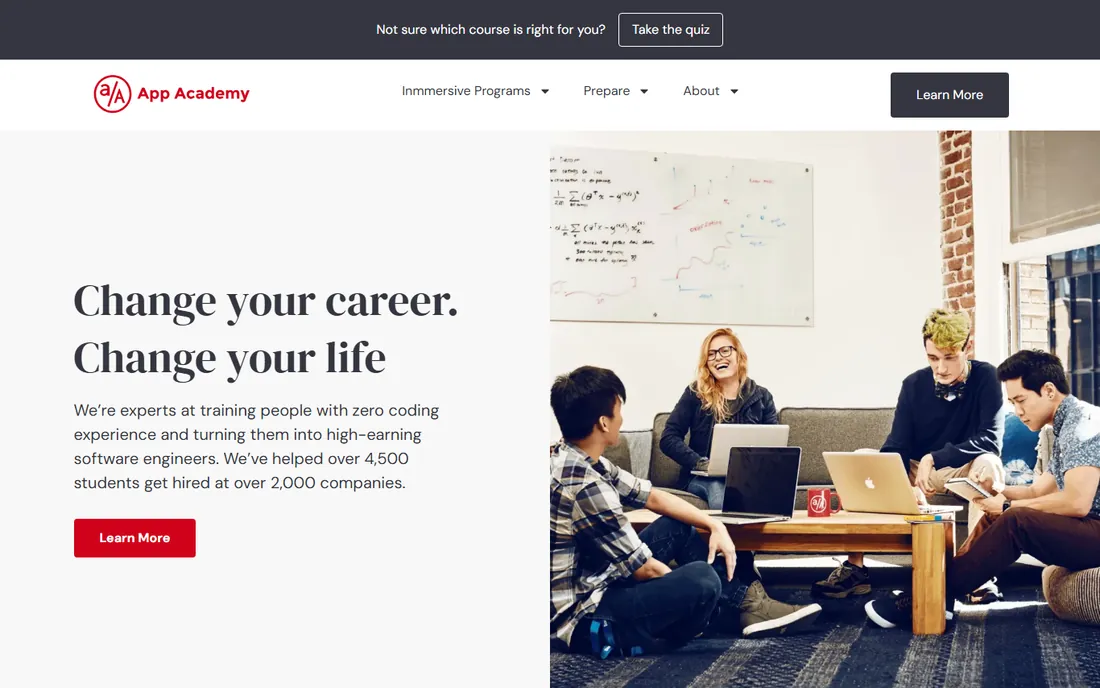
App Academy pioneered the income share agreement in coding education: you pay nothing upfront, then pay a percentage of your salary for a fixed period once you land a qualifying job. Because the school only gets paid when you do, its incentives are unusually aligned with yours, and that shows in the curriculum. The full-time program is famously demanding, with long days, pair programming, and assessments that remove students who fall behind.
The ISA is not free money. Total payments can exceed what upfront tuition would have cost, and the obligation follows you for years. Read the income threshold, payment cap, and maximum term before signing anything. But for talented career changers with no savings, App Academy remains the most credible way to enter software engineering without paying first. It is the best software engineer bootcamp for people whose main obstacle is cash, not commitment.
What we like- No tuition until you are employed
- Famously rigorous curriculum
- Strong outcomes culture driven by the ISA model
Watch out for- You pay a share of income for years after hiring
- The workload is intense and the pace unforgiving
Starting priceFrom $9,995
Free planNo (free intro course)
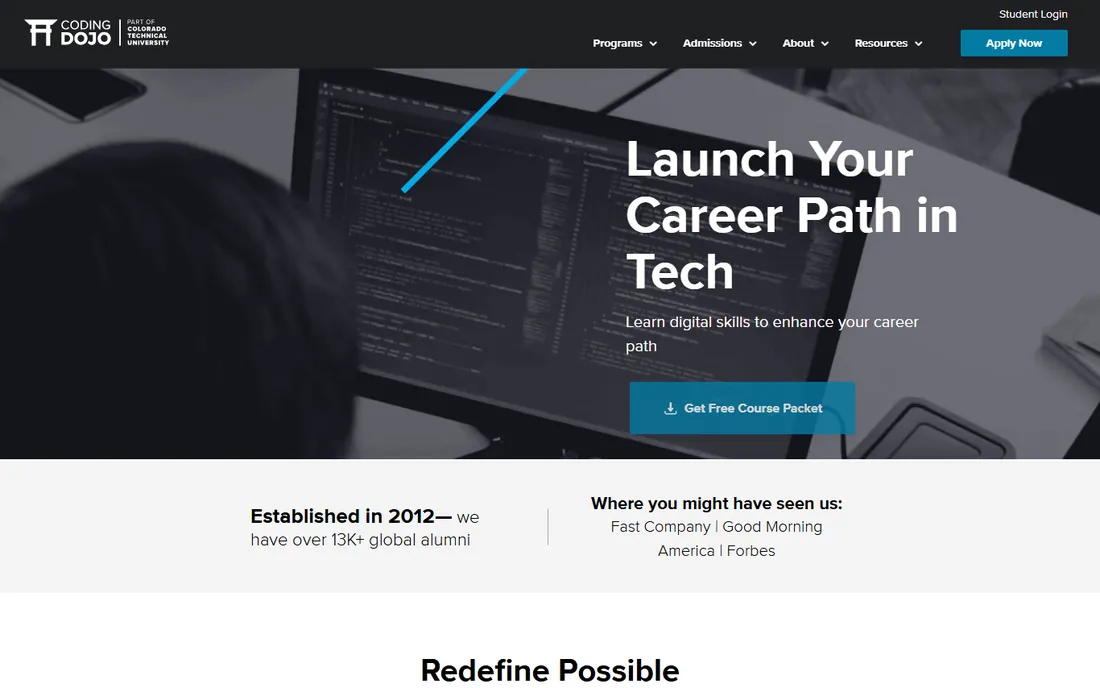
Coding Dojo differentiator is breadth: where most bootcamps teach one stack deeply, Coding Dojo runs students through three (typically Python, JavaScript/MERN, and Java or C#). The theory is that learning multiple stacks teaches you how to learn new technologies, which is the actual skill employers pay for over a career. Programs run 20 to 32 weeks online, full-time or part-time, with tuition ranging from about $9,995 to $16,995 depending on format.
The risk of the three-stack model is spreading yourself thin; some graduates feel strongest in none of the stacks. Career support exists but is less intensive than Springboard or Flatiron one-on-one coaching. Coding Dojo fits learners who are curious about different technologies and want maximum optionality, or international students who value its global alumni presence. If you already know you want to be a JavaScript developer, a single-stack program may serve you better.
What we like- Teaches three full technology stacks instead of one
- Online full-time and part-time formats
- Long track record since 2012
Watch out for- Breadth can mean less depth per stack
- Career services are thinner than the top career-focused schools
Starting priceFrom $4,995
Free planNo
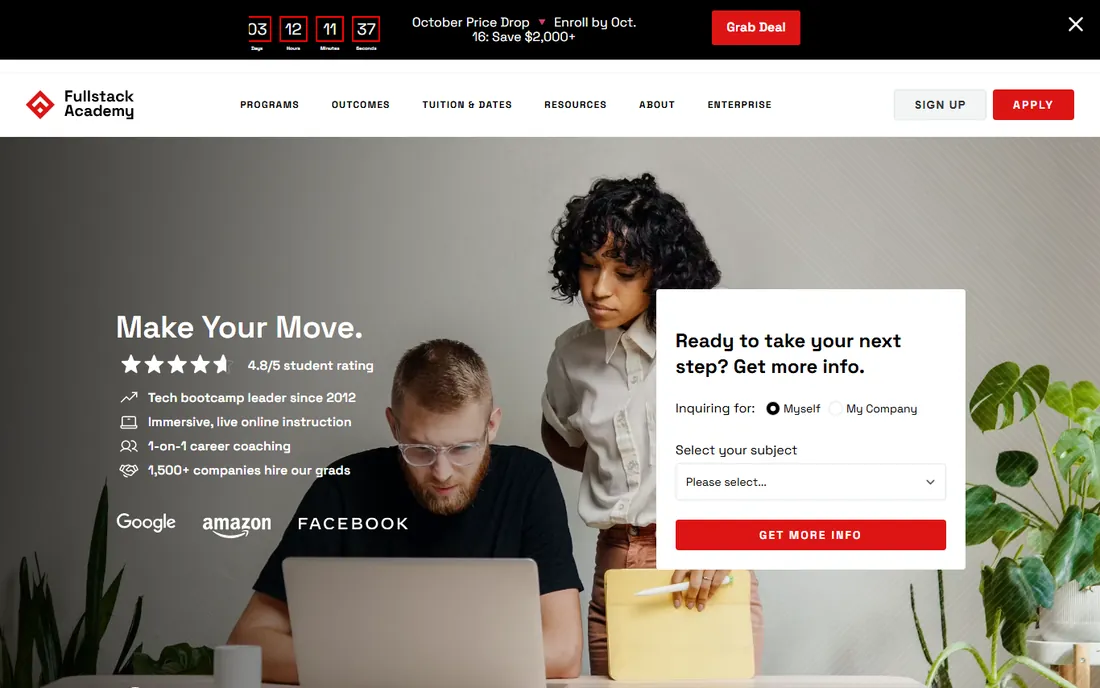
Fullstack Academy runs live online bootcamps with scheduled evening classes, which makes it one of the more practical choices for people who cannot quit their jobs. Part-time programs stretch 12 to 26 weeks with a mix of live sessions and structured study time, and tuition starts around $4,995 for shorter programs, rising to about $11,995 for the full career-track bootcamps. The school also powers bootcamps for several universities, which speaks to institutional trust.
The shorter formats are the main limitation: fewer total hours means less project depth than a 12-week immersive, and you will need to supplement with personal projects to build a competitive portfolio. Published outcomes data is also thinner than what General Assembly or Flatiron provide. But as a way to learn software development around a job at a moderate price, Fullstack Academy is a solid middle option.
What we like- Live instruction with real class cohorts
- Evening and part-time schedules for working adults
- Part of a larger education group with university partnerships
Watch out for- Shorter programs mean less total instruction time
- Outcomes data is harder to find than for the biggest brands
Starting priceFrom $4,935
Free planNo
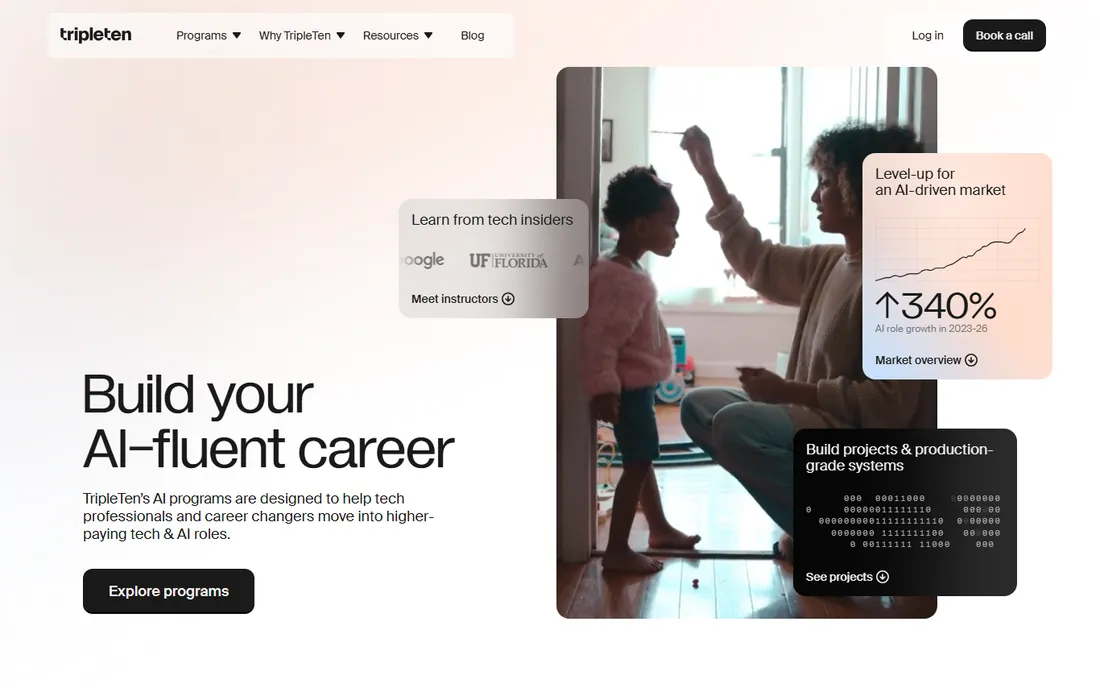
TripleTen (formerly Practicum) positions itself as the on-ramp for people with zero tech background: there is no application, no admissions test, and no prior experience required for its entry-level programs. The AI Software Engineering track runs about seven months part-time at $9,800, with shorter and cheaper options in QA and data analytics. AI tools are woven into the coursework rather than bolted on, which matches where junior developer work is heading.
The obvious question is employer recognition. TripleTen does not carry the resume weight of General Assembly or Flatiron yet, so graduates lean harder on portfolios and interview performance. But the low barrier to entry, part-time schedule, and sub-$10,000 pricing make it one of the most accessible serious programs available. If you are starting from scratch and want the gentlest credible on-ramp, this is it.
What we like- No admissions test for entry programs
- AI-integrated curriculum
- Part-time schedule around 20 hours a week
Watch out for- Newer brand with less employer recognition
- The best programs cost more than the entry price suggests
Starting priceSee website
Free planNo
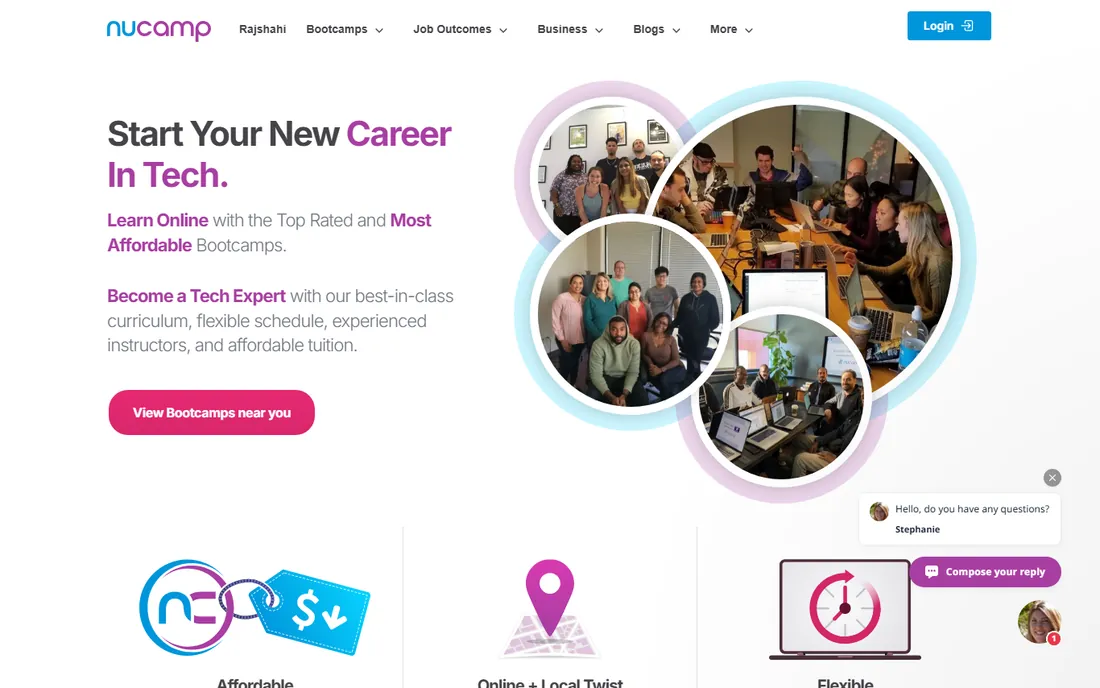
Nucamp took the community-college model to coding bootcamps: small evening and weekend cohorts, part-time pacing, and tuition far below the industry norm. Its Full Stack Web and Mobile Development program has historically cost a few thousand dollars, making it the cheapest serious option on this list by a wide margin. The schedule is designed for people working full-time jobs, with a few weeknight sessions plus weekend workshops.
You get what you pay for in career services and total hours: Nucamp is education-first, and graduates do more of their own job hunting than at schools with dedicated placement teams. It is best viewed as either a low-risk way to test whether you enjoy programming before spending five figures, or as affordable skills training if you already have a job-search strategy. For the price, the instruction quality consistently earns strong student reviews.
What we like- The most affordable credible bootcamp model
- Evening and weekend schedule
- Strong community feel in small cohorts
Watch out for- Less total instruction than immersive programs
- Career services are lighter than premium competitors
Starting priceSee website
Free planNo (free prep)
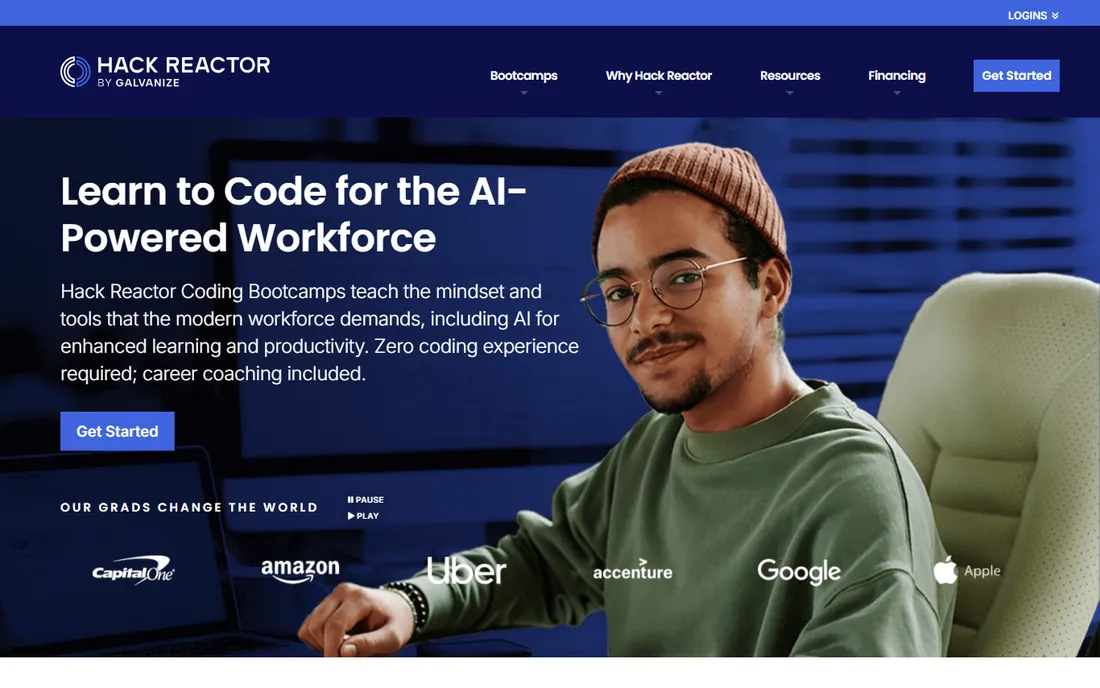
Hack Reactor, now part of the Galvanize network, built its reputation on depth: an advanced software engineering immersive that goes further into JavaScript internals, algorithms, and system design than most competitors. Admissions are selective, with technical assessments that ensure cohorts start from a solid baseline, which in turn makes the peer group one of the program strengths. Graduates have historically placed well at tech companies, particularly on the West Coast.
This is not a program for dabblers. The schedule is famously intense, part-time study is not really an option, and tuition sits at the premium end of the market (confirm current figures on the school site, as Galvanize pricing has shifted over time). If you already have some coding experience and want the deepest JavaScript training a bootcamp offers, Hack Reactor remains the benchmark. If you are starting from zero, begin with one of the gentler programs above.
What we like- Deep JavaScript and computer science fundamentals
- Strong alumni network in tech hubs
- Selective admissions produce strong cohorts
Watch out for- Premium pricing
- Extremely demanding schedule not suited to part-time study
How this shortlist was built
We focused on programs with multi-year track records, published curricula, and verifiable tuition figures, drawing on bootcamp comparison sites, student review platforms like Course Report, and the schools own program pages. Tuition was checked against figures published in late 2026; where a school had recently changed pricing or financing terms, the price is marked "See website" rather than repeated from a stale source.
We weighted career support, admissions selectivity, and format flexibility alongside price, because the cheapest bootcamp is a bad deal if it does not lead to a job. Outcomes claims (job placement rates, salary figures) were treated with caution throughout: schools measure these differently, and self-reported numbers deserve skepticism. No enrollment or classroom testing was performed; this is a research-based comparison.
What to check before you enroll
Start with the outcomes data, and read it like a skeptic. Ask what counts as "employed" (any job, or a qualifying tech job?), what the response rate on graduate surveys was, and whether the figures were audited by a third party. A 90 percent placement rate means little if half the cohort never answered the survey.
Next, match the format to your life honestly. Full-time immersives demand 60-plus hours a week and usually mean quitting your job; part-time programs stretch six to nine months and let you keep earning. Be realistic about your self-discipline too: mentor-led and self-paced programs like Springboard work brilliantly for some learners and fail quietly for others who need a classroom.
Finally, talk to recent graduates, not just the admissions team. Reddit communities, Course Report reviews, and LinkedIn alumni searches will tell you what the sales call will not: how the job search really went, whether career services were useful, and what graduates wish they had known. Spend a week on this research; it is the highest-return week of the whole process.
ISA vs upfront: how bootcamp financing really works
Bootcamp financing comes in three main forms, and they are not equivalent. Upfront payment is simplest: you pay the full tuition (often with a discount) and owe nothing later. Deferred tuition and income share agreements let you pay after employment, usually as a fixed monthly amount or a percentage of salary for one to three years, with an income threshold below which you pay nothing.
ISAs deserve special attention because their headline ("pay nothing until hired") hides real cost. Total payments under an ISA frequently exceed the upfront tuition price, and the obligation can last years. Before signing, confirm four numbers: the income threshold that triggers payments, the percentage or monthly amount, the payment cap, and the maximum term. Also ask what happens if you leave the tech industry or move abroad. Loans are the third option and the least forgiving, since they must be repaid regardless of outcomes; compare interest rates and deferment terms carefully.
Frequently asked questions
Are coding bootcamps still worth it in 2026?
For the right person, yes, but the bar is higher than it was five years ago. Entry-level hiring is more competitive, and employers expect stronger portfolios and fundamentals than before. Bootcamps with selective admissions, real career support, and curricula that include AI-assisted workflows still place graduates; programs that rush students through with thin portfolios struggle. Your effort level matters as much as the school you pick.
How long does it take to become job-ready?
Full-time immersives run 12 to 16 weeks, followed by a job search that typically takes three to six months. Part-time programs stretch six to nine months of study before the job hunt begins. Anyone promising you a developer job in eight weeks total is selling something; plan for six to twelve months from first lesson to first offer.
Can I do a bootcamp while working full-time?
Yes, with a part-time program. Nucamp, TripleTen, Springboard, and the part-time tracks at Coding Dojo and Fullstack Academy are designed around working adults, usually requiring 15 to 25 hours a week of evenings and weekends. Full-time immersives at General Assembly, Flatiron, App Academy, and Hack Reactor are not compatible with a job.
What is the average bootcamp graduate salary?
Published figures vary too much to quote a single number responsibly. Schools report different definitions of salary (first job vs. within a year), different response rates, and different job qualifications. Treat any salary figure as marketing until you see the methodology, and talk to recent alumni in your city for realistic expectations.
Do employers respect bootcamp graduates?
Increasingly, yes, especially for web development roles at startups and mid-size companies. What employers respect is demonstrated ability: a strong portfolio, clean interview performance, and solid fundamentals. The bootcamp name opens the door slightly wider at some companies, but your projects and technical interviews decide the outcome.
Should I choose an ISA or pay upfront?
If you can afford upfront payment (or a low-interest loan), it is usually cheaper in total than an ISA, and you keep your full salary from day one. Choose an ISA if paying upfront would mean dangerous debt or is simply impossible; the alignment of incentives is real. Either way, read the full agreement and model the total cost under optimistic and pessimistic salary scenarios.
Sources we checked (4)
- https://tripleten.com/blog/posts/best-coding-bootcamps
- https://fueler.io/blog/best-us-coding-bootcamps-flatiron-vs-app-academy-vs-general-assembly
- https://jobtraininghub.com/comparisons/flatiron-school-vs-general-assembly/
- https://careeremployer.com/web-development/web-development-bootcamps/
Is your product missing or out of date?
We review this list regularly. Vendors can request a listing, send updated pricing or ask about featured placement.

Shihab Mia · Founder, Rankite
Shihab has spent more than a decade helping SaaS and e-commerce brands grow through search. He writes Rankite's software buying guides from pricing pages, documentation and public user reviews. More about Shihab.