How we make this list: we compare pricing pages, product documentation and public user reviews. Ratings come from G2, Capterra or Trustpilot, with the date we checked them.
Key takeaways
- OpenSolar is the only serious free option, with a free core platform covering design, proposals and project management, which resets the price conversation for everyone else.
- Aurora Solar is the industry standard for design accuracy, used widely across US residential installers, but pricing is quote-based and sits at the premium end.
- Solargraf (now part of Enphase) publishes tiered pricing aimed at residential volume installers who want design-to-proposal in one flow.
- Match the tool to the sales motion: door-to-door teams need speed and mobile proposals (Pylon, Solo), while design-led shops need engineering-grade accuracy (Aurora, HelioScope).
Quick comparison
| Tool | Best for | Starting price | Free plan |
|---|
 Aurora Solar Aurora Solar | Design accuracy for serious installers | See website | No |
 OpenSolar OpenSolar | Free end-to-end platform | Free | Yes |
 Solargraf Solargraf | Residential volume sales | See website | No |
 Enact Enact | Financing-led residential sales | See website | No |
 Pylon Pylon | Fast proposals for field teams | See website | No |
 Solo Solo | High-velocity door-to-door sales orgs | See website | No |
 HelioScope HelioScope | Engineering-grade commercial design | See website | Free trial |
 Sighten Sighten | Proposal automation with analytics | See website | No |
Is your product missing or out of date?
We review this list regularly. Vendors can request a listing, send updated pricing or ask about featured placement.
The best solar sales software
Solar is sold, not bought. The rep at the kitchen table needs a roof design, production estimate, financing options and a contract before the homeowner's attention fades. Solar sales software compresses that into minutes: remote roof modeling, shade analysis, proposal generation and e-signature in one flow. Eight platforms installers actually use.
Starting priceSee website
Free planNo
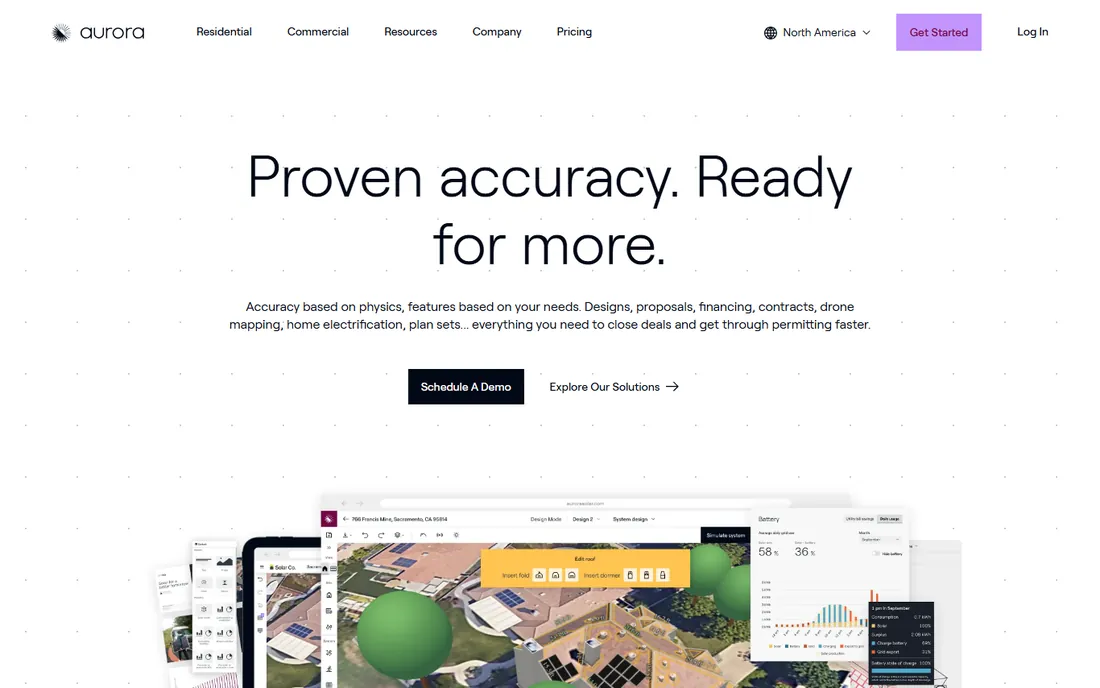
Aurora Solar is the reference product for residential solar design and sales. Its roof modeling, shading analysis and production estimates are built on validated physics rather than approximations, which matters when the numbers go into a 25-year contract. The platform extends past design into proposals, financing options, contracts and plan sets, so the sale and the permit paperwork live in one system.
The position costs money: pricing is quote-based at the premium end, reflecting the enterprise installer base. Small shops sometimes find the breadth overwhelming for simple jobs. Aurora fits installers where design accuracy decides deals and permitting speed decides margins.
What we like- Physics-based production modeling trusted across the industry
- Covers design, proposals, financing, contracts and permitting
- Extensive integrations
Watch out for- Premium quote-based pricing
- The full platform can be more than small shops need
Starting priceFree
Free planYes
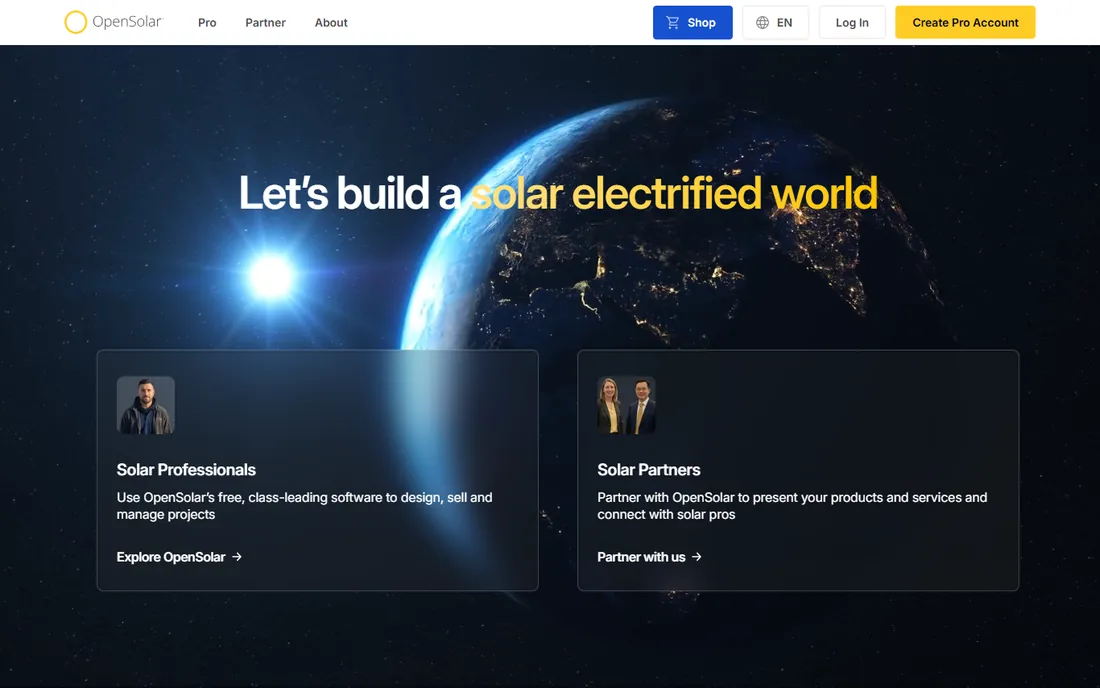
OpenSolar's free core platform is the category's price anchor. It handles the full workflow: lead capture, system design with panel layouts and shading, interactive customer proposals, financing options, e-signatures, payments and project management, all without a license fee. For new installers, that removes the software budget question entirely.
The business model runs on optional paid extras and services, so map what your operation actually needs against the free tier during evaluation. Support expectations should match the price. OpenSolar suits cost-conscious installers and new companies that want a complete platform on day one without a contract.
What we like- Core platform is genuinely free, from lead to install
- Covers design, proposals, finance, contracts and project management
- Large global installer community
Watch out for- Advanced features and support tiers cost extra
- The free model means evaluating what is included versus paid add-ons
Starting priceSee website
Free planNo
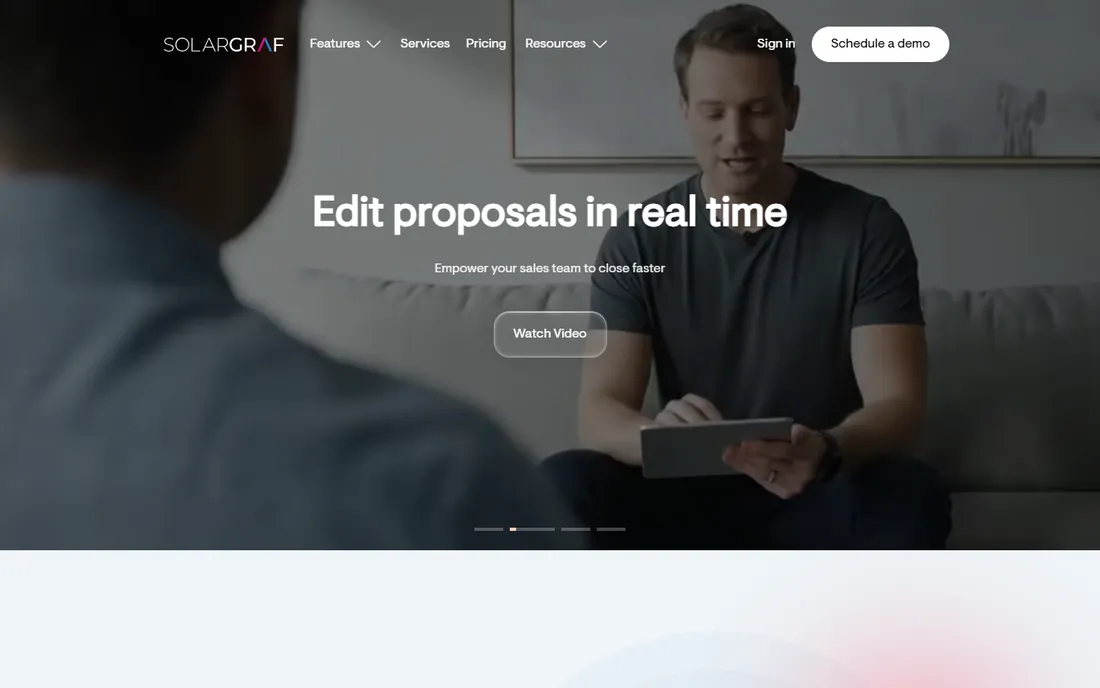
Solargraf (part of Enphase) targets residential installers who sell on speed. The platform moves from roof design to customer-ready proposal quickly, with 3D visualization that helps homeowners say yes, plus permitting documentation and project tracking. Published tiered pricing scales with project volume.
The positioning is clear: residential volume, not one-off custom jobs or large commercial. Smaller installers should check the entry tier against their actual project count. Solargraf fits residential shops running dozens of proposals a month where speed-to-proposal is the metric.
What we like- Fast 3D design-to-proposal flow for residential teams
- Now backed by Enphase
- Permitting and project management included
Watch out for- Published tiers target volume installers, pricing out casual users
- Less suited to complex commercial work
Starting priceSee website
Free planNo
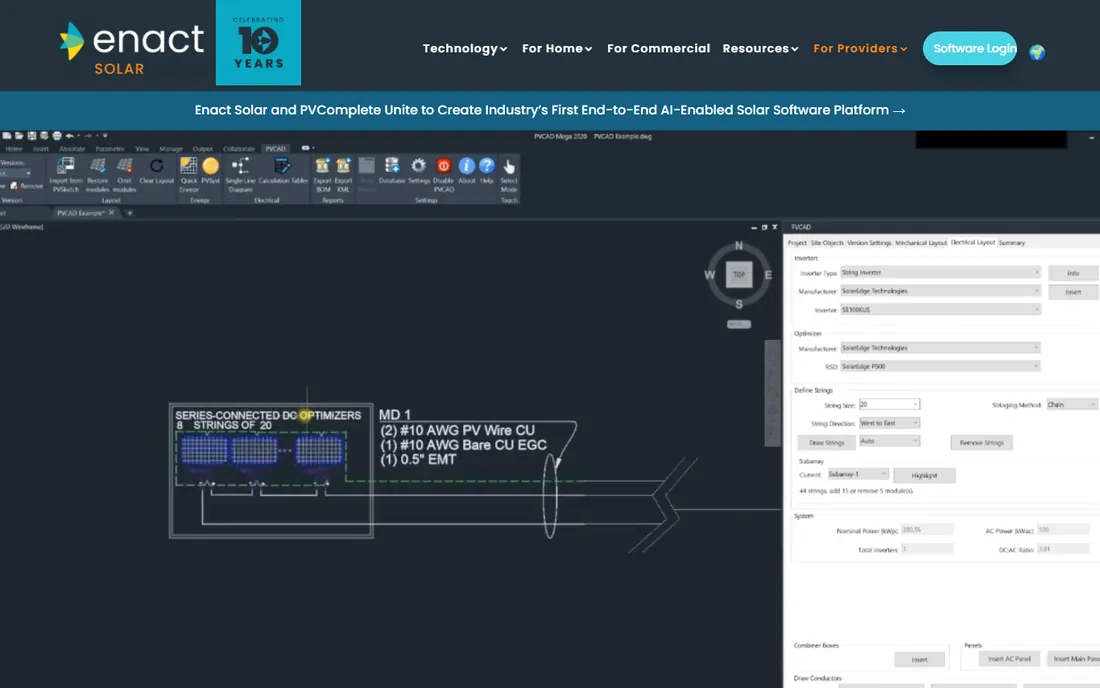
Enact approaches solar sales from the money side: proposals structured around monthly payments, financing comparisons and savings storytelling, with design depth sufficient for residential jobs. The consumer-facing experience is polished, which helps reps close at the table.
Engineering teams doing complex commercial work will find the design tools thinner than the specialists. Enact suits residential sales organizations where the financing conversation closes deals and the proposal needs to sell savings, not just kilowatts.
What we like- Proposal flow built around financing options
- Consumer-facing design that builds trust
- Handles the sales conversation, not just the engineering
Watch out for- Narrower design depth than Aurora or HelioScope
- Pricing information requires a sales conversation
Starting priceSee website
Free planNo
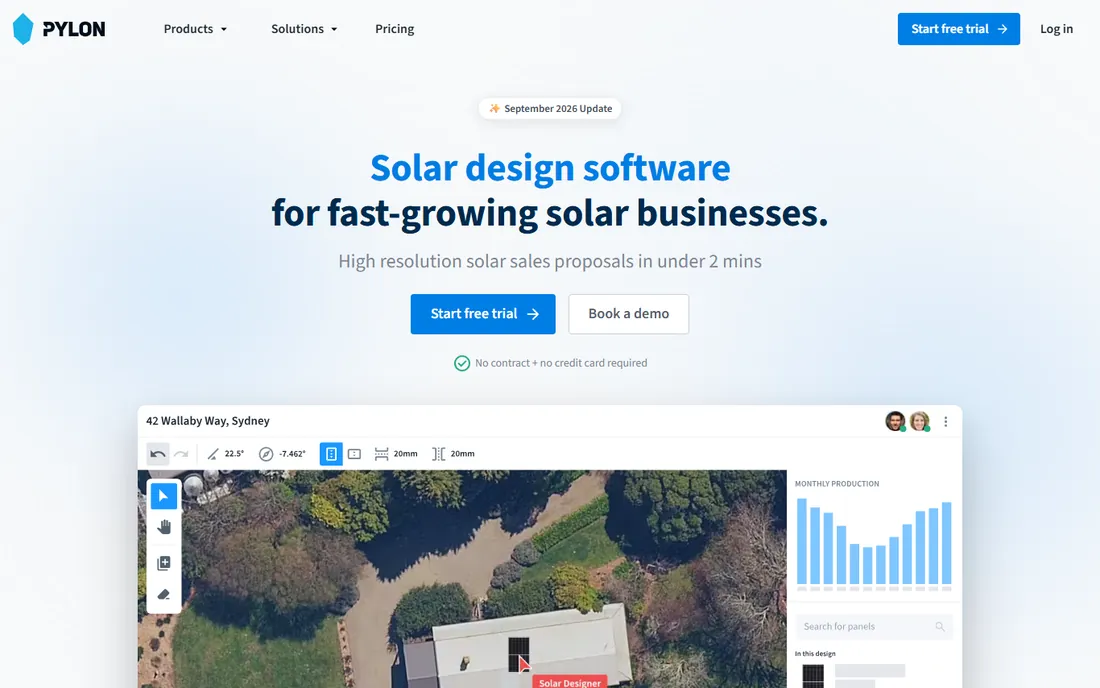
Pylon prices per project rather than per seat, which fits door-to-door teams, part-time sellers and small shops with uneven volume. Reps generate proposals fast in the field without the company carrying annual licenses for seasonal staff.
At high volume the per-project math favors seat-based competitors, so model your actual project count. Pylon suits field sales teams where speed and low fixed cost matter more than deep project management.
What we like- Per-project pricing suits low-volume and part-time sellers
- Fast proposal generation for door-to-door workflows
- Low commitment to start
Watch out for- Per-project costs add up at volume
- Lighter on project management depth
Starting priceSee website
Free planNo
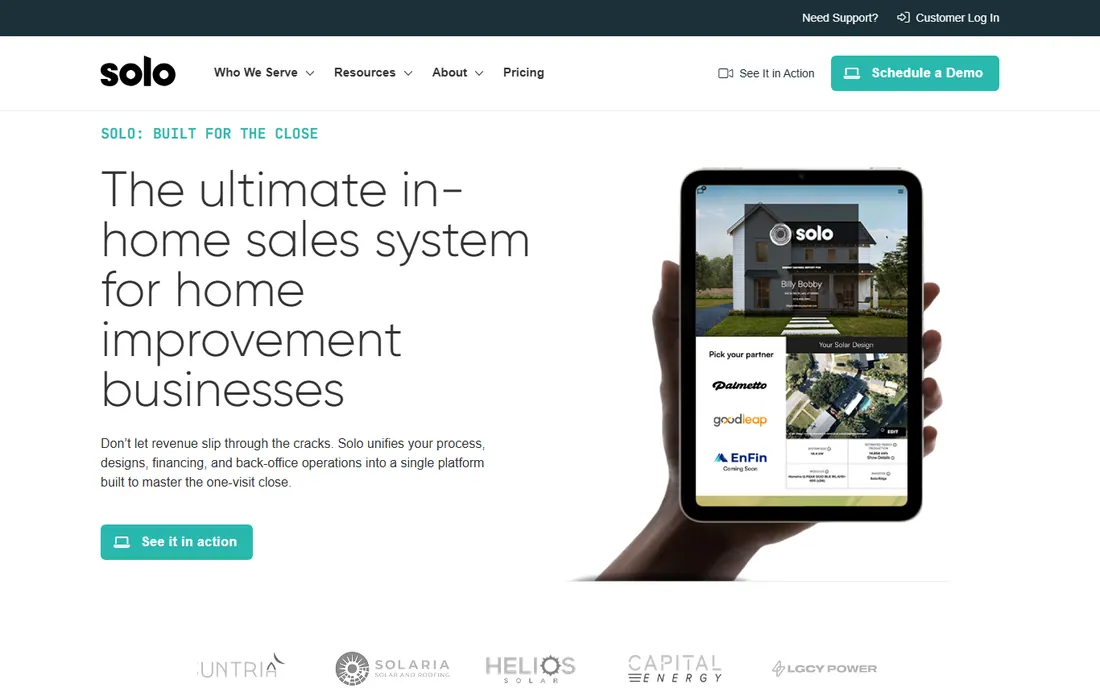
Solo is sales software that happens to serve solar: canvassing management, appointment setting, proposal generation and closer workflows in a mobile-first package. It fits the door-to-door and retail solar model where the org chart has setters, closers and canvass managers.
It is not a design tool first, so engineering-led shops should pair it with a design platform. Pricing is quote-based. Solo fits high-velocity residential sales organizations running field teams at scale.
What we like- Built for canvassing and setter-closer workflows
- Mobile-first for the doorstep
- Sales management and tracking included
Watch out for- Quote-based pricing with no public entry point
- Design depth is secondary to sales workflow
Starting priceSee website
Free planFree trial
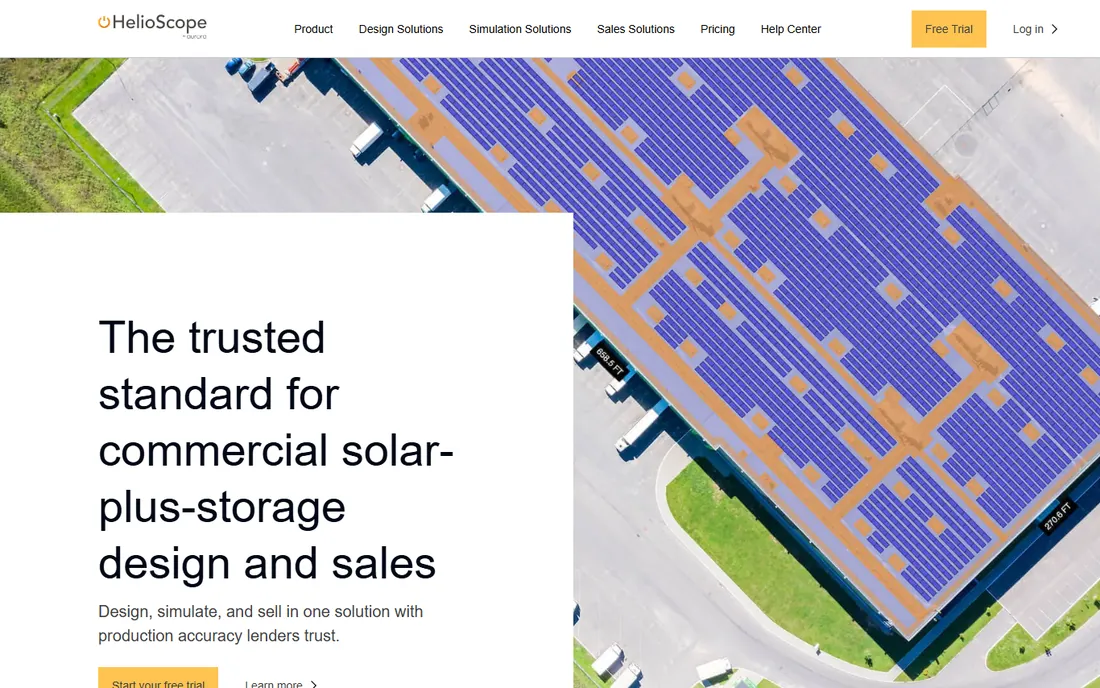
HelioScope (by Folsom Labs) is the engineer's design tool: precise shade analysis, detailed production reports and layout tools that handle complex commercial roofs. Incentive programs and utilities accept its reports, which tells you about its credibility. A free trial lets technical teams evaluate properly.
The proposal and CRM side is not its strength; sales-first teams will find it spartan. HelioScope suits commercial installers and engineering-led residential shops where the design report, not the pitch deck, wins the job.
What we like- Detailed shade and production modeling trusted by engineers
- Strong for commercial and complex residential
- Straightforward per-user pricing historically
Watch out for- Sales and proposal features are thinner than the sales-first platforms
- Interface rewards engineering skill
Starting priceSee website
Free planNo
Sighten automates the proposal pipeline with analytics on what closes, aimed at installers that want data on their sales process as well as documents for customers. Quote management, contracts and workflow tracking round out the sales operations side.
Its market footprint is smaller than Aurora or OpenSolar, so reference checks matter more. Sighten suits mid-size installers that want proposal automation plus insight into sales performance, rather than pure design horsepower.
What we like- Automated proposal generation with strong analytics
- Integrates with sales workflows
- Quote and contract management included
Watch out for- Smaller market presence than the leaders
- Pricing requires a sales conversation
What to check before you buy
Start with your sales motion. Door-to-door teams need mobile speed and per-project economics; design-led shops need engineering accuracy and permitting outputs; financing-led sellers need payment storytelling. The wrong category match wastes the subscription regardless of features.
Then verify the imagery and data for your territory. Roof imagery quality, LiDAR availability and utility rate databases vary by region; test with your actual addresses during the trial. Check proposal customization: your pricing, your financing partners, your contracts. Confirm e-signature and payment collection work in your state. Finally, model the real cost at your volume, since per-seat, per-project and tiered pricing cross over at different scales.
How we chose
We selected solar sales platforms with live products and real installer customer bases, covering design-led, sales-led and free options, using vendor sites, pricing pages and public reviews. We list starting prices as See website where we could not verify a current figure on the vendor's own pricing page. We did not model test roofs or verify production estimate accuracy.
What makes a solar proposal convert
A solar proposal is a sales document disguised as an engineering report. The ones that close share a structure worth copying.
Lead with the money, not the modules. Homeowners buy savings, not specifications. The first page should answer three questions: what do I pay, what do I save, and when do I break even. Panel wattage and inverter brands belong in an appendix, not the opening. Proposals that open with equipment specs lose to proposals that open with the electric bill going down.
Show the math transparently. System size, production estimates, utility rate assumptions, incentive calculations: lay them out clearly enough that a skeptical customer (or a competing bidder) can follow the logic. Hidden assumptions are where deals die in the "let me think about it" stage. If your production estimate differs from a competitor's, explain why; the honest explanation usually wins.
Address the roof directly. Homeowners worry about leaks, and every installer knows it. Include the mounting method, the flashing details, the warranty on the roof penetration work, and photos of similar installs. A proposal that ignores the roof question invites the customer to imagine the worst.
Make the incentives concrete. Federal credits, state rebates, net metering rules: translate each into dollars on the customer's bill, with the timeline for receiving them. Vague mentions of "tax incentives available" create uncertainty; specific numbers with dates create confidence. Note what happens if net metering rules change, because informed customers will ask.
End with a clear next step. Site survey scheduling, not "contact us for more information." The proposal should make saying yes the path of least resistance: one signature, one date, one phone number. Every additional step between proposal and commitment costs you closings.
Frequently asked questions
What is the difference between solar design software and solar sales software?
Design software models the roof and calculates production; sales software turns that into proposals, financing options and contracts. Most modern platforms do both, but they lean one way: Aurora and HelioScope lean design, Solo and Enact lean sales.
Is free solar software like OpenSolar actually usable?
Yes. OpenSolar's free core covers the full workflow from lead to install. Paid extras exist for advanced needs, but small installers run real businesses on the free tier. Verify the specific features you need are in the free tier before committing.
How accurate are remote roof designs?
Good platforms use high-resolution imagery and LiDAR where available, producing designs accurate enough to sell and permit from. Accuracy varies by imagery quality in your territory, so validate with your first few installs.
Do these tools handle financing?
Most include financing marketplaces or integrations: leases, loans and PPAs presented inside the proposal. Confirm your specific financing partners are supported, since that decides whether the proposal matches what you can actually offer.
Can I use this software for commercial projects?
Aurora Solar and HelioScope handle commercial work well. Residential-focused tools like Solargraf and Pylon are weaker there. Match the platform to your project mix.
What should a proposal include?
At minimum: system design visualization, production estimate, pricing breakdown, financing options with monthly payments, savings projection, equipment specs, warranty terms and contract with e-signature. Every tool here covers most of that; the differences are in polish and automation.
Sources we checked (9)
- https://aurorasolar.com
- https://www.opensolar.com
- https://www.solargraf.com
- https://enact.solar
- https://getpylon.com
- https://gosolo.io
- https://www.helioscope.com
- https://www.sighten.io
- https://kurums.com/solar-proposal-software/
Is your product missing or out of date?
We review this list regularly. Vendors can request a listing, send updated pricing or ask about featured placement.

Shihab Mia · Founder, Rankite
Shihab has 5+ years in B2B and SaaS SEO. He writes Rankite's software buying guides from pricing pages, documentation and public user reviews. More about Shihab.